
 Interview
The SDE Interview / Alan Parsons
Parsons on early years, I Robot and Atmos

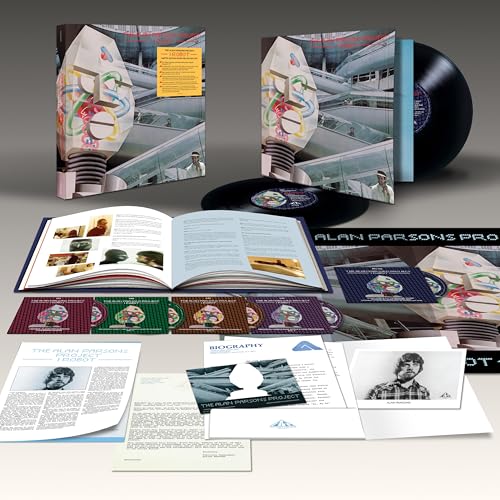
The Alan Parsons Project’s second album, 1977’s, I Robot, was reissued back in October as a super deuxe edition 4CD+Blu-Ray+LP box set (watch the unboxing here) and more recently as a standalone blu-ray audio featuring the Dolby Atmos, 5.1 and hi-res stereo mixes.
SDE recently caught up with Alan Parsons to discuss the album and the Dolby Atmos mix which Parsons himself has created.
SDE: You started at Abbey Road Studios. Could you explain what the role of a recording engineer? What influence you have on the sound of a record?
Alan Parsons: You want me to explain what a producer does?
Well, not so much of what producer does, but what a recording engineer does. You worked on The Dark Side of the Moon as a recording engineer, and your work on that record is attributed, in part, to the sound of that record, but you weren’t the producer on it. You were the engineer...
The official role of a recording engineer is to decide where microphones are going to go, choice of microphones, and [making sure] the mic-ing would be in line with the requirements of the artist. If it was a full orchestra, you’d have a different set of parameters to deal with. And on the session, particularly in the old days, there was the engineer and the producer. And the producer would work with the engineer to get the possible result for the artist. In terms of creativity, the engineer’s role was actually to keep his mouth shut. Nothing creative. Don’t ever say “I think he could play it better”, or “He’s a bit out of tune” or “We’ve got two vocal takes – I think we need another one” and all that kind of stuff. In a way, I think I probably broke through into production through not keeping my mouth shut. I would say what I felt about a performance and I would say when the guitar was out of tune. Essentially at Abbey Road, engineers used to be called Balance Engineers, and that’s what it was. Obviously, the engineer needs to know the studio, needs to know what plugs to plug in to make everything work and deal with special effects, reverb, delays and so on. So, that’s the basic role. But like I said, I kind of side-stepped a bit. I think the artists I worked with liked the fact that I would say what I thought about anything that wasn’t quite right or spoke up about a way of improving something.
Paul McCartney always talked Abbey Road having ‘men in white coats’ in the early days. Had it moved on from that?
Yeah, I never wore a white coat [laughs]. Although I did wear a white coat with job prior to that; I was mending tape machines. But no, the engineers and second engineers didn’t wear white coats. It was a requirement to wear a tie, though.
It wasn’t like a film set, where unions decreed what you could do and couldn’t do in the studio?
No unions, thank goodness. It was pretty relaxed, really. The funny thing is, there were more engineers than there were sessions, so there were a lot of engineers just simply hanging around, reading the paper every day. They had show up, even if they weren’t on session.
You must have made your mark on Paul McCartney, in particular, when you were working on those two last Beatles albums (Let It Be and Abbey Road) because you went on to do the Wings Wild Life and Red Rose Speedway albums
I did not once say to The Beatles that one of the guitars was out of tune! I had no creative input at all. But I’m very grateful for the fact that I can get through the rest of my life saying I worked with The Beatles, and I’m never allowed to forget it [laughs]
Being on the rooftop of 3 Savile Row, when they were doing their last live performance… It can’t have just been like another day in the office. You must have realised this was going to be an historic event?
Yes, indeed. And I was having the time of my life, frankly, watching The Beatles play together for the first time in years. And I think I recognised that it would be the last time.
What did it sound like? Were they as you expected them to be, playing live as a unit?
The overall sound was not transmitted back to the roof from downstairs. So I couldn’t hear vocals. I could only hear vocals through the monitors.
Some people think that was the end of The Beatles, but of course, they went on to do Abbey Road, which you worked on, as I said. Did you learn a lot from being in the same room as George Martin? Because George wasn’t really involved much in those, Let It Be sessions, was he?
No, he wasn’t. But I followed, the history of, Let It Be, and eavesdropped on sessions, with Phil Spector and stuff. I was in two minds about ‘The Long and Winding Road’, for example. Is he ruining it, or is he making it wonderful?
Paul McCartney always said he ruined it, but then McCartney did a version of it that was quite slushy on his Give My Regards to Broad Street soundtrack, which had a saxophone on it! Let’s talk about I Robot. In terms of your association with Eric Woolfson, he was your manager, before he was your creative partner, wasn’t he?
Yes. I hadn’t really anticipated the creative partnership between us, at the beginning. I just needed a business advisor; a manager, who would go chasing after the royalties that I hadn’t received and so on.
So he was managing other musicians as well?
He was managing Carl Douglas of ‘Kung Foo Fighting’ fame and a band called Gonzalez, who whose lead singer was Lenny Zakatek [who sings on ‘I Wouldn’t Want To Be Like You’ on I Robot].
What was the time period between when he started managing you and when the creative partnership started?
Probably a matter of weeks.
You must have known from the beginning, that Eric was writing songs and he had aspirations in that area?
I knew he was a musician. He was a pretty good pianist. We actually met on a session that somebody had booked and he also had a fairly early synthesizer, so he could do a bit of synth as well as piano. In later years, he completely dropped his technical side. He never touched a synth keyboard again, I think. As technology developed, he just watched it, he didn’t go with it.

You signed to Arista for the I Robot album, which is one of the interesting developments after the first record. This is a long time ago, back in 77, but Clive Davis has got this reputation for being a sort of cut-throat guy. What was it like dealing with him?
It was a complete surprise. He just came out of the blue and said, “I want to sign you for a three-album deal based on Tales of Mystery and Imagination, which had been a small hit. He liked the music enough to want to hear more and to sign us up, which was great. We were in no way ready to do anything but sign on the dotted line and go with it.
In the book, in the box set, there’s a quote from his autobiography where he states ambitions of reaching a large audience, which he did ultimately do. But, was that an ambition you shared? You wanted to sell a lot of records and be successful?
My motivation was creative, not business. I just wanted to make good music. And with each successive album, it was astounding to me that people were buying this stuff. I mean, I Robot did really well, Pyramid did very well. And, you know, each successive album did better, and Eye in the Sky was probably the pinnacle of our success.
Was it always the case that you were going to be a studio-based project. There was never any temptation to try and get a band together and go out on the road?
Oh yes, at that time it was very much the case that we were a studio band, and [we thought] there is no way that this can be reproduced with a full orchestra and all the different singers and stuff. It would have been an absolute nightmare to bring it to the stage. But in later years, synthesizer sounds got better, musicians got more competent dealing with lots of different sounds at the same time and I was all in favour of playing live. Eric had no desire whatsoever to do that. It was after we separated, Eric and I, that it was decided that putting a live show together was something I could do.
How was it working with all the different vocalists in the studio? I imagine dropping in to do one song on a record and going away again is probably a relatively nerve-wracking experience. How did you get the best out of vocalists?
Well, I think in the case of at least a couple of the singers, they liked the idea of not singing to [necessarily] further their own careers. That was very much the case with Alan Clarke, for example, with The Hollies. When he came in, he just saw it as another job – he was delighted to do it.
‘Some Other Time’, has two lead singers on it, which is quite unusual. Tell me about recording that song and the thought process behind the two different singers.
‘Some Other Time’ was was influenced by a conversation I had with Paul McCartney. I asked him to do a brief spoken appearance on the album, and he said, “I can’t do that right now. Let’s do it some other time”. So that became a line in the song. I mean, I was hopeful that Jaki Whitren would be the singer of on that song. I just couldn’t get the right performance out of her on the verses. There was a connection of some sort with Peter Straker and he came in, and he did a nice job on it. I think he was still doing [the musical] Hair at the time.
There’s an interesting outtake on one of the CDs in the box set where you can hear the song with Jaki Whitren singing everything, which is very interesting. And it shows, I think, that the right decisions were taken…
Of course, at the time I would have said “nobody is ever going to hear this”, but Jaki and Peter were very well matched, in the timbre their voices.
How many takes would you be doing with them? These were all accomplished singers or course, but how hard would you push them?
I remember, in particular with Jaki, asking her to sing a line more to emphasise a certain word. Things like that. I can’t generalize – my memory fails me because it was a long time ago – but my usual way of working was that I would have them do two or three takes, start to finish that would listen to them and talk about the strengths and weaknesses of those performances and maybe do a repair for a line or two, or a chorus or two, or whatever.
What about the technology that you were using in the studio? Tell me about this thing called the ‘Projectron’?
It was built, but to my specification. I wanted a keyboard that could play notes from a 16 track machine – or whatever was on a 16 track machine – with attack and decay and that kind of thing, like the buttons you normally find on a synthesizer. And then I spent a long time making vocal loops, making them totally continuous. That was then transferred to 16-track, and I could actually play chords on the Projectron, using those voices – as many as I needed.
What would the advantage be over a Mellotron? Would it be more reliable because you’re connected to a proper, robust tape machine?
Yes, that’s true. The mellotron was terribly temperamental, the reset time was too long and it basically sounded awful.
‘I Wouldn’t Want To Be Like You’ was obviously quite a big hit single in America, and was a great bit of promotion for the album. It has the disco beat of the era. Was that song written to be a commercial hit?
I think it was a perfect lyric for the for the concept of I Robot, whether it be man talking to machine, or machine talking to man. I think it really fitted the concept better than any of the other songs on the album. It was recorded in 1977, which was the absolute height of the of the disco period and it was also the time that Star Wars was released. So we had the strength of the disco period in our favor and also the ‘robot’ side of the album connecting perfectly with Star Wars.
You never really had any hit singles in the UK, like you did in America. Why do you think that was?
Two words: Radio One. That was the problem. We just didn’t fit into the type of music they were playing at the time. Alan Freeman was always ready to play something progressive, something new, and he was a huge, huge boon to our career. We became friends and he did radio commercials for us. He was amazing and I think he actually played a whole side of I Robot on one of his shows. But the likes of Tony Blackburn and whoever else was on daytime radio, they weren’t interested. And as we all know, Radio One had a playlist, done by committee.
Tell me about recording budgets and time spent in the studio. With groups like The Beatles and Pink Floyd they seemed to just be able to spend as much time as they wanted on anything, understandably enough. But you were in a new band; you’d just been signed – there must have been some constraints, even if it doesn’t sound like it, with the big choirs and everything. Who was looking after the purse strings?
Well, that would have been Eric, and he seemed undeterred by any decisions on my part to use choirs or a large orchestra, or whatever. His atitude was “this is going to be a great album, let’s spend money on it”.
So no one ever said “no, we can’t do that.”
We were in charge. Unusually, because normally people sign to labels, then the labels would say, well, here’s your budget, and if you go over the budget, you have to let us know. And they would, um and ah about what a record was costing to make. But we were in charge. They gave us an advance but we had money in the bank to pay for the album, so that’s what we did.
Over the period of time where you recorded all the Alan Parsons Project albums, you personally were obviously still working doing other things. Were you producing other artists in between?
I call it double dipping, because I was not only working for The Alan Parsons Project, I was working for other artists, and I was on the payroll at Abbey Road, so I was still being paid my monthly salary.
That’s quite surprising, isn’t it? So you were still on the payroll, even though you were basically in a band and doing your own thing?
Yes, I was being paid a salary to make my own records. That was the irony.
Because you weren’t touring, was it relatively easy to manage your own diary?
It’s funny, we were always busy, even though we weren’t touring. Busy either recording or promoting. We spent a lot a lot of time doing interviews and traveling around doing playbacks. A lot of playbacks in big cities in America, usually associated with radio stations.,
That must have been really enjoyable, because you don’t have any of the stresses and strains of touring, I suppose, and it’s all paid for by the label. You’re traveling around telling people about your record.
You’ve raised the question – I hope the labels were paying for it?! [laughs]. I think they probably were…
But Clive Davis was quite astute, because there’s a quote from him in the book [in the box set] where he says, you were like film directors, going around talking about a film that’s about to come out. And it’s a very good analogy, isn’t it?
It is, and absolutely – that’s what we did. We didn’t have a lot of time off. We were always busy.
How do you think Abbey Road compared to other studios around London at the time? Because the punk scene happened and I think maybe some people started to get sniffy because Abbey Road was considered a bit old school. Was it still state of the art? The Beatles always complained Abbey Road took too long to get to 8-track and all the rest of it. How was it as a facility at that time?
I think the period of I Robot was when Abbey Road was really on top of everything. They had the latest gear; they had 24-track consoles. It’s true to say, in The Beatle days, the studios were way behind. But I think as time went on, they became absolutely top-of-the-line studios.
And was it as collaborative as it always sounds? With people poking their head around the door and saying, “Can someone help me with some backing vocals in studio three?”?
Yeah, that happened now and again. I did some backing vocals on a Wings track, actually.
Which one was that?
‘Tomorrow’, a song called ‘Tomorrow’ [from Wild Life, which Alan engineered]
Let’s talk about Dolby Atmos, because, there’s a lot of people coming out of the woodwork doing Atmos mixes now, but you go back to the very early days of surround sound because you did the Quad version of The Dark Side of The Moon, didn’t you?
Which, interestingly, was critically acclaimed, by many, as being better than the first 5.1 mix.
Yeah, I’ve read the same thing. You can only get it in the Immersion box set that came out in 2011, I think – they didn’t include it on the most recent blu-ray. But what are your thoughts on Atmos? How much do you enjoy working in Atmos?
I love it, but I also like working in 5.1. The change from stereo to 5.1 was, was colossal – huge – but the change from 5.1 to Atmos, I think, is less so.
What’s your process when you do an Atmos mix?
I don’t rebuild stereo. I would normally go to 5.1, listen to the balances and make sure all the everything’s heard, everything’s right. The Atmos, is about taking the 5.1 and making it more interesting by adding ‘upstairs material’, as we call it (Alan is referring to the height channels).
Interesting. So your 5.1 mix is a dedicated 5.1? You’re not rendering that from the Atmos at the end?
No, the process is 5.1 and then Atmos.
Not everyone works like that. Some people do their Atmos mix, and then in the Dolby renderer, export it as a 5.1.
That’s criminal. I think that’s cheating [laughs].
I did notice on the blu ray that you didn’t do a new stereo mix. You didn’t see any need to do that?
[No]. I Robot was mixed analogue, it’s therefore high definition. Whereas when, when we [later] went to digital, that’s not high def, that’s 16 bit.
50 years later, what, are your lasting impressions of I Robot? Are you very proud of the album that you created with Eric?
Oh, I was very proud of I Robot, but I was even more proud of Pyramid, believe it or not. I distinctly remember saying, this is much better than I Robot…
Interesting…
Of course, it was the first taste of success. ‘I Wouldn’t Want To Be Like You’ became a hit, and that was really good for what happened in the future.
For anyone who has not listened to The Alan Parsons Project music, they might look at the album cover/concepts and wrongly get the idea that it’s very sort of oblique, hard-to-get-into music. But, to me, it’s very commercial sounding, for the most part.
We’ve kind of been branded as ‘progressive rock’. I’m not sure that’s really accurate. I mean, there were tracks that had progressive rock stuff, you know, time signature changes, something changed from one one style to another, that kind of thing, but I think it should have been branded as ‘progressive pop’.
Thanks to Alan Parsons who was talking to Paul Sinclair for SDE. I Robot is out now as a super deluxe box set and standalone blu-ray and vinyl editions.
Order the I Robot standalone blu-ray from the SDE shop using this link or the button below.
Compare prices and pre-order

The Alan Parsons Project
4CD+blu-ray+LP box set
|
|
||||||||||||||||||||||||||||||||||||||||||||||||||||||
Compare prices and pre-order

ALAN PARSONS PROJECT
half-speed clear vinyl

|
|
||||||||||||||||||||||||||||||||||||||||||
Compare prices and pre-order

ALAN PARSONS PROJECT
single CD edition

|
|
||||||||||||||||||||||||||||||||||||||||||||||||||||||
Tracklisting

I Robot The Alan Parsons Project / Box Set
-
-
CD 1
- I Robot
- I Wouldn’t Want To Be Like You
- Some Other Time
- Breakdown
- Don’t Let It Show
- The Voice
- Nucleus
- Day After Day (The Show Must Go On)
- Total Eclipse
- Genesis Ch.1. V.32
- US Radio Commercial For I Robot
- I Robot (Boules Experiment)
- I Robot (Hilary Western Soprano Vocal Rehearsal)
- Extract 1 From The Alan Parsons Project Audio Guide
- Extrac2 From The Alan Parsons Project Audio Guide
- I Wouldn’t Want To Be Like You (Backing Track Rough Mix)
- Some Other Time (Complete Vocal by Jaki Whitren)
- Breakdown (Early Demo Of Backing Riff)
- Extract 3 From The Alan Parsons Project Audio Guide
- Breakdown (The Choir)
- Don’t Let It Show (Eric Woolfson Demo)
- Day After Day (Early Stage Rough Mix)
- Genesis Ch1. V.32 (Choir Session)
- The Naked Robot
-
CD 2
- I Robot (Outtake and Rough Mix)
- I Robot (Experimental Lead Guitar Part With Guide Count)
- I Robot (John Leach Kantele Takes)
- I Robot (Ian Bairnson Rhythm Electric Guitar)
- I Robot (Choir Takes)
- I Robot (Early Mix Before Choir)
- I Robot (Single Edit)
- I Wouldn’t Want To Be Like You (Slower Backing Outtake)
- I Wouldn’t Want To Be Like You (Eric Woolfson Keyboard Take)
- I Wouldn’t Want To Be Like You (Ian Bairnson Electric Rhythm Guitar)
- I Wouldn’t Want To Be Like You (Early Mix Of Backing Track)
- I Wouldn’t Want To Be Like You (Lenny Zakatek Alternative Vocal)
- Some Other Time (Eric Woolfson Piano Take)
- Some Other Time (Ian Bairnson Acoustic Guitar Takes)
- Some Other Time (Ian Bairnson Lead Electric Guitar Takes)
- Some Other Time (Rough Mix With Jaki Whitren Alternative Lyrics and Ad libs)
-
CD 3
- Breakdown (Eric Woolfson Keyboard Part)
- Breakdown (Projectron And Bass)
- Breakdown (Ian Bairnson Acoustic Guitar Takes)
- Breakdown (Ian Bairnson Electric Guitar Harmony Solo)
- Breakdown (Strings, Brass & Horns Take)
- Breakdown (Rough Mix and Alternative Backing Track Outtake)
- Breakdown (Rough Mix Of Backing Track)
- Don’t Let It Show (Eric Woolfson Piano Takes)
- Don’t Let It Show (Eric Woolfson Organ Take)
- Don’t Let It Show (Recorder & Horns Outtake in Key Of D)
- Don’t Let It Show (String Section Take)
- Don’t Let It Show (Woodwind Take In Key Of D)
- Don’t Let It Show (Backing Track Early Rough Mix)
- Don’t Let It Show (Rough Mix With Alternative Orchestra Score)
- Don’t Let It Show (Extended End Section)
- The Voice (Rough Mix With Extra Strings and Alan Parsons Vocoder)
- The Voice (Backing Track Rough Mix)
- Nucleus (Experimenting With Sound Effects)
- Nucleus (Talking Sound Effects)
- Nucleus (Stuart Tosh Drum Take With Delay)
- Nucleus (Projectron Only)
-
CD 4
- Day After Day (The Show Must Go On) (BJ Cole Steel Outtake)
- Day After Day (The Show Must Go On) (Synth Experiments)
- Day After Day (The Show Must Go On) (Eric Woolfson Celeste Take)
- Day After Day (The Show Must Go On) (Ian Bairnson Acoustic Guitar Take)
- Day After Day (The Show Must Go On) (BJ Cole Pedal Steel Take)
- Day After Day (The Show Must Go On) (Backing Vocals)
- Day After Day (The Show Must Go On) (Backing Track)
- Day After Day (The Show Must Go On) (Single Edit)
- Total Eclipse & Nucleus (Choral Experiments)
- Total Eclipse (Choir Only)
- Genesis Ch.1 V.32 (Alan Parsons Demo)
- Genesis Ch.1 V.32 (Everything But The Choir)
- Genesis Ch.1 V.32 (Ian Bairnson Acoustic Guitars)
- Genesis Ch.1 V.32 (Strings Only)
- Genesis Ch.1 V.32 (Backing Singers & Choir Take)
- Alan Parsons Spacey Vibraphone
- Eric’s Jupiter (Start Of Gemini Idea)
- Taking It All Away (Eric Woolfson Songwriting Diary First Version)
- I Robot Radio Adverts
-
2LP vinyl (45RPM)
Side one
- I Robot
- I Wouldn’t Want To Be Like You
Side two
- Some Other Time
- Breakdown
- Don’t Let It Show
Side three
- The Voice
- Nucleus
- Day After Day (The Show Must Go On)
Side four
- Total Eclipse
- Genesis Ch.1. V.32
-
blu-ray
- 2025 Alan Parsons Dolby Atmos Mix
- 2025 Alan Parsons 5.1 Surround Sound Mix
- Original album remastered in stereo by Miles Showell 2025
- I Wouldn’t Want To Be Like You (video)
- Eric Woolfson Interview Footage
-
CD 1
Related Content

 News
News


By Paul Sinclair
20