Duran Duran’s 1990s album Duran Duran aka ‘The Wedding Album‘ and Thank You are to be reissued in April on vinyl for the first time since their original release.
The albums follow BMG’s recent extras-free vinyl pressings of Duran’s albums released after they left EMI, from 1997’s Medazzaland to All You Need Is Now from 2011. With Big Thing reissued on vinyl in 2024, it leaves 1990’s Liberty as the only Duran Duran album not to have been repressed on vinyl this century.
Given the limited nature of their 90s pressings, The Wedding Album and Thank You both fetch three-figure sums for original vinyl pressings. This is despite the two records being squashed onto single LP editions at the time, even though The Wedding Album has a 63-minute runtime and covers set Thank You lasts 54 minutes. The new pressings, on Warner, are both 2LP sets, on black vinyl.
Released in 1993, ‘The Wedding Album‘ revived Duran’s commercial fortunes. Featuring the hits ‘Ordinary World‘ and ‘Come Undone‘, it reached No 4 in the UK – their first Top Five album since Seven And The Ragged Tiger a decade earlier – and No 7 in the US, Duran’s best chart peak Stateside since Rio had reached No 6 in 1982.
Despite being eponymous, the album’s unofficial name (which stuck almost immediately) is derived from its artwork, featuring photos of the weddings of the parents of Simon Le Bon, Nick Rhodes, John Taylor and Warren Cuccurullo.
Two years after Duran Duran (The Wedding Album), 1995’s Thank You was the last album Duran Duran released on their original record label, EMI. Featuring covers of Sly And The Family Stone, Public Enemy, The Doors, Led Zeppelin and Iggy Pop among others, it reached No 12 in the UK and No 19 in the US. Its singles – versions of Lou Reed’s ‘Perfect Day’ and Melle Mel’s ‘White Lines’, were Top 30 hits in the UK. The latter remains a regular in Duran’s live show.
Both albums are also reissued on CD and neither format has any bonus tracks. Outside of these two welcome vinyl reissues, there remains no further news on the release of Reportage, the 2006 album had virtually finished before Andy Taylor left Duran Duran for a second time.
Both Taylor and Nick Rhodes have stated last year that the necessary additional work on Reportage is almost completed and would be ready for release soon, but no details have been confirmed.
Instead, Duran Duran are said to be readying a one-off new single. The song was thought to have been worked on during the sessions for 2023’s Danse Macabre with Nile Rodgers, but is believed to have been thought of as “too disco” for that album’s Halloween theming.
The only confirmed Duran Duran news is that the band are to play a four-night residency at The Fontainebleau in Las Vegas in May.
Duran Duran release ‘The Wedding Album’ and Thank You on 2LP vinyl and CD on 10 April, via Warner Music. ‘The Wedding Album’ 2LP set comes in a newly embossed sleeve and a 12-inch art card. Thank You 2LP comes in a gatefold sleeve with a poster.
Order vinyl editions from the SDE shop using this link or the buttons below.
The Charlatans’ 1990 debut album Some Friendly is to be reissued in 2CD and 2LP editions in March – with the 2CD version featuring exactly half as many bonus tracks than a 2CD edition released just four years ago.
A press release states that singer Tim Burgess has “especially curated” the nine bonus tracks on the new edition, yet most of these were also included on a 2CD set featuring 18 additional songs released in 2022.
Some Friendly features The Charlatans’ classic debut single ‘The Only One I Know’ as well as ‘Then’, the follow-up single which reached No 12 in 1990. It’s also notable for instrumental closing track ‘Sproston Green’, which was the band’s regular live closer for decades afterwards.
The album has been newly remastered by Frank Arkwright at Abbey Road, with a new Dolby Atmos mix also available. This mix will however only be available on streaming services Apple Music, Amazon Music and Genie.
2LP white vinyl features bonus tracks
The nine bonus tracks, which include the B-side ‘Taurus Moaner’ in both its vocal and instrumental version, as well as the seven-inch single version of ‘Then’, also feature on the 2LP edition. This is on white vinyl, in a gatefold sleeve. This is the first time an expanded version of Some Friendly has been available on vinyl.
Although the album was released in 1990, the 2CD from 2022 was billed as a 20th anniversary edition. This featured eight songs from Radio 1 sessions for Mark Goodier and John Peel, including ‘You Can Talk To Me’ for Peel, which was a B-side of ‘The Only One I Know’. None of those sessions feature on the new set of bonus tracks.
The songs Burgess has chosen which weren’t on the 2022 CD are the seven-inch mix of ‘Then’, the instrumental version of ‘Taurus Moaner’ and an Edit of ‘Happen To Die’.
The new edition of Some Friendly follows Beggars releasing 2CD and 2LP versions of 1994’s fourth album Up To Our Hips in new artwork in 2024, which included 10 bonus tracks on each edition.
Since then, The Charlatans have released new album We Are Love in 2025, which reached No 8. They will tour during April and May, before playing Forest Fest and Lakefest this summer.
Some Friendly is released on 27 March 2026, via Beggars Banquet.
Squeeze are to reissue their 1991 album Play this week – ahead of the band’s new album, Trixies, which is due in early March.
Squeeze have a notably troubled relationship with reissues, as they have endured a long dispute with their former label, Universal, whose A&M subsidiary released the majority of Squeeze albums from their self-titled debut in 1978 until the band split in 1999.
Of the original incarnation of Squeeze, only Play and their final album Domino, which was self-released on Quixotic in 1998, were released away from A&M. With Play being released originally by Reprise, it’s left Warner free to reissue it, as a remastered CD and 2LP vinyl set, adding the four B-sides from the era as bonus tracks.
The new edition is the first time Play has been released on vinyl since its original 1991 appearance, and its first CD pressing since a 2008 US release on specialist American reissue label Wounded Bird.
Reprise signed Squeeze after they were dropped by A&M after poor sales of the preceding Frank in 1989, which ended their relationship after eight albums. However, while Play improved on Frank’s No 58 UK chart peak, it missed the Top 40, stalling at No 41.
Its two singles – ‘Sunday Street’ and ‘Satisfied’ – both missed the Top 75, ‘Sunday Street’ making No 87 and ‘Satisfied’ No 132. With the original Play album lasting 53 minutes, side four of the 2LP vinyl is rounded out by the B-sides of ‘Sunday Street’ and ‘Satisfied’, in ‘Happiness Is King’, ‘Laughing In My Sleep’, ‘Maidstone’ and ‘Mood Swings’. These are also added to the CD.
With Jools Holland leaving Squeeze for the second time after Frank, Play is the only Squeeze album to feature a traditional guitar/bass/drums four-piece line-up, with Steve Nieve of Elvis Costello And The Attractions replacing Holland as a guest musician on keyboards, alongside Glenn Tilbrook, Chris Difford, Gilson Lavis and Keith Wilkinson.
Play is also notable as an early album to be produced by Tony Berg, who had only previously produced Michael Penn and Altered State. Berg is now a leading producer of singer-songwriters in the US, working on albums for Phoebe Bridgers, Boygenius, Sombr, Andrew Bird and Lizzy McAlpine, as well as the Taylor’s Version of Taylor Swift’s Red.
The reissue of Play is followed in March by Trixies, Squeeze’s first new album since 2017’s The Knowledge. It’s released on BMG. Difford and Tilbrook have admitted they were disillusioned by the relative disinterest shown to The Knowledge, which reached No 25 in the UK, and were happy to continue touring their old material.
However, around their 50th anniversary tour in 2024 the pair revisited the unreleased songs they wrote when they first met in 1974. Based around a fictional nightclub in South London, where Squeeze formed, Tilbrook’s meloides were too complicated for the band to actually play. Their current line-up have instead revisited them. Trixies is produced by Squeeze bassist Owen Biddle, a longtime fan of the band who joined in 2020, having previously played in The Roots.
Trixies, the new album due in March
As well as recording Trixies – which is available as a 2CD+blu-ray edition with Dolby Atmos Mix – Difford and Tilbrook have written an album of new songs. Largely recorded simultaneously alongside Trixies, this second new album needs “two or three more” songs to be finished, according to Tilbrook. It will be finished once promotional work is completed on Trixies.
After Play, Squeeze rejoined A&M, releasing Some Fantastic Place in 1993 and 1995’s Ridiculous before again leaving the label. In 1997, their first five albums, from Squeeze to Sweets From A Stranger, were reissued on CD, each with just two bonus tracks.
A seemingly random selection of four albums were reissued with around eight bonus tracks each in 2008: 1980’s Argybargy, Sweets From A Stranger from 1982, Frank and Ridiculous. Since then, Squeeze have refused Universal permission for any reissues. This means no Squeeze album has had a deluxe edition, while Ridiculous remains unreleased on vinyl.
In 2010, Squeeze went as far as releasing Spot The Difference, in which they re-recorded 14 old hits, designed to sound as close to the originals as possible, hoping these would become the preferred visions for sync campaigns, to earn them royalties instead of Universal.
However, there have been rumours that Squeeze and Universal are close to reaching an agreement on the band’s catalogue, so that reissues can recommence. Tilbrook said in the current issue of Classic Pop: “We’re a commodity first and foremost, and Universal would like to utilise that opportunity, to recast what Squeeze mean to people. We’re very open to working with anyone who could help boost that. There’s plenty of stuff which could be rediscovered. It could happen soon, as Universal know where we are.”
Play is reissued by Warner on January 23. Trixies is released by BMG on 6 March 2026. The 2LP version of Play appears to be an indie-only release
Fine Young Cannibals haven’t released any new music in almost 30 years, and haven’t played any concerts since 1991. That means it has become easy to forget just how massive the trio were. At the start of the 1990s, Fine Young Cannibals were arguably the biggest band on the planet.
Hits like ‘She Drives Me Crazy’, ‘Good Thing’ and ‘Johnny Come Home’ were an irresistible mix of soul, funk and pop, while second album The Raw AndThe Cooked was a multi-platinum No 1 smash both in the UK and US.
They began when guitarist Andy Cox, bassist David Steele and drummer Everett Morton’s previous band, successful politically-charged ska collective The Beat, split in 1983. For a singer, they recruited Roland Gift, whose Hull-based band Akrylikz had supported The Beat.
Morton left before debut single ‘Johnny Come Home’, which reached No 8 in 1985. Fine Young Cannibals’ soulful self-titled debut made the Top 20 and was an underground word-of-mouth in the States, before 1989’s more modern, Prince-influenced The Raw And The Cooked saw the band become a genuine phenomenon.
However, Fine Young Cannibals were unable to follow it up, spending several years trying to get a third album together. Eventually, after one-off single ‘The Flame’ promoted a 1996 singles compilation, they drifted apart.
Since then, Gift has released just one solo album, 2002’s Roland Gift, the same year Cox’s duo Cribabi released their sole LP Volume. Steele’s new duo Fried made one self-titled album too, in 2004.
While Gift resumed touring a decade ago, FYC have generally kept a low profile. Now, there’s a new 4CD+DVD box set, FYC 40, which celebrates four decades since their debut. An SDE exclusive blu-ray of The Raw AndThe Cooked has also just been released, featuring a host of mixes of the classic album, including David Kosten’s new Dolby Atmos version.
Quite how Fine Young Cannibals took over the chart is a remarkable story that hasn’t been told enough. Here, in exclusive in-depth exclusive interviews, Roland Gift and David Steele tell SDE how it all happened. It’s a story featuring Prince’s lava lamps, a freeloading Lauren Bacall, the second coming of Elvis Presley, an unreleased Steve Martin remix, turning down Jack Nicholson, music’s most divisive manager, Michael Jackson… and a 21-year ongoing dispute over the word “leatherette”.
HiRoland, and hi David. Does it feel like 40 years since Fine Young Cannibals started?
Roland Gift: No, it doesn’t. I was talking to a friend recently, about how we’d go to clubs when we were 16 and how we don’t feel any different now. We don’t go to clubs anymore, but we don’t feel that different inside. It’s the same with this box set. No way does it feel like 40 years.
David Steele: It’s scary when you put it like that, it sounds like the anniversary of D-Day. Forty years? That’s a really long time. I can’t believe how old I am. I feel like I’m in my fifties, but I’m in my sixties. Not in a morbid way, but it feels like time is running out, like it’s going faster and faster.
David, when The Beat split, were you, Andy and Everett always going to start a new band together?
David: If we were going to do something together again, it had to be something amazing. It couldn’t just be The Beat 2. That’s one reason getting Fine Young Cannibals together took so long.
How did the approach to Roland come about?
David: We spent a long time looking for other singers, then there was a chat about: “What about that guy from Akrylikz?” Roland was more of a sax player than a singer in Akrylikz, but he’d sung a couple of songs and he had a charisma.
Roland: Akrylikz did probably 10 dates supporting The Beat. I’d then left Hull and moved to London, where I was in a new group. Andy’s wife phoned me and I went to Birmingham to meet everyone.
David: When we got in contact with Roland, he said: “I’m mainly a singer now.” He came over to Handsworth, we played him some stuff and it started to work.
Roland: It was one of those moments where you look all over the place for something, when it’s right next to you. I’d been there all along, but David and Andy had to go through what they did in looking for singers before thinking of me.
What do you remember about Arkylikz’ shows with The Beat?
Roland: Mostly, it was a lot of fun. The Beat were nice to us, and there was a bit of money: enough to eat and sleep.
David: They were more like an LA ska band than a British one. Roland always had charisma, but they were all funny guys, a nice bunch of lads with hyper-energy.
Roland: There was a nasty moment at Top Rank in Birmingham. We’d signed a few autographs, which was a first for us. On the way to a chip shop after the gig, some mods got out of a car. We thought they were carrying rolled-up posters for us to sign. In fact, it was pickaxe handles and they laid into us. That was weird.
Was it an easy decision to join Andy and David’s new band?
Roland: I could have done more with the group I was in, but I took the opportunity to see what would happen with David and Andy instead. I was a bit mercenary. It wasn’t a done deal, as I could have gone back to my other group, but I thought: “David and Andy have done this before, so maybe they can do it again.” I was being quite selfish.
How soon did songwriting start to gel between you?
Roland: I was given a tape over Christmas of some backing tracks they’d been working on. I wrote ‘Move To Work’ and ‘Funny How Love Is’ over the holidays, so pretty quickly we realised we had something worth pursuing.
David: In The Beat, the songs just poured out. The Cannibals always took longer. It was more like: “Take a beat off there,” “Try the chorus from that song.”
I’d got better at writing songs by then, with an understanding of what choruses, middle-eights and pre-choruses are. I’d written a lot of The Beat’s songs, but it just took a while in the Cannibals to write great ones.
Why did Everett leave?
David: It was hard, as we couldn’t get arrested. 2-Tone had gone from being a wave of mass hysteria to nothing. Now, people love that era again, but back then it was nothing.
Dave and Roger had started General Public, which flopped. Dave would say he wrote The Beat’s songs, when really he wrote the lyrics. But trying to convince record companies I really had written their music was impossible and nothing was happening. Any of us could have given up at that point. We weren’t a band that worked immediately, it took a bit of time.
On top of that, Everett had his own drum style, which didn’t quite fit the Cannibals. But we stayed friends after he left and I loved Everett more than anyone. He died four years ago, which was like losing family. Maybe I’m too uptight, but I haven’t told many men that I love them. When Everett got ill, he was one of them.
What were your initial hopes for the band?
Roland: Initially, I thought the Cannibals might be a way to establish myself as an actor. I was open to anything that might come along, then, once we started working together, it quickly became something serious.
It’s like a relationship: you can meet someone who seems nice, but you don’t necessarily think you’ll get married. It can take a while before you think: “This is worth it.” Pretty quickly, though, I thought: “Yeah, this is the thing to do.”
I did some acting as a result of Fine Young Cannibals, like Sammy And Rosie Get Laid and Scandal, but I soon became more concerned with singing than acting.
Was there a particular moment when you realised FYC would be a long term relationship?
Roland: ‘Johnny Come Home’. As the first single, it worked on a number of levels: it was catchy but heartfelt, and it wasn’t an obvious subject for a pop song. That felt like an area we could occupy, that it was something we could mine.
David: Once we had ‘Johnny Come Home’, it took off. The whole world wanted to sign us. It went from nobody wanting to take our phone number, to every record company in England offering us whatever we wanted.
Did you know straight away ‘Johnny Come Home’ would be a big song?
David: I didn’t know how big a hit it would be, but I knew: “OK, that’s a hit.”
Roland: I never felt that way about any of our songs, as that side of things was so out of our hands. When you release a record, you really release it: you let go of it and it’s out of your hands.
You don’t have ownership of it anymore. All you can do is think: “I really like it, there’s no reason why it shouldn’t do well,” but there’s no guarantee.
Before you signed to London Records, you had a memorable appearance on The Tube. What was that experience like?
Roland: That was a big thrill, as me and my friends would talk about The Tube on Friday night in the pub before going to the clubs. Being on it was a real treat, and the people who worked on it were nice and friendly.
We were doing showcases for record companies at a studio in Birmingham, where The Archers used to be recorded. That’s where The Tube director Geoff Wonfor came to film us. Doing that show made us feel we were on the inside of the industry.
David: The Tube was great, but we’d already started to get interest by then. We’d gone back to The Beat’s old manager, John Mostyn, who started to manage the Cannibals and sort us a deal.
A combination of John and ‘Johnny’ meant The Tube got to hear about us. Even before it was shown, the hype had started around us. London had been the first label to show interest, but they only offered a singles deal. Whatever happened, we knew we at least wanted an albums contract.
Roland: Years later, I was in the doldrums for a while. What got me out of it was doing shows in 2013 with Jools Holland. The first time I’d met Jools was that Tube appearance. I introduced myself to him, but my hand was wet as I hadn’t dried it after washing it, after I’d been to the toilet. Jools immediately wiped his hand in disgust.
‘Johnny Come Home’ felt like a companion song to ‘Smalltown Boy’ by Bronski Beat…
Roland: That’s a fair description. We were labelmates on London with Bronski, so there was some kinship there. We’d see them around at London’s office, and Jimmy Somerville later sang backing vocals on ‘Suspicious Minds’.
FYC40 has Anne Dudley’s mix of ‘Johnny Come Home’, which was due to have been the original single version. How easy a decision was it to stick with your own mix instead?
Roland: It was easy for us, because ours was clearly better. There’s a lot of bluff in the music industry. Nobody really knows what’s going to be a hit. Clearly, London didn’t think the original of ‘Johnny’ was going to be a hit, otherwise they wouldn’t have made us work with Anne Dudley.
David: Working with Anne was us trying to do a proper version of ‘Johnny’ in a fancy studio. We threw it away, as it wasn’t as good as the original.
Roland: I always like to go with feeling. That can make you seem determined or awkward, but I’m intuitive on whether something feels right. I value that. You have to stick with what you believe. When we got together, the three of us had that in common.
You followed ‘Johnny Come Home’ with ‘Blue’. How important was the political side of the band?
David: Politics was important for everyone at the time, not just the band. It was important for the country. We lived in Handsworth, and it was grim. But, although politics was important, so were a lot of other things: ‘Johnny’ was only political in a secondary way.
Roland: Politics was very important, until they didn’t play our records. After ‘Johnny’, Radio 1 made us “Band of the year”, or something like that. But, when ‘Blue’ came out, with its references to governments and urban decay, they didn’t ban it: they just didn’t play it.
David: At the time, I think we just thought: “OK, there’s no airplay for that one.” We never could get ‘Blue’ right. I’m not sure we ever did.
Roland: Releasing ‘Suspicious Minds’ was a way to get us out. It’s what saved us from that hole.
Why specifically choose ‘Suspicious Minds’ to cover?
Roland: It was a risky thing to do, which was fun, knowing people would ask if it was naff or if it was cool. Where were we on that knife-edge?
‘Suspicious Minds’ was a lot of things: kitsch, cool, tongue-in-cheek, but also sincerely felt. There’s a bit of everything in there, and I like that. I don’t like it when music takes itself too seriously.
‘Suspicious Minds’ is a great song, and we liked that it was from Elvis’ reemergence, his second coming. We listened to a few songs from that period. ‘In The Ghetto’ was the next-closest contender.
Did the timeless sound of the debut come easily?
David: Reading our old interviews, it can sound like everything was planned, but I don’t remember there being any masterplan.
The huge change for me was in how I wrote. In The Beat, I wrote on bass. In the Cannibals, I switched to writing on keyboards. A lot of our songs came from the Hammond, and later piano, as opposed to bass.
We were always massive Stax fans, but I wasn’t trying to write Stax songs, it was more that this was the music coming out when I wrote on Hammond.
Did you know from the start of the band that the album/tour/album/tour treadmill wasn’t something Fine Young Cannibals would be caught up in?
Roland: No. Maybe if we’d been ten years younger, we might have done that. At the start of the band, I was keener to tour than Andy and David. They were more jaded, having done so many tours of America with The Beat.
As another example of the way nobody knows how best to make something happen, everyone said to us: “To break America, you’ve got to tour there.” But we became quite popular there quite quickly, without having to slog around in the way we’d been told.
Did it feel a long time in between the two albums?
Roland: It did. People were complaining and thought we were one-album wonders, as it was so long between the two. Proving people wrong when they write you off is always a pleasure.
David: Not really, as there was always stuff happening. It wasn’t like a Coen Brothers film, with us locked in a room. The first record slowly spread around Europe, so we’d find ourselves in Italy six months after Britain. We were always working.
In between the two albums, David and Andy became one-hit wonders as Two Men, A Drum Machine And A Trumpet, when ‘Tired Of Getting Pushed Around’ reached No 18 in 1988. How did that come about?
David: That was just for fun, something we thought would be a Cannibals B-side. Then Pete Tong pressed up some white labels, gave them to some people in Ibiza, and it became a big club track. It was never meant to be a single; I hardly think it’s a masterpiece.
There was one annoying thing attached to ‘Tired Of Getting Pushed Around’, though. Andy and I did some music for Planes, Trains AndAutomobiles. Steve Martin was a big fan of ‘Pushed Around’ and wanted to do a Steve Martin version of it with us. That would have been great, but London banned it from happening. They already thought we were never going to finish the second Cannibals record and their view was: “God, if we start putting Steve Martin on ‘Pushed Around’, it’s never going to end.”
Before finishing The Raw And The Cooked, several songs were previewed on the soundtrack of Barry Levinson’s film, Tin Men. Were they written specifically for the film?
David: The sound of the band was already changing. Barry asked us for a soul-sounding soundtrack, and we had to tell him we weren’t doing that style anymore. ‘Johnny’ was the start of where we intended to go: half-programmed, half-live.
Even now, The Raw AndThe Cooked is an album on which you can’t predict where it’s going to go next…
Roland: No, you can’t, and that’s good. It is that kind of record. But that wasn’t intentional, it just happened that way.
David: The style of the The Raw AndThe Cooked is more about its production than the songwriting. Some of it, like ‘Tell Me What’, is more of an old-sounding Stax song. Something like ‘She Drives Me Crazy’ obviously isn’t like that. Then you have songs like ‘I’m Not The Man I Used To Be’. Trying to put breakbeats on a normal song like that has been done a billion times now, but it was fairly original at the time.
When did the idea come of having the Raw classic songwriting and Cooked contemporary dance aspects?
David: The idea was to have one side of old-sounding soul songs and one of the more modern songs. Once we sequenced it, it just didn’t work. It was a great concept, but it sounded better once we jumbled the songs up.
Roland: The title came after the songs were done. Once you create an album, you have to give an explanation for it.
We wrote whatever came to mind, pulling together everything we could. That’s what we named the album after, but I don’t think the name was significant.
‘Don’t Let It Get You Down’ is an extraordinary song to have on such a huge album…
Roland: That’s the most experimental song on there, sure. We were thinking of Prince when we wrote it.
David: ‘Don’t Let It Get You Down’ is an interesting song, a weird experiment that came about from getting into Derrick May, Todd Terry and doing remixes for Chicago and Detroit people.
It’s a song some people really love. We did some stuff with Jean-Baptiste Mondino, who was obsessed with ‘Don’t Let It Get You Down’ and said it was our best song.
Is it true you approached Prince to produce The Raw AndThe Cooked?
David: I’m fairly sure Prince didn’t get near our request. That’s an idea which reminds me of the stuff we tried that didn’t work. On the first album, we were into early hip-hop, The Clash and The Rolling Stones: stuff that isn’t on that record at all. We wanted to change after that first album, and Prince was a massive influence, especially Sign O’ The Times.
Roland: Instead, we worked at Prince’s Paisley Park studio with his engineer, David Z.
What was David Z like to work with?
Roland: David was good, very at home in Paisley Park.
David: Before David, it never worked when we tried working with other producers, as they wouldn’t get our dynamic in the band. I’m more of a bassist than a keyboardist, so a producer would say they’d want to get a proper keyboardist in. I’d think: “Yeah, that might be good,” but when it came to it, they’d just sound professional. Not in a good way, but in a piano bar way, so I’d have to go back to playing keyboards after all.
When we were told we couldn’t get Prince, but that we could work at Paisley Park with David Z, we thought: “Well, that sounds like fun.” I’ve worked in other celebrity studios, and they’re usually chaotic. But the people Prince had running his studio were so great to work with.
What was it like working at Paisley Park?
Roland: The studio itself was like any studio, really. It wasn’t eccentric, like Lee Perry’s studio with all its juju stuff hanging around.
I thought there’d at least be joss sticks or something, but Paisley Park was state of the art. It was just a new studio for hire, not somewhere loads of people had been over the years, like AIR or RAK.
David: Prince had two studios there: one that anyone could use, and the one where he and his own people worked. As we were working with David Z, we got the actual Prince studio. That meant it had the Purple Rain guitar in the corner and Prince’s lava lamps on the desks.
We picked up that Purple Rain guitar, but we didn’t want to take the piss. Can you imagine if we dropped it? Just seeing it opened my mind, seeing Prince’s wah-wah pedal and his flanger.
At the time, I only liked using straight keyboards. When David Z said: “Why not try putting it through a flanger?”, my initial thought was: “Hmm…” but when David said: “It’s Prince’s flanger…”, I went: “OK, then!” And you can hear it on ‘She Drives Me Crazy’, as well as Prince’s wah-wah.
Roland: It was Prince’s studio, so obviously that was a big thing, but there was nothing peculiar about it, apart from the fact it was on the outskirts of Minneapolis. That’s how you knew you were in Prince’s principality.
David: Paisley Park was this world of funk and coolness but, outside there, Minneapolis was like Fargo. David would take us to the Riviera Supper Club: imagine the restaurant in any episode of Fargo and it was that.
Going back to trusting your intuition, ‘Good Thing’ was famously written in five minutes…
Roland: Yeah, it was. David played the tune, I started singing a lyrical idea I’d had and that was it.
That happens now and again, when a song writes itself. It feels like you’re not doing it. It’s good to know when to trust it, to stop once it’s ready.
There’s a song I haven’t released yet that’s like that, ‘Do You Really Want To Know’, that I wrote with Errol Brown. Not the one from Hot Chocolate, a different Errol. He played me the chords, and I sang over them straight away.
On the other side of the songwriting equation, ‘She Drives Me Crazy’ was apparently a marathon to write…
Roland: It took ages, probably six months. We played it to the record company before we finished it, which was involving other people too early in the process.
Sometimes, you can end up doing it by committee. You’ll get a better result from time to time, but it doesn’t feel as much fun.
David: It started out as just the beat and the guitar. Roland couldn’t quite get it, then after we’d gone home one night, he came up with the falsetto. That was: “Wow!”
At that point, it was still called ‘She’s My Baby.’ We knew that was a working title, none of us liked the lyrics then. The second David heard it, he said: “Right, this is the one.” There was something cool about it, we just hadn’t worked the song itself out.
What was the key to finally getting it right?
Roland: Being in the studio with David Z helped, as we had to get on with it. The same as we’d done with ‘Johnny Come Home’, we didn’t want to leave with the job half done, and we had to get ‘She Drives Me Crazy’ done by a certain time.
David: We used Prince’s drum machine on it. David Z has a story of how he put a snare in a massive room with a special mic to get the drum sound. And that did happen, but I reckon it was the power of Prince’s drum machine.
Roland: Getting the title was key. David (Steele) pushed for that, changing it from ‘She’s My Baby’ to ‘She Drives Me Crazy’. Once there was pressure on and we had the title, the whole concept materialised. The line “What is wrong with my life, that I must get drunk every night?” popped into my head, fully formed.
In terms of the production, it’s a sparse song for one that took so long…
Roland: True, but it can take a while to get rid of stuff. And it is sparse, but at the same time there’s a lot there.
David: ‘She Drives Me Crazy’ is a funny song, as we didn’t see it as the big hit. We thought we’d already got that done, with ‘Good Thing’, so ‘She Drives Me Crazy’ is a song we mucked about with a lot: speeding the guitar up, slowing it down, playing it normally and bleeding it all together. Sonically, the guitar on ‘She Drives Me Crazy’ is amazing.
We also tried to copy Prince, without having his manual, by varispeeding the vocals and putting normal vocals on top. ‘She Drives Me Crazy’ was a “Try this!” song, not a “This is the big hit, so we’d better do this properly” song.
How did it feel to take off in the States?
Roland: It was a bit abstract, really. We were over here when our records were selling by the bucketload over there. It was just numbers: two million, three million, four million… It didn’t mean anything. Even the chart positions felt abstract.
I joked with Roger Ames at London that we’d pluck numbers out of the air which would then appear. We could do things to help or to mess it up, but mostly it was out of our control. It felt different once we went over there and actually saw people at the shows.
David: That success in the States was a combination of really fun and total madness. And it was unexpected. If we’d come back on the second album to a ‘Johnny Come Home’ level of success, that would have been pretty good.
The shows there were always great, complete mania. The only weird thing is that I could never get ‘Good Thing’ right live. That used to slightly bug me.
What made the band so successful in the States?
David: Looking back now, it’s so bizarre that we were one of the biggest bands in America. In a weird way, we were more important there than in England. We stood out in the States as these English weirdos, whereas we’re used to that kind of people over here.
Roland: A lot of it was luck. When we first got together, there was talk we wouldn’t do that well in America, because MTV was a very white channel. That changed because of Michael Jackson, so that was timing.
By the second record, Al Teller had taken over from Irving Azoff as head of our American label, MCA. Al thought he could make an impression with us, that we were a good group for him to make his mark as one of his projects.
And our songs were genuine. They weren’t gimmicky, which is why I think they’re still played. It’s a mixture of luck and craft.
How starry did it feel at the centre of that success?
David: Lauren Bacall wanted tickets for the Beacon in New York and left a pile of albums to be signed. Weird stuff like that kept happening. When we were in LA, Michael Jackson kept calling us up, saying: “Come to Neverland.” Every time, on the morning he’d wanted us to come, he’d cancel.
Roland: We also got invited to go to Jack Nicholson’s house for a party. We had a show the next day and, being the dutiful band we were, we thought it was too risky to go. Now, I wish we’d gone.
David: If I’d had the choice, I’d have preferred to meet Prince than Jack Nicholson, though my mum would have been impressed if I’d met Jack.
Part of the problem was that, as well as John Mostyn, we had this insane co-manager, Tony Meilandt. Tony would make stuff up, but half the stuff he said was true, so it was impossible to figure out what was real and what wasn’t. He’d tell us some complete nonsense, then say: “Warren Beatty and Madonna want you to come for dinner,” and that would be true.
One day, Tony said: “Al Green is coming up Broadway in his car and he wants to meet you now.” And there he was. It’s like what people say about lottery winners: after a while, it starts to feel normal.
What was the funniest part of being so successful?
Roland: I bumped into a guy who was married to a woman I once knew. He told me how, in the past, he’d pretended to be me. I thought that was hilarious.
David: A friend told me how he was walking in the desert in Africa. He hadn’t seen anyone for three days, then he got to a hut and ‘She Drives Me Crazy’ was playing on the radio.
An equivalent thing happened to me during lockdown. The centre of London was so quiet, maybe three other people there, and I was walking to the British Museum. It was so eerie, then I heard someone blasting out ‘She Drives Me Crazy’. Some songs just follow you around like a dog.
How important was dance culture to the band? There are some fantastic remixes on the box set…
David: Having worked with Wee Papa Girl Rappers and Monie Love, it was something we did right from the beginning. Prince Paul is a genius, so having him do a remix was fantastic. Having Pete Tong as our A&R was great, he’d have ideas for remixers too.
There are a couple of new remixes on the boxset too. I said: “No, this is shit” to a couple of them, London would say: “No, it’s great!” To be fair, we’d come to an agreement: they didn’t try to steamroller us into accepting a remix we didn’t want.
Roland: I’m not mad on remixes, to be honest. Todd Terry’s ‘Missing’ remix for Everything But The Girl was great, or Fatboy Slim’s ‘Brimful Of Asha’ for Cornershop, but on the whole I don’t go for them. I wouldn’t stop someone doing it, I’m just not a fan.
Does that apply to Surround Sound mixes too? You’re talking to the website releasing the Atmos Mix The Raw AndThe Cooked on blu-rayhere…
Roland:To be honest, yeah. Sorry, I’m not that kind of music fan. I grew up listening to records on a transistor radio. The way I like listening to music is to have it playing in another room. That’s my aural bent, I’m just not an audiophile.
When I was living in Hull and looking for a record player, I went into a proper hi-fi shop, thinking I’d spend about £300. I was nearly talked into spending £1,000, but I managed to escape and bought something much more reasonable from John Lewis.
David: I’m really looking forward to hearing those David Kosten mixes, I can’t wait for a copy.
Why do you think the band drifted apart?
Roland: I know exactly why: we didn’t have a manager who could hold us together. When I say “hold us together,” I don’t mean drugs, we weren’t into that. I’d got drugs out of my system long before the Cannibals.
The problem was, after The Raw And The Cooked, John Mostyn resigned after finding a group who he thought would be the next Beatles: Ocean Colour Scene. That left us with Tony Meilandt. Tony was really good in some ways, really bad in others.
David: Tony was legendary, and bonkers. He was cool and not cool. He had really good taste in music, food, TV. But Tony was really into drugs. He spent like crazy and that put pressure on him. It wasn’t so much the band who went mad after The Raw AndThe Cooked as the people around us.
Roland: The atmosphere around us was that The Raw AndThe Cooked had done so well, but the next album had to keep on that upward trajectory, as otherwise it would be a failure. That was ridiculous, but we’d stopped working in the way we had.
David: The dynamic of the band had changed, so that we weren’t really a band anymore. Every band has a love/hate relationship, where you go “That’s shit!” at a bad idea. I felt like we couldn’t say “That’s shit!” anymore. At the beginning, we’d had that relaxed mood.
Everybody wanted a massive hit. If we’d just made a cool record and not worried about that, maybe we’d have made a fourth and fifth album.
Roland: It was a bad atmosphere. Then I took off and did a play, which didn’t help.
Was that when you appeared in Romeo And Juliet for the Hull Truck Theatre Company?
Roland: That’s right. I needed to get away from the band’s environment, as it had gone a bit toxic. When I got back, we moved to New York. We’d worked a lot there, and we wanted a cool New York vibe.
When we were in New York, David said to me: “Tony tells me you and Andy are looking for a new bass player. Is that right?” And it wasn’t the case at all. Tony thought divide and rule was the best way to operate. He’d say the same thing to David and Andy about me. We’d have been better with Brian Clough as manager, someone who knows how to get the best out of people.
You’d always been able to deflect external pressures before. What had changed?
Roland: I’m not sure, but I think there can be fissures in any relationship, which can then expand. For instance, I was on the cover of Rolling Stone, which was upsetting not so much for Andy but for David.
I wasn’t in awe of Rolling Stone. I didn’t care about it, I just took things as they came. I’d grown up in what people would call an alternative environment. Drugs had been around from when I was very young. I’d stay in communes from when I was little, as my mum was involved with grassroots politics and women’s lib. It wasn’t a sheltered life, I’d seen stuff, so things like Rolling Stone didn’t carry as much weight as they might have. To me, that cover wasn’t a big deal. It was a big deal when it first happened, like our first Blitz cover or getting our first John Peel play.
That crack was there in the band because David and Andy always had a fear – I think especially David – that they’d get dumped by a singer who would go off and take all the attention and credit. That’s because that’s what had happened to them in The Beat with Dave Wakeling and Ranking Roger. So me getting a Rolling Stone cover? The fissure widened.
David: The pressure Roland had was different to me and Andy. When I was out, people would think they knew me, but it was more that they’d think: “Did I go to school with that bloke?” If I was properly recognised, it was mostly by fans wanting to say nice things. Whereas Roland had builders singing ‘Johnny Come Home’ and ‘She Drives Me Crazy’ at him every time he walked down the street.
Roland: There were also personal things, like I’d had a child between finishing The Raw And The Cooked and moving to America. I’m sure that affected me.
David: Massive, life-changing things happened to Roland, whereas I was just the same, really.
Could a different manager have kept you together?
David: It’s hard to figure out. I’d like to blame the manager, but I’m not sure that’s true. You have to take some responsibility yourself.
If we’d had a different manager, it would have helped. Tony definitely liked to split us up. Rather than say: “Roland says you’re getting his nerves a bit,” Tony would say: “Roland really hates you.” Obviously, that’s not great, and Tony did it to all of us. Equally, you could say we should have just said to each other: “Hang on, what’s going on here?” It’s a bit of both.
Roland: If we’d had an experienced manager, I’m sure we’d have been OK. That’s why I mention Brian Clough, as he’d have known what to do, how to keep us together. But the Cannibals didn’t have the person who could have done that.
In the sessions for the third album, you worked with Lamont Dozier and Teddy Riley. They seem to represent the extremes of those Raw and Cooked sides of the band…
Roland: That happened because we weren’t working well together. It was: “What can we do to fix this?” It wasn’t enjoyable at all. It was like moving someone else in to try and fix your marriage.
David: I must have had the music for 50 different songs, but none of them got finished. After a while, I couldn’t figure out if any of them were any good or not. Some songs stuck around for so long, I’d hear them yet again and think: “Is this good or terrible?”
Working with other people wasn’t right for us, even though we tried it. For the third record, maybe we should have done something like Lauryn Hill’s The Miseducation Of, keep the soul sound with a hip-hop thing and some live stuff.
Was there a definite end point of the band?
David: After a while, we said we’d do one more record and that would be it. Once you’ve decided that, it’s over, isn’t it?
It had stopped being fun. It’s like a football team: you’ve won the Premier League, then you start losing games and start feeling down. We were like strikers who just couldn’t score. We didn’t know if it was the strikers losing form or the midfield not providing enough service.
Roland: I know when it ended for me. We were working in the studio on a song I’d written with some other people. I thought we were all making an effort to make it work.
That night, I went to an industry preview screening of Bernardo Bertulocci’s new film, Stealing Beauty. Bertolucci wanted someone to write the music for the film, and I was being considered for that. I got to the screening room in Wardour Street and saw Björk there – and David and Andy. We all knew we’d be there that night, but none of us had mentioned it in the studio. After the film, I told David and Andy: “This is mad. What is this about? We’re working together, but none of us are saying anything.” That was when it was over for me.
David: You can stay married to some people forever. Others are amazing for three or four years, but they’re not going to work out long term. Maybe we were just more like that.
What do you think of the final single, ‘The Flame’?
Roland: I like it, it’s a good swansong. That’s the shame of it, that we probably could have done more. We had more to offer, but it didn’t happen that way.
Are you still in touch with the other two?
Roland: Andy more than David. David said some pretty bad things about the Cannibals when he got his new group Fried together.
David said the Cannibals were like leatherette in comparison to what he was doing now, which was the real thing. He was diminishing himself by saying that, and I don’t think it was a nice thing to say for people who liked the Cannibals. It was an off thing for him to say.
David: That comment really pissed Roland off. In that interview, I did also say that leatherette has its own charm, that I love the stuff you get on diner seats, which is its own thing.
I wasn’t talking about Roland’s vocals at all, I was referring to how Fried used strings: how strings were set up then in a different way to how they’d been used by Marvin Gaye, and that Fried were trying to recreate that. It was about me as a musician.
We had an offer to reform last year. The manager behind it told me Roland was angry about that quote. I have said sorry to Roland, and it honestly wasn’t like I was trying to make a big anti-Cannibals statement with it, but it really annoyed Roland. That’s where he is, and I can’t do much about it. And that’s fine.
What happened to Fried, anyway? I loved the self-titled album you did in 2004.
David:I think Fried is the best record I ever made. Just before its release, London got bought by Warner, who closed London down. So the album came out, but not really properly.
Fried got picked up by Sony, but we were managed by Rab Andrew and Gerry McElhone: lovely, funny guys who also managed Primal Scream. The Primals had just left Sony, so our managers were un-mates with the label.
Then, as Sony were about to relaunch us, (singer) Jonte just didn’t get on the plane over from New Orleans, where she lived and where we’d made the album. Sony said: “We can’t relaunch you if you’re not getting on the plane.” They were so pissed off.
What would it take for the three of you to reform?
David: I don’t think it’ll ever happen. Maybe if aliens insist it’s the only way they’ll let Earth survive. It’s not impossible, but to do something amazing would take a lot of work. Also, it got a bit weird recently, when Roland advertised Fine Young Cannibals reunion gigs. That added a little bit of spice.
To me, reunions are like guys who do civil war reenactments. It’s a good day out and you get to do some jousting, but there’s something about you at your peak that you can’t recreate. Artistically, it doesn’t seem valid, as you only get to have a moment in life.
Roland: Oh, we couldn’t, I don’t think. If we did, I don’t think it would be good for the audience.
What are you working on now?
David: The last few years have been tricky. I’ve been trying to sort out The Beat, after Saxa, Roger and Everett have passed away. I’ve tried to sort that out for their families, which has involved a lot of lawyers. I’m hoping that will end soon.
I’m also trying to get Fried back on streaming. On one of our songs, ‘Back From The War’, we wanted to sample the helicopters from Apocalypse Now. Our engineer was John Casali, a lovely and persuasive Yorkshire guy. John phoned up Lucas Films and asked for any helicopter outtakes from Apocalypse Now – and Lucas Films sent them to him. John eventually won an Oscar for Best Sound for Bohemian Rhapsody, which didn’t surprise me in the least.
John has been trying to place ‘Back From The War’ into a cool film. Maybe that’ll happen, or maybe it’ll end up on a crisp advert.
Roland: I did a musical play, Return To Vegas, which I adapted for Radio 4 a while ago. I’d like to develop that. Another play I did for Radio 4, The Punk’s Progress, is something I’m turning into a graphic novel. I’ve commissioned an illustrator to do the art. It’s about me and some Hull mates following The Clash around. I’d like to develop both of those plays into films.
Do you prefer writing to acting?
Roland: I do. I’m not looking for acting work. I’ve acted for mates, but I don’t want to do auditions and get rejected, which is a big part of an actor’s lot.
I prefer creating something from the beginning, which is what you also do with music. Being an actor can be like being a session musician.
Roland, how did you get involved in playing yourself in U&Dave’s reality sitcom,Meet The Richardsons?
Roland: I’ve known (writer/star/stand-up comedian) Lucy Beaumont for years. It’s a Hull thing. Akrylikz were in the same year at art college as Lucy’s dad, and her mum was in a drama group run by someone I know.
Lucy was my opening act for a couple of shows and, when she was starting out, she’d stay at ours in London.
What about new music? It’s been 23 years since Roland’s self-titled solo debut and 21 since Fried’s.
Roland: I’ve been playing new songs live, so they’re very well road-tested. I will do a new album, and I’m also releasing a Christmas single, ‘Everybody Knows It’s Christmas’. I wrote it with Ben Barson ages ago and I’ve always meant to do it properly.
With FYC40 coming out, I asked London if they’d like to release my Christmas single, as it might help sales. I know it’s catchy, having played it live. And it’s nice that the box set allows some shows to happen, which I’ve just announced will be happening next year. That makes it all more of a celebration, more eventful.
David: After Everett, Saxa and Roger passed away, I realised I don’t know how many years I’ve got left. I could have 10 years, maybe 15. How do I want to spend the next 15 years? I’m not into deep dish stuff, and I’d like to do some more music. I’d rather do something new and mindblowing than something old.
What’s your favourite Fine Young Cannibals deep cut?
Roland: ‘I’m Not The Man I Used To Be’. I was quite young when I wrote that, and it has more resonance now.
When was the last time you thought “I’m not the man I used to be”?
Roland: I used to compete as a swimmer. Even when I stopped competing, there were certain people at the pool who I’d sail past. Then I noticed I wasn’t going past them quite so quickly. In some cases, they were now going faster than me. I’m working on changing that.
What are you happiest about what Fine Young Cannibals achieved?
David: I don’t think in those terms, as I’m not perky enough for the modern media world. I am conscious of how lucky I am, doing The Beat, then Fine Young Cannibals, then Fried. That’s a pretty good run, and I can’t ask for anything more than that. I’ve had a very lucky life.
Roland: Longevity: that it’s still meaningful to people. When we got together, we’d listen to a lot of American soul that was about 25 years old at the time. That’s one thing we wanted to do from the start, to make records people would still play 25 years later. It feels good that we did that.
Thanks to Roland Gift and David Steele who were interviewed for SDE by John Earls.
Fine Young Cannibals’ 4CD+DVD box set FYC 40 was released by London Records last week alongside the SDE exclusive blu-ray of The Raw And The Cooked, featuring 11 versions of the album including a Dolby Atmos mix by David Kosten. Pre-orders have shipped and the blu-ray is still available to order only from the SDE shop using this link or the button below.
Adam Ant is to release a new compilation next month. The Singles is a 20-track chronological set, running from Adam & The Ants’ 1978 debut single ‘Young Parisians’ to the title track of 1995’s Wonderful solo album.
Available on CD or as a limited edition red-and-white coloured 2LP vinyl set, the 20 songs comprise 10 each by Adam & The Ants and Adam Ant, the solo artist. It’s the tenth singles compilation by Adam Ant, but the first since 2012’s Playlist.
The Singles Collection includes songs released on Adam & The Ants’ pre-fame labels Decca and Do- It, plus most of Adam Ant’s singles released on MCA and EMI after leaving Sony following 1985’s Vive Le Rock album. No word on re/mastering.
However, it doesn’t include 2012’s ‘Cool Zombie’, the sole single Ant released from his 2013 comeback album Adam Ant Is The Blueblack Hussar In Marrying The Gunner’s Daughter, which reached No 25. Released on Ant’s own Blueblack Hussar label, it was Adam Ant’s first album since Wonderful 18 years earlier. AAITBHIMTGD so far remains Ant’s only new music this century, though he has continued to tour regularly.
The 2LP white and red vinyl. These are supposed to be very limited (click image to enlarge)
Two other singles are missing from The Singles: ‘Deutscher Girls’, Adam And The Ants’ contribution to the soundtrack of 1978 punk film Jubilee, which reached No 13 on its release as a single at the height of Antmania in 1982 on EG Records; and ‘Gotta Be A Sin’, the second single from Wonderful, which made No 48.
The Singles is notable as the first Adam Ant catalogue release on Sony since the super deluxe edition of Kings Of The Wild Frontier in 2016 (still available). Hopefully, this might mean future catalogue releases for a singer who hasn’t had a multi-title reissue campaign since 2008, when Sony released expanded CDs of the five albums Ant released for the label between 1980-85. These each featured several unreleased demos, but didn’t include B-sides, mixes or live songs.
In addition, Adam Ant’s 1991 album Persuasion – due to have been his second album for MCA after the previous year’s Manners And Physique – remains officially unreleased, while Wonderful has yet to see a release on vinyl.
The Singles coincides with a UK tour running from late October to late November and is released on 31 October 2025, via Sony.
James are to release a 58-song complete singles compilation next month, Nothing But Love: The Definitive Best Of.
Available as a 3CD or 5LP box set, this includes two new songs, ‘Wake Up Superman’ and ‘Hallelujah Anyhow’. The running order is chronological, from ‘What’s The World’ from 1983’s debut EP Jimone to three songs from last year’s No 1 album Yummy. Twelve songs make their debut on vinyl across the five LPs.
‘Sit Down’ is featured in both its original 1989 version released on Rough Trade, and the shorter re-recording on Fontana which reached No 2 in 1991 (kept from No 1 by Chesney Hawkes’ ‘The One And Only’).
5LP vinyl box set edition of Nothing But Love
The compilation also includes the Flood Mix of ‘Come Home’, remixed from its appearance on Gold Mother (and first single iteration) in 1990. Arguably, James’ only single not included among the 58 tracks is ‘Sit Down ’98,’ the remix by Apollo 440 which reached No 7 in 1998.
The compilation also features two B-sides, ‘All Good Boys’ and ‘I Defeat’, both originally on the flipside of singles from 1999’s Millionaires in ‘I Know What I’m Here For’ and ‘Just Like Fred Astaire’ respectively. James’ management told SDE of their inclusion: “The band feel they’re both really strong songs and have questioned themselves as to why they didn’t put them on the album. They’ve recently started playing ‘All Good Boys’ in their live sets”.
A cut-down 2LP edition of Nothing But Love offers 21 tracks, with the 2LP on black vinyl and a D2C neon violet coloured vinyl version. The 5LP vinyl is housed in a rigid slipcase, with 5LP and 3CD editions both featuring a booklet containing commentary by James on the songs.
Nothing But Love: The Definitive Best Of is the fourth James singles compilation, and the first since 2007’s Fresh As A Daisy: The Singles reached No 12. James are to go on an arena tour next April, supported by Doves. Tickets go on sale this Friday (12 October).
Nothing But Love: The Definitive Best Of is released by on 21 November 2025, via UMR.
Madness are to release a new singles compilation, Hit Parade, in November. It’s the band’s 13th singles compilation and their first since 2021’s Our House: The Very Best Of. By contrast, Madness have also released 13 studio albums.
Hit Parade features 45 chronologically sequenced singles, running from 1979’s ‘The Prince’ to ‘Round We Go’ from 2023’s Theatre Of The Absurd Presents C’est La Vie, which gave Madness their first non-compilation No 1 album.
Four songs make their debut on physical formats – ‘Sugar And Spice (Radio Edit)’, ‘How Can I Tell You (Radio Edit)’, ‘Bullingdon Boys’ and ‘Round We Go (Single Version)’.
An additional seven songs are previously unavailable on vinyl: ‘Drip Fed Fred (The Conspiracy Mix)’, ‘Sorry (Radio Edit)’, ‘NW5 (Radio Edit)’, ‘Dust Devil (Radio Edit)’, ‘Forever Young (Melt Music Radio Edit)’, ‘Mr Apples (Toerag Mix)’ and ‘My Girl 2 (Radio Edit)’. There are no major Madness singles not to feature in the tracklisting.
Hit Parade is available as a 2CD set, plus a range of vinyl versions, including a 4LP boxset and a Madness Shop exclusive 4LP which adds an exclusive seven-inch featuring two further songs, which Madness have said should have been singles: ‘Bed And Breakfast Man’ from One Step Beyond and ‘Madness’ from The Rise And Fall.
Madness shop exclusive Hit Parade 4LP box with 7″ single (click to enlarge)
The two 2LP editions in the box are available separately. These volumes charting 1979-1986 (on red vinyl) and 1992-2024 (on blue vinyl), respectively. Just in case that’s too much Madness, a single LP 15-song highlights edition is available, in a multitude of variants (clear, gold, yellow or silver, picture disc) depending on where you choose to shop. Unlike the other formats, the single LP is not chronologically sequenced.
Hit Parade is released by Madness’ new label, West Village, after Theatre Of The Absurd Presents C’est La Vie proved to be their only new studio album for BMG. However, BMG also reissued every previous Madness studio album, on vinyl and 2CD.
The Amazon-exclusive single LP pressed on opaque gold-coloured vinyl (click to enlarge)
The complete list of Madness singles compilations is: Complete Madness (1982, No 1); Utter Madness (1986, No 29); It’s Madness (1990, didn’t chart); It’s Madness Too (1991, didn’t chart); Divine Madness (1992, No 1); Total Madness: The Very Best Of (1997, didn’t chart); The Heavy Heavy Hits (1998, No 19); Total Madness (2009, No 11); Ultimate Madness (2010, No 27); The Very Best Of (2014, didn’t chart); Full House: The Very Best Of (2017, No 23); Our House: The Very Best Of (2021, didn’t chart).
Madness are to go on their regular Christmas arena tour, starting on 4 December. Hit Parade is released on 21 November 2025.
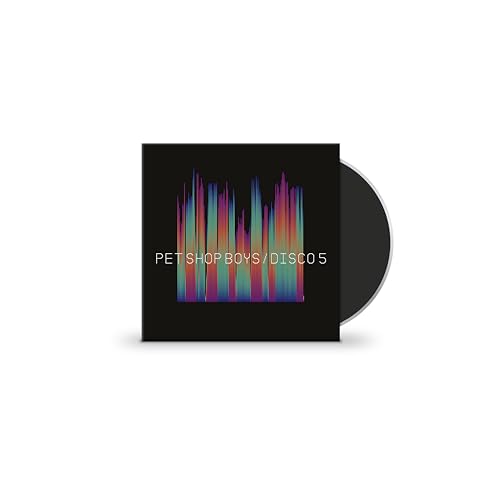
Pet Shop Boys are to release new remix compilation, Disco 5, in November, the first in their Disco series since Disco 4 in 2007.
This release features 12 remixes and collaborations, running from 2008’s Symphonic Mix of Sam Taylor-Johnson’s ‘I’m In Love With A German Film Star’ (which Pet Shop Boys also produced) to the duo’s Hot Mix of Tina Turner’s ‘Hot For You Baby’, released in April.
The set doesn’t include two post-Disco 4 remixes: of Lady Gaga’s 2009 single ‘Eh Eh (Nothing Else I Can Say)’, or of MGMT’s ‘Kids’ from 2008. However, it does include – in unremixed form – ‘Let The Music Play’, the song Pet Shop Boys produced for former Floy Joy singer Carroll Thompson.
‘Let The Music Play’ was on soundtrack of Nel Jordan’s 1992 film The Crying Game, for which Neil Tennant and Chris Lowe also produced Boy George’s title theme song. Thompson sang backing vocals on Pet Shop Boys’ first tour in 1989, but the soundtrack – released on PSB’s own Spaghetti label – has long been deleted, with the duo wanting to see ‘Let The Music Play’ available again.
Other artists remixed on Disco 5 include Primal Scream, Paul Weller, Noel Gallagher’s High Flying Birds and The Hidden Cameras. It includes Pet Shop Boys’ Extended Mix of ‘Purple Zone’, their collaborative single with Soft Cell from the latter’s *Happiness Not Included album, and their remix of Sleaford Mods’ cover of ‘West End Girls’. The only Pet Shop Boys song to be remixed is ‘Dreamland’, their duet with former Years & Years singer Olly Alexander from 2020’s Hotspot album (SDE review of that, here).
Disco 5 will be available on CD and black (or orange) double vinyl. The first three Disco albums, released in 1986, 1994 and 2003, focused on remixes of Pet Shop Boys’ own music, before Disco 4 featured their remixes for the likes of The Killers, Madonna, Yoko Ono and Rammstein, as well as their own singles ‘I’m With Stupid’ and ‘Integral’.
Pet Shop Boys have toured their hits concert since the release of both Hotspot and Nonetheless, with its next date planned for Japanese festival Rockin’ On Sonic in January.
Disco 5 is released on 21 November 2025, via Parlophone.
Since it was launched in 2018 by the BPI and ERA (the entertainment trade group also representing gaming), National Album Day has generally been seen as the poor man’s Record Store Day.
Yet there are some excellent albums being released for this year’s incarnation on 18 October. A large part of the problem is inept marketing: the NAD website has almost non-existent info on the 60 albums being released this year, so you need to search around to spot that, say, Badfinger’s second LP hasn’t been on vinyl since 1996, or that The Coral’sThe Invisible Invasion is getting its first pressing in 20 years.
This year’s theme is simply “Rock”, which encompasses a wide variety of eras and artists.
Inevitably, as with any such campaign, alongside the hidden treats labels also use National Album Day as an excuse for yet another coloured vinyl variant of freely available titles. A clear vinyl edition of Never Mind The Bollocks? How novel!
Here is SDE’s guide to all the albums, ranked into categories on how essential they are for the artists’ fans to purchase.
NEW ALBUMS
John Lee’s Barclay James Harvest – Relativity (Esoteric Antenna) The first new album since 2013’s North from Barclay James Harvest’s current incarnation. As well as standard 2LP and CD editions, a 2CD+blu-ray adds album mixer Stephen W Tayler’s 5.1 Surround Sound mix on the blu-ray. The second CD features a 2009 gig from Pennsylvania, notable as one of the final performances featuring keyboardist Woolly Wolstenholme before his death in 2010.
Mozart Estate – Tower Block In A Jam Jar(West Midlands) The second album from Felt and Denim mainman Lawrence’s new identity, available on CD/LP. It’s Lawrence’s first album since the acclaimed biography Street Level Superstar by Will Hodgkinson.
Sabaton – Legends (Better Noise) A concept album about legendary figures, the Swedish metallers’ 11th album is on CD and 2LP. Two 2CD versions add spoken-word sections about the characters described in the songs, plus either a booklet or hardback book detailing the concept.
ALSO ON CD
The Fall – The Unutterable (Cherry Red) The 21st Fall album, from 2000, is available in its first vinyl pressing since 2014 as a straight 2LP. A 4CD adds two gigs, from Newport TJs and Edinburgh Liquid Rooms, plus the album’s monitor mixes by Testa Rossa, previously released on vinyl in 2019.
FIRST TIME ON VINYL
Skin – Fake Chemical State (UMR) The second – and currently most recent – solo album by Skunk Anansie’s singer was co-written with Paul Draper of Mansun, who also co-produced first single ‘Alone In My Room’ with Skin. The rest of the 2006 album was produced by The Strokes associate Gordon Raphael.
FIRST UK PRESSING
Good Charlotte – The Young And The Hopeless (Sony) Released on vinyl in the US in 2023, here’s the first UK/European pressing of the 2002 pop-punks’ album. It features three Top 10 singles: ‘Lifestyles Of The Rich And Famous’, ‘The Anthem’ and ‘Girls And Boys’ (not a Blur cover).
FIRST PRESSING IN MANY YEARS
Badfinger – Magic Christian Music(UMR) Featuring the Paul McCartney-penned hit ‘Come And Get It’, the Apple signings’ 1970 second album hasn’t been released on vinyl since 1996. This thus marks the first vinyl edition of the album’s remaster from 2010.
Black Mountain – Black Mountain(Jagjaguwar) Although an expanded 2LP was released in 2015, this is the first time the original 1LP edition of the Canadian psychedelic outfit’s debut has been on vinyl since its release in 2005.
Hope Of The States – The Lost Riots (Sony) The cult indie noughties favourites’ debut was only given a limited vinyl release in 2004. Not only is it finally back out again, but the fourth side of this 2LP adds four B-sides selected by singer Sam Herlihy.
Ian Gillan Band – Live From The Budokan(Demon) Deep Purple’s 1972 classic Made In Japan was reissued in August. Five years after that was recorded, Ian Gillan returned to the Budokan. Originally released solely in Japan, this 2LP set is its first reissue since its original British release in 1983.
The Coral – The Invisible Invasion (Sony) The Coral have diligently been reissuing their catalogue on vinyl. Here’s the first pressing since the 2005 original for album four, produced by Portishead’s Adrian Utley and Geoff Barrow, featuring the hit ‘In The Morning’.
T’Pau – Bridge Of Spies(UMR) No, really. T’Pau’s 1987 debut album – ‘China In Your Hand’, ‘Heart And Soul’ and all – is such a charity shop staple that Universal have never bothered reissuing it on vinyl. Until now. Step away from the 3-for-£5 box and hand over your £27.99 for this brand-new red colourway.
Yes – Big Generator(Rhino) After 1983’s Trevor Horn-led 90215 was a commercial smash which divided Yes’ fanbase, they returned to Trevor Rabin’s guitar-led sound four years later. This is the first reissue outside of the States ever since.
EXPANDED/REMASTERED EDITIONS
Ghost – Meloria (Concord) The Swedish arena rockers’ third album marks its 10th anniversary with a 2LP adding the contemporaneous five-song Popestar EP. That features the hit ‘Square Hammer’, plus covers of Eurythmics ‘Missionary Man’, Simian Mobile Disco’s ‘I Believe’, Echo And The Bunnymen’s ‘Nocturnal Me’ and Imperiet’s ‘Bible’. It also includes a replica dollar bill featuring a caricature of Ghost’s then-singer Papa III.
Judas Priest – Painkiller (Sony) Rob Halford’s last album with Judas Priest until 2005, their 1990 LP (their twelfth) is newly remastered by producer Tom Allom with Matt Colton.
Amy Macdonald – A Curious Thing (UMR) The Scot’s second album, a No 4 success in 2010, gets a second disc housing a gig from Luxembourg, featuring the Deutsche Radio Philharmonie.
The Mission – Blue (Demon) Their final album before splitting for five years was released in 1996 and not reissued until 2019. For the first time on vinyl, this adds the two bonus tracks first featured on Blue’s 2011 CD reissue, ‘Perfect Sunrise’ and ‘Coming Home (Godlike Version)’. You can guess the colour of the vinyl.
New Model Army – Thunder And Consolation (Rhino) The crusty scene staples’ 1989 album adds an 11-track second LP, including B-sides, an electric version of ‘Adrenalin’ plus two live tracks.
Porridge Radio – Every Bad(Secretly Canadian) Ahead of their farewell tour in December, the Brighton collective’s 2020 debut adds five songs, including Lala Lala duet ‘Good For You’, a demo of ‘Sweet’, two Radio X session tracks and ‘Talking About It’.
Procol Harum – Procul Harum (Esoteric) Their 1967 debut is newly remastered. It adds a 12” EP featuring non-album singles ‘A Whiter Shade Of Pale’ (originally only included on the US edition) and ‘Homburg’, plus their respective B-sides.
Status Quo – On The Level (Demon) For its 50th anniversary, the album featuring Quo’s only No 1 single, ‘Down Down’ gets a 2LP. This adds B-sides, live songs and new sleevenotes featuring band interviews.
Bill Wyman – Stone Alone (Demon) The bassist’s second solo album, originally released in 1976 on Rolling Stones Records, was only first reissued in 2018. This 2LP adds four B-sides, plus the single mixes of ‘A Quarter To Three’ and ‘Apache Woman’.
FILE UNDER “REASONABLY SCARCE”
Avenged Sevenfold– The Stage (UMR) A deluxe 4LP edition in 2018 added two discs of extra tracks and live songs. Here is the first reissue of the original 2LP from 2016.
The Band – The Band(UMR) Their second album from 1969, featuring ‘The Night They Drove Old Dixie Down’, isn’t as easy to find as you’d think. So a first pressing since 2019 is welcome.
Iggy And The Stooges – Raw Power (UMR) Reissued as a 2LP in 2017 featuring both the original 1973 David Bowie mix and Iggy’s own 1997 mix, this drops Iggy’s mix and sticks to Bowie’s version for a 1LP.
The Jesus And Mary Chain – Psychocandy (Rhino) It’s nice to see their debut back on vinyl for the first time since 2017. But, considering it’s the 40th anniversary, you might expect more effort than a simple white/red spatter colourway.
Kasabian – Empire (Sony) As with its scarce original run in 2006, the previous reissue of Kasabian’s second album in 2014 was on a double 10”. Its first pressing in 11 years is also its initial 12” edition.
Kiss – Love Gun (UMR) Featuring their cover of The Crystals’ ‘Then He Kissed Me’, 1977’s sixth album was the first Kiss album to break the Top Five in the Billboard Hot 100. It was also their final album with the original line-up. Love Gun was last pressed in 2017.
Manic Street Preachers – This Is My Truth Tell Me Yours (Sony) Although it’s one of their most successful albums, you can’t always find the Manics’ 1995 chart-topper. While fans wait for Postcards From A Young Man to complete their vinyl reissue series, here’s the first pressing since 2018.
Elvis Presley – From Elvis In Memphis (UMR) While Presley’s catalogue is a baffling minefield for casual fans, his 1969 album featuring ‘Suspicious Minds’ and ‘In The Ghetto’ is one of the good ones. It’s only been reissued this century on vinyl twice before, in 2011 and 2019.
Reef – Replenish(Sony) The 30th anniversary of Reef’s debut probably deserves another outing: its only previous repress was in 2020. It reached No 9 on its original release, while its single ‘Naked’ just missed the Top 10.
Stereophonics – Language. Sex. Violence. Other? (UMR) Only its second repress and the first since 2016 for the album featuring Stereophonics’ sole No 1, ‘Dakota’. Following albums Pull The Pin and Keep Calm And Carry On only received their first vinyl reissues this year.
The Stranglers – Rattus Norvegicus (Rhino) For such an influential punk album, The Stranglers’ debut – featuring ‘Peaches’ and ‘(Get A) Grip (On Yourself)’ has been neglected on vinyl. Here’s its second repress, the first since 2018.
T.Rex – Bolan’s Zip Gun (Demon) The only T.Rex album to fail to chart in the UK, Bolan’s Zip Gun was essentially a repackaging of the previous year’s US LP Light Of Love, adding three extra songs. Previously reissued in 2015 and 2020, this is the first vinyl repress to recreate the 1975 original’s die-cut sleeve.
UFO – Phenomenon (Chrysalis) Reissued in 2011 and 2019, the metallers’ first album with new guitarist Michael Schenker after he joined from Scorpions was also UFO’s first for a major label. This features new sleevenotes by Michael Hann.
WHY IS THIS BEING REISSUED AGAIN?
Allman Brothers – Idlewild South (UMR) The fourth recent vinyl reissue for the 1970 favourite, most recently repressed in 2022. This pressing is on baby blue vinyl.
Architects – Lost Forever // Lost Together and Holy Hell (Epitaph) An ambassador for this year’s National Album Day, and no wonder: the Brighton metalcore band specialise in endless different vinyl editions for each album. Here are the 20th and 28th different colourways of their 2013 and 2018 albums respectively.
Dinosaur Jr – Sweep It Into Space (Jagjaguwar) J Mascis’ collective issued 10 different vinyl editions of their 2021 album. This one is “opaque light purple blast”.
Hole – Live Through This (UMR) Only reissued two years ago. This version is purple.
Iggy Pop – The Idiot (UMR) Also only reissued in 2023. Orange, since you ask.
Jimi Hendrix – Axis: Bold As Love (Sony) It’s a classic album but, like so much of Hendrix’s catalogue, Axis: Bold As Love has been reissued plenty of times already. Here’s an electric orange variant.
Liam Gallagher – As You Were (Warner) Competing with the feeble (What’s The Story) Morning Glory? 30th anniversary edition for this year’s most pointless Oasis-related release, a zoetrope LP with new artwork is the seventh vinyl edition for an album released in 2017.
Lou Reed – Transformer (Sony) A black-and-white spatter edition of an album now on its ninth vinyl pressing since 2009.
Megadeth – The Sick, The Dying And The Dead (UMR) Blue and green discs for a double album only released in 2022.
Patti Smith – Horses (Sony) The week before National Album Day, Horses’ 50th anniversary edition is released. That’s a 2LP. The National Album Day edition is a 1LP. Maybe you don’t want the extras, but surely you’d have already bought it when it was reissued on vinyl in 2007, 2009, 2015, 2018, 2019 or 2021?
Queen – A Night At The Opera (EMI) It’s rather bold of Queen to specify “50th anniversary edition” for this clear vinyl, considering their fourth album is so ubiquitous.
Sex Pistols – Never Mind The Bollocks (UMR) Go away.
Teenage Fanclub – Grand Prix (Sony) Green and black marble for an indie staple that’s not exactly out of print.
The Rolling Stones – Their Satanic Majesties Request (UMR) OK, it’s the first zoetrope version, but let’s not encourage those. This was only reissued on vinyl last year, and it didn’t need that either.
The Vaccines – What Did You Expect From The Vaccines?(Sony) White vinyl for the indie perennial, most recently on vinyl for its 10th anniversary in 2021.
The Verve – A Northern Soul (UMR) “Brick red” for an album repressed for the third time only two years ago. You can’t imagine Richard Ashcroft is too happy, considering his new solo album Lovin’ You is out just a fortnight later.
Yeah Yeah Yeahs – Cool It Down (Secretly Canadian) The trio’s first album for nine years didn’t exactly set the world alight when it was released in 2022. Maybe this blue colourway will send it hurtling up the charts.
The Blue Aeroplanes are to release their second ‘Best Of’ compilation, in 2025, to mark their 40th anniversary.
Released next month, Outsider Art: The Other Best Of 1985-2025 follows the Magical Realism compilation from January. It features 19 songs on double vinyl and single CD, with the 2LP set coming with a bonus seven-inch single housing two additional tracks: a first vinyl release for ‘Tyger Tyger Burning Bright!’, originally on the 2024 CD compilation Staring At The Future, which was limited to 100 copies, plus a new live version of ‘Lover And Confidante’.
Outsider Art’s 19 songs feature five previously unreleased tracks: a newly recorded take on 1984’s ‘Gunning The Works’, plus live versions of ‘Control Of Embassies’, ‘What It Is’, ‘Winter Sun’ and ‘Breaking In My Heart’. In addition, three songs have been unavailable on vinyl before: ‘Cavaliers P10’ and ‘Cavaliers P12’ from 2000’s Cavaliers And Roundheads and ‘Bright Star Catalogue’ from 2006’s Altitude.
The compilation has been remastered by Phil Kinrade at AIR Studios, with vinyl and CD both featuring sleevenotes, lyrics and photos from the band’s archives.
Outsider Art: The Other Best Of 1985-2025 is released on 31 October via Chrysalis.
Thompson Twins are to release a new compilation, Industry And Seduction: A Thompson Twins Collection, in October. It’s the first ‘Best Of’ to be approved by the band, with Tom Bailey and Alannah Currie selecting the tracklisting and Joe Leeway designing the artwork, with Currie.
In limited edition deluxe 3CD form, the compilation includes 40 songs from all eras of the band, including Bailey and Currie’s final albums when they changed their name to Babble before splitting in 1998. The first CD – remastered by Frank Arkwright at Abbey Road – features 20 of their best-known tracks, while CD2 comprises 20 of their own favouritesongs, including the B-sides ‘Passion Planet’ and ‘Beach Culture’, as well as their cover of Cole Porter’s ‘Who Wants To Be A Millionaire’ from 1990’s Red, Hot And Blue Aids charity compilation.
Having been released on vinyl for Record Store Day, the third CD is the audio from the 1984 VHS concert film Into The Gap Live, recorded at Del Mar Racetrack in California. However, there is no DVD or Blu-Ray element in the package, with Into The Gap Live remaining a VHS-only release (although there was a Japanese laserdisc), yet to be reissued in the 41 years since it came out.
Industry And Seduction is also available in single CD and 2LP coloured vinyl editions, which both replicate the 20 songs from CD1 of the 3CD. The package also includes sleevenotes (by this writer), with Bailey and Currie’s full 6,000-word new interviews discussing their whole career in the 3CD set or a 1,500-word cut-down interview in the single CD.
The compilation was first mooted when Bailey and Currie discussed the 40th anniversary reissue of Into The Gap in January with SDE. There have been many previous compilations, including ones in 1990 and 2003, none of which Thompson Twins oversaw.
While the band didn’t oversee 1990’s Greatest Hits, the new compilation includes a song first released on that hits set, ‘Roll Over’, which is from the original self-produced sessions in Paris for what became Here’s To Future Days, before Nile Rodgers produced the eventually released version of Here’s To Future Days in New York.
Industry And Seduction is notable for not including any songs from 1987’s Close To The Bone, while only one song each are included from Set and Babble’s final album, Ether. Tom Bailey has recently supported The Human League on tour, while Alannah Currie continues to work as an artist in New Zealand.
Industry And Seduction: The Best Of is released by BMG in 3CD, 1CD and 2LP editions on 31 October 2025
Everything But The Girl are to release a new career-spanning compilation on their own Buzzin’ Fly label in November.
The Best Of comes as a single CD or 2LP vinyl (with audio newly mastered by Miles Showell at Abbey Road Studios) and features songs from 1982’s ‘Night And Day’ (standalone debut single) to ‘Nothing Left To Lose’ and ‘Run A Red Light’ from in 2023. It’s their first such compilation since 1996’s identically titled The Best Of, which is now updated to include songs from 1999’s Temperamental, 2023’s comeback album Fuse, the mash-up single ‘Tracey In My Room’ from 2002 remix compilation Like The Deserts Miss The Rain and their cover of Antonio Carlos Jobim’s ‘Corcovado’ from 1996 charity compilation Red Hot + Rio, later released as a single in 2002. The duo’s first singles compilation, Home Movies: The Best Of, reached No 5 in 1993.
Tracey Thorn and Ben Watt explained The Best Of is designed to start with their clubbier songs, before ending on their more contemplative work. Thorn said: “We always liked albums that had a fast side and a slow side, so we thought we’d start with the bangers and wind down with the ballads.”
Watt added: “It also makes the album run backwards in time. It gives you a sense of clubland back to bedsit, a journey that to us feels very real. And at the end, we pair the modern-day in Run A Red Light, with how we started on Night And Day.”
Songs missing from the compilation include their Top 20 version of Mickey And Sylvia’s ‘Love Is Strange’ from 1992’s Covers. The only song from Temperamental is the album track ‘No Difference’, with that album’s singles ‘The Future Of The Future (Stay Gold)’, ‘Five Fathoms (Love More)’ and the title track all absent. Similarly, there are no songs from their second or sixth albums, Love Not Money and Worldwide.
After releasing Like The Deserts Miss The Rain, Thorn and Watt focused on their family and respective solo careers, before returning with Fuse 21 years later. They have since resumed playing live, albeit in a low-key fashion, with a five-night residency in June at the 300-capacity London Moth Club, where they also played earlier this month.
The Best Of is released on 14 November 2025, via Buzzin’ Fly/Chrysalis.
Pre-order The Best Of formats from the official EBTG shop
Soft Cell’s 1983 album The Art Of Falling Apart is to receive a 6CD reissue in October, following the format of multiple versions of each song established with last year’s similar 6CD edition of the duo’s 1981 debut, Non-Stop Erotic Cabaret.
With the remix album Non-Stop Ecstatic Dancing (reissued in June) following in 1982, Marc Almond and Dave Ball were determined to torpedo their pop career with their second full LP. It reached No 5, but its singles ‘Where The Heart Is’ and ‘Numbers’ both missed the Top 20, whereas predecessors ‘Tainted Love’, ‘Say Hello Wave Goodbye’, ‘Torch’ and ‘What!’ had all made the Top Five.
The original album (“freshly remastered by Barry Grint”) is joined on the first CD by the songs ‘Martin’ and ‘Hendrix Medley’, initially given away on a 12” with early copies of the album: ‘Hendrix Medley’ comprises covers of Jimi Hendrix’s ‘Hey Joe’, ‘Purple Haze’ and ‘Voodoo Chile’. The CD is rounded off with the B-sides ‘It’s A Mug’s Game’ and ‘Barriers’, plus a US mix of ‘Loving You, Hating Me’.
CD2 features extended versions of all eight album songs and its B-sides. Most of these were remixed around the original album, but ‘Kitchen Sink Drama’, ‘Baby Doll’ and the title track were mixed by Dave Ball around Soft Cell’s reunion shows in 2018.
The third CD features external remixes, by the likes of The Hacker, Nitewreckers, Atomizer, Dark Poets and Marcas Lancaster, as well as Ball’s group The Grid. It also includes a new vocal version of Soft Cell’s cover of Suicide’s ‘Ghost Rider’. Their original instrumental cover, a fan club-only release, is included among the instrumental and dub versions on CD5.
6CD box set version of Soft Cell’s The Art of Falling Apart
Demos, edits and the audio of TV appearances features on CD4, with ‘Numbers’ and ‘Heat’ taken from The Oxford Road Show; ‘Martin’, ‘Where The Heart Is’ and ‘The Art Of Falling Apart’ from The Tube; and ‘Ghost Rider’ from The Switch.
CD6 has live versions of each song from the album, plus ‘Martin’, ‘Hendrix Medley’, the two B-sides and ‘Ghost Rider’. Most of these are taken from Soft Cell’s reunion show at London O2 from 2018, the full concert of which was released as the live album Say Hello Wave Goodbye: The O2 London, in 2019. The exceptions are ‘Kitchen Sink Drama’, from Hammersmith Apollo in 2021 – a gig itself released as Non-Stop Erotic Cabaret And Other Stories – ‘Hendrix Medley’ from Los Angeles Palace Theater in 1983 and three songs from Hammersmith Palais in 1983: ‘It’s A Mug’s Game’, ‘Ghost Rider’ and a second version of ‘Numbers’, in addition to its O2 rendition.
In addition to the 6CD version, there’s a 2CD deluxe with the second disc offering a mix of new/old 12″ versions plus a few live tracks. The 2LP coloured vinyl has just six seven-inch versions added to the bonus LP.
Despite its cult status, The Art Of Falling Apart hasn’t received an expanded reissue before, though a 2LP vinyl version adding the original ‘Martin’/’Hendrix Medley’ 12” was released in 2016. The 6CD package also includes a 60-page hardcover book with sleeve notes by journalist Adrian Thrills, featuring new interviews with Almond and Ball.
After 2022 comeback album *Happiness Not Included returned Soft Cell to the Top 10, the duo recently announced they’re working on a new album, to be titled Danceteria, for release next year. Almond has also signed a two-album solo deal with Cherry Red, who have reissued much of his existing catalogue.
Soft Cell’s 6CD edition of The Art Of Falling Apart will be released on 31 October 2025, via UMR.
Pulp are to reissue Different Class next month, 30 years to the week since the original album was released.
The new 2CD and 4LP edition adds Pulp’s full headline performance from Glastonbury in 1995, four months before the album was released. It’s the first time their entire Glastonbury show has been issued, with ‘Common People’ the only previously issued song from the performance.
Overseen by Jarvis Cocker and Mark Webber, the main album has been remastered by Geoff Pesche at Abbey Road, who mastered the original version in 1995. Although Different Class has been repressed on vinyl regularly since 2011, the new 4LP set is the first time the original studio album has been pressed on two LPs, rather than just one, despite its 53-minute runtime.
Cocker said of the new pressing: “This 45rpm double album version of Different Class will make it sound a whole lot better. We were obsessed with the fact that this was our ‘Pop’ album. (We had finally achieved some ‘popularity’ when ‘Common People’ was a hit.) As everyone knows, all pop albums have 12 songs on them: six tracks per side.
“Only problem: this took the running time of the record to 53 minutes. We were told this would compromise the audio quality of the vinyl record – but we were more bothered about not compromising the quality of our Pop Dream. Now, 30 years later, we are finally ready for Different Class to be heard in all its glory. Different class indeed.”
30th anniversary 4LP set of Pulp’s Different Class
The vinyl and CD editions both include a 28-page booklet featuring new interviews with the band discussing the making of the album, plus previously unseen photos by original sleeve photographers Rankin and Donald Milne.
Housed in a slipcase, the 4LP set also recreates the original 1995 “Choose your own sleeve” design, featuring six double-sided sleeve inserts of alternative cover options.
Initially a B-side of ‘Mis-Shapes’/’Sorted For Es And Wizz’, the 1995 Glastonbury performance of Common People was also previously part of Different Class’ only previous expanded reissue, when a 2CD was released in 2006. Its second CD housed 11 additional tracks, including demos of four unreleased songs, plus Mile End from the soundtrack of Trainspotting, the B-sides PTA and Ansaphone, a cover of Whiskey In The Jar and Nick Cave’s remix of Disco 2000.
However, UMR’s new expanded edition drops all pre-existing bonus material in favour of the Glastonbury performance. A third CD could have kept the 2006 bonus material, plus potentially additionally released B-sides from the era, such as Moloko’s remix of F.E.E.L.I.N.G.C.A.L.L.E.D.L.O.V.E and the extended version of Live Bed Show, while a DVD/Blu-Ray could have included the BBC’s footage of Glastonbury 1995, videos of the album’s five singles and TV performances.
30th anniversary 2CD set of Pulp’s Different Class
Cocker’s statement on the reissue concluded: “The Glastonbury performance in June 1995 will always be the most significant concert of Pulp’s career. Three weeks after Common People hit No 2 in the national charts, the band filled in for The Stone Roses at the last minute. We played Sorted For Es & Wizz, Mis-Shapes and Disco 2000 – all receiving their live debut. This is first time the whole concert (including the long, drone-based intro) has been made available. Your chance to relive an historical moment.”
Pulp’s tour for their reunion album More, which made No 1 in June, reaches the US on September 4. The band’s final scheduled show is at Hollywood Bowl on 26 September.
Different Class is released on 24 October 2025, via UMR/Island.
Sparks are to release a 3CD compilation based on their two albums released in 1975 and 1976.
The functionally titled 1975-1976 features 1975’s Indiscreet and the following year’s Big Beat in their original running order on the first two discs, with the third disc comprising nine bonus tracks from the era. Both albums are also being reissued separately on vinyl, both as single LP coloured vinyl and single LP picture discs.
1975-1976 is housed in seven-inch packaging, featuring a booklet containing original release details, plus sleeve notes by Simon Price. Its extra tracks comprise the B-sides ‘Profile’, ‘England’ and ‘The Wedding Of Jacqueline Kennedy To Russell Mael’; Sparks’ cover of The Beatles’ ‘I Want To Hold Your Hand’ which was released as a standalone single in 1976; the two songs recorded for the Big Beat sessions which first surfaced on that year’s The Best Of compilation: ‘Gone With The Wind’ and ‘Tearing The Place Apart’; a live recording of ‘Looks, Looks, Looks’ originally released on the 2006 “21st Century Edition” of Indiscreet; and finally two songs – ‘Intrusion/Confusion’ and ‘Looks Aren’t Always Enough’ – initially available on the 2006 “21st Century Edition” of Big Beat.
Indiscreet was Sparks’ first album produced by Tony Visconti, reaching No 18 and spawning the Top 30 singles ‘Get In The Swing’ and ‘Looks, Looks, Looks’.
Although both albums have been reissued on vinyl – Indiscreet in 2015 and Big Beat in 2017 – the new compilation marks the first time they’ve been released with bonus tracks since those 2006 21st Century editions. 1975-76 continues Sparks’ 50th anniversary compilations, which began with last year’s 3CD 1974, similarly rounding up the extras of the albums Kimono My House and Propaganda.
Indiscreet was Sparks’ first album produced by Tony Visconti, reaching No 18 and spawning the Top 30 singles ‘Get In The Swing’ and ‘Looks, Looks, Looks’. Big Beat saw the Mael brothers return to America, leaving their backing band behind. It’s produced by Rupert Holmes and Jeffrey Lesser: Holmes later had a hit with ‘Escape (The Pina Colada Song)’, while Lesser is now a TV composer, who has won four Emmys for his work on Nickelodeon cartoon Wonder Pets.
Since the release of 1974, Sparks saw new album Mad! reach No 2 in May, beating their highest chart position, previously achieved by Kimono My House in 1974.
The 3CD 1975-76 and vinyl reissues of Indiscreet and Big Beat are released on 10 October 2025, via Edsel/Demon Records.
Matt Berry is to release a vinyl box set of his recent album, Heard Noises, featuring 10 remixes and four additional songs from the sessions.
Berry’s 13th long-player, Heard Noises became his first to make the Top 30 on its release in January, reaching No 22. Guests on the album include Kitty Liv of Kitty, Daisy And Lewis, Sax Appeal bassist Phil Scragg, Eric D Johnson of Fruit Bats and Orange Is The New Black actor Natasha Lyonne.
The 2LP+12”+7” picture disc box set features a remix LP, with reworkings by Sean Ono Lennon, Andy Votel, Tennis, ex-Skint Records head Midfield General, Rodeo Clown, Brian Kehew, Project Gemini and – in their first remix for 25 years – Moog Cookbook, aka Brian Kehew and Roger Manning. Further remixes by Ono Lennon and Project Gemini are included on the box set’s seven-inch picture disc.
The 12-inch single includes a previously unreleased cover of Beach House’s ‘Lover Of Mine’, featuring vocals by Cecilia Fage of folk duo Cobalt Chapel, plus three songs which have had a limited release: ‘Crucifix Lane’, from Acid Jazz’s compilation Totally Wired, and ‘Snake Organ’ and ‘Screaming Walls’, both originally featured on Heard Noises’ HMV-only CD edition.
The main album has been mastered at half-speed by Miles Showell. It’s in a redesigned gatefold sleeve. Limited to 1,000 copies, the box also features a 64-page hardcover book containing Berry discussing the album plus photos by his regular collaborator Ben Meadows.
Other memorabilia includes two posters which advertise the album’s cassette and eight-track cartridge variants, and a promotional photo personally signed by Matt Berry. The box has a lift-off lid, with the cover a new photo of Berry from the original album sleeve sessions.
The new edition is Berry’s first box set since his first decade with Acid Jazz was marked with the career-spanning Gather Up in 2021, which he discussed with SDE.
The box set edition of Heard Noises is released on 21 November 2025, via Acid Jazz.
The Boomtown Rats are to release a 2CD and 2LP ‘Best Of’ compilation to mark 50 years since the band first formed.
Out in September, The First Fifty Years: Songs Of Boomtown Glory features 27 songs on CD and 24 on vinyl, with ‘Keep It Up’, ‘House On Fire’ and ‘Tonight’ the additional CD-only tracks. The compilation spans all seven of The Boomtown Rats’ albums, including 2020’s comeback Citizens Of Boomtown, but there is no new material.
It’s the first official greatest hits since Back To Boomtown: Classic Rats Hits reached No 35 in 2013. That coincided with the band’s reunion, having split in 1986, almost exactly a year after Live Aid. Citizens Of Boomtown has been their only album of new songs since, though they continue to regularly play live: a 50th anniversary tour runs from 10 October to 15 November.
The tracklisting is notable for featuring six songs from Citizens Of Boomtown, compared to just two each from Mondo Bongo (1981) and V Deep (1982), albums the band were known to be dissatisfied with before rallying on 1984’s In The Long Grass.
The singles not included on the new compilation are ‘Go Man Go’ from Mondo Bongo; ‘Never In A Million Years’ and ‘Charmed Lives’ from V Deep; and ‘A Hold Of Me’ from In The Long Grass. Of those, only ‘Never In A Million Years’ reached the Top 75, albeit a lowly No 62.
The First Fifty Years: Songs Of Boomtown Glory will be released on 19 September 2025, via UMR/Mercury.
Nick Heyward is releasing a 4CD box set of the three albums he made during the 1990s for Epic and Creation: From Monday To Sunday, Tangled and The Apple Bed. The compilation, with the self-explanatory title The Epic And Creation Years 1993-98, adds demos of several unreleased songs on each album, as well as the usual B-sides and live versions.
Following his sole album for Reprise, 1988’s I Love You Avenue, Heyward waited five years before releasing his next record. From Monday To Sunday in 1993 was the first of Heyward’s two albums for Epic and was also his first self-produced LP. Bass is by ex-Haircut 100 bandmate Les Nemes, with trumpet by Steve Sidwell.
Tangled was released by Epic in 1995. Its second single, ‘Rollerblade’, returned Heyward to the Top 40 for the first time since ‘Warning Sign’ in 1984. Tangled featured bass by Ride guitarist Andy Bell, five years before Bell joined Oasis, with other guests including Julian Cope’s guitarist Donald Ross Skinner, Caravan viola player Geoffrey Richardson and, duetting on ‘Believe In Me’, Heavenly singer Amelia Fletcher, formerly of Talula Gosh. Tangled, which made No 93, was the only one of the three albums on the box set to reach the Top 100.
For The Apple Bed in 1997, Heyward joined Creation, whose boss Alan McGee was a particularly big admirer of From Monday To Sunday’s single ‘Kite’. As with its two predecessors, The Apple Bed is self-produced.
All three albums were previously reissued by Cherry Red in 2010-11. The box set, released by Edsel, features the Cherry Red bonus content, plus additional unreleased songs on each album.
‘Kite’, from From Monday to Sunday
From Monday To Sunday newly adds demos of unreleased songs ‘The Best (Hey There I Love You)’ and ‘Jubilee Sunshine’, plus the “Revisited” versions of previous solo singles ‘Blue Hat For A Blue Day’ and ‘Whistle Down The Wind’, which originally featured on the B-side of ‘He Doesn’t Love You Like I Do’.
The bonus content on Tangled now stretches across two CDs. New material added since its 2011 reissue includes covers of The Beatles’ ‘Dr Robert’ and The Jam’s ‘Sounds From The Street’, recorded at a show in Bolder, Colorado, in February 1994. It also adds demos of album tracks ‘Kill Another Day’, ‘Carry On Loving’, ‘Mr Shirt And Tie’ and ‘London’, alongside ultimately unreleased songs ‘Secrets’, ‘Some Holiday’, ‘Sue Washes Another Dish’ and ‘I Don’t Feel Like It Anymore’, plus an instrumental demo of ‘Secrets’, entitled ‘Fan Mail’.
The Apple Bed adds just one unreleased track from its 2011 reissue, a demo of ‘Dear Miss Finland’ entitled ‘Mad About You’.
Each of the three albums will also be available on coloured vinyl. It’s the first time Tangled and The Apple Bed will be out on the format, while From Monday To Sunday has only previously been on vinyl via a Dutch pressing in 1993.
Following The Apple Bed, Heyward released “audio play” Open Sesame Seed in 2001 and 2006’s duets album The Mermaid And The Lighthouse Keeper with his then-partner, actress India Dupre, before returning to regular pop with 2017’s Woodland Echoes.
Haircut 100 reformed in 2023 and have toured regularly since. A new album, their first with Heyward since Pelican Westin 1982, is due out next year. It will be produced by Heyward’s son, Oliver Heyward, who co-produced Woodland Echoes. A single, ‘The Unloving Plum’, was released last year.
The Epic And Creation Years 1993-98 is released by Edsel on 28 November 31 2025. Exclusive SIGNED editions of the 4CD set (limited to 1,000 units) are available via Amazon UK.
Compare prices and pre-order
Nick Heyward
The Epic and Creation years 1993 - 1998 - 4CD Signed edition
The Alan Parsons Project’s second album I Robot is to be reissued in a variety of formats, including a 4CD+Blu-Ray+LP boxset. The album has been newly remastered by Miles Showell.
Originally released in 1977, I Robot is based on Isaac Asimov’s science-fiction Robot series, which explored themes of artificial intelligence. The album was a Top 10 success in the US, reaching No 9, and was one of the duo’s three albums to make the Top 30 in the UK, alongside 1982’s Eye In The Sky and Ammonia Avenue from 1984.
Vocalists on I Robot include Steve Harley, Allan Clarke, Lenny Zakatek, Peter Straker, Jaki Whitren and Jack Harris, with regular Alan Parsons Project sessioners Ian Bairnson on guitar and drummer Stuart Tosh, both also of Pilot.
The box set features 70 bonus tracks across three CDs. Mainly comprising studio outtakes, it also includes B-sides, single edits plus UK and US radio adverts for the album. A single CD edition adds four of those bonus tracks, while a single LP half-speed remaster by Miles Showell is also available, in black and clear vinyl, with the official shop offering an exclusive ‘artic pearl’ coloured vinyl. All vinyl editions are hi-res transfers from “rarely played” duplicate analogue tapes run off on a second master machine at the time, by Eric Woolfson.
The I Robot limited edition super deluxe box set (click image to enlarge)
As well as the bonus tracks, the box comprises a Blu-ray housing a new Dolby Atmos and 5.1 Surround Sound remix of I Robot by Alan Parsons, plus the video of the single ‘I Wouldn’t Want To Be Like You’ and an archive interview with Eric Woolfson discussing the album. The LP included in the boxset is pressed on two 45rpm records – the vinyl edition available separately is a regular 33rpm LP.
Memorabilia in the boxset is a large format hardcover book featuring interviews with Parsons, the singers and musicians, lyrics, commentary on the bonus tracks and interviews with the late Woolfson’s family. It also houses a replica of the original 1977 press folder, which features an A1-sized poster, a band biography, press photo, press release and postcard.
The Alan Parsons Project went on to make eight further albums, before splitting after 1987’s Gaudi. Their unreleased contractual obligation album The Sicilian Defence, recorded in 1979, was issued in 2014.
I Robot will be reissued on 17 October 2025, via Cooking Vinyl. The first 500 box sets purchased via the official shop come with a print signed by Alan Parsons.
Supertramp are to reissue half-speed remastered vinyl editions of their commercial breakthrough album, Crime Of The Century, and its follow-up, Crisis? What Crisis?
After their self-titled debut in 1970 and its successor, Indelibly Stamped Supertramp veered away from their prog roots to mainstream acclaim on 1974’s Crime Of The Century thanks to the ‘Dreamer’ single, with the album reaching No 4 in the UK and No 38 on the Billboard Hot 100. A year later, Crisis? What Crisis? was less successful in the chart, but has since been named Roger Hodgson’s favourite Supertramp album.
Both albums have been remastered at half-speed by Miles Showell at Abbey Road, overseen by the band and original co-producer Ken Scott. They each maintain their original tracklisting.
Crime Of The Century is no stranger to being remastered. It was first remastered in 1999, then again in 2002, 2008, 2014 and 2019. The 2014 remaster saw its only expanded 2CD reissue (and a 3LP vinyl box), with the sole extra a 1975 Hammersmith Odeon concert.
Crisis? What Crisis? has been relatively neglected, having only been previously remastered in 2003 and 2008. It has yet to receive an expanded CD edition.
Since their final tour in 2011, which didn’t feature Hodgson, Supertramp have endured a messy royalties case. Dougie Thompson, John Helliwell and Bob Siebenberg sued main songwriters Hodgson and Rick Davies after they stopped receiving royalties in 2021. Davies settled out of court in 2023, while Hodgson won his case in court a year later.
Crime Of The Century and Crisis? What Crisis? are reissued on 29 August 2025 via UMR.


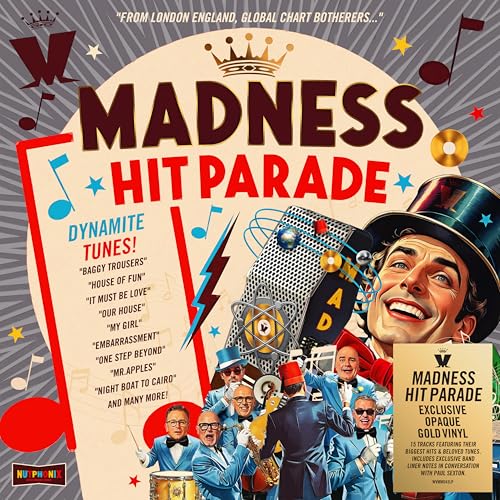

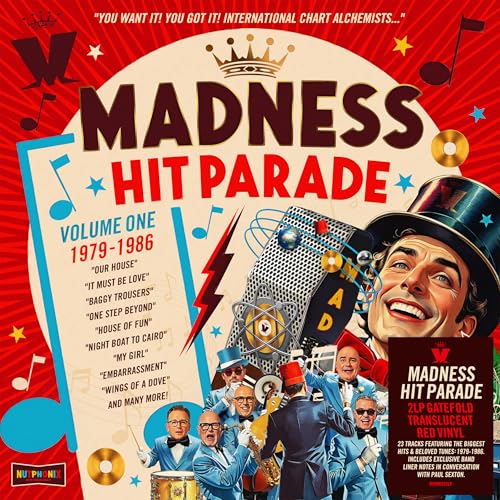


 Reviews