Suede will release their 10th studio album, Antidepressants, in September.
The new album was “recorded live” with the band’s long-time producer Ed Buller and frontman Brett Anderson describes it thus: “If Autofiction was our punk record, Antidepressants is our post-punk record. It’s about the tensions of modern life, the paranoia, the anxiety, the neurosis. We are all striving for connection in a disconnected world. This was the feel I wanted the songs to have. The album is called Antidepressants. This is broken music for broken people.”
“This is a widescreen and ambitious record”, says bass player Mat Osman. “It’s a big stage record and it’s taking it up a gear”. The recording sessions took place Belgium’s ICP Studios, London’s RAK, Sleeper Sounds, and RMV in Sweden.
You can preview the new album by listening to ‘Disintegrate’ the first ‘single’ from the album which is below.
The new album will be released on CD, cassette and various vinyl editions (including a store-exclusive picture disc). The deluxe CD (in a “hessian slip case”) features three bonus tracks and there’s also a limited edition ‘flip-top’ box set, which contains black vinyl, the deluxe CD and “a patch, fanzine & tote bag”.
In conjunction with the new album, Suede are announcing Suede Takeover – a special concert series over four nights hosted in different venues across London’s Southbank Centre throughout September 2025. The performances will see Suede present their live show “in completely new ways”. The first two dates on 13 and 14 September (at the Royal Festival Hall) will be concerts of “loved classics, hits and brand new music”, while on the 17 September will see the band play the Purcell Room for an “unusual and intimate off-mic evening”. The residency closes on 19 September in the Queen Elizabeth Hall, with Suede’s first-ever full orchestral headline show, in collaboration with the Paraorchestra.
Antidepressants will be released on 5 September 2025 via BMG.
Almost two years after Part 2 of The Kinks‘ “career-defining trilogy”, The Journey – Part 3 is set for release on vinyl and CD. This final chaptercovers their RCA/Arista era spanning 1977 to 1984, and, again, has been compiled by the band.
The first disc of both the 2LPvinyl and 2CD sets hosts 11 classic tracks and hits from this era, including ‘Come Dancing’, ‘Destroyer’, ‘Living On A Thin Line’ and more. These have been remastered from the original quarter-inch production master tapes.
The Journey – Part 3 as a 2CD set (click image to expand)
The second disc features never-before-heard recordings, discovered in the Konk archive, including the band’s Royal Albert Hall show from 11 July 1993. “As far as performances go, it was a high point achievement of The Kinks,” Dave Davies said of the show. This audio for this set is taken from what is described as “a simple desk mix”.
Both formats offer track-by-track commentary by the band and new sleeve notes from Phil Alexander. The Journey – Part 3 will be released on 11 July 2025 via BMG
Luke Haines and Peter Buck are to issue a third collaborative studio album, in July.
Going Down To The River… To Blow My Mind follows 2020’s Beat Poetry For Survivalists and 2022’s All The Kids Are Super Bummed Out with the latest being called “the third in the psychiatric trilogy” of albums from the pair of musicians who are better known for their previous bands (The Auteurs & Black Box Recorder; and R.E.M., respectively).
Haines and Buck struck up a friendship and later a professional relationship after Peter bought one of Luke’s paintings online. The new album was recorded in Portland Oregon, in what is described as “USA foot-down-to-the-floor-throttle-out style”.
The 13-track long-player includes the songs ‘The Pink Floyd Research Group’, ‘Me and the Octopus’ and ‘Radical Bookshop’. It will be released on vinyl and CD on 25 July 2025, via Cherry Red. Luke Haines and Peter Buck will be on tour in the UK in August.
Oasis will reissue their 2009 best of Time Flies… 1994 – 2009 next month.
The collection features all 26 singles and was originally released as a 2CD set, a 2/3CD+DVD package and a 5LP vinyl box set. The vinyl now commands very high prices on the secondary marketplace.
New 4LP vinyl edition features remastered audio (click image to enlarge)
The new reissues feature remastered audio and on vinyl the audio is squeezed onto four LPs, this time, not five. This will feature the ‘hidden’ track ‘Sunday Morning Call’ and it should be pointed out that this quadruple LP set is good value, priced similarly to the 2LP reissue of George Harrison’s Let It Roll best of (on some shops).
The 4LP black vinyl box comes with a limited edition print. The other format is 2CD the original of which is still very easy to pick up cheaply, so all you’re really getting this time around is the remastered audio which is no longer in a jewel case.
Time Flies… 1994 – 2009 will be reissued on 13 June 2025 via Big Brother Records.
NOW That’s What I Call Music will issue the fourth in their Vault series, with a release that focuses on the year 1981.
These collections are about singles that are “lesser compiled” mostly because either they were not big hits; they missed the chart entirely, or were big hits across the Atlantic but not in the UK. The formats remain the same, with deluxe and standard 4CD formats (82 tracks) and a 3LP set which is pressed on translucent purple vinyl (45 tracks).
CD 1 includes Heaven 17’s ‘(We Don’t Need) This Fascist Groove Thang’ (well known, but not a hit), ‘Never Gonna Cry Again’ from Eurythmics‘ excellent, but hit-free, first album In The Garden, Debbie Harry’s ‘The Jam Was Moving (from Kookoo)’, ‘Paint Me Down’ from Spandau Ballet’s second album Diamond, a single which fared poorly (No 30 in the UK) when compared to its predecessor [‘Chant No. 1 (I Don’t Need This Pressure On)’ made the top 5], Generation X’s ‘Dancing With Myself’ and Adam & The Ants’ ‘Young Parisians’.
The 4CD deluxe edition comes in hardcover book packaging
The second disc features rock acts like Bruce Springsteen (‘The River’), John Cougar Mellencamp (‘Ain’t Even Done With The Night’), Rush (‘Tom Sawyer’), Rainbow (‘Can’t Happen Here’) and Thin Lizzy (‘Trouble Boys’) and later heads into a soul/R&B zone with tracks from Sister Sledge, Commodores, Rick James, Chaka Khan and Evelyn “Champagne” King.
CD 3 goes a bit ‘indie’ and includes songs from The Cure, New Order, The Creatures, Echo & The Bunnymen, The Teardrop Explodes, The Stranglers, The Clash and more.
Vault ’81’s final CD features ‘lesser compiled’ tracks from the likes of Pretenders, Pat Benetar, REO Speedwagon, Rick Springfield, Jim Steinman, Kim Carnes, Dolly Parton, Diana Ross and Christopher Cross.
Now Yearbook Vault ’81 will be released on 13 June 2025.
Compare prices and pre-order
Various Artists
The Vault 1981 - 4CD deluxe hardcover book edition
George Harrison’s 2009 compilation, Let It Roll, will be issued on vinyl for the first time, in July.
This 19-track collection spans George’s post-Beatles solo career including tracks from the albums All Things Must Pass, Living in the Material World, Cloud Nine and others. Three Beatles tracks also feature, as performed live during The Concert for Bangladesh at Madison Square Garden in 1971.
2LP set of Let It Roll (click image to enlarge)
SDE’s personal favourite is ‘Cheer Down’, which originally featured on the Lethal Weapon 2 soundtrack in late 1989 and almost simultaneously included in George’s Best of Dark Horse 1976–1989 compilation. It was also released as a single, but failed to chart.
This is a 2LP set pressed on 180g black vinyl, packaged in a gatefold sleeve. It’s released on 11 July 2025, via BMG.
1989 hip-hop classic in Atmos, 5.1 and Stereo • Bonus tracks! • Quick pre-order
De La Soul’s 1989 album, 3 Feet High and Rising, is now available to pre-order as an SDE exclusive blu-ray audio.
3 Feet High and Rising was the debut studio album from the renowned hip hop trio, and the first of three full length collaborations with producer Prince Paul, which would become the critical and commercial peak of both artists.
Sampling artists as diverse as Hall & Oates, Steely Dan and The Turtles, 3 Feet High and Rising is often viewed as the stylistic beginning of 1990s alternative hip hop (and especially ‘jazz rap’). The album was chosen by the US Library of Congress to be added to the National Recording Registry for its cultural significance and general excellence.
Containing the singles ‘Me Myself And I’, ‘The Magic Number’, ‘Buddy’ and ‘Eye Know’, the album has been hailed as a hip hop classic and is also listed on Rolling Stone’s 500 Greatest Albums of all time.
The album is now available for the first time on blu-ray audio via this limited edition release, #43 in Super Deluxe Edition’s SDE Surround Series.
The blu-ray features Dolby Atmos, 5.1 and Stereo mixes created by Rich Keller and overseen by De La Soul, with 6 exclusive bonus tracks (also in Atmos, 5.1 and stereo).
3 Feet High and Rising – Dolby Atmos Mix (48/24)
3 Feet High and Rising – 5.1 Surround Mix (48/24)
3 Feet High and Rising – Stereo Mix (48/24)
6 bonus tracks in Atmos, 5.1 and stereo
This is a region-free blu-ray audio and is #43 in the ongoing SDE Surround Series. It will be packaged in a clear amaray case and ships with a free, collectible SDE Surround Series slipcase.
The 3 Feet High and Rising blu-ray is only available via the SDE shop and is a limited edition with a 16 day pre-order window, which closes on Friday 30 May 2025. Availability cannot be guaranteed after that date. Pre-order using this link or the buttons below.
ThisSDE exclusive blu-ray is released on 18 July 2025 via Chrysalis.
Tracklisting
3 Feet High and RisingDe La Soul/SDE exclusive blu-ray audio
All tracks in Dolby Atmos, 5.1, stereo
INTRO
THE MAGIC NUMBER
CHANGE IN SPEAK
COOL BREEZE ON THE ROCKS (The Melted Version)
CAN U KEEP A SECRET
JENIFA TAUGHT ME (Derwin’s Revenge)
GHETTO THANG
TRANSMITTING LIVE FROM MARS
EYE KNOW
TAKE IT OFF
A LITTLE BIT OF SOAP
TREAD WATER
POTHOLES IN MY LAWN
SAY NO GO
DO AS DE LA DOES
PLUG TUNIN’ (Last Chance to Comprehend)
DE LA ORGEE
BUDDY
DESCRIPTION
ME MYSELF AND I
THIS IS A RECORDING 4 LIVING IN A FULLTIME ERA (L.I.F.E.)
I CAN DO ANYTHING (Delacratic)
D.A.I.S.Y. AGE
Bonus tracks
FREEDOM OF SPEAK (We Got Three Minutes)
JENIFA TAUGHT ME (12” Version)
AIN’T HIP TO BE LABELLED A HIPPIE
WHAT’S MORE
PLUG TUNIN’ (Home Demo)
FREEDOM OF SPEAK (Home Demo)
1 Tears For Fears / The Tipping Point
2 xPropaganda / The Heart is Strange
3 Gilbert O’Sullivan / Driven
4 Shakespears Sister / Hormonally Yours
5 Brian Eno / ForeverAndEverNoMore
6. Orbital / Optical Delusion
6.5 Various Artists / Concert For George
7 Ten Years After / A Space in Time
8 Bob Dylan / Time Out Of Mind (2022 Remix)
9 Tears For Fears / The Hurting
10 Mike Oldfield / Tubular Bells
11 Suede
12 ABC / The Lexicon of Love
13 Duran Duran / Danse Macabre
13a Duran Duran / Danse Macabre De Luxe
14 Trevor Horn / Echoes – Ancient and Modern
15 Soft Cell / Non-Stop Erotic Cabaret
16 Def Leppard / Diamond Star Halos
17 Paul Young / No Parlez
18 Mark Knopfler / One Deep River
19 Wham! / Fantastic
20 Wham! / Make It Big
21 Keane / Hopes and Fears
22 Luther Vandross / Never Too Much
23 Crowded House / Gravity Stairs
24 Ultravox / Lament
25 Tori Amos / Unrepentant Geraldines
26 Bronski Beat / The Age of Consent
27 Thin Lizzy / 1976
28 Tears For Fears / Songs For A Nervous Planet
29 Thompson Twins / Into The Gap
30 The Who / Who’s Next
31 Elton John / Diamonds
32 Simple Minds / New Gold Dream
33 Simple Minds / Sparkle in the Rain
34 Bryan Ferry / Retrospective
35 Envy of None / Stygian Waves
36 Roxy Music / Avalon
37 INXS / Listen Like Thieves
38 Dire Straits / Brothers in Arms
39 Elton & Brandi / Who Believes In Angels?
40 Claudi Brücken / Night Mirror
41 Mike Oldfield / Hergest Ridge
42 Steve Harley & Cockney Rebel / The Best Years of Our Lives
Jamiroquai’s sixth album Dynamite will be reissued on vinyl next month for its 20th anniversary.
The 2005 album reached features the band’s last UK top 10 single ‘Feels Just Like It Should’ with two further singles issued at the time (‘Seven Days in Sunny June’ and ‘(Don’t) Give Hate a Chance’ – both top 30 hits in Britain).
2LP reissue comes with bonus CD (click image to enlarge)
The 20th anniversary reissue is a 2LP set pressed on ‘Dynamite Smoke’ coloured vinyl. Rather oddly, for a vinyl release, it comes with a bonus CD of the original promo album sampler, which features different ‘pre-release’ versions of five tracks.
This Dynamite 2LP+CD set will be released on 13 June, via Sony.
The Older We Get: The London Years is a forthcoming 8CD box set featuring albums and rarities from Hothouse Flowers.
The box set spans the Irish band’s years with London Records, from the late eighties through the nineties, and includes their four studio albums – People (1988), Home (1990), Songs From The Rain (1993) and Born (1998). The first three of these records were all top 10 hits in the UK and all went to number one in Ireland.
But albums is only half the story; this box is about bonus material and there’s a lot of it! The bonus tracks include single versions, B-sides, and live versions and an entire disc of previously unreleased demos. Many tracks are also on CD for the first time.
The Older We Get: The London Years is a clamshell box which is released on 30 May 2025, in good time for the band’s nine-date UK tour which starts a week later.
Watch as SDEtv unboxes the 3CD+LP super deluxe edition of INXS’s 1985 album Listen Like Thieves. This edition was released on Friday as part of the 40th anniversary reissue campaign.
Dire Straits’ 1985 album Brothers In Arms, celebrates its 40th anniversary with an SDE-exclusive blu-ray audio as well as a 3CD set and vinyl editions. Head to the SDE shop to secure your copy. Shipping starts on Friday.
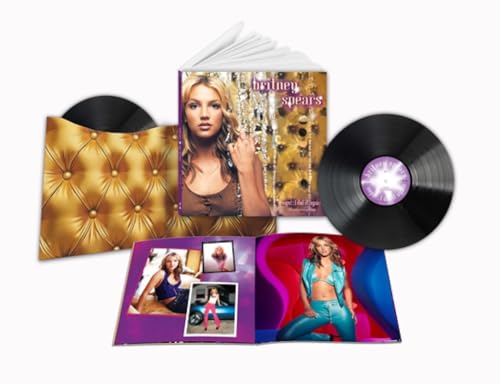
Britney Spears / Oops!… I Did It Again (2LP vinyl)
25th anniversary edition of Britney Spears’ second album features an alternate cover, 20-page booklet and two new remixes. There’s no other format available! Optimistic pricing from Rough Trade!
Watch, as SDEtv unboxes the newly released Roxy MusicAvalon SDE exclusive blu-ray audio, #36 in the SDE Surround Series. This was released on Friday and is available from the SDE shop using this link or the button below.
Scissor Sisters’ debut album will be reissued in July.
The album boasts five top 20 UK singles – ‘Laura’, ‘Comfortably Numb’, ‘Take Your Mama’, ‘Mary’ and ‘Filthy/Gorgeous’ and became the biggest selling album in Britain, in 2004.
3CD deluxe edition of ‘Scissor Sisters’ (click image to enlarge)
For what is a belated 20th anniversary reissue, a 3CD deluxe edition offers B-sides & rarities (including seven previously unreleased tracks) on the second disc and remixes on the third. A 2LP gatefold vinyl version offers the same B-sides and rarities on the second LP (two tracks fewer than on CD 2 of the deluxe).
Scissor Sisters will be reissued on 18 July 2025 via UMR.
Complete Danny Wilson is a new 5CD box set that will be released in June.
It features the Scottish band’s two late 80s albums – Meet Danny Wilson from 1987, which features the hit single ‘Mary’s Prayer’, and 1989 follow-up Bebop Moptop. The group disbanded in the early 1990s.
Additionally, the new box set features a generous selection of B-sides, remixes and edits, with two CD’s worth. A fifth disc offers a complete live show from London’s Town and Country Club.
This collection includes a booklet with new interviews from the band (who are supporting this release). Complete Danny Wilson will be issued on 4 July 2025 (was 6 June), via Cherry Red.
Highlights of CD 2 include the cheekyMcCartney/MacManus ‘1-2’ of ‘My Brave Face’ and ‘Veronica’ as well as The Beautiful South’s ‘You Keep It All In’; S’Express’ ‘Hey Music Lover’; and ‘Something’s Jumpin’ In Your Shirt’ courtesy of Lisa Marie With Malcolm McLaren And The Bootzilla Orchestra.
The last disc includes more Duran (‘Do You Believe In Shame?’); another helping of The Cure (‘Fascination Street’); Yazz’s Fine Time; Liza Minnelli’s‘Don’t Drop Bombs’; and more.
Of course, it is the late 80s, so there’s also a few tracks featuring Stock-Aitken-Waterman productions including Kylie, Jason, Big Fun etc.
NOW Yearbook ’89 – Extra will be released on 6 June 2025.
In 2015, Chris James worked with Prince, as an engineer, on what would be his last studio album, HitnRun Phase Two. A decade on and James has now completed his second Dolby Atmos Mix for one of Prince’s album, namely Purple Rain. With a physical blu-ray audio now available to buy, SDE sat down with Chris to discuss the process of transforming the 1984 classic into an immersive listening experience.
SDE: I know you worked with Prince towards the end of his life. How did that come about, and how have you ended up continuing to work with his catalogue?
Chris James: I have no idea. It’s just crazy; I was a huge fan growing up. I learned how to write songs, then started recording those songs and then spent most of my life trying to sound like Prince records. A friend of mine, who was another engineer, heard those recordings and said he could really hear the Prince influence on my sound. Fast-forward, that same engineer ended up working across the hall from Prince at the Record Plant, and ended up doing Andy Allo’s record with him, one of his proteges. Shortly after those mixes were completed, Prince wanted him to come back to Paisley Park to record, and he wasn’t available, so he threw my name in the hat, and a week later, I was in Paisley Park.
Wow, that must have been an incredible experience?
Yes, it was quite nerve wracking. It’s not like anything else you’ve ever experienced in your life. Everything about it was just different.
Was it as challenging as it often sounds, working with someone with Prince’s disposition?
Absolutely. Kind of genius, I guess, to hire somebody who’s been influenced so heavily by you, because they understand your language, but also, when you piss them off, they respect you enough to take the abuse a little more than they probably would with other artists.
Obviously, you were working with him on new music at the time, and Prince famously wasn’t someone who was particularly interested in looking back. Did you ever have discussions about his back catalogue or anything along those lines?
Not really. I would ask questions, of course, because I was curious, and very early on, he’s like, “Well, what is this, a Rolling Stone interview?” He kind of put me in my place. When it was the time and he was willing to share, I would, of course, absorb everything I could. But the closest I ever got to his back catalogue is when he needed fresh tape and there wasn’t any to be found in the building. So the process of finding what to record over became the issue. Can you imagine putting a tape on the reel and he’s telling you to erase it? I’m like, I don’t know if I should do that. What if something’s great on it?
I’m surprised he would want to do that. But maybe that’s the thing about Prince, he wasn’t predictable
No, you could do one thing one day, and then the next day I’d do the exact same thing, and it would be wrong, so that kept you on your toes.
It goes without saying, that it’s so sad that he’s not around to be involved in some of these projects. But you’re obviously involved, now. How did you go from working with Prince on new music and then, all these years later, being trusted with the crown jewels of some of his output from the 80s and 90s?
I can’t really explain it. Obviously, relationships matter. Politics matter. Skills matter, obviously, or you wouldn’t have been in the seat in the first place. I think I’ve just been fortunate enough for the synergy to have happened this way. It wouldn’t have been my desire to record the man’s last music [the HitnRun Phase Two album, released Jan 2016] and then to be Grammy nominated for it just put an emphasis on the work. I kept in touch with many of the musicians and people that were involved with Paisley Park, and then, I guess, after doing that, a little piece is given to you. You’re trusted with it and then they give you another piece. And then they’re like, “Okay, this works. Let’s continue on”.
And who are you working for?
At the end of the day, the Estate makes all the calls… that’s a two-sided thing between Prince Legacy and Primary Wave. On certain projects, it’s Warner, that’s the label solely, and then other projects, it’s Sony and Warner that are the label [laughs], so you’re dealing with a lot of cooks.
What’s your approach to creating a Dolby Atmos mix, an immersive audio mix, of an album, like Purple Rain, that everyone knows so well, in stereo?
Typically, I spend a lot of time with the stereo. I try to find the best version, in my opinion, of the stereo, because there’s been many remasters and releases, and I just spend a lot of time on headphones with that. I make my notes about panning – I think that’s important to retain – and the depth, in terms of what’s in front, what’s behind… and I just make my notes of things that would be cool in Atmos, like if you hear auto-panning in stereo, that’s an obvious example where they were trying to do something psycho-acoustic and that’s a great thing to exploit. I’ll also get a copy of the best vinyl and just spend time with my hi-fi speakers and just absorb it and take it all in. Luckily, I did the Fleetwood Mac catalogue before this, so my nerves are a little more settled in terms of dealing with something of this magnitude. But I think it’s very important to retain as much of the original as possible. But you do have [to consider] the condition of the tracks that are given to you. It’s not just this pristine thing that’s pulled off a shelf, put on the machine, and it sounds exactly like 1984 stereo release. It’s just not the case.
Could you talk a little bit about the process of transferring the multi-tracks and stem creation and the like? Do you get involved in that?
[Laughs] There is no one else to create stems! There’s the staff with Iron Mountain Entertainment Services, which is where the vault is stored. I’ve had several conversations with engineers from there, and from my understanding, they had previously used Avid 192 converters, and they would basically bake the tapes and transfer them using those. Since then, they’ve upgraded to Prisms, which are a higher end converter, and it absolutely makes a difference, based on everything that I’ve heard.
So does that mean the tapes may have been transferred a few times as capture technology improved?
I don’t think Purple Rain was re-transfer. Because it was from 2018, so I believe that the 192 files I received were previously already transferred on this particular project.
Was everything there that you needed or was anything missing?
For the most part, yes. In many cases, it sounds like there was some kind of drum enhancement going on in the mix and when I pulled the kick and snares up, it didn’t exactly sound like the stereo, and that became a chase, but the for the most part, things were there.
On this point, when these transfers are done, often, all the various reverb and effects that exist on the record just are not there on the multi-track. So, I guess one of your key challenges is recreating some of that stuff to match it with the original. Tell us a little bit about that.
So, when I initially got the multi-tracks, I spent about a day just gawking over how amazing it is and how everything’s separated and you’re hearing it so loud and isolated. And after I got over that, then I dig into using plug-ins to replicate placeholders for reverbs and delays and stuff. And then once I get it to a place where I’m like, “okay, this sounds like the record”, I’m checking to make sure where mutes and edits need to happen – because you also have to understand that if a song’s originally 18 minutes long and then the cut down is four, then I’ve got to go and figure out where they sliced and used the different portions of the arrangement. But once I have what I consider to be my stereo recreation, in this case, I went to Sunset Sound [studios] and transferred the 192 through the console, through outboard into another rig to 48k, because Atmos is much easier to deal with at that sample rate. So it was during that process that I discovered how much of the sound of this record is in Sunset’s [echo] chambers. As an example, when you just lay the kick drum from ‘When Doves Cry’ into the chamber, it automatically just sounds like the record. It’s like “whoa!”. IK Multimedia has a nice plugin, an emulation of it, but there’s nothing like the real room.
So, you were basically recreating the sounds of the original, the echo and the reverb, by playing it back in the room where it was recorded?
Absolutely! With the same gear… If you put Prince and the Revolution on top, the next two [most important] things for Purple Rain would be First Avenue [Minneapolis nightclub, where 3 tracks were recorded live] and Sunset Sound. They have a huge impression on the overall sound of that record.
And at this point, in Sunset Sound recreating the drum sound, you haven’t really got anywhere near the point of what people think of as Dolby Atmos mixing, which is moving sounds around in a three-dimensional space. The number of different skills needed to deliver such a project is quite significant, isn’t it?
Yes, and on this particular record, what you just said, is further magnified because there’s the movie, which is to picture, and then there’s the album that’s just in your mind. And while my Atmos mixes did not make it to the film itself, we did go through the process of doing a specific mix for the film on a dub stage first, so you’re panning things to what matches on screen, and you’re using the live audience in a way that worked and interacted with the film. And then I went back and did the whole album version.
So, by the end of it, you must have known this album inside out?
Absolutely!
Prince would record a song and then, I think, part of his process was he’d take things out; he’d sort of strip it down to its bare essentials, if you like. The ‘missing’ bass on ‘When Doves Cry’ is the most famous example of that. There’s no bass on that record, but there is a bass on the multi-track, right? So, you must have had a lot of fun kind of hearing stuff that no one’s ever heard because he decided not to put it in the final record?
I listened down maybe once or twice, but then I don’t want to get it in my head. A situation where you then hear it, even if it’s not there. But in that case, it was an Oberheim synth bass that was doing, like 16th notes, and it reminded me of Eurythmics which, ironically, was the hit at the beginning of that year, [Chris is likely referring to ‘Here Comes The Rain Again’] so that would make sense… why muted it.
So, talking in general terms, do you think he made the right decisions most of the time?
How can you argue with it? Yeah, of course he did. Part of you, as a musician, you want him to play and show his chops to the world and then there’s his pop ear for radio, where you have to simplify things. But as an engineer, you want things to be all pristine and sound good. But that wasn’t [always] the gig, you know. It was attitude and vibe. And so, you have to put that aside and accept that he has intention with everything that he did.
I was listening to Purple Rain, and I was hearing things I don’t remember ever hearing that before. I’ll give you an example, the little Spanish guitar flourishes at the beginning of ‘Take Me With You’. I put the stereo on, and it is there, of course, but it’s buried in the layers. But to my ears, that’s now more prominent, because, almost by definition, by putting things like that in the surround channels, you’re drawing attention to them. How do you deal with that? Is it just the art of the delicate balancing of levels and trying to just get the overall shape of the sound, correct?
Yes, and part of that is how it down-mixes. And as you know, there’s the dreaded binaural stereo mix. And then there’s the dreaded Apple-coded mix [for Apple Music]. And then there’s also what happens in the room on your speakers – one mix has to service all three of those. It’s a very daunting thing to do. But to answer your question about the acoustics, I would say in that particular case, they were probably brightened and because they’re isolated, you do hear them louder.
What did you the centre speaker is another thing I have a lot of conversations with engineers about. Some people don’t really use the centre channel at all, some like using the lead vocal in it, others spread the vocals across the front three channels. What was your thinking, in terms of how you use that centre channel with vocals.
So, in this case, for the film version, I very much used it, because you’re in a theatre, and that’s the dialog at that point. For the album version, I tend to use more phantom centre, because it’s, it’s easier for the Apple encoder, because a lot of times when you put something in the centre channel on Apple, it gets a lot louder, and it’s kind of isolated, so I figured most people are going to hear this in that format, so it’s just one less thing to have to stress over. And we’ve heard phantom centre since stereo existed.
Did you have to resort to using any AI to pull things out of stereo mixes because you might not have had it on the multi-track?
Yeah, there was a handful of those… I’m trying to think of examples…. There was some stuff on ‘The Beautiful Ones’… it’s usually one little thing. I had a conversation with Bobby Z once, and he told me that they were overdubbing toms at Bernie Grundman’s mastering studio one day, which in effect, means it only exists on the stereo master and never even existed on the multi. And it just goes to show you, in Prince’s mind, it’s never too late till it’s too late, and mastering is pretty much the very, very last thing before it goes to consumer. So, the fact that he was creating all the way up till that moment kind of tells you that, it ain’t all on the multi-track!
You did the Atmos of ‘Diamonds and Pearls’ as well, which is obviously a ’90s record, and recorded differently, I imagine, to ‘Purple Rain’. Did you adapt your approach for one when compared to the other?
Well, ‘Diamonds and Pearls’ would have been an SSL-based record, so everything’s a lot more compressed and processed, gated and a lot more channels. The track count was incredible. The song ‘Thunder’ was on seven reels, which is over 160 tracks. And even then, with that song, one reel would have one arrangement, one reel would have another arrangement. And if they did sync up, you’d have to edit one reel to match the other. It was just a big puzzle that took several weeks to even just do that one song. On Purple Rain, everything was on a single reel, unless it was something like the song ‘Purple Rain’, where they did the strings. Wendy’s intro and, I think, one vocal was overdubbed, and everything else was on a single reel, so it made it a lot easier to deal with.
How long, how long did the project take you, in the end? If we break it down into two bits, which is all the rebuilding and piecing the audio puzzles together and the second phase two which is creating the Dolby Atmos mix?
Well, I booked Sunset [Sound studios] for January 1, and I believe the film was in the can by April. So, from April until probably, I guess, about a month before the release, [on streaming in June 2024] was the nine songs for the album.
So, you were working on it for three or four months, basically?
Well, with the film, there were the extra songs from The Time and Apollonia and the score… so there was a lot more, leading up to those nine songs.
What happened to your Atmos mix for the film? Why didn’t they use it in the end?
That’s a complicated answer, but basically, the movie studio was dealing with The Estate, and The Estate was dealing with the movie studio, and they could not come to terms before the deadlines. You do what you can on your end and leave it up to them to do all that. And as disappointing as it is, it’s life.
None of Prince’s music was ever released commercially for surround sound, in his lifetime. I asked you earlier whether you ever had any little chats about his back catalogue. Did he ever express any interest in 5.1 Surround Sound?
I personally don’t think he would have had the patience [for Atmos]. Because honestly, there’s so much to deal with on the headphone side and with stereo you can basically turn anything in, if it’s not clipping, and even you can clip, and it still gets through. With Dolby, there’s no console to push, there’s no tape to overload… It’s very frustrating when you’re trying to recreate a Prince recording in the format, if, if that stuff’s not already baked into your sources. I think he would absolutely hate it. He would love the concept of having a bigger palette of space to put things in, but the process of mixing, how he liked to clip consoles and tape, you know, that would be very frustrating for him on this,
He never struck me as an audiophile, someone that was interested in everything being pristine.
Yeah. For lack of a better word, most of his recordings are demos. Most people record demos and then go to the studio and do the real version, whereas most of what he is creating is the demo, so there isn’t that separated process. And you know, for the most part, he would much rather, probably record more songs than spend time mixing something that’s already exists.
On Purple Rain was there one song where it was either challenging and problematic or perhaps one particular song where you got a lot of satisfaction because you just thought it just worked perfectly?
To me, the less dense tracks, turned out really good, like ‘Darling Nikki’ only has 11 tracks of audio on the reel. It’s a singular mono microphone on the entire drum kit. So, it was kind of cool to take that singular mic, put it in a speaker, and re-mic the room at Sunset so that it felt native. And even though you’re adding more channels for spatial cues, it’s done in a natural way, so the less tracks you have, the more opportunities you have to exploit something like that. And The Beautiful Ones is another example where that’s only 14 tracks, but in the end, it just sounds like this massive, massive thing.
So, if most of if most of the tracks were one reel, does that mean 24 tracks, maximum?
Yes, pretty much 24, and there would be a time code track on 24. In most cases, it was less than 22 or less.
When you finished the mix, what was the approval process? How much backwards and forwards was there?
Well, generally, once the mix is done, I’ll go listen to it, at least outside my room somewhere, just to get a different set of speakers, a different brand, a different resonance of acoustics, all that type of stuff. It goes to mastering. In this case, we used Michael Romanowski to master this one, and then we kind of go back and forth. Mastering for Atmos is a strange little beast, because it’s not just like a two-track that you then just process through. You still have a multi-track for mastering.
Not everyone does mastering for Atmos. I know with Steven Wilson, sometimes he doesn’t like his stuff to be mastered, saying it doesn’t need it.
I can understand that approach, I certainly can. But to me, I feel like, if the stereo mix was mastered, then why shouldn’t the Atmos be mastered? It’s not a loudness spec that we’re going for or anything like that, it’s more of the idea of this song has bottom end, this song lacks bottom end, this song has treble, bright things etc. and it’s just having someone do a once over to just sort of push those things back into a playlist, in the traditional mastering sense. So that’s one of the main reasons, not to mention it’s really good for somebody with my mindset – that grew up loving such a record, and then getting to work on it, and then being so close to it – getting someone else’s zoomed out view of it. When it gets back from mastering, that’s when we forward it to the powers that be that put their final ears on it, and Charles Spicer Jr [Prince’s former business advisor, now co-manager of Prince Legacy] is one of the ones at the Estate that listens to them.
It sounds like, from what you were saying – going to the Sunset Sound studio and recreating reverbs etc. that you got a decent budget?
Absolutely. I do my initial passes with plug-ins, and probably with any other artist that would be what ended up being the final mix, but in this case, it’s such a historically significant album, I think it’s worth the effort. That Sunset chamber is just it was imperative for this record.
What’s next for you, specifically, in terms of Atmos? Even if it’s not Prince, have you got other projects that you’re going to be working on soon?
Yes, there are vault-based Prince projects coming. There’s also a bunch of indie musicians that I’m working with. It’s kind of fascinating that they put the effort into this [doing Atmos] but it gets them on a new playlist that they normally wouldn’t be on. And I’m also working on some instrumental stuff myself. That’s a blast. It’s like creating from the ground up in this format is special.
Thanks to Chris James who was talking to Paul Sinclair for SDE. You can buy the Purple Rain blu-ray audio with the Atmos Mix at the SDE shop (with exclusive slipcase)using this link or the button below.
Tracklisting
Purple RainPrince and the Revolution/Blu-ray Audio
Blu-ray audio features Purple Rain in Dolby Atmos and 96/24 stereo mix
Following on from the Queen I box set of last year, the 2024 remix of Queen’s 1973 debut album is being released in Dolby Atmos on a limited edition audiophile blu-ray audio.
“This is not just a remaster, this is a brand new 2024 rebuild of the entire Queen debut album” said Brian May when announcing the release of the band’s revisit of their eponymous debut album late last year, retitled Queen I for this new version. May further elaborated: “Every instrument has been revisited to produce the ‘live’ ambient sound we would have liked to use originally.”
With Brian May and Roger Taylor acting as executive producers, and overseen by Queen’s long-standing audio-production team of Justin Shirley-Smith, Joshua J Macrae and Kris Fredriksson, this enhanced spatial surround sound format release breathes stunning new life into the band’s epic and unique multi-layered sound.
Says Justin Shirley-Smith: “It always feels like Queen’s music was designed for immersive formats. It’s dramatic and powerful and has a lot of dynamics. The original album was recorded more than 50 years ago, but it was so ambitious musically, rhythmically and lyrically. It’s beyond belief really, and it’s such a joy for us to work on.”
The audio streams on this blu-ray are as follows:
Queen I – 2024 Mix – Dolby Atmos
Queen I – 2024 Mix – Stereo (96kHz/24bit)
Queen I – 2024 Mix – Stereo Backing Tracks (96kHz/24bit)
Brian May has confirmed that the Atmos Mix on the blu-ray is updated from the version that has been on streaming:
Says Brian May: “i’m particularly excited about this new Dolby Atmos version of what we now call QUEEN 1. When the boys were converting the stereo rebuild into a surround experience, I was unable to be there, due to a health hiccup. So I was very happy to have the opportunity to go back in with them recently and add my own contribution to this multichannel mix. There are now a few nice adventurous Easter eggs in there, which those who know the album intimately will hopefully enjoy. So the Blu-ray version is an update from the version that has currently been available to stream. Nobody has ever heard our first album quite like this !!!”
Queen I will be released on this limited audiophile blu-ray on 13 June 2025. You can secure your copy of this blu-ray by pre-ordering from the SDE shop using this link or the buttons below.