In a surprising, but very welcome turn of events, a-ha frontman Morten Harkethas announced a new solo album, Human Grace.
This announcement comes 15 months after the news broke that Morten has Parkinson’s Disease. Human Grace will be Harket’s seventh solo album (the last being Brother issued 12 years ago) and his fifth English language long-player.
It has been co-produced by Peter Kvint, who, with Harket, started looking over the material that had been recorded since the last album (but not released). Morten says they were “pleasantly surprised by the quality and coherence of what was waiting to be freed up. It was uplifting. It’s been quite a journey, to be able to land this. For me, and certainly for everyone else working with me under such uncertainty, giving it all they had”.
According to an interview over on a-ha.com, apart from the main body of vocals, everything on the album is all new. Instrumentation and arrangements, even some vocal overdubs, were done between July 2025 and July 2026.
The 10-track album is described by Harket himself as a “celebration of life”, and was created in close collaboration with long-time musical companions and his family – including guest appearances by his daughters, Tomine and Karmen Harket. The first single is ‘Hold Me’ which you can hear, above.
The album is being released by Warner Records Germany and international availability is yet to be confirmed. But there’s a Euro-based artist store offering coloured vinyl, CD and black vinyl and it’s available at the momet, on Amazon in Germany and Spain (and JPC).
My Chemical Romance’s 2006 album The Black Parade is being reissued, for its 20th anniversary, as this deluxe 2LP vinyl ‘One Step’ Audiophile Edition.
The band’s third album, The Black Parade follows ‘The Patient’ through his reflections on life and his passage into the afterlife, built on the concept that death visits people in the form of their earliest cherished memory.
The 20th Anniversary One Step Audiophile Edition, includes the original album plus a live performance of ‘Someone Out There Loves You’ recorded at Maxwell’s in Hoboken, NJ on October 24, 2007. The original album has been sequenced over four sides of the double LP to maximise audio quality.
Pressed as a double LP on Neotech VR900-D2 180g vinyl (often referred to as ‘super vinyl’ for its lower surface noise/better detail) and cut from the original analog master tapes. Mastered by Chris Bellman at Bernie Grundman Mastering. The One-Step process(which by Dorin Sauerbier at Record Technology, Inc.
The records are housed in a numbered slipcase with a gatefold jacket, new art insert, two printed inner sleeves and RTI rice-paper inners. SDE has a retail exclusive for this special edition in the UK and you can pre-order it from the SDE shop using this link or the button below.
The Black Parade (One Step Edition) 2LP vinyl pressing is released on 23 October 2026 via Warner Records.
One Step Plating Process: This is the process of turning the lacquer into metal, then to make a stamper to press the records. The traditional three-step plating process includes creating a father (negative) and then a mother (positive). Once the mother is created you can make an unlimited number of stampers from it. One-Step plating eliminates two steps in that process, the creation of the father and the mother. That removes two stages of generational loss and by doing so reveals more musical detail and a significant reduction of surface noise on the final record. This process requires multiple lacquers to be created since only one stamper can be used from each lacquer. You can manufacture approximately 500-750 records per stamper. That is essentially where the term One-Step comes from. It is a tedious, challenging and more expensive process.
Tracklisting
The Black ParadeMy Chemical Romance/20th anniversary 2LP vinyl One Step Audiophile Edition
U2 will release Carnaval De Luz, their 16th studio album, in November, their first long-player of new material in nine years.
Available on CD, vinyl and as an SDE / D2C exclusive blu-ray audio, the 12-track album was recorded “all over the place” and produced by Jacknife Lee. It explores themes of spirituality, friendship, freedom and endurance in the face of dark, encroaching forces.
We are promised “echoes of the band’s most experimental work” combined with some strict songwriting in the shape of ‘The Greatest Show On Earth’, ‘Glorify’ and ‘Midnight Sunshine’, as well as the 2mins 35second homage to early surf-punk insolence that is ‘Silencio’.
“Roll up, roll up, roll up! Bring your purple socks, your broken hearts, your rose-tinted naivety… oh be amazed in the hall of mirrors. There will be loud guitars, deep bass, some ecstatic rhythms and, yes, some silver tears will make an appearance!”
Bono
Carnaval De Luz sees contributions from Brian Eno (co-writing and synthesizers on ‘Go (Carnaval De Luz)’, ‘The Greatest Show on Earth’ and ‘Can’t Stop Us Now’), Martin Garrix (co-writing on ‘Glorify’), Daniel Lanois (playing pedal steel on ‘Torn’); and the late, great Dolly Parton, in what has sadly turned out to be her last recorded vocal performance. She duets with Bono on ‘Torn’, a song co-written by U2, Parton and Johnny McDaid, it’s a tender country song detailing broken family ties that holds wider resonances.
The blu-ray edition offers the album in Dolby Atmos and hi-res stereo. It’s packaged in an amaray case and includes a 16-page booklet featuring lyrics, photography and exclusive album imagery.
Carnaval De Luz will be released on 13 November 2026 via Island. You can pre-order the SDE & D2C exclusive blu-ray from the SDE shop using this link or the button below. For other versions check out widgets.
Ah, Britpop. A golden age, kicked off in 1994, for British bands and guitar-driven pop music. NOWYearbook ’94 says “hold my pint” as it delivers 79 tracks of US R&B, Boy Bands, American female singer-songwriters, Oscar winners from Disney musicals, rock legends hitting the charts after a leave of absence, various rappers and Jimmy Nail.
’94 is still a good year but undeniably a mixed bag. It’s the year Kylie was BACK with ‘Confide in Me’, Sting had his first UK top 10 hit with ‘When We Dance’, and Bruce Springsteen returned to the UK top 10 for the first time in nine years with his No 2 single ‘Streets Of Philadelphia’.
Boy bands include Take That, Boyzone, Boyz II Men, East 17 (two tracks including the Christmas No 1 ‘Stay Another Day’) and the first half of CD 2 (the ‘Britpop-y’ section) is the exception rather than the rule, but excellent all the same with tracks from Oasis, Radiohead, The Stone Roses, Suede, Elastica, Primal Scream et al.
Two doses of Elton John from the Lion King soundtrack is probably two too many, but very good to see Crowded House’s ‘Locked Out’, Sophie B. Hawkins’ ‘Right Beside You’ and The Grid’s ‘Swamp Thing’ included here.
If we’re being honest, there’s a fair bit of dross (PJ & Duncan!) and plenty of acts following up their ‘big hits’ with ones that make you think “How does that go, again?” (see Haddaway, D:Ream, M People etc.).
So, whereas 1986 and 1987 Yearbooks were much better than you expected, 1994 is arguably worse. More up and down. It paints a accurate enough picture of the 12 months in question and even if Blur were represented (boo!), it wouldn’t ultimately change the whole picture.
The usual formats on offer: 4CD sets (deluxe hardcover book and card sleeve editions) and the 3LP version, which delivers 44 tracks across six sides of bright blue vinyl.
NOW Yearbook ’94 will be released on 30 October 2026.
Origins 1971–1978 is a new box set that Tom Petty’s first eight years as a recording artist.
It contains 51 audio newly-mixed audio tracks, including 27 unreleased, live, extended, and previously unheard tracks. There are two versions of this box set – 4CD edition and the 4LP vinyl edition – and they contain the same audio and both come with additional DVD and a blu-ray discs. The content is as follows:
The deluxe set includes four CDs in mini-jackets:
CD1: No Sleep Til L.A. & The Cut Out Bin – LP1: No Sleep Til L.A.
CD2 & LP 2: Tom Petty and The Heartbreakers (50th Anniversary Edition)
The box set includes the band’s first two albums, Tom Petty and the Heartbreakers and You’re Gonna Get It! newly mixed by longtime producer and engineer Ryan Ulyate. Both editions feature extended versions of eleven tracks, including ‘American Girl’ and ‘Breakdown.’
The additional discs trace the earliest chapters of Tom Petty and the Heartbreakers, deep from the family’s vault. A “musical diary” of the band’s Gainesville roots through their cross-country move to Los Angeles and into their first taste of success. This includes No Sleep ‘Til LA (also available as a standalone release) which features 12 tracks of Tom Petty “becoming Tom Petty”, including seven previously unreleased cuts.
Live from the Record Plant 1977offers a ‘fan favourite’ live broadcast in full for the first time and the DVD of BBC’s Old Grey Whistle Test performance in 1978 offers restored audio and HD visuals.
Finally, the Blu-Ray Audio is generous: it delivers all 51 audio tracks in hi-res stereo, Dolby Atmos and 5.1 immersive mixes.
The vinyl box comes with an 88-page fanzine featuring liner notes by David Fricke and Bud Scoppa, track-by-track annotations from the original band and polaroids, postcards, collectibles etc. The CD version has a 46-page fanzine with, presumably similar content.
Origins 1971–1978 and No Slip ‘Til L.A. will be released on 6 November 2026 via UMR.
Forty Two is a new 2LP vinyl set documenting Level 42’s brit funk instrumental work from 1980-1982.
Level 42 formed as an instrumental group in 1979 when Mark King and brothers Phil and Rowland ‘Boon’ Gould joined Mike Lindup at London’s Guildhall School of Music and Drama for weekly jam sessions. United by a shared love of Miles Davis, Billy Cobham, John McLaughlin and Jan Hammer, they channelled their influences into the creation of the inventive jazz-funk fusion instrumentals showcased here.
The deluxe gatefold 2LP vinyl draw from the group’s first three albums and four 12-inch B-sides and is the first time this material has been presented together on vinyl. Presented as a limited edition of 1,000 copies, it has been mastered and engineered at Abbey Road by Geoff Pesche using hi-res 24-bit transfers from the original analogue tapes. As well as mastering the band’s Standing In The Light and World Machine albums, Pesche cut the lacquers for the band’s first ever vinyl release in 1980; this compilation’s curtain raiser, ‘Sandstorm’.
The packaging includes an OBI-strip, matt lamination and printed inner sleeves with the records pressed on black and yellow vinyl. Gilles Peterson, one of Level 42’s earliest fans, provides sleeve notes and there’s new band commentary by Mark King, Wally Badarou, Phil Gould and Mike Lindup.
This new release comes courtesy of Coalface Records a new label formed by Level 42 superfan and archivist Paul Waller and is released with the full cooperation and enthusiasm of the band.
Forty Two is actually released this Friday, on 25 September 2026. It can be ordered via the Coalface Records website.
NOW Music continue their 12″ 80s series with a 4CD set offering more extended hits from 1987.
NOW 12″80s: 1987 – Part Two offers further evidence that 1987 was ‘not as bad as you think’ since among the 46 tracks are two Pet Shop Boys extended versions (Dusty ‘collab’, ‘What Have I Done To Deserve This’ and the Christmas No 1, ‘Always On My Mind’), a-ha’s ‘The Living Daylights’, Duran Duran’s ‘Meet El Presidente’ (their first CD single and admittedly a weaker track from Notorious), Eurythmics’ ‘Missonary Man’ and the ‘Three Coins In a Fountain Mix’ Terence Trent D’Arby’s ‘Wishing Well’.
They are all on CD 1, elsewhere you’ll find the extended version of Curiosity Killed The Cat’s excellent ‘Misfit’, the ‘John Potoker Extended Mix’ of Fine Young Cannibals’ ‘Ever Fallen in Love’, ‘The Whole Story’ version of ABC’s ‘The Night You Murdered Love’, the superb ‘Superb, Superb Mix’ of Swing Out Sister’s ‘Twilight World’ (a great mix, but an odd choice, given it’s effectively the album version) and more long mixes from New Order, Simply Red, Wet Wet Wet, Johnny Hates Jazz and Jan Hammer.
NOW 12″80s: 1987 – Part Two is out on 16 October 2026.
Chrysalis will release a new Midge Ure ‘best of’ in November that features brand new stereo mixes of all the hits and two new recordings of famous songs Midge is associated with. SDE is offering two exclusives: a blu-ray audio and a hand-pressed splatter vinyl (limited to 250 units).
Midge is of course, best known for being the front man of the 1980’s version of Ultravox, his involvement in Visage and Thin Lizzy, not to mention being the co-creator and founder of Band Aid, Live Aid, and ‘Do They Know Its Christmas?’.
Chapters: The Best Of Midge Ure includes all his hits, key album tracks and some songs he has been associated through his career. Featuring his UK No.1 single, ‘If I Was’ along with classics like ‘Dear God’, ‘No Regrets’, ‘The Man Who Sold The World’, ‘After A Fashion’ which he recorded with Japan’s Mick Karn and the sublime duet with Kate Bush, ‘Sister & Brother’ (Kate in Atmos!). For the first time Midge has recorded new studio recordings of Visage’s ‘Fade To Grey‘ and Phil Lynott’s ‘Yellow Pearl’, which he originally co-wrote.
The 3CD deluxe edition features 17 tracks on CD 1, brand new remixes on CD 2 (from the likes of Richard Barbieri, Blank & Jones and Steve Jansen) and a third disc of instrumentals. In 2LP vinyl form you get 15 tracks across the four sides of vinyl and the SDE exclusive blu-ray offers new mixes (by Richard Whittaker) of 17 tracks as follows:
Chapters: The Best OfMidge Ure – Dolby Atmos Mix (48 kHz / 24 bit)
Chapters: The Best OfMidge Ure – 5.1 Mix (48 kHz / 24 bit)
Chapters: The Best OfMidge Ure – New Stereo Mixes (96 kHz / 24 bit)
Chapters: The Best OfMidge Ure – Dolby Atmos Instrumental Mix (48 kHz / 24 bit)
Chapters: The Best OfMidge Ure – 5.1 Instrumental Mix (48 kHz / 24 bit)
Chapters: The Best OfMidge Ure – New Stereo Instrumental Mixes (96 kHz / 24 bit)
SDE excluisve blu-ray
Additionally, the SDE blu-ray features a wealth of video content, include seven promo videos (with optional Midge Ure commentary) and seven BBC TV appearances including performances on Top of the Pops and Wogan. Full tracklistings and details are below.
The 2LP version is available in the ultra-limited SDE splatter (250 units, hand pressed at The Vinyl Factory with OBI and certificate – now SOLD OUT) as well as a standard black version with bonus seven-inch (via the official store).
Chapters: The Best Of Midge Ure is #79 in the ongoing SDE Surround Series and and it will be packaged similarly to previous editions and ships with a free, collectible SDE Surround Series slipcase.
The SDE blu-ray is a TIME LIMITED release. Itavailable to pre-order for two weeks only. The pre-order window closes on 1 October 2026. Availability after that point cannot be guaranteed. Pre-order it from the SDE shop using this link or the buttons below. For other formats browse the official store.
Chapters: The Best Of Midge Ure will be released on 13 November 2026 via Chrysalis Records.
A new A Flock Of Seagulls greatest hits will be released in November.
Synonymous with the MTV generation and part of the Second British Invasion, the English New Wave band enjoyed success in the Early eighties in both America and around the world with singles such as ‘I Ran (So Far Away)’, ‘Wishing (I Had a Photograph of You)’ and ‘Space Age Love Song’.
The 3CD version of The Best Of A Flock Of Seagulls offers singles on CD 1, BBC Sessions on CD 2 and B-sides and Rarities (including 12-inch mixes) on CD 3.
A 2LP vinyl edition spreads the 15 tracks from CD 1 across two yellow vinyl records. The compilation is also available as a single CD variant.
The Best Of A Flock Of Seagulls will be issued on 20 November 2026 via BMG.
The SDE exclusive blu-rays of Spandau Ballet’sGold: The Best Of and George Michael’sThe Faith Tour both end tonight at midnight.
The former has all the hits in Atmos, 5.1, Stereo and instrumental form as mixed by Steven Wilson, along with a generous selection of 12-inch remixes from the era (stereo only). The latter offers previously unreleased live concert audio from 1988, newly mixed in Atmos, 5.1 and Stereo by George’s longtime engineer Chris Porter and is the only format that offers a seamless uninterrupted listening experienceof the full concert, unencumbered by vinyl side breaks or CD disc changes.
Both blu-rays are region-free, these products have the same release date (6 Nov) and can be bought together as a specially priced bundle. George Michael is #75 in the SDE Surround Series and Spandau are #76. Both ship with the collectible SDE slipcases.
Only available via the SDE shop, you can order via this link or the buttons below. Manics and The Who will end this Friday (18 Sep).
Gold: The Best Of and The Faith Tour are released by Parlophone and Sony Music respectively, on 6 November 2026.
Tracklisting
Gold: The Best Of Spandau BalletSpandau Ballet/SDE exclusive blu-ray
Seven years after issuing the 14CD box set of the 1975 Live Recordings of Bob Dylan’s Rolling Thunder Revue, Sony return to this infamous tour for the 1976 second leg, with an even bigger box set.
The second leg saw Dylan welcome old friends and collaborators to his troupe. He reunited with Joan Baez to perform a moving set of duets across many dates, including performances of ‘Blowin’ in the Wind’ and ‘Railroad Boy’.
Dylan’s band included bassist Rob Stoner, violinist Scarlet Rivera, drummer Howie Wyeth (who had all worked on the Desire album), guitarists Mick Ronson, Steven Soles, David Mansfield and T Bone Burnett.
39CD box set – click to enlarge
The Rolling Thunder Revue: The 1976 Live Recordings is a 39CD box set that “captures all professionally recorded shows” from the 1976 second leg, all from original tape sources. The box includes 381 tracks, 371 of which have never been released.
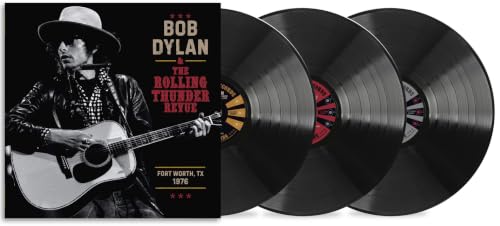
Scroll down for a full tracklisting. The box set includes a booklet with sleeve notes by Mikal Gilmore alongside rare photographs. The Fort Worth Texas show from 16 May 1976 (CDs 32 & 33 in the box set) will also be available as a standalone 3LP vinyl set.
The Rolling Thunder Revue: The 1976 Live Recordings will be released by Sony on 6 November 2026.
The pre-order window for the SDE exclusive blu-ray of Amy Winehouse’s 2006 album Back to Black closes today.
This exclusive format brings together the Dolby Atmos Mix for your immersive listening pleasure, but also offers the digital debut of arguably the best sounding stereo version of the 2006 album, which is Miles Showell’s 2018 remaster. This version was prepared for the half-speed mastered vinyl eight years ago and has never been issued on CD.
Add 17 bonus tracks, including B-sides and unreleased demos, and you have yourself a fantastic physical format, curated by SDE and UMR for the serious listener, who likes ‘holding the music in their hands’.
As ever, this is a limited edition. Produced to meet demand within a two week pre-order window. That window CLOSES TODAY, so place your order now if you want to guarantee yourself a copy of this modern classic on blu-ray.
Back to Black is #74 in the ongoing SDE Surround Series and will be packaged similarly to previous editions (clear amaray case) and ships with a free, collectible SDE Surround Series slipcase.
The pre-order window closes TONIGHT at midnight GMT. Availability after that point cannot be guaranteed. Order exclusively from the SDE shop using this link or the buttons below.
Back to Black is released on 23 October 2026, via UMR/Island.
Tracklisting
Back to Black Amy Winehouse/SDE Exclusive blu-ray
Dolby Atmos (48/24) and Hi-Res Stereo 2018 Remaster (48/24)
Rehab
You Know I’m No Good
Me & Mr Jones
Just Friends
Back To Black
Love Is A Losing Game
Tears Dry On Their Own
Wake Up Alone
Some Unholy War
He Can Only Hold Her
Addicted
BONUS TRACKS (stereo only – 48/24). B Sides, Bonus Tracks & Demos
Valerie (Live at BBC Radio 1 Live Lounge)
Cupid
Monkey Man
Hey Little Rich Girl
You’re Wondering Now
To Know Him Is To Love Him
You Know I’m No Good (feat. Ghostface Killah)
Do Me Good
Close To The Front
Rehab (Demo Version)
I’m No Good (You Know I’m No Good – Original Demo)
Fuckery (Me & Mr Jones – Original Demo)
I’ve Been Drinkin’ (Just Friends – Alternative Version)
Back To Black (Original Demo)
Love Is A Losing Game (Original Demo)
Tears Dry (Tears Dry On Their Own – Alternative Demo)
Some Unholy War (Down Tempo)
78 The Who / Who By Numbers
77 Manic Street Preachers / The Holy Bible
76 Spandau Ballet / Gold: The Best Of
75 George Michael / The Faith Tour
74 Amy Winehouse / Back to Black
73 Tears For Fears / The Seeds Of Love
72 Dire Straits / On Every Street – still available
71 Roxy Music / For Your Pleasure – still available
70 The Family Silver / Electric Blend – still available
69 Suede / Coming Up
68 Simple Minds / Once Upon A Time
67 Tina Turner / Private Dancer
66 Producers / Made in Basing Street
65 Thin Lizzy (1971 debut)
64 Bryan Ferry / Taxi
63 Bryan Ferry / Bête Noire
62 Roxy Music / Flesh + Blood
61 Tori Amos / In Times Of Dragons
60 Heaven 17 / The Luxury Gap
59 Heaven 17 / Penthouse and Pavement
58 Mark Knopfler and Emmylou Harris / All The Roadrunning
57 The Who / Quadrophenia
56 George Michael / Faith
55 Bryan Ferry / Boys and Girls
54 Thin Lizzy / Nightlife
53 Fine Young Cannibals (FYC) / The Raw & The Cooked
52 Tears For Fears / Songs From The Big Chair
51 Propaganda / A Secret Wish
50 Frankie Goes To Hollywood / Welcome to the Pleasuredome
49 Elton John / Captain Fantastic and the Brown Dirt Cowboy
48 The Who / Who Are You
47 The Human League / Dare
46 Split Enz / ENZyclopedia Volumes 1 & 2
45 Mark Knopfler / Sailing to Philadelphia
44 Matt Deighton / Today Become Forever
43 De La Soul / 3 Feet High and Rising
42 Steve Harley & Cockney Rebel / The Best Years of Our Lives
10cc’s first two albums are explored on The Stockport Shuffle, a forthcoming 6CD+blu-ray box set.
Both the 1973 debut, 10cc, and its 1974 follow up Sheet Music were issued on Jonathan King’s UK label with the former featuring ‘Donna’ and the UK chart-topping ‘Rubber Bullets’. This new box set is being promoted as ‘The Complete UK Label Anthology’ (since the band moved to Mercury for 1975’s The Original Soundtrack).
Newly mastered versions of both records feature in the box set alongside various single versions and edits. Two CDs are devoted to session highlights from each album, including isolated vocal tracks, work-in-progress, instrumentals, rehearsals and more.
The blu-ray offers TV performances and Dolby Atmos Mixes, although with the Atmos Mixes it’s a curious selection and there’s no confirmation if the blu-ray also includes 5.1 and hi-res stereo (the latter seems reasonably likely). This set comes with a 40-page booklet with a new 7,000 word essay on the band’s time at UK Records.
The Stockport Shuffle: The Complete UK Label Anthology 1972-1974 will be released on 20 November 2026 via Cherry Red imprint, Grapefruit.
Foreigner’s 1979 album Head Games will be reissued next month as a 3CD+blu-ray super deluxe edition.
The band’s third album was recorded by the following line-up: Lou Gramm (lead vocals, percussion), Mick Jones (lead guitar, piano, backing vocals, lead vocals), Ian McDonald (guitars, keyboards, synthesizers), Rick Wills (bass, backing vocals), and Dennis Elliott (drums). It features the hits ‘Dirty White Boy’ and ‘Head Games’ and this new edition includes a newly remixed version of the 10-track long-player (the original mix does not feature).
A disc of outtakes and alternative versions features on CD 2 and the third disc offers a previously unreleased live show from the Head Games tour.
The set is completed by a Blu-ray Audio that features a Dolby Atmos remix of the studio album in addition to a hi-res stereo version of the remixed album. This deluxe edition was overseen by Jeff Pilson and Wyn Davis, and features a new essay by Ken Sharp detailing the history of this iconic record.
Head Games will be reissued on 9 October 2026, via Rhino.
Steven Wilson will release his new studio album, Requiem For A Village in November.
Previewed earlier this year in London at a few special Atmos playback events, the album is described as “a haunting, cinematic journey into a village that exists beyond time and place” and as his most “intimate and imaginative work yet”.
I would tend to agree – this could be Wilson’s best record for a decade. It blends dark folk, rock and electronica, as the album unfolds as a continuous 54-minute “film for the ears,” populated by strange archetypes and eerie folklore. The album is narrated by actor David Tennant (‘Doctor Who’) and written with XTC’s Andy Partridge.
SDE exclusive blu-ray with unique slipcase
The album is available on CD, 2LP vinyl and blu-ray audio, with the SDE shop offering an exclusive slipcased blu-ray with alt cover art.
As you might expect there is also a deluxe book edition which is available via SW’s official shop. This 2CD+blu-ray edition has bonus disc with 47 mins of music not on the album and a blu-ray which includes stereo instrumentals and CD 2 in hi-res (neither are included on the standalone blu-ray).
Requiem For A Village will be released on 6 November 2026 via Fiction. Pre-order the SDE exclusive blu-ray with the slipcase or the (very limited) 2LP green vinyl via the SDE shop using this link or the button below.
Tracklisting
Requiem For A VillageSteven Wilson /
SDE / Standalone Blu-ray
Atmos, 5.1 (96/24) and Stereo (96/24)
Swirl in a Lark’s Eye (2.41)
Requiem for a Village (7.55)
The Same River Twice (3.23)
Now Departing (7.20)
Hireath (2.25)
On Chapel Slope (4.53)
Murmuration (7.15)
Cursus Fingerprint (2.41)
A Basket of Bees (4.32)
Great Green Map (5.08)
Wheel (3.55)
The Old God Is Buried (2.00)
CD 1
Swirl in a Lark’s Eye (2.41)
Requiem for a Village (7.55)
The Same River Twice (3.23)
Now Departing (7.20)
Hireath (2.25)
On Chapel Slope (4.53)
Murmuration (7.15)
Cursus Fingerprint (2.41)
A Basket of Bees (4.32)
Great Green Map (5.08)
Wheel (3.55)
The Old God Is Buried (2.00)
CD 2
Low Requiem (2.41)
Requiem for a Village – demo version (9.11)
Born But Never Asked (4.09)
Steeple Song (2.42)
On Chapel Slope – Katherine Priddy version (5.57)
Valentinesque (4.55)
Requiem for a Village – The Original Soundtrack (17.09)
Blu-ray
Requiem for a Village in
High res stereo 96/24
5.1 mix 96/24
Dolby Atmos mix 48/24
High resolution instrumental stereo 96/24
Plus the 7 track Bonus CD content in high resolution stereo 96/24
Siouxsie and the Banshees’ 2004 B-sides collection Downside Up will be issued on vinyl for the first time in November.
This set brings together 49 studio recordings from the band’s career which have been remastered from the original tapes and cut to lacquer by Miles Showell at Abbey Road Studios. The 5LP box includes a 32-page booklet featuring a new introduction from Siouxsie, lyrics, commentary from Siouxsie and Severin and imagery drawn from the band’s original single artwork.
Downside Up – 5LP box set
CD fans are not left out since Downside Up is also reissued on Compact Disc. However, this time it’s a 3CD not 4CD set because The Thorn EP tracks, which were included as a fourth disc in the 2004 release are not included, either here on or the 5LP version (apparently plans are underway for a separate reissue). Similarly, two live tracks from LA radio station KROQ’s ‘Acoustic Christmas’ show in 1991 (‘Swimming Horses’ and Velvet Underground cover ‘All Tomorrow’s Parties’ – both issued on the ‘O Baby’ single) are also omitted from the 2026 reissue.
The new CD packaging is also different, as you might expect. 2004’s longbox styling is replaced by a clamshell package, which comes with a 68-page booklet which presumably shares the content of the vinyl booklet.
Downside Up will be released on 20 November 2026, via UMR / Polydor.
The pre-order window for the SDE blu-ray of Tears For Fears’ 1989 album The Seeds Of Love, closes today.
This Seeds of Love blu-ray disc features a brand new Steven Wilson Dolby Atmos Mix, an updated 5.1 mix (not the same as the one in the 2020 box set) and for the first time Steven Wilson’s stereo mix is commercially released (this was first created in 2020 and updated in 2023).
Additionally, the blu-ray includes an unreleased 2023 Miles Showell stereo remaster of The Seeds of Love(prepared for a half-speed vinyl pressing whch is part of this campaign), full instrumental versions in Atmos, 5.1 and Stereo and what Roland Orzabal called the “magical” Townhouse Live Jam Sessions from the long out-of-print box set, which include Roland singing ‘Rhythm of Life‘, a song he wrote with Nicky Holland but was never officially released by Tears For Fears (they gave it to Oleta Adams)..
TheSeeds of Love audio streams on the blu-ray (all audio is 48 kHz / 24 bit)
The Seeds of Love – Steven Wilson Atmos Mix
The Seeds of Love – Steven Wilson 5.1 Mix
The Seeds of Love – Steven Wilson Stereo Mix
The Seeds of Love – Steven Wilson Instrumental Atmos Mix
The Seeds of Love – Steven Wilson Instrumental 5.1 Mix
The Seeds of Love – Steven Wilson Instrumental Stereo Mix
The Seeds of Love – Miles Showell 2023 Remaster
The stereo only bonus tracks from the Townhouse Live Jam Sessions are as follows (all audio 48 kHz / 24 bit)
Woman in Chains 7:08
Broken 1:35
Rhythm of Life 3:11
Badman’s Song 8:19
Badman’s Song (reprise) 2:08
Standing on the Corner of the Third World 9:10
The Seeds of Love SDE exclusive blu-ray is #73 in the ongoing SDE Surround Series and will be packaged similarly to previous editions (clear amaray case) and ships with a free, collectible SDE Surround Series slipcase.
The pre-order window closes TONIGHT at midnight GMT. Availability after that point cannot be guaranteed. The 2LP blue vinyl/bundle has sold out.
The Seeds of Love is released on 16 October 2026, via UMR/Mercury. Order exclusively from the SDE shop using this link or the buttons below.
Tracklisting
The Seeds of LoveTears For Fears/SDE exclusive blu-ray
In the following audio streams: Dolby Atmos, 5.1, Stereo, Instrumental Atmos, Instrumental 5.1, Instrumental Stereo, 1989 Stereo Mix (2023 remaster)
Woman In Chains: 6:31
Badman’s Song: 8:32
Sowing The Seeds Of Love: 6:19
Advice For The Young At Heart: 4:50
Standing On The Corner Of The Third World: 5:33
Swords And Knives: 6:12
Year Of The Knife: 7:08
Famous Last Words: 4:26
STEREO ONLY BONUS TRACKS
Townhouse Live Jam Sessions
Woman in Chains 7.08
Broken 1.35
Rhythm of Life 3.11
Badman’s Song 8.19
Badman’s Song (reprise) 2.08
Standing on the Corner of the Third World 9.10
78 The Who / The Who By Numbers
77 Manic Street Preachers / The Holy Bible / The Holy Bible Live
76 Spandau Ballet / Gold: The Best Of
75 George Michael / The Faith Tour
74 Amy Winehouse / Back to Black
73 Tears For Fears / The Seeds Of Love
72 Dire Straits / On Every Street – still available
71 Roxy Music / For Your Pleasure – still available
70 The Family Silver / Electric Blend – still available
69 Suede / Coming Up
68 Simple Minds / Once Upon A Time
67 Tina Turner / Private Dancer
66 Producers / Made in Basing Street
65 Thin Lizzy (1971 debut)
64 Bryan Ferry / Taxi
63 Bryan Ferry / Bête Noire
62 Roxy Music / Flesh + Blood
61 Tori Amos / In Times Of Dragons
60 Heaven 17 / The Luxury Gap
59 Heaven 17 / Penthouse and Pavement
58 Mark Knopfler and Emmylou Harris / All The Roadrunning
57 The Who / Quadrophenia
56 George Michael / Faith
55 Bryan Ferry / Boys and Girls
54 Thin Lizzy / Nightlife
53 Fine Young Cannibals (FYC) / The Raw & The Cooked
52 Tears For Fears / Songs From The Big Chair
51 Propaganda / A Secret Wish
50 Frankie Goes To Hollywood / Welcome to the Pleasuredome
49 Elton John / Captain Fantastic and the Brown Dirt Cowboy
48 The Who / Who Are You
47 The Human League / Dare
46 Split Enz / ENZyclopedia Volumes 1 & 2
45 Mark Knopfler / Sailing to Philadelphia
44 Matt Deighton / Today Become Forever
43 De La Soul / 3 Feet High and Rising
42 Steve Harley & Cockney Rebel / The Best Years of Our Lives
A new 8CD Kajagoogoo box set will be released in November.
The band hit number one in the UK with their first single, ‘Too Shy’, in 1983, and enjoyed further top 40 hits with ‘Ooh to Be Ah’, ‘Hang on Now’, ‘Big Apple’ and ‘The Lion’s Mouth’.
Lead singer Limahl left after the first album and the band eventually disbanded in late 1985 before a period of reunion and reconciliation in the mid-late 2000s.
Box Of Goo: The Complete Anthology brings together the three EMI era albums (White Feathers, Islands and Crazy People’s Right to Speak, issued in ’83, ’84 and ’85 respectively), 2008 EP Death Defying Headlines, two discs of remixes and B-sides, 2008’s Gone to the Moon studio album and Live in Tokyo 1984.
All audio has been remastered by Tony Dixon and Box of Goo: The Complete Anthology will be released on 27 November 2026, via Cherry Red.