McAlmont & Butler / The SDE Interview

This week sees the release of vinyl and CD anniversary editions of The Sound of McAlmont & Butler – the 1995 debut album by former Thieves vocalist, David McAlmont, and ex-Suede guitarist, Bernard Butler.

Featuring two hit singles, the epic and uplifting, ‘60-style powerhouse pop-soul of ‘Yes’ and the dramatic ballad, ‘You Do’, The Sound of McAlmont & Butler is essentially a compilation album made up of A-sides, B-sides and extra tracks. It’s an eclectic collection of songs, taking in Prince-like funk, dark and swampy blues, swaggering glam, ‘70s Neil Young-esque rock and stripped-back folk influences.

By the time it was released, in the late autumn of 1995, McAlmont & Butler had gone their separate ways, but they reunited in 2002 for their second album, Bring It Back. SDE speaks to both of them to get their thoughts on writing and recording The Sound of McAlmont & Butler, finds out if they’ll ever collaborate again and asks them what they’re working on in their solo careers.

SDE: The Sound of McAlmont & Butler turned 30 last year. Was the original plan for the new anniversary edition to come out in 2025 rather than this year?

Bernard Butler: That was the plan, but Universal weren’t very helpful about getting back to us. It took a year to get replies to emails. I told Ben [Stanley – head of product, marketing and licensing] at Demon [Music] that I was going to get a placard made up that said, ‘These people own my music but they won’t give it to me’ and go and stand outside the Universal building with my guitar. I’m not joking – it came that close. It’s very frustrating – they own my music, but you can’t get near it and it’s not in print. So, that’s why we missed out on the 30th anniversary – it’s taken a long time.

SDE: There was a deluxe edition of the album that came out in 2015 for the 20th anniversary…

Bernard: Yeah. What I say to everybody who buys records is, ‘Please don’t buy my music – you don’t have to; there’s no gun to your head – no one is forcing you to do it…’ The reason why the album is coming out is because you can’t currently buy it in any physical format because it’s not in print. We’re putting out a version once and for all that you can buy. Also, the digital version is so out of date. It’s the wrong masters and it has the wrong artwork. I think it’s a nice thing to do – to make sure it’s all correct. We’ve spent months doing this stuff.

SDE: The original vinyl edition from 1995 was on a single LP, but the new version is a 2LP set – George Shilling has remastered it for a double LP…

Bernard: Yes – when you put something on vinyl, if you can give it more space, then it sounds better – the grooves are deeper. The original album was a bit long to be squeezed onto one LP. I wanted to see if George could do something special with it, and I think it sounds brilliant. I’ve worked with George since People Move On and he’s great – I trust him.

SDE: Does it feel like 31 years since The Sound of McAlmont & Butler first came out?

Bernard: Yes, it feels like 31 years…

SDE: I think it still sounds fresh, but is there anything you would change about it?

Bernard: I wouldn’t change anything, and that’s rare for me.

SDE [To David]: How do you feel listening to it now?

David McAlmont: I’d moved on and I went back to academic studies for a while, so I wasn’t that invested in the whole thing, but one of the things that struck me over the years is people loving it. It’s robust and resilient… It’s lasted a long time and I’m grateful for that. I thought I was being quite coded in what I was saying [in the songs] at the time, but listening to it now, I realised I wasn’t. I was being raw and open, so that took me by surprise when I listened to it recently. It’s a good album, and I particularly like ‘Disappointment.’ I don’t know why, but it’s the one that gets me every time.

SDE: That’s one of my favourite songs on the record too…

David: That breakdown, with the saxophone… It was one of those lovely surprises. Bernard was in the live room with Mick [Tedder] on bass and Mako [Sakamoto] playing drums, and he was like, ‘Let’s just keep on playing…’

Bernard: When we were in the studio, I said, ‘Wouldn’t it be great to have some sax on this?’ Our bass player, Mick, said: ‘I’ve got a mate called Jimmy – I’ll give him a call’. He was there in about an hour, and he just jammed over it. It was great, and I’ve never heard of him or seen him since.

SDE: ‘You Do’ was your second hit single after ‘Yes’ – it got to number 17 in the UK. You wrote the music for it while you were in Suede, doing Dog Man Star. What was the inspiration for it?

Bernard: I wanted [to write] a piece of music that was like ‘One’ by U2, which is still one of my favourite ever records – it’s astonishing. I loved Achtung Baby and I loved ‘One’ so much – I saw it as a gateway to great songwriting, but it also had a mood to it, and it was beautiful – the strings, the sound… everything about it was great, but, in particular, it was the guitar playing. I was just pissing about and emulating it, if I’m honest.

SDE [To David]: Did you know ‘You Do’ was inspired by ‘One?’

David: That’s a new one on me. I heard from a fan the other day that there’s a rumour going around that ‘You Do’ is ‘Yes’ slowed down.

SDE: ‘You Do’ is in the same key as ‘Yes’, isn’t it?

Bernard: They’re in the same key – that was a coincidence – but I like to think of ‘You Do’ as the noir version of ‘Yes.’ It’s slowed down – the moody, sad cousin…  Essentially, they’re the same chords.

SDE: ‘Yes’ is an uplifting song, but ‘You Do’ feels like the flipside – it’s sad; a plea for someone in a relationship to be stronger…

David: ‘Yes’ and ‘You Do’ are both very arrogant, lyrically. ‘Yes’ imagines that you’re going to become incredibly famous and that the person who ghosted you will suddenly want to get to know you, which did happen, and ‘You Do’ is assuming that you’re the strong one in a relationship and you’re telling the other person not to be so weak. As the years went by, I thought, ‘Who do you think you are to write such a thing? Be stronger?’ Because ‘You Do’ is a ballad and is quite lovely, you can see it as somebody willing somebody on, but it’s a lot more arrogant than that. I don’t know if I should say that, as the fans might not like it as much.

Bernard: Lyrically, David gets the mood of the music and that’s what I love about him. He is quite nonchalant about his own lyric writing, but he wrote things that were simple and beautiful, and he captured the mood, which was so important.

SDE [To David]: Earlier, you mentioned listening to the album again recently and being surprised by how raw and open your lyrics were – some of the songs are about being a gay man and your relationships. When the record was released, the UK was in the grip of the laddish Britpop culture, driven by Loaded magazine – did you feel out on your own?

David: I always get honest, and Bernard didn’t have anything to say when I wrote the lyrics. It was like, ‘This is what I’ve come up with’, and he was like, ‘OK, fine’, and then he would get on with whatever he was doing. It felt like, ‘Is he listening? Am I getting away with it here?’

‘How About You?’ was written about cruising. I drank a lot at a place called the City of Quebec [in London] and I often got drunk and didn’t get lucky. ‘Although’ is about a loved one passing away from HIV.

Bernard: I love ‘Although.’ It has a personal narrative of David’s – a friend of his who was ill… When my mum died a few years ago, I started singing it to myself, so I started playing it in my solo set, and I started thinking about it and saw it in a totally different way.  I love singing ‘Although’ and I always think of it from my perspective now – that’s a nice use of a song. I love interpreting it as my own story. I don’t think David knows that.

SDE: ‘What’s the Excuse This Time?’ sounds like Prince and it could easily have been a single, rather than a B-side…

David: A lot of people thought it should’ve been the third single. When I wrote it, I was concerned about the line ‘I could wait forever, stay forever, until you felt inclined,’ because it sounded so much like something Prince had written, but I don’t think he did… It’s very much the sort of line you might get in a song like ‘Raspberry Beret.’

SDE: ‘Don’t Call It Soul’ is stripped back and acoustic guitar-led, and ‘How About You?’ has a folky sound, but then becomes darker and heavier, with some great and very emotional electric guitar playing…

Bernard: ‘Don’t Call It Soul’ and ‘How About You?’ we did together at my flat. They were the first two songs we did before we got a band together. I recorded them and they were quite slapdash. There’s all this strange percussion… That’s just me adding it over the top because we didn’t have any drums. When we started working with Nigel [Godrich – engineer], he mixed them and made them sound a bit posher. I really love those two.

‘How About You?’ could’ve been a Dog Man Star song. I just think it’s so fucking cool what David does with the lyric. It’s so open, brave, honest and autobiographical – it’s very London. I love my guitar at the end – that’s one of my favourite pieces of recording I’ve done.

The guitar part that starts ‘Don’t Call It Soul’ is David’s – he came up with those two chords.  The rest of it wasn’t finished and I sort of made better shapes for it. David was trying to learn guitar at the time. I don’t know how he’s coming along with that. I should check in on him.

SDE [To David]: Did you carry on with the guitar lessons?

David: No, because I went on stage with my guitar and started singing, and wondered what was going on with the sound… My hand didn’t move… I played the first chord and the introduction, which was fine, because I wasn’t singing, but when I started singing, my hand just stayed still…

SDE: ‘The Debitor’ has a glam feel and reminds me of The Stooges and Iggy Pop…

Bernard: Yeah. Everything [on the record] was done very quickly – write a tune, come up with some music, get David to put some lyrics together that night and record the song the next day. So, for each song I was thinking thematically… ‘OK, we’ve done a waltz thing… we’ve done an acoustic thing… let’s do a torch song… let’s do an Iggy thing…’  It’s not a sensible way to put a record together so it holds a shape, but I was playing around and having fun, and I think it hangs together.

SDE [To David]: Lyrically, ‘The Debitor’ could be seen as a comment on the music industry at that time…

David: Yeah – I suppose so. Maybe treating the music industry like hoods – mafiosi. ‘Name your price… You don’t sign on this here line…’ 

SDE: ‘Tonight’ is beautiful – musically, it’s a mixture of sweetness and darkness…

Bernard: I love ‘Tonight’ – it’s a lovely recording and I’m proud of that one. I think that’s my favourite song on the record.

SDE: ‘The Right Thing’ was a previously unreleased song. It is atmospheric – heavy, dark and swampy…

David: It was super-exciting to get a new track from Bernard – he wasn’t just trying to recreate ‘Yes’ or ‘You Do.’ He was using the opportunity to create something interesting and I responded to that. I heard the blues in it, and I want to say that I was enjoying ‘Superstar’ [a cover of The Carpenters song] by Sonic Youth at the time. When that came along, I thought, ‘Dark love’. My version of dark love was a couple somewhere in the Deep South, resisting Christian homophobia.

SDE: ‘You’ll Lose a Good Thing’ is a sparse cover of the Barbara Lynn R&B song from 1962, with just vocals and droning Hammond organ…

Bernard: Geoff Travis [manager and founder of Rough Trade Records] phoned me up and said, ‘Virgin won’t put the record out unless you give them something that hasn’t come out before – a bonus track.’ By that point, me and David weren’t going to write anything together again, so Geoff said: ‘Why don’t you record ‘You’ll Lose a Good Thing’? It was my favourite song while I was growing up.’

So, he sent me his vinyl copy – I’ve still got it. It was an upbeat, waltz thing with a great lyric, but the first thing I thought was, ‘I’m not going to do a straight cover of it.’ The most obvious thing was to see what would happen if we did something incredibly sparse, with just a Hammond drone – very ambient. So, we did it. We did two takes of it, with David singing live and me playing the Hammond organ, and that was it.

David: Bernard taped down the organ keys and just let it drone on.

SDE: Next year it’s the 25th anniversary of your second album, Bring It Back. Are there any plans to reissue it?

Bernard: I’m trying to do it now – that’s not with Universal; it’s with Warner Bros. I’d like to do it – it’s underway, but I don’t know if we’ll get it done in time. I hope so.

David: I love Bring It Back– particularly the song, ‘Bring It Back,’ because it’s honest. I was at home one afternoon, feeling depressed, and the phone rang and it was Bernard. He said, ‘I’ve been doing some writing recently and yours is the only voice I can think about.’  It was like, ‘Let’s put the past behind us and reconcile’. And then I put the phone down and the sun came out. So, when I sing, ‘and the sun came out the moment you called,’ it’s referring to something that happened.

SDE: There’s an unfinished third album too, isn’t there?

David: People are always asking about it online. I’d like to rewrite some of it – we didn’t release it, so I’m quite happy to revisit it. I think we were trying something new, but the newness didn’t quite work. If it does happen, I’d like to do a lot of rewriting.

Bernard: I still dream of finishing it. I kick the can down the road with it a bit, but I want it to come out one day. It’s a whole album – all demoed. We just need to finish it – do a lot of recording and put it out.

[To Bernard]: Would you like to work with David again?

Bernard: I’d love to do a tour, but it’s just so bloody expensive. I’ve always said it has to be special, and it has to be the full thing or not at all. When we did the tour in 2015, me and David got paid less than the road crew because it was an awful lot to put together. The problem is also that Mako’s gone now, so that’s a tough one. I would love to do it again, but it’s one of those things on the list…

[To David]: Would you like to work with Bernard again?

David: We’ve started new material, but Bernard gets the heebie-jeebies with the industry. I’d imagine there’s a likelihood, but a lot of it depends if there’s a likely audience for it. Nothing happens with M & B until Bernard’s ready.

SDE: Can you tell us about your current solo projects?

David: I’m doing some shows this year and I want to get some reissues out. There are a couple of Thieves songs that have never been rereleased, so it’s time to start packaging stuff. Foremost in my mind is getting the old records reissued and doing them live for the audiences who have been with me this long and never heard those songs.

Bernard: I’d like to get a new song out by the end of this year and an album early next year. I feel good about it – it’s very different from the last record [Good Grief] and it’s colourful and upbeat. You’ve got to be in a place where you’re not worried about what people think and then you can be totally free. Once you do that, you just feel really good about what you’re doing.

Thanks to David McAlmont and Bernard Butler who were talking to Sean Hannam for SDE. The Sound of McAlmont & Butler is reissued this Friday, on 18 September 2026 via Demon Music.

If you want even more ‘chat’ with Bernard and David, Paul Sinclair interviewed them both a decade ago on this site for the previous reissue of this album! Bernard’s interview and David’s interview.

SIGNED EDITIONS

Compare prices and pre-order

McAlmont & Butler

The Sound of McAlmont and Butler - Signed 2CD deluxe edition

Currency:
STANDARD EDITIONS

Tracklisting

McAlmont & Butler / The Sound of McAlmont & Butler signed blue & green 2LP vinyl

The Sound of McAlmont & Butler McAlmont & Butler /

    • LP 1
      Side A
      1. Yes (Full Version)
      2. What’s The Excuse This Time?
      3. The Right Thing
      Side B
      1. Although
      2. Don’t Call It Soul
      3. Disappointment / Interval
    • LP 2
      Side C
      1. The Debitor
      2. How About You?
      3. Tonight
      Side D
      1. You’ll Lose A Good Thing
      2. You Do (Full Length)

Midge Ure / The SDE Interview

‘Every artist I know lives and breathes on self-doubt’

Midge Ure

Midge Ure, former frontman of Ultravox, is gearing up for the release of his first album of new material in 12 years and an accompanying UK tour.

A Man Of Two Worlds – a double album – is divided into two distinct parts. The first half, World One: Music, is made up of eight instrumental pieces, while the second half, World Two: Songs, consists of eight ‘proper’ songs.

The concept was partly inspired by the time Ure spent during lockdown, listening to instrumental music, and some of the work he heard whilst presenting The Space show on Scala Radio.

Written mostly on keyboards, World One: Music is sparse and cinematic, as well as reflective and melancholy at times – the hauntingly beautiful, ‘Blues and Greys’ is elegiac and autumnal, and ‘The Pictures You Carry With You’ is based on a lullaby-like melody Ure used to sing to his children when they were babies.

The second half of the album, World Two: Songs, shares some of the stripped-down and spacious instrumentation of the first half, but it also manages to find room for the anthemic, stadium-friendly rock/pop of first single, ‘Just Words’, and there are nods to Ure’s Ultravox past with filmic, electronic tracks like ‘World Away’ and ‘Ordinary Man (Precious Moments).’

Speaking to SDE, he tells Sean Hannam about writing and recording the new album, reflects on technology and the state of the world, and gives us some clues as to what we can expect from his forthcoming gigs.

SDE: It’s been 12 years since your last album of new material – why the big gap?

Midge Ure: I’m getting old. At the top of the heap of reasons why it’s taken so long is self-doubt – every artist I know lives and breathes on that. It doesn’t matter what process your latest offerings have to go through to get to the music-listening public, if it doesn’t happen, the first thing you do is not blame them – you blame yourself. 

So, there’s an element of self-doubt that runs through everything, and there’s treading in the same footsteps that you’ve taken in the past – you’re working on a piece of music, and you think, ‘that’s quite good,’ and then you wake up in the middle of the night and think, ‘that’s because I did it 30 years ago!’ It’s too similar to something you’ve done in the past.

It doesn’t stop some artists, to be fair… 

If you’ve got a wealth of material under your belt, it’s bound to happen – there are only so many notes and subject matter. Then there were other things that happened… Touring takes up a large amount of my time – I’ve done a huge amount of touring over the past decade – and there was lockdown…  

There was also boredom. You’re sitting there doing it on your own – there’s no engineer, sidekick or band member. There’s nobody to bounce ideas off and give you immediate feedback on what you’re doing. The only way I can gauge whether anything is worth pursuing or not is to walk away from it and do something else, so my doing something else was to start to write the instrumental stuff. 

I’d walk away from a song I was working on, do some work on an instrumental, and then go back to a song maybe a month later. I’m not one of those guys who can just knock up an album and shove it out there – I analyse it way too much.

The instrumental half of the album was partly inspired by the time you spent listening to instrumental music during lockdown, and some of the tracks you heard while curating The Space show on Scala Radio… 

Yes – it was a combination of both. For the first time in my life, I found myself in a situation where I’d look in my diary and there was nothing in there. We were all in that scenario and we didn’t know when or if we were getting out, and we didn’t know whether we’d go back to normal life or some radically rearranged one. So, there was a lot of looking out the window. You get up and you twiddle your thumbs or whatever. Fortunately, I had a studio.

Where did you spend lockdown?

In the UK – I was in Bath, sitting there, looking out over the countryside, and seeing it change and evolve. I had a facility to record there, which kept me sane. I could just pop in and start throwing down some ideas – the images that I had in my head. I could tell a story without the help of lyrics or a catchy chorus. It was a bit of a challenge, but I found it quite fun. 

I was also curating the late-night music programme The Space on Scala Radio – I don’t think they’d had anyone curate it before. They asked me to do it for a couple of weeks during lockdown, but I ended up doing it for quite a few months. So, I did a deep dive and listened to a lot of the instrumental stuff I’d listened to in the past, and, of course, the algorithms start throwing things at you, and giving you recommendations, so I’d find things like Oliver Arnold and Max Richter, who call themselves ‘neo-classical composers.’ They write beautiful instrumental music.

I’ve always done instrumentals – I think every album has got one or two on there – but I saw what I was doing as two completely different things – an album of songs, which is what I do, and the other stuff as maybe another album at some point. It wasn’t until I’d completed both albums and played them to some friends that they pointed out the records were brother and sister – it was twins. They were created at the same time and belonged together, which excited me because I’d never done that before.

The instrumental pieces are reflective and cinematic – the music is often gentle and spacious, but sometimes elegiac and melancholy… 

There’s a lot of melancholy… Think about when a lot of them were created, and, during lockdown, we did reminisce a lot – we harked back to the old days: ‘wouldn’t it be great to go out and meet up with the band again?’ We weren’t allowed to do it for a year and a half, or whatever. 

So, there was an element of nostalgia and reminiscence – I was trying to capture what instrumental music did to me as a kid. I’d hear Santo & Johnny, or ‘Wonderful Land’ by The Shadows, coming out of an old valve radio – it was at a time when instrumental musical fitted into the charts. That’s what I cut my teeth on. 

Instrumental music made you create your own images in your head – there was no video to go with it. You heard it coming out of the radio and it took you out of the reality you were living in, which, for me, was a tenement slum on the outskirts of Glasgow. Suddenly, an instrumental piece could take you to the South Seas or Australia – anywhere on the planet, or outside of it, depending on how your head worked.

So, that’s what I was with doing with the instrumental stuff, and it’s not just the melodies – a lot of it is about the sound that you use. I wanted it to sound like a band, not like one person playing each individual instrument one at a time. So, it’s slightly loose and it’s kind of ambient in places.

What instruments did you write on?

Keyboards, but I used a guitar synth on a couple of the tracks. I’m not a keyboard player at all, so, everything I do is in the key of C because that’s the easiest way to play a keyboard, so I did a couple of tracks using a guitar synth, playing a piano sound, and that created a different image in my head than if I had played those notes on a piano initially. 

The piece ‘Blues and Greys’ has a haunting and autumnal feel – it’s almost classical and it’s very mournful…

It is. It could have gone one of two ways… The guy that I worked with on the songs side of the album, Ty Unwin, worked with me on my album Orchestrated. If I’d worked with him on the instrumental stuff, I think it would’ve been much more strident, grand and pompous. 

The instrumental music reflects how it was done – one person in a little room on their own, feeling quite melancholic while writing it. There was no desire to do something big or grandiose, but it has a bigness – I sound like Trump – without being strident. I’m not trying to write classical music. I was trying to write music that I would normally do but using different instrumentation.

There’s a story behind the instrumental piece ‘The Pictures You Carry With You’ – it came from a melody that you used to sing to your children when they were babies…

Yeah – you know what it’s like when you have a babe in arms and they refuse to go to sleep. You’re trying to lull them. I came up with that melody, and every time I picked the baby up, the melody would come back – I didn’t forget it, even though I hadn’t written it down or recorded it – so, every child I’ve had, I’ve sung that melody to them. 

While I was in a reflective mood, I thought it would be great to get it down, so I put down a simplistic and repetitive melody and then I wrote a bigger section to go side-by-side with it. I thought it was a lovely thing to do – my kids, when they have kids of their own, will know that tune because they won’t forget it. When I told them I’d done it, they instantly sang the melody to me. 

The instrumental half of the album was recorded at your studio, Environment, in Bath, but some of the songs on the other half were done at BooBoo Studio in Oxford…

I did 99 per cent of it at my studio, but Ty has a studio in Oxford – he’s great. I’ve not really had a sidekick since the Ultravox days – someone who will call you up every so often and say, ‘Have you written the lyrics for that song yet?’ or ‘Have you finished the vocals for that track because I’m desperate to try and mix it?’ So, I had Ty to egg me on to get things finished because I was being too pedantic.

I would send him what I’d done and then he’d reassemble all the tracks in his studio, play some of the pieces that I was too sticky at playing, make them better and mix them. So, we ended up doing them with an ocean – or a channel – between us, just using technology to ping them back and forth.

How did you first hook up with Ty?

I met him at Howard Jones’s house – he was having a summer party or something. Ty came up to me and we started chatting – he was an Ultravox, Visage and electronics fan, and he knew more about my stuff than I did; he took it to the nth degree. He’s way beyond anything I can do when it comes to technology and technical creativity. 

I was looking for an orchestrator at the time, so I said to him: ‘I presume you’re a proper musician, who can read and write music? Unlike me…’ And he said: ‘If you’re talking about notation and orchestration, that’s exactly what I do.’ So, I got his email, we met up, and he took a classic Ultravox song and did the orchestration for it, and it was outstanding. I knew I had the right guy, and he’s easy to get on with.


Let’s talk about some of the songs on the second half of the album. It kicks off with ‘Just Words,’ which was also the first single. It’s a great song with a big chorus – in a parallel universe it would be a massive hit. It was written about people in power who abuse their positions and don’t tell the truth…

There’s a bit of a theme that runs through the album. You can’t have existed on this planet and not noticed that for the past five or six years, things have been going wrong – the abuse of power and the ability for charlatans to find themselves in those positions. I’ve always written about what affects me or my family – so, the song is just reminding people that words are only words until somebody acts on them – for good or for bad.

‘Just Words’ starts with vocals and a sparse backing and then it builds into a stadium rock anthem-in-waiting, with a couple of guitar solos – it’s a big tune…

Yeah – it builds and it’s got a killer chorus. Although it deals with a fairly dark subject, there’s an element of hope to it. It’s one of the few songs that features a bit of guitar. For a guitarist, I left a lot of guitar off the album – it just didn’t seem to fit with a lot of the stuff. 

‘World Away’ is moody and electronic. It sounds like a nod to some of the music you’ve made with Ultravox – that cinematic synth-pop sound… 

Yeah – when you’re toying with technology, you find things that make you reminisce. There are elements of it, like the little, samba-type drum machine rhythm at the beginning, and the heavy synth bass, that we used back in the Ultravox days. I think the song is slightly different to what we would’ve done, but there are elements of the sound that is similar.

Earlier, you mentioned the troubled state of the world. ‘Shouting To The Moon’ is a song about unity – how we can change things by working together, rather than being in isolation. There’s a line in it that says: ‘Feast on stupid noise from smart devices – dumbing down to go so low.’ Thanks to smart technology, humans have never been more connected, yet, ironically, it creates isolation too…

It does, but it’s not just that… If you stand at a bus stop or a train station, everyone’s looking at their phones. Those things seem to have taken over – nobody engages personally. The videos people are watching are probably AI, and they see them as absolute truths, which is nonsense. 

We can’t depend on any source anymore for what is really happening. Maybe we never could, but right now it seems to be blatant. People can be videoed saying something and it can be shown all around the world, but the next day they’ll deny saying it. And we go, ‘OK…’ None of it makes sense anymore. 

So, ‘Shouting To The Moon’ is a bit about that. It also harks back to the Band Aid / Live Aid stuff – one person standing in a field, shouting, won’t be heard, but a million people doing it together will – that’s when things change.

What’s your relationship with technology like?

I still love it. Most of the photographs on the album sleeve were taken on my phone, just because it’s easy and the quality has got better. I like my little boxes that light up and make funny noises, but I’m not consumed by technology. I think a lot of people are. I’m still a sucker for seeing an advert for a new Apple product and thinking, ‘Oh, I need to get that,’ but it’s no different to the one I’ve already got… 

There’s this thing now that everything we have is disposable – we have to get rid of the old one because we need a new one… I’m trying to wean myself off that – especially with studio technology, because it takes so long to learn how it works, that by the time you’ve learned to use it, there’s a new version out. You’d never create anything. So, I’m trying to take a break and think, ‘if this was a tape machine instead of a computer, I wouldn’t change it every week…’ 

How do you listen to music? Are you a vinyl or CD person, or do you stream?

Chrysalis will tell me they’ve got a new cut of the Steven Wilson mix of something and ask me if I want them to send me the vinyl. My deck is in the loft, and I haven’t seen it since 1984! I listen to stuff in the car more than anything – and it doesn’t tend to be music. I tend to listen to talk radio. If I’m listening to music at home, I’ve got a little studio with decent monitors.

Going back to the new album, ‘Caught In The Middle’ and ‘Ordinary Man (Precious Moments)’ don’t address world issues; they are more personal songs. The former tackles human fallibility and the latter deals with mortality. Do you worry about old age?

I don’t. Whatever plan you have in your life – and I’ve never really had one – like, ‘by the time I hit 50 I’m going to do that,’ or ‘when I’m 60, I’m going to do this…’ – none of those things are powerful enough to combat fate. Something comes along that you weren’t planning or that you didn’t expect, it gets plonked right on you, and you have to deal with it. So, I don’t fear anything in the future at all, but there is a reality check… I still have a bright outlook of things happening – the phone ringing or getting an email that says, ‘How do you fancy doing this?’ That’s how it’s always worked. 

‘Ordinary Man (Precious Moments)’ feels quite sparse, with synths, a drum machine and what sounds like a synth bass…

It was Ty who came up with that idea. Because the song talks about the past and looking back, he said we should use some of the elements that I’ve used throughout my career. Sadly, Mick Karn isn’t here anymore, so we kind of emulated his bass sound towards the end of the track, and there’s a LinnDrum on it too – something we used during the Ultravox years. In a quirky way, we’ve peppered the track with elements of who I was and what I did in the past, but from different time periods. 


Earlier on, you talked about charlatans and you also mentioned Trump – ‘The Man Who Stole Your Soul’ reflects on the current state of the US. I think vocally you sound a bit like Bowie on that track. Is the title a slight nod to ‘The Man Who Sold the World?’

I hadn’t thought of that… I’ve been going to America for a long time. It’s always been the UK’s brother across the seas – and it probably still is – but that’s been hidden by a lot of nonsense. That song points that out – there’s a line in it: ‘The flame from Lady Liberty still casts a light that all the world can see.’  So, it’s not scathing – it’s a love song to America that says, ‘you haven’t lost it yet – we’re still waiting for you to come back.’ For a kid growing up in a tenement slum in Glasgow, America was everything – DC Comics and the movies… That was the big pull.

When did you first go to the States?

I went with Thin Lizzy. I found myself in New Orleans, which didn’t look anything like America – it was like the South of France. America was everything I expected it to be and had hoped it would be. It was rowdy, it was vast, it was violent and exciting, and from the moment you stepped off the plane, it smelt different because of the air conditioning. You knew you were in the States and not in the UK anymore. Bear in mind that I was there with Thin Lizzy, so I was in a limousine and staying in 4-star or 5-star hotels – it was a whole different ball game.

You’re going on a UK tour this month, and then again later in the year. What can we expect to hear? Will you be playing some songs from the new album as well as the older stuff?

Not too much of the new record. I think it’s too much of an uphill struggle for most people to listen to brand-new stuff they haven’t heard before, so I might only do a couple of songs from the new album. 

I’ve created a monster because I’ve got the album coming out on the same day as the first date of the tour and they’re both called the same thing: A Man Of Two Worlds. The tour concept was put together before I decided to put the album out – the idea for the tour was to play more of the old instrumentals. I normally throw one in to give me a five-minute breather. I can get my voice back after screaming those hits that everyone wants to hear that I did when I was 25. But I’ve thoroughly enjoyed delving into the instrumentals, so I want to play more of those. 

Then I had the problem of how I incorporate those into the show – 50 percent of your audience aren’t there to see you; they’re there to keep their other half happy, and they only know the hits, so you’ll lose them – they’ll be asleep or straight on their phone… So, I thought a way of doing it would be to do segues – start with an instrumental, move into a track they know, do a Visage song, play one of the big hits, then do another instrumental… To take people on a journey and enhance the visuals that will be on stage. 

The last part of the show will be the songs that people want to get up and dance to. That’s the concept that’s in my head, but it might change when I get into rehearsals. It’s a difficult thing to pull off technically because there’s only four of us on stage and we’re all changing sounds and instruments, so you have to do that seamlessly. 

Do you enjoy touring?

I do – you couldn’t do it if you didn’t enjoy it; it’s too much like hard work. The fun bit is when you’re on stage, and sometimes that’s not much fun if things start going wrong… There’s a lot of hanging about, but that’s all part and parcel of doing it.

What else is coming up? Are there any reissues planned?

We’re working on some of my solo stuff now and we’ll probably look at U-Vox. We’ve kind of exhausted a lot of the Ultravox stuff, but I think what we’ve done with the box sets and the other editions has been fantastic – the remixes and extended versions have been amazing. Weirdly, I’ve done a couple of them. All the original recordings were on tape, so they were transferred to digital and I was sent the files. So, I was playing stuff that was recorded 40 years ago, and I heard things that I’d completely forgotten about. It’s been a fascinating process, rearranging some of the tracks.

With my solo stuff, it’s going to be difficult because for a lot of it I didn’t have a producer, which means I probably have no idea where the master tapes are. It was when technology changed from tape to digital formats and then computer recording. I’ve got no idea about what we’re going to do about getting the original masters.

Finally, which ‘world’ are you in today? Are you in the mood for instrumentals or songs?

I’m probably in an LBC mood. I’ll finish the interviews I’m doing and then go off and listen to James O’Brien moaning for a while.

It’s better than doomscrolling on your phone…

Oh, God – I’ve got to doing stop that, it’s dreadful.

Thanks to Midge Ure, who was talking to Sean Hannam for SDE.  A Man Of Two Worlds is released on 8 May via Chrysalis. The tour starts on Friday and you can check tour dates here.

Midge Ure shop highlights

Tracklisting

Midge Ure / A Man of Two Worlds

A Man Of Two Worlds Midge Ure /

    • CD 1 / LP 1 – World One: Music
      1. A Different View
      2. The Space In Between
      3. Hearing The invisible
      4. Just Below The Surface
      5. The Dimming Light
      6. The Other Side
      7. Blues and Greys
      8. The Pictures You Carry With You
    • CD 2 / LP 2 – World Two: Songs
      1. Just Words
      2. World Away
      3. Shouting To The Moon
      4. Caught In The Middle
      5. Ordinary Man (Precious Moments)
      6. Somewhere Out There
      7. The Man Who Stole Your Soul
      8. Fan The Flame

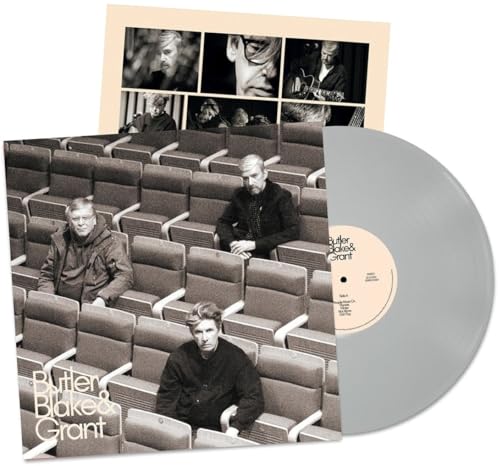
Butler, Blake & Grant / Murmurs

Only a year on from the release of their self-titled debut album, supergroup Butler, Blake & Grant have announced the follow up, Murmurs, which will be released in March.

The record sees the trio – Bernard Butler (Suede, McAlmont & Butler), Norman Blake (Teenage Fanclub) and James Grant (Love and Money) – reimagining songs from their respective back catalogues.

Butler, Blake & Grant formed when Scottish musician, Douglas MacIntyre, who promotes FRETS Concerts, invited them to perform a low-key concert in South Lanarkshire, Scotland, guessing that they would work well together. The trio then performed all over the UK and recorded a critically-acclaimed 2024 album of original material at Blake’s home on the banks of the River Clyde.

For Murmurs, the group reassembled at Blake’s studio to capture the original premise for the very early shows they played: three guitars, three voices, and selections from three impressive back catalogues.

The first song to be released from Murmurs is ‘Lonely Night’, written by Blake, which initially appeared as a bonus track called ‘Dark and Lonely Night’ on Teenage Fanclub’s 2010 album, Shadows.


Others songs on Murmurs include a version of Teenage Fanclub’s ‘Planets’, from their 1997 album, Songs From Northern Britain; a new take on Butler’s ‘Not Alone’, from his 1998 debut solo album, People Move On, and a version of Love and Money’s ‘Last Ship On The River’, which featured on the Scottish band’s fourth studio album, Littledeath, which came out in 1993.

Of the ten tracks featured on the new album, only one doesn’t originate from the trio: ‘Me & Magdelana’, which was written by Blake’s friend, Ben Gibbard of Death Cab for Cutie and The Postal Service, for The Monkees’ 2016 reunion album Good Times!

The long player is available as an exclusive, crystal-clear vinyl version, limited to 350 copies, from the Butler, Blake & Grant official shop. This edition boasts an alternate sleeve. The standard vinyl is silver and is limited to 1,000 copies.

Murmurs is released on 27 March 2026 via 355 Recordings. Butler, Blake & Grant will be playing UK shows this spring. Tickets are on sale now.

Tracklisting

Murmurs Butler, Blake & Grant /

      1. People Move On
      2. Planets
      3. Winter
      4. Not Alone
      5. Did I Say
      6. Last Ship On The River
      7. Me & Magdalena
      8. Souvenir
      9. Does It All Add Up To Nothing
      10. Lonely Night

Review: Nick Heyward – The Epic & Creation Years 1993-1998

Sean Hannam explores the new CD box set of 90s-era Nick Heyward and finds much to enjoy

After enjoying ‘80s hits with Haircut 100 and as a solo artist, singer-songwriter Nick Heyward started a new chapter of his career in the ‘90s – he signed to Epic, which was his third record label, in 1993, and released his fourth album, From Monday To Sunday.

As is clear from the rather unimaginative title of this new, 4CD, 76-track box set, The Epic & Creation Years 1993-1998, it focuses on the three albums he made for Epic and Creation, From Monday To Sunday (1993), Tangled (1995) and 1997’s The Apple Bed, but also adds demos of unreleased songs, B-sides and live versions.

Curated by the man himself, this compilation comes in seven-inch packaging and features a 24-page booklet, with a revealing interview with Heyward by Daryl Easlea, which sheds some light on how he feels about this period of his career.

“I was made for the ’90s – I loved all of it, right from the beginning with World Party’s Goodbye Jumbo, and Crowded House’s Woodface,” says Heyward.

“Things looked hopeful again for singer-songwriters after dance music seeming to dominate in the late 1980s. I really loved those albums – they were inspiring. I didn’t feel like the ’90s had much of a connection with the ’80s.”

He adds: “Terry Hall felt the same – he said it was just suddenly completely different. It was almost made for us, pop music and writing-wise. I never felt happier.”

First song, ‘He Doesn’t Love You Like I Do’ – the opener on From Monday To Sunday – sets the tone for a lot of what’s to follow. It’s a superb, jangly Beatlesy guitar tune.

Up next is the gorgeous and pastoral, psych-pop of ‘Kite’, which was inspired by a news report about a child going into prison in Turkey with his mum, who then died – the child flew his kite in the prison yard, and it was seen as symbolising freedom. With a touch of baroque, cello and its ‘Penny Lane’-style trumpet, ‘Kite’ was almost a hit – it got to number 44 in the UK singles chart. 

Heyward wasn’t afraid of hiding his love for the Beatles away – CD3, which is called Tangled Part 2, includes his EP of Fab Four covers, the playfully titled, A Hard Day’s Nick, which features faithful versions of ‘If I Needed Someone,’ ‘Nowhere Man’ and ‘All My Loving,’ with future Oasis member, Andy Bell (Ride, Hurricane #1), on lead guitar – Bell also bass plays on Tangled.

Also on CD3, there’s a frantic live rendition of The Beatles’ ‘Dr. Robert’, from Revolver, which was recorded in concert at The Fox Theatre in Boulder, Colorado on 14 February, 1994 – another cover, from the same gig, Heyward’s take on The Jam’s ‘Sounds From The Street’, is also included – he introduces it as his “favourite Jam song”.

Neither of these tracks have been released before – they’re nice to have, although hardly essential, and don’t stray too far from the originals, but they show where Heyward’s head was at the time musically.

The bright and breezy ‘Caravan’, on From Monday To Sunday, even mentions Weller’s punk/mod three-piece in the lyrics: ‘Don’t you know she still loves to play The Jam?’

Whilst writing From Monday To Sunday, Heyward moved from a one-bedroom flat in London to a cottage in the commuter belt town of Surbiton, and, like Weller in The Jam, he started writing observational songs about life in suburbia – so we get Ray Davies-like tracks such as ‘Ordinary People’ and ‘Mr. Plain.’

From Monday To Sunday was initially partly recorded at Pete Townshend’s barge studio in Twickenham – the record ended up being made in Fulham at Shaw Sound and Lilley Yard – but, funnily enough, it’s the follow-up album, Tangled, some of which was recorded at Parkgate Studios in Battle, Sussex, that embraces Who-like power-pop – there’s even a song on it called ‘Can’t Explain’…

Tangled still looks to The Beatles for inspiration – the world-weary opener, ‘Kill Another Day’, references ‘Tomorrow Never Knows’ in the lyric – ‘Another season goes – another secret tomorrow never ever knows’ – and has some Revolver-era backwards guitar, and the chiming ‘She Says She Knows’ borrows some of its chorus from ‘She Said She Said’ – but the album has a heavier and crunchier sound than From Monday To Sunday.

‘She’s Another Girl’ features a great, raw and slightly bluesy riff that brings to mind The La’s; the Tangled-era B-side, ‘Mr Shirt & Tie’, has a similar feel, and the Top 40 hit, ‘Rollerblade’, which name-checks The Smiths’ ‘Reel Around the Fountain’ and The Jesus and Mary Chain, is infectious and fuzzed-up, US-style college rock.

Heyward took another stroll down ‘Penny Lane’ for the anthemic ‘My Heavy Head’, from The Apple Bed – it’s got a Fab Four-esque string arrangement, echoey harmonies, and a jubilant trumpet solo by John Thirkell.

For The Apple Bed, Heyward found himself signed to Creation, as part of Sony Music, along with Beatles-loving label mates Oasis, so it’s no surprise that their influence loomed large on the record – the melancholy stadium rock ballad, ‘The Man You Used To Be’ could be his ‘Wonderwall,’ with Mellotron, piano and moody orchestration.

First single, ‘Today,’ is anthemic and noisy Britrock – with a wall of guitar, it sounds like it’s been chained to the mirror and the razor blade…

Speaking to SDE in an interview earlier this year, Heyward told us: “Being on Creation and the fact that Oasis was happening, and the influence of that… I got waylaid. When you get a Beatles influence and you put a Les Paul on it, it sounds like Oasis. In hindsight, I should’ve reined it in a bit.” Oh, well – don’t look back in anger… 

Ironically, it’s Blur that springs to mind on the previously unreleased demo ‘Some Holiday’ (on CD3) – a delightful and infectious, mid-paced, country-tinged song that was written after a US tour, but, sadly, didn’t find its way onto Tangled. Inspired by a holiday Heyward took with his keyboard player, Phil Taylor, who was pursuing a French woman that ended up becoming his girlfriend, it has some amusing and cheeky lyrics: ‘You were far too hasty / She’s so French and tasty…’ 

‘Fan Mail’ – another unreleased demo recorded in 1994, in preparation for the Tangled sessions – is a pleasant and jaunty instrumental with some nifty, wailing harmonica and jangly guitar. It reappears later, with vocals, as ‘Secrets’, which is a gem – a tuneful, intriguing and filmic song about someone fleeing to the coast to leave the past behind. In the sleeve notes interview, Heyward says that ahead of recording Tangled, he himself escaped to the coast, to write lyrics.

There’s a nice stripped-down and almost bluesy demo of ‘Carry On Loving’ from Tangled, while the never-before released demo, ‘She Washes Another Dish’, is a mournful and atmospheric, sparse guitar-led ballad about loneliness – you can imagine a more psychedelic, full-band version of it would’ve been stunning. 

Taken from the Tangled-era sessions, there’s a demo of a previously unreleased song called ‘I Don’t Feel Like It Anymore’, which is a nice-enough acoustic number that feels like it could’ve gone somewhere with a bit more work on it. Some of the lyrics are hard to make out, as the vocals are quiet, but the tune is pretty.

‘Mad About You’ is a 1992 demo recording of the song that became ‘Dear Miss Finland’ on The Apple Bed – it’s not as tight or focused as its successor, less mid-‘60s Beatles, and much rawer and rockier. 

The penultimate track on disc 4, ‘The End’ – not the Beatles song – was recorded after The Apple Bed sessions, and it first saw the light of day in 2011, when it was released on the Cherry Red expanded CD version of the album. It’s a moody and epic indie-rock song about the death of a relationship. 

As we’re talking about endings, after The Apple Bed, Heyward didn’t make another guitar pop album for 20 years –Woodland Echoes appeared in 2017.

Now, eight years later, he’s on a roll – a reformed Haircut 100 are releasing a new studio album, Boxing The Compass, in March 2026, and when SDE spoke to him in February of this year, he said he’d been writing songs for a solo album.

Heyward also had a co-write on this year’s Saint Etienne album, International – ‘The Go Betweens’, a duet with him and Sarah Cracknell, is soaring synth pop, with a lush and dreamy sound.

This box set is a reminder of why Heyward is one of England’s greatest and most underrated singer-songwriters, with a gift for killer choruses, warm and nostalgic guitar pop tunes and wry lyrics. 

If you don’t know these three ‘90s albums, then you’re in for a treat – this is a nice package – and if you’re already a fan of them, there’s enough unreleased material and extra tracks on here to justify you shelling out for this compilation – the asking price is around £35.

And, as if that’s not enough, From Monday To Sunday, Tangled and The Apple Bed are also available as new, separate coloured vinyl editions – in orange, blue and green, respectively. The latter two are making their vinyl debut, and the former is making its first appearance outside of a rare one-off pressing in the Netherlands. 

The LPs are released at the same time as the CD box set: November 28. What a fantastic day!

Review by Sean Hannam. The Epic & Creation Years 1993-1998 is released via Edsel on 28 November.

Compare prices and pre-order

Nick Heyward

The Epic and Creation years 1993 - 1998 - 4CD Signed edition

Currency:

Tracklisting

Nick Heyward / The Epic and Creation Years 1993-1998

The Epic and Creation Years 1993-1998 Nick Heyward / 4CD deluxe set

    • CD 1: From Monday to Sunday

      1. He Doesn’t Love You Like I Do
      2. Kite
      3. Into Your Life
      4. Caravan
      5. Ordinary People
      6. How Do You Live Without Sunshine
      7. January Man
      8. Mr Plain
      9. These Words
      10. All I Want You To Know
      11. Diary
      12. Everytime
      13. Something Inside
      14. Women In Love
      15. Say What You Got To Say
      16. Blue Hat For A Blue Day (Revisited)
      17. Whistle Down The Wind (Revisited)
      18. The Best (Hey There I Love You)
      19. House Of Love (1992 Demo)
      20. Jubilee Sunshine (1989 Demo)

    • CD 2: Tangled
      1. Kill Another Day
      2. Blinded
      3. Backdated
      4. She Says She Knows
      5. The World
      6. Carry On Loving
      7. I Love The Thing You Know I Don’t Know
      8. Can’t Explain
      9. Believe In Me
      10. Rollerblade
      11. The Breadwinner
      12. London
      13. She’s Another Girl
      14. 1961
      15. Mr Shirt And Tie
      16. Friday
      17. The World (Radio Edit)
      18. Fantastic Day (Acoustic Version)
      19. Kite (Acoustic Version)
      20. Caravan (Acoustic Version)
    • CD 3: Tangled – Continued
      1. Better Place
      2. Famous Man
      3. If I Needed Someone
      4. Nowhere Man
      5. All My Loving
      6. Kill Another Day (April 1994 Demo)
      7. Fan Mail (Instrumental April 1994 Demo)
      8. Carry On Loving (July 1994 Demo)
      9. Secrets (July 1994 Demo)
      10. Some Holiday (July 1994 Demo)
      11. London (July 1994 Demo)
      12. Sue Washes Another Dish (July 1994 Demo)
      13. Mr Shirt And Tie (July 1994 Demo)
      14. I Don’t Feel Like It Anymore (July 1994 Demo)
      15. Dr Robert (Live at The Fox Theatre, Bolder, 14/02/1994)
      16. Sounds From The Street (Live at The Fox Theatre, Bolder, 14/02/1994)
    • CD 4: The Apple Bed
      1. Star In Her Eyes
      2. In Every Place
      3. My Heavy Head
      4. The Chelsea Sky
      5. Just Like Sorrow
      6. Closer
      7. The Goodbye Man
      8. Reach Out For The Sun
      9. Today
      10. I Don’t Really Know You
      11. Dear Miss Finland
      12. The Man You Used To Be
      13. 3 Colours
      14. A Beautiful Place
      15. Time
      16. Shine
      17. The Brightest Pearl
      18. Going Somewhere
      19. The End
      20. Mad About You (Dear Miss Finland Demo)

Split Enz / Phil Manzanera: The SDE Interview

Split Enz’s Eddie Rayner joins Second Thoughts’ producer Phil Manzanera for a chat with SDE

New Zealand art-rockers Split Enz’s ground-breaking 1975 debut album, Mental Notes, is celebrating its 50th anniversary this year, and has been reissued, remastered and remixed for the first in a new series of the band’s archive releases.

ENZyclopedia Volumes One & Two is a deluxe 5CD box set that’s also available as a 3LP version and an SDE exclusive blu-ray edition, featuring a Dolby Atmos Mix.

CD1 of the box set features a 2025 remaster by Phil Kinrade at AIR Studios, while disc two has a brand-new remix of Second Thoughts by Split Enz keyboard player, Eddie Rayner – Second Thoughts was produced by Roxy Music’s guitarist, Phil Manzanera and was Split Enz’s first album release in Europe and North America, but their second in Australia and New Zealand, where Mental Notes was actually their debut (slightly confusingly, Second Thoughts was only known by that name in Australia and New Zealand and was simply called Mental Notes everywhere else).

CD3 has a remastered version of the original mix of Second Thoughts, while the penultimate disc collects the band’s earliest singles and rare tracks from their formative years. Disc five, Wide Angle Enz, features unreleased and rare material, including never-before-heard live recordings from the 1975 Ormond Hall show in Melbourne, and rough mixes from the Second Thoughts sessions, recently uncovered in the Chrysalis archives.

In 1975/76, Split Enz were Tim Finn (vocals, piano), Phil Judd (vocals, guitars, mandolin), Eddie Rayner (keyboards), Mike Chunn (bass), Emlyn Crowther (drums), Noel Crombie (percussion), Wally Wilkinson – lead guitar on Mental Notes  – and Robert Gillies, who played saxophone and trumpet on Second Thoughts. Neil Finn joined in 1977.

SDE spoke to Rayner and Manzanera about the new box set and got them to share some of their memories of making Second Thoughts in London, at Island Records’ Basing Street Studios.

SDE: The box set celebrates the 50th anniversary of Split Enz’s debut album – does it feel like 50 years?

Eddie Rayner: It does – it feels like an absolute eternity, but it all flooded back when I revisited it. When I listened to the old two-inch multitrack tapes – the original versions from Sydney in 1975 – I could’ve been right there. I’m the same person and it feels like everyone else is the same person they were then.

In the sleeve notes for the box set, you say that when you went back and listened to the original 1976 mixes of Second Thoughts, you didn’t really need to change them because they felt right, but then you were sifting through the digital transfers from the Chrysalis archives and curiosity got the better of you, so you started playing around with them…

Eddie: I was given the opportunity to do it, and by virtue of the fact that Chrysalis sent me all the files… they did a great job of digitally sending me all the stuff that they had on multitrack.

It was just sitting there, and I wasn’t really going to do anything with it, because I thought Second Thoughts was so well recorded and well mixed by Phil Manzanera and Rhett Davies. I didn’t really think it needed changing, but I had a play, one thing led to another, and then the next minute, I’d finished remixing the whole album. Whether it’s any better… I guess the trainspotters out there will let me know.

If it had never seen the light of day, it wouldn’t have worried me – it was just me doing what I do. I spend all day, every day, in my studio, mixing, whether it’s for Split Enz or other people.

Chrysalis liked the mixes – they do sound good, but they’re not a lot different. In a way, it’s like owning a classic car – you look after it, but then every 20, 30 or 40 years it needs a complete redo, rather than just a bit of spit and polish. When you do a remix, it’s like pulling it down to the bare metal and rebuilding it, and that’s sort of what I did with the mixes.

You’ve brought out Noel Crombie’s percussion more…

Eddie: Noel’s setup was notoriously difficult to mic up because there were so many aspects to it – so many individual instruments – so I guess it would’ve been a nightmare for the mixing engineer to bring out each one.

I felt Noel’s bits were sort of underutilised – he plays percussion like nobody else you know, and he colours in every song. I felt like he deserved better acknowledgement for his work, so I used whatever I could find from him to give him a bit of a guernsey.

Was it a daunting task remixing Second Thoughts?

Eddie: The task itself was OK, but the most daunting thing was telling the individual members of the band that I’d been remixing it and then just seeing their looks of total disdain and horror… particularly the drummer, who said, ‘No – why? Just don’t touch it!’ But he’s happy…

Noel must’ve been happy…

Eddie: He doesn’t say much, but he’ll let you know if he’s unhappy. He’s an affable and easy-going sort of character.

When Split Enz set out to make their first album, what kind of record did you intend it to be?

Eddie: I think we just wanted to capture the brilliance that we thought we had. We were young and naive – wet behind the ears – but there was a lot of things about the band that were great – particularly the writing.

We were still finding our way as players. I rated myself, along with the drummer, as being proper musicians, because we’d been playing prog rock – your trademark is you can play things faster and more complex than anybody else in the band… and that’s what it was like with Split Enz, but they were all good musicians.

It wasn’t until I remixed Second Thoughts that I realised how great they really all were – and they were so tasteful and inventive. Back in ’75, I thought they were good, and I loved the music and being in the band, but I just didn’t rate them as musicians. I didn’t think they were bad, just alright, you know… So, hey, you live and learn…

We had to leave New Zealand to be able to play the number of gigs we needed to play to become a good band – it takes hundreds of gigs for you to hit your straps, and to be able to compete with the great bands of the world.

With that first record [Mental Notes], we recorded it, and it was all fine – we thought we’d done a good job – but once we received the final mixes, Tim and I were just not that happy with them. We thought they didn’t really match the power or the feeling that we used to get on stage – we felt it was a little bit limp compared to how we thought we sounded. Whether or not we did sound like that was another thing, but that’s why we decided to go to England – once Phil Manzanera asked us.

[To Phil Manzanera]: When you produced Second Thoughts, you were impressed by how together and accomplished the band were with their arrangements, but you didn’t appreciate how long they’d been gigging…

Phil Manzanera: They’d been going for four years, so by the time they came to England, they had played all those tracks quite a few times, so no wonder they were bloody good! They were incredibly good musicians, and I hadn’t really appreciated how fantastic they were.

When I went to hear the Dolby Atmos version at Dolby in Soho Square recently, I thought ‘Wow – they’re incredible! Did I produce that?’ It’s so bloody good, I couldn’t believe it!’

What attracted you to Split Enz in the first place? Was it their off-the-wall look and feel, and their mix of styles?

Phil: Yeah – it’s got everything, and it’s like going on a magical mystery music tour. When I listen to it now, you’ve got whimsical lyrics, like Ray Davies, you’ve got psychedelia, you’ve got prog, you’ve got The Beatles – it’s a mixture of stuff.

Interesting bands are made up of people who all have certain musical things in common but who have different interests, so what you get is a strange brew, to quote Cream. You won’t hear it anywhere else, and you won’t hear it again.

Listening back now and trying to make sense of it, it’s a unique album. Even though there are versions of some of the tracks on Mental Notes, the big difference [on Second Thoughts] is you’ve got Robert Gillies on brass, which brings out the Beatlesy influence a lot – there was a richer sound palette to work with.

So, what was your production approach?

Phil: It was from the George Martin school of production – and I’d learnt that from Chris Thomas, who worked with George Martin.

You’re playing together in a room, doing backing tracks and then overdubbing bits, and making sure everyone’s parts are great and in tune. You’re picking a take – it’s not like using Pro Tools where you can do hundreds and chop them all up… I don’t remember chopping any different takes together…

I applied what I had learnt making all the Roxy albums – working with that Abbey Road method and the quality of microphone placement. It’s an old-fashioned way of producing, but you had to make sure that you captured a performance.

It’s different when you’ve got songs that are already written and they’ve been performed, as opposed to building up tracks in the studio that haven’t really been written properly, or when you don’t have any idea of where you’re going.

We started from finished stuff, so my job was not to interfere, but to try and make Split Enz come to life on record, sonically, in the best way that was available at that time.

[To Eddie]: How was it when you arrived in London for the first time to make the album with Phil?

Eddie: It was like coming home – our affiliation with England and that part of the world. I guess it was deep in our DNA. When we went to England, the National Geographic magazine was vindicated… whereas when we went to America for the first time, it was completely the opposite – it was nothing like I’d pictured it being.

You made the album at the Island Records studio in Basing Street, Notting Hill – while you were there, Bob Marley and The Wailers were making Exodus in the downstairs studio…

Eddie: Yeah – we could hear the bass. It was bleeding through from downstairs onto all our tapes. But recording the album was a great experience and it was all new to us and very high tech – a dream come true.

Phil was somebody that we looked up to musically, and he was a very good set of ears, and a very calming influence. There were certain members of the band, who shall go unnamed, who tended to get a bit worked up and a little bit nervous about recording…

Phil: They pitched up. I was 24 – I’d worked on two Eno albums, and Bryan Ferry and Andy Mackay’s solo albums… I had quite a lot of chops, and I’d learnt so much from Chris Thomas and from working with Eno… I thought ‘Let’s do it!’

So, we went to my safe place, which was Basing Street, and I used Rhett Davies, the same engineer that I’d used on my solo albums and with Eno – he’d been promoted from a tape op to an engineer. He’s worked with Roxy and he’s still working with Bryan Ferry.

We went for a rehearsal in Brewery Road – I recorded it on my cassette player – this little Pioneer stereo thing I had – and I still have the recording of it. I discovered it amongst all the junk in my so-called memorabilia archive, so I had it digitised a few years ago, and I sent it to Tim and Eddie because it was extraordinarily good.

I was pleased that at the age of 24, I could spot talent, and I was very happy to be associated with them. I’ve had an ongoing relationship with Neil, Tim and Eddie over the years – they are all incredibly talented. It will be nice for some new people to listen to Split Enz and to get their reaction.

Those early Split Enz albums still stand up now – there are very inventive, with a mix of rock and pop and some weird, quirky and experimental stuff…

Eddie: Yeah – I think of it as being like kids in a sweet shop or playing with a chemistry set. We were always very open. That was one of the things I loved about Split Enz in the early days – everybody was very encouraging of everybody else, and the wilder the better… When it came to things like my synthesizers, I was always encouraged to make the wildest sounds and do the most off-the-wall stuff I could. That was our kind of mantra with everything we ever did, and in terms of how we looked and dressed, and even our mannerisms. We sort of had our own little culture and it was quite elitist.

Looking back now, how do you feel about some of those costumes you wore?

Eddie: I mean Noel…. really? I hate to think what he’s going to come up with for the gigs we’re doing next year. One of the things I’ve learned is that as you get older, you start to look silly in clothing that isn’t becoming of your age. Noel’s got his work cut out, but he’ll definitely come up with something…

I remember when we first started playing around London, and we went to our digs in the King’s Road, there were punks everywhere, and mods and rockers. They were quite taken by the way we looked, but they were very suspicious of us.

When we played at Imperial College, all the punks were there. Sid Vicious and Siouxsie Sioux were in the front row, and they were checking us out. I don’t know whether they liked us or hated us… They might’ve liked bits of us, like our hairstyles, which were pretty extreme…

Noel used to do our haircuts – we used to call him the Paekākāriki Butcher… Paekākāriki is a town near Wellington. His haircuts were notoriously over the top, but we didn’t care – we’d walk around with them in broad daylight…

Phil: We were entering the full Sex Pistols punk mode, with Malcolm McLaren and Vivienne Westwood and that kind of image, which couldn’t be further away from what Split Enz were wearing… I went to the [Split Enz] gigs in the pubs… The timing wasn’t brilliant – if the whole thing had happened three years earlier, maybe they’d have been a lot more successful in England…

I introduced them to my friends, who became their friends – Eno popped in and they met Andy Mackay. There was a club called Zanzibar that was difficult to get into – lots of Roxy people went there, and the fashion designers…

Split Enz felt plugged in, but, ultimately, they hoped, that, naively, by coming to London and having that association with Roxy, it was going to instantly make them famous, but it doesn’t work like that. They didn’t have a single to get on Top of the Pops – if you had that, you were 90% of the way there. With Roxy, we had ‘Virginia Plain’ and it worked – we were on Top of the Pops and boom! Timing is everything – that’s why it took a bit longer for Split Enz to become big.

Split Enz were a difficult band to pigeonhole – they had their own sound, but also elements of art rock and prog, like Genesis, 10cc and Queen…

Eddie: One of the words that was bandied around a lot was ‘mental’ – we used to say, ‘Oh, that’s really mental…’ These days it’s used by everybody all the time, but back then we used to say it – we just wanted everything to be ‘mental.’

It wasn’t meant to be disparaging of people who were intellectually challenged – it was just to be out there and not follow trends. We just tried to be ourselves and create our own style – and it was fun.

There are more Split Enz box sets planned, aren’t there?

Eddie: There’s probably going to be another two, three or four coming out as part of the overall ENZyclopedia. This is the first one and there’s not a huge amount of bonus material because back then we hadn’t done much recording – there wasn’t a lot of old material lying around. In the other box sets, there will be a lot of bonus material and live stuff that no one’s heard before.

And you’re reforming to play your first gigs since 2009 next year – there are shows in New Zealand and Australia…

Eddie: Yeah – I’ve gotta learn all those songs again and programme them up.

Do you think Split Enz will play in the UK again?

Eddie: It may happen – we’re talking about it.

Phil: I think it would be fabulous – they’ve got loads of hits now, and they could throw in some of their solo things, which a lot of the fans know. Plus, there’s the songs Tim and Finn wrote for Crowded House… You’ve got wall-to-wall fun! I think it would be a winner, and I hope they come to London.

So, what else are you up to?

Eddie: Tim and I have a project called Forenzics – Chrysalis are going to release our second record early next year, so that’ll be good. The thing about Forenzics is that it’s delving back into our old Split Enz material, taking snippets from it and reforging them – those snippets that we felt were maybe not capitalised on enough. They were overlooked as good pieces of music, so we’re turning them into new songs. We’ve done two albums and I think they’re great – I’m really proud of them.

I also have a band called Double Life – and we’ve done a lot of stuff, which is up online. Tim writes lyrics for us as well. We’re always working, but [playing] live is hard – we’ve chosen to come and live back here in New Zealand, but it’s a very small place and there’s not a lot of opportunity to play live here.

[To Phil]: Are you working on new material?

Phil: I’m always busy. I’m doing a new album with Quiet Sun – the band I had before Roxy. It’s 90% done and it will be out next year. We’re hoping to get into the Guinness Book of Records for the longest time between a first and second album – 51 years!

And in September this year, you released a new live album with Andy Mackay – AM PM Soho Live…

Phil: Yes – it’s from an extraordinary 90 percent improvised event. We did three nights at a screening theatre in Soho. There was a lot of jeopardy – I had no idea what it was going to be like, and I didn’t want to do it! Andy forced me – and I said that I could always blame him… But the reviews were fantastic… It’s what I call ‘avant-rock’, and when I answered the ad to join Roxy, which I still have, it said: ‘Avant-rock group…’

I’d forgotten all about that for ages, and I was thinking, ‘What the hell is avant-rock?’ I realised that what me and Andy were doing was returning to our original mission statement for Roxy, which was to be an avant-rock group.

[To Eddie]: You played on Paul McCartney’s 1986 album, Press to Play. How did that come about? Had he been to see Split Enz play live?

Eddie: I think so – he was in and out of AIR in London when we were recording our album Dizrythmia. So, he was aware of us, and Hugh Padgham was producing his record. I’ve done a lot of work with Hugh – we first met in ’77, when he was the assistant engineer on the [Split Enz] Frenzy album. He suggested me to Paul – I guess he needed a keyboard player. So, I hopped on a plane and stayed for a few weeks…

And you got to play with Pete Townshend and Phil Collins on that record…

Eddie: Yes – I did. And Eric Stewart and Carlos Alomar.

How was it?

Eddie: It was daunting, but it was fun – I didn’t have anything to lose. I’d just been working on all Crowded House’s demos – ‘Don’t Dream It’s Over’, ‘World Where You Live’… all those amazing songs from their first record.

I’d been demoing a lot of them at my studio, with Neil Finn, and he had been out shopping them around, so I took them over and played them to Paul, who I think was mightily impressed. It wasn’t a big job for me, but it was an amazing experience playing with those musicians.

Thanks to Eddie Rayner and Phil Manzanera, who were talking to Sean Hannam for SDE.

ENZyclopedia Volumes 1 & 2 on SDE exclusive blu-ray, and the other formats, is out now, via Chrysalis. Phil and Andy’s AM PM Soho Live is also available now out via Expression Records.

Tracklisting

ENZcyclopedia Volumes 1 & 2 Split Enz / SDE exclusive blu-ray

    • MENTAL NOTES
      – 1975 Original Stereo Mix Remastered [96/24 bit]
      1. Walking Down A Road
      2. Under The Wheel
      3. Amy (Darling)
      4. So Long For Now
      5. Stranger Than Fiction
      6. Time For A Change
      7. Maybe
      8. Titus
      9. Spellbound
      10. Mental Notes
      SECOND THOUGHTS
      – Michael Carpenter Dolby Atmos Mix [48/24 bit]
      – Michael Carpenter 5.1 Mix [48/24 bit]2025
      – Eddie Rayner Stereo Mix [96/24 bit]
      – 1976 Original Stereo Mix Remastered [96/24 bit]
      1. Late Last Night
      2. Walking Down A Road
      3. Titus
      4. Lovey Dovey
      5. Sweet Dreams
      6. Stranger Than Fiction
      7. Time For A Chan
      8. Matinee Idyll (129)
      9. The Woman Who Loves You1
      10. Mental Notes (1976 Stereo Mix Only)
      MUSIC VIDEOS
      1. Sweet Dreams
      2. Lovey Dovey
      3. Late Last Night

Tracklisting

Split Enz / ENZyclopedia Volumes 1 & 2 - 5CD box set

ENZcyclopedia Volumes 1 & 2 Split Enz / 5CD box set

    • CD 1: Mental Notes (2025 Remaster)
      1. Walking Down A Road
      2. Under The Wheel
      3. Amy (Darling)
      4. So Long For Now
      5. Stranger Than Fiction
      6. Time For A Change
      7. Maybe
      8. Titus
      9. Spellbound
      10. Mental Notes
    • CD 2: Second Thoughts – 2025 Eddie Rayner Remix
      1. Late Last Night
      2. Walking Down A Road
      3. Titus
      4. Lovey Dovey
      5. Sweet Dreams
      6. Stranger Than Fiction
      7. Time For A Change
      8. Matinee Idyll
      9. The Woman Who Loves You
    • CD 3: Second Thoughts – Original Stereo Mix, 2025 Remaster
      1. Late Last Night
      2. Walking Down A Road
      3. Titus
      4. Lovey Dovey
      5. Sweet Dreams
      6. Stranger Than Fiction
      7. Time For A Change
      8. Matinee Idyll
      9. The Woman Who Loves You
      10. Mental Notes
    • CD 4: The Beginning of the Enz
      1. Spellbound (2025 Eddie Rayner Remix)
      2. No Bother To Me (2025 Eddie Rayner Remix)
      3. Malmsbury Villa (2025 Eddie Rayner Remix)
      4. Sweet Talking Spoon Song (2025 Eddie Rayner Remix)
      5. Lovey Dovey (2025 Eddie Rayner Remix)
      6. 129 (2025 Remaster)
      7. Split Ends (2025 Remaster)
      8. For You (2025 Remaster)
      9. Home Sweet Home (2025 Remaster)
    • CD 5: Wide Angle Enz
      1. Sweet Dreams (Live At Ormond Hall, Eddie Rayner Remix)
      2. Late Last Night (Archival Rough Mix)
      3. Stranger Than Fiction (‘Mental Notes’ Version, Eddie Rayner Remix)
      4. 129 (MAtinee Idyll) (Live At Ormond Hall, Eddie Rayner Remix)
      5. Titus (Archival Rough Mix)
      6. Under The Wheel (Live At Ormond Hall, Eddie Rayner Remix)
      7. Time For A Change (Live At Ormond Hall, Eddie Rayner Remix)

Tracklisting

Split Enz photographed by Peter Hill-Travis

ENZcyclopedia Volumes 1 & 2 Split Enz / 3LP vinyl

    • LP 1: Mental Notes (2025 Remaster)
      Side A
      1. Walking Down A Road
      2. Under The Wheel
      3. Amy (Darling)
      4. So Long For Now
      Side B
      1. Stranger Than Fiction
      2. Time For A Change
      3. Maybe
      4. Titus
      5. Spellbound
      6. Mental Notes
    • LP 2: Second Thoughts – 2025 Eddie Rayner Remix
      Side A
      1. Late Last Night
      2. Walking Down A Road
      3. Titus
      4. Lovey Dovey
      5. Sweet Dreams
      Side B
      1. Stranger Than Fiction
      2. Time For A Change
      3. Matinee Idyll
      4. The Woman Who Loves You
    • CD 4: The Beginning of the Enz
      Side A – 2025 Eddie Rayner Remixes
      1. Spellbound
      2. No Bother To Me
      3. Malmsbury Villa
      4. Sweet Talking Spoon Song
      5. Lovey Dovey
      Side B – 2025 Remasters
      1. 129
      2. Split Ends
      3. For You
      4. Home Sweet Home

Review: Bob Dylan / Through The Open Window: Bootleg Series Vol 18, 1956-1963

“Through The Open Window is an essential set for diehard Dylan fans”

Last year’s acclaimed Bob Dylan biopic, A Complete Unknown, starts in the winter of 1961, with the 19-year-old musician, played by Timothée Chalamet, hitchhiking his way to New York, but Through The Open Window – Volume 18 in the long-running Bootleg Series – goes back even further to the roots of the legendary singer-songwriter.

Covering the years 1956 –1963, over the course of this 8CD box set, we are taken on a fascinating journey from Dylan’s beginnings in Minnesota to his late teenage years on the college coffee shop circuit in Dinkytown, Minneapolis and becoming part of the Greenwich Village bohemia of the early 1960s.

As history professor and Dylan author, Sean Wilentz, writes in his extensive and excellent sleeve notes that are included in the 125-page hardback book which accompanies the 139-track collection – the 2CD and 4LP ‘highlights’ editions include 42 tracks – there are “unreleased concert performances and uncirculated studio outtakes… rarities of Dylan performing in friends’ apartments, on radio broadcasts, in the office of the left-wing folk revival magazine, Broadside, and in long-gone folk clubs and musicians’ hangouts”.

Featuring 48 never-before released performances and 38 ‘super-rare cuts’, the compilation culminates with the previously unreleased complete recording of Dylan’s landmark show at New York’s Carnegie Hall on October 26, 1963 – the concert is spread over discs 7 and 8.

Tantalisingly, the collection begins with what is likely to be Dylan’s first ever recording – we hear a snippet of him as a 15-year-old, singing and playing piano in a high school trio called the Jokers, laying down a rough and ready but enthusiastic version of the R & B song, ‘Let The Good Times Roll’, on a DIY 78rpm acetate at the Terlinde Music Shop in St. Paul, Minnesota on Christmas Eve, 1956. This is followed by one of Dylan’s early self-penned songs – a derivative doo-wop-style number called ‘I Got A New Girl’, that was taped at the Hibbing home of a friend, Ric Kangas, in May 1959. 

The young Dylan idolised US folk singer, Woody Guthrie – in 1960, he became obsessed with him after reading his autobiography, Bound For Glory – and before he discovered his own sound, Dylan was essentially a Guthrie impersonator, and on Disc 1 of this set there’s an amateur recording of him playing Guthrie’s ‘Jesus Christ’ that was taped by 15-year-old folk enthusiast, Clive Pettersen, during a gathering at Dylan’s apartment in Minneapolis, during September 1960.

But it’s not until we hear tracks recorded on a reel-to-reel Wollensak tape machine in Madison, Wisconsin in late 1960 that we truly get a glimpse of what Dylan would sound like when he arrived in New York a few weeks later, in the winter of ’61. On the spirited ‘East Virginia Blues’ – a traditional song first recorded by the Carter Family – there are early signs of Dylan moving away from copying Guthrie and beginning to develop his own style. After it finishes, Dylan tells us that he heard the song “down South from some old guy”.

‘Song to Woody’ – Dylan’s paean to his songwriting hero – would appear on his 1962 self-titled debut album, but on CD1 of this set we are treated to a wonderfully intimate live recording of it, captured at New York’s Gaslight Café – a hub for folk musicians – in Greenwich Village, during the September of the year before.

Recorded at the same gig, there’s a version of the amusing and satirical ‘Talkin’ Bear Mountain Picnic Massacre Blues’, which gets a good reaction from the crowd, who laugh when Dylan introduces it.

In September ’61, Dylan did his first commercial recording session at Columbia Studios, playing harmonica for US folk singer-songwriter, Carolyn Hester. The last track on CD1 is an alternate take of the rousing, ‘I’ll Fly Away’, a song which ended up on Hester’s self-titled third album from 1962. Dylan plays on three tracks on the record. 

He went back to the same studio in November ’61 to record his debut album – one of the highlights on CD2 is a compelling version of the old Anglo-American ballad, ‘House Carpenter’, which was laid down on the second day of the sessions, but, frustratingly, the song didn’t make it onto the record. 

Also included from the same sessions is an alternate take of Jesse Fuller’s ‘You’re No Good’ – a song that did end up on Dylan’s debut. This previously unreleased version includes a spoken introduction by Dylan explaining how he first heard the song, but he has to restart the performance after making a mistake. 

CD3 opens with the first recording of ‘The Death of Emmett Till’ – taken from a WBAI radio broadcast in 1962, Dylan wrote the protest song about the murder of a 14-year-old African American boy. The host of the radio show, Cynthia Gooding, tells Dylan that it’s one of the greatest contemporary ballads she’s ever heard. 

The same disc features six songs from a 20-minute set Dylan performed for a Monday night hootenanny at Gerdes’s Folk City in New York on April 16, 1962 – a month after the release of his first album. Opening with an upbeat brand-new song, ‘Honey, Just Allow Me One More Chance’, the concert is notable for featuring the first ever public performance of ‘Blowin’ in the Wind’ – which, at that point in time, was only two verses long.

‘Blowin’ in the Wind’ would become one of Dylan’s most well-known protest songs and it was the opening track on his 1963 album, The Freewheelin’ Bob Dylan – a record which also included his almost seven-minute, apocalyptic epic, ‘A Hard Rain’s A-Gonna Fall‘.

On CD4, as well as several outtakes from Freewheelin’, including an alternate take of the riotous ‘Mixed-Up Confusion’, recorded with an electric band, we get to hear an early live performance of ‘A Hard Rain’s A-Gonna Fall’ – one of four songs recorded at a private, after-hours gathering at the Gaslight in October ’62.

Also in the set, there’s a still-evolving ‘Don’t Think Twice, It’s Alright‘, a spellbinding ‘Barbara Allen’, which clocks in at eight minutes, and a superb bluesy and hypnotic version of the traditional folk-ballad ‘Cuckoo’.

There are yet more Freewheelin’ outtakes on CD5 – an alternate version of ‘Masters of War’, a dark, accusatory and politically-charged song which found its way into Dylan’s tour setlist this summer for the first time in almost 10 years – and the gentle love song, ‘Girl From the North Country’. 

The same disc has six tracks from a 1963 Dylan show at New York’s Town Hall, plus the only known version of his own composition, ‘I Rode Out One Morning’ taken from a private recording made at the home of Mac and Eve McKenzie in New York.

An interesting rarity on CD6 is a performance of ‘Liverpool Gal’ – recorded in the summer of ’63 during a party at the home of his friend, Tony Glover, in Minneapolis, it’s a Dylan original, and was inspired by a girl he met while visiting London, but it’s based on the tragic romantic ballad, ‘Lily of the West’ – a song Dylan would revisit a few years later. 

Four tracks from Dylan’s first appearance at the Newport Folk Festival, in July ’63, are also featured on CD6, including the moody ‘North Country Blues’ – a tale of hard life in a mining community – and a stirring version of ‘With God On Our Side’, on which he duets with Joan Baez. There are also outtakes from the recording sessions for his third album, the following year’s The Times They Are A-Changin.’

Discs 7 and 8 are given over to the sold-out concert the 22-year-old Dylan performed at New York’s Carnegie Hall on October 26, 1963. Songs from this show have been released on previous compilations, including The Bootleg Series Volumes 1–3 (Rare & Unreleased) 1961-1991 and 2005’s The Bootleg Series Vol. 7: No Direction Home: The Soundtrack, but this is the first time the concert has been presented in its entirety – all 19 songs from the set.

In just under two years, Dylan had graduated from performing on a side stage at Carnegie Hall in November 1961 to the venue’s main stage. Made up of songs he’d performed at New York’s Town Hall earlier that year, and newer material written in the months leading up to the big Carnegie Hall gig, the concert is a treat, with Dylan on fine form.

Opening with the prophetic ‘The Times They Are A-Changin’’– the first concert performance of the song – there are comic asides, such as when he prefaces ‘Blowin’ in the Wind’ with a stand-up routine, and darker, more intense moments, with powerful renditions of ‘A Hard Rain’s A-Gonna Fall’, ‘Masters of War’ and ‘The Lonesome Death of Hattie Carroll’.

There’s been plenty written about Dylan’s early life, including his own account in the candid and intriguing 2004 memoir, Chronicles Volume One, but, as Wilentz says in the introduction to his sleeve notes, Through The Open Window is different because it tells the story entirely through recordings made in those formative years. 

Compiled chronologically, it’s an essential set for diehard Dylan fans, and, with most of the songs being previously unreleased, a real treasure trove – Dylan’s management and label, Columbia Records / Legacy Recordings have been working on the project for years, tracking down rarities.

The collection ends in late October 1963 – the following year, Dylan would release two albums, The Times They Are A-Changin’ and Another Side of Bob Dylan and become the spokesperson for a generation. Next, in ’65, he would shock the music world by ‘going electric,’ but that’s a story for another day…

Review by Sean Hannam for SDE. Through The Open Window: Bootleg Series Vol 18, 1956-1963 is released this Friday, 31 October 2025, via Sony Music.

Tracklisting

Through The Open Window Bob Dylan /

    • CD 1
      1. Let the Good Times Roll (Terlinde Music Shop, St. Paul, MN, 1956)
      2. I Got a New Girl (Informal Recording, Hibbing, MN, 1959)
      3. San Francisco Bay Blues (Informal Recording, Minneapolis, MN, 1960)
      4. Jesus Christ (Informal Recording, Minneapolis, MN, 1960
      5. East Virginia Blues (Informal Recording, Madison, WI, 1960)
      6. C. Moan (Informal Recording, Madison, WI, 1960)
      7. Bob Dylan with Danny Kalb
      8. Hard Travelin’ (Informal Recording, Madison, WI, 1960)
      9. Bob Dylan with Danny Kalb
      10. Pastures of Plenty (Informal Recording, East Orange, NJ, 1961)
      11. Remember Me (Informal Recording, East Orange, NJ, 1961)
      12. Song to Woody (The Gaslight Cafe, NYC, 1961)
      13. Talkin’ Bear Mountain Picnic Massacre Blues (The Gaslight Cafe, NYC, 1961)
      14. Ain’t No Grave (Informal Recording, NYC, 1961)
      15. I Ain’t Got No Home (University of Minnesota, Minneapolis, MN, 1961)
      16. Death Don’t Have No Mercy (Party, Minneapolis, MN, 1961)
      17. Devilish Mary (Party, Minneapolis, MN, 1961)
      18. Introduction: Riverside Church (Riverside Church, NYC, 196)
      19. Handsome Molly (Riverside Church, NYC, 1961)
      20. Introduction: See That My Grave Is Kept Clean (Gerdes Folk City, NYC, 1961) –
      21. See That My Grave Is Kept Clean (Gerdes Folk City, NYC, 1961)
      22. The Girl I Left Behind (Gerdes Folk City, NYC, 1961)
      23. Introduction: Pretty Boy Floyd (Gerdes Folk City, NYC, 1961)
      24. Pretty Boy Floyd (Gerdes Folk City, NYC, 1961)
      25. Bob Dylan with Jim Kweskin
      26. Railroading on the Great Divide (Gerdes Folk City, NYC, 1961)
      27. Bob Dylan with Jim Kweskin
      28. Introduction: Fixin’ to Die (Folklore Center, NYC, 1961)
      29. Fixin’ to Die (Folklore Center, NYC, 1961
      30. Bob Dylan with Dave Van Ronk
      31. I’ll Fly Away (Carolyn Hester Alternate Take, NYC, 1961)
      32. Carolyn Hester with Bob Dylan
    • CD 2
      1. Introduction: In the Pines (Carnegie Chapter Hall, NYC, 1961)
      2. In the Pines (Carnegie Chapter Hall, NYC, 1961)
      3. Gospel Plow (Carnegie Chapter Hall, NYC, 1961)
      4. Introduction: Young But Daily Growing (Carnegie Chapter Hall, NYC, 1961)
      5. Young But Daily Growing (Carnegie Chapter Hall, NYC, 1961)
      6. Man on the Street (Carnegie Chapter Hall, NYC, 1961)
      7. This Land Is Your Land (Carnegie Chapter Hall, NYC, 1961)
      8. Pretty Polly (Carnegie Chapter Hall, NYC, 1961)
      9. Man of Constant Sorrow (Bob Dylan Rehearsal, NYC, 1961)
      10. House Carpenter (Bob Dylan Outtake, NYC, 1961)
      11. You’re No Good (Bob Dylan Alternate Take, NYC, 1961)
      12. He Was a Friend of Mine (Bob Dylan Outtake, NYC, 1961)
      13. Ramblin’ Round (Bob Dylan Outtake, NYC, 1961)
      14. Story: East Orange, New Jersey (Party, Minneapolis, MN, 1961)
      15. Stealin’ (Party, Minneapolis, MN, 1961)
      16. Po’ Lazarus (Party, Minneapolis, MN, 1961)
      17. Dink’s Song (Party, Minneapolis, MN, 1961)
      18. I Was Young When I Left Home (Party, Minneapolis, MN, 1961)
      19. In the Evening (Party, Minneapolis, MN, 1961)
      20. Baby, Let Me Follow You Down (Party, Minneapolis, MN, 1961)
      21. Cocaine (Party, Minneapolis, MN, 1961)
    • CD 3
      1. The Death of Emmett Till (WBAI-FM, NYC, 1962)
      2. Conversation: Folksinger’s Choice, 1 (WBAI-FM, NYC, 1962)
      3. Roll On, John (WBAI-FM, NYC, 1962)
      4. Conversation: Folksinger’s Choice, 2 (WBAI-FM, NYC, 1962)
      5. Hard Times in New York Town (WBAI-FM, NYC, 1962)
      6. Talkin’ John Birch Paranoid Blues (Informal Recording, NYC, 1962)
      7. Ballad of Donald White (Informal Recording, NYC, 1962)
      8. Midnight Special (The Midnight Special Rehearsals, NYC, 1962)
      9. Harry Belafonte with Bob Dylan
      10. Midnight Special (The Midnight Special Alternate Take, NYC, 1962)
      11. Harry Belafonte with Bob Dylan
      12. Wichita (Three Kings and the Queen Album Version, NYC, 1962)
      13. Big Joe Williams with Bob Dylan
      14. It’s Dangerous (Kings and the Queen, Volume Two Album Version, NYC, 1962)
      15. Victoria Spivey with Bob Dylan and Big Joe Williams
      16. Honey, Just Allow Me One More Chance (Gerdes Folk City, NYC, 1962)
      17. Talkin’ New York (Gerdes Folk City, NYC, 1962)
      18. Corrina, Corrina (Gerdes Folk City, NYC, 1962)
      19. Deep Ellum Blues (Gerdes Folk City, NYC, 1962)
      20. Introduction: Blowin’ in the Wind (Gerdes Folk City, NYC, 1962) – 0:00:19
      21. Blowin’ in the Wind (Gerdes Folk City, NYC, 1962)
      22. Rambling, Gambling Willie (Freewheelin’ Outtake, NYC, 1962)
      23. (I Heard That) Lonesome Whistle (Freewheelin’ Outtake, NYC, 1962) – 0:02:06
      24. Rocks and Gravel (Freewheelin’ Outtake, NYC, 1962)
      25. Paths of Victory (Broadside Office, NYC, 1962)
      26. Train A-Travelin’ (Broadside Reunion Album Version, NYC, 1962)
      27. Hiram Hubbard (The Finjan, Montreal, 1962)
      28. Quit Your Low Down Ways (The Finjan, Montreal, 1962)
      29. Let Me Die in My Footsteps (The Finjan, Montreal, 1962)
      30. Ramblin’ on My Mind (The Finjan, Montreal, 1962)
      31. Blue Yodel No. 8 (Mule Skinner Blues) (The Finjan, Montreal, 1962)
    • CD 4
      1. Baby, Please Don’t Go (Freewheelin’ Outtake, NYC, 1962)
      2. Worried Blues (Freewheelin’ Outtake, NYC, 1962)
      3. Baby, I’m in the Mood for You (Freewheelin’ Outtake, NYC, 1962)
      4. Bob Dylan’s Blues (Freewheelin’ Alternate Take, NYC, 1962)
      5. Introduction: Tomorrow Is a Long Time (Party, Minneapolis, MN, 1962)
      6. Tomorrow Is a Long Time (Party, Minneapolis, MN, 1962)
      7. This Land Is Your Land – The Last Verses (Party, Minneapolis, MN, 1962) – 0:01:44
      8. Long Time Gone (Party, Minneapolis, MN, 1962)
      9. A Hard Rain’s A-Gonna Fall (The Gaslight Cafe, NYC, 1962)
      10. Don’t Think Twice, It’s All Right (The Gaslight Cafe, NYC, 1962)
      11. Barbara Allen (The Gaslight Cafe, NYC, 1962)
      12. The Cuckoo (The Gaslight Cafe, NYC, 1962)
      13. That’s All Right (Freewheelin’ Outtake, NYC, 1962)
      14. Mixed-Up Confusion (Single Alternate Take, NYC, 1962)
      15. Ballad of Hollis Brown (Freewheelin’ Outtake, NYC, 1962)
      16. Kingsport Town (Freewheelin’ Outtake, NYC, 1962)
      17. Whatcha Gonna Do? (Freewheelin’ Outtake, NYC, 1962)
      18. Hero Blues (Freewheelin’ Outtake, NYC, 1962)
      19. I Shall Be Free (Freewheelin’ Alternate Take, NYC, 1962)
    • CD 5
      1. The Ballad of the Gliding Swan (BBC-TV, London, 1963)
      2. Only a Hobo (Broadside Ballads Album Version, NYC, 1963)
      3. John Brown (Broadside Ballads Album Version, NYC, 1963)
      4. All Over You (Informal Recording, NYC, 1963) Bob Dylan with Happy Traum and Gil Turner
      5. Oxford Town (Witmark Demo, NYC, 1963)
      6. Bob Dylan’s Dream (Town Hall, NYC, 1963)
      7. Introduction: Walls of Red Wing (Town Hall, NYC, 1963)
      8. Walls of Red Wing (Town Hall, NYC, 1963)
      9. Introduction: Tomorrow Is a Long Time (Town Hall, NYC, 1963)
      10. Tomorrow Is a Long Time (Town Hall, NYC, 1963)
      11. Dusty Old Fairgrounds (Town Hall, NYC, 1963)
      12. Introduction: Pretty Peggy-O (Town Hall, NYC, 1963)
      13. Pretty Peggy-O (Town Hall, NYC, 1963)
      14. Who Killed Davey Moore? (Town Hall, NYC, 1963)
      15. Last Thoughts on Woody Guthrie (Town Hall, NYC, 1963)
      16. James Alley Blues (Informal Recording, NYC, 1963)
      17. I Rode Out One Morning (Informal Recording, NYC, 1963)
      18. House of the Rising Sun (Informal Recording, NYC, 1963)
      19. Talkin’ World War III Blues (Club 47, Cambridge, MA, 1963)
      20. Masters of War (Freewheelin’ Alternate Take, NYC, 1963)
      21. Girl from the North Country (Freewheelin’ Alternate Take, NYC, 1963)
    • CD 6
      1. Introduction by Cordell Reagon (SNCC Rally, Greenwood, MS, 1963)
      2. Only a Pawn in Their Game (SNCC Rally, Greenwood, MS, 1963)
      3. Blowin’ in the Wind (SNCC Rally, Greenwood, MS, 1963)
      4. Eternal Circle (Party, Minneapolis, MN, 1963)
      5. Liverpool Gal (Party, Minneapolis, MN, 1963)
      6. West Memphis (Party, Minneapolis, MN, 1963) Bob Dylan with Tony Glover
      7. North Country Blues (Newport Folk Festival, RI, 1963)
      8. With God on Our Side (Newport Folk Festival, RI, 1963) Bob Dylan with Joan Baez
      9. Playboys and Playgirls (Newport Folk Festival, RI, 1963)

      Bob Dylan with Pete Seeger

      1. Blowin’ in the Wind (Newport Folk Festival, RI, 1963) Bob Dylan with with Joan Baez, Peter, Paul & Mary, The Freedom Singers, Pete Seeger
      2. Slate: Boots of Spanish Leather (The Times They Are A-Changin’ Sessions, NYC, 1963)
      3. Boots of Spanish Leather (The Times They Are A-Changin’ Alternate Take, NYC, 1963)
      4. Seven Curses (The Times They Are A-Changin’ Outtake, NYC, 1963)
      5. Farewell (The Times They Are A-Changin’ Outtake, NYC, 1963)
      6. Bob Dylan’s New Orleans Rag (The Times They Are A-Changin’ Outtake, NYC, 1963)
      7. Moonshiner (The Times They Are A-Changin’ Outtake, NYC, 1963)
      8. Introduction by Joan Baez (Forest Hills Tennis Stadium, NYC, 1963)
      9. Troubled and I Don’t Know Why (Forest Hills Tennis Stadium, NYC, 1963) Bob Dylan with Joan Baez
      10. Introduction by Ossie Davis (March on Washington, Washington, D.C., 1963)
      11. When the Ship Comes In (March on Washington, Washington, D.C., 1963) Bob Dylan with Joan Baez
      12. The Lonesome Death of Hattie Carroll (Party, Los Angeles, 1963)
      13. The Times They Are A-Changin’ (Informal Recording, Los Angeles, 1963)
      14. One Too Many Mornings (The Times They Are A-Changin’ Alternate Take, NYC, 1963)
      15. Key to the Highway (The Times They Are A-Changin’ Outtake, NYC, 1963)
    • CD 7
      1. The Times They Are A-Changin’ (Carnegie Hall, NYC, 1963)
      2. Ballad of Hollis Brown (Carnegie Hall, NYC, 1963)
      3. Introduction: Who Killed Davey Moore? (Carnegie Hall, NYC, 1963)
      4. Who Killed Davey Moore? (Carnegie Hall, NYC, 1963)
      5. Boots of Spanish Leather (Carnegie Hall, NYC, 1963)
      6. Talkin’ John Birch Paranoid Blues (Carnegie Hall, NYC, 1963)
      7. Lay Down Your Weary Tune (Carnegie Hall, NYC, 1963)
      8. Introduction: Blowin’ in the Wind (Carnegie Hall, NYC, 1963)
      9. Blowin’ in the Wind (Carnegie Hall, NYC, 1963)
      10. Introduction: Percy’s Song (Carnegie Hall, NYC, 1963)
      11. Percy’s Song (Carnegie Hall, NYC, 1963)
      12. Seven Curses (Carnegie Hall, NYC, 1963)
      13. Walls of Red Wing (Carnegie Hall, NYC, 1963)
      14. Introduction: North Country Blues (Carnegie Hall, NYC, 1963)
      15. North Country Blues (Carnegie Hall, NYC, 1963)
      16. A Hard Rain’s A-Gonna Fall (Carnegie Hall, NYC, 1963)
    • CD 8
      1. Talkin’ World War III Blues (Carnegie Hall, NYC, 1963)
      2. Don’t Think Twice, It’s All Right (Carnegie Hall, NYC, 1963)
      3. Story: Hootenanny Hoot (Carnegie Hall, NYC, 1963)
      4. With God on Our Side (Carnegie Hall, NYC, 1963)
      5. Only a Pawn in Their Game (Carnegie Hall, NYC, 1963)
      6. Introduction: Masters of War (Carnegie Hall, NYC, 1963)
      7. Masters of War (Carnegie Hall, NYC, 1963)
      8. Introduction: The Lonesome Death of Hattie Carroll (Carnegie Hall, NYC, 1963)
      9. The Lonesome Death of Hattie Carroll (Carnegie Hall, NYC, 1963)
      10. Introduction: When the Ship Comes In (Carnegie Hall, NYC, 1963)
      11. When the Ship Comes In (Carnegie Hall, NYC, 1963)

The Divine Comedy / The SDE Interview

“This is my deep into middle age album…” – Neil Hannon

The Divine Comedy’s new album, Rainy Sunday Afternoon, is a melancholy and reflective orchestral pop record.

Made at Abbey Road and written, produced and arranged by main man, Neil Hannon, lyrically it tackles subjects including the First World War (‘Achilles’), the loss of his father to Alzheimer’s disease (‘The Last Time I Saw the Old Man’), Trump’s presidency (‘Mar-A-Lago By The Sea’) and the wonder of a childhood Christmas (‘All The Pretty Lights’).

Whilst sometimes cinematic, moody and powerful – the haunting string arrangement on ‘I Want You’ has a touch of vintage John Barry, and ‘The Last Time I Saw the Old Man’ is ‘60s-Scott-Walker-meets-late-night-jazz – there are also lighter moments, like the breezy Bacharach pop of the title track, and the optimistic and pastoral closer, ‘Invisible Thread,’ which features Hannon’s daughter, Willow, on guest vocals.

In an exclusive interview, he talks to SDE about the new album, which is released tomorrow, reveals his frustration at never having a Christmas hit, and tells us what he most likes to do on a rainy Sunday afternoon. Sean Hannam asks the questions…

SDE: Hi Neil – how are you doing?

Neil Hannon: I’m good. How are you?

I’m doing alright. The last time I interviewed you was in 1996 – when Casanova, was released. You’ve done pretty well since then…

The main thing is that I’m still here and you still want to talk to me…

So, let’s talk about the new album, Rainy Sunday Afternoon.  I think it’s a great record – one of the best things you’ve ever done…

Oh, thank you very much.

It was recorded at Abbey Road, with an orchestra and a choir, and it embraces the more melancholy and reflective sides of your character. There are some lighter moments, but it’s an album that’s been influenced by darker times – both personally, but also in the wider world. Was it a reaction against some of the more jaunty and offbeat music you’ve done in recent years, like the Wonka film soundtrack, and 2019’s Office Politics, which was an eclectic concept album?

It’s just the way the cookie crumbles – I don’t have 10-year plans or anything. You could go back to Foreverland [2016 album] – it was five years after Cathy [his wife – Irish singer-songwriter, Cathy Davey] and I had got together.

So naturally, I’d accumulated quite a few songs about us being us, and then Office Politics, in 2019, Brexit and Trump – the nightmare of the 21st century. Maybe I’d got that all out of my system…

Wonka was a big deal, and, on and off, it took up three years of my life, being quite jaunty and chocolatey. It was really enjoyable and very satisfying, but difficult…

Rainy Sunday Afternoon is an ambitious record and it’s not cheap to make an album at Abbey Road with an orchestra – did the commercial success of Wonka help to fund it?

The chocolate money…

It was a golden ticket…

(Laughs). It wasn’t like, ‘Oh – I’ve got all this money, so I’m going to go to Abbey Road…’ It was more that I felt less fragile economically.

We could have probably done it that way in previous times, but I never felt that confident that I was going to get it right first time, and I’d be completely screwed if it was a failure.

So, this time I felt confident that I knew what I was doing, and we’d done a lot of Wonka in [Studio] Three in Abbey Road, and it was like, ‘Oh, this is so cool – I really have to do one of my own [albums] here before I die.’

Had you worked in Abbey Road before?

We’ve done bits and pieces over the years, but it’s always been a string session here, and a friend’s wedding there… (laughs). I have discovered, over the years, that you can do string sections in the smaller rooms, and they can often sound a bit cooler and ELO-ish…

With this one, it was more about being in the one room for the whole thing – often you end up getting jolted around studios, and you don’t get a real flow going. We had 10 days in Abbey Road – that was all we could manage – but it was only possible because we did 10 days of rehearsals, so we knew we could go in there and just play the songs.

You arranged and produced the album too…

When it comes to the arrangements, I do very strict demos of what I imagine it will sound like, but then the strings and brass arrangements go through the wonderful technical filter of Andrew Skeet, who also plays piano with us. So, I kind of more or less write the notes, but he makes it viable.

Was it a special experience making the record?

It was, but I guess it would’ve been more special had I not experienced that kind of thing before. It was just really satisfying and pleasing to be able to do it, and to do it right for once.

It was also nice that we put the string and brass sessions and the choir in the body of the week [of recording] – usually all the guys in the band are nowhere near those things, but they all came in every day, and we all got to have that high (laughs).

And some of them mentioned little things as those sessions happened, which might’ve passed me and Andrew by, so that was good.


Let’s talk about some of the songs on the album. It opens with ‘Achilles’, which was also the first single, although don’t they call them ‘focus tracks’ these days?

They’ll always be singles to me…

Me too. ‘Achilles’ is a very powerful and dramatic song, with strings and a choir on it, and it was inspired by Patrick Shaw-Stewart’s 1915 poem, Achilles in the Trench, which was written about his experience of Gallipoli during World War 1. Can you tell me how that influenced you?

Well, I have to admit that most of the lyrics were written in 2014, which was the centenary of the beginning of the First World War.

There was a piece in the paper about the poem, and it resonated with me – not least because I hadn’t come across this dude, and it was just terribly sad… He was obviously a brilliant classics student, he’d immediately gone into the war, written some nice poems, and then got killed.

He died in 1917…

Yes – it was out of one frying pan into a much worse frying pan… I’d had a birthday and had been moping around, going, ‘Oh, God – I’m so old…’

Now I dream of being 43, but it made me think that was all bloody ridiculous, because that guy died at half my age – so, you’ve just got to be thankful for everything that’s already happened. So that’s where the song emanates from.


The second song on the album is ‘The Last Time I Saw the Old Man’ – it’s very personal, as it concerns itself with your father, who died after suffering from Alzheimer’s disease. It’s a sad yet very moving song – lyrically you’re not trying to be too clever – it’s simply observational – and it’s the music that makes it so powerful…

Yeah – hopefully. With a lot of these things, you don’t really set out to write a song… I was walking the dogs one day and went (he sings the main melody): ‘The last time I saw my papa.’

I changed that bit… I thought, ‘Oh, shit – that’s quite a good tune…’ And I knew exactly what the song had to be about. I don’t know why the line popped into my head, but, as you can imagine, I suppose it’s just subconscious.

Musically, the song has a vintage Scott Walker feel, but with some late-night jazz too – it has a flugelhorn solo on it…

Yeah. I’ve always loved ‘Shipbuilding’ – the Elvis Costello song by Robert Wyatt.

I can see it has a similar atmosphere…

Exactly – a doomed kind of atmosphere. The funny thing was I had the tune and the words, and I knew what key it would be in, but the music just wasn’t happening.

Then, I was up at my mum’s, and I was noodling at the old piano, which I’d written so many songs on when I was a kid, and my dad played it… Then the descending line which goes through the whole song just happened, and, suddenly, the whole thing made sense.So, there is a degree of weird synchronicity to the whole thing.

People always accuse me of being literate and thoughtful, but I’m constantly battling with myself to not overthink things and to try and just get on with it and don’t think about it. I feel like that song is particularly successful because I sort of tried to get out of my own way.

There are several songs on the album that mention your childhood, including ‘The Man Who Turned Into a Chair,’ which also has references to regenerating as a bird, and literally becoming part of the furniture – it’s a song about an older man who is settled in his ways, and has just accepted what he is…

Indeed, and that becomes a present concern when you’re in your fifties. It’s all linked – it’s a deep into middle-age album.

I’m not particularly anti morphing into a chair… (laughs). It’s the sort of line I might’ve heard from Cathy after I’ve been watching five days of Test cricket: ‘If you sit there any longer, you’ll turn into the chair…’

I just wrote in my notebook one day, ‘the man who turned into a chair,’ and I thought it had a nice ring about it. I had the music, but with completely different words – I didn’t like the words, so I took them out, and realised that (sings): ‘The man who turned into a chair,’ fitted with the tune, so it became that song instead.

Some of the songs, like ‘Achilles’, ‘The Last Time I Saw the Old Man’ and ‘I Want You’ have a cinematic sound – the arrangement on ‘I Want You’ has a section that reminds me of ‘60s John Barry…

Good – I love all of that, and when you mix it in with the classical stuff, and a chanson, that’s what you get.

Have you ever fancied doing a Bond theme?

I did in my early days – I would’ve loved to, but I don’t care now.

Your song ‘Thrillseeker’ [from 1998’s Fin de Siècle] had a Bond soundtrack feel…

Indeed, but I’ve done a Hollywood movie now, so I don’t care! But if they came along and said, ‘You’re up…’ I’d be amazed, but I would also say, ‘yay!’

I think they want younger artists for it now…

Exactly. I did stuff a demo into David Arnold’s hand in a club one day back in the ‘90s. He was very sweet, but he said, ‘I can’t take it – it’s too risky because of legal action…’ So, he gave it straight back.

In ‘I Want You,’ there are the lines: ‘Some people want to meet their heroes, pay money just to shake their hand.’ Is that a reference to the celebrity ‘meet and greet’ VIP fan culture in the music world?’

Yeah. I don’t want to judge anyone, because it’s a fucking shitty music industry and everybody’s just trying to make a living and trying to make their next record possible, but I have always been disinclined to monetise myself.

If you want to meet me, just linger by the bus after the show. I’m not going to charge you for it

Neil Hannon

I will bleed the music dry (laughs) because it’s a thing that I make, and I’m proud of it, and I want to be successful, but, if you want to meet me, just linger by the bus after the show. I’m not going to charge you for it – it just doesn’t seem right.

A lot of the lyrics on the record are melancholy and reflective, but sometimes they’re juxtaposed with lighter musical arrangements, like on the title track, which deals with the doom and gloom in society, and having the weight on the world on your shoulders after a fight with your partner, but musically it’s breezy and bouncy – it’s like Bacharach…

Yeah – I thought it owed something to Bacharach and Carole King. I just love a lot of music, so it all goes in, and, sometimes, it comes out…

I like the song, but I don’t know whether people will think that it’s particularly brilliant compared to some of the other ones on the record, because it wears its influences on its sleeve, but I don’t care. Sometimes you just write the song and make the song…

Over the years, I’ve tried to become less rigid about it – ‘This song is about this, and it’s going to do this…’

I like that song because it’s just more conversational. It’s just the way your mind wanders sometimes – especially after a fight – we don’t have that many – but you’re all stirred up, and you’re thinking everything’s wrong, like bloody Trump and bloody everything!

I know what you mean – things starts to escalate, and especially on a rainy Sunday afternoon, when the cricket’s been called off…

Well, it was COVID at the time, so nothing was happening.

So, from a rainy Sunday afternoon to childhood memories of a family trip to London at Christmas time… ‘All The Pretty Lights’ is a lovely song, and it’s very evocative. It beautifully captures the wonder of a child experiencing that time of the year…

Thank you – I’ve got these fleeting images of it, and I was trying to put it down, but I couldn’t remember any of it. It’s like the song is as much about trying to remember something from your childhood as it is about the event itself.

It’s probably the most exciting thing that ever happened to me because everything is more exciting when you’re a kid. The furthest we’d been up to that point was the odd caravan in Kerry.

I think it was because my cousin was being christened – her family wanted my dad [who was a Church of Ireland clergyman] to come over and christen her, so that’s how we could afford to suddenly be going to London at Christmas.

There’s a nice bit in the song where you’re an adult and you’re reflecting on how when Christmas takes place now and you see kids enjoying it, it takes you back to that childhood trip…

Exactly – and I miss that too because my daughter has grown up now. So, I’m going to have to find somebody else’s kid…

There’s a great fairground organ instrumental section on ‘All The Pretty Lights’…

Thank you – I’m never averse to just breaking into a weird bit, and I enjoyed creating it. It was mostly done with my stuff at home, like a Mellotron and my Roland CR-78 drum machine, which I’m very proud of. I bought it recently – it’s a classic.

We could have got musicians in to redo it – like a bassoon player and everything – but I thought it sounded right as it was on the demo.

You’ve already done two Christmas songs – ‘Christmas with the Hannons,’ which appeared on the reissue of Liberation, and ‘Home For The Holidays,’ which was a bonus track on the deluxe 3CD version of your Best Of compilation, Charmed Life, so with ‘All The Pretty Lights’ you’ve completed the Christmas trilogy…

Yeah – and I’m going to keep trying until one of them is a hit…

‘Down The Rabbit Hole’ is the heaviest song musically on the new album – it has rock guitar on it. In the lyric, you’re singing about a mythical place, and I’m also reminded of Alice In Wonderland, but it could also be a comment on the state of America…

I guess that’s just the framing of the subject, to make it enjoyable and not just a drag. But, yes, America is obviously super down the rabbit hole, but it’s got everywhere…

I’m sure we all know people who have disappeared into weird internet idiot areas. I was always dubious about this internet thing from when it was in its infancy in the ‘90s, and, I have to say, I’ve been proved right. It’s all bollocks, and as for AI, I mean, give me a break (laughs).

‘Mar-A-Lago By The Sea’ is a song on the album that tackles the Trump presidency with a breezy musical backing. There’s a bossa nova feel and Hawaiian guitar, and I love lines like: ‘All the sycophants and narcs / All the cannibals and sharks / A secluded paradise of spies and cypress trees / Mar-a-Lago by the sea…’

Frankly, I’m just quoting DJT [Donald John Trump].

Yes – you take on his persona in the song…

I was envisaging him feeling nostalgic for his home from his prison cell, but, unfortunately, it didn’t quite pan out… But I was damned if his weird luck was going to stop me from putting a track on my album (laughs).

‘The Heart Is A Lonely Hunter’ is a beautiful song – it’s about looking for love, but also leaving the past behind, and looking to the future…

I was reading the book [by Carson McCullers] at the time, and I loved the title. The book’s not bad too, but I thought, ‘I’m just going to take this title because it’s the best…’ and the tune sort of wrote itself.

I suppose I kind of drifted off into trying to remember those wilderness years – various times of your life when you feel like you’re just constantly searching for somebody who’s going to make it right. It doesn’t always have to relate to you and where you are now, as long as it’s a real heartfelt idea, then that’s okay.

I just get this vague feeling that you’re always searching until your dying day for the meaning of it all.


The last song on the album, ‘Invisible Thread’ has your daughter, Willow, singing on it. It’s a song about letting go of someone but knowing that you’ll always have a connection – how once you were guiding that person through life, but now they’re guiding you…

Yes – exactly. It’s very much about parents and their offspring – that thing when you realise, ‘My work here is done – off you go…’

My daughter has a band, which makes me very proud, because it’s so noisy and indie – it’s something I would still do if had any of the vigour. I love that she wants to do that, so it seemed obvious to get her to sing on it.

Musically, it’s quite pastoral, and it ends the album on a hopeful and positive note…

If I was a braver artist, maybe I would leave people going, ‘Oh God…’ but I’m afraid I’m rather conservative, with a small c, in that regard, and I do like a happy ending – just so we all don’t do ourselves in (laughs).

The album’s coming out in various formats – the deluxe 2CD version has a bonus disc called Live in Paris & London, which features songs from your 2022 residencies at the Barbican in London and Paris’s Cité de la Musique, and you’ve chosen to include some songs that weren’t often played live…

It’s songs through the years that maybe were played once during the first tour of an album – it seemed like the only opportunity they were going to get to be put on a record and properly mixed. We’ve done live albums, but I didn’t want to just do another one with ‘Tonight We Fly’, ‘National Express’ and all the rest…

You’re touring the new album in the UK this October, including two shows in London, at The Barbican – will you have an orchestra at the London gigs?

The answer is ‘no.’ I’ve always been dubious of too many additions for the capital city shows. I know we did it in the olden days, but my thinking is that Wolverhampton deserves as good a show… So, we’re a seven-piece – we’ve augmented the band with a violinist, and it’s working well in rehearsals. I guarantee you won’t be disappointed, wherever you are.

Over the past few years, you’ve been busy – you made Office Politics, and the Wonka soundtrack, remastered and reissued your back catalogue, and put out the Charmed Life Best Of, and now you’ve made Rainy Sunday Afternoon – does this feel like a new chapter in your career?

In a way, doing a ‘Best Of’ does sort of punctuate your career, but I’ve never thought of it quite like that. We did our first Best Of [A Secret History… The Best of The Divine Comedy] in 1999, but we’d already made six albums by then, which is way more than a lot of bands ever make.

After 2000, it was a very different scene for us – there was a lot of the media that just wanted us to stay in the ‘90s, but I kept going – much to their chagrin.

I felt it was the right time to do Charmed Life – there was so much good stuff after 2000 which needed to be collated.

Sure enough, Rainy Sunday Afternoon does feel like the start of a new chapter. I don’t often like to talk about it in those sort of eras… It’s hard to explain but I feel like I’ve explored all the things I can do or want to try, and this is what I’m best at…

In some respects, musically the new album does feel like a return to the orchestral pop of Casanova or A Short Album About Love…

Maybe it’s more Absent Friends or Victory for the Comic Muse, but the point is that it’s got it all – it’s very me and it’s a lot less jokey.

So, what’s your favourite thing to do on a rainy Sunday afternoon?

If it was a genuinely rainy Sunday afternoon, then I would take the dogs to the canal, because when it rains, nobody walks their dogs.

I really like that – I enjoy walking in miserable weather. There’s something very brutal about it.

Are you not a summer person?

No – I can’t stand it. I think part of the reason is that I get very bad hay fever.

‘The Pop Singer’s Fear of the Pollen Count?’

Yeah – dead on. It’s not that I hate the summer, it’s just that I’m not good at it. I’m not particularly good at any other season, so, I should just stay in my room, write songs, and leave everyone alone.

Thanks to Neil Hannon of The Divine Comedy who was talking to Sean Hannam for SDE. Rainy Sunday Afternoon is released tomorrow, on 19 September, via Divine Comedy Records.

The Divine Comedy Shop highlights

Compare prices and pre-order

The Divine Comedy

Rainy Sunday Afternoon - 2CD deluxe

Currency:

Compare prices and pre-order

The Divine Comedy

Rainy Sunday Afternoon - dark green vinyl LP

Currency:

Tracklisting

Rainy Sunday Afternoon The Divine Comedy /

    • CD 1: Rainy Sunday Afternoon
      1. Achilles
      2. The Last Time I Saw The Old Man
      3. The Man Who Turned Into A Chair
      4. I Want You
      5. Rainy Sunday Afternoon
      6. All The Pretty Lights
      7. Down The Rabbit Hole
      8. Mar-A-Lago By The Sea
      9. The Heart Is A Lonely Hunter
      10. Can’t Let Go
      11. Invisible Thread
    • CD 2: Live in Paris & London
      1. A Desperate Man (live in Paris)
      2. Neapolitan Girl (live in London)
      3. Freedom Room (live in Paris)
      4. Count Grassi’s Passage Over Piedmont (live in London)
      5. Note to Self (live in Paris)
      6. The Wreck of the Beautiful (live in Paris)
      7. The Lost Art of Conversation (live in London)
      8. Someone (live in Paris)
      9. Life On Earth (live in Paris)
      10. Ten Seconds to Midnight (live in London)
      11. Middle Class Heroes (live in London)
      12. In Pursuit of Happiness (live in London)
      13. Love What You Do (live in Paris)

Matt Deighton / The SDE Interview

Singer-songwriter and guitarist Matt Deighton’s latest solo album, Today Become Forever, is No 44 in the SDE Surround Series and is released next week. Limited to just 1,000 units, it’s available on blu-ray audio featuring Dolby Atmos, 5.1, stereo and instrumentals mixes, alongside a previously unreleased bonus track and four videos.

Deighton, who was the frontman and guitarist with ‘90s acid jazz outfit Mother Earth, also played with Paul Weller on 1997’s Heavy Soul tour, and joined Oasis in 2000, when he temporarily replaced Noel Gallagher, who quit the band mid-tour. 

The Observer Music Monthly once said of him: ‘His true spiritual ancestor is Nick Drake’, while the Sunday Times wrote: ‘It is impossible to imagine fans of Nick Drake and John Martyn not falling in love with him.’

Deighton’s life was documented in the Sky Arts film, Overshadowed, and he’s also worked with Chris Difford of Squeeze and English singer-songwriter, Bill Fay (who died in February).

Earlier this year, Deighton released a collaboration album with Dr Robert of The Blow Monkeys – called The Instant Garden, it’s a stripped-back, folk-psych record inspired by Tyrannosaurus Rex, Fred Neil and Tim Hardin.

Today Become Forever, which was originally released in 2023, is Deighton’s seventh solo album. Partly produced by Ken Scott (The Beatles, David Bowie, George Harrison) and Deighton himself, it features anthemic mod rock, gorgeous folk songs, a touch of jazz, soulful brass, cinematic string arrangements and Hammond organ.

SDE talked to Deighton about the Dolby Atmos version of Today Become Forever, writing and recording the original record, and his plans to make a new acoustic solo album on a reel-to-reel tape machine.

SDE: How did the idea of doing an SDE Surround Series Blu-ray Audio edition of Today Become Forever come about?

Matt Deighton: I subscribe to SDE, I saw an unboxing video of The Beatles’ Revolver, I liked Paul Sinclair’s eye for detail on graphic design, and I started buying stuff from the website. I spotted Paul at a Dolby Atmos playback event for Mike Oldfield’s Tubular Bells, and I approached him and told him I liked what he was doing with physical releases in a world of streaming. 

About a month later, my mate, Chris Sheehan [musician and manager], got in touch – he said he’d heard from a friend called Tim Burns, who he had worked with at a studio in Wood Green (North London). Tim had heard Today Become Forever, liked it, and asked if he could do a Dolby Atmos mix of a couple of tracks. But Chris being Chris, said: ‘I dunno – if you’re gonna do it, you need to do the whole album…’ 

So, Tim said, ‘Alright…’ We went from there and we ended up at Tileyard [studios in King’s Cross, London], where we mixed the album for Surround Sound. I got on well with Tim. 

What’s your take on the Dolby Atmos version of the album?

Most of it is mind-blowing! ‘Snow Lit Lovers’ sounds like I’m in a forest… It’s immersive, but it doesn’t detract from the mixes, and it just emphasises how well Callum Marinho [engineer] and Ken Scott had set things up when we originally played and recorded stuff. It doesn’t make it feel exposed or ill-suited for such scrutiny hi-fi-wise.

Do you think hearing the capabilities of Dolby Atmos will affect how you work in the studio in the future?

I’d bear it in mind, because I’ve found it luscious, but it would depend on the music – if it’s just guitar and vocals, that’s a hard ask. The next thing I’m working on probably wouldn’t lend itself to Dolby Atmos. My album, Doubtless Dauntless, would be pretty good for it – ‘Need Never Be’ is cathedral-esque.

Matt signing the art cards for signed blu-ray


There’s a previously unreleased song from the Today Become Forever sessions called ‘Satisfiction’ that’s exclusively available on the SDE Surround Series version of the album. What can you tell us about that? It’s a soulful rock/pop song…

I’d forgotten it existed. I’d made a point of wiping anything I wasn’t happy with, but I forgot about it! I’m glad I didn’t wipe it… It’s got some good bits, but it’s an outtake for a reason… it just didn’t fit on the album. I tried it but it wasn’t welcome. I misheard Joni Mitchell singing what I thought was ‘satisfiction’ on ‘Song For Sharon’ from Hejira, when I was slightly enhanced, and I thought, ‘Oh – satisfiction… I bet no one’s thought of that…’ But they had – there’s many a track called ‘Satisfiction’…

You worked with legendary producer and engineer Ken Scott on Today Become Forever. What did he bring to the sessions?

Sixty-five years of colossal experience of doing beatific stuff! We bonded over mono… I’d read his book… he used to cut acetates at Abbey Road. He cut Pink Floyd’s single, ‘Apples and Oranges’ loud, and I spoke to him about that. 

After he initially vetted me in front of a few engineers who he was showing how things worked, I was thinking, ‘Don’t think about David Bowie or The White Album – I should just go home’, but he was brilliant – he wasn’t standoffish in any way, but he was observing, because he’s done it all… 

Me and the musicians set up in a room and we started playing and recording live, with headphones on, but we couldn’t get the right mix and the blend was weird. 

When Ken went to the cafeteria we decided to play without headphones, so we could hear each other. We then asked him if we could do that, and he said, ‘yeah’ – it was just great. He’s so musical. We worked with him for a week, and we got three songs done: ‘Snow Lit Lovers’, ‘High Time (Figured It Out)’ and ‘When All Heaven Breaks Loose.’ It was an absolute joy to sit with him and quiz him about all the things he’s worked on. 

Today Become Forever has a warm and intimate sound and was largely recorded at the famous Monnow Valley Studio in Monmouthshire, Wales, which was used by Oasis, Black Sabbath and Queen. What was it like being there?

It was beautiful, but it’s a very haunted place – the last time we were there, I just wanted to leave. It’s because of Black Sabbath – they did a Ouija board there and there’s a portal down at the end of the corridor. I had a horrific dream there, when we were recording ‘Ruthless Grin’ and ‘Somewhere To Climb To’ – I dreamt I was being dragged down the corridor to room 3, which was dodgy. When I was left in the studio, I heard a female voice that sounded like Kate Bush, and it said ‘Matt.’ There was also shuffling in the room. It was creepy. I got out of there sharpish.

The engineer on the songs you recorded for Today Become Forever at Monnow Valley was Callum Marinho, who now works with Noel Gallagher…

I’m so pleased for him… He’s good. I was happy with Callum’s monitor mixes – I’m a believer of getting it done on the day, because it’s in the air – that’s the weather you’re at, sonically. It was the same with [engineer] Matt Glasbey, who worked on the track ‘Stringless Heart’ – he mixed David Gilmour’s last album, Luck and Strange. I was lucky enough to work with him and Callum.

‘Stringless Heart’ was originally intended for your 2018 album Doubtless Dauntless – it’s an old song that you wrote in 2002 or 2003…

Yeah – it was a long time ago, to the point where babies were born, grew up, got jobs, and had their own children (laughs).

‘Letting Go’, from Today Become Forever, dates back from your time with The Family Silver, the band you were in with Steve White (The Style Council and Paul Weller) and Damon Minchella (Ocean Colour Scene, Richard Ashcroft). Didn’t that song just tumble out of you when you were in the studio?

Yeah – it’s from when we went to Blueprint, in Salford. It was quite emotional – I was sort of in tears… I don’t want to sound dramatic, but without sounding pretentious, doing music is an emotional thing – you’re tapping into your heartbeat and all the rest of it – good and bad. 

We’d done ‘Overshadowed’ [the Sky Arts documentary] which was cathartic, but I was overwhelmed by it, and I thought it was a bit heavy… I didn’t think I should’ve felt like that, as it was only music… There was a guitar sitting around, I picked it up and ‘Letting Go’ came out verbatim – I played all of it as it was… 

Is it quite rare for a song to fall out of you fully formed?

When I was in my teens [and I read about it happening to people], I thought, ‘That’s a bit flash’, but then when it happened to me, I thought, ‘Oh – it does…’. It’s emotional – I get choked up thinking about it. I don’t know why – that’s probably something for a psychologist (laughs)…

I picked the guitar up yesterday, and a tune popped out… I thought, ‘Have I worked that out before?’ but I hadn’t… Bill Fay used to have it too – he called it ‘song finding.’ It’s in me – it’s like gardening – if you’ve got green fingers and you’re passionate, you’re in tune with it… It comes from within you. It was my tune, and it came from me – not some guardian angel on Saturn… 

Today Become Forever opens with ‘A Song That’s On My Mind’, which is a big, soulful, psych-rock track with brass…

It’s me trying to channel my inner Mother Earth again.  

‘Snow Lit Lovers’ is one of my favourite songs on the album – it’s so cinematic…

It’s one of my favourites too, but I like them all… That song was new territory for me – it’s a deep number and scary, but hopefully not depressing. I love it – I’m so proud of it. I’d had it for a while. It was on a cassette somewhere and was called ‘Baroque Thing.’ It came from a guitar that someone got out of a skip – you could only play the first five frets on it, but it was a beautiful hand-built guitar… It was from a school in London that was being cleared out.

Where did the album title, Today Become Forever, come from?

It’s from a particular book I was reading – I just took the ‘s’ off Becomes (laughs). There’s nothing deep about it – I just thought it was an odd title… I’m a stickler for titles. Me and a mate were talking about titles by The Fall: ‘‘Bingo Master’s Breakout?’ What’s that about? I’m going to have to listen to it…’

When you said you took the ‘s’ off Becomes, it made me think of Oasis, when they called their album Standing On The Shoulder of Giants, rather than the grammatically correct Standing On The Shoulders of Giants… 

Yeah – they took it from the side of a £2 coin when they were pissed in Soho, so what do you expect? (laughs). 

It’s fair to say that when Today Become Forever was released in 2023, it went under the radar. It’s a brilliant album, but not a lot of people got to hear it and it didn’t get much press coverage…

It was only thanks to you, Sean, that it got a review – you were the only person that noticed it existed! It was so unknown that when I was on tour and someone saw a copy of it on the merch stall, they said, ‘What album’s that?’ I said, ‘It’s the new one!’  

The SDE Surround Series version will give it a new lease of life and a second chance…

That’s exactly what I’m thinking. I’m seriously so excited about it, and it’s coming out on my birthday – 5 September. As far as I’m concerned, it’s one of the best things that’s happened to me in my solo career – a highlight in my musical existence. If there’s any chance of this album getting heard and noticed, it’s now. I will be doing more [music], but if nothing else happened, I’d be happy. 

On that note, you have been doing new music. You’ve made The Instant Garden album with Dr Robert of The Blow Monkeys, and you’ve been working with folk group Magnet, including founder member Gary Carpenter, on their first album since they did the soundtrack for The Wicker Man in 1973. You’re crowdfunding the Magnet album, aren’t you? How’s that going?]

As far as mixing and manufacturing it, it’s a tall order – it’s such a large amount of money… I’d rather give the record to a label to do it.  It’s too easy to say it’s jinxed, but there’s something about doing something with The Wicker Man that keeps some people at arm’s length… It’s weird and so personal for some people. I get the feeling that the record is destined not to be heard in my lifetime, but hopefully there will be a way. 

On a positive note, it has been recorded for Dolby Atmos purposes. (laughs). Every song on it is a story or a folklore myth from around the British Isles. It will happen… it’s just that we can’t predict when – the record will tell us when it’s going to do its thing somehow.

Are you going to make another solo album?

I’m going to do an album that I will probably record on reel-to-reel – I got given a TEAC 4-track recorder that was going to end up in a skip.

It will basically be me and an acoustic guitar. For the past 20 years, I’ve been asked why I don’t do a record with an acoustic guitar and no one else. Well, I’ve been too scared to do it, because of the opportunity to put a Hammond on it… 

Recently I’ve been listening to June Tabor, and Shirley Collins and Anne Briggs and it’s unaccompanied, so I’ve been thinking, ‘Matt – why are you making albums that are loaded because this is what I like?’ It’s been in plain sight, and I hadn’t even noticed. The album I like most by Nick Drake is Pink Moon, and the June Tabor stuff I’ve been listening to was recorded in a stone cottage with one mic. 

My son has turned me on to Jessica Pratt, but my favourite track by her wasn’t recorded in a flash studio – it was done on an iPhone, you can hear the traffic in the background, and it clicks off… I love it. So, I’m just going to record at home – I’ve got some tunes that turned up in my head. From memory, it’s stuff I did 15 years ago… I picked the guitar up and I played one of them without thinking. I love it when that happens. 

Thanks to Matt Deighton who was talking to Sean Hannam for SDE. An edited version of this interview appears in the booklet of the Today Become Forever SDE blu-ray, which is out next week. The last copies of the blu-rays are still available and new to the SDE shop is the album on vinyl (which was pressed at Optimal) signed by Matt (limited to 40 copies!)

Richard Hawley / The SDE Interview

‘Coles Corner changed everything for me – I was thinking about going back to busking and playing pubs in rock ‘n’ roll bands…’

It’s been 20 years since Richard Hawley’s melancholy masterpiece, Coles Corner, was released and to celebrate its anniversary Parlophone are reissuing the album on vinyl – a half-speed master black edition and a Zoetrope LP – as well as a 2CD deluxe with an extra disc of alternate versions and B-sides. Hawley is also playing some special UK shows where he and his band will be joined by a string section to perform Coles Corner in full.

His breakthrough solo album, it saw the singer-songwriter and guitarist (Treebound Story, Longpigs, Pulp) nominated for the 2006 Mercury Prize, but losing out to fellow Sheffield act Arctic Monkeys – at the ceremony, Alex Turner famously joked: “Somebody call 999. Richard Hawley’s been robbed…”

It may not have won the Mercury Prize, but Coles Corner garnered great reviews for its mix of late-night laments and love songs – it’s an intimate soundtrack of sweeping, orchestral-led ballads, country music, blues, chamber pop, and early rock ‘n’ roll influences – and effectively took Hawley’s career to the next level.

In an exclusive interview, he tells SDE why it was a ‘make or break’ album for him, reflects on writing and recording some of the songs from that era, and explains why he doesn’t play the fame game.

SDE: Coles Corner was your first album to be released on Mute Records – your previous albums had all come out on Setanta. It’s a late-night, melancholy record – where was your head at when you made it?

Richard Hawley: Looking back at it, I think, ‘If I only knew then what I know now’. I found myself in my mid-thirties without a record deal, and completely broke. It felt like the last roll of the dice for me – I thought, ‘You’ve had a really good innings here, boy…’ Most people get maybe a bite of the cherry, but I’ve had the whole bowl. I’m not the wealthiest man in the world, but I’ve had an amazing life. But, at that point in time, I thought it was the end. I was thinking about going back to busking and playing pubs in rock ‘n’ roll bands.

I was never going to give music up, but the thing that’s kept me going all these years – apart from my family and the love of friends – is being creative and being skilfully creative enough to avoid gainful employment! (Laughs).

It’s to do with luck… I don’t believe I’m talented, I just believe I’m mentally ill, and that people are capitalising on it – me most of all! (Laughs).

Coles Corner changed everything for me. It’s like that old joke: ‘It took him 40 years to have an overnight sensational career…’ At the time, I felt like a passenger, watching all this mad shit happen, but because I was older, I could do it with my tongue planted firmly in my cheek.

It’s a cliché, but I took it all with a pinch of salt to a certain degree. If it had been some kind of rocket that had been invented and people were hoping it would take them to the outer edges of our atmosphere, that fucker went to Neptune!

When you’d finished recording Coles Corner, did you know you’d made something special?

No – at the time I didn’t know – but that record was made with so much love – and it wasn’t just from me. I pulled in a lot of favours, and I’d accrued a lot of respect by that point.

Not all the songs were [originally] recorded for that album: ‘(Wading Through) The Waters of My Time’, which is a bluegrass / country song, and the last track, ‘Last Orders’, were two pieces of music that were for a completely different project.

At that time, I met Shane Meadows through Mark Herbert [film producer] and I went in the studio to see a rough edit of the film Dead Man’s Shoes. We worked together on the soundtrack – they asked me how long I needed to do it, and I said, ‘Oh – an afternoon…’

I wrote them a soundtrack live – putting music to the images. It was just me in the studio with my dear friend, Mike Timm, engineering.

They kept some of it, but a lot of it was cut. I really liked the two pieces of music [‘(Wading Through) The Waters of My Time’, and ‘Last Orders’], so I think I ditched two other songs that I’d written at the time that I didn’t think were right.

‘Who’s Gonna Shoe Your Pretty Little Feet?’ [from Coles Corner] is an old folk song that my mother taught me – she used to sing it to me.

When my sons were small, I used to sing them to sleep with that song – they’d be gone before I got to the second verse. When I was going on tour with Pulp, my wife, Helen, said, ‘What am I going to do to get them to bed when you’re not here? They’re going to run me ragged’. So, when I had some downtime in the studio, I recorded ‘Who’s Gonna Shoe Your Pretty Little Feet?’ with Colin [Elliot – co-producer / bassist / arranger] in one take. The plan was to give Helen a CD of it, so she could play it to the boys while I was away on tour, which I did, but Colin and my manager, Graham [Wrench], heard something else in it, and they went ‘Fuck! That’s got to go on the record’.

It was the last choice on the album – I was searching for something… I didn’t want it to be a big rock-out – I’m a rootsy player, and my stuff is based on ancient music. If it was going to be my last album, I didn’t want it to be twiddly, like a lot of guitar players – I wanted it to be more soulful.

Coles Corner is a timeless record – it hasn’t dated…

I don’t know why… that’s the music I make, but I’ve veered slightly away from it over the years with heavier stuff or whatever.

On your latest album, In This City They Call You Love, there were some songs, like ‘Heavy Rain,’ ‘Hear That Lonesome Whistle Blow,’ and ‘‘Tis Night’ that harked back to the sound of Coles Corner…

It’s because they’ve got space on them – you don’t need to fill in all the dots to lead folks to the conclusion. The listener fills in so much.


On the new deluxe 2CD version of Coles Corner, you’ve included the single versions of ‘The Ocean,’ ‘Just Like The Rain’, ‘Born Under A Bad Sign’ and ‘Hotel Room’, which are different from the versions on the album…

I hated all that, but it was the A&R people at Mute who managed to persuade me to re-record ‘The Ocean’. It’s got its merits, to be fair. I do like what we did with ‘Born Under A Bad Sign.’

That’s one of my favourite songs of yours…

That riff, which is in B Flat, is childlike. I’ve always loved glockenspiel, dulcimer and celeste – those kinds of instruments that elicit a response that’s related to childhood in even the most cynical of adults.

‘Born Under A Bad Sign’ is kind of a doo-wop song – I grew up listening to doo-wop, I’ve got over 1,000 doo–wop singles and I’m obsessed with it. It’s also definitely influenced by The Velvet Underground’s ballads.

The song is basically about what a c*** somebody is and how much they’ve got away with it, and it’s most definitely autobiographical!

Am I right in thinking that ‘Just Like The Rain’ was written when you were really young?

It was written on my 16th birthday – I wrote three songs that day. One was called ‘Swimming In The Heart of Jane,’ which was a single by Treebound Story, and the other one was called ‘The Nights Are Cold’, which I did later. It just goes to show that I was a miserable c*** even back then! (Laughs).

You’ve written quite a few songs that mention rain…

I know. Whenever I send Duncan Cowell, who cuts my records, the files for a new album, he says: ‘Ah, yes: lots of songs about large bodies of water – that’ll be a Hawley album, then…’

On the new 2CD deluxe version of Coles Corner, there are some great B-sides, including your cover version of the Jesus and Mary Chain’s ‘Some Candy Talking’, which you transform into a Phil Spector-like epic…

It was on a CD for Q magazine. There’s only me and Colin – my bass player and co-producer – on that track. I played drums. There was zero budget and zero time, and we ripped the song apart… I got a message from Jim Reid [from the Jesus and Mary Chain] saying that he really liked it, which made it worth it.

I’ve always loved the Mary Chain – they’re a brilliant band, great songwriters and one of the greatest statements to come out of Scotland – they’re fucking awesome, and I proudly own everything they’ve ever recorded.


There are some instrumental B-sides included on the 2CD set too, including ‘I’m Absolutely Hank Marvin,’ which, brilliantly, features Hank Marvin on guitar. How did that come about?

I ran through it with the band, and we recorded a demo version of it, which was rough. My manager, Graham, became quite obsessed with it, but I wasn’t that bothered. I loved the melody, but I said it was too near the knuckle, as it was a real pastiche of The Shadows.

Graham said it was beautiful and that we had to record it, but I was adamant… ‘No fucking way!’ It became a bit of a thing, and he was annoyed with me because I wouldn’t record it.

I said, ‘I’ll tell you what – if you can get Hank Marvin to play guitar on it, I’ll do it!’ I thought there was no way that was going to happen, but then I got a phone call from Hank saying, ‘When do I play my guitar bit?’ (Laughs). Graham had got in touch with him, sent him the track and he loved it. Hank did an amazing performance on it – he is a master guitar player and a trailblazer.

I called it ‘I’m Absolutely Hank Marvin’ because when anybody in our country is hungry, they say, ‘Fucking hell – I’m absolutely Hank Marvin!’ When Hank found out I’d called the track that, he pissed himself laughing – my pure cheek…

He sent me a letter which I still have. I used an eight-string Supro Hawaiian lap steel guitar on the recording, and the letter is inside the case. He wrote: ‘Hi Richard. I hope you like what I’ve done with the track – if you don’t, I’m sorry, but I don’t do refunds.’ He played on it for free… The curious thing about that track is that when they do Shadows conventions, when all these guys try and pretend to be Hank Marvin, the second most chosen song they play is ‘I’m Absolutely Hank Marvin’ – the first is ‘Apache.’

Coles Corner was nominated for the Mercury Prize in 2006, but Arctic Monkeys won that year. Famously, when picking up the award, Alex Turner said: ‘Somebody call 999. Richard Hawley’s been robbed…’

I knew those guys a bit, and I was really happy that they’d won it because they had to do all these fucking interviews but I went to the bar! Because Alex had said that, it was like winning it without winning it, and it sent that record even further into the stratosphere with me doing nothing.

Does it feel like it’s been 20 years since Coles Corner was released?

No – it doesn’t, but then I look at my kids, who are now young men and women, and I think, ‘Fuck!’ They’re adults now, but when that record came out, they were little.

I can remember writing the initial idea for the song ‘Coles Corner’ – the melody, the lyrics and the beat – in Endcliffe Park, in Sheffield. I had a double buggy and our two little boys… I took them to the park at the end of the street, and I was pushing them on the swings, one at a time, making them laugh.

I had a creative burst – I got the melody and the beautiful idea – but it completely fucked the moment… These days I would’ve just hummed it into my phone, but I got my boys off the swings, stuffed them into the pram, while they were complaining, hugely, and ran home up the hill. It was a hot day, and I was puffing and panting. We had a shared passage with the neighbours – I left the boys in their buggy, went indoors, grabbed my guitar, and bashed the idea down. I had a drink of water – I was so sweaty – then we went back to the park and continued our day.

My creative process develops and morphs, but I keep close to the everyday – that’s massively important for me. It has to have some meaning and depth. There’s a big reason why I avoid all the fame shit. If you’re in a limo or a private jet, what are you going to write about that any other fucker can relate to?

So far, you’ve done one gig, in York Museum Gardens, where you played the entire Coles Corner album, in order. How was that?

It was fucking nuts! It’s a curious position that I find myself in… I’m 58 years old… I’ve been around a long time, but people still seem genuinely interested. It’s just funny that so many folks turn up. When we walk out on stage, it’s a sea of people, and I keep looking behind me and saying, ‘Who have they come to see?’ I live in my own little bubble, like a lot of us. I potter along, and I don’t care much for the trappings of it all – it doesn’t interest me, and it never has.

One minute I’m pushing a trolley around Lidl and then I get in a car and find myself on stage with my mates, playing in front of thousands of people in Hammersmith… My life is so weird. It’s great – I’m loving it, but the thing I like about it the most is that it’s on my terms and at my pace. I’ve been in situations before where you feel like you’re holding on to the back of someone else’s car, going at 200 miles per hour.

It’s safer to be behind a trolley in Lidl…

Yeah – holding on to that…

What’s it like playing a whole album in concert? You’d never done that before, had you?

No – never. I wasn’t very keen on the idea, but on this occasion, I’ve had to accept that that record meant so much to so many people other than me – it means a lot to me, but I know how that record was constructed… It’s a bit like The Wizard of Oz… Don’t look at the guy behind the curtains, pulling the levers…

I know that Coles Corner means a lot to people because of the number of letters and messages that I’ve had from folks over the years where they tell me stuff, like ‘I buried my mum to ‘The Ocean’, ‘we walked down the aisle to ‘Born Under A Bad Sign,’ or ‘we had our first dance to ‘Coles Corner.’

It’s not just one or two – it’s thousands… I’m known for being someone who makes music that has a nostalgic atmosphere to it or sentimentality. I’d never set out to do that, but with other people I guess it evokes a certain vibe.

I’ve agreed to celebrate the record because it’s a totemic thing in my life – a point on the highway… But, for someone who is known for music of a certain atmosphere – a timelessness – curiously enough, I don’t like looking back. I constantly want to push forward.

In 2023, you compiled an album for Ace Records called 28 Little Bangers from Richard Hawley’s Jukebox. Any plans to release some more volumes?

I’ve sent Liz [Buckley – Ace’s head of A & R] enough to do six volumes… I thought I’d better crack on with it… I’m going to do 10, as long as Liz doesn’t end up in a mental institution doing it!

The first one took so long because of getting it cleared, and Liz had so much else to do, and I was busy… But now we’re ahead of the game, and Pete Paphides has written the liner notes [for the second volume].

So, after the Coles Corner gigs, what’s next? The last time we spoke, you said you had a lot of songs that didn’t make your last record, In This City They Call You Love. Are you thinking about your next album?

I’m already kind of there… You don’t have a choice, and the older you get, you realise the clock’s ticking…

You’ve been so busy over the past few years – are you not going to take some time off?

It’s a balance with me – the creative life and my home life – and it always has been. That’s why I’m not particularly keen on touring America or travelling miles… because I don’t have the time. I’m not interested in being a megastar in America, and, even if I was, I don’t think people would dig it. I’m not easy on the eye – I was hit by the ugly stick when I was a kid, but at least fate and time has allowed me to have my teeth and my hair, and I’ve not become a fat fuck! (Laughs).

Thanks to Richard Hawley who was talking to Sean Hannam for SDE. The 20 anniversary edition of Coles Corner is released on vinyl and a deluxe 2CD set on 1 August 2025.

Tracklisting

Coles Corner Richard Hawley /

    • CD 1: Original Album
      1. “Coles Corner” – 4:49
      2. “Just Like the Rain” – 3:17
      3. “Hotel Room” – 3:42
      4. “Darlin’ Wait for Me” – 3:53
      5. “The Ocean” – 5:36
      6. “Born Under a Bad Sign” – 3:41
      7. “I Sleep Alone” – 3:44
      8. “Tonight” – 4:32
      9. “(Wading Through) The Waters of My Time” – 3:48
      10. “Who’s Gonna Shoe Your Pretty Little Feet?” – 4:08
      11. “Last Orders” – 4:59
    • CD 2: Single Versions, B-Sides and Acoustic Versions
      1. The Ocean – Single Version – 4.29
      2. Just Like The Rain  – Single Version – 3:09
      3. Born Under a Bad Sign – Single Version – 3:33
      4. Hotel Room – Single Version 3:17
      5. Long Black Veil – 3.14
      6. Room With a View – 3:50
      7. I’m Absolutely Hank Marvin – 4:38
      8. Dark Road – – 3:58
      9. Kelham Island – 3:41
      10. Some Candy Talking – 3:42
      11. Young and Beautiful –  2:59
      12. I’m Just Here To Get My Baby Out Of Jail – 4:16
      13. Can You Hear The Rain Love? – 4.55?
      14. Coles Corner – Acoustic Version 4.06
      15. Hotel Room – Acoustic Version 3.32
      16. Darlin’ Wait For Me  – Acoustic Version 4.04
      17. I Sleep Alone – ( Live at Sheffield City Hall) 4.07
      18. A Bird Never Flew On One Wing – 2:35

Swing Out Sister / The SDE Interview

‘We’re like good cop, bad cop, but in musical terms’: Swing Out Sister talk you through their new box set

This week sees the release of Certain Shades Of Limelight, a new 8CD box set by British pop duo Swing Out Sister – Corinne Drewery and Andy Connell. Focusing on the group’s five studio albums from 1994 to 2004 – The Living Return (1994), Shapes and Patterns (1997), Filth and Dreams (1999), Somewhere In The Night (2001) and Where Our Love Grows (2004) – the collection also includes three bonus CDs of B-sides, remixes, edits and rarities, as well as new artwork by Corinne.

SDE went to visit Swing Out Sister in their East London studio, where some of the albums in the box set were written and recorded, to talk about the new compilation, and their influences and inspirations, including New York in the ‘90s, Joe Meek, Brian Wilson, Scott Walker and ‘60s spy film soundtracks.

SDE: Certain Shades of Limelight  is the follow-up box set to Blue Mood, Breakout and Beyond, which came out on Cherry Red in 2022. Did the first collection do well?

Corinne Drewery: I think it did well, but we don’t tend to take much notice. If enough people said they liked it, that’s good enough for us.

If Cherry Red want to put out another one, then that must mean it did okay… It’s good for us, as it makes us sort our records out and we get a chance to listen to a body of work. I don’t know where half of the things are, as we gave them away to people, or they might be in a box in our studio, or at Andy’s house in Manchester, or in my cellar or attic – they’re all scattered around. Once you’ve made a record, you don’t tend to keep everything filed alphabetically. Some people do, but we don’t… (laughs).

Has it been fun putting the box set together? Was it a labour of love?

Andy Connell: I think the artwork and the general direction of it has been a labour of love on Corinne’s part, but in terms of the music there hasn’t been all that much labour involved – it’s just been a case of ‘these are the tracks…’ We checked them for quality, but it does itself really.

Have you done any remastering?

Andy: No – it’s true to the originals. I’m never honestly sure about remastering. What are you going to do? Make it a bit louder? For what? There’s a guy called Malcolm Sired who helps us a lot – he’s a big fan and he’s been great at sourcing various mixes, especially on the last two discs – we didn’t have access to those tracks, and we didn’t know some of them even existed.

Corinne: We had to track a few of the obscure tracks down, but we haven’t gone and found old demos that are on cassettes because the quality would be rubbish. If people really want those, we’d probably have to put them out as a bootleg. We might have the first demo I ever did with Andy somewhere, but would I want anyone to hear it? Not really.

How was it revisiting the albums that are in the box set?

Corinne: You think you know them because they come from the very inner depths of your soul, but it’s quite interesting to have stood back from some of them for 30 odd years and to think, ‘Wow, where did that come from and did we really create this stuff?’

I was trying to think back to our circumstances and what we were doing. I could talk you through each album, but that might get a bit too clinical…

It was interesting and quite emotional to listen to all these things where we had delved so deep… Those were kind of our wilderness years – when we were making those albums, we didn’t really know who was going to put them out.

Was there anything that surprised you when you listened back to the music?

Andy: I think it was a surprise how coherent it was as a body of work, if you want to call it that. But I think the thing for me is… when you get to a certain age, you discuss your life and the narrative of your life that emerges. At the time it was chaos. You were always in the midst of something… ‘Is that going to happen, is that not going to happen?’

To hear however many hours it is – six or seven from a decade of your life, and a very important one in our lives… To hear that documented was much more powerful than I thought – it was a moving experience. I don’t think we spend a lot of time looking at the things that we’ve done – we’re not retrospective in that sense.

So, let’s delve into the box set. The first CD that’s included is your 1994 album, The Living Return, which you recorded with the UK producer, Ray Hayden, rather than your regular collaborator, Paul Stavely O’Duffy. Your label at the time, Mercury Records, was keen for you to work with an American producer, but it didn’t work out, did it?

Andy: The UK record company’s interest was waning, but the American one was interested, as the audience there had a little bit more longevity, so we were torn between the two. The American company had more enthusiasm, but that would soon dissipate with the making of the record (laughs).

Corinne: Actually, I don’t think it was with this one… The Living Return has different fans in different places…

Andy: Okay – so I was being slightly tongue-in-cheek…

Corinne: It was the next one that really put the nail in there…

Andy: So, if you look at the arc of the whole thing… It’s basically been a struggle between which record company is showing any interest at all at any given moment. With the later records, the Japanese companies took over a bit, but with The Living Return the record company very much wanted a different producer – we never really understood why, but I think they wanted to shape it a bit more in their direction, which failed massively.

Ahead of making The Living Return, you went to New York for a trip that combined songwriting with a holiday, and you stayed at the legendary Mayflower Hotel. How was New York in ’94?

Corinne: It was wild – we were going out most of the time and venturing down to Alphabet City before it was gentrified. I’d heard of a club called Sapphire, so we went traipsing there – it was snowing… there was a blizzard, and people were saying, ‘Don’t go out, you’ll get frostbite!’

We didn’t really know our way around and we were wondering if we’d ever get back, but we found this little hole-in-the-wall club, behind some corrugated iron. As soon as we walked in, somebody started playing ‘Am I The Same Girl’; they had recognised us – we had a friend and a fan there. That was Bill Coleman, who was DJing, and he ended up being our club promoter.

When we were staying at the Mayflower, Robert De Niro was there too, and I got in a lift with Sean Penn. I also climbed onto his or De Niro’s balcony – unbeknown to them or me. We were staying on the side of the hotel, but if you went to the front, you could see Central Park. It was quite high up… I climbed over the balcony – it was about 35 floors up… There was an adjoining floor with a little railing, and I wanted to see Central Park. I wondered who was staying on that side, and I peered into the room, which had gym equipment in it, but then I went down in the lift…

You wrote some of the songs for The Living Return in New York, didn’t you?

Andy: We did.

Corinne: We conceived them – I wouldn’t say we quite finished them…

Andy: That album was a band thing… It was the only one where we thought, ‘let’s get the band to play…’

So, you were coming up with grooves in the studio and making songs out of those?

Andy: Yeah – we’d never done that before, so I think it worked well as an exercise but, of course, we went back to not doing that afterwards.

Did being in New York shape the sound of the album?

Andy: I think so, but not quite in the way you might have anticipated. When we were in New York, it was the Brooklyn Funk Essentials, and there was a kind of R&B and hip-hop thing going on it. It was harder than the record that came out, and when we came back, Ray Hayden had very much ‘the London sound’ – he had the Martine Girault record, ‘Revival.’ It was a melting pot, and I think the record company were excited that we could somehow get involved in that, but we didn’t – we went sideways…

In the interview that’s in the booklet that accompanies the box set, you say that you can hear Sly Stone in some of the tracks on The Living Return…

Andy: Only in hindsight – I can hear the little horn parts and a sort of insistence…

The opening song, ‘Better Make It Better’ has a smooth and funky, yet sultry, groove, with strings and flute…

Andy: It’s probably the most ‘Ray’ track on the album – there’s a lot of him in it.

It was released as a single in the UK and the US, but it didn’t chart, did it?

Corinne: DJs liked it, and people who ran clubs knew it.

How did the album fare?

Andy: It did as well as an album would do that wasn’t a priority for the label. They weren’t pushing it, but the reviews were generally good.

So, now we’re heading to 1997 for the album Shapes and Patterns, which is one of my favourite Swing Out Sister records…

Corinne: The Living Return wasn’t quite the shiny record that Mercury America wanted, so we went back to working with Paul Stavely O’Duffy – they were happy with that because he’d done ‘Breakout.’ We were gearing Shapes and Patterns towards the Brill Building – that sunny time in America – but it went a bit sideways…

It has a retro British pop feel at times – where did you make it?

Corinne: It was made in Swan Yard Studios, which is at the bottom of Holloway Road [in North London]. That’s why there’s a reference to Joe Meek on it…

Yes. There’s a weird, short instrumental track on the album called ‘Joe Meek’s Cat,’ which I’m assuming was inspired by the story of the legendary pop producer going into a graveyard at night and recording the noises made by a cat. Meek thought the animal ‘spoke’ in a human voice…

Andy: So, you know the story…

Corinne: He was into spirits, Ouija boards and planetary stuff… We did the track because we had a bit of a Joe Meek thing going on – there was a Joe Meek Society meeting every week in a pub up the road.

Andy: I think it’s a track that’s much more fun for us than it is for the listener… There’s a lot of shit going on in it – things feeding back on each other and effects. You know – it’s the stuff you do when you’ve got too much time in the studio. It was a lot of fun and there was a lot of messing about, but that doesn’t come through on the record.

Corinne: There is probably some underlying stuff on some of the other tracks, like backwards recordings and things that have just been buried in there.

The opening song on Shapes and Patterns is ‘Somewhere In The World’, which is optimistic and sunny – it’s like strolling through a city in the summer, with a soundtrack of horns, lush strings and organ…

Andy:  Yeah, it’s one of those… I wouldn’t normally go within a mile of something that’s so unashamedly positive, but sometimes you just get won over… (laughs).

Corinne: I’m contrary and if Andy wants to be a bit dark, moody and miserable then I will go full glee, joyful and happy to his melancholy. But it flips – if I go melancholy, he will be the joyful one. We’re kind of good cop, bad cop in musical terms. Funnily enough, ‘Somewhere In The World’ was written as a duet with Philip Bailey, but it didn’t work out.

Andy: He was all gung-ho – he was like, ‘let’s make this happen…’ We had this song that was like Earth, Wind & Fire, with positive vibes, and we’d written a falsetto part for him, but in the time that he took him to get to the studio, he’d decided he wanted to showcase a lower register… We were like, ‘OK – that’s not going to work…’ He wouldn’t be Philip Bailey, basically…

Corinne: So, we were in the vocal booth when he was saying this, and I had to sing his part – I was shaking… He’s said, ‘Are you OK?’ and I said, ‘No – not really…’ It was totally out of my range because it was meant for him to sing.

We tried it out, but it wouldn’t have worked – it wouldn’t have been exuberant, but it was an exuberant song… Philip was lovely – we’d met him when we were touring The Living Return in America and we’d even talked about writing songs with him, but it’s that transatlantic thing…When you’re British and you’ve loved American music and been inspired by it, you tend to do a British version of it – you put your own take on it. But if you go to America, and try and do it with Americans, it sort of cancels it out – it unravels and it’s not the same. So that’s why we didn’t end up working with American producers.

‘Here and Now’ from Shapes and Patterns has a rich ‘60s pop feel, with a bit of Dusty Springfield, The Walker Brothers /Scott Walker and Burt Bacharach…

Corinne: Oh, you’re saying all the right things…

Andy: I hear Jackie Trent – I wasn’t at the time, but I do now. That’s my favourite song on the album because it’s so ambitious – almost stupidly so – but it somehow works. Paul [Stavely O’Duffy] is a huge Scott Walker fan – anytime he could put massive reverb on something… That’s Paul paying attention to it.

‘Icy Cold As Winter’ stands out because it’s more experimental and moodier than the rest of Shapes and Patterns – it has a haunting, magical and cinematic feel. It’s like Ryuichi Sakamoto meets Brian Wilson…

Corinne: I think ‘Good Vibrations’ is what woke my ears and eyes up to music – Brian Wilson’s harmonies. Paul was a big Beach Boys fan and Andy loves the harmonies. We were experimenting on ‘Icy Cold As Winter’ and we just unwound on it – it just seemed to happen… It just came out without even trying.

Andy: The end part is certainly Brian Wilson, with tinkly bells and big strings coming in… The box set lets you see things that you didn’t know were unfolding – it seems that with every album, the last track we did for it is a precursor to the album that follows it. ‘Icy Cold As Winter’ feels like it should be on the next album.

And that record was 1999’s Filth and Dreams…

Andy: Yes – that one takes up where Shapes and Patterns left off…

Filth and Dreams was just you two, guitarist Tim Cansfield and Paul Stavely O’Duffy, wasn’t it?

Andy: It was mainly just us and Paul. Tim came in and did a little bit of guitar after the event – he was the only person who came into the room with the three of us in a year.

Corinne: We all grew beards… (laughs).

That album is much darker and more intimate than Shapes and Patterns  – it feels edgier and it’s more electronic. It’s a weird record…

Andy: It is – there’s some stuff on there that I love in a ‘what the hell is that?’ kind of way. I don’t know where it came from – there’s a lot of arpeggiated piano on it. I was listening to Richard Rodney Bennett, who did the soundtrack for Billion Dollar Brain – it’s ‘60s British spy movie music. There’s an awful lot of that being referenced, but at the same time also a nice potpourri of things – it’s got a darkness to it.

‘If I Had The Heart’ is intoxicating…

Andy: I feel the same way about it.

Corinne: We were striving for something a bit different, but, at the same time, we didn’t have anyone popping in, and overseeing us. We didn’t really know where it was going, so I think we were in a bit of a dark place. 

Andy: It feels like an experiment in isolation – if you took three people and put them in a place for a year, what would happen? That album is where the lines blurred – we just became one thing and none of us were thinking about the record company. That’s the point where it changed – we weren’t doing things for an audience. We stopped pretending to write pop songs and we were keeping ourselves entertained – it was like we’d been left unattended…

You worked with Paul Stavely O’Duffy on the next album, Somewhere Deep In The Night, which is a very dramatic and cinematic record. ‘Through The Sky’ sounds like it should be played over the opening credits of a ‘60s romantic thriller set in the Alps – it reminds me of the film Charade…

Andy: Exactly – that’s all you need to write about it… Bands always talk about having a ‘cinematic’ sound, and I can’t take it seriously – I hate hearing us say it too – but the point of all the music we’ve ever done is that it accompanies visual imagery.

Before you made Somewhere Deep In The Night, you and Paul went on a skiing trip to Chamonix, didn’t you?

Andy: Yes – that was important. All three of us skied down a mountain at midnight, when there was a full moon – we were up high, and we skied through the clouds. It was astonishing.

Corinne: And it was terrifying…

Andy: When the three of us came back, we knew exactly what the record would sound like…

Corinne: It captured the fear of the unknown. Somewhere Deep In The Night was an exploration – we were learning stuff about ourselves musically and emotionally. A few people we loved left this world while we were recording it, and we came to the conclusion we could either stop and have time to go and grieve or we could put it in the music. We could’ve wallowed in it, but we turned it into a positive thing that was bigger than us – I think it kind of took control of us.

The title track of the album is stunning – filmic jazz meets Bacharach and Fifth Dimension, with a vocal ensemble and velvety strings…

Andy: All the various strands came together on that one – when I listen back to the album, it seems bigger than it was. I hear some of the arrangements and think, ‘How did we do that?’

Corinne: With a lot of the albums in the box set, our imagination ran riot – and it was all created in this room. It was when the Internet was just beginning, but we didn’t have so many distractions, like phones, so we’d just sit here in the studio and get completely lost in our minds.

Andy: That’s true – you could pick any one of the albums and we would hear the smallness of our surroundings while we were making it, and the hugeness of the final product. I saw an interview about Brian Wilson in which someone said, ‘Brian never went to the beach…’

He made the sound of a life that he didn’t have, and I think that’s very much the case with us. We sit in this room, and we imagine various worlds – we’re not in them… 

The next album, Where Our Love Grows, from 2004, was a much warmer album than its predecessor…

Andy: I don’t know why that was… I don’t think we were in that much of a better place… (laughs).

Corinne: We’re just contrary – how much more melancholy or sad could we get? The pendulum swings the other way…

The title track is very optimistic – a sophisticated and soulful pop song…

Andy: It’s a soulful pop song in an alternate universe – it’s not a soulful pop song that anybody would’ve made at that time. That’s the thing with this box set – I can really hear us drifting away from the mainstream.

Does it feel like Swing Out Sister has existed in a parallel universe some of the time?

Andy: I don’t think we have – I think we’ve made our own. As we’ve been more and more left to our own devices, our imaginary world has become more expansive. We’ve drawn in the details, and we believe it now.

You’ve always done your own thing rather than jump on the bandwagon, haven’t you?

Andy: We’ve tried but we’ve never been able to get on the bandwagon…

That’s not necessarily a bad thing…

Andy: No, it’s not, in hindsight. We just became too isolated, and we didn’t know where the bandwagon was.

Corinne: I think we’ve always been a little bit at odds with what’s going on around us, but we quite like that.

Thanks to Swing Out Sister who were talking to Sean Hannam for SDE. Certain Shades of Limelight is released by Cherry Pop on 18 July 2025.

Tracklisting

Certain Shades Of Limelight Swing Out Sister / 8CD box set

    • CD 1: The Living Return
      1. Better Make It Better
      2. Don’t Let Yourself Down
      3. Ordinary People
      4. Mama Didn’t Raise No Fool
      5. Don’t Give Up on A Good Thing
      6. Making The Right Move
      7. La La (Means I Love You)
      8. Feel Free
      9. Stop And Think It Over
      10. That’s The Way It Goes
      11. All In Your Mind
      12. Pesadelo Dos Autores
      13. Low Down Dirty Business
    • CD 2: Shapes and Patterns
      1. Somewhere In the World
      2. Here And Now
      3. We Could Make It Happen
      4. Shapes And Patterns
      5. Better Make It Better
      6. Something Out of This World
      7. Joe Meek’s Cat
      8. Stoned Soul Picnic
      9. You Already Know
      10. Always
      11. Now You’re Not Here
      12. Icy Cold as Winter
      13. Shapes And Patterns (Reprise)
    • CD 3: Filth And Dreams
      1. Who’s Been Sleeping
      2. Closer Than the Sun
      3. Sugar Free
      4. Filth And Dreams
      5. Happy When You’re High
      6. If I Had the Heart
      7. When Morning Comes
      8. Invisible
      9. World Out of Control
      10. Make You Stay
    • CD 4: Somewhere Deep in The Night
      1. Through The Sky
      2. Will We Find Love?
      3. Somewhere Deep in The Night
      4. The Vital Thing
      5. What Kind of Fool Are You?
      6. Suspended In Time
      7. Alpine Crossing
      8. Fool Tag
      9. Where The Hell Did, I Go Wrong?
      10. Non E Vero Ma Ci Credo
      11. Touch Me Now
      12. The Vital Thing-Take B
      13. Where Do I Go?
      14. Now Listen to Me
    • CD 5: Where Our Love Grows
      1. Love Won’t Let You Down
      2. Where Our Love Grows
      3. When The Laughter Is Over
      4. Certain Shades of Limelight
      5. From My Window
      6. Caipirinha
      7. Where Our Love Grows (A Cappella)
      8. Let The Stars Shine
      9. We’ll Find a Place
      10. Happy Ending
      11. La Source
      12. Love Won’t Let You Down (More Love)
    • CD 6: The Big Elsewhere
      1. Now You’re Not Here – Vocal Mix
      2. Now You’re Not Here – Daddy Macks Back
      3. Now You’re Not Here – Da-Li-Da
      4. Now You’re Not Here – So Low
      5. Now You’re Not Here – Water and Water
      6. Now You’re Not Here – Desolate Shores
      7. Now You’re Not Here – Deep Siesta
      8. Now You’re Not Here – Instrumental
      9. Now You’re Not Here – TV Mix
      10. Now You’re Not Here – Cool Mix
      11. Now You’re Not Here – Original Karaoke
      12. Now You’re Not Here – Passion Fruit Mix
      13. Now You’re Not Here – Original Single Mix
    • CD 7: Excursions and Versions
      1. La La (Means I Love You) – Self Anointing Version
      2. La La (Means I Love You) – U.S. Mix with Flute
      3. La La (Means I Love You) – UK Edit W/Guitar Solo
      4. La La (Means I Love You) – U.S. Mix with Trumpet
      5. Better Make It Better – Eastside Connection
      6. Better Make It Better – Ten Men Mix
      7. Better Make It Better – Acappella Mix
      8. Heaven Only Knows – Little Piece of Heaven Mix
      9. Heaven Only Knows – Too Much Heaven Mix
      10. Somewhere In the World – Circle & Square Mix
      11. Somewhere In the World – Instrumental
      12. Somewhere In the World – Original Karaoke
      13. We Could Make It Happen – Instrumental
      14. We Could Make It Happen – Original Karaoke
      15. We Could Make It Happen – What’s Happening Mix
    • CD 8: More excursions and versions
      1. Who’s Been Sleeping – Parabolica Mix
      2. Alpine Crossing – Gravallax Mix
      3. Alpine Crossing – A Cappella Mix
      4. Alpine Crossing – Extended Mix
      5. Waters Of March – Single
      6. La La (Means I Love You) – Edit
      7. Better Make It Better – Edit
      8. Better Make It Better – Radio Edit
      9. Better Make It Better – Edi
      10. Ordinary People – Edit
      11. Mama Didn’t Raise No Fool – Edit
      12. Making The Right Move – Edit
      13. Stop And Think It Over – Edit
      14. All In Your Mind – Edit
      15. Through The Sky – Single Edit
      16. Somewhere Deep in The Night – Radio Edit
      17. Love Won’t Let You Down – Radio Edit

Kenney Jones / The SDE Interview

Small Faces drummer on ‘The Autumn Stone’ reissue (with reissue producer Rob Caiger)

This year is the 60th anniversary of Immediate Records, the iconic label started in 1965 by Rolling Stones manager, Andrew Loog Oldham, and his business partner, Tony Calder. To kick off the celebrations, there’s a new version of the Small Faces’ final album, The Autumn Stone, from 1969, available as either a 3LP box set or a 3CD edition.

Curated by the band’s drummer, Kenney Jones, who also played with the Faces and The Who, both formats include unreleased tracks newly mixed from Olympic Studios session tapes. The new version has been significantly expanded from the unfinished, error-strewn original ‘best of’ LP – there were numerous technical issues and the band’s name was left off the front cover – which was rush-released by Immediate more than six months after the Small Faces band members had gone their separate ways, splitting into the Faces and Humble Pie.

SDE spoke to Jones, the only surviving member of the Small Faces, and Rob Caiger, Immediate’s archivist / reissues producer, about the idea behind the box set, the challenges involved putting it together, and what other releases they’ve got planned around the 60th anniversary of the label.

SDE: When The Autumn Stone was released in late 1969, the Small Faces had split up. Other than Steve Marriott, the band members didn’t know anything about the album coming out until it was released…

Kenney Jones: I didn’t know a damn thing about it – I just thought it was Andrew Oldham and Tony Calder trying to cash in.

How did you feel about it at the time?

Kenney: I didn’t feel anything – I didn’t really give it much thought.

But Steve Marriott had been paid by Immediate to remix some of the tracks…

Kenney: I only found that out recently. The best thing is that with myself and Rob [Caiger] now contributing to it, it’s out there now as it should be, so it’s nice to feel a part of it, even though it’s many years later. That’s what really matters to me. 

I’ve had a lot of input and, along with Rob and Nigel [Adams – co-owner of Jones’ label Nice Records], I’m proud that we’re making sure whatever we release goes to the fans and they enjoy it now that they’ve got value for money.

And, more than 55 years later, you’ve finally got the band’s name on the front cover…

Kenney: [laughs] I know…

Original Small Faces photographer, Gered Mankowitz, has been closely involved with the new artwork, hasn’t he?

Kenney: That’s right – he’s done a great job. 

How has it been revisiting the album and hearing the songs again? Has it been a nice experience?

Kenney: It’s been a lonely one, but I’ve got the boys with me… I feel their presence and them looking down on me, saying, ‘Good on yer, Ken…’

[To Rob Caiger]: What was the starting point for the box set?

Rob Caiger: We discussed it, but I don’t think we can ever do a Small Faces career-retrospective box set as such, because they were only recording for Decca and Immediate for about three years – there’s not a massive wealth of material recorded, lost or otherwise – so The Autumn Stone seemed to fit. As we went on, we found more and more things and it just built…

We started it a long time ago. You know the history of Immediate… [the label ceased operating in 1970 due to financial problems]. After years of preparing and trying to find things, it’s only taken us about three months to put the box set together.

I’ve got to say that credit must be given to Andrew [Loog Oldham] – more so than Tony [Calder]… Andrew was 23 years old [in 1967] and the guys were younger than him – no one knew what they were doing, but they should’ve known what they were doing on the business side…

Kenney: I care about it now, but I didn’t when I was younger… 

Rob: No, because you were in it, and you were creating stuff… We’ve been going back 25 years and starting to find tapes… Immediate fell apart and Andrew had to put it into liquidation… He was removed from it and other corporations came in, including the liquidator. Things were disposed of, things were lost, and things were stolen. At one point, the liquidator ordered a load of master tapes to be destroyed because they couldn’t work out who the actual owners were. So, for me to start recovering the tapes, and especially the session multi-tracks… 

You find the tapes in all sorts of strange places – especially with Immediate… Thank God for private collectors who had kept stuff, like engineers, and Kenney himself, who had stored them in their tape boxes. There’s a discipline that certain musicians, like Kenney, have. 

The Autumn Stone was [originally] going to be part of the series that we did with Charly [Records]. We had it all done as a 2LP back in 2015.  Prior to that, I had a chat with Kenney and Mac [Ian McLagan – Small Faces keyboard player who died in 2014] and that’s when I found out that the album wasn’t finished – two of the sides are only 10 minutes. 

I’ve had Kenny involved, suggesting other tracks [to include] that they all enjoyed working on together, so we’ve added them, and we’ve changed the flow of it, and we’ve got two new acoustic mixes [‘The Autumn Stone’ and ‘Red Balloon’], and the acoustic mixes that were on the [Here Comes The Nice] CD box set – that will never be released again, because it was a Kenney and Mac project – but I wanted to put some of them on vinyl, which is what we’ve done. The album has a flow to it now, which the original didn’t have. 

The new 3LP box set of The Autumn Stone [order here]


Were there technical issues with the live recordings you’ve included? Did you have to correct the speed and pitch?

Rob: On the original version of The Autumn Stone there were technical errors, but to give credit to Tony Calder, it was the first time a greatest hits compilation had been done with another record label [Decca – as well as Immediate] – that was quite revolutionary. There were technical imperfections… The Decca tracks had been messed around with – they had fake stereo phasing sprayed all over them and the live tracks had the wrong pitch and speed and had a load of screaming [from the audience] added. We found an earlier tape with less of the screaming and everything is at the right speed now. 

There were some technical issues with ‘Afterglow’ – the stereo version was included, but, towards the end, the tape was damaged, and it was repaired with a mono tape, so it suddenly switches from stereo to mono… All the technical imperfections have now been fixed – and they’re all from the master tapes. I was really pleased that we could find the tapes, and we also found an unreleased jam…

That track is an instrumental called ‘Olympic Jam’, and it’s a funky and dirty, boogie-woogie groove that was recorded with producer and engineer, Eddie Kramer, at Olympic Studios. Where did you find that?

Rob: It was on the end of a tape reel by The Apostolic Intervention, who were Jerry Shirley’s group on Immediate – they were doing a session that Steve [Marriott] was producing, maybe with Ronnie [Lane], with Eddie, and they were covering ‘Green Circles’ [by the Small Faces], which has never come out.

Spliced on the end of it, not credited, was an unfinished track by the Small Faces. We took the four tracks and mixed it as it was, and it had a lovely little vibe to it, so it definitely needed a place on the box set.

‘Green Circles’ by the Small Faces is also on the box set – Kenney, that was one of the songs you chose to include, because you and the band really enjoyed recording it… It was one of your earliest psychedelic songs… 

Kenney: Yes – it’s one of my favourites because I like the drumming on it. 

Rob: It’s proper percussion…

‘Wham, Bam, Thank You, Mam’, which is on the box set, has a heavier rock and roll sound, and ‘The Autumn Stone’ is folky and soulful… Do you think those tracks are representative of what the proper follow-up album to Ogdens’ Nut Gone Flake could’ve sounded like if the Small Faces had got round to finishing it?

Kenney: ‘Wham, Bam, Thank You, Mam’ is one of my favourite tracks – it’s the nearest we got to playing rock and roll. 

Rob: If ‘The Autumn Stone’ had been a single, as was originally intended, with ‘Wham, Bam, Thank You, Mam’ on the other side, you would’ve had the whole breadth of what the band could do, just on one single. If you look at the album that could’ve come out of that, there’s such a wide range, but Steve said he couldn’t achieve it with the Small Faces, so he went on to do it [with Humble Pie], with a mix of folk and rock.

The Small Faces could do it much better because there was a democracy there. But, in Humble Pie, it was ruled by Steve – you had one person pushing everything. Mac said to me that was when Steve stopped singing and started shouting.

‘Collibosher’, which is on The Autumn Stone, is an instrumental backing track which was left over from the Odgens’ sessions… 

Kenney: That’s right – we did a lot of instrumentals, and I think we might’ve come up with a few more gems somewhere along the line… 

Rob: There’s another version of ‘Collibosher’, which is much longer and heavier, and guitar-led, and without the brass. All of the instrumentals, like ‘Collibosher’ and ‘Wide Eyed Girl On The Wall’, were meant to have vocals on them, because, on all the eight-track session tapes, the eighth track was left spare for a lead vocal, so who knows what could’ve been… 

[To Kenney]: It’s well documented that the Small Faces were ripped off back in the day – by both their manager, Don Arden, and Immediate. As the last member of the band left alive, it must be important for you to address any issues with royalties regarding the back catalogue for yourself and the families of the other guys…

Kenney: I’m very pleased to be a part of it. All I can say is thank God for Rob Caiger – he put it all together for us and he’s done a lot of research into finding the tapes and going through the archives. 

Rob: Always running in tandem with that is looking at where the royalties are – where they’ve gone… There are still things to be uncovered. You’re never going to get back the stuff from the past, but when Immediate went into liquidation, the biggest loser was Andrew – £250,000 of his own money, which is over £2 million today. 

The guys [in the Small Faces] lost royalties, and there are some things which we are trying to address that we can’t talk about at the minute. It goes on, but the more we have the product out there and Kenney’s doing interviews and is visible, the more we can draw attention to it. The Small Faces are still loved and there’s still a fan base, let’s do right by them. Sadly, three of them aren’t with us, so let’s do right by the families.

So, there aren’t really any other Small Faces rarities left to uncover?

Kenney: No doubt we’ll uncover something…

Rob: As soon as we say there’s nothing, a load of tapes will turn up… 

What plans do you have for releasing material by other artists from the Immediate archives as part of the label’s 60th anniversary?​

Rob: There’s a load of great material that never came out that we’ve managed to assemble. We’re sitting on the assets. A lot of it, with a few exceptions, has been passed on from the Abbey Road archive, because EMI was the original manufacturer and distributor of Immediate, and it was pretty good at archiving stuff – not everything, but they’ve got most of it. 

I’ve recovered stuff from all round the world, so, between us, we’ve got an Immediate archive. Charly has a whole load of multi-tracks that I’ve been through, and BMG, who is the UK rights holder that we license from, has specific tapes of Humble Pie that have never been released – I know Jerry Shirley has been through them. Kenny is leading it – it will be artist-led, which is the only way these projects can be done.

Kenney: It’s very important that it’s artist-led.

Rob: So, yes, there are plans – all the things that you could wish for coming out… if there’s an audience for it – as you know, vinyl isn’t cheap… it’s insanely expensive –  and there’s support, with great initiatives like SDE that bring it directly to the fans that want it… We want to get it to the fans first rather than it go out to retail, because straight away you lose 40%, which is fair, but I’d rather the money went to the bands and the artists, which is why it has to be artist-led. 

It’s about having quality control, which you only get if the artist has a voice. Certain labels, from majors to independents, still don’t give the artist a voice. If there’s a fan base out there, and we can get the records to them, what do they want? They want the artist involved.

We know what we want to do, but it’s the business side… we need to dot the i’s and cross the t’s. It makes you wish for the days when Immediate used to do things and then apologise later – they got the things out there… Ogdens’ in a round sleeve… who’d have thought? But we’re in 2025 now… 

We’ve got plans for a Small Faces documentary focused on ‘All or Nothing’ being number one in 1966, and the Small Faces stereo LPs have never been available since they were originally issued, so that would make a nice little compact box set and I could put In Memoriam in there as well. 

I’m just going through a Vashti Bunyan session – I’ve found a multi-track with Jimmy Page and Big Jim Sullivan on, and a Rod Stewart session that he did with Mike d’Abo. It’s just Rod’s voice and piano – he was such a great singer.

What about anything by Billy Nicholls, who made the great ‘lost’ Immediate album Would You Believe?

Rob: It’s the English Pet Sounds as far as I’m concerned… Kenney has been instrumental in talking to Billy, who wants to work on it. He’s got loads of stuff that never made it onto the original album – we could very easily turn it into a box set. 

An original pressing of Billy Nicholls’ ‘lost’ album Would You Believe on sale early in 2025 at the Den Bosch record fair for €8500


[To Kenney]: How does it feel to be talking about 60 years of Immediate?

Kenney: Oh, God. If only I could rely on my memory, it would be great! 

What was it like being on Immediate at the time and how do you feel about it now in retrospect?

Kenney: It was stunning to be with a company that saw our talent and wanted to work with us – they gave us a lot of studio time. We had to pay for it in the end, but we didn’t realise that at the time. Andrew was very wise – he knew the only way to get the Small Faces to be creative was to put us in a creative place, which was the studio, where we recorded those wonderful songs.

Do you have any regrets on how the Small Faces ended? You got back together in the mid-late ‘70s, which didn’t work out. How do you feel about that now?

Kenney: Terrible. I wish I hadn’t been part of it – it was round about the punk time, and Steve was gobbing everywhere and swearing. I just wanted the stage to open up and swallow me. It was a great idea at the time, but I should’ve realised when we first got back together with the original band, including Ronnie Lane… Ronnie and Steve had a bit of a tiff, so Ronnie went off… I should’ve gone off then as well.

What’s going on with the Faces now? Any plans to do anything with Ronnie Wood and Rod Stewart?

Kenney: We’re sort of doing an album, but very quietly… We’ve done a few nice tracks and we’re still working on it together – there’s no rush, but we’re trying to fit it in between everyone’s fucking tours! You just get going and then the Stones do something… Ronnie said, ‘I’m off now for three months – see you later.’ And then Rod said, ‘While he’s doing that, I might as well do something myself…’

Rob: You’re dealing with musicians who, growing up, have always had a work ethic, and they’ve not changed. It’s bloody annoying, but you can’t argue with ‘em.

Thanks to Kenney Jones and Rob Caiger, who were talking to Sean Hannam for SDE. The Autumn Stonebox set is available now exclusively via The Small Faces website.

Nick Heyward: The SDE Interview

Considering he was only 22 when he made it, Nick Heyward’s 1983 debut solo album, North of a Miracle, which was reissued last week as a 3CD deluxe edition, is a surprisingly mature and ambitious record.

Produced by Beatles engineer, Geoff Emerick, it’s a richly cinematic and colourful set of pop songs – uplifting opener, ‘When It Started To Begin’ is anthemic, brassy and soulful, and ‘The Kick of Love’ is jazzy and sophisticated, but sublime hit singles, ‘Blue Hat For A Blue Day’ and ‘Whistle Down The Wind’, have a sense of melancholy about them, as does the lush and atmospheric ‘The Day It Rained Forever’, which was recorded at Studio One in Abbey Road with an orchestra arranged and conducted by Kate Bush producer, Andrew Powell. Musicians on the album include legendary session bassist, Pino Palladino, Fairport Convention drummer, Dave Mattacks, and keyboard player, Steve Nieve (Elvis Costello).

SDE spoke to Haircut 100 frontman Heyward about writing and recording North of a Miracle, hanging out with Paul McCartney, and his plans for making two new albums – a solo record and one by Haircut 100.

SDE: It’s been 42 years since North of a Miracle came out. How does that feel?

Nick Heyward: I’m surprised it’s only 42 – it feels like 82 [laughs]. It feels like a lifetime ago, mate. The album sounds so good – I’m not being disrespectful to anybody else I’ve worked with since, but to work with Geoff Emerick at AIR Studios in Oxford Circus, where ‘The Man With the Child in His Eyes’ was made, and Pretenders – it was an amazing studio. What an environment to work in! I felt completely blessed that I was there, let alone working in that environment.

You were only 22…

Yeah, and there I was working with Geoff Emerick – I couldn’t believe it. He’d just made one of the albums that had blown me away – Imperial Bedroom [Elvis Costello and The Attractions], which had an astonishing sound.  Just to be in that room and surrounded by those people… We still had the dream of the band sounding the best we could, so that was it – it was amazing.

North of a Miracle didn’t start out as a solo record, did it? It was intended to be the follow-up album to Haircut 100’s debut, Pelican West…

Yeah, it was.

But it didn’t work out that way, because you found yourself in a difficult situation with the other members of the group and you left the band. What went wrong?

I’ve put something about it in the sleeve notes [of the new edition] because it hasn’t really been talked about much since that time. Things have moved on, and Graham [Jones – Haircut 100 guitarist], Blair [Cunningham – drummer] and I are now working together and it’s positive and so good. I haven’t got any feelings on it either way – I’ve just got a reflection of it was what it was.

When I listen back to it [North of a Miracle], I think, ‘This is how we could’ve sounded, chaps, and I wish it could’ve been different…’ We could all probably go back to that time and have a meeting on our own, but we were so successful that everybody wanted a piece of Haircut 100… It was awful, but for such an album to come out of that period was quite strange really.

Listening to it now, it sounds beyond its years – the sound of it was so sophisticated, and the instrumentation I was using… I didn’t realise I’d learnt that much in that year. At that point, Geoff was at his height and so were studios – in hindsight, I think how brilliant he was. The album is a lovely thing to look back on – I could only dream of sounding like that now. If you listen to North of a Miracle, sonically… wow! Everybody wanted to record at AIR – I walked down the corridor and saw Billy McKenzie – because it was the wizard’s alchemical residence.

Before you went to AIR, you’d started working on the record at The Manor in Oxfordshire, where you wanted to try and get a drum sound like XTC’s – you were big fans – but it didn’t happen, did it?  So, you ended up doing your own parts in AIR, while the rest of the band moved to Roundhouse Studios in Chalk Farm…

Yeah – I hoped that we could salvage the situation and move on and make the album sound better. We didn’t get that sound, but it was obviously evolving into something else.

Andy Partridge offered XTC to be my band

Nick Heyward

Funnily enough, while I was in AIR, Andy Partridge got in touch, and we went for a cup of tea round the corner from the studio. He offered XTC to be my band… I couldn’t speak, I was so knocked out – I’ve had lots of opportunities that I couldn’t deal with at the time because I was so overwhelmed, and I didn’t have the tools of communication. I’ve learnt them since, and now I can speak up about things.

I couldn’t believe what has happening and dealing with it all was tough – I didn’t have any management to turn those ideas and offers into fruition. That was the tricky part, and, anyway, it wasn’t meant to be – it would’ve been a completely different record.

What do you think that second Haircut 100 album could’ve sounded like? Would’ve it sounded like North of a Miracle?

It would’ve sounded exactly like North of a Miracle, but it would’ve been Haircut 100… and if it had had XTC as the band, it would’ve sounded like XTC – brilliant, but they would’ve probably never wanted to work with anybody again apart from Geoff Emerick.

Pino Palladino and Dave Mattacks were vital to the sound of the album – they were the band. Of course, Dave went on to work with XTC and be their drummer.

I was initially just doing vocals for the Haircut 100 album [at AIR] because I didn’t want to go to the Roundhouse because of the awful experience I’d had there. I was having a tough time doing the vocals because I was in a tiny studio at the side.

So, you talked Geoff Emerick into working with you…

Geoff kept walking past and so did George Martin, and Paul McCartney was there – that itself was an amazing thing because I became a Beatles fan on tour with Haircut 100. I hadn’t heard them much before, but on the coach, from one gig to another, I was listening to all their albums and going, ‘Oh, my lord…’ It was like opening a huge box of music.

Paul McCartney was helpful to other artists and knew the effect it would have on people

Nick Heyward

McCartney came into the studio while you were making North of a Miracle and you played him ‘Whistle Down The Wind’, which he gave a thumbs-up to…

Yeah – it was good. He’s a supportive person because he knows he’s the king of songwriting, and everybody else is probably influenced by him – if not consciously, unconsciously. It wasn’t an ego thing – he was helpful to other artists, and he knew the effect it would have on people – the inspiration.

Didn’t McCartney play your red Gretsch guitar in the studio?

I asked him how to play ‘Ticket To Ride.’ I said, ‘Am I playing it correctly?’ and he said, ‘No – this is how you play it,’ and he showed it to me. I went, ‘It’s so simple – of course it’s that…’ It was a lovely moment.

How did it feel becoming a solo artist?

It was awful. I never got used to it – it took years… That wasn’t the dream. The dream was for Les [Nemes – Haircut 100 bassist], Graham and I to be XTC, The Beatles, Talking Heads, The Cure or The Jam (laughs). It was bands, bands, bands then – it wasn’t a solo artist thing, the fun thing was to be in a band. I didn’t have any aspirations to be Leo Sayer or David Essex – brilliant as they were.

North of a Miracle has some upbeat, soulful songs on it, but it’s quite a melancholy album too – was that down to your state of mind at the time?

Yeah – definitely, because Pelican West was so optimistic. There was a slight bit of melancholy with ‘Surprise Me Again’, but it’s pretty much surrealism all the way because  I was so into Talking Heads and XTC, and we still had punk, and The Fire Engines were kicking off – when we were playing the Embassy Club [in London], they’d be playing there the week before.

Everything was influencing everything else, and then we had our set of influences, which is why we were in one studio trying out one thing…

Uriah Heep were in the other studio when we were recording – I used to do their record sleeves when I was working as a designer and a budding artist. I love all those connections. 

A lot of the songs on North of a Miracle mention the weather – the lyrics refer to rain, the wind, the cold… Your music often has a very English feel – in some of your other songs you’ve written about caravans, the traffic in Fleet Street, flying a kite…

If I was a writer, I’d be a children’s writer or I’d write  [books] for adults, but with child-like things in them. I suppose it’s the optimism… It always comes through and, personally, it’s what gets me through stuff.

When I’ve got to face stuff, the only way out is the way in… and because you’ve gone right to the heart of it, you’ve felt it… I couldn’t understand why I was singing ‘Feel the pain’ on ‘Favourite Shirts’ – what on earth did I mean as a youngster? It’s such a whimsical song, but all that stuff comes from the subconscious mind.

‘The Day It Rained Forever’ was recorded live at Abbey Road, in Studio One, with an orchestra conducted by Andrew Powell. Can you remember that session?

Yeah – completely. Like it was yesterday. It was terrifying, and I’ve since read that it was where ‘Alfie’ by Burt Bacharach was done… I’m glad I didn’t know that at the time. I was there going, ‘I can’t believe this is happening…’

Geoff said, ‘Can you give us a guide vocal?’ I was like, ‘Oh my God…’

So, they set up a booth within the orchestra and I was singing along with it. I felt the movement of the sound in the room, and it was deep and sonorous. I felt overwhelmed – it was like a huge wave of emotion.


There’s a choir on ‘When It Started To Begin’, which is the first track on the album. It’s an upbeat and anthemic start to the record…

When I was doing it, I didn’t realise it was going to be the opening song – you do it all and then you fit it together to make the narrative work, right up to the last minute, when you’re plonking the title on the record and doing the mixing.

I had this song, and I didn’t know what it was going to be called – originally it was a song called ‘Coming Home,’ which was written in the early days.

I think it goes right back to way before Haircut 100 and, at one point, it really sounded like The Skids. It was a song that Richard Jobson wanted to record – we met him in a pub, and we asked him if we could produce him. He said, ‘Yes,’ and we were like, ‘What?’

So, we went into the studio and that was one of the songs we did, but I don’t think it worked out – it was a demo, and it wasn’t really happening. I thought I could change it and write lyrics for it because it didn’t really have any – it had lots of Talking Heads-style words like ‘heh’, ‘woah’… Everybody wanted to be like Talking Heads, but nobody could write lyrics like David Byrne.

It was just influences… I loved Imperial Bedroom, but I wasn’t about to write ‘Town Cryer…’

But you did get Steve Nieve from The Attractions to play on North of a Miracle…

Yeah – Geoff knew him, and it was amazing to work with him. He played the Hammond organ and piano on ‘Take That Situation’ – he came in and did three or four run-throughs, but they were all over the place. I was thinking ‘Oh, God…’ but it’s just Steve’s way of finding his feet, and suddenly it all just came out, note-perfect.

Jazz musicians Bill Le Sage and Ian Laws played on ‘The Kick of Love’ – you and your dad used to go and see Bill play in the Bull’s Head in Barnes, and your dad came to the recording session…

We got to know him very well… At that point, we didn’t know him, but I knew that Bill was dad’s hero, so I asked him, and he came down and did a session.

‘On A Sunday’ reminds me of Squeeze – that ‘80s, English guitar pop sound…

That’s Paul McCartney’s favourite song ever.

Is it?

No, it’s not, but he liked the guitar on it. When I tell that story live, I say it’s his favourite song ever [laughs].


Was ‘Blue Hat For A Blue Day?’ inspired by a film?

I had the title… I thought it sounded like the title of a film –

It’s quite cinematic. I wanted the whole album to have a cinematic feel because I loved cinema posters – that was my thing. I had them all over my walls – especially American ones, from California.

The new reissue of North of a Miracle includes an unreleased single called ‘Teach Till You Reach.’ What can you tell me about that song?

I was trying to find my feet after North of a Miracle – I had that moment of working with people of that calibre, but I hadn’t worked with anybody else like that or sounded like that – then the whole world changed.

I was trying to sound as good as that, but I wasn’t. The sound of the music is an important ingredient, if not the most important – I could take care of the song part of it, but I hadn’t been trained to make the landscape pop and happen, and, with me, the budgets were never there again.

‘Teach Till You Reach’ and some of the other extra songs, are bits of music that for me are the sound of less budget.

Sometimes there was a producer but sometimes there wasn’t the budget for one – I was doing demos, and I was learning how to do stuff in the studio.

If you had a great engineer, you could make it happen. Geoff was lucky enough to be an engineer and a producer and be great at both – that’s why him and George Martin were so good together – you had the best of both worlds.

Your ‘90s albums, From Monday To Sunday, Tangled and The Apple Bed, were shamelessly influenced by The Beatles and ‘60s pop, weren’t they?

Yeah, but it didn’t start out like that. For The Apple Bed… there was a B-side, which was called ‘A Beautiful Place’, which was how the album was going to be – it was influenced by The Beatles a bit, but mainly it had all these strange Turkish and Greek instruments all over it.

It sounded odd, and I was using handclaps, but being on Creation, and the fact that Oasis was happening, and the influence of that… I got waylaid.

I can remember one day getting out a Les Paul and putting it on it. When you get a Beatles influence and you put a Les Paul on it, it sounds like Oasis. Ironically, I sounded like Oasis, which was the wrong thing at the wrong time. In hindsight, I should’ve reined it in a bit.

Haircut 100 reformed in 2023, and last year you toured the UK and the US, and released a single, ‘The Unloving Plum.’ You’re working on a new album – will it come out this year?

I hope so – we’re doing it right now. It’s tricky – we can’t be Haircut 100 because we’ve been Haircut 100… We have an open canvas of what we can do and what we can be.

Are we funking now? Do we carry on with the same influences we had before? There’s a lot of finding our feet and rediscovering what we want to say. There’s going to be a Haircut 100 band album and a singer-songwriter solo album.

So, you’ve been writing songs for a solo album?

Yeah – on the last solo tour I did [October 2024], I played a new song called ‘The Remainers’, which is about a couple who are Elvis Costello fans. They meet in a supermarket in London, in 1978, and they move to America. They’re living in Madison Avenue and they’re arguing. It’s that thing – do they remain together?

They also dream of living somewhere with open borders and great chorus lines – it’s a nostalgic look at their past. It came to me when I was riding a bicycle and living in Tampa during COVID – that was all I could do every day.

Instead of sitting and writing melodies, I took them for a ride to the local park on a bicycle, where there were alligators. It was so hot, and I was sweltering, but it was great for writing lyrics. Once I had to phone my wife, Sara, to come and pick me up because I had no energy.

Any plans for more reissues? How about your ‘90s albums? It would be good to have them out on vinyl…

I think From Monday To Sunday is going to be reissued– it will hopefully come out on vinyl.

Two of your most well-known songs are ‘Fantastic Day’ and ‘Blue Hat For A Blue Day.’ What kind of day are you having today?

Well, I had reflexology this morning, which is always fantastic.


Thanks to Nick Heyward, who was talking to Sean Hannam for SDE. North of a Miracle is available as a deluxe 3CD set via Demon Music. More info on this release, here.

Compare prices and pre-order

Nick Heyward

North of a Miracle - 3CD deluxe

Currency:

Tracklisting

Nick Heyward / North of a Miracle 3CD deluxe edition

North of a Miracle Nick Heyward /

    • CD 1
      1. When it Started to Begin
      2. Blue Hat for a Blue Day
      3. Two Make it True
      4. On a Sunday
      5. Club Boy at Sea
      6. Whistle Down the Wind
      7. Take that Situation
      8. The Kick of Love
      9. The Day it Rained Forever
      10. Atlantic Monday
    • CD 2: HEYWARD AND THE NORTH: 1983
      1. Whistle Down The Wind [12″ version]
      2. Take That Situation [Rhythm Mix]
      3. Love Sublime On A Sunday
        [early version of On A Sunday]
      4. Atlantic Monday [early version]
      5. When It Started To Begin [re-recorded version]
      6. The Kick Of Love [instrumental]
      7. Take That Situation [instrumental]
      8. Whistle Down The Wind [instrumental reprise]
      9. Don’t Get Me Wrong
      10. Stolen Tears
      11. Love At The Door
      12. Café Canada
    • CD 3: 1984 Recordings
      1. Love All Day
      2. Warning Sign [7″ version]
      3. Give Love More Time [alternate
        instrumental version of “Love All Day”]
      4. Teach Till You Reach
      5. Kiss Those Tears Goodbye [backing vocals]
      6. Love All Day (And Night)
      7. Love All Afternoon [instrumental]
      8. Night Summer Stream
      9. Warning Sign [instrumental]
      10. Warning Sign [extended 12” version]
      11. Warning Sign (Bullet To Your Head) [US Remix]
      12. Warning Sign (Dubbed To Your Head) [US Remix]

Scott Gorham: The SDE Interview

Thin Lizzy’s two definitive studio albums, Jailbreak and Johnny The Fox, have been remixed and remastered as part of a new 5CD and Blu-ray box set called 1976, after the year in which both the records were released.

The set includes new Dolby Atmos and stereo mixes, as well as outtakes, BBC sessions and a 1976 concert recorded in Cleveland, Ohio.

Jailbreak, which came out in March 1976, features the classic title track and ‘The Boys Are Back In Town’, which is arguably the band’s most well-known song, while Johnny The Fox, which was released just six months later in October, includes the funk-influenced ‘Johnny the Fox Meets Jimmy The Weed’ and the hit single, ‘Don’t Believe A Word.’

SDE spoke to one of Thin Lizzy’s twin lead guitarists, Scott Gorham, who joined the band in 1974, aged 23, after moving to London from his native California. He tells us about working on the box set, why 1976 was a make-or-break year for the band, co-writing songs with Phil Lynott, and how Thin Lizzy never managed to capture their live sound in the studio.

SDE: You’ve overseen the box set. Did you work closely with audio engineer Richard Whittaker on the new mixes? What was your main role in the project?

Scott Gorham: Good question. I knew that Richard had been hired to do some updated remixes of the two albums – it got to the point where he said he’d pretty much done them, so he called me up and said, ‘Do you want to come down and have a listen?’

I listened in private at his home studio – I had no designs on changing anything or going there for any mixing purposes… I was purely going there to have a listen, and he played me the first track, which was ‘Jailbreak.’

I asked Richard if there was any way in which we could bring the bass up a little bit, or if that was fixed in the mix? He said, ‘We can bring it up…’

So, we fixed the bass, and then I said, ‘If you can do that, can we level up the guitars a little more?’ And he said, ‘Absolutely.’

So, he did that – there were little touches… I knew that he was nervous about touching the albums because he had a lot of respect for both of them – he loves Thin Lizzy and he didn’t want to go in there and do anything willy-nilly, but, because I validated it… I said, ‘Hey, Richard, it’s OK, come on, you can bring the fader up here, you can put a little reverb on that, and, while we’re at it, why don’t we try changing the drum sound a little bit?’ I know Brian Downey [Thin Lizzy drummer] was never happy with the drum sound that he got in the studio.

So, Richard said: ‘How about this?’ He already had it lined up and he hit me with the drum sound, and I said, ‘Yeah, man – that’s what we’re talking about, right.’ It was really Richard who did the nuts and bolts of it.

What’s your take on remixing albums that were made almost 50 years ago in Dolby Atmos? Is it about record companies offering fans something different to spend their money on? Some people might see it as messing with the holy grail, but are you cool with it if it’s done well?

Absolutely. My whole take on it is that I have a lot of respect for the Thin Lizzy fans, but some of these albums have been out there for 40 or 50 years, and the fans have already got the original versions – they might have bought them two or three times… To me, it’s legal, because of the new technology that wasn’t available to us [at the time of recording the albums].

It’s interesting to see what would happen if some of the albums or songs were recorded or remixed today, but in no way do you want to destroy the feel of the song, or the way it was intended to be recorded. It’s purely just to make it sound a little more pleasant to the modern ear.

Jailbreak and Johnny The Fox are seen as the definitive Thin Lizzy albums, aren’t they?

They have to be, and they did what they were supposed to do – they got us out of trouble. If it wasn’t for ‘The Boys Are Back In Town’, you and I probably wouldn’t be talking right now.

The year before, you’d released the album Fighting, which only went into the UK charts at number 60. It was make or break for you, wasn’t it?

We had the fear of God put up us by our record company and management – they said, ‘If you don’t come up with the shit this time, we’re gonna show you the back door and we’re not gonna let you back in.’ There were even fans saying, ‘You guys have gotta step up here…’

The masterplan for bands back then was that you were given a three-album deal – with the first one you’re testing the water, with the second one you’re supposed to be showing a lot of promise, and the third one is going to be your breakthrough album.

With us, those two albums [Nightlife and Fighting] were absolutely miserable failures sales-wise, and I don’t think a lot of that was our fault – there were production values that just weren’t up to scratch.

We were so pissed off with the production on the Nightlife album that Phil said, ‘Well, fuck it – I’m going to produce this one myself’, which was another huge mistake. You don’t have your main guy, who is writing the bulk of the songs, singing everything, playing bass, and working on the arrangements, producing at the same time – it’s too much of a workload, plus, he’d never done it before. What was going through his mind?

So, before you recorded Jailbreak at Ramport Studios in London, you went to Farmyard Studios, in Little Chalfont, Buckinghamshire to write and rehearse, didn’t you?

We bought ourselves a four-track TEAC reel-to-reel – get how advanced we were! We learned how to use it and we were in a farmhouse – we rented that place out for a couple of weeks, and we must’ve been writing in that room for anywhere between eight and 12 hours a day. It worked out, because at the end of the two-and-a-half weeks we’d come up with 25 songs.

Jailbreak was produced by John Alcock, who’d worked with The Who. Was that a management decision?

I can’t remember whose idea it was – it was too long ago. I know I’ve said things about John Alcock that I probably shouldn’t have said… He was the guy that really brought the band together – we needed to be glued back together, especially in the studio.

We liked him enough and he produced ‘The Boys Are Back In Town’– he gave us that, so how do you not like a guy like that? That’s why when it came to Johnny The Fox we decided to carry on with John.

There are some interesting studio rarities included in the box set, like ‘Funky Job,’ which is on the Jailbreak outtakes CD, but shows the funkier direction you would explore on the next album…

That’s right – we were into all sorts of different grooves. I never looked at Thin Lizzy as a straight-ahead rock band, just doing heavy riffs and chords. I was known as having a ‘happy right hand’ – the chunky, rhythmic kind of thing. It was pretty simple to come up with those groove-orientated songs, which we all loved doing. Image-wise, I don’t know if it was the greatest thing to do – maybe we should’ve stuck to our hard rock guns, but we kind of always liked that eclectic feel – you couldn’t put Thin Lizzy into one bag, because we were a little bit more diverse than that.

That’s clear from listening to Jailbreak  and Johnny The Fox  – songs like ‘Running Back’ and ‘Romeo and the Lonely Girl’ showcase a different and more soulful side to the band…

‘Romeo and the Lonely Girl’ has more of a funk feel, but with a hard edge to it at the same time. I always liked that – I thought it was cool to merge those two kinds of music together.

There’s a lovely acoustic version of ‘Romeo and the Lonely Girl’ on the Jailbreak outtakes CD in the box set…

I can’t remember that version – I should, as I was probably playing on it! We did a lot of demos and it’s tough to remember all of them.

Is there still a lot of unreleased Thin Lizzy material?

There is.

You co-wrote ‘Warriors’, from Jailbreak, with Phil Lynott. Lyrically, it was inspired by rock stars who died young, like Jimi Hendrix and Duane Allman, wasn’t it?

Yeah – Phil was really influenced by Jimi Hendrix, who was one of the, if not the only, other black guys in the whole of rock music – and Hendrix just happened to be one of the most influential guitar players in the world. Phil loved that guy, and so did I – we all did.

Like Hendrix, Phil had that romantic gypsy image…

The romantic gypsy? Absolutely – you got it right. Phil took note of all these great musicians and personalities who were dying needlessly – he took it to heart, and that’s where the lyric from ‘Warriors’ came from.

Sadly, that song is prescient because Phil died aged 36…

He became a character in his own song.

So, the Jailbreak album goes to number 10 in the UK charts and The Boys Are Back In Town is a top 10 hit too – number 8 – and also your biggest single in America, but when you head off to tour the States, things don’t quite go as planned…

Well, it was always America… it was our bogey land. We could travel all around the world – Japan, Australia, Europe, the UK – and everything was fine, but when we went to America, something always happened, every single time.

Both myself and Phil really wanted to crack America – me, for obvious reasons. Phil grew up with the westerns and the TV programmes straight out of Hollywood – he was totally enamoured with the whole American thing.

So, every time we got on the plane, something would happen… Somebody would cut their hand, or quit halfway through, for God’s sake…

So, [in 1976] hepatitis came up and we had to cancel the rest of the tour – we were convinced that this was the tour that we were going to show America what we were all about. Phil got hepatitis and had to go home and go to an emergency ward – the doctor said to him: ‘You’ve got to get on the plane now, because you’re infecting everybody around you.’ All of us in the band had to get gamma globulin shots – they’re the most painful shots you can ever have.

I think what happened with America is that the fans became a little disillusioned – they’d bought tickets to see us, and they never saw us play, so the next time we came around they didn’t buy a ticket, because they didn’t trust us – and I can’t blame ‘em. 

I think Phil was in hospital for a month – that’s when the doctor told him that his liver was so fried that he had to stay off alcohol for at least a year.

He managed to do it, didn’t he?

He did. Two months later, we were back on the road – Phil was watching all of us partying and having a great time, but he was dead straight, drinking his Diet Coke. That was terrible, because in the morning he’d say, ‘Man, do you know what you guys did last night? You should’ve seen yourselves.’ ‘Oh, shut up, Phil!’

So, did Phil write the songs for Johnny The Fox while he was recuperating from his illness?

No – that’s not what happened. When I said we’d come up with 25 songs [at Farmyard Studios], the first 10 were the Jailbreak album, and the next batch of 10 were Johnny The Fox. That enabled us to go out for six months and tour Jailbreak then almost immediately Johnny The Fox came out. Most people couldn’t believe it – nobody releases an album six months later – but they didn’t know how we’d written it.

When Johnny The Fox came out, we got to go on the road for another six months. It was a great 18 months of constantly playing and moving around, so it was very cool the way it turned out.

You and Phil co-wrote the ballad, ‘Sweet Marie’, which is on Johnny The Fox – it’s a lovely song. It has an interesting sound – there’s a ’50s thing going on, and then a sitar and a string arrangement…

Thanks. I played the sitar on ‘Sweet Marie’ – I wrote it with Phil, who wrote the lyrics. It was about a girl I’d been going out with. She was an art student from New York and her name was Marie. Everybody in the band really loved her, and Phil said, ‘How about we call the song ‘Sweet Marie?’

I went, ‘Er, I don’t know about that – that might get me in trouble later on down the road…’ But it was OK in the end – it’s a lovely song.

The song ‘Johnny the Fox Meets Jimmy the Weed’ has a funk feel. Was it inspired by ‘For the Love of Money’ by The O’Jays?

Yeah – we all loved that, and because of Phil’s black roots it was natural for him to want to do things like that. Johnny the Fox and Jimmy the Weed are real characters from a Manchester gang of thieves.

I met ‘em one night and I was thinking, ‘These guys are gonna have scars and will be carrying knives’, but they weren’t like that all – they were the sweetest people you were ever going to meet in your life, and they had their own little club where you weren’t allowed to pay for a drink all night long.

If you went with your wallet, they were offended. I thought, ‘I could come to this club a little more often’ – it was a pretty cool place.

Johnny The Fox meets Jimmy The Weed (from Johnny The Fox)

There are lots of characters in Phil’s songs – some of them are quite shady…

Yeah – very colouful.

Phil trusted you to look at his book of lyrics, didn’t he? He wouldn’t have done that with the other band members, would he?

He wouldn’t do that with anyone else in the band – he caught Brian Robertson looking at his lyrics one day, and he snatched that thing away from him and said, ‘Don’t you ever…’

During a couple of the recordings, Phil would get stuck on a line – he would try and concentrate on the next word he needed to use. I would say, ‘How about blah-blah-blah?’ and he would, OK – let’s try that’.

I think that’s why he trusted me because I knew where he was going with the lyrics, and I knew the depth of that song and what it meant to him. When I came up with a word or a phrase, he would say, ‘Why don’t you take a look at my songbook and see what you think?’ He never did that with anybody, so I was like, ‘Well, thank you very much – that’s very cool’.

But my co-writes were always on the music – that was understood right from the get-go. Phil was the one who would write the lyrics exclusively – that was his encampment, and nobody would cross that line – but he would encourage everybody to bring their musical ideas.

Do you think that Thin Lizzy never managed to capture their live sound in the studio?

You’re absolutely right – a lot of that was because of the ‘70s and ‘80s mic-ing techniques, with a close mic right up on the speaker cone or right on top of the snare drum skin.

There were no overheads going on or space being created, and we didn’t know – we didn’t have the technical recording knowledge at that time.

It wasn’t until we got to working with Tony Visconti, who did Live and Dangerous, that he showed us how to use microphones to get the whole room – we immediately saw the difference, and that’s why we wanted to use him on as many albums… I wish we could’ve used him three albums earlier – it would’ve made life so much easier.

After Johnny The Fox was released, you played three sold-out nights at Hammersmith Odeon – some of those recordings are on Live and Dangerous, which is seen as one of the greatest live albums of all time. Did that make up for the cancelled US tour of ‘76?

I don’t think anything can make up for cancelled tours, but I know what you’re trying to say – you’re trying to be kind and all that… but when we saw the success of the live album, especially in America, that kind of made up for it. We let the American population see what we wanted to bring to them but couldn’t – ‘our apologies, but this is what it sounded like…’

We couldn’t get that live sound in the studio – it burned all of us. You’d go straight from a rehearsal to a recording studio where it sounded completely different. I don’t know, but we kinda got there in the end, so that’s what matters.

So, the box set is called 1976 – you joined Thin Lizzy in 1974, when you were 23. You had your audition the year I was born…

Oh my God – wait a minute, my back is hurting now [laughs].

You’d moved from the States to England after some personal issues. Did you see coming to London as a way out?

Yeah – I did. All the music I truly loved was English bands – there were a couple of singles by American bands that I fell in love with, but it was always the British bands.

So, what kind of groups were you listening to when you were growing up in the States?

Cream – the big supergroup. I was stunned when that happened. We also all thought Jimi Hendrix was English – he lived in England and the other two guys in the band were English… We all loved Van Morrison and Traffic – Steve Winwood, was so great, it was unbelievable.

In America, nobody knew Van Morrison was Irish until 40 years later – he never advertised it in America. We all thought he was English – don’t you think that’s kinda odd? It was the British invasion that knocked me right between the eyes – the population of England was the size of Texas, but the bands from there were dominating the American charts. How were they doing it? Was it something they were eating and drinking over there that we weren’t getting?

What was it like coming over from California and moving to London in the early ‘70s?

Well, it was a culture shock – no doubt about that. I remember coming out of St Pancras station and going into the street – I’d never seen so much red brick in one place in my life. Where were they getting all this red brick? It just looked incredible.

I loved California – it was 95 degrees. I flew over to England in a white t-shirt, jeans and a pair of tennis shoes, and when I got there, it was absolutely hammering down with rain… I couldn’t find my jacket because it was in my suitcase… but I loved every minute of it. Rain in Los Angeles was a rare commodity back then. I still love the rain…

And you still live in England…

I stayed – I’ve been here for 50 years. I only came for the weekend…

So, apart from working on Thin Lizzy projects, what else are you up to now? You stepped back from your band Black Star Riders a few years ago…

I’ve got a little art project – I’ve done exhibitions, which scared the piss out of me! They were drawings that were never supposed to see the light of day – they were just for me, and it was a relaxing thing to do when I was out on the road. Nobody in the band ever saw them and my wife never saw them until about three-and-a-half years ago.

She was the one who said I had to put them out because people would like to see them – she spent three years talking me into doing the website and letting other people see them. It’s out there now.

Any plans to reissue any more Thin Lizzy albums?

There are probably a couple more albums where I’d like to see a wee bit of remixing going on – not drowning them in new technology but enhancing them. I think Jailbreak and Johnny the Fox have come out well.

I still have aspirations of putting Thin Lizzy back together again, but at the appropriate time and for the appropriate reasons – not to just go out to tour the world. There’s got to be a reason for it, so I’ll figure out what those reasons are, and we’ll get the right people in the right positions in the band, which, for me, is extremely important. We’ll see – I’m always up for it.

Thanks to Scott Gorham, who was talking to Sean Hannam for SDE. The 1976 box set is available now via UMR.

Compare prices and pre-order

Thin Lizzy

1976 - 5CD+blu-ray box set

Currency:

Compare prices and pre-order

Thin Lizzy

Jailbreak 2024 stereo remix - grey vinyl LP

Currency:

Compare prices and pre-order

Thin Lizzy

Jailbreak 2024 stereo remix - red vinyl LP

Currency:

Tracklisting

1976: Jailbreak and Johnny The Fox Thin Lizzy / 5CD+blu-ray box set

    • CD 1
      Jailbreak – Original Mix
      1. Jailbreak
      2. Angel From the Coast
      3. Running Back
      4. Romeo And the Lonely Girl
      5. Warriors
      6. The Boys Are Back in Town
      7. Fight Or Fall
      8. Cowboy Song
      9. Emerald
      Jailbreak – New Stereo Mix
      1. Jailbreak
      2. Angel From the Coast
      3. Running Back
      4. Romeo And the Lonely Girl
      5. Warriors
      6. The Boys Are Back in Town
      7. Fight Or Fall
      8. Cowboy Song
      9. Emerald
    • CD 2: Johnny The Fox
      Johnny The Fox-Original Mix
      1. Johnny
      2. Rocky
      3. Borderline
      4. Don’t Believe a Word
      5. Fool’s Gold
      6. Johnny The Fox Meets Jimmy the Weed
      7. Old Flame
      8. Massacre
      9. Sweet Marie
      10. Boogie Woogie Dance
      Johnny The Fox- New Stereo Mix
      1. Johnny
      2. Rocky
      3. Borderline
      4. Don’t Believe a Word
      5. Fool’s Gold
      6. Johnny The Fox Meets Jimmy the Weed
      7. Old Flame
      8. Massacre
      9. Sweet Marie
      10. Boogie Woogie Dance
    • CD 3: Jailbreak Outtakes 
      1. Jailbreak TK5 – Demo
      2. Angel From the Coast – Alt Version
      3. Running Back – Demo
      4. Romeo And the Lonely Girl – Acoustic
      5. Warriors – Instrumental
      6. The Kid Is Back – TK1
      7. Fight Or Fall – Acoustic
      8. Cowboy Song – TK2 – Instrumental Demo
      9. Emerald – Alt Version
      10. Brian’s Number – TK3 – Outtake
      11. Funky Job – Outtake
      12. Emerald – John Peel BBC Session – 12/02/1976
      13. Warriors – John Peel BBC Session – 12/02/1976
      14. Cowboy Song – John Peel BBC Session – 12/02/1976
      15. Jailbreak – John Peel BBC Session – 12/02/1976
    • CD 4: Johnny The Fox Outtakes
      1. Johnny – Instrumental T2
      2. Rocky – Alt Version 2
      3. Borderline – 4 Track Demo
      4. Don’t Believe a Word – Alt Version 2
      5. Fool’s Gold – Demo
      6. Johnny The Fox Meets Jimmy the Weed -12-inch Mix
      7. Old Flame – Alt Version 2
      8. Little Big Horn
      9. Sweet Marie – Demo
      10. Boogie Woogie Dance – Instrumental Outtake
      11. Biriani Tango – Instrumental Outtake
      12. Son Of Warrior – Instrumental Outtake
      13. Jam aka Give It Up
      14. Jam – Improvised vocal off mic
      15. Don’t Believe a Word – John Peel BBC Session – 23/09/1976
      16. Johnny – John Peel BBC Session – 23/09/1976
      17. Fool’s Gold – John Peel BBC Session – 23/09/1976
      18. Johnny The Fox Meets Jimmy the Weed – John Peel BBC Session – 23/09/1976
    • CD 5: Live In Cleveland 11/05/1976 WMMS Radio Broadcast
      1. Jailbreak
      2. The Boys Are Back in Town
      3. For Those Who Love to Live
      4. Wild One
      5. Emerald
      6. It’s Only Money
      7. Romeo And the Lonely Girl
      8. Blues Boy
      9. Warrior
      10. Rosalie + Cowgirl Song
      11. Suicide
      12. Angel From the Coast
      13. Sha La La
      14. Me And the Boys
      15. The Rocker
    • Blu-ray
      Jailbreak: Dolby Atmos, 5.1, 2024 Stereo and Original Stereo mixes
      1. Jailbreak
      2. Angel From the Coast
      3. Running Back
      4. Romeo And the Lonely Girl
      5. Warriors
      6. The Boys Are Back in Town
      7. Fight Or Fall
      8. Cowboy Song
      9. Emerald
      Johnny The Fox: Dolby Atmos, 5.1, 2024 Stereo and Original Stereo mixes
      1. Johnny
      2. Rocky
      3. Borderline
      4. Don’t Believe a Word
      5. Fool’s Gold
      6. Johnny The Fox Meets Jimmy the Weed
      7. Old Flame
      8. Massacre
      9. Sweet Marie
      10. Boogie Woogie Dance

Ahmet Zappa and Joe Travers: The SDE Interview

To commemorate its 50th anniversary, Frank Zappa’s 1974 album, Apostrophe (’), has recently been reissued in a number of formats, notably as a 5CD+Blu-ray super deluxe edition with session outtakes and a brand new Dolby Atmos Mix.

SDE spoke to Ahmet Zappa – Frank’s son and trustee of the Zappa Family Trust – and Zappa vaultmeister, Joe Travers, who, together, oversaw and produced the new edition, about the album’s anniversary, its enduring appeal, and some of the challenges involved when putting the box set together.

SDE: How did you approach the super deluxe edition? What did you want to achieve?

Ahmet Zappa: It was a real labour of love – we understand the gravitas of this record and the impact it had on people discovering Frank. It really is a fan favourite and a lot of the songs on it are some of his most popular and streamed songs.

If fans are going to spend their money, we really want it to be a valuable experience and to give them things that they’ll truly love. We listen to the comments from the fans.

I find it interesting that you can compare Frank’s stereo mix with the Quad mix and the Atmos mix that we’ve given so much love and attention to with Karma Auger and Erich Gobel – we love working with those guys. They’re so creative and they care so much about the work that they do – they really respect Frank and I think it shows in the Atmos mix.

The Atmos Mix brings a whole new life to the record – it’s a surprising alchemy of the players and everyone’s musical contributions. It feels very joyous and it’s funny – there’s storytelling in the songs and it feels like everyone had a great time trying to bring it to life.

Joe Travers: I think the inclusion of today’s Dolby Atmos technology was a no-brainer because we’d been going down that route for the last few box sets and anniversaries. The inclusion of the Blu-ray was really great – it’s the cream of the crop… We knew we were going to do the Dolby Atmos and include the vintage Quad mix, so what kind of content could I come up with from the vault to surround that?

We decided to remaster the record with Bernie Grundman, which is always a good choice, and, because we had done The Crux of the Biscuit [in 2016] for the 40th anniversary of Apostrophe (‘) we didn’t have too many options as far as studio outtakes and rough mixes – surprisingly, Frank didn’t do too many of those. But the addition of the two concerts helped us a lot – the selection of those was intentional. I wanted to make sure that we chose a concert at the beginning of the year and a concert at the end of the year, to illustrate how Frank’s music and the band was morphing, and how much he accomplished in a single year just with the live stuff.

Was Zappa ahead of his time when it came to recording and mixing music? What do you think he would make of Dolby Atmos and the possibilities it offers in the studio?

Ahmet: He would love it.

Joe: One hundred percent – he was a surround pioneer. He was doing six-channel mixes in 1992 and that format never even existed in the marketplace. It ended up turning into 5.1, which was a different configuration. He was always embracing new technology and he was a total fan of immersive audio. He loved the sonic possibilities of surround sound music, and he would’ve completely kicked the shit out of Dolby Atmos!

Ahmet: I would hazard a guess that Frank would’ve had a much greater impact on music technology if he was still with us – he was always pushing the boundaries. He was a thought-leader and people would come to him – he was working on his own ideas for things… Keep in mind that he passed even before Pro Tools took off and before you were able to send files.

On top of innovating from a sound, mix and production point of view, I think he would appreciate the fact that he could collaborate with different musicians from anywhere in the world – he could send them a guide track and get it back. There was an immediacy with his orchestral work – he wanted an orchestra at his fingertips.

There is a parallel dimension where Frank is hanging out with all of our kids, making us all laugh and telling us how he has created a sonic screwdriver because he loves Dr Who, but if you touch it to your head, you can get 700 hours of new Frank Zappa music!


The 2024 Piano and Vocal Mix of ‘Uncle Remus’, a song which deals with racism and civil rights, is very powerful – it has isolated vocal and tack piano tracks, and turns the song into a stripped-down, emotional ballad. It’s very different to the original…

Joe: That’s what I thought – I sent it to Ahmet and said: ‘Do you like it?’ He said: ‘I love it!’

Ahmet: Yeah – you think about how they build tracks in the studio… It’s really pared down, but it’s got to start somewhere before it gets layers and layers and layers…  It’s beautiful.

Zappa used to record his concerts on a half-inch, four-track tape machine. Did that give you any issues when it came to sound quality with the live material in the new box set? Were there challenges to overcome?

Joe: Yes. Frank worked with a variety of engineers on the road, and they always seemed to be changing. There was a man named Brian Krokus who was around in ’73, then he left in early ’74, then he came back in the same year. When he left, another guy called Bob Ludwig – not to be confused with the famous mastering engineer – came on board. On the tapes that he recorded, the routing on the channels was very different from what Brian Krokus used to do. The tapes that Bob Ludwig created were definitely assigned by Frank, which was a head-scratcher…

Here’s some forensic information for you – the first channel was a mix of all the band, the second channel was Frank’s guitar, but for the bulk of shows that March, the guitar was overdriven, and we couldn’t use it. Thankfully, there was also guitar in the mix on the first channel, so we were safe there.

Channel three was supposed to be Napoleon Murphy Brock’s vocal mic, and channel four was supposed to be George Duke’s vocal mic, but on the majority of the tapes, channel four was blank. So, as a mix engineer, that was a challenge right there. Thankfully, we found a show that was listenable, and we were able to do the best we could with it – that’s the Colarado Springs show.

It was really important for me to try and find something we could work with from that tour because Frank hadn’t released anything from it, and, in total Zappa fashion, he premiered new compositions on that tour, and the arrangements were different and never played that way again later on in his career.

For instance, if you listen to ‘Florentine Pogen’ from the Colorado Springs show, you’ll hear that it’s burning fast, and it’s got all sorts of different things happening in it. The version that ended up on One Size Fits All a year later was the quintessential one that everybody knew – it’s at a slower pace. He never played the fast version ever again. There are more instances like that in the concert, so that’s why I’m very excited about the Colorado Springs show coming out – there’s so much that has never been heard before.

The second concert was chosen because it was the last show in the vault with Tom Fowler on bass – that was the end of the classic six-piece group that everybody knows and loves. It’s a big deal that we have that one final show.

Joe, in your sleeve notes for the new edition, you recall when you first heard Apostrophe (’). It was in 1981, when you were 12 – you bought a vinyl copy at a record store in your local mall. Prior to that, you first heard Zappa when your uncle played you his copy of Sheik Yerbouti a couple of years before…

Joe: Yeah, hearing that record sparked my interest. It blew my brain into bits, so eventually I knew that I was going to have to get my own Zappa record, instead of constantly going over to my uncle’s and asking him to play it every time.

I just remember the experience of playing Apostrophe (’) and loving it so much – I was so into every minute of the record, and I became a lifer immediately. I just knew that this man and this music were going to affect me for a long time.

Ahmet: I turned 50 in May, so, for me, Apostrophe (’) is my nursery music. I love this record – it’s the Zappa gateway drug. I always recommend it to folks. My top five records if someone wants to dive in are Apostrophe (’), Over-Nite Sensation, Hot Rats, Sheik Yerbouti…

Joe: It has everything on it that you would expect… There are the layers, the humour, the virtuosic performances of the band, the cleverness, the compositions… It’s all there, basically, and it gives somebody a good overview of what makes Frank Zappa’s music tick.

Apostrophe (’) was Zappa’s most commercially successful album. Why do you think that was?

Joe: There were a lot of reasons and I talk about it in my liner notes. Over-Nite Sensation, the album prior to it, laid the groundwork. It opened the doors because that record was a new sound and a new chapter for Frank’s music. Also, he was touring like crazy the year before Apostrophe (’) came out, playing colleges, so there had already been a buzz happening about him – his music had changed, and it was appealing to a larger mass. It was more accessible – Frank was singing more, and the music was fun, and it was witty.

When Apostrophe (’) came out, Frank was on the road for most of the year – while he was in Europe, ‘Don’t Eat The Yellow Snow’ became his first hit single, so with that came a new and larger awareness, and a new level of success. The album contains classic tunes that everybody gravitated to, and the side lengths are very short and very consumable – they warrant repeat listens. The album leaves you wanting more.

Is there a lot more material in Zappa’s vaults that could see the light of day?

Joe: Absolutely – there’s so much and there’s a lot of opportunity there.

Thanks to Ahmet Zappa and Joe Travers, who were talking to Sean Hannam for SDE. The Apostrophe (’) 50th anniversary is available now via UMR.

Compare prices and pre-order

Frank Zappa

Apostrophe Gold Nugget coloured vinyl LP

Currency:

Tracklisting

Frank Zappa / Apostrophe 50th anniversary reissue

Apostrophe Frank Zappa / 50th anniversary

    • CD 1: Original 1974 Album – 2024 Remaster + Album Session Bonus Tracks
      1. Don’t Eat The Yellow Snow
      2. Nanook Rubs It
      3. St. Alfonzo’s Pancake Breakfast
      4. Father O’Blivion
      5. Cosmik Debris
      6. Excentrifugal Forz
      7. Apostrophe
      8. Uncle Remus
      9. Stink-Foot
      10. Don’t Eat The Yellow Snow (Basic Tracks/Alternate Take)
      11. Nanook Rubs It (Basic Tracks/Outtake)
      12. Nanook Rubs It (Session Outtake)
      13. Cosmik Debris (Basic Tracks – Take 3)
      14. Excentrifugal Forz (Mix Outtake)
      15. Apostrophe (Mix Outtake)
      16. Uncle Remus (Mix Outtake)
      17. Apostrophe (Unedited Master/2024 Mix)
      18. Uncle Remus (Piano and Vocal Mix 2024)
    • CD 2: Bonus Concert 1 – Colorado Springs, CO 1974
      1. Show start/Band Intros
      2. Village Of The Sun
      3. Echidna’s Arf (Of You)
      4. Don’t You Ever Wash That Thing?
      5. Babbette
      6. Approximate
      7. Cosmik Debris
      8. Pygmy Twylyte
      9. The Idiot Bastard Son
      10. Cheepnis
      11. Montana
      12. Dupree’s Paradise Intro
    • CD 3 – Bonus Concert 1 – Colorado Springs, CO 1974 (Continued)
      1. Dupree’s Paradise
      2. Is There Anything Good Inside Of You?
      3. Florentine Pogen
      4. Kung Fu
      5. Penguin In Bondage
      6. T’Mershi Duween
      7. The Dog Breath Variations
      8. Uncle Meat
      9. RDNZL
      10. Medley: King Kong/Chunga’s Revenge/Son Of Mr. Green Genes
    • CD 4: Early 1974 Bonus Live Track + Bonus Concert #2 – Dayton, Ohio, Hara Arena 20 November, 1974
      1. Tush Tush Tush (A Token Of My Extreme)
      2. Stink-Foot
      3. RDNZL
      4. Village Of The Sun
      5. Echidna’s Arf (Of You)
      6. Don’t You Ever Wash That Thing?
      7. Penguin In Bondage
      8. T’Mershi Duween
      9. The Dog Breath Variations
      10. Uncle Meat
      11. Building A Girl
    • CD 5: Dayton, OH Show (Continued) + Bonus
      1. Dinah-Moe Humm
      2. Camarillo Brillo
      3. Pygmy Twylyte
      4. Room Service
      5. Tush Tush Tush (End Vamp)
      6. Don’t Eat The Yellow Snow
      7. Nanook Rubs It
      8. St. Alfonzo’s Pancake Breakfast
      9. Father O’Blivion
      10. Apostrophe TV Ad
      11. Don’t Eat The Yellow Snow- Single Edit
      12. Goteborg GTR
      13. Approximate
      14. …the poodle bites…
    • Blu-ray Audio
      2024 Stereo Remaster + Dolby Atmos Mix + 1974 Quad Mix
      1. Don’t Eat The Yellow Snow
      2. Nanook Rubs It
      3. St. Alfonzo’s Pancake Breakfast
      4. Father O’Blivion
      5. Cosmik Debris
      6. Excentrifugal Forz
      7. Apostrophe
      8. Uncle Remus
      9. Stink-Foot

Graham Gouldman: The SDE interview

Graham Gouldman’s latest album, I Have Notes, features an impressive list of collaborators, including Ringo Starr, Brian May, Hank Marvin, Albert Lee and Beth Nielsen Chapman.

The follow up to 2020’s Modesty Forbids, it’s a classy, well-crafted and eclectic record that embraces country music, guitar pop, early rock ‘n’ roll, late-period Beatles influences, folk and swing-jazz.

Gouldman, who has enjoyed a 60-year career – he started out as a freelance singer-songwriter, became one of the founding members of British art-rock band, 10cc, and, alongside Andrew Gold, was one half of the duo, Wax – tells SDE about the inspirations behind some of the songs on I Have Notes, and shares some memories of penning ‘60s hits for other acts, including The Yardbirds and The Hollies.

SDE: Let’s talk about the new album. The first single, ‘We’re Alive,’ was written in Nashville…

Graham Gouldman: I didn’t record any of the songs in Nashville, but I wrote one of the songs there – I go over there now and again to write. I have quite a few writing partners there – two of them are regular ones: Beth Nielsen Chapman and Gordon Kennedy, who I wrote ‘We’re Alive’ with. I love working with them.


It’s a positive and upbeat song and it reminds me of Paul McCartney… Something like ‘Dance Tonight…’

Yeah. I was in Nashville, and I started playing what I thought was a kind of country riff, and Beth and Gordon joined in, and we had the song really quickly. The environment influenced what we were going to write. From that opening riff and how it evolved, it was always going to be a positive song – it would’ve been ridiculous to write it about someone contemplating suicide, wouldn’t it?

How does writing with other people change your approach to creating songs?

It brings out other things in you that you might not have thought about, and you can be messing around – almost unconsciously playing something – and your partner might say, ‘What’s that?’ And you say, ‘Oh – it’s nothing,’ and they say, ‘I like that,’ and it can lead to something.

Some artists write songs remotely – sending their collaborators ideas over email. Do you ever do that, or do you like to be in the same room, thrashing things out?

I have done that, but I prefer to be in a room – things happen quicker. You might come up with an idea, but you can look at the other person and say, ‘Hmmm – it’s not happening…’

I wrote a song with Tim Rice – he sent me a lyric and we were never in the same room when the lyric and music came together. I’m not stuck in any one way, but there’s much more joy when you’re in a room with the people you’re working with.


‘Floating In Heaven’ is a spacy ballad with a Beatles feel and a Brian May guitar solo…

Wonderful. All Brian’s guitar parts – not just the solo, but all the incidental parts – are superb. That song was inspired by the launch of the James Webb Space Telescope. I started following it on the NASA website and I got enchanted by the whole thing and what it could do, looking back billions of years and sending back amazing pictures.

And Brian’s obviously a keen astronomer – he loves space…

He does – and he’s an astrophysicist, so he’s sorted in that department. When the song was just starting out, I played it to Andrew [Campbell] at my record company [Lojinx], and he said, ‘You should get Brian May to play on it.’ I sent him the song and he said, ‘I love it – it’s great.’ He was really involved with the whole production, as well as playing and singing on it.

There’s a choral effect on it that’s a nod to 10cc’s ‘I’m Not in Love…’

Yes – it’s a nod to it, and why not? I was one of its creators. The backing vocals use the same long-winded method that it took to create that.

‘Floating In Heaven’, came out as a single a few years ago – I thought it was a brilliant collaboration, and it was important because I worked on that and got back into a writing mode. If that happens, I don’t resist it – even though I’d only put a record out a few years back.

Are you a prolific songwriter? Some people churn songs out regularly – even on a daily basis…

Definitely not daily, but if I’ve got to do it, I do it – particularly if I’m in a situation where I’m collaborating. I always come up with something – whether or not it’s any good is another matter…

We mentioned Brian May, but there’s also another guitar hero on your album – Hank Marvin plays on ‘When You Find Love…’

We were recording the song and we’d got to where the solo was… I’d done one, but I thought, ‘Wouldn’t it be great to get someone like Hank Marvin to play on it,’ because I thought it might suit his style.

His touch and sound – there’s no one like him. It’s the same with Brian – you can tell him a mile off.

I knew Hank – we’d met a couple of times in Perth, Australia, where he lives. As with everybody who I approached to play on the album, I said I’d be honoured if they would consider it, but it wasn’t a problem if they didn’t think they could do it or it didn’t resonate with them, but everybody I approached said they would do it.

What inspired ‘Play Me (The Ukulele Song)’? Was it written on a ukulele?

My wife bought me a ukulele as a birthday present many years ago. The song was originally written for a children’s album that I was involved with during lockdown – I did a lot of stuff then, as I frantically wanted to keep working. I’m not a person who can watch daytime telly all day.

As I was writing the song, I thought it was quite charming, and I didn’t want to waste it on a library album, which might never see the light of day. I thought it was quite a visual song, so I asked Kevin Godley to do a video for it – he did a lovely job on it.

We talked about the song ‘We’re Alive,’ but, in complete contrast, there’s also a song called ‘I’m Lazy’ on the album…

[Laughs]. Yes, I hadn’t realised that.

That song has a darker edge and a sadness to it – it’s about someone who is suffering from depression and hiding away after being cheated on…

Yes – that’s really what the song’s about. I wrote it quite a long time ago. I think it might’ve been for 10cc Mark II, but it didn’t make the cut. It was unearthed by two guys… There are a few people who hunt down demos – it’s something I wouldn’t have done but thank goodness that they do it. There were two songs – I didn’t like the other one. I liked it musically, but I didn’t like the lyric – I thought it was too pompous. But I liked the other one and thought, ‘Ooh – I’m going to re-record this.’

You’ve put a Christmas song, ‘A Christmas Affair’, on an album that comes out in July…

Yes – I know. I’m sorry about that – get over it. I think that also started life as a song for a library album, but I thought it was too good… 

It’s a lovely fun song, and the top jazz guys in this country played on it. I’d recorded with them on my last album, Modesty Forbids – there’s a track called ‘That’s Love Right There,’ which has a jazz-swing feel. I used the same boys on it – they were terrific, and it was a lot of fun to record. It’s a fun and slightly cheeky kind of song.

It’s a duet with Beth Nielsen Chapman and it feels like a classic Christmas song, but with an interesting twist…

Exactly. I initially asked my wife, Ariella, to sing on it, because of the lyrical content – it didn’t seem appropriate to sing it with anybody else – but bless her, we went in the studio, and she did try and sing it, but it didn’t work. I could’ve sung it on my own, but it works so much better as a duet. I asked Ariella if it was OK if Beth sang it with me – she knows her, and she said, ‘Yes – no problem.’

Ringo Starr plays on ‘Couldn’t Love You More’, which has a real late-period Beatles sound…

I wrote that song with Phil Thornalley – him and I go way back. He produced the first album that I made with the late, great Andrew Gold, as Wax. I’d started this song, and it was so blatantly Beatles… I said, ‘There’s only one person… we’ve got to ask Ringo to play on it…’ I’m very happy that he did.

Did he come to the UK to do it?

No – he did it at his studio in Los Angeles.

‘It’s Time For Me To Go’ is an autobiographical song about being on the road, missing your family, and hanging out with the band…

Yes – your family and your extended family, in a way, and being torn between them, because you love being with them both, but when you’re away, you’re missing somebody. When I’m away, I speak to Ariella two or three times a day, so we’re very communicative.

You turned 78 earlier this year. Do you still enjoy touring?

Yes – I do. I don’t have to do it, and if I didn’t enjoy it, I wouldn’t do it. I think audiences pick up on when you’re going through the motions, and I don’t think that’s right. This year is really busy.

You’re going to the States with 10cc in July and August for the band’s first shows there in more than 40 years…

Yes – the last time we went was in the late ‘70s.

Why has it taken so long to play there again?

Nobody asked us to go back – all the deals we were offered just didn’t make sense.

Next year is the 50th anniversary of 10cc’s Original Soundtrack album. Any plans to celebrate that?

I’m thinking about doing something, although Sheet Music is the album for me. I like all the early albums – I love the first album we ever did, which is called 10cc. There are some real gems on that.

A lot of people think Original Soundtrack is the best album we ever did – probably because it has ‘I’m Not in Love’ and ‘One Night In Paris’ on it.

And ‘Life is a Minestrone’…

Yes – and that, as well.

Does it feel like 50 years since you made that record?

Nothing feels as long ago as it was. That’s one of the things about getting older – you think something happened three or four years ago, but it was 10 years… I have very fond memories of it – we went through a golden period.

Graham Gouldman wrote ‘For Your Love’, a big hit in the UK for The Yardbirds in 1965


The last track on your new album is a blistering live version of ‘Heart Full of Soul’ – a song you wrote for The Yardbirds back in the ‘60s. The new version is from a 2022 festival in Armenia – why did you decide to include it?

It’s from the Starmus Festival – Brian May does it every two years, I think. They were putting out a video of a concert that I did there – I went over to do ‘Floating In Heaven,’ but Brian said as I was coming over, could I do some other songs as well?

One of them was ‘Heart Full of Soul’ – when I was sent a mix of it for my approval, I was just blown away by it. It’s rough and ready but it’s got a real great vibe to it. I asked permission from everybody involved if I could put it on the album as a kind of bonus track – it’s a lovely way to finish the album.

The original version by The Yardbirds, which came out in 1965, was an important song for the band because it was their first single after Jeff Beck replaced Eric Clapton on guitar…

Correct.

What are your memories of writing it?

I was going through a period of listening to Indian music and I had this riff… A lot of the songs I wrote in the ‘60s started with a riff, rather than a chord sequence. It just sort of rolled out from there.

The demo I did is quite different from what The Yardbirds did – they changed it quite a lot and did a fantastic job. I love their version – and, God bless him, Jeff Beck is still the king. He’s just the best.

You wrote ‘Bus Stop’, which is my favourite song by The Hollies – it has a classic British melancholic feel. Where did that song come from?

I think it has almost a Mancunian feel… I had the idea for the song – my dad used to write lyrics with me. I told him the idea, I came home one day, and he’d written the first verse – as I read it, I heard it.

The lyrics inspired the melody – I wrote it, and I had a riff, but I needed a middle part. I wrote (sings): ‘Every morning I would see her waiting at the stop’ in my head – the music and the lyrics just came out in one piece. I remember rushing home and putting it together – I couldn’t record it on a smartphone in those days. It was a song that was written in two parts.

Did you write ‘For Your Love’, which became a hit for The Yardbirds, in 1965, when you were 16?

I was 19 – I don’t know where that 16 thing has come from.

You originally wrote it for your band The Mockingbirds…

Correct – that was the demo. Funnily enough, I’ve just been listening to it prior to speaking to you because Sky Arts are going to do a documentary on The Yardbirds and I’ve had a request for the demos of some of the songs.

How different is your demo to the Yardbirds’ version?

The arrangement is slightly different, but it’s pretty similar, and you can hear the things that changed – there’s no harpsichord on it.

That was Brian Auger on the harpsichord, wasn’t it?

Yes – the reason there’s a harpsichord on it was because when he went to do the session, he thought he was going to play the piano, but there was no piano, only a harpsichord… That’s amazing – to have a harpsichord and bongos on a record was mad, but there you go…

Finally, as it just so happens, yesterday, I was in my local second-hand record shop and I bought a seven-inch of the Yardbirds double A-side ‘Evil Hearted You’ / ‘Still I’m Sad’ for one pound…

Wow! You’ve got a good deal there.

Thanks to Graham Gouldman, who was talking to Sean Hannam for SDE.  I Have Notes is out now and 10cc are on tour later this year.

Tracklisting

I Have Notes Graham Gouldman /

      1. Floating In Heaven
      2. We’re Alive
      3. When You Find Love
      4. Play Me (The Ukulele Song)
      5. A Christmas Affair
      6. Couldn’t Love You More
      7. It’s Time For Me To Go
      8. Don’t Tell Lies
      9. I’m Lazy
      10. Celestial Light
      11. Say You Love Me Tonight
      12. Heart Full Of Soul (Live)

Hey Rusty: Blitz Club founder on the early 80s and his new compilation

“There are so many cheap and terrible cash-in New Romantic compilations out there and they’re always wrong”

For the first time, the music played at legendary and influential, weekly, ‘80s New Romantic night, the Blitz Club, in London’s Covent Garden, which was founded by musician and DJ, Rusty Egan and host/promoter, Steve Strange, has been curated and compiled in a deluxe 4CD box set called Rusty Egan Presents Blitzed!

Said to be a definitive soundtrack to the Blitz Club, which initially launched in Soho venue Billy’s, in 1978, before moving to a World War II-themed wine bar in Covent Garden called the Blitz, the new collection is an eclectic affair, including tracks by the likes of the Human League, Kraftwerk, Grace Jones, Yello, the Pretenders, Joy Division, Cabaret Voltaire, Lulu, Japan, Blondie, Roxy Music, The Cure, Hot Chocolate, Spandau Ballet, Simple Minds, Suicide, Ultravox and, of course, Visage.

SDE spoke to Egan and the album’s project manager, Simon Blackmore, to find out how the collection came together and, to cut a long story short, get the inside track on the Blitz Club.

SDE: How long have you been working on the project and how easy was it to put the compilation together and source the tracks?

Rusty Egan: It was basically me going through my old playlists and finding things I’d forgotten about – some of the records were one-off singles I’d picked up in Rough Trade. Kraftwerk said ‘yes,’ – there were a lot of moments when we went ‘yay!’ There were some disappointments, and some of the trolls have immediately said, ‘Oh – you haven’t got Bowie on there…’ If you go on my Spotify, there’s a playlist of more than 250 tracks.

Simon Blackmore: We’ve had some highs and lows. Some people didn’t license their tracks – there are a couple of obvious names – but when Kraftwerk agreed to their music being licensed, it was a lovely moment – they don’t license music for compilations… It was such a compliment to Rusty and his long friendship with them – it was an instant ‘yes.’ The tracks they’ve given us are just brilliant.


One of them is a rare promo edit of ‘Radioactivity…’

Simon: It was on a promo CD – you can’t get it anywhere.

Rusty: It’s one of my favourite tracks – I still play it out to this day. It’s a great opening track.

Simon: Some of the amazing disco tracks that Rusty liked and played were so obscure we couldn’t find who to license them from. There was a lot of hard work – Demon’s licensing team have been brilliant, but we still couldn’t secure everything. We also had a further problem – there were certain mixes that Rusty played, and we had long conversations about that. We couldn’t license a particular mix of ‘Follow Me’ [by Amanda Lear], but we got the next best thing.

[To Rusty]: Have you still got a lot of your original vinyl collection from the days of the Blitz Club?

Rusty: Everything I had was in a house and then I had a divorce – she got the inside of the house, and I got the outside.

Simon: From when Rusty and I first met, it’s taken almost three years to put the album together. We’ve gone through it so meticulously and Demon have been involved – I can’t tell you how much work has gone into it. Rusty’s right – it is disappointing when people are a bit sniffy about it, but most people have been receptive. There are so many cheap and terrible cash-in New Romantic compilations out there and they’re always wrong.

I’ve been such a fan of electronic music since the age of nine or ten – when Rusty was doing it at the Blitz Club. I watched the Blitzed! documentary on Sky Arts, and I said to my wife, ‘I’d love a Blitz Club box set or a compilation’, but every New Romantic compilation I looked at had Freiheit on it, and I was like, ‘Freiheit? What?’

I realised that what I was looking for didn’t exist, so that’s when Rusty and I spoke. When I went to him, I said, ‘You were there, playing it, so it would be amazing to have the definitive statement on what was being played at the Blitz Club.’ People have said, ‘Why haven’t you put Soft Cell or Depeche Mode on there?’ Because they didn’t exist when the Blitz Club started!

Rusty: They hadn’t released records – I was promoting them as unsigned. There was a Some Bizzare album [Some Bizzare Album – 1981] put together by Stevo, who, according to some, wasn’t let into the Blitz by Steve Strange, after I’d invited him.

Steve wasn’t aware of what was happening musically – he was more into fashion – but he wouldn’t come up to me and say, ‘What the hell is this rubbish? Why aren’t you playing my favourite records?’ Which would’ve been ‘Tainted Love’ by Gloria Jones… I used to play Roxy Music, Bowie, loads of Kraftwerk, Grace Jones… Steve would be like, ‘Who are Telex? Or ‘Oh – Giorgio Moroder? I like that…’

I went crate digging, as you’d call it today. The excitement was when you found something, you put the needle on the record, and it was ‘Being Boiled’ by the Human League and you’d never heard anything like it before. I read all the sleeve notes and I wanted to go to Düsseldorf or Berlin to follow the music – I went there, I went crate digging and I found it and brought it all back.

I found ‘Schaufensterpuppen’ and ‘Das Model’ by Kraftwerk, and I started to play ‘Heroes’ by Bowie in French and German in the club, which people started to like even more… Then I found ‘Pinball Cha Cha’ by Yello, Telex from Belgium, and then I found Yellow Magic Orchestra from Japan – nobody played Japanese music…

There was ska and bands like the Ruts and the Clash championing reggae – we understood politically what was happening, but we kind of wanted our own little fantasy world. ‘La Vie En Rose’ by Grace Jones would transport you, on a Tuesday, in a café, to Paris, and then you’d hear ‘Magic Fly’ by Space, something French…

I presume – and I would hope – that my soundtrack made your week or your vision of the future… Some of the people were students from Saint Martin’s art college and they wanted to have a better life. I played Kraftwerk, Ultravox, Neu!, Can… What other DJ was playing that? There was nobody. I played ‘The Model’ by Kraftwerk three years before it was number one.

Simon: A journalist who’s reviewing the box set said to me: ‘I was at the Blitz Club, and I can tell you, it’s a completely authentic compilation.’ That’s the highest compliment we’ve been paid – at last somebody’s done it and got it right. Nobody’s getting rich off this box set – from the record label to Rusty, but we felt it was important and needed to be documented properly. It’s the definitive statement.

Rusty (far left), Steve Strange (second from right) and other familiar faces outside the Blitz Club in 1980 (click to enlarge). Photo by Sheila Rock.

There’s a very eclectic mix of songs on the compilation: new wave, post-punk, electronic music, disco…

RE: My music taste has always been eclectic – when I used to DJ at Camden Palace, I played Tom Waits at nine o’clock…

Have you got any favourite tracks on the album?

RE: I love ‘Hiroshima Mon Amour’ [Ultravox!] – I think John Foxx is a total unsung hero. He influenced Gary Numan. By their third album, [Systems of Romance], Ultravox had gone through Brian Eno and Conny Plank…

[To Rusty]: You met Steve Strange when you were on tour with the Rich Kids, didn’t you? Your first weekly club night together was at Billy’s in Soho, before you moved to the Blitz in Covent Garden – how did the whole club thing come about?

RE: I had a room in a flat – the girl who lived there went away, and me and Steve said, ‘Let’s have a party…’ We trashed the flat – about 200 people showed up and we got kicked out. I said, ‘If 200 people showed up to a flat, we could at least get 100 of them to come to a little club in Soho…’ It was more or less free – 50p to get in. We were right – there was nothing else. Where else were you going to go? It was a Tuesday night…

Why did you move from Billy’s to the Blitz?

Rusty: We were 20 or 21 years old. As far as the owners of a sleazy clip joint in Soho were concerned, those kids were on to a winner, and they wanted to clean up and double the prices of all the drinks. We were like, ‘Know your market – those people are students, they’re unemployed or they’re in a band… No one’s got any money, mate!’

Steve took the concept to the Blitz – it was a little cabaret-type place. On the weekend, it was ladies’ night, and they played the Bee Gees, but Monday to Thursday, it was a very nice bar and restaurant.

I went off to Berlin and Düsseldorf, and then when I came back, Steve showed me the Blitz, and I loved it. I said, ‘This is perfect – let’s do it!’ The sound was great too. We didn’t know that Martin Rushent had a record label upstairs – that was a bit of luck.

You mentioned aspiring musicians used to hang out at the Blitz Club. Bands like Ultravox and Spandau Ballet were part of that scene…

RE: I dragged them all there… When me and Steve put on Spandau Ballet, Chris Blackwell was in the audience. He heard ‘Private Life’ by the Pretenders, he wrote it down and said, ‘I’ll have that for Grace Jones…’

People were writing down what I was playing, and then they were going to Rough Trade to buy the tracks, so I opened a record shop called The Cage on the King’s Road.

I can’t make statements, but if you invited someone back to yours from the pub, you got your record collection out, you put on ‘E-Musik’ by Neu! and Midge Ure was there… He’d never heard of Neu! The influence of Neu! on Ultravox is fairly obvious – it was phenomenal – and also on Joy Division.

I would be putting records on for John McGeoch, Billy Currie, Midge Ure, Zaine Griff, Peter Godwin, Richard James Burgess…

I don’t know if Gary Numan’s band came in… Steve didn’t let Stevo or Gary Numan in. At the end of the day, that was his call.

He famously didn’t let Mick Jagger in, either did he?

RE: Jagger turned up at 1am on a packed, full-on Tuesday night – there was nowhere else open. Covent Garden was like a desert then. Steve was like, ‘Oh my God – I can’t let him in…’

Bowie came to the Blitz Club once, didn’t he?

RE: And guess what? I was on tour with The Skids… I don’t know who DJ’ed that night.

Bowie showed up – he came to cast people for his ‘Ashes To Ashes’ video. I got to meet Bowie a few times because I ended up buying Trident Studios when I had success and money – easy come, easy go, eh?

I got invited to a flat by his hairdresser and I had an evening with him. He used to read everything – I couldn’t tell him anything because he knew it. In the ‘90s, he showed up at my other club, on the King’s Road. I ended up being really embarrassed because he was clean, and I wasn’t. It was a moment for me, and I said, ‘I’ve got to stop…’ In the ‘90s, it was Ecstasy, raves, clubbing, drugging… you know.

Was it fun putting the new compilation together? Did it bring back some good memories? How do you feel looking back on those days now?

Rusty: I was a fan – I loved music and I had a vision. I wanted to be inclusive and share it with everyone, but everybody else had their own agenda. I was running around record companies saying, ‘Simple Minds are amazing – you should sign them…’ but they’d say, ‘We’ve got Dire Straits…’. ‘Depeche Mode?’ ‘Really – a bunch of kids from Essex travelling on the Tube with their synths?’

I’m the only one who hasn’t written a book… A lot of people say, ‘I’m reading Martin Kemp’s or Midge Ure’s books, or a book on Madonna, and you’re in it…’

I thought you were planning one?

Rusty: No – I’m not, because I don’t want to upset anyone (laughs).  I can’t say Midge Ure stood at the DJ booth and then went off and wrote a song that sounds like Neu! but if you listen to ‘Death In The Afternoon’… (on Rage in Eden).

Boy George worked in the cloakroom at the Blitz Club, didn’t he?

RE: Yes – he’s still a friend today and he’s recorded with me recently. He’s more loving and beautiful today than he was then. He is absolutely wonderful.

Back then, we were all just young and silly airheads – none of us really knew anything, but we thought we knew everything. Basically, we were Kevin and Perry (laughs)…

Did Visage come about because you needed more electronic music to play at the Blitz Club, so you started making your own?

RE: Well, Midge and I had started to write music together. When I was in the Rich Kids, I wasn’t a writer – I was just considered to be a drummer. After an album, Top of the Pops , touring and getting paid more money in the Skids, despite not being a member, than I did in the Rich Kids, and devoting my life to it, I said to Midge, ‘Fuck that!’

So, we went in and recorded ‘The Dancer’, which is just him and me. I got John McGeoch to play saxophone and then we did ‘In The Year 2525’ to see if we could do it… it was very Kraftwerk and tongue-in-cheek, with Midge on vocoder.

I saw Steve Strange’s band The Photons… I thought, I’ll get him… He sang ‘Tar’ and ‘Mind of a Toy.’

Without claiming to be… I put Visage together. ‘What, Rusty? I thought it was you and Midge…’ No – Midge was then in Thin Lizzy, and I introduced Midge to Billy Currie.

The version of Visage’s ‘Fade To Grey’ that’s included on the new compilation is a 1980 dance remix by you and Midge Ure – it’s an extended version, with a long phased drum outro…

Rusty: The bane of my life has been trying to get my way [whether] in Visage, or in the clubs. Midge and I had the finished mix – I’d been to massive nightclubs in New York and Paris, and I knew it would sound good on a sound system, and I was excited – but in a meeting, the record company said, ‘You’re a pop group – you’re not a club act’. We didn’t get our way – no 12-inch was released, but it’s on the new album. We made that version in 1979 or 1980. I love the hi-hat and the snare, the extended bit and the whisper ‘fade to grey’ – I wanted to make that the long outro, so a DJ could bring in another tune – when I DJ these days, I do it with ‘Enjoy The Silence.’

Simon: Rusty told me it was the mix he used to play on cassette at the Blitz Club…

Rusty: Yeah – I used to play cassettes, and don’t forget, I owned a recording studio…

How would you describe the vibe at the Blitz Club for people like me, who never went?

Rusty: If you went at seven o’clock to have a burger in the wine bar and you were engrossed in conversation over a lovely dinner, at nine o’clock, the music would go weird because the DJ had shown up and put Kraftwerk on – the whole 22-minute side of an album.

If you went downstairs to got to the toilet, standing at the bar would be a bloke dressed like a monk, but you didn’t know it was a bloke… and next to him there was Boy George and Marilyn. You’d think, ‘Is that Marilyn Monroe?’ So, you’d go back upstairs and say, ‘There’s something going on downstairs – all these people have shown up and they’re playing weird music…’

They were all smoking then and we got a few free drinks on the tab at the start of the night… everyone was engrossed in conversation and talking about their clothes, and whatever…

More and more people would start to arrive, and you’d say to your mates, ‘We should stay here because there’s nothing else happening… What’s that tune? The extended mix of ‘La Vie En Rose’? It sounds great – they’re not playing weird music now…’

You’d go downstairs and you’d hear [he sings ‘Being Boiled’]: ‘Listen to the voice of Buddha,’ everyone is dancing, and you’d go ‘Wow – this is weird.’

[To Rusty]: You’re working on a new studio album, aren’t you? Can you tell us who you’re collaborating with?

Rusty: Chris Payne is my number one, go-to keyboard player… I’ve got the singer, Erik [Stein] and the keyboard player Jon [Boux] from Cult With No Name on a track on the album, and I’ve got Rubi Taylor, who has the voice of an angel, singing on one song. My son is my sound engineer, co-writer and co-producer, and I’ve been working with Wolfgang Flür, Zaine Griff and Claudia Brücken. Andy Mackay from Roxy Music is playing sax and I’m working with Peter Hook.

Tony Hadley wrote a song that I absolutely loved – I want to put it on my album, but he’s saying he wants to put it on his. So, I’m saying, ‘Can I remix it and put it on my album?’ He said, ‘I’ll let you know…’

I might have ‘Fade To Grey’ with Zaine Griff singing on it. I remade it as an instrumental for the Blitzed! documentary – it’s eight minutes long. I’ve got a song out at the moment by Mylène Farmer – it’s called ‘Je t’aime mélancolie.’ She contacted me to say, ‘I love Visage – would you like to do a track on my album?’ Arthur Baker has done a track on her album and it’s absolutely brilliant.

Thanks to Rusty Egan and Simon Blackmore, who were talking to Sean Hannam for SDE. Rusty Egan Presents Blitzed! is out now, via Demon Music.

Compare prices and pre-order

Rusty Egan

blitzed - Amazon exclusive 4CD signed set

Shop Price gbp Stock
Currency:

Tracklisting

Rusty Egan – Blitzed! Various Artists /

    • CD 1
      1. The Human League – Being Boiled (Fast Product version)   
      2. Tubeway Army – Down In The Park
      3. Magazine – Permafrost
      4. Vice Versa – New Girls Neutrons
      5. Fad Gadget – Back To Nature
      6. Pretenders – Private Life
      7. Iggy Pop – Nightclubbing
      8. The Normal – Warm Leatherette
      9. Throbbing Gristle – Hot On The Heels Of Love
      10. Thomas Leer & Robert Rental – Day Breaks, Night Heals
      11. Shock – R.E.R.B.
      12. The Glitter Band – Makes You Blind
      13. John Foxx – Burning Car
      14. Yello – Bostich (album version)
      15. Dalek I – Dalek I Love You (Destiny)
      16. Cowboys International – Thrash
      17. Joy Division – Shadowplay
      18. Cabaret Voltaire – Nag Nag Nag
      19. Ultravox! – Hiroshima Mon Amour
    • CD 2
      1. Sparks – The Number One Song In Heaven (long version)
      2. Orchestral Manoeuvres In The Dark – Electricity (1980 Dindisc version)
      3. Ultravox – Passing Strangers
      4. Kraftwerk – Radioactivity (edit)
      5. Lulu – The Man Who Sold The World
      6. Jeff Wayne   – The Eve Of The War (disco re-mix)
      7. Don Armando’s 2nd Avenue Rhumba Band – I’m An Indian Too
      8. Japan – Life in Tokyo (short version)
      9. Blondie – Heart Of Glass (12” version)
      10. Amanda Lear – Follow Me
      11. Wolfgang Riechmann – Wunderbar
      12. Eno, Moebius, Roedelius – Broken Head
      13. M – Pop Muzik (12” version)
      14. Barry De Vorzon – Theme From ‘The Warriors’
      15. Roxy Music – Angel Eyes (extended remix)
      16. Suicide – Dream Baby Dream (long version)
    • CD 3
      1. Grace Jones – La Vie En Rose
      2. Throbbing Gristle – Hamburger Lady
      3. The Walker Brothers – No Regrets
      4. Hot Chocolate – Put Your Love In Me
      5. The Men – I Don’t Depend On You
      6. Metro – Criminal World
      7. Billy Cobham – Spanish Moss – A Sound Portrait: Storm
      8. Cerrone – Supernature (12” full length version)        
      9. Garçons – French Boy
      10. Lori And The Chameleons – Touch
      11. Visage – Moon Over Moscow
      12. Kraftwerk – Schaufensterpuppen
      13. Mick Ronson – Only After Dark
      14. Landscape – Japan
      15. La Dusseldorf – Rheinita (single version)
    • CD 4
      1. The Cure – A Forest (album version)
      2. The Regents – 7 Teen
      3. Zaine Griff – Ashes And Diamonds
      4. Spandau Ballet – To Cut A Long Story Short
      5. Telex – Moskow Diskow
      6. Taxi-Girl – Mannequin
      7. Silicon Teens – Memphis Tennessee
      8. The Slits – I Heard It Through The Grapevine
      9. Simple Minds – Changeling
      10. Skids – Animation (edit)
      11. Giorgio Moroder – Chase (from ‘Midnight Express’ soundtrack)
      12. Rinder And Lewis – Willie And The Hand Jive (12” version)
      13. Visage – Fade To Grey (1980 Dance Mix)       
      14. Gina X Performance – No G.D.M.
      15. Vangelis – Chung Kuo
      16. Lou Reed – Perfect Day

Bernard Butler: The SDE interview

It’s been 25 years since Bernard Butler’s last solo album, 1999’s Friends and Lovers – the follow up to his debut, People Move On, which was reissued in 2022. Rather than forge ahead as a solo artist, the former guitarist with indie-glam rockers Suede has made a name for himself as a producer and a collaborator – he’s worked with acts including David McAlmont, as one half of the duo McAlmont & Butler; Pet Shop Boys; Duffy; Sharleen Spiteri; The Libertines; Tricky; Sophie Ellis-Bextor; Bert Jansch; Ben Watt, and Sam Lee.

In 2022, the album he made with actress, Jessie Buckley, For All Our Days That Tear The Heart, was nominated for the Mercury Prize – during the writing and recording of that record, Butler used certain techniques and processes that then informed the writing and recording of his long-awaited third
album, Good Grief, which is released this month. SDE caught up with Butler recently to discuss the new record…

SDE: Let’s talk about the background to the new album. The last time I spoke to you was ahead of the reissue of your first solo record, People Move On, in 2022 – you re-recorded the vocals, added some guitar parts, and put out a new version of it on Demon Music. You told me that prior to that happening, you’d been going into a London rehearsal room in Holloway Road for 18 months, with an electric guitar and a microphone, revisiting some of your old songs, and then you started writing some new ones. So, Good Grief  is the result of that?

Bernard Butler: Yeah – absolutely. That’s funny because you were at the other end of the process. Part of it was doing what I did with People Move On and doing the reissue – Demon asked me to do it, and I thought I would re-record the vocals.

At that point, I’d been playing, going into rehearsals and trying to rethink… I was playing the [old] songs, recording them on my phone, listening back to them and thinking, ‘Oh, God – this is really different…’

It’s quite hard to judge when you listen to it once – I really need time to get a good perspective and trust how I feel about something. Over a period of months, I realised what I was doing was quite consistent. My voice has changed, but it’s not so much that… I’m a different person, and your mind tells you to behave in a different way, which comes out in the way you sing or perform.

As you get older, you feel more free – I started singing in a much more free way to make myself happy. I was letting myself be myself. So, when the question of doing People Move On as a reissue came up, I took the opportunity. I thought, ‘If I do this and I feel good about re-recording the vocals, then I know I’ll be really confident about going forward and doing new songs.’

So, how quickly did the new songs come together? Was it a fast process?

It’s funny – I keep thinking about when I wrote these songs, and I can’t remember… I should look it up. It was over a period of time… There were quite a few that happened during COVID – before I met Jessie Buckley. When I met her, everything changed overnight and I thought, ‘Woah – I’m just going to do this…’

It developed quite quickly with her, so we had a load of songs and I just sort of pursued that. I didn’t really care about my own record – I thought, ‘I’ll do it whenever,’ and I’m glad I did that.

That project lasted for a couple of years, and I carried on writing on my own during that period. The record with Jessie took a long time to get together because there was a period when we wrote songs, and then she went off and did a film or something, and I wrote songs on my own.

I had to convince her to record the album because she didn’t want to do it – from the project ending to it being released was about four months, but for me the whole process was about two and a half years. The processes I used when I was writing with Jessie I carried on with for my record.

She’s got a co-write on the last song on Good Grief, which is called ‘The Wind…’

Yeah – when I met Jessie, she sent me a lot of text. I wouldn’t call them lyrics, they were just lines of words. I think she was in Toronto doing a film – she would text me all the time. Not even ‘Hello – how’s it going?’ –  just reams of text that were kind of meaningless and very abstract. I grabbed a few of those and turned them into a song called ‘The Wind’. We blotted out that song completely – we didn’t use it or go back to it. When I was doing my record, I just kept singing it for myself and I finished it off. The opening few lines are Jessie’s and the rest of it is mine, so that’s why she’s credited on it, because she started the idea.

There’s also a co-write with Edwyn Collins on the track ‘Clean,’ which is a song from 2001…

That’s right – I wrote it with Edwyn in 2001. It was a B-side – no one ever heard it, but I always really liked it. When I went back to playing in the rehearsal room, I tried to remember songs and that was one of them that I played over and over.

I really enjoyed it and I felt it had a more profound meaning – it’s one of those songs that’s carried itself over time and has a different meaning now, which songs often do. I ended up recording it again – I wanted a different version of it.

Why did you call the album Good Grief ?

The title is a reference to the fact that I’ve experienced grief in the past year of my life – I don’t really want to discuss that specifically.

We all experience grief, but when someone mentions the word it’s like you’ve mentioned ‘the war’ or something… There’s something slightly ludicrous about it – it’s the only inevitable action that will happen to every one of us in our lives, and yet, we still find it difficult to address and to deal with when it happens, and it can be quite farcical at times.

We forget that grief happens to us – not the person that’s died. It’s about how we cope in the process and afterwards. The record isn’t about that at all – there are no songs referencing it – but the title came to me because when I was recording and finishing the record last year, it [grief] was going on in my life, and I just felt it was important to underline ways of grief happening to you that could be positive or inspiring.

The only way to deal with it is to see it in a positive way. That’s what people who we’ve lost want us to do – to go forward with our own lives and shine a light.

The other side of it is that a lot of the record deals with emotions… It’s just something that’s always been portrayed as a weakness of mine, and I was always branded with it – that I was an emotional person, and I was sensitive. I always thought that was really unfair – to brand someone as emotional when we’re all emotional as human beings.

When I was a young person that definitely happened to me, and it was something that I hid and felt ashamed of. I’ve addressed that on a lot of the songs on the record – being able to deal with emotions, and how all of us try to cope with our everyday lives and the darkness and the sadness that we face.

There’s a song called ‘The Forty Foot’, which is about a place in Ireland, near Dún Laoghaire, in Dublin, which is where my parents are from. We went to Dún Laoghaire every year on holiday – we went to see relatives for a few weeks.

It’s a rocky cove, where people go to dive in – a freshwater swimming place. It’s very famous – people go there on Christmas Day and New Year’s Day. There’s a pool for people with mental health issues. I liked the idea of people going there every day to dive underwater and save themselves – obviously there’s such a religious background to that, and in my life.

A lot of the record is about being OK with having emotions and turning it into a positive. Instead of saying, ‘You’re a bit emotional,’ I’m saying, ‘Isn’t it a good thing that you have emotions.’

Instead of saying to somebody, ‘Oh – you’re too sensitive,’ how about saying, ‘Isn’t it nice you’re sensitive.’ Do you know what I mean? It depends how you frame these things, and too often in my life it was framed as something I should be ashamed of. I’m just trying to reframe it.

The weight of the title encapsulates those feelings of trying to restage the idea of emotions, and I like the fact that the phrase ‘Good grief,’ is something I use all the time. It’s like a Carry On phrase…

For me, there’s a lot of self-effacing comedy in the lyrics. I chuckle at some of the stuff I’ve done and written, and I know what it’s referring to, and it’s not that serious.


You mentioned emotions – there’s actually a song called ‘Deep Emotions’ on the album. Was the title inspired by a quote by Sylvia Plath [ ‘I don’t know what it is like to not have deep emotions. Even when I feel nothing, I feel it completely.’]

I didn’t take it from that, but I read afterwards about her saying that line. I wasn’t sure about what to call the song – I thought ‘Deep Emotions’ might sound like the title of a cheesy Rose Royce song from 1978 – but when I read that Plath had used that phrase, it made me feel OK. She was talking about the same thing – that it’s OK to have deep emotions in your life and to display them. That’s why I allowed myself to use it.

I like the way the song starts, with an acoustic, folky, Bert Jansch-like intro, and then it builds into a mini-epic, with a string arrangement and some great, soulful electric guitar. What inspired that song musically?

I don’t know – I just started playing. There’s a lot of acoustic playing on this record, partly because, on the Jessie Buckley album, I was playing a lot of acoustic guitar, and I got into open tunings an awful lot. That spilled over into this record.

My wife bought me a guitar for my 40th birthday. It’s really lovely – a ‘50s Gibson LG. I kind of loved it, but I hadn’t really used it that much – then when I did the Jessie record, I fell in love with it. It just felt like, ‘Wow – this is what this was always for… it was meant to be for this.’ Now it’s the thing I play all the time – it’s like finding a pair of shoes… it takes a while to get used to them, but, suddenly, you can’t take them off.

I got into the guitar and started writing everything with it, so that’s where that intro came from, and, obviously, Bert was a big part of my life – not just musically, but also personally. He was a profound influence on me.

One of my favourite songs on the album, ‘Living The Dream’, sounds like it has a Spanish guitar on it, and it features whistling…

Yeah – my first whistle. You can tell I’m of a certain age and I really don’t care anymore… You think, ‘Oh, I’ll just whistle…’ You would never do that when you’re 22… [laughs].

In some of the songs, you reference suffering from insomnia and bad dreams, and in ‘Living The Dream’, the title of which has a double meaning, you sing: ‘When I was 17 and living the dream, it’s not what I thought life was gonna be…’ What was life like at 17?

The song has a dual meaning… It is about the fact that as a middle-aged, old codger it’s easy to think how brilliant life was back in the day, when I could do anything, but, actually, my life is really great at the moment. I’m really grateful – it’s astonishing. I’m amazed at how things have turned out for me – I never thought I’d be making music for a living. When I was 17, I dreamed of it, but I never thought I’d do it.

When I was 17, I thought I was Roddy Frame. I used to watch Aztec Camera videos, and Roddy would have double denim on and look super-cool. He was stick-thin and he was a brilliant guitar player, and I thought, ‘Wow – I wish I could be somebody like that.’

That time in my life was really great – I was absorbed in music, and I didn’t do a lot of socialising. I went to gigs, but I wasn’t a teenage player, going out with girls or in gangs – I did my 10,000 hours of music, music, music, which got me here.

I’m amazed at how things have turned out for me – I never thought I’d be making music for a living

Bernard Butler

I’m addressing that thing… It’s so easy for middle-aged people to say, ‘It used to be great back in the day,’ and, of course, I’m referencing me as well – how people constantly reference my own back catalogue, and say, ‘Wasn’t it great back then?’ I’m just trying to throw it back, and say, ‘Live where you are – be in the present for once in your life, and let me live in the present,’ because it’s way more profoundly enjoyable than it was 20 years ago.

That’s a nice segue, because in the lyrics of the song ‘Pretty D’, you say: ‘Well, it’s been 20 years since you broke my heart, oh, 20 years, we’ve been falling apart. Am I losing my touch, baby? Why don’t we start it again?’ Is that a song about getting a fictitious band back together?

Yeah – kind of, but it’s more of a love song. It’s easy to read music into it because it’s me, but it’s really a relationship thing…

If you know The League of Gentlemen, it’s the Les McQueen and Crème Brulee thing – the terrible sadness of him just standing there [when the rest of his band fail to turn up for the reunion tour after he’s given them money to go back on the road]. It’s bang on the money. We’ve all watched it and thought, ‘Oh, isn’t it tragic?’, but we all want our musicians, our artists, our actors, our models or our footballers – anyone we admire – to always be the person they were on the day we first encountered them. We don’t ever want to see them fat or bald, or grown-up and doing something different, and we can’t accept it. We’re so harsh, but we don’t think for a second what we look like…

It’s plagued me, it still does to this day, and it always will – I’m just trying to throw it back at people. We cannot cope with nostalgia in the right way…

You see the story of the character in ‘Pretty D…’ He’s me – I’m playing the protagonist and I’m being very self-deprecating. We always say, ‘Oh, that was so bad, you broke my heart, and I can’t bear it anymore – let’s do it again…’ In so many relationships, people just can’t move away… they haven’t got the ability to say, ‘That was great, and now this is different…’

There are a few religious references in some of the lyrics on the album. In ‘The Forty Foot’ you sing about trying to escape the troubles of a Catholic mind, and there’s a song called ‘Preaching To The Choir…’

My upbringing was very strictly Catholic – quite hardcore. Lots of the Irish who came over [to England] in the ‘60s were pretty lightweight about it. Where we grew up, in North London, everyone was Irish basically, apart from a few Poles. This was in the ‘70s, when there was a bit of a shadow of shame about being Irish – we were told to not advertise it, because of the Troubles.

We always had priests in our house – my mum spent a lot of time at convent and my dad was part of a Catholic men’s organisation. I was an altar boy, and I was incredibly involved with the church – I went to an all-boys, Jesuit secondary school. By the time I was 16, it was like, ‘Great – that’s over with.’ It was an overwhelming thing, but you stop going to Mass as soon as you can.

When I left home, I had nothing to do with the church ever again – I couldn’t be more of an atheist if I tried – but I know I carry the weight of it – the classic Catholic guilt and sense of shame.

When Neil Tennant wrote those lines in ‘It’s A Sin…’ the whole first verse of that song… it was like, ‘Oh my God!’ It was so astonishing that he wrote this damning piece, and it was a number one pop song.

Let’s talk about the recording of the new album. You made it at your own studio, 355, and you produced and mixed it yourself. It was mastered by George Shilling, who worked on the original version of People Move On, and the reissue. How did you approach Good Grief ? Did you know what kind of record you wanted to make and what it should sound like?

At various points… I would probably have liked it to have been much more minimal [laughs]. I started off playing the songs on one guitar and singing, but one thing led to another, and because I hadn’t made a record on my own for a long time, I just started to shape things and see how they turned out together as a group. I was quite inspired by the Jessie record. I played an awful lot of my record on my own.

Drums, bass, guitars, piano and violin… I didn’t know you played violin…

I played violin when I was a kid – until I was 14. I gave it up to play the guitar. I can’t play the violin really, but I wish I could, and I wish I’d kept it up.

I do have a violin – when I was doing the Jessie record, and because it was COVID, and I wanted to hear some sounds, I got one and started to make some John Caleesque noises and scrapes on it. I played drones and layered them up – I really enjoyed the sound of it. There’s quite a bit of my [violin] playing on ‘Preaching To The Choir’, and also there’s a guy called Jo O’Keefe, who plays [violin] quite a lot.

You worked with string arranger and violinist Sally Herbert too…

Yes – Sally and Ian [Burdge – cellist] did the strings on ‘Deep Emotions’ and ‘London Snow.’ Sally is a good friend of mine – I’ve worked with for so long. She played on ‘Yes’ back in the day, and she just knows me really well.

‘London Snow’ is another one of my favourite songs on the album. It has a majestic feel and, again, it’s a track that builds, and it has a big orchestral sound…

I didn’t intend it to be like that… I can clearly remember writing it during COVID, and it’s very much about London – obviously I was stuck in London at the time… My wife is a teacher, and she was working in a school in the city – I can remember going down there quite a lot during COVID, because her school was open, and she could go in as a key worker.

We both cycled from North London into the city, and I can remember those days when it was just a ghost town – this place that’s usually full of people everywhere. There was something beautiful about it.

The idea of ‘London Snow’ is all the layers – the homelessness, the people who’ve gone missing… They’re all in London, under this layer of sadness – frozen over.

It’s the cliché of London – people not talking or being friendly when you get on the Tube, and beneath all that veneer there’s an emotional tension all the time, everywhere go you. All that sadness and poverty is hidden.

You’ve made a Dolby Atmos mix of the album available, but only on streaming platforms…

A friend of mine is a guy called Myles Clarke, who works at Dolby – he was charged with promoting Atmos a few years ago. He came to me when I was doing the Jessie record, and said, ‘Do you want me to help you to do this?’

I hadn’t heard of it at that time, so we did the Jessie record in it and that worked out great. Since then, I’ve just kept track of how it’s working out and it’s quite interesting – the trajectory of Atmos and where it works and where it doesn’t.

I’ve interviewed some producers, including Stephen Street, who aren’t fans of it, and see it as a bit of a gimmick…

I don’t like the idea of putting a barrier against any part of my work – if I think I’ve done that, then it’s my instinct to say, ‘You’ve just stopped yourself doing something, mate – why?’ You should question yourself, and I think all of us who do creative things should question why we don’t want to find out about something.

I was curious about it – I like learning about stuff. If you don’t want to hear it, you can listen to the other one. I don’t really have a problem with it – why not just give it a try?

I get it – the drawback [with Atmos] and Stephen has probably seen this… To get old records into Atmos, you have to remix them to stereo first – you have to get back the stereo mix before you can separate it into Atmos.

A lot of it is happening – a lot of people are doing it really well, and a lot of people are doing it really badly. That’s the problem. Whereas, if you’re doing a new record, and you’ve just finished the mix, it’s very simple to just separate the parts of it into different speakers.

Whenever you hear Dolby in a cinema or at Dolby in Soho Square, you can’t help but sit there and think, ‘Oh, wow – that sounds good…’

AI is another hot topic in music which divides people…

So much pop music sounds like it’s made by AI already… robotic and everything to a definite click. There are no dynamics and it’s all exactly the same structurally and texturally.

I don’t really mind it [AI] and I’m not scared of it, because people like me, making mistakes in rooms, telling bad jokes to audiences, and forgetting my setlist… that’s not for AI. You can’t compete with me, I’m afraid. [laughs]. I think that’s a good thing – people will pay to go out and watch something and be around human beings, as part of a community, and to be in a room together.

Part of AI is… if you go and see some megastar at a mega-dome and pay £700 to do it, and you stand staring at a screen that’s 200 metres away, and the sound is pretty bad, and you can’t see anything… People come away and complain about it, and every venue in your town is closing down… The figures are just horrendous – the money that’s being made by the big corporate agencies and the promoters… It should be going back into saving grassroots music venues.

People complain: ‘My son or daughter has to go to this show because everyone’s going at school’, and you’ve just spent £400 on tickets and you’re so depressed by it…

What is wrong with you? Fucking pull yourself together and stop doing it, because people like me are out there and trying to earn a living.

Some of the venues that I play all around the country are so welcoming, they treat you well and they work unbelievably hard – the venue creates the atmosphere and the night, not the lights, the songs or the dance routines. The venues create that feeling of community that is so needed. The moral is that AI will take over all of that and arenas – you make your choices in life…


I came to see you do a solo show at Esquires in Bedford, in December 2021, at which you played some new songs. I can remember hearing ‘Camber Sands,’ which was the first single off the album, for the first time, and really liking it, but I was very surprised when I heard the studio version – it’s turned into a mini-epic. It reminds me of Springsteen, but more M20 motorway than ‘Thunder Road…’

Quite a few people have mentioned Springsteen, which is really funny, because I don’t think I sound anything like Bruce Springsteen…

You don’t, but it’s the atmosphere of the song, the way it builds, and the idea of escaping, and the road trip in the lyrics…

Yeah – I don’t normally like references and stuff like that – ‘You sound like this…’ but I like that one because I’m so far away from being Bruce Springsteen as you can imagine, for obvious reasons. But I like what you’ve said, and I read something recently in which somebody was talking about how Americans like talking about the road or the great road trip, and they like geography – it’s a common thing in blues or folk – but the English have a real problem being able to discuss our own geography and dropping in place names [in songs.] You can talk about the great, wide open highway or Highway 61 and stuff, but nobody wants to drop in the M11…

Billy Bragg did ‘A13 Trunk Road To The Sea,’ which was a piss-take of ‘Route 66…’

Yeah, and of course, he’s a big fan of Americana-folk – he understands that influence.

Listen – I’m a Londoner and I’ve never left here. Whenever there’s a weekend or a break, we always head for the coast as quickly as we can – just for a day trip. We look at where we can drive to and back in a day – a couple of awful hours on the motorway, or going through the Blackwall Tunnel, and we’ll get there.

When you get there, all you want to do is to stand on the beach and look at the sea. I always look at people there who are also just looking at the sea – I always think it’s such a profound thing… All the distractions we have in life, but people can just go and look at waves and be speechless. That emotion… I wonder what people are thinking about when they’re looking at waves and harbours.

One of the places I’ve regularly gone to is Camber Sands – it’s not the only place… The song isn’t about Camber Sands at all…

It’s a love song, isn’t it?

Yeah… There are other places on the coast – Hythe, near Folkestone, that I really like. And Mersea Island, in Essex, which I really love and I go to a lot. That gets referenced in the song as well.

Have you ever been tempted to move out of London?

Yeah – we always go to the coast, and we think, ‘This is brilliant, why on earth do we live in London? This is so beautiful – we could sell-up, buy a farm and get a speedboat or a horse’ [laughs]. I think, ‘I could have a studio in a stable…’

You think about it, but then you go home and forget about it. That’s essentially what ‘Camber Sands’ is about – that feeling of ‘Why do I always come back to London? What is it I’m doing?’ What I’m doing isn’t really about the seaside, it’s about the journey – trying to leave yourself and leave your past behind…

To promote the new album, you’re playing some solo shows in record shops across the UK in May and June, and you’re touring too, including a gig on the Acoustic Stage at Glastonbury. There’s a big sound on several of the new songs – can you envisage doing some gigs with a full band?

I went to the London Palladium on a Saturday night to see Nerina Pallot and she played a beautiful show with a massive band, with strings – it sounded amazing.

I thought to myself, ‘If you’re going to do this, do it that way, and if you can’t do that and make it sound good, then just do it on your own.’ I don’t like the halfway house of making it sound like a cheap version of the record, and I really enjoy playing on my own. Whenever I perform now, I don’t want it to be like, ‘Oh – it’s just me…’

It’s a powerful thing to take a song into its purest place and improvise – I can kick-off a song how I like, and I can finish it how I like. If I want to do a solo, I can, or if I don’t… You feel the room and you can really perform to the people in front of you. If you’re doing a band set, where everything’s quite disciplined, it has to be the same every night, regardless of who the audience is.

I just walk in and try and feel who they are and judge how I perform. I change the songs – a lot of the setlist is improvised. I can play what I want, when I want – it’s good and I’m really enjoying it.

Your new album is the first physical release on your own label, 335 Recordings. Any plans to put out records by other artists, or is it just a vehicle for your own music?

It’s a vehicle for my own music, but we’ll see what happens… It’s funny – when my label was announced, I had a deluge of people asking me to sign them.

I think they got the wrong end of the stick… As if I’m going to dish out advances… I haven’t got an office complex… It’s an imprint for my music and it feels like it’s a beginning – putting out records will be an ongoing thing. This is the first one, and it’s exciting to think of what I can do now I’ve got this platform.

It means I don’t have to go to a record company begging to get my demos played or to be held to account for commercial success – I’ve made hundreds of records and I just feel like I’ve done enough for other people. I deserve to not feel nervous about putting out music, and I don’t really care about the success element of it anymore – it doesn’t really bother me.

It’s 25 years since you put out a solo record. Are you not worried about what people think of the new album?

I can’t be – it’s just part of the nature of everything. You’re damned if you do, and you’re damned if you don’t. The internet makes it a harsh place. I’ve read some things which people have said already… They’ve got a piece of music, which is five years in the making, for free, heard 15 seconds of it, and couldn’t wait to get on their keyboard… If it’s not for you… I can’t imagine who that person is who jumps on their keyboard to have their say…

I’m not trying to compete with Radiohead or Beyoncé. I just want people who like what I do to appreciate that I try really hard, and I have done for 35 years

Bernard Butler

For me, when I want to have my say about something, I write songs and I make a record. People don’t have a clue how much of an effect they’re having on you – the possibility of actually stopping you from working and the potential of stopping someone from creating something in the future.

It’s not just me and it’s not a new thing – it’s always been like this. I’d like to say that I don’t give a fuck, but of course I do – I want people to like it – but, at the same time, I’m not trying to compete with Radiohead or Beyoncé. I just want people who like what I do to appreciate that I try really hard, and I have done for 35 years. I just want a break…

Can you tell us about any other projects that are coming up? Are you producing for anyone?

There’s no producing at all going on – I’ve not been offered anything [laughs]. That’s the truth of it. It’s a hard environment, but that’s fine.

The only other thing I’m doing is with Norman Blake and James Grant. We’ve done some shows as a trio and we’re making a record – we’ve written pretty much most of it and recorded it. That will be out next year.

They are diamonds. I love being around them – it’s like being on a little holiday. They’re so supportive of me and that’s been a big part of me doing this [the new solo album], as I started singing again with those two. It didn’t all rely on me – it relied on their songs as well.

I love their music and their voices, and they made me feel really comfortable and confident about performing. I owe them a lot. Whenever I see them, it’s really relaxing and good fun.

Finally, is there anything else in your back catalogue that you’d like to reissue? After the first McAlmont & Butler album, and People Move On, what about any other McAlmont & Butler releases, your second solo record, Friends and Lovers, or The Tears album?

Somebody asked me about that [The Tears] a few years ago… [that’ll be SDE, Ed.] I don’t know what happened about it. I know that at some point, we’ll do the second McAlmont & Butler album, Bring It Back, and we’ll do the record that we never put out – we had a bunch of songs that we never finished. We never recorded it properly and it fell apart. It’s just sat there – once a year, I’ll have a quick listen and think, ‘God – somebody should hear this at some point.’ I’d love to put it out – that’s on my list.

Thanks to Bernard Butler, who was talking to Sean Hannam for SDE. Good Grief  is out now, via 355 Recordings.

Tracklisting

Bernard Butler / Good Grief (new studio album)

Good Grief Bernard Butler /

      1. Camber Sands
      2. Deep Emotions
      3. Living The Dream
      4. Preaching To The Choir
      5. Pretty D
      6. The Forty Foot
      7. London Snow
      8. Clean
      9. The Wind

Portishead’s Adrian Utley on Roseland NYC Live

Portishead’s Roseland NYC Live album recently turned 25 and is being reissued on physical formats to celebrate its anniversary.

A digital version hit streaming platforms late last year, but now the record by the Bristol-based, Mercury Prize-winning, ‘90s trip hop pioneers (Beth Gibbons – vocals, Geoff Barrow – drums, decks, programming, production, and Adrian Utley – guitar) is about to be reissued as an expanded 2LP set on red vinyl and on CD. The concert was recorded and filmed at New York’s Roseland Ballroom with a 28-piece orchestra, in 1997.

SDE spoke to Utley, who has overseen the reissue and been closely involved with the remastering, about his memories of performing the concert, the difficulties of combining Portishead’s unique and inventive sound with an orchestra, and being part of the so-called trip hop scene. We also found out about some of the projects he’s worked on recently and what he’s got in the pipeline.

SDE: It’s the 25th anniversary of Roseland NYC Live. Does it feel like 25 years since the album came out?

Adrian Utley: No – time just whizzes past, doesn’t it? I always do the sums – what was I doing before Portishead? I add up the years and go, ‘oh, God…’

What are your memories of playing the gig? 

I can remember a lot about the whole thing – I did a lot of work on the orchestration and getting it together. The idea for the film came from old films that I loved, like Miles Davis and Gil Evans – there’s this beautiful film of Miles Davis’s classic band, with Coltrane, Cannonball [Adderley], and Wynton Kelly playing the piano, in a horseshoe shape. The way it’s shot is just fucking awesome – that’s been a favourite film of mine, as well as the music… That was the vibe of how we wanted the film to be and there was a lot of work that went into it.

We were just finishing album number two – and I can remember sitting with Geoff in the studio while we were mixing it, and talking about what we might want from a string section at the gig, and how we might do it. Then I went off and did it.

Was it challenging blending the 28-piece orchestra with the other instruments in the band, including the guitar, the drums and the decks? Were there a lot of rehearsals?

Yes – but mainly it was about being prepared and knowing what was going to happen before we got there. I can’t orchestrate, but I worked with Nick Ingman, who was conducting – I talked to him about the ideas, and gave him written out chord voicings, references and little lines that I thought were cool and that we could incorporate. He had some nice ideas – “maybe that should be on a cello at the top rather than a viola” although it was interesting for me, but also nerve-wracking. It was terrifying – it was being filmed live…

“We hadn’t played any of the tunes from ‘Portishead’. They were never played live and weren’t played live in the studio”

Adrian Utley

We rehearsed for about a month – we’d hadn’t played any of the tunes [from the album]. They were made in the studio – they were never played live before, and they weren’t played live in the studio. It was only me that was playing, and Geoff playing drums… we didn’t really know how to play them or interpret them – it was all new.

If you’ve seen the film, there’s one track, ‘Numb’, that comes from the rehearsal the day before – just as a safety precaution. We had another whole film just in case something went horribly wrong – we couldn’t repeat anything because it was a gig, and it was being filmed…We had a stage manager with headphones and a microphone, telling people to stop because we had to change the reels on the tape machine – it was run like a live TV show in a way. If we fucked up badly, we could’ve stopped and started again, but we didn’t.

The other thing, which isn’t easy to explain, is that we had to play quietly, but the sounds that we made were pretty severe at times. We got it under control, but we were putting extreme fuzz guitar and distorted drums next to a cellist – it was a weird thing, and it made you uptight. It was much quieter in the room than it was when we mixed it.

The new version of Roseland NYC Live features some tracks that weren’t on the original album, like ‘Undenied’, and ‘Numb’, which were in the film, plus ‘Western Eyes’, which was played in part over the credits at the end of the film…

Yeah – for some reason… I can’t remember, it was 25 years ago… I’d always wanted ‘Western Eyes’ on the record, but something went wrong with it at the very beginning, and we never ever put it on the live album.

You’ve been closely involved with the reissue…

We had to edit some things to make them work for the record. I had to trawl through all our stuff, and it wasn’t easy to find multi-tracks to remix. I had all the multi-track tapes, but that meant remixing the 48 tracks – we recorded on two tape machines synced together.

I had all that transferred digitally into Pro Tools, but, in the end, we found some DATs of mixes that Geoff and I had done at the time at Rockfield Studios, in Wales. I worked with TJ Allen, who’s a guy I work with all the time – we edited quite a lot to make it work. It was almost a year ago since we did that – we had to find bits and put it together from what we had.

The Roseland NYC Live reissue is available as a red vinyl 2LP set


The versions of ‘Sour Times’ and ‘Roads’ on the new version of the album are now the original ones from the Roseland concert. Why did you use different versions of those tracks, recorded at The Warfield, San Francisco in April 1998 and ‘Roads’ from the Quart Festival, Kristiansand in the same year, on the original release? Were they better recordings?

Yeah, but I don’t know why we had one with clapping on it – there were a few issues with it, but now, 25 years later, it doesn’t feel so extreme. It’s more of an archive, so I felt it was OK to clean up and release the new versions of ‘Roads,’ ‘Western Eyes’, and ‘Numb.’ I think ‘Numb’ is the original version that we put on the film – the DVD – but it wasn’t on the record. We had a version of ‘Sour Times,’ too, but the tuning of the horns was a bit iffy and so was my guitar, but I don’t care now, and I think it sounds great.

You worked on the remastering of the 25th anniversary edition, didn’t you? Was there a lot of work to do?

There’s a guy called Shawn [Joseph] who runs Optimum Mastering – he’s mastered lots of our stuff, including the projects we’re working on now. The idea was not to make it [sound] contemporary, but just to give it a bit of a lift, with a little bit more low-end, and to clean it up a bit. It was very simple because he’s brilliant and we both had the same aesthetic – we didn’t want to make it sound like a new record, because it’s an old one.

What was the Roseland Ballroom like as a venue?

It looked good, and we wanted to be on the floor, like the Gil Evans thing I mentioned – we didn’t want to be on the stage. We all wanted to be part of the space, and we had bleacher sports hall-type seating shipped in. It was a massive dance hall. I’d been in there when there was a Latin American day on – older people dancing to a band.

Why did you choose the US for the gig, rather than London or Bristol?

It was exciting to do it in New York, but it was incredibly expensive. We wanted to make it special – it was the launch of the [second] album. We did the launch of Third in Berlin, in a place called Funkhaus – we wanted to get out of this country, because it was fucked.

Let’s talk about some of the performances on the live album – the version of ‘Mysterons’ is great, with exotic-sounding strings, and a stunning climax, with the orchestra, your guitar, and all these strange, noisy effects, before it all drops back to just the guitar and the scratching…

On Dummy, it was the first track – it was very intimate, quiet and close, with no reverb. Live it developed – the original didn’t have any bass on it, because there was already a lot of bass on my guitar, which was cool. But live we used Jim [Barr] – he played bass on it, which already made it bigger than it was, and then we extended the end to be a much more psychedelic thing, but with respect to what we liked. It wasn’t just to make it go ‘eyeballs out’ at the end. There’s a melody that we used to play on the theremin that I picked out for the orchestra to play, and then I played it with my guitar as well – that’s what you’re talking about. It’s all about the dynamics. Everything was considered from beginning to end – every tiny note that’s played was talked about and organised by us.

It wasn’t like, ‘Here, mate – put some strings on this for us, will you?’ We never wanted to that do – we had an interest in Italian soundtracks and pop songs from way back, which were an enormous influence on Geoff and I. Yeah, there’s an orchestra, but it’s also got a raw, fuzzy guitar. It’s like Morricone combining worlds together, and it was integral to the whole thing, and hopefully, every track is like that.

Some of them were recreated, like Lalo Schifrin’s stuff for ‘Sour Times,’ – that already had strings and horns on it – and, obviously, ‘Glory Box,’ because that was Isaac Hayes’ original string loop. For ‘Only You,’ from the second record, I’d written out parallel chord voicings that I wanted, and I talked to Nick [Ingman] about that – I really love the sound of what happened there.

The live version of ‘Roads’ is beautiful – the way the strings sneak in and slowly start to build. The song gets a big cheer from the audience….

Yeah – that was because no one had heard any of the tracks, apart from the ones from Dummy…


So, the Roseland gig was on 24 July 1997, your second studio album, Portishead, came out on 29 September 1997, and the live album was released on 2 November 1998…

Yeah.

Have you got a favourite track from the live album?

I really like ‘Western Eyes’ and ‘Undenied.’

Didn’t you create your own vocal sample towards the end of ‘Western Eyes?’ It’s credited as ‘Hookers and Gin,’ by The Shaun Atkins Experience…

Yeah – that was our lovely friend, Shaun, who died last year. He was a great singer, and he was in a heavy metal band called The Whores of Babylon. We made a track so Geoff could scratch it at the end of the tune.

There’s also a cheeky nod to the James Bond theme with the guitar chord at the very end of ‘Western Eyes…’

Yes [laughs]. It’s an E minor / Major 7/9.

Straight after the Roseland NYC gig, Portishead went on a world tour…

Yeah – it pre-empted a whole year of touring. It was a good rehearsal for getting our shit together to go on tour. That was quite a significant tour – The Verve had split up that year and we got upped to the headline slot at nearly all the festivals we played – everything changed.

This year also sees the 30th anniversary of Dummy. Has there ever been a reissue of it and are there any plans for another?

There has – it was for another anniversary, but we didn’t make a big deal of it, and I doubt we’ll make a big deal of the next anniversary either… I’m a bit sick of major record companies – I feel like they can just go and fucking swivel… I buy vinyl, but I buy old vinyl.

So, are you a record collector or a crate digger?

I’m not a crate digger, and I never have been. I have my real favourite records on vinyl. My friend just dropped off some 45s for me – ‘Paranoid’, ‘Jumpin’ Jack Flash’ and ‘Voodoo Chile.’

“There was a tea towel called Bristol Legends and I’m really proud to be on it, but I never fucking got one… “

Adrian Utley

When Dummy came out in 1994, Portishead were labelled part of the ‘trip hop’ scene, along with other Bristol acts like Massive Attack and Tricky. How did you feel about that tag? You also spawned lots of imitators – did you feel that you’d created a monster?

I’m very proud of what we’ve done and of contributing something to Bristol. I’m not from Bristol but I’ve been here 30-odd years now, and I feel like I’ve actually done something… There was a tea towel called Bristol Legends – it’s got a whole bunch of people on it, like Massive Attack, Banksy, Big Jeff… and I’m really proud to be on it, but I never fucking got one…

Those things mean a lot, but in terms of trip hop, I’m not that bothered about it – it was just cool to make music that really excited us all and moved us on. I never met any of those people in other bands – I wasn’t interested in it… I’d still be listening to Jimi Hendrix or Italian soundtracks.

We always had our own set of rules that weren’t anything to do with what people thought they were. The big question that we were always asked in every interview was ‘Why so sad?’

We could write a book and call it, ‘Why So Sad?’ We’re not sad – no one in the band is sad, no more than anyone else is. It was just a reflection on the darker side of life – and musically I tend to gravitate towards that kind of vibe. I’m never going to make a happy tune – unless someone asks me to do it for a soundtrack.

You’re originally from Northampton – you moved to Bristol in the ‘80s. Was your background playing in jazz bands?

It was also art school and playing in soul bands, backing American soul artists, and playing holiday camps to make some money and learn how to read music. I then got into jazz and moved to Bristol.

How did you meet Geoff Barrow?

I met him in a studio – when I was recording a jazz quintet that I had with Clive Deamer [drummer and percussionist], who’s on our records. We just started talking… At that point, I was interested in hip hop – Geoff knew about it and I didn’t. I didn’t know they made it, but I’d heard A Tribe Called Quest and Public Enemy, and it blew my mind – in the same way that Coltrane and Hendrix did, back in the day.

The Specials were also a big step for me – the whole Two-Tone thing just changed everything, as did hip hop, but there were other things on the route… Geoff was a kid and he was sampling and making hip hop. We were intrigued by each other and what we knew – my world and his world – and we put them together.

And you were both into soundtrack composers like Ennio Morricone, Lalo Schifrin and John Barry…

I knew about those people – that was an area that we both talked about. He was into soundtracks big time – he introduced me to some really cool ones, and I introduced him to some really cool ones too. That was common ground, but I didn’t know how hip hop sampled stuff… I knew the Billy Cobham track [‘Stratus’] that Massive Attack used on their song ‘Safe From Harm’ from years before, but when I first heard them do it, I was like, ‘How the fuck have they made that repeat and be a different speed?’

I’m a collector of Blue Note records because I love Van Gelder’s recordings, I love the artwork, and, more than anything, I love the players that they chose to put out. When I heard A Tribe Called Quest, I was like, ‘Fucking hell – this is the sound of Blue Note as well. How is this working?’

The last time we heard from Portishead was when you played a War Child gig at Bristol Academy in 2022. Are you on hiatus? Beth’s solo album is out next month…

We’re all doing other stuff – Beth and I have chatted about a few things. I’ve got a lot of things going on this year.

Anything you can tell us about?

No – I can’t really talk about them… I’ve worked with Beth Orton recently – I played Glastonbury with her last year and we’ve done some recording. I’ve also been working with John Parish on an Indigo Sparke record he’s producing. I’ve just made a record with a guy called Larry Stabbins, who’s an avant-garde, free [jazz] saxophone player – he’s probably best known for a band he had in the ‘80s called Working Week. That’s going to come out soon – it’s free [jazz], improv and noise. We’re going to be launching it in July.

In the last few years, you played on Mark Lanegan’s Straight Songs of Sorrow, which is a great album, and the last one he made before he died…

I know. Fucking hell – we talked but never met. I really regret that. I wasn’t a friend of Mark’s but I’d really loved his music for a long time. There was another American friend who died, Mark Linkous [Sparklehorse]… he was a close friend of mine. I feel a similar thing… they were brilliant people and they just fucking died – it was dreadful.

I worked on Mark Lanegan’s record – he got in touch and asked me if I would play. I did a whole load of stuff and sent it to him – I said, ‘You don’t need to use any of this, man – these are just my ideas and there’s too much…’ He emailed me back and said, ‘Fucking hell, man – I’m using all of it!’ It was brilliant – how cool. I love that record – I think it’s great.

You’ve worked on soundtracks – would you like the chance to score a big Hollywood blockbuster, like a Bond film?

I’d rather work with Lynne Ramsay or Jim Jarmusch – that would be more my vibe. I’m not really into big films because the absolute bollocks that goes on behind [the scenes] isn’t really a world I want to inhabit, as my years advance. If I was younger and ambitious enough to want to do that… I don’t want to fucking work at that kind of level – Marvel and those sort of things…

Me and my mate Will Gregory [Goldfrapp] worked with a guy called Paul Wright on an archive film [Arcadia] a few years ago, and we toured it – live film music. I like doing that. I would’ve loved to have worked on Poor Things or Perfect Days – some of the great films we’re seeing now. I never ever want to work on a big film with all the producers, and all the fucking squabbling going on, and budgets…

As a producer, as well as a musician, are you interested in immersive audio, like Dolby Atmos?

Enormously – and one of the projects I’m about to do that I can’t talk about is entirely that. I’ve been commissioned to do it, but I know nothing about it… I’ve been asked to compose, and it’s a massive learning curve and exciting because I really like to learn new things.

What’s your studio set-up like?

My studio is full of old gear – modular synths, hundreds of guitars… all that stuff. I’ve just sold my Trident analogue desk and I’ve gone ‘into the box’ as they say, with Pro Tools. I still have an enormous amount of old analogue stuff that I use, but I just record digitally now, rather than in the old school way. It’s working out well – the world moves on.

Thanks to Adrian Utley, who was talking to Sean Hannam for SDE.

Roseland NYC Live is reissued on 26 April 2024, via UMR/Island.On the same day Watershed Cinema in Bristol will be showing the Roseland NYC Live film in full with an introduction by Adrian Utley. Tickets are available here.

CD edition with backstage pass

Tracklisting

Roseland NYC Live Portishead / 25th anniversary edition

    • LP 1
      Side A
      1. Humming
      2. Cowboys
      3. All Mine
      Side B
      1. Mysterons
      2. Only You
      3. Half Day Closing
      4. Over
    • LP 2
      Side A
      1. Glory Box
      2. Sour Times
      3. Roads
      Side B
      1. Strangers
      2. Undenied
      3. Numb
      4. Western Eyes

Ian Gillan on Deep Purple’s Machine Head

Machine Head by Deep Purple is one of the classic heavy rock albums of the ‘70s and it features ‘Smoke on the Water’, which has arguably the most famous and recognisable guitar riff of all time. Several other songs on the record, including ‘Highway Star’, ‘Pictures of Home’ and ‘Lazy’, are still played in the band’s current live set.

Released in 1972, Machine Head was the group’s sixth studio album, their most commercially successful, and the third with the celebrated MK II Deep Purple line-up of Ian Gillan (vocals), Roger Glover (bass), Ian Paice (drums) Jon Lord (keyboards) and Ritchie Blackmore (guitar).

It was to be recorded in December 1971, at the Montreux Casino in Switzerland, but the venue burnt to the ground when someone in the audience at a Frank Zappa and the Mothers of Invention gig fired a flare gun – the event is documented in the lyrics to ‘Smoke on the Water.’

After moving to a nearby theatre to make the album, the band had to abandon that plan due to complaints about the noise. They then relocated to the empty Grand Hotel, which was closed for the winter, and recorded their songs there with engineer Martin Birch, using the Rolling Stones mobile recording studio.

Machine Head has been reissued many times and this month sees yet another version coming out – a 3CD+Blu-ray+LP super deluxe edition.

Dweezil Zappa has remixed the album in stereo and in Dolby Atmos, and in the CD set there are two live performances included – the first, recorded on 9 March 1972 at the Paris Theatre in London, captures the group on their Machine Head tour, while the second is previously unreleased; it was recorded at April 1971 at the Montreux Casino – the same venue that burnt down only a few months later.

SDE spoke to frontman Ian Gillan, who along with Roger Glover and Ian Paice, still performs in the band’s current line-up – the other members are Don Airey (keyboards) and Simon McBride (guitar) – about the new edition of the album, the making of Machine Head, and whether he’s tempted to join in when he hears someone playing the riff to ‘Smoke on the Water’ in a music shop…

SDE: Machine Head came out more than 50 years ago – 52 years, in fact. You recorded it in December 1971 in Montreux, and it was released the year after. How does it feel to be celebrating it with another reissue after all this time?

Ian Gillan: It’s really weird, because we still play these songs every night – not all of them obviously, as there are new songs involved, but ‘Smoke on the Water’, ‘Highway Star’, ‘Pictures of Home’ and ‘Lazy’ are still in the act. It feels like yesterday.

Have you been closely involved with the reissue and the remastering?

No – alongside it, we’ve been making a new Deep Purple record, so we were fairly remote. I think that’s a good thing because when we heard the first Dweezil Zappa mix, Roger and I were in Portugal at my studio – we were working on something else – and we went ‘What?’ And then we thought, ‘Hold on a moment – don’t compare it with the original…’

It is what it is, and we’ve got to listen to it for what it is and not compare it – it’s all different. I’ve seen the [new] video for ‘Smoke On The Water’, and it’s pretty good, so I’m looking at it from a fan’s point of view, rather than being in the band.


Do you like what it’s now possible to achieve with the latest studio technology, or do you not like messing with the past?

I don’t think it’s good or bad – you’ve got to take it for what it is. You can’t live in the past. Who’d have ever thought that Jane Austen, Dickens and Shakespeare would’ve have been made into movies one day? I think it’s fair game and it’s exciting, and the material’s good enough to justify it – it’s survived all these years. It’s quite a nice feeling – I love it.

What do you think the new mix has brought to the songs?

Probably a fresh approach – technology has changed, the thinking is different now and so is the balancing of instruments. It’s a whole different process – around about 1982, when digital came in, it was absolutely shocking. I can tell you that when I heard Machine Head on CD for the first time, I nearly wept – it was so awful and so flat.

At that time, everyone was saying that vinyl sounded 10 times better than digital, and, of course, they were right, but the reason for that was because the engineers hadn’t caught up with the technology – they hadn’t trained themselves how to work it and make it sound good. It’s a completely different story today.

The new 3CD set features some live performances, including the April 1971 concert from Montreux Casino. Can you remember that gig?

Vaguely – I was drunk most of the time. Let’s say, we were having a good time – it was all part of the music. We hadn’t developed to that super-professional level at that time. We were professionals, don’t get me wrong, but we were still enjoying it probably a little too much.

There’s also a 1972 concert from the Paris Theatre in London included. Any memories of that show?

As far as I recall, it might have been the Paris Theatre or the Lyceum, so, forgive me if I’m getting them muddled up… Audiences have become quite sophisticated now – if there’s a behavioural pattern at large concerts, they all know what to do – how to respond, and when to get involved or when not to. But it was all quite new back then – and audiences weren’t as raving as they are now. They were more circumspect, but in the clubs and the small venues they were more into it, and we knew all the faces – they weren’t massive crowds. But I do remember, whether it was the Paris Theatre or not, that we were going to do a blues song – I can’t remember which one – and I said: “Why don’t you sit down and take the weight off? Lean back and enjoy it.”

Then we got back into doing the rock thing and they all stood up again. A few weeks later, we were playing the Paradiso in Amsterdam, and I did the same thing – I said: “Why don’t you sit down and enjoy yourselves?” So, they all did, but they didn’t get back up again. If you know anything about the Paradiso, then you’ll know why…

Machine Head was the third album with the Mark II Deep Purple line-up, and it was the band’s most commercially successful album – it went to number one in the UK and several other countries and made it into the Top 10 in the US. It’s arguably seen as your classic album, but where does it sit in your list of favourite Deep Purple records?

I think it’s great – we avoided the [difficult] second album syndrome successfully, but not entirely, with an album called Fireball  that went before it.

You had Deep Purple in Rock, then Fireball and Machine Head, which I think was an amalgam of the two – so, we finally found our feet. We had to do Fireball  because of the funky element of the band – it wasn’t all hard rock, it was funky and, with Jon Lord there were elements of orchestral compositions, and there was blues and folk – everything was in there. There was also big band swing with Ian Paice.

Machine Head was very special. I can remember doing some preparation for some of the songs beforehand and I had a feeling that we were putting something really good together. I was round at Ritchie’s flat, and we were writing ‘Pictures of Home’ – not the lyrics, they came in Switzerland. It was the riff against the rhythm, and it was a little moment of magic. I’d been ill – I was just getting back on my feet…

You had hepatitis, didn’t you?

Yes – I had it pretty badly and jaundice too. I was off for three months. Everyone had hepatitis in New York – in the early days, you weren’t allowed to have alcohol on stage in the clubs up north. We used to knock the top off a bottle of a Coke and fill it up with whiskey, but it looked like Coke, so you got away with it.

Scotch and Coke became the drink of the musicians. In New York, you didn’t know whose drink belonged to who – hepatitis was rife, and there are other ways of catching it too, of course… Anyway, I had it pretty badly, but with Machine Head, everything just came together – serendipity is the word, I think.

We were also very spontaneous in those days – if an idea came to us, we’d write it in seconds. ‘Child In Time’ [from Deep Purple in Rock] was written in 20 minutes. It was started at the Hanwell Community Centre where we used to rehearse, opposite Jim Marshall’s shop – we walked in and there was a piano in the entrance. I think it was used for school dances and goodness knows what – Jon was playing these chords and it was a slowed-down version of a song called ‘Bombay Calling’ by It’s A Beautiful Day. He said: “These chords are fantastic – aren’t they lovely?”

I started singing at the piano – everyone came out of the pub, we went into the main room, plugged in and started playing this thing, and it was all done in 20 minutes. I think we then did it on stage.

When you’d finished recording Machine Head, did you know you’d made something special?

No – we didn’t. We just couldn’t wait to get back on the road – we’d look on an album as the thing that gave us new material. That was why we recorded albums – we had no idea of commerciality. In fact, there’s a great story connected to that – there’s a song on the record called ‘Never Before’, but the joke in the band is ‘Never Again…’

We attempted to write a single – to tailor something for the radio – but that wasn’t in our way of thinking at all. Our principle was ‘ignore the fans, ignore the business, ignore the managers, ignore the record company and ignore everyone’ when we were writing. We didn’t want to be fashionable – we just wanted to get the best out of ourselves, and then when we’d finished it, to get down on our knees and pray that they liked it.

‘Never Before’ wasn’t a big hit, was it?

We didn’t have a clue how to write commercial songs – they happen accidentally. If people like them, then they become commercial.

We had no idea about ‘Smoke on the Water’… for us, it was a great track to play live on stage. The first time we did it, it was in a soundcheck in the studio in Switzerland. Martin Birch had it on tape and he said we were seven minutes short of an album, so we resurrected it because we only had a day left. So, we said, “Let’s use this, but we’d better write some words to it.”

Is it true that Roger Glover first wrote the title ‘Smoke on the Water’ on a napkin?

As the casino burnt down… Well, he doesn’t remember it that way, but that’s the way I remember it. I think he coined the phrase and then the words had to be written – it was a biographical account of the making of the record.

In fact, it ended up being [almost] a seven-minute track on the album. It wasn’t until a guy called Russ Shaw from Warner Brothers came to see us at Anaheim or somewhere like that, and saw the reaction of the crowd to ‘Smoke on the Water…’ He looked at the album and said, “No wonder they don’t play it on the radio – it’s seven minutes long.” So, he went back and did an edit – three minutes 50 – and Bob’s your uncle. It then became quite well known…

Did it feel special when you’d recorded it?

It was one of my favourites. I love songs like that – simple, straight-ahead rock with a great backbeat. That’s my kind of rock. It almost demeans it by analysing it too much.

‘Smoke on the Water’ wasn’t released as a single until about a year after the album had come out, was it?

That was as a result of that guy from Warner Brothers. It’s the most played rock track in the history of rock music.

It’s arguably the most famous rock guitar riff of all time, isn’t it?

Yes.

Have you ever been in a music shop, heard someone play the riff when they’re trying out a guitar and been tempted to join in?

Not in a shop, but I hear people do it all the time. I was privileged to be at a little prize-giving charity event in Salcombe that was held by a dear friend of mine, David Cohen. There was a performance by a school band and I drove down from Bristol to present a prize. The band got up and they did ‘Smoke on the Water’ – people were asking me to get up and sing, so I did.

When I approached the stage, there was a lovely girl who was 14 years old maybe – she was singing it with the band. She saw this hairy guy get up on stage and she started moving away. I went across to join her and she protected the microphone, as if to say: “Who is this person who is trying to ruin my evening?” It was so funny, and, of course, I started singing with her and I didn’t realise she didn’t have a clue who I was. It was wonderful.

My favourite performance of ‘Smoke on the Water’ was with Stan Bowles [ex-Queens Park Rangers and England footballer] at a restaurant in Portugal.

You support QPR, don’t you?

I wouldn’t say I support them, but I follow them…

When you were recording Machine Head, did you set out to capture the live sound of the band? Was it a different approach to making Fireball?

Yes – definitely. We were progressing and we realised that we needed larger spaces to record in because we were amplified, and we played the drums loudly. Up until that time, the tradition was – and you heard it from the recording engineers – that you’d go into a studio and they would ignore the sound that you liked. They’d put blankets over everything, enclose everything and ask you to put pads on the drums to keep them quiet.

I remember a classic quote from an engineer. He said to me: “We have to break everything down to its absolute bare elements and then we rebuild the sound at the desk.”

The sound is bloody wonderful – why break it down and destroy it and then rebuild it into something that’s only a quarter as good?

So, that was the principle behind moving into larger spaces – to get the expansion and the volume of the amplifiers. Of course, it still had to be controlled – you needed separation – but that was a different issue. We started recording in barns and old ruined houses – anywhere that had a bit of atmosphere. It was just as good, and we realised that we didn’t have to be in a recording studio.

The mobile recording studio gave us the freedom to do that – you could properly record outside of a studio, so it was quite an event. We weren’t the first – there were two main mobile studios at the time and the Rolling Stones had one of them.

So, for Machine Head you used that one – it was moved from the South of France to Switzerland…

Correct.

Were you also recording in Switzerland for tax reasons?

No – I can assure you there were no tax reasons… The reason we went to Montreux was because Claude Nobs was there – he engineered everything, but he wasn’t the sound engineer or the electrical one. He loved the band and he was Mr Montreux – he ran the Montreux Jazz Festival and he organised the truck and everything else for us. There were no accountants involved – nice try.

You had some issues making Machine Head in Montreux – you were going to record it at the casino but it caught fire, so you moved to another venue, where you did ‘Smoke on the Water’, but you ended up recording the rest of the album at the empty Grand Hotel…

You probably know more about it than I do from all the accounts that have been written. Yes – that sounds pretty accurate. We used different rooms for different instruments to get the separation I was talking about earlier – it was so you didn’t get overlap on the tracks. Don’t forget, we were still on tape in those days, so we were limited to 24 tracks.

The drums needed eight tracks, so you couldn’t have overspill – guitar leaking on to a drum track – because if you bring one up, you bring both up.

So, we used bedrooms and mattresses… I was singing in the hallway and in-front of me was the staircase – we couldn’t get to the studio for the playbacks because it was so far. It was an adventure and there was a lot of creativity. Claude was a genius and a fabulous guy – so full of enthusiasm.

As well as writing the lyrics for ‘Smoke on the Water’ in Montreux, you also penned the words for ‘Pictures of Home’ there, didn’t you? They mention a mountain, eagles and snow…

Yeah – when you’re writing, you take what’s around you. If can have impressionism in lyrics, like you do in painting, then that’s an impressionist song.

Was Machine Head a quick album to make?

Yes – very quick. It was a necessity.

It must’ve been cold in Montreux – it was December when you were there…

It was cold, but the bars were open – we had coffee and whiskey and stuff like that… It wasn’t that bad.

How was Martin Birch to work with?

He was ahead of his time – he was a great engineer. He understood what we were trying to achieve and he was a great guy – we all loved him.

Was ‘Highway Star’ written as a song to start your live set with? You still play it now…

Yeah – it’s a classic opener. You’ve got your framework of songs – you can muck around with the middle – but that’s one of the foundations.

It’s a song about cars and girls, which are also two of the foundations of rock ‘n’ roll…

Exactly.

Didn’t you write ‘Maybe I’m A Leo’ about your star sign? You were born in August…

Yeah, but I didn’t know anything about astrology… Someone told me I was a Leo, and I said, “Maybe I am…”

You played harmonica on ‘Lazy’, didn’t you?

Yeah – I learnt very early in life that if you want to play the harmonica well, you really have to suck…

Do you still play it?

I do. I like playing the harmonica, but I don’t like to over-do it – it comes in as a refreshing little lift every now and again.

The lyrics to ‘Space Truckin’ have a ‘50s sci-fi-meets-rock-‘n’-roll feel. It’s become a big song for you, hasn’t it?

It really has. Kalpana Chawla was one of the astronauts on the Columbia shuttle that went down – ‘Space Truckin’ was her wake-up call. It was piped through from Houston to wake her up for her shift. We sent emails to each other via Houston, but it ended in tragedy.

The bluesy ballad, ‘When A Blind Man Cries’, which was recorded during the sessions for Machine Head, but isn’t on the album – it ended up as the B-side to ‘Never Before’ – is another one of your big songs, isn’t it? Do you regret not putting it on Machine Head?

I do, but somebody didn’t like it…

It sounds different from a lot of your other stuff…

It’s a nice message, it’s a blues… It tells the story of the little guy, or the guy who hasn’t got anything, or who is disabled, or can’t afford a meal or a roof over his head.

A blind man never complains but all those people who’ve got full pockets and full bellies seem to be bitching, moaning, whining, groaning and complaining all the time – you don’t hear a guy in a wheelchair complaining very often. When a blind man cries, he’s really got something to cry about…

You said earlier that you’re working on a new Deep Purple studio album…

It’s finished and it’s out in July. There’s not much I can tell you about it yet, but I’m thrilled to bits with it.

And you’re on tour this year, playing Australia in April, and then Asia, and Europe over the summer…

Once we kick off in Australia, I don’t get home until November – it’s an eight-month tour.

Do you still enjoy it?

I’m loving every minute.

What keeps you going?

I don’t know – I’ve never analysed it. I’m happy. Look, I’ll tell you something… This may not be very rock ‘n’ roll, but I remember my mum always trying to persuade my dad to get a job in an office – he worked in the stores at a factory and he used to get cash in a wage packet. She wanted him to get an office job, so he could get a salary – it was for social status.

He kept deferring it, but, in the end, he said: “Look, – if you work in an office, you take your work home and it’s there in your head all the time. If you work in a factory, you get your wage, walk out and leave everything behind – I play football Sunday mornings and I’m content.”

I remember him saying that and I think that’s probably one of the greatest achievements you can get in your life – to be content.

That doesn’t mean it’s not exciting, but to be content with what you’ve got is what I am.

Are you content being a QPR fan?

That’s a bit more troublesome…


Thanks to Ian Gillan, who was talking to Sean Hannam for SDE.

Machine Head is reissued today as a 3CD+Blu-ray+LP super deluxe edition via Warners in America and Universal in the rest of the World. You can watch the SDEtv unboxing video here.

Compare prices and pre-order

Deep Purple

Machine Head 3CD+blu-ray+LP super deluxe

Currency:

Tracklisting

Deep Purple / Machine Head 50th anniversary

Machine Head Deep Purple / super deluxe edition

    • CD 1: Machine Head
      Dweezil Zappa 2024 Remix
      1. “Highway Star”*
      2. “Maybe I’m A Leo”*
      3. “Pictures Of Home”*
      4. “Never Before”*
      5. “Smoke On The Water”*
      6. “Lazy”*
      7. “Space Truckin’”*
      8. “When A Blind Man Cries” – B-side*
      2024 Remaster
      1. “Highway Star”
      2. “Maybe I’m A Leo”
      3. “Pictures Of Home”
      4. “Never Before”
      5. “Smoke On The Water”
      6. “Lazy”
      7. “Space Truckin’”
      * previously unreleased

    • CD 2: In Concert ’72

      1. Introduction
      2. “Highway Star”
      3. “Strange Kind Of Woman”
      4. “Maybe I’m A Leo”
      5. “Smoke On The Water”
      6. “Never Before”
      7. “Lazy”
      8. “Space Truckin’”
      9. “Lucille”
      10. “Maybe I’m A Leo” – soundcheck

    • CD 3: Montreux ’71

      1. “Swiss Yodel” *
      2. “Speed King” *
      3. “Strange Kind Of Woman” *
      4. “Into The Fire” *
      5. “Child In Time” *
      6. “Paint It Black” *
      7. “Wring That Neck (Hard Road)” *
      8. “Black Night” *
      9. “Lucille” *
      * previously unreleased

    • Blu-ray Audio
      Dweezil Zappa 2024 Atmos Remix
      1. “Highway Star” *
      2. “Maybe I’m A Leo” *
      3. “Pictures Of Home” *
      4. “Never Before” *
      5. “Smoke On The Water” *
      6. “Lazy” *
      7. “Space Truckin’” *
      8. “When A Blind Man Cries” – B-side *
      1974 U.S. Quad Mix
      1. “Highway Star”
      2. “Maybe I’m A Leo”
      3. “Pictures Of Home”
      4. “Never Before”
      5. “Smoke On The Water”
      6. “Lazy”
      7. “Space Truckin’”
      Dolby 5.1 Surround Sound Mixes
      1. “When A Blind Man Cries” – B-side
      2. “Maybe I’m A Leo”
      3. “Lazy”
      * previously unreleased
    • Vinyl LP

      Side One

      1. “Highway Star”
      2. “Maybe I’m A Leo”
      3. “Pictures Of Home”
      4. “Never Before”
      Side Two
      1. “Smoke On The Water”
      2. “Lazy”
      3. “When A Blind Man Cries” B-side
      4. “Space Truckin’”

Electribe 101’s Billie Ray Martin talks to SDE

This month sees the reissue of Electribe 101’s 1990 debut album, Electribal Memories  – it’s available as a deluxe 4CD set, with remixes, rarities and demos, and also as a half-speed remastered vinyl edition.

The group, who were managed by pop svengali, Tom Watkins, (Pet Shop Boys, Bros and East 17) were formed when Hamburg-born/London-based singer-songwriter, Billie Ray Martin, who had been part of acid house group S’Express, teamed up with four musicians/producers from Birmingham (Joe Stevens, Les Fleming, Rob Cimarosti and Brian Nordhoff), who answered her advert in the Melody Maker: ‘Soul rebel seeks musicians – genius only.’

Electribe 101’s sound was influenced by the deep house music coming out of Chicago and Detroit, as well as soul, but also had a dark, cinematic and European edge – so much so that the band were invited to support Depeche Mode on their 1990 World Violation tour but met with a hostile reaction from the headline act’s devoted fans.

Electribal Memories featured the hit singles ‘Talking With Myself’ and ‘Tell Me When The Fever Ended’, and the band were tipped for great things, but when the album was released, it stalled at number 26 in the charts.

Dropped by their label, Phonogram, the group split in 1992 – their aborted second album, Electribal Soul, finally saw the light of day in 2022 – and Martin launched a solo career. Her 1994 single, the hi-NRG dance-pop anthem ‘Your Loving Arms,’ was a major hit in the UK and Europe. In a very revealing interview, she tells SDE why it’s been so difficult to get Electribal Memories reissued, reflects on the making of the album and the highs and lows of the band’s short-lived career, and updates us on the progress of the four (!) solo albums she’s currently working on.

SDE: Was the reissue of Electribe 1O1’s debut album prompted by the success of the release of the ‘lost’ follow up, Electribal Soul, or has it been on the cards for a while?

Billie Ray Martin: It’s been a plan for, I’m going to say, 15 years – what prevented it was Universal Music being obstructive if I’m being honest. I kept getting in touch with them and they either didn’t respond or wanted money in advance – because it was just me doing it, I wasn’t successful.

So, it’s now being reissued on Demon Music…

Demon were more patient with Universal than I could ever be as an individual person – it took them about a year to get everything sorted, I think. Demon are so professional because that’s what they do – they’ve heard it all and seen it all before.

It’s coming out as a 4CD set and a half-speed remastered vinyl version. Is it nice to have it back out there as a physical release?

It’s really exciting and I only found out a while ago that Demon are doing a nice package – as far as I understand the 4CD version is like a seven-inch design. There’s also a signed edition. It looks really good, and I didn’t expect that, because prior to talking to Demon I was in contact with another reissue company – they were going to do a really cheap and horrible version, and I prevented it from happening. They were talking about a photocopied sleeve and a master where someone was running it through a laptop, using software I’d never heard of. I ended up saying: “No – it’s not going to happen.”
It then took me some time to try and find a new company. Also, the success of the second album, and the beautiful press responses we had, also inspired Demon to get on board. With the mastering, I had to trust Demon and the engineer at AIR because I’m so anal about mastering – I reject everything three times. I said to them, “I trust you on this, otherwise it will never come out.”

But have you been closely involved with the rest of the project?

Yes. I am really particular when it comes to all that stuff – nothing goes out without me being happy about it. People have been waiting for a long time, so you can’t give them shit! I was involved from the start because I’m friends with the graphic designer [Philip Marshall] and we’ve been working together for years. I had the negatives of all the original photo shoots by Lewis Mulatero, so I gave them to Philip and we chose the images together. Prior to that, I’d been restoring them – I went to a printer and had them scanned, repaired and enlarged.

There’s a lot of material on the 4CD set – remixes, rarities and demos. Did you realise you had so much stuff in the archives?

I was the one that had them – it’s all been sitting in my drawer since the ‘90s. I got the tracks digitised and somewhat restored and, finally, I gave them to Demon.

Electribal Memories 4CD deluxe set

You had a lot of remixes in your back catalogue…

Obviously, a lot of them are known – they came out in one form or another – but it’s nice to have them all, like the ones that were previously only on vinyl. I believe some of them were in Universal’s archives – there were versions that came from DAT or CD, and masters and premasters. I’m glad that I wasn’t the one who had to go through all of that – Demon are good at that.

You had your songs remixed by the likes of Frankie Knuckles, Larry Heard and Mantronix – what did you think of what they did to your tracks?

We pretty much loved all the mixes, and we were big fans of Frankie Knuckles, Fingers Inc. and Larry Heard – that goes without saying. Everything they did was good, and when we heard their mixes, we were ecstatic. The Mantronix remix [of ‘Inside Out’] we rejected but it’s on the box set to present the whole picture – that’s why I wanted it included. It was never released, and people were curious about it. I was the one who wanted Mantronix to remix us, because I was a big fan – I was going in a more pop direction, and they’d produced things that were in the charts. I thought it was beautiful music – very soulful – but when we got the mix, we said no. I think with a better mix it would’ve worked, but they didn’t care enough. It’s alright – it’s good to have it as part of the package.

There are some demos on the 4CD set, including a hypnotic club instrumental called ‘The Spell’, ‘Non-Doctor’ and ‘That’s How Strong My Love Is.’ What can you tell us about those songs?

‘The Spell’ was the first demo the guys played me to write ‘Tell Me When The Fever Ended’ – that ended up being that song. I probably called it ‘The Spell’ because I was writing about a person who wasn’t going to escape a relationship. ‘Non-Doctor’ and ‘That’s How Strong My Love Is’ were either after we’d been dropped by our record company, or just before we got the message. We went into the studio, and I was really into drum and bass and jungle – I said, “Oh – we need to change our style.” I told the guys that every five minutes… In hindsight, it wasn’t a very good idea, but there you go…

I always needed to move forward. I was always in the clubs and coming back saying, “There’s this new thing that we definitely have to do”, and the guys were like, “Hmmm, alright then.” We did all these demos and some of them we weren’t too happy with. The two I thought were worth a listen were ‘Non-Doctor’ and ‘That’s How Strong My Love Is’, but we chose not to release them on the second album because they were attempts but not good enough.

‘That’s How Strong My Love Is’ is a soul-rave banger…

Yeah – I was raving every night! I was in the jungle clubs, which were happening in London, and it was the best time I ever had in my life.

The moody instrumental, ‘Mummy I’m Sick, I’m Underwater’ has a jazz groove. Was that a B-side?

Yes – I think it was, but I’m not the best person to ask – I really like it. I think the guys did it without me one day.

How does it feel now talking about a debut album that came out 34 years ago? What are your thoughts on it?

When you do something and it’s done, you then don’t think about it the next day – it’s just something you’ve done and there are some songs that you’re happier with than others. We promoted it, we went on tour, and people responded to it in one way or another – we focused more on what was happening next.
To be honest, being the way I am – I have an incredible ear for detail – I would probably focus on the things I don’t like. I didn’t have the control and technique in my vocals that I do now or had later – there are songs where I think it didn’t work for my voice, or that I should I have sung it completely different. I was still trying to find my way and I sometimes copied other singers. There are songs like ‘Inside Out’ and ‘Talking With Myself’ where I sound like me because they lent themselves to that, and then there were songs when I was thinking ‘How do I sing that?’ or ‘Let’s just try it like this other singer did…’ They were early attempts, so there are songs where I hate my vocals.

What are your memories of writing and recording the album?

The guys had a studio in Birmingham prior to me joining – it was called Elephant House. That’s where we demoed ‘Talking With Myself’ and recorded ‘Tell Me When The Fever Ended’ – actually, we recorded all the other stuff for the album there – but then I think the record company sent us to another studio to record ‘Talking With Myself.’ I did another vocal, but I said, “No – the demo one is better.” There might have been a third vocal… On the demo you can hear that’s it not quite the same vocal – we used one that was in-between. Sometimes it’s pointless when record companies think you need an outside producer or to go to another studio when it was all good in the first place – it can sometimes ruin bands when they no longer trust their own shit because they’re told to go elsewhere. ‘Talking With Myself’ was weird – we were suddenly thrown in at the deep end, but we went back to the Birmingham studio, and we recorded and mixed everything there.

Do you have a favourite song from the album?

At the time, I remember calling the guys from London… they’d done a final mix of ‘Inside Out’ one evening without me – I would normally be there in Birmingham – and they sent it to me. I said: “This is the most perfect thing you’ve ever done,” and they were really happy. My vocal had some notes that were off-key, but we didn’t care because it was done and there was a vibe. That stands out for me and also ‘Talking With Myself’ – we were a group that had only just met. It’s basically a demo that was then mixed again to make it a bit more perfect – it sounds very similar to the first demo. It stands out for me because it’s what happens when people are being creative.

There’s a homage to Lalo Schifrin’s Mission Impossible theme in ‘Talking With Myself…’

I tried to get rid of that – I said it was naff – but I was outvoted.

Why did you decide to do a cover version of Odyssey’s ‘Inside Out’ on the album?

When I was a kid in Germany, it was a hit – it was always on the radio and my ears pricked up every time it came on. I couldn’t get enough of it, and what struck me about it was that it was different from other soul records. The vocal was quite hypnotic and there weren’t any peaks – it was on the level, and it was an ongoing vibe. Even though the music was funky, there was something hypnotic about it – it came out of the radio at me, and I just thought, ‘Wow’. There are just some songs that stick with you forever…
If someone asked me to do a cover version tomorrow, it would be a song from an early stage in my life.
I suggested ‘Inside Out’ to the guys, and they were immediately into it.

‘Talking With Myself’ and ‘Tell Me When The Fever Ended’ were both Top 40 hits – you appeared on Top of the Pops – and when Electribal Memories came out, it was critically acclaimed, but the album didn’t do that well commercially, did it? In the UK, it only got to number 26. Why do you think it didn’t do better?

The initial sales were 50,000 or something, so the record company didn’t consider us a priority. I think it sold more afterwards. ‘You’re Walking’, which was the third single, was a bit too weird – it wasn’t a big crossover hit. Radio 1 played it, but it wasn’t on the A list, and they didn’t play ‘Inside Out’, which tended to be the kiss of death – it kind of fizzled out.

A lot of club/dance acts at that time made albums with one or two good singles and a lot of filler, but your debut was a really strong record…

I’m a songwriter – that’s what I’ve always done: verse, bridge, chorus… Before I met the guys, I was in a soul band who wrote songs, and I was in a folky-indie band – that’s how I grew up and that’s what I brought to the guys. I didn’t have to convince them to do that – they were already into all that. Their background was reggae and soul and Roxy Music – things like that. None of the guys had a problem with me bringing songs or writing songs – it just came naturally to us. Joe came up with all these beautiful drum loops and hooks – he was the Kraftwerk-y guy in the group and listening back to his stuff was brilliant. I can remember him saying he wanted to do an instrumental because there were too many vocals and the other guys said: “Hold on a minute – no way, let her do her thing.”

Did you like doing TV shows like Top of the Pops?

Up until that point, I was this person who’d been waiting for exposure for what I do all my life, but I didn’t even think about it – you get the call that you’re on Top of the Pops and you go… In those days, my performances looked quite confident – I didn’t give a shit, but now I think ‘Wow’. I looked like someone who really had something to prove, so I was going to show it. Later, when I was on Top of the Pops with ‘Your Loving Arms’, it was different because there was all this pressure – you had to sing live, but you couldn’t move, then you had to stand there and look over there… It was an artificial environment – it didn’t feel natural any more. The BBC and Top of the Pops always changed the rules – sometimes you had to mime when you wanted to sing live, and other times they made you sing live when their set-up wasn’t equipped to deal with it. It was really weird.

You had a striking image – your look was very ‘60s…

In Berlin, I was in a ‘60s revival soul group, so it was just what I brought with me. When we were signed, Tom Watkins put us in contact with the stylist Alan Keys who was brilliant. He said, ‘What do you want to do?’ And I said, ‘Definitely not what Tom Watkins told me’, because he was suggesting that I put a bowler hat on and dye my hair red. I said: “That’s not going to happen…” I wanted to do all the ‘60s stuff and Alan Keys said yes, because nobody else was doing it. I was so happy about it.

You didn’t get on with Tom Watkins, did you?

He was bizarre – we got rid of him. I should write a short book about it because it was not a good experience. As a rule, he would try and sack one of the main band members, and in Electribe 101 that was me! He tried to get rid of me from the start, and the guys were like, “Wait a minute – she’s the singer…” It was really weird and horrible.

The band came together after Joe, Les, Rob and Brian answered your advert in Melody Maker, which read: ‘Soul rebel seeks musicians – genius only.’ Did you get a lot of responses?

Yeah – I met quite a lot of people, and in those days it was pre-internet or email, so people would call. Sometimes I would meet them in rehearsal rooms to sing and play, or we would try and write a song together. The guys came down from Birmingham to meet me quite quickly – we put out a white label of ‘Talking With Myself’ and we were signed pretty much straightaway.

How did you know they were the musicians to work with? Was there chemistry right from the start?

There wasn’t – when they came to meet me, I said no! I didn’t like them, and I thought they were weird – with the Birmingham thing, I couldn’t understand a word they were saying! But Brian called me – he must have had a sense that something was going on with us – and he said: “We have a studio in Birmingham, and you could come and do some demos.” I said: “Oh – a studio in Birmingham…” So, I went up and I took three demos of mine along. One of them was ‘Talking With Myself’, and I also brought a record – ‘Jealousy and Lies’ by Julian Jonah, and I said, “Look, this is the future.” And the guys said: “Yeah – definitely. We’ve been experimenting with this kind of music anyway.” There was an instant understanding and we started out by copying Julian Jonah records completely. We put my demo of ‘Talking With Myself’ and the Julian Jonah record together as a starting point.

Your sound was a mix of Detroit and Chicago house music, as well as soul, and your European sensibilities, and the guys’ eclectic influences. It was a melting point and didn’t really sound like anything else around at that time…

The guys came from diverse backgrounds – they were listening to the same sort of stuff that I was, but Birmingham was a reggae place, so Brian had the dub thing going on – getting into a vibe and sticking with it, and Joe had the whole Kraftwerk and Roxy Music thing. There was all this openness, and when you looked at how the guys mixed records, everything was done live on the desk – this was pre-recall, so if you made a mistake, you had to start again and put down another mix. They would work on a mix for days and I would sit on the sofa, in the background – I would see four guys at the desk, bopping their heads. I would comment on details and moan about what I wanted to change. Anything that disturbed the vocals had to go. The guys had the vocals up loud from the start and they built the mixes up from that – they didn’t start with bass and drums like a lot of electronic people do. They knew the importance of the vocals.

When did you discover you had a great voice – did you sing as a child?

At about two years old – my grandmother always told a story of how people tried to get my attention, but I was just singing – I was sitting on a rocking horse, or in a pram. By the age of five, I made demo tapes of children’s songs and whatever I heard on the radio I would try and copy. When I was six, I told my grandmother I’d made a tape – we had a reel-to-reel-machine – and I wanted her to send it to my favourite singer who I’d seen on the TV. She didn’t, because she didn’t understand any of that. My mother looked after The Beatles – she was a music fan and she worked at the Top Ten Club [in Hamburg]. She ended up in dodgy establishments because she just stayed for the music.

You grew up in Hamburg, in the red light district – when did you move to London?

When I was 23 or 24, but I’d been there before that. There was a period when I ran away from home and went to London to check it out. I always knew I would move to London – when I was five, I had pictures of the Queen and would tell my grandparents I was going there. I also went to Berlin, which was really happening – there was a strong ‘60s revival scene and the Einstürzende Neubauten industrial stuff. I was kind of doing both – I was making weird electronic demos at home with someone, which were batshit crazy, but then I realised I wanted to use my voice in other ways, so I started doing the ‘60s revival thing.

Before Electribe 101, you worked with Mark Moore in S’Express – where did you meet him?

In London – at Shoom [acid house club]. We always say that we met under the strobe lights at Shoom, which is true.

In 1990, Electribe 101 supported Depeche Mode on their World Violation tour. Tell us about that…

We thought it was going to be a great thing because the band invited us – it wasn’t arranged by the record company – but once the tour started, we were bottled off stage every night. The guys were gutted but imagine me as a female in the firing line – I was crying and it was horrible. I actually think it was the start of our band’s breakup. In those days, Depeche Mode fans were evil – I’m sorry, but they came with weapons to use against whoever the support band were. People in Paris arrived with plastic bags full of stuff to throw – one night, I refused to go out on stage.

Why did the band break up? You were dropped by your label, Phonogram, but you’d started work on a new album, hadn’t you?

I don’t think we ever managed to overcome the tension – there was a tension from the start because the guys were a unit already – they’d known each other from their school days maybe. And then I came in… and they always needed to protect themselves from the new person. I was paranoid about that – about not finding my way in. I was also young and moody – I was worried about a lot of things, and I was threatened by Tom Watkins on a daily basis. He said I would never make another record anywhere unless I did what he said, so I was already on edge. I think we could have become a really great harmonious unit – we did like each other, and we had great laughs – but we didn’t get on all the time. Me being in London and them being in Birmingham – they were thinking, ‘Oh, what’s she up to in London?’ They thought I was doing my own thing, and then Tom Watkins was stirring the shit pot, saying I was off on my own. There was all this crap going on, and then Depeche Mode, and me crying because I was being booed off stage every night… There was also stuff going on in their lives which wasn’t easy for them. It wasn’t great – we tried to be as supportive of each other as we could, but we never got a chance. We really did want to try and stay together – we did a second album, but the record company sent us to a studio with an outside producer and that put pressure on the guys – they didn’t like it and were having none of it. Then we were dropped, we were looking for a manager and we didn’t get signed…

Do you have any regrets from that time?

I only have one regret… We were on every magazine cover in the country – we were hailed as the new group that would really make it – and I know the second album would’ve opened all the doors for us and done well, as it’s a good album. It went more in a pop music direction because I was on that trip at that time. Was that a good idea? I don’t know. We never knew the album was good – we thought we were rubbish and we got dropped. That’s the regret I have… we deserved a chance, and it didn’t happen, for a variety of reasons. Our personalities didn’t match and we didn’t get along in the end – we broke up. It’s a shame because all that potential was there.

When SDE last spoke to you, in March 2022, you were working on four solo albums. What’s the latest on that?

I’m still working on them! I’m so meticulous and when I embarked on this journey, I didn’t see myself as a record producer. Each of the albums has a different subject matter and I started these long research phases which can last for anything from six months to a year. I collect sounds and inspirations from other artists and records, and I make mood boards. That goes on forever, and then I source the musicians and the studios because I’m so particular about what I’m going for – it takes time. An engineer recently told me I’m too technical because I pay attention to the gear that the studio has. I’m really anal about all that. I was sourcing musicians which took time, but eventually I ended up with the right people, including members of Tindersticks. When it was in the studio, I was like, “Yes – it was meant to be!” I contacted a lot of people but it didn’t work out – they said no, or they weren’t available, or I checked them out and thought, ‘Hmmm – that doesn’t seem right.’ I’m looking for mix engineers… I need to chill out in the future because it’s taking too long.

Do you think you’ll get something out this year?

Well, I’ve been through a bit of an ordeal… I’ve recorded three of the four albums, but I’m trying to find a mix engineer – I went to a studio to work with a guy, but it wasn’t right for many reasons, so I’ve ended up with some songs that aren’t done, which means I now have to raise some more money. Something may or may not come out this year – the first album was going to be in March. I’ve just come back from a mixing session, and it went a bit pear-shaped – the studio kept exploding! I’m not fucking kidding you! So, on top of me and the engineer not seeing eye to eye, and the electricity blowing up every half an hour, then there was a ghost in the studio – I’m not joking.

That sounds like it could be a concept for your next album…

The ghost in the machine, right? It was fucking bizarre. The fourth album is now firmly planned – that will be plain sailing, because I’m now confident as a producer. I’ve developed my style now. I couldn’t think of being a producer before, but somehow I just ended up doing it, and as I went along, I figured out what I needed to do. Now, I’m like, ‘What’s the problem? I’m doing it.’

I don’t know which album will come out first – the most elaborate one, which has turned out amazing and has some of the Tindersticks guys on it, is about popular French culture we grew up with that has now disappeared – films and music – and it’s about gentrification and Paris being destroyed by neighbourhoods being torn down. I’ve invented characters who walk through Paris, and they reminisce about what it was like when they were young, and what it’s like now – I’m talking about prostitutes and sailors and people that were alive at one point but maybe aren’t now. There’s a lot going on, each song has a theme and the album is influenced by French film soundtracks from the ‘70s, but it’s turned into something different, People are saying, “It’s a bit Tom Waits…” I’m like, “Really? Wow.” I can’t wait to put it out.

One of the albums is about gentrification in Hamburg, and homelessness and prostitution in the red light district I grew up in – the whole city collapsed under the weight of mass tourism and what was destroyed was the soul of Hamburg by city planning. Everything was torn down. That album is mainly live and analogue, but there are some electronic pieces.

Then there’s an album called Poems, which is just piano and vocals – poems about loss that are straight from the soul, and some field recordings. It’s very honest and quite different from what I normally do.

We’d better let you go if you’ve got all these albums to do, but would you like to see any of your older solo record reissued?

No – I’m all about what I’m doing now. The new stuff is the best and the most important thing I’ve ever done.

Thanks to Billie Ray Martin, who was talking to Sean Hannam for SDE.
Electribal Memories is reissued on 15 March 2024, via Demon Music. The signed 4CD edition is limited to 1,000 units and includes a print signed by Billie Ray Martin.

Compare prices and pre-order

Electribe 101

Electribal Memories - 4CD signed edition

Shop Price gbp Stock
Currency:

Tracklisting

Electribe 101 / Electribal Memories 4CD deluxe set

Electribal Memories Electribe 101 /

    • CD1
      1. Talking With Myself (Original Band 12″ Version)
      2. Lipstick On My Lover
      3. You’re Walking (Peeping Tom Mix)
      4. Inside Out
      5. Diamond Dove
      6. Heading For The Night
      7. Tell Me When The Fever Ended (Full Length Version)
      8. Talking With Myself (Lambada Version)
      9. Electribal Memories
      10. Tell Me When The Fever Ended (7″)
      11. Talking With Myself (Frankie Knuckles 7” Mix)
      12. You’re Walking (Peeping Tom 7″ Mix)
      13.  Inside Out (Pop Mix)
    • CD2
      1. Talking With Myself (8-track Demo)
      2. The Spell (8-track demo)
      3. Talking With Myself (Deep Dream Mix)
      4. Lipstick On My Lover (1989 12” Mix)
      5. Diamond Dove (1989 12” 12″ Mix)
      6. Tell Me When the Fever Ended (12”)
      7. Talking With Myself (Frankie Knuckles 12-inch Mix)
      8. You’re Walking (Corporate Def Mix)
      9. Inside Out (Anti-Pop Mix)
      10. Heading For The Night (Night Over Europe)

    • CD3
      1. Talking with Myself (Opium Mix)
      2. Tell Me When The Fever Ended (Larry Heard After Dark Mix)
      3. You’re Walking (Azmafez Mix)
      4. Heading For The Night (Classic Club Mix)
      5. Talking With Myself (Jazzy Piano Mix)
      6. You’re Walking (Ambient Groove Mix)
      7. Talking With Myself (Brixton Club Mix Master)
      8. Mummy I’m Sick, I’m Underwater (4:19)
      9. Talking With Myself (Larry Heard After Dark Dub)
      10. You’re Walking (Warped Truth Mix)
      11. Talking With Myself (Next Big Thing Mix)
    • CD4
      1.  Talking With Myself (Frankie Knuckles Edit)
      2. Diamond Dove (7”)
      3. Lipstick On My Lover (7”)
      4. Talking With Myself (Larry Heard After Dark Mix)
      5. Heading For The Night (Pianoppella)
      6. Inside Out (MCM Mix)
      7. Talking With Myself (Frankie’s Lovely Dub)
      8. Tell Me When the Fever Ended (Yankee Mix)
      9. Talking With Myself (American Promo Anabolic Steroid Mix)
      10. Tell Me When the Fever Ended (Raggamix)
      11. Inside Out (Mantronix Mix 2)
      12. You’re Walking (Hip Hop Mix)
      13. Non-Doctor (Demo)
      14. That’s How Strong My Love Is (Demo)