Career-spanning compilation on 2CD or green coloured LP
The Essential Nick Heyward, a new compilation covering Heyward’s solo and Haircut One Hundred material will be released in November.
It will be the first Heyward and Haircut One Hundred compilation since 2009’s 2CD Favourite Songs: The Best Of and the first covering Heyward’s entire career to be released on vinyl (green coloured). This set differs from previous comps by leaning more heavily on Heyward solo material, featuring songs right up to 2017’s Woodland Echoes.
In terms of Haircut tracks, it includes all four of their Top 10 singles – ‘Favourite Shirts (Boy Meets Girl)’ (No 4, 1981), ‘Love Plus One’ (No 3, 1982), ‘Fantastic Day’ (No 9, 1982) and ‘Nobody’s Fool’ (No 9, 1982) – as well as two recent reunion singles ‘The Unloving Plum’ (2024) and ‘Dynamite’ (2025), which both featured on the June 2026 album Boxing The Compass. The solo material includes six Top 40 singles, including ‘Whistle Down The Wind’ (No 13, 1983), ‘Take That Situation’ (No 11, 1983) and ‘Blue Hat For A Blue Day’ (No 14, 1983).
The Essential Nick Heyward on green vinyl
The 2CD set offers a significantly deeper dive with 31 tracks, compared to 14 on the vinyl. The release of The Essential coincides with the publication of Heyward’s autobiography Fantastic Days, which is out in November on New Modern books.
The Essential Nick Heyward is out on 27 November 2026 via Demon Music.
There’s an enduring bit of Joy Division mythology, repeated by the surviving members almost any time the subject comes up. It goes like this: Joy Division were a punk band until they walked into Strawberry Studios, where Martin Hannett took their ragged post-punk apart and rebuilt it as something cold and alien and transforming, elevating and future-proofing the songs but, certainly in the band’s eyes, losing something along the way.
It’s a neat story. It’s also, on the evidence of Eternal, only half true. Listen to the first disc, a scrappy, newly unearthed audience tape from the tiny Hope & Anchor in Islington in March 1979. This is a Manchester band with a self-financed EP and a couple of tracks on a Factory sampler to their name, down in London for the night a few weeks before the Unknown Pleasures sessions, and the myth starts to wobble.
This is absolutely a punk gig in a venue that is still, to this day, very much a sweatbox basement, in front of a gobby (quite possibly literally) punk crowd, one of whom greets the end of a song with “Hey you cunts, more! Mooooore!”, a sentiment that doesn’t exactly sync with the mythologised view of the band’s arty austerity. It’s also, presumably, the last gig to happen anywhere in which someone in the audience is yelling passionate requests for ‘Leaders of Men’. There’s absolutely punk here, on ‘Warsaw’, on ‘Glass’, on a ragged ‘Ice Age’. And yet the other Joy Division, the one we’re not supposed to have met yet, is here too. You can hear it in the clipped, mechanical drums and spacious arrangement of ‘She’s Lost Control’, in the effects zapping through ‘Interzone’, and in the slow dread of ‘I Remember Nothing’.
Stephen Morris, asked by Rolling Stone recently whether this is how Hannett first heard them, laughs: “That’s actually what we sounded like and how we thought the record was going to sound.” He’s more right than perhaps even he realises. The arrangements, the gaps, Morris’s drum-machine discipline were all in place before Hannett touched them. What an audience cassette can’t tell you is how much of the atmosphere was his: the reverb, the delay, the sense of a band recorded in an empty building at four in the morning. That’s precisely the thing a tape deck in a sweaty crowd can’t capture. The architecture was theirs; the dressing was Hannett’s. His genius was less invention than recognition.
Joy Division never lived long enough to become a major live act.
Simon Armitage, in his characteristically sharp essay that comes with the box, offers the opposite theory: that once Hannett had created “the Joy Division sound”, the band went away and copied it on stage. The tapes don’t back that up either. At the Factory night at Manchester’s Russell Club in July 1979, a month after the album came out, ‘She’s Lost Control’ has barely moved from where it was in the spring. Sumner’s guitar is a bit cleaner and further back, but that’s a better PA talking, not a change of heart. The version ground and growled out at a YMCA hall in London that August isn’t far removed from the one the band delivered in combat with their audience at the Hope & Anchor in March.
The live Joy Division were always both bands at once: the spectral version that Hannett heard and the leaner, more physical, more human version that existed on stage. You can hear it in ‘Shadowplay’, which turns up at almost every show here and is the best thing on nearly every disc. The physical and the ethereal occupy the same space.
Joy Division never lived long enough to become a major live act. Morris remembers playing “every night to maybe 200 people”, and they never recorded a true live album. Bands at that level don’t, as a rule. Every live record since has been posthumous: the Birmingham disc of Still, the album of their February 1980 gig in Preston, and Les Bains Douches, recorded in Paris the previous December, all of which are represented here. Almost none of it was recorded by anyone who thought they were making a record. The radio broadcasts were mixed on the fly. The band’s own desk reels “mysteriously disappeared, as these things do” and resurfaced as bootlegs. The rest is kids with cassette recorders. It’s been a cottage industry for four decades.
Which is what sets Eternal apart from the usual canon-band vault-rattling. When a band’s story closes early, their catalogue becomes a finished object and the archive becomes the only place left to find new chapters. The Beatles get their American mono albums reboxed and a Peter Jackson documentary. Nevermind turns 30 with four full Nirvana concerts bolted on, one of them, as it happens, from the same Amsterdam club as Joy Division’s January 1980 show here. But Joy Division had no Unplugged, no Live at Leeds, and certainly no Live and Dangerous, patched up in the studio after the fact until nobody could quite say how much of it was live. Morris reckons young people think Joy Division played stadiums. They never made it out of the clubs and small theatres. A polished live album doesn’t exist.
So what we have here is best described with a beautiful, minimal and very Joy Divisiony word: “document”, which could have worked rather well as a title. This isn’t the band as their label at the time would have wanted them seen. This is them as they were. That’s what makes it fascinating, because Joy Division are, like Nirvana or the Sex Pistols, one of the canon bands whose tiny body of work is obsessed over precisely because there’s so little in the evidence file.
That’s also the danger with archaeology on this scale. Done badly it embalms, turning every soundcheck into a relic and pushing the band further into their monochrome monument. Done well it shrinks them back down to the size they actually were. Eternal mostly manages the latter.
At Preston a woman grabs the mic to announce that the coach back to Burnley leaves in five minutes.
Where its value lies depends on where your interest in the band sits. There’s no great revelations here, no lost gems, unearthed at last, aside from the missing opening minute of ‘Ceremony’ (more of which later). “Previously unheard” means different things disc to disc. The Hope & Anchor and seven songs from Acklam Hall, under the Westway, recorded that May, will be genuinely new to most fans. The July Factory show has been out in full since 2007, but this is a different desk reel, rescued from Rob Gretton’s attic, and the kick drum on ‘Insight’ has never thumped like this. The Lyceum in February 1980 gets nine unheard desk tracks. The first of the Moonlight Club dates in West Hampstead that April, with Closer freshly finished, gets six more. And Paris, at the tail end of a year that had taken them from Islington basements to supporting Buzzcocks in theatres, has been stitched together from two or three radio broadcasts to get rid of a chatty DJ and make a complete show.
The rest comes from widely circulated bootlegs, made official and remastered at Abbey Road. The infamously error-plagued show at the Warehouse in Preston has been in the shops since 1999. Devotees will probably own half of this already. What you get now is the best version of all of it, legitimately, in one place, with every taper credited by name: Jonathan Crabb, Duncan Haysom, Tim Bayes, Andy Hooper and co. Official releases almost never do that, and they absolutely should, because these people are the band’s live history.
But how much of it will you actually return to after a first play? Frank Arkwright’s remastering does about as much as anyone reasonably could, and the desk tapes and broadcasts have never sounded better, but it can’t turn the microphone on a ghettoblaster into a mixing desk. Some of these discs will get spun once, out of curiosity, and never touched again, and listening to these lo-fi recordings in succession, especially on headphones, will genuinely tire your ears. The September 1979 set at Leeds’ Futurama festival sees the band on a bill with PiL, The Fall and half of the north’s new wave hopefuls, taped in the Queen’s Hall, a cavernous former tram depot. The performance is solid, but it’s fighting the crowd noise and the echo of the room and losing. At Bowdon Vale Youth Club in Altrincham that March, Curtis is so hot in the mix he may as well be yelling directly into your ear canal.
The appeal here is not in the sonic experience, but rather in the storytelling.
The keepers are obvious, though. Paris is the best-sounding show here, and ‘Colony’, newly in the set as the band hurtle towards Closer, is furious. The Paradiso broadcast from Amsterdam that January is sharper still, properly panned and so clean every mistake is out in the open. Sumner is audibly out of tune on ‘Day of the Lords’, which somehow only helps. The Lyceum sounds hungry and has the only known live ‘Komakino’. The Effenaar in Eindhoven, a week after Amsterdam, mostly adds a rowdy Dutch crowd.
The appeal here is not in the sonic experience, but rather in the storytelling. What the box does brilliantly is let you hear the band change night to night. ‘Love Will Tear Us Apart’ arrives scrappy but noticeably different from the rest of the set, and within weeks its opening shows. At the first Moonlight night it’s played without keyboards and sounds oddly hollow. The keys come back the following night and it snaps into shape, which tells you exactly how much that synth line is carrying, and how much of the atmosphere people credit to Hannett the band were already building into the arrangements themselves. ‘Atrocity Exhibition’ settles into the slot before the encore and kills every time. ‘Isolation’ becomes the late highlight, cranking up in intensity with every show, and the Warsaw-era holdovers drop away one by one until much of the set is songs that didn’t exist when the box began. The whole evolution takes just over a year.
There’s also real pleasure in the gaps between the songs. Curtis was not one of rock’s great raconteurs. “Good evening, we’re Joy Division”, a plea for more foldback and “thank you, good night” is about the size of it (Armitage says he identified his Paradiso bootleg by the foldback requests; in fairness, Curtis makes them at practically every gig). But the tapes are full of other people’s nights out. “Anybody got any speed?” asks someone at Futurama. A punter at Derby’s Ajanta Theatre in April 1980, one of the last handful of shows the band would ever play, informs nobody in particular that it’s ‘Dead Souls’, with “great guitar”. You don’t get that on Live and Dangerous.
There’s some rare fun and, equally, some frustration to be had at Preston when the sound breaks down. The bass dies, Sumner and Morris pad for time with an embryonic ‘The Eternal’, somebody explains that everything’s bust so it’s all going through the bass amp, and a woman grabs the mic to announce that the coach back to Burnley leaves in five minutes. You hope they made it. Curtis fills time by pretending to take requests, the closest Joy Division ever came to cracking a smile onstage. The mess is charming until it gets as annoying for the listener as it must have been for those in the room, and most live albums wouldn’t have kept a second of it. When the power comes back, the rest of the gig is ferocious, which is a shame for anyone who left on the Birmingham coach.
The other big, advertised selling point is, for the first time, a complete Joy Division performance of ‘Ceremony’. It comes from the band’s final show at Birmingham University’s High Hall on 2 May 1980, a fortnight before Curtis died, with an American tour booked for later that month. The gig has been released before, but the first minute or so has always been missing from the desk tape. Alas that restored minute, sourced from an audience recording, sounds horrible; captured in the thick of the crowd on what sounds like one of those Fisher-Price tape decks beloved of children of the ’80s. It’s interesting, but it’s certainly not much fun to listen to, and the Abbey Road boffins could only do so much.
The book is beautiful and the music is often thrilling. That same music, though, is often poorly recorded.
Then the screen widens and the pristine desk tape takes over, though Curtis’s vocal takes a maddeningly long time to emerge. When it finally sits in the right place it’s astonishing. ‘Ceremony’ has always been a great pop song, and the New Order version released the following year is justly celebrated. Here, though, we get a glimpse of the Joy Division take that never made it out into the world. Delivered with the drama and commitment of an Ian Curtis vocal, it soars into something that, captured by Hannett, could have been astonishing. This was the next calling card: a band with two masterpieces, ‘Love Will Tear Us Apart’ and ‘Ceremony’ in its pocket, about to fly out to America. It’s all there in one ragged recording, and that’s all there is.
The rest of that last show is remarkable mainly for being unremarkable. It’s a great band doing the thing they do, a little ragged here and there, but if this set teaches us anything it’s that Joy Division were always a bit ragged here and there. There are few clues in the audio that anything was coming undone. What happened next exists in the ear of the listener. We’ve spent forty-six years reading the ending into every note Joy Division played. On the night, the music didn’t know.
Meanwhile, if any further proof were needed that Joy Division were never the band the T-shirts suggest, it’s in the two DVDs, because barely anyone thought to film them. The footage consists of Malcolm Whitehead’s short film, built around a 1979 rehearsal and that March’s Bowdon Vale gig, a clip from the BBC’s Something Else and footage from two nights at the Manchester Apollo in October 1979 on the Buzzcocks tour, the band’s first taste of theatre-sized crowds in their home city
Each one is essentially a single camera zooming in and out of the murk.
None of it would make a satisfying concert film, but here too there’s value, because Curtis’s dancing is the one part of Joy Division live that no tape can carry and no photograph quite gets. At the mic he’s rooted, intense, absolutely committed, eyes shut, everything going into the words. The moment the line ends he steps back and the body takes over, arms windmilling, jerking and twitching. It’s deeply odd and strangely compelling. No-one else has ever done it quite like that. The contrast between the stillness and the dancing is part of what makes Curtis fascinating.
Eternal (Live). Click image to enlarge.
We also get the Plan K show in Brussels that October, the band’s first gig outside Britain, shot on VHS from behind a pillar with audio so mangled that trying AI stem separation produced, per Morris, “six tracks of washing machine”. So the box also offers the same footage with audio from Paris and Amsterdam laid over the top. It’s clearly labelled and well meant, and it’s the one moment in Eternal where somebody blinked and the truth fell away. Fourteen discs make the case that true documentary, bum notes and coach announcements and all, is more interesting than the tidied-up version, and here, for once, the box offers a better-looking fiction instead.
The accompanying book pulls in the other direction, and I suspect deliberately. The photography, from Anton Corbijn, Kevin Cummins, Jill Furmanovsky and others, is superb, and it’s Joy Division exactly as the legend has them: monochrome, grave, lit from one side, Curtis eyes closed at the mic like a man taking confession. It’s the monument, beautifully made. There’s nothing dishonest about the photographs; the point is how powerfully images like these have come to define the band. Flick from them to the gobbing at the Hope & Anchor or the Burnely coach party at Preston and the box has, whether it means to or not, packaged the myth and the evidence together and left you to work out the truth for yourself.
Armitage’s essay sits somewhere between the two. It opens with him getting thumped outside a Marsden pub at Easter 1982 for wearing a Joy Division badge. That’s as good a first line as any box-set essay has managed, and a reminder of how quickly the band became a totem once Curtis was gone. But he was also there, sixteen and probably not supposed to be, in the crowd at Futurama, and his memory of it is closer to the tapes than to the photographs. As he tells it, Curtis’s “Good evening, we’re Joy Division” was met with not so much as a whoop. If they were famous yet, nobody in Leeds had been told.
Even the cover plays along: a Wolfgang Tillmans photograph of Sirius shot through a defocused telescope. The brightest star in the sky, deliberately blurred, is about as good a description of fourteen discs of audience tapes as anyone could come up with.
Whether the whole thing is worth the price tag will depend very much on what you’re looking for in it. The book is beautiful and the music is often thrilling. That same music, though, is often poorly recorded. These sound like bootlegs because, despite the best efforts of all involved to present them in their best form, that’s absolutely what they are. Not everyone is going to be need that. Anyone after a great Joy Division live album can make do with the Paris show, which has been available on its own since 2001, and newcomers will bounce off Futurama inside ten minutes. This is for the committed, the people with a shoebox of tapes or a hard drive full of FLACs, and for them it delivers the best available versions of the known shows, a handful of genuinely new things and a complete ‘Ceremony’ at last.
Curtis had a knack for taking plain, clinical words and making them feel monumental: ‘Atmosphere’, ‘Isolation’, ‘Digital’, Closer. Eternal runs that trick in reverse. It takes a band carved into granite decades ago and puts them back at human scale: four lads from round Manchester (and one from Salford — a very important distinction) playing to a couple of hundred people, fighting the PA, losing the bass, fielding heckles and requests for songs they’d rather not play. Hannett didn’t invent them, and they weren’t gods of gloom. They were already doing it themselves, in a basement on Upper Street, before most people had heard of them.
Which is both the case for this box and the case against it. It’s a document, a story, a folder of evidence, the most honest record of Joy Division on stage there will ever be, and for exactly that reason not always an enjoyable one. It won’t be the Joy Division release you reach for most often, but it may well be the one that tells you the most about them.
Review by Marc Burrows. The Eternal box set is out now.
CD1: Hope And Anchor, London **Previously unreleased**
Recording date: 1st March, 1979
Audio source: Mixing an audience recording by Jonathan Crabb, with a second audience recording (taper unknown). Both recordings previously unheard.
One
She’s Lost Control
Shadowplay
Leaders Of Men
Insight
The Only Mistake
Disorder
Glass
Digital
Warsaw
Transmission
I Remember Nothing
Interzone
Ice Age
CD 2: Bowdon Vale Youth Club, Altrincham
Exercise One
She’s Lost Control
Shadowplay
Leaders Of Men
Insight
Disorder
Glass
Digital
Ice Age
Warsaw
Transmission
I Remember Nothing
No Love Lost
Recording date: 14th March, 1979
Audio source:”Exercise One” from a sound desk recording, the rest of the show is a matrix of the sound desk recording and an audience recording by Malcolm Whitehead.
Acklam Hall, London **Previously unreleased**
Disorder
She’s Lost Control
Shadowplay
Wilderness
Insight
Candidate
Digital
Recording date: 17th May, 1979.
Audio source: An audience recording by Jonathan Crabb
CD 3: The Factory, Manchester **Previously unheard recording**
Dead Souls
The Only Mistake
Insight
Candidate
Wilderness
She’s Lost Control
Shadowplay
Disorder
Interzone
Atrocity Exhibition
Novelty
Transmission
Recording date: 13th July, 1979
Audio source: A previously unheard sound desk recording.
CD 4: YMCA, London
Dead Souls
Disorder
Wilderness
Autosuggestion
Transmission
Day Of The Lords
She’s Lost Control
Shadowplay
Atrocity Exhibition
Insight
Recording date: 2nd August, 1979
Audio source: Sound desk recording.
CD 5: Futurama One Festival, Leeds
I Remember Nothing
Wilderness
Transmission
Colony
Disorder
Insight
Shadowplay
She’s Lost Control
Atrocity Exhibition
Dead Souls
Recording date: 8th September, 1979
Audio source: An audience recording by Duncan Haysom.
CD 6: Les Bains Douches, Paris
Passover
Wilderness
Disorder
Love Will Tear Us Apart
Insight
Shadowplay
Transmission
Day Of The Lords
Twenty Four Hours
Colony
These Days
A Means To An End
She’s Lost Control
Atrocity Exhibition
Interzone
Warsaw
Recording date: 18th December, 1979
Audio source: Radio broadcast recording, France Inter.
Erasure will release Radio!! Radio!!, their 20th (!) studio album in March next year.
The album hosts “more personal, more reflective songwriting”, with frontman Andy Bell acknowledging that it would be easier, perhaps, for he and Vince Clarke to go on autopilot, 40 years into their career. “It’s a two-person brain, and everything that we’ve gone through comes into it,” he says. “We have a sense of responsibility. We couldn’t ever do something throwaway.”
The album apparently melds the band’s synth-pop palette with acoustic instrumentals such as piano and acoustic guitar, although this is not particularly apparent from Wings Of Love, which you can listen to, above.
The 10-track album is available on CD and sunburst coloured vinyl with vinyl picture disc, cassette editions and CDs with alt artwork on the band’s store (Lexer Music). Rough Trade has red and yellow splatter vinyl limited to 500 units.
Radio!! Radio!! will be released on 12 March 2027, via Mute.
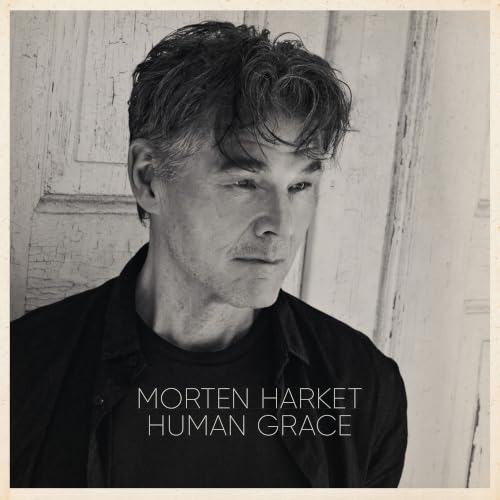
In a surprising, but very welcome turn of events, a-ha frontman Morten Harkethas announced a new solo album, Human Grace.
This announcement comes 15 months after the news broke that Morten has Parkinson’s Disease. Human Grace will be Harket’s seventh solo album (the last being Brother issued 12 years ago) and his fifth English language long-player.
It has been co-produced by Peter Kvint, who, with Harket, started looking over the material that had been recorded since the last album (but not released). Morten says they were “pleasantly surprised by the quality and coherence of what was waiting to be freed up. It was uplifting. It’s been quite a journey, to be able to land this. For me, and certainly for everyone else working with me under such uncertainty, giving it all they had”.
According to an interview over on a-ha.com, apart from the main body of vocals, everything on the album is all new. Instrumentation and arrangements, even some vocal overdubs, were done between July 2025 and July 2026.
The 10-track album is described by Harket himself as a “celebration of life”, and was created in close collaboration with long-time musical companions and his family – including guest appearances by his daughters, Tomine and Karmen Harket. The first single is ‘Hold Me’ which you can hear, above.
The album is being released by Warner Records Germany and international availability is yet to be confirmed. But there’s a Euro-based artist store offering coloured vinyl, CD and black vinyl and it’s available at the momet, on Amazon in Germany and Spain (and JPC).
My Chemical Romance’s 2006 album The Black Parade is being reissued, for its 20th anniversary, as this deluxe 2LP vinyl ‘One Step’ Audiophile Edition.
The band’s third album, The Black Parade follows ‘The Patient’ through his reflections on life and his passage into the afterlife, built on the concept that death visits people in the form of their earliest cherished memory.
The 20th Anniversary One Step Audiophile Edition, includes the original album plus a live performance of ‘Someone Out There Loves You’ recorded at Maxwell’s in Hoboken, NJ on October 24, 2007. The original album has been sequenced over four sides of the double LP to maximise audio quality.
Pressed as a double LP on Neotech VR900-D2 180g vinyl (often referred to as ‘super vinyl’ for its lower surface noise/better detail) and cut from the original analog master tapes. Mastered by Chris Bellman at Bernie Grundman Mastering. The One-Step process(which by Dorin Sauerbier at Record Technology, Inc.
The records are housed in a numbered slipcase with a gatefold jacket, new art insert, two printed inner sleeves and RTI rice-paper inners. SDE has a retail exclusive for this special edition in the UK and you can pre-order it from the SDE shop using this link or the button below.
The Black Parade (One Step Edition) 2LP vinyl pressing is released on 23 October 2026 via Warner Records.
One Step Plating Process: This is the process of turning the lacquer into metal, then to make a stamper to press the records. The traditional three-step plating process includes creating a father (negative) and then a mother (positive). Once the mother is created you can make an unlimited number of stampers from it. One-Step plating eliminates two steps in that process, the creation of the father and the mother. That removes two stages of generational loss and by doing so reveals more musical detail and a significant reduction of surface noise on the final record. This process requires multiple lacquers to be created since only one stamper can be used from each lacquer. You can manufacture approximately 500-750 records per stamper. That is essentially where the term One-Step comes from. It is a tedious, challenging and more expensive process.
Tracklisting
The Black ParadeMy Chemical Romance/20th anniversary 2LP vinyl One Step Audiophile Edition
U2 will release Carnaval De Luz, their 16th studio album, in November, their first long-player of new material in nine years.
Available on CD, vinyl and as an SDE / D2C exclusive blu-ray audio, the 12-track album was recorded “all over the place” and produced by Jacknife Lee. It explores themes of spirituality, friendship, freedom and endurance in the face of dark, encroaching forces.
We are promised “echoes of the band’s most experimental work” combined with some strict songwriting in the shape of ‘The Greatest Show On Earth’, ‘Glorify’ and ‘Midnight Sunshine’, as well as the 2mins 35second homage to early surf-punk insolence that is ‘Silencio’.
“Roll up, roll up, roll up! Bring your purple socks, your broken hearts, your rose-tinted naivety… oh be amazed in the hall of mirrors. There will be loud guitars, deep bass, some ecstatic rhythms and, yes, some silver tears will make an appearance!”
Bono
Carnaval De Luz sees contributions from Brian Eno (co-writing and synthesizers on ‘Go (Carnaval De Luz)’, ‘The Greatest Show on Earth’ and ‘Can’t Stop Us Now’), Martin Garrix (co-writing on ‘Glorify’), Daniel Lanois (playing pedal steel on ‘Torn’); and the late, great Dolly Parton, in what has sadly turned out to be her last recorded vocal performance. She duets with Bono on ‘Torn’, a song co-written by U2, Parton and Johnny McDaid, it’s a tender country song detailing broken family ties that holds wider resonances.
The blu-ray edition offers the album in Dolby Atmos and hi-res stereo. It’s packaged in an amaray case and includes a 16-page booklet featuring lyrics, photography and exclusive album imagery.
Carnaval De Luz will be released on 13 November 2026 via Island. You can pre-order the SDE & D2C exclusive blu-ray from the SDE shop using this link or the button below. For other versions check out widgets.
Ah, Britpop. A golden age, kicked off in 1994, for British bands and guitar-driven pop music. NOWYearbook ’94 says “hold my pint” as it delivers 79 tracks of US R&B, Boy Bands, American female singer-songwriters, Oscar winners from Disney musicals, rock legends hitting the charts after a leave of absence, various rappers and Jimmy Nail.
’94 is still a good year but undeniably a mixed bag. It’s the year Kylie was BACK with ‘Confide in Me’, Sting had his first UK top 10 hit with ‘When We Dance’, and Bruce Springsteen returned to the UK top 10 for the first time in nine years with his No 2 single ‘Streets Of Philadelphia’.
Boy bands include Take That, Boyzone, Boyz II Men, East 17 (two tracks including the Christmas No 1 ‘Stay Another Day’) and the first half of CD 2 (the ‘Britpop-y’ section) is the exception rather than the rule, but excellent all the same with tracks from Oasis, Radiohead, The Stone Roses, Suede, Elastica, Primal Scream et al.
Two doses of Elton John from the Lion King soundtrack is probably two too many, but very good to see Crowded House’s ‘Locked Out’, Sophie B. Hawkins’ ‘Right Beside You’ and The Grid’s ‘Swamp Thing’ included here.
If we’re being honest, there’s a fair bit of dross (PJ & Duncan!) and plenty of acts following up their ‘big hits’ with ones that make you think “How does that go, again?” (see Haddaway, D:Ream, M People etc.).
So, whereas 1986 and 1987 Yearbooks were much better than you expected, 1994 is arguably worse. More up and down. It paints a accurate enough picture of the 12 months in question and even if Blur were represented (boo!), it wouldn’t ultimately change the whole picture.
The usual formats on offer: 4CD sets (deluxe hardcover book and card sleeve editions) and the 3LP version, which delivers 44 tracks across six sides of bright blue vinyl.
NOW Yearbook ’94 will be released on 30 October 2026.
Origins 1971–1978 is a new box set that Tom Petty’s first eight years as a recording artist.
It contains 51 audio newly-mixed audio tracks, including 27 unreleased, live, extended, and previously unheard tracks. There are two versions of this box set – 4CD edition and the 4LP vinyl edition – and they contain the same audio and both come with additional DVD and a blu-ray discs. The content is as follows:
The deluxe set includes four CDs in mini-jackets:
CD1: No Sleep Til L.A. & The Cut Out Bin – LP1: No Sleep Til L.A.
CD2 & LP 2: Tom Petty and The Heartbreakers (50th Anniversary Edition)
The box set includes the band’s first two albums, Tom Petty and the Heartbreakers and You’re Gonna Get It! newly mixed by longtime producer and engineer Ryan Ulyate. Both editions feature extended versions of eleven tracks, including ‘American Girl’ and ‘Breakdown.’
The additional discs trace the earliest chapters of Tom Petty and the Heartbreakers, deep from the family’s vault. A “musical diary” of the band’s Gainesville roots through their cross-country move to Los Angeles and into their first taste of success. This includes No Sleep ‘Til LA (also available as a standalone release) which features 12 tracks of Tom Petty “becoming Tom Petty”, including seven previously unreleased cuts.
Live from the Record Plant 1977offers a ‘fan favourite’ live broadcast in full for the first time and the DVD of BBC’s Old Grey Whistle Test performance in 1978 offers restored audio and HD visuals.
Finally, the Blu-Ray Audio is generous: it delivers all 51 audio tracks in hi-res stereo, Dolby Atmos and 5.1 immersive mixes.
The vinyl box comes with an 88-page fanzine featuring liner notes by David Fricke and Bud Scoppa, track-by-track annotations from the original band and polaroids, postcards, collectibles etc. The CD version has a 46-page fanzine with, presumably similar content.
Origins 1971–1978 and No Slip ‘Til L.A. will be released on 6 November 2026 via UMR.
Forty Two is a new 2LP vinyl set documenting Level 42’s brit funk instrumental work from 1980-1982.
Level 42 formed as an instrumental group in 1979 when Mark King and brothers Phil and Rowland ‘Boon’ Gould joined Mike Lindup at London’s Guildhall School of Music and Drama for weekly jam sessions. United by a shared love of Miles Davis, Billy Cobham, John McLaughlin and Jan Hammer, they channelled their influences into the creation of the inventive jazz-funk fusion instrumentals showcased here.
The deluxe gatefold 2LP vinyl draw from the group’s first three albums and four 12-inch B-sides and is the first time this material has been presented together on vinyl. Presented as a limited edition of 1,000 copies, it has been mastered and engineered at Abbey Road by Geoff Pesche using hi-res 24-bit transfers from the original analogue tapes. As well as mastering the band’s Standing In The Light and World Machine albums, Pesche cut the lacquers for the band’s first ever vinyl release in 1980; this compilation’s curtain raiser, ‘Sandstorm’.
The packaging includes an OBI-strip, matt lamination and printed inner sleeves with the records pressed on black and yellow vinyl. Gilles Peterson, one of Level 42’s earliest fans, provides sleeve notes and there’s new band commentary by Mark King, Wally Badarou, Phil Gould and Mike Lindup.
This new release comes courtesy of Coalface Records a new label formed by Level 42 superfan and archivist Paul Waller and is released with the full cooperation and enthusiasm of the band.
Forty Two is actually released this Friday, on 25 September 2026. It can be ordered via the Coalface Records website.
NOW Music continue their 12″ 80s series with a 4CD set offering more extended hits from 1987.
NOW 12″80s: 1987 – Part Two offers further evidence that 1987 was ‘not as bad as you think’ since among the 46 tracks are two Pet Shop Boys extended versions (Dusty ‘collab’, ‘What Have I Done To Deserve This’ and the Christmas No 1, ‘Always On My Mind’), a-ha’s ‘The Living Daylights’, Duran Duran’s ‘Meet El Presidente’ (their first CD single and admittedly a weaker track from Notorious), Eurythmics’ ‘Missonary Man’ and the ‘Three Coins In a Fountain Mix’ Terence Trent D’Arby’s ‘Wishing Well’.
They are all on CD 1, elsewhere you’ll find the extended version of Curiosity Killed The Cat’s excellent ‘Misfit’, the ‘John Potoker Extended Mix’ of Fine Young Cannibals’ ‘Ever Fallen in Love’, ‘The Whole Story’ version of ABC’s ‘The Night You Murdered Love’, the superb ‘Superb, Superb Mix’ of Swing Out Sister’s ‘Twilight World’ (a great mix, but an odd choice, given it’s effectively the album version) and more long mixes from New Order, Simply Red, Wet Wet Wet, Johnny Hates Jazz and Jan Hammer.
NOW 12″80s: 1987 – Part Two is out on 16 October 2026.
Chrysalis will release a new Midge Ure ‘best of’ in November that features brand new stereo mixes of all the hits and two new recordings of famous songs Midge is associated with. SDE is offering two exclusives: a blu-ray audio and a hand-pressed splatter vinyl (limited to 250 units).
Midge is of course, best known for being the front man of the 1980’s version of Ultravox, his involvement in Visage and Thin Lizzy, not to mention being the co-creator and founder of Band Aid, Live Aid, and ‘Do They Know Its Christmas?’.
Chapters: The Best Of Midge Ure includes all his hits, key album tracks and some songs he has been associated through his career. Featuring his UK No.1 single, ‘If I Was’ along with classics like ‘Dear God’, ‘No Regrets’, ‘The Man Who Sold The World’, ‘After A Fashion’ which he recorded with Japan’s Mick Karn and the sublime duet with Kate Bush, ‘Sister & Brother’ (Kate in Atmos!). For the first time Midge has recorded new studio recordings of Visage’s ‘Fade To Grey‘ and Phil Lynott’s ‘Yellow Pearl’, which he originally co-wrote.
The 3CD deluxe edition features 17 tracks on CD 1, brand new remixes on CD 2 (from the likes of Richard Barbieri, Blank & Jones and Steve Jansen) and a third disc of instrumentals. In 2LP vinyl form you get 15 tracks across the four sides of vinyl and the SDE exclusive blu-ray offers new mixes (by Richard Whittaker) of 17 tracks as follows:
Chapters: The Best OfMidge Ure – Dolby Atmos Mix (48 kHz / 24 bit)
Chapters: The Best OfMidge Ure – 5.1 Mix (48 kHz / 24 bit)
Chapters: The Best OfMidge Ure – New Stereo Mixes (96 kHz / 24 bit)
Chapters: The Best OfMidge Ure – Dolby Atmos Instrumental Mix (48 kHz / 24 bit)
Chapters: The Best OfMidge Ure – 5.1 Instrumental Mix (48 kHz / 24 bit)
Chapters: The Best OfMidge Ure – New Stereo Instrumental Mixes (96 kHz / 24 bit)
SDE excluisve blu-ray
Additionally, the SDE blu-ray features a wealth of video content, include seven promo videos (with optional Midge Ure commentary) and seven BBC TV appearances including performances on Top of the Pops and Wogan. Full tracklistings and details are below.
The 2LP version is available in the ultra-limited SDE splatter (250 units, hand pressed at The Vinyl Factory with OBI and certificate – now SOLD OUT) as well as a standard black version with bonus seven-inch (via the official store).
Chapters: The Best Of Midge Ure is #79 in the ongoing SDE Surround Series and and it will be packaged similarly to previous editions and ships with a free, collectible SDE Surround Series slipcase.
The SDE blu-ray is a TIME LIMITED release. Itavailable to pre-order for two weeks only. The pre-order window closes on 1 October 2026. Availability after that point cannot be guaranteed. Pre-order it from the SDE shop using this link or the buttons below. For other formats browse the official store.
Chapters: The Best Of Midge Ure will be released on 13 November 2026 via Chrysalis Records.
A new A Flock Of Seagulls greatest hits will be released in November.
Synonymous with the MTV generation and part of the Second British Invasion, the English New Wave band enjoyed success in the Early eighties in both America and around the world with singles such as ‘I Ran (So Far Away)’, ‘Wishing (I Had a Photograph of You)’ and ‘Space Age Love Song’.
The 3CD version of The Best Of A Flock Of Seagulls offers singles on CD 1, BBC Sessions on CD 2 and B-sides and Rarities (including 12-inch mixes) on CD 3.
A 2LP vinyl edition spreads the 15 tracks from CD 1 across two yellow vinyl records. The compilation is also available as a single CD variant.
The Best Of A Flock Of Seagulls will be issued on 20 November 2026 via BMG.
The SDE exclusive blu-rays of Spandau Ballet’sGold: The Best Of and George Michael’sThe Faith Tour both end tonight at midnight.
The former has all the hits in Atmos, 5.1, Stereo and instrumental form as mixed by Steven Wilson, along with a generous selection of 12-inch remixes from the era (stereo only). The latter offers previously unreleased live concert audio from 1988, newly mixed in Atmos, 5.1 and Stereo by George’s longtime engineer Chris Porter and is the only format that offers a seamless uninterrupted listening experienceof the full concert, unencumbered by vinyl side breaks or CD disc changes.
Both blu-rays are region-free, these products have the same release date (6 Nov) and can be bought together as a specially priced bundle. George Michael is #75 in the SDE Surround Series and Spandau are #76. Both ship with the collectible SDE slipcases.
Only available via the SDE shop, you can order via this link or the buttons below. Manics and The Who will end this Friday (18 Sep).
Gold: The Best Of and The Faith Tour are released by Parlophone and Sony Music respectively, on 6 November 2026.
Tracklisting
Gold: The Best Of Spandau BalletSpandau Ballet/SDE exclusive blu-ray
This week sees the release of vinyl and CD anniversary editions of The Sound of McAlmont & Butler – the 1995 debut album by former Thieves vocalist, David McAlmont, and ex-Suede guitarist, Bernard Butler.
Featuring two hit singles, the epic and uplifting, ‘60-style powerhouse pop-soul of ‘Yes’ and the dramatic ballad, ‘You Do’, The Sound of McAlmont & Butler is essentially a compilation album made up of A-sides, B-sides and extra tracks. It’s an eclectic collection of songs, taking in Prince-like funk, dark and swampy blues, swaggering glam, ‘70s Neil Young-esque rock and stripped-back folk influences.
By the time it was released, in the late autumn of 1995, McAlmont & Butler had gone their separate ways, but they reunited in 2002 for their second album, Bring It Back. SDE speaks to both of them to get their thoughts on writing and recording The Sound of McAlmont & Butler, finds out if they’ll ever collaborate again and asks them what they’re working on in their solo careers.
SDE: The Sound of McAlmont & Butler turned 30 last year. Was the original plan for the new anniversary edition to come out in 2025 rather than this year?
Bernard Butler: That was the plan, but Universal weren’t very helpful about getting back to us. It took a year to get replies to emails. I told Ben [Stanley – head of product, marketing and licensing] at Demon [Music] that I was going to get a placard made up that said, ‘These people own my music but they won’t give it to me’ and go and stand outside the Universal building with my guitar. I’m not joking – it came that close. It’s very frustrating – they own my music, but you can’t get near it and it’s not in print. So, that’s why we missed out on the 30th anniversary – it’s taken a long time.
SDE: There was a deluxe edition of the album that came out in 2015 for the 20th anniversary…
Bernard: Yeah. What I say to everybody who buys records is, ‘Please don’t buy my music – you don’t have to; there’s no gun to your head – no one is forcing you to do it…’ The reason why the album is coming out is because you can’t currently buy it in any physical format because it’s not in print. We’re putting out a version once and for all that you can buy. Also, the digital version is so out of date. It’s the wrong masters and it has the wrong artwork. I think it’s a nice thing to do – to make sure it’s all correct. We’ve spent months doing this stuff.
SDE: The original vinyl edition from 1995 was on a single LP, but the new version is a 2LP set – George Shilling has remastered it for a double LP…
Bernard: Yes – when you put something on vinyl, if you can give it more space, then it sounds better – the grooves are deeper. The original album was a bit long to be squeezed onto one LP. I wanted to see if George could do something special with it, and I think it sounds brilliant. I’ve worked with George since People Move On and he’s great – I trust him.
SDE: Does it feel like 31 years since The Sound of McAlmont & Butler first came out?
Bernard: Yes, it feels like 31 years…
SDE: I think it still sounds fresh, but is there anything you would change about it?
Bernard: I wouldn’t change anything, and that’s rare for me.
SDE [To David]: How do you feel listening to it now?
David McAlmont: I’d moved on and I went back to academic studies for a while, so I wasn’t that invested in the whole thing, but one of the things that struck me over the years is people loving it. It’s robust and resilient… It’s lasted a long time and I’m grateful for that. I thought I was being quite coded in what I was saying [in the songs] at the time, but listening to it now, I realised I wasn’t. I was being raw and open, so that took me by surprise when I listened to it recently. It’s a good album, and I particularly like ‘Disappointment.’ I don’t know why, but it’s the one that gets me every time.
SDE: That’s one of my favourite songs on the record too…
David: That breakdown, with the saxophone… It was one of those lovely surprises. Bernard was in the live room with Mick [Tedder] on bass and Mako [Sakamoto] playing drums, and he was like, ‘Let’s just keep on playing…’
Bernard: When we were in the studio, I said, ‘Wouldn’t it be great to have some sax on this?’ Our bass player, Mick, said: ‘I’ve got a mate called Jimmy – I’ll give him a call’. He was there in about an hour, and he just jammed over it. It was great, and I’ve never heard of him or seen him since.
SDE: ‘You Do’ was your second hit single after ‘Yes’ – it got to number 17 in the UK. You wrote the music for it while you were in Suede, doing Dog Man Star. What was the inspiration for it?
Bernard: I wanted [to write] a piece of music that was like ‘One’ by U2, which is still one of my favourite ever records – it’s astonishing. I loved Achtung Baby and I loved ‘One’ so much – I saw it as a gateway to great songwriting, but it also had a mood to it, and it was beautiful – the strings, the sound… everything about it was great, but, in particular, it was the guitar playing. I was just pissing about and emulating it, if I’m honest.
SDE[To David]: Did you know ‘You Do’ was inspired by ‘One?’
David: That’s a new one on me. I heard from a fan the other day that there’s a rumour going around that ‘You Do’ is ‘Yes’ slowed down.
SDE: ‘You Do’ is in the same key as ‘Yes’, isn’t it?
Bernard: They’re in the same key – that was a coincidence – but I like to think of ‘You Do’ as the noir version of ‘Yes.’ It’s slowed down – the moody, sad cousin… Essentially, they’re the same chords.
SDE: ‘Yes’ is an uplifting song, but ‘You Do’ feels like the flipside – it’s sad; a plea for someone in a relationship to be stronger…
David: ‘Yes’ and ‘You Do’ are both very arrogant, lyrically. ‘Yes’ imagines that you’re going to become incredibly famous and that the person who ghosted you will suddenly want to get to know you, which did happen, and ‘You Do’ is assuming that you’re the strong one in a relationship and you’re telling the other person not to be so weak. As the years went by, I thought, ‘Who do you think you are to write such a thing? Be stronger?’ Because ‘You Do’ is a ballad and is quite lovely, you can see it as somebody willing somebody on, but it’s a lot more arrogant than that. I don’t know if I should say that, as the fans might not like it as much.
Bernard: Lyrically, David gets the mood of the music and that’s what I love about him. He is quite nonchalant about his own lyric writing, but he wrote things that were simple and beautiful, and he captured the mood, which was so important.
SDE[To David]: Earlier, you mentioned listening to the album again recently and being surprised by how raw and open your lyrics were – some of the songs are about being a gay man and your relationships. When the record was released, the UK was in the grip of the laddish Britpop culture, driven by Loaded magazine – did you feel out on your own?
David: I always get honest, and Bernard didn’t have anything to say when I wrote the lyrics. It was like, ‘This is what I’ve come up with’, and he was like, ‘OK, fine’, and then he would get on with whatever he was doing. It felt like, ‘Is he listening? Am I getting away with it here?’
‘How About You?’ was written about cruising. I drank a lot at a place called the City of Quebec [in London] and I often got drunk and didn’t get lucky. ‘Although’ is about a loved one passing away from HIV.
Bernard: I love ‘Although.’ It has a personal narrative of David’s – a friend of his who was ill… When my mum died a few years ago, I started singing it to myself, so I started playing it in my solo set, and I started thinking about it and saw it in a totally different way. I love singing ‘Although’ and I always think of it from my perspective now – that’s a nice use of a song. I love interpreting it as my own story. I don’t think David knows that.
SDE: ‘What’s the Excuse This Time?’ sounds like Prince and it could easily have been a single, rather than a B-side…
David: A lot of people thought it should’ve been the third single. When I wrote it, I was concerned about the line ‘I could wait forever, stay forever, until you felt inclined,’ because it sounded so much like something Prince had written, but I don’t think he did… It’s very much the sort of line you might get in a song like ‘Raspberry Beret.’
SDE: ‘Don’t Call It Soul’ is stripped back and acoustic guitar-led, and ‘How About You?’ has a folky sound, but then becomes darker and heavier, with some great and very emotional electric guitar playing…
Bernard: ‘Don’t Call It Soul’ and ‘How About You?’ we did together at my flat. They were the first two songs we did before we got a band together. I recorded them and they were quite slapdash. There’s all this strange percussion… That’s just me adding it over the top because we didn’t have any drums. When we started working with Nigel [Godrich – engineer], he mixed them and made them sound a bit posher. I really love those two.
‘How About You?’ could’ve been a Dog Man Star song. I just think it’s so fucking cool what David does with the lyric. It’s so open, brave, honest and autobiographical – it’s very London. I love my guitar at the end – that’s one of my favourite pieces of recording I’ve done.
The guitar part that starts ‘Don’t Call It Soul’ is David’s – he came up with those two chords. The rest of it wasn’t finished and I sort of made better shapes for it. David was trying to learn guitar at the time. I don’t know how he’s coming along with that. I should check in on him.
SDE[To David]: Did you carry on with the guitar lessons?
David: No, because I went on stage with my guitar and started singing, and wondered what was going on with the sound… My hand didn’t move… I played the first chord and the introduction, which was fine, because I wasn’t singing, but when I started singing, my hand just stayed still…
SDE: ‘The Debitor’ has a glam feel and reminds me of The Stooges and Iggy Pop…
Bernard: Yeah. Everything [on the record] was done very quickly – write a tune, come up with some music, get David to put some lyrics together that night and record the song the next day. So, for each song I was thinking thematically… ‘OK, we’ve done a waltz thing… we’ve done an acoustic thing… let’s do a torch song… let’s do an Iggy thing…’ It’s not a sensible way to put a record together so it holds a shape, but I was playing around and having fun, and I think it hangs together.
SDE[To David]: Lyrically, ‘The Debitor’ could be seen as a comment on the music industry at that time…
David: Yeah – I suppose so. Maybe treating the music industry like hoods – mafiosi. ‘Name your price… You don’t sign on this here line…’
SDE:‘Tonight’ is beautiful – musically, it’s a mixture of sweetness and darkness…
Bernard: I love ‘Tonight’ – it’s a lovely recording and I’m proud of that one. I think that’s my favourite song on the record.
SDE: ‘The Right Thing’ was a previously unreleased song. It is atmospheric – heavy, dark and swampy…
David: It was super-exciting to get a new track from Bernard – he wasn’t just trying to recreate ‘Yes’ or ‘You Do.’ He was using the opportunity to create something interesting and I responded to that. I heard the blues in it, and I want to say that I was enjoying ‘Superstar’ [a cover of The Carpenters song] by Sonic Youth at the time. When that came along, I thought, ‘Dark love’. My version of dark love was a couple somewhere in the Deep South, resisting Christian homophobia.
SDE: ‘You’ll Lose a Good Thing’ is a sparse cover of the Barbara Lynn R&B song from 1962, with just vocals and droning Hammond organ…
Bernard: Geoff Travis [manager and founder of Rough Trade Records] phoned me up and said, ‘Virgin won’t put the record out unless you give them something that hasn’t come out before – a bonus track.’ By that point, me and David weren’t going to write anything together again, so Geoff said: ‘Why don’t you record ‘You’ll Lose a Good Thing’? It was my favourite song while I was growing up.’
So, he sent me his vinyl copy – I’ve still got it. It was an upbeat, waltz thing with a great lyric, but the first thing I thought was, ‘I’m not going to do a straight cover of it.’ The most obvious thing was to see what would happen if we did something incredibly sparse, with just a Hammond drone – very ambient. So, we did it. We did two takes of it, with David singing live and me playing the Hammond organ, and that was it.
David: Bernard taped down the organ keys and just let it drone on.
SDE: Next year it’s the 25th anniversary of your second album, Bring It Back. Are there any plans to reissue it?
Bernard: I’m trying to do it now – that’s not with Universal; it’s with Warner Bros. I’d like to do it – it’s underway, but I don’t know if we’ll get it done in time. I hope so.
David: I love Bring It Back– particularly the song, ‘Bring It Back,’ because it’s honest. I was at home one afternoon, feeling depressed, and the phone rang and it was Bernard. He said, ‘I’ve been doing some writing recently and yours is the only voice I can think about.’ It was like, ‘Let’s put the past behind us and reconcile’. And then I put the phone down and the sun came out. So, when I sing, ‘and the sun came out the moment you called,’ it’s referring to something that happened.
SDE: There’s an unfinished third album too, isn’t there?
David: People are always asking about it online. I’d like to rewrite some of it – we didn’t release it, so I’m quite happy to revisit it. I think we were trying something new, but the newness didn’t quite work. If it does happen, I’d like to do a lot of rewriting.
Bernard: I still dream of finishing it. I kick the can down the road with it a bit, but I want it to come out one day. It’s a whole album – all demoed. We just need to finish it – do a lot of recording and put it out.
[To Bernard]: Would you like to work with David again?
Bernard: I’d love to do a tour, but it’s just so bloody expensive. I’ve always said it has to be special, and it has to be the full thing or not at all. When we did the tour in 2015, me and David got paid less than the road crew because it was an awful lot to put together. The problem is also that Mako’s gone now, so that’s a tough one. I would love to do it again, but it’s one of those things on the list…
[To David]: Would you like to work with Bernard again?
David: We’ve started new material, but Bernard gets the heebie-jeebies with the industry. I’d imagine there’s a likelihood, but a lot of it depends if there’s a likely audience for it. Nothing happens with M & B until Bernard’s ready.
SDE: Can you tell us about your current solo projects?
David: I’m doing some shows this year and I want to get some reissues out. There are a couple of Thieves songs that have never been rereleased, so it’s time to start packaging stuff. Foremost in my mind is getting the old records reissued and doing them live for the audiences who have been with me this long and never heard those songs.
Bernard: I’d like to get a new song out by the end of this year and an album early next year. I feel good about it – it’s very different from the last record [Good Grief] and it’s colourful and upbeat. You’ve got to be in a place where you’re not worried about what people think and then you can be totally free. Once you do that, you just feel really good about what you’re doing.
Thanks to David McAlmont and Bernard Butler who were talking to Sean Hannam for SDE.The Sound of McAlmont & Butler is reissued this Friday, on 18 September 2026 via Demon Music.
If you want even more ‘chat’ with Bernard and David, Paul Sinclair interviewed them both a decade ago on this site for the previous reissue of this album! Bernard’s interview and David’s interview.
SIGNED EDITIONS
Compare prices and pre-order
McAlmont & Butler
The Sound of McAlmont and Butler - Signed 2CD deluxe edition
Seven years after issuing the 14CD box set of the 1975 Live Recordings of Bob Dylan’s Rolling Thunder Revue, Sony return to this infamous tour for the 1976 second leg, with an even bigger box set.
The second leg saw Dylan welcome old friends and collaborators to his troupe. He reunited with Joan Baez to perform a moving set of duets across many dates, including performances of ‘Blowin’ in the Wind’ and ‘Railroad Boy’.
Dylan’s band included bassist Rob Stoner, violinist Scarlet Rivera, drummer Howie Wyeth (who had all worked on the Desire album), guitarists Mick Ronson, Steven Soles, David Mansfield and T Bone Burnett.
39CD box set – click to enlarge
The Rolling Thunder Revue: The 1976 Live Recordings is a 39CD box set that “captures all professionally recorded shows” from the 1976 second leg, all from original tape sources. The box includes 381 tracks, 371 of which have never been released.
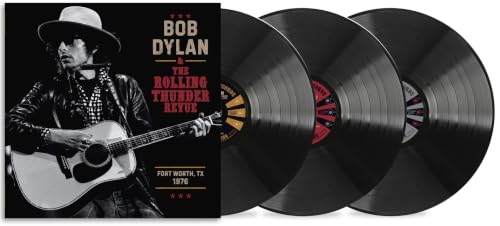
Scroll down for a full tracklisting. The box set includes a booklet with sleeve notes by Mikal Gilmore alongside rare photographs. The Fort Worth Texas show from 16 May 1976 (CDs 32 & 33 in the box set) will also be available as a standalone 3LP vinyl set.
The Rolling Thunder Revue: The 1976 Live Recordings will be released by Sony on 6 November 2026.
The pre-order window for the SDE exclusive blu-ray of Amy Winehouse’s 2006 album Back to Black closes today.
This exclusive format brings together the Dolby Atmos Mix for your immersive listening pleasure, but also offers the digital debut of arguably the best sounding stereo version of the 2006 album, which is Miles Showell’s 2018 remaster. This version was prepared for the half-speed mastered vinyl eight years ago and has never been issued on CD.
Add 17 bonus tracks, including B-sides and unreleased demos, and you have yourself a fantastic physical format, curated by SDE and UMR for the serious listener, who likes ‘holding the music in their hands’.
As ever, this is a limited edition. Produced to meet demand within a two week pre-order window. That window CLOSES TODAY, so place your order now if you want to guarantee yourself a copy of this modern classic on blu-ray.
Back to Black is #74 in the ongoing SDE Surround Series and will be packaged similarly to previous editions (clear amaray case) and ships with a free, collectible SDE Surround Series slipcase.
The pre-order window closes TONIGHT at midnight GMT. Availability after that point cannot be guaranteed. Order exclusively from the SDE shop using this link or the buttons below.
Back to Black is released on 23 October 2026, via UMR/Island.
Tracklisting
Back to Black Amy Winehouse/SDE Exclusive blu-ray
Dolby Atmos (48/24) and Hi-Res Stereo 2018 Remaster (48/24)
Rehab
You Know I’m No Good
Me & Mr Jones
Just Friends
Back To Black
Love Is A Losing Game
Tears Dry On Their Own
Wake Up Alone
Some Unholy War
He Can Only Hold Her
Addicted
BONUS TRACKS (stereo only – 48/24). B Sides, Bonus Tracks & Demos
Valerie (Live at BBC Radio 1 Live Lounge)
Cupid
Monkey Man
Hey Little Rich Girl
You’re Wondering Now
To Know Him Is To Love Him
You Know I’m No Good (feat. Ghostface Killah)
Do Me Good
Close To The Front
Rehab (Demo Version)
I’m No Good (You Know I’m No Good – Original Demo)
Fuckery (Me & Mr Jones – Original Demo)
I’ve Been Drinkin’ (Just Friends – Alternative Version)
Back To Black (Original Demo)
Love Is A Losing Game (Original Demo)
Tears Dry (Tears Dry On Their Own – Alternative Demo)
Some Unholy War (Down Tempo)
78 The Who / Who By Numbers
77 Manic Street Preachers / The Holy Bible
76 Spandau Ballet / Gold: The Best Of
75 George Michael / The Faith Tour
74 Amy Winehouse / Back to Black
73 Tears For Fears / The Seeds Of Love
72 Dire Straits / On Every Street – still available
71 Roxy Music / For Your Pleasure – still available
70 The Family Silver / Electric Blend – still available
69 Suede / Coming Up
68 Simple Minds / Once Upon A Time
67 Tina Turner / Private Dancer
66 Producers / Made in Basing Street
65 Thin Lizzy (1971 debut)
64 Bryan Ferry / Taxi
63 Bryan Ferry / Bête Noire
62 Roxy Music / Flesh + Blood
61 Tori Amos / In Times Of Dragons
60 Heaven 17 / The Luxury Gap
59 Heaven 17 / Penthouse and Pavement
58 Mark Knopfler and Emmylou Harris / All The Roadrunning
57 The Who / Quadrophenia
56 George Michael / Faith
55 Bryan Ferry / Boys and Girls
54 Thin Lizzy / Nightlife
53 Fine Young Cannibals (FYC) / The Raw & The Cooked
52 Tears For Fears / Songs From The Big Chair
51 Propaganda / A Secret Wish
50 Frankie Goes To Hollywood / Welcome to the Pleasuredome
49 Elton John / Captain Fantastic and the Brown Dirt Cowboy
48 The Who / Who Are You
47 The Human League / Dare
46 Split Enz / ENZyclopedia Volumes 1 & 2
45 Mark Knopfler / Sailing to Philadelphia
44 Matt Deighton / Today Become Forever
43 De La Soul / 3 Feet High and Rising
42 Steve Harley & Cockney Rebel / The Best Years of Our Lives
10cc’s first two albums are explored on The Stockport Shuffle, a forthcoming 6CD+blu-ray box set.
Both the 1973 debut, 10cc, and its 1974 follow up Sheet Music were issued on Jonathan King’s UK label with the former featuring ‘Donna’ and the UK chart-topping ‘Rubber Bullets’. This new box set is being promoted as ‘The Complete UK Label Anthology’ (since the band moved to Mercury for 1975’s The Original Soundtrack).
Newly mastered versions of both records feature in the box set alongside various single versions and edits. Two CDs are devoted to session highlights from each album, including isolated vocal tracks, work-in-progress, instrumentals, rehearsals and more.
The blu-ray offers TV performances and Dolby Atmos Mixes, although with the Atmos Mixes it’s a curious selection and there’s no confirmation if the blu-ray also includes 5.1 and hi-res stereo (the latter seems reasonably likely). This set comes with a 40-page booklet with a new 7,000 word essay on the band’s time at UK Records.
The Stockport Shuffle: The Complete UK Label Anthology 1972-1974 will be released on 20 November 2026 via Cherry Red imprint, Grapefruit.