Roberta Flack’s ’70s purple patch is to be celebrated with an 8CD box set, With Her Songs: The Atlantic Albums 1969–1978, the first release of material by the soul great since she died in February 2025.
With Her Songs includes eight newly remastered studio albums: First Take (1969), Chapter Two (1970), Quiet Fire (1971), Roberta Flack & Donny Hathaway (1972), Killing Me Softly (1973), Feel Like Makin’ Love (1975), Blue Lights in the Basement (1977), and Roberta Flack (1978).
With the exception of commercial peaks First Take and Killing Me Softly, Flack’s back catalogue has been bafflingly underserved on CD. A 5CD Original Album Series set was released in 2013 and included those two albums plus Quiet Fire, Feel Like Makin’ Love and Blue Lights In The Basement, but other than Japanese reissues, gems such as Chapter Two haven’t been available on CD for decades.
With Her Songs: The Atlantic Albums 1969–1978
From that landmark debut – an extraordinary outpouring of socially, genre-defying (soul, funk, jazz, folk – what couldn’t she do?) music recorded in just 10 hours – through albums that took in soul classics (Killing Me Softly, Feel Like Makin’ Love), civil rights anthems covers of Broadway standards and more, Flack became a worldwide star and a pioneer. With Her Songs will be released days before what would have been Flack’s 89th birthday and is a vital reminder of her singular talent.
With Her Songs: The Atlantic Albums 1969–1978is released on 6 February 2026, via Rhino.
The latest Supertramp half-speed vinyl reissues have been announced. Even In The Quietest Moments (1977), Breakfast In America (1979) and Famous Last Words (1982)have been remastered by Miles Showell at Abbey Road Studios and will be released in March.
The three reissues – all on 180g black vinyl – continue the series of half-speed remasters which began in July 2025 with the pairing of 1974’s commercial breakthrough Crime Of The Century and the following year’s patchy Crisis? What Crisis?.
The vinyl reissues are part of the celebrations to mark the 50th anniversary of the ‘classic’ Supertramp line-up – Roger Hodgson, Rick Davies, Dougie Thomson, John Helliwell and Bob Seibenberg. The decade that this line-up stayed together was transformative for the band. By the time of the massive-selling Breakfast In America (22 million sold and 88 consecutive weeks in the US Billboard 200), their early prog leanings had been cast aside in favour of naggingly catchy soft rock, seemingly custom-built to dominate the airwaves (‘The Logical Song’, ‘Goodbye Stranger’. ‘Take The Long Way Home’).
It’s not the first time Supertramp’s chart-conquering years have been spruced up for audiophiles. Even In The Quietest Moments and Breakfast In America were remastered at half-speed for A&M’s Audiophile Series (pressed in Japan by JVC, distributed in Canada) back in the late ’70s/early ’80s. Even In The Quietest Moments was issued on the short-lived Sweet Thunder label back in ’82 and Breakfast In America was given the Mobile Fidelity Sound Lab vinyl treatment in ’82 and 2018. Meanwhile, Famous Last Words was released in the US as part of A&M’s Europadisk series in ’82. Supertramp die-hards are encouraged to list further audiophile pressings in the comments below…
All three vinyl reissues are out 20 March 2026 via UMR/Polydor.
The Beach Boys have announced the long-awaited We Gotta Groove:The Brother Studio Years, a 73-track, 3LP+3CD box set covering studio sessions from 1974-1977.
The set includes 35 previously unreleased tracks and 22 new mixes. Disc one features a new remaster of Brian Wilson’s maverick masterpiece, 1977’s Love You, along with outtakes from the sessions. The second disc offers tracks originally intended for Love You’s abandoned follow-up, the much-bootlegged Adult/Child, along with backing tracks and miscellaneous outtakes from the period. And the final disc comprises new mixes of a clutch of tracks from 1976’s 15 Big Ones, along with outtakes and backing tracks, plus Love You alternate mixes and demos.
We Gotta Groove focuses on the period that saw band leader Brian Wilson take centre stage for the first time since abandoning the SMiLE project in 1967. The huge success of the band’s 1974 greatest hits compilation Endless Summer (over three million copies sold in the US alone), along with their renewed popularity as a live draw, meant that demand for new material was the strongest it had been for years. The band – in particular Carl and Dennis Wilson – spent 1974 and ’75 demoing songs that showcased their growing maturity (some of which appear on We Gotta Groove’s second disc), but despite the best efforts of the younger Wilson brothers, their record label pushed for the return of the altogether more bankable elder brother.
Brian returned on production duties for 15 Big Ones, a collection of new interpretations of rock’n’roll standards with a smattering of originals intended to ease him back into the fold. But if the label were expecting to sit back and watch the dollars roll in, they would be disappointed – Brian’s embrace of Moog and ARP synthesizers and gruff vocals were a world away from the nostalgia-filled hits of his youth. Still, the hype around the album was enough to make 15 Big Ones their biggest hit in over a decade.
Most importantly, it led to a purple patch of creativity, with Brian throwing himself into sessions for Love You and Adult/Child. The songs he recorded for Love You are unfiltered and raw, all fuzzed-up synths, bizarre and often childlike lyrics, hoarse vocals and killer melodies. It’s difficult to think of a stranger and more uncompromising album released by a major artist.
We Gotta Groove includes Love You in its entirety, along with a bunch of previously unreleased outtakes and demos, including the set’s title track. Back in the day, Brian wasted little time on moving on to the tracks bootlegged as Adult/Child and here presented as Adult/Child Sessions. The best songs – the beautiful ‘It’s Over Now’ and ‘Still I Dream Of It’ – will be familiar from previous archive releases, but improved sound quality will be a massive draw for fans.
We Gotta Groove: The Brother Studio Years is a 3LP+3CD box set (click image to enlarge)
The three CDs in this six-disc multi-media package effectively repeat the content from the three vinyl records and then go beyond that by offering additional outtakes and alternate mixes that the LPs don’t have space to accommodate. Packaged in a 12-inch slipcase it includes a 40-page booklet with sleeve notes featuring new and archival band interviews and the Brother Studio engineering team, archival photos and a complete sessionography with detailed production credits.
We Gotta Groove: The Brother Studio Years is out 13 February via Capitol/UMe, although it should be noted that this box set is not available via traditional retail channels at all. It’s all D2C (direct-to-consumer) so you will need to seek out Beach Boys / Universal Music channels to order it – although at the time of writing it appears to be SOLD OUT (update: it is now newly available from The Beach Boys store in the USA and uDiscoverMusic.com in the US with a 20 March release date, which suggests a repress).
Rush continue their comprehensive reissue programme with a super deluxe edition of their 10th album, 1984’s Grace Under Pressure.
This album represented a bold new phase for the Canadian prog heroes. The band had recently parted ways with producer Terry Brown – who’d worked on every Rush album since 1975’s Fly By Night – and opted to produce themselves, with assistance from Peter Henderson, the man behind the desk for Supertramp’s gargantuan hit Breakfast In America. The result was a set that expanded upon the synth soundscapes of previous album Signals (1982), while its angular guitar sound complemented the dystopian visions of drummer Neal Peart’s lyrics.
Available as either a 4CD+blu-ray or 5LP+blu-ray box set, it’s the album’s first time on CD since a limited-edition Japanese release in 2009. Disc one features the original 1984 stereo mix, newly remastered from the original analogue stereo master tapes by Sean Magee at Abbey Road. Disc two gives fans the chance to hear how Grace Under Pressure may have sounded had Terry Brown been on board, thanks to a new stereo mix by the producer from the original multi-tracks. CD3 and CD4 (or LP3, LP4 and LP5) are devoted to the first-ever release of the complete 21 September 1984 show at Maple Leaf Gardens, Toronto, originally released in part as the Grace Under Pressure Tour VHS and later released (again, in incomplete form) as a bonus CD with 2006’s Rush Replay X 3 and as a standalone live album in 2009. The 20-track show has been newly mixed from the original multi-track masters.
The 5LP+blu-ray super deluxe of Grace Under Pressure (click image to enlarge)
The blu-ray features the album newly mixed by Richard Chycki in Dolby Atmos & 5.1 surround plus Terry Brown’s new album mix in hi-res stereo. And in terms of visuals, the blu-ray also includes the Toronto concert newly remastered in HD with the audio with Atmos, 5.1 and Stereo options, all newly mixed by Terry Brown. Lastly, the album’s four music videos are remastered in HD and presented in 5.1 surround and stereo. This appears to be a great disc, although Rush’s frustrating habit of ‘locking’ these in with enormously expensive box sets, continues.
The super deluxe edition also includes a hardcover book including sleeve notes written by Geddy Lee and brand-new illustrations for each song by Hugh Symes (who has also ‘re-imagined’ the album cover). And there’s memorabilia galore, including an LED light-up display, replicas of the GUP tour book, Toronto concert ticket and poster, GUP Tour backstage pass, six-page press release and three band photo lithographs.
Grace Under Pressure Super Deluxe Edition is out 13 March via Capitol/UMe.
“This is certainly a culmination of something,” Paul McCartney says in episode nine of The BeatlesAnthology– a newly constructed epilogue to mark 30 years since the release of the documentary series. “I mean, we’ve put together our story. I don’t know whether that means it’s an end.”
It’s 1994, and McCartney is tipsy on what-ifs following sessions with George Harrison and Ringo Starr to turn a clutch of John Lennon demos into ‘new’ Beatles songs. His eyes are twinkling, as if he’s allowed himself to think there’s a chance of making more new Beatles music.
Harrison is more philosophical. “The Beatles will go on and on,” he says. “On those records and films and videos and books and in people’s memories and minds. The Beatles has just become its own thing now. The Beatles, I think, exist without us. Play the game ‘existence’ till the end of the beginning.”
In a way, they’re both correct. The Anthology project – comprising three 2CD rarities sets released between November 1995 and October 1996, a primetime eight-episode documentary and (much later) a coffee table book – was a joyful and revelatory exploration of The Beatles’ music, story and individual personalities, which delighted those who were there first time around and drew in new generations. As ever, their timing was perfect – nostalgia was in the air, what with Oasis’ Lennon cosplay, and the influx of vintage rock titles on newsagents’ shelves. What better moment was there for The Beatles to return? They were far from the first of the 60s giants to open their vaults – Dylan’s Bootleg Series began in 1991; The Beach Boys gave fans something to SMiLE about with 1993’s Thirty Years Of Good Vibrations set – but Anthology set a new standard for archive releases. Previously unheard moments of magnificence; Mark Lewisohn’s detailed sleevenotes; Klaus Voorman’s exquisite artwork; those fat white CD boxes – everything about Anthology felt like a step up. This rarified quality was reflected in the then-hefty price of the 2CD sets (unless, like this writer, you took advantage of a loophole in the Britannia Music Club’s introductory offer to get all three volumes for free).
Since then, lavish, wallet-emptying box sets have become commonplace, making Anthology look rather quaint by comparison. Not only that, but the outtakes and alternate takes released on the Beatles’ own deluxe editions have made their Anthology counterparts – often multiple takes bolted together and polished by perfectionist George Martin – feel dated.
The announcement of an anniversary edition of Anthology brought hopes of more riches from those Abbey Road archives and, in the light of Peter Jackson’s incredible Get Back, a revamped and extended documentary series. Get Back aside, recent Beatles releases have shown a worrying lack of engagement with fan opinion. The lack of blu-ray in the Revolver box irked audiophiles and the Let It Be set was needlessly stingy when it came to outtakes; we’re still waiting for the long-promised DVD/blu-ray of Michael Lindsay-Hogg’s Let It Be and for the home release of the rooftop gig; extended ‘red’ and ‘blue’ albums were seemingly prioritised above the still-MIA Rubber Soul box; and then there was the chaos of the In Mono box reissue.
An Anthology reissuewas a chance to buck that trend. But it hasn’t quite panned out that way. The original three Anthology sets have been remastered (well, that’s the official line, we’ll come to that later) and joined by a fourth volume. Anthology 4 includes 36 tracks over two CDs or three LPs – 13 of which are previously unreleased, plus new remixes of the two 90s ‘threetles’ singles – ‘Free As A Bird’ and ‘Real Love’ – and their belated sibling, 2022’s ‘Now And Then’. When first announced, it looked as though the only way fans would be able to get those ‘new’ tracks was to buy the entire set. Understandably, online outrage ensued, and, to their credit, Apple made the common-sense decision to make Anthology 4 available to buy separately.
Everyone will have different ideas of how to improve Anthology (that’s what the comments section below is for, pop pickers), but how difficult would it have been to present all of the original tracks in full, rather than the George Martin edits, and to add an additional disc’s worth of unreleased tracks to each of the three volumes – whether as a bonus disc or slotted in chronologically? Take the 13 previously unreleased tracks that have ended up on Anthology 4, add the ‘Free As A Bird’ and ‘Real Love’ B-sides still unavailable elsewhere, and then take your pick from cleaned-up Decca audition tapes; cleaned-up early live shows and BBC sessions; songs that didn’t make their respective deluxe editions so far (the 27-minute ‘Helter Skelter’, ‘Revolution’ take 20, ‘Suzy Parker’, ‘The Palace Of The King Of The Birds’ and ‘Watching Rainbows’, for starters) and, yes, I’m going there, ‘Carnival Of Light’ and, hey presto, we have an Anthology reissue to set tongues wagging in Pepperland.
Perhaps The Beatles camp’s thoughts on that mythical unreleased track are telling – in a recent Uncut interview, Giles Martin teased it again while arguing that it’s unsuitable for release (“It’s John Lennon hitting an anvil for quite a long time”, “it’s a sound installation” – sign me up, Giles!) and implying that Beatles fans are spoilt for wanting to hear it. The thing is, anybody interested in hearing it understands the spirit in which it was recorded and is aware that it’s unlikely to change anybody’s world. As Giles’ dad said when referring to the summer 1960 recordings with Stuart Sutcliffe on bass featured on Anthology 1, ‘Carnival Of Light’ is of historical interest – if nothing else, when else would the biggest and best pop band in the world also be so engaged with a burgeoning counterculture? For a few Apple execs to decide on the track’s worth smacks of the same strange underestimating of fans that underpins their puzzling recent missteps.
The ‘new’ songs that are on Anthology 4 show exactly why we all care so much. If this is barrel scraping, fetch me a wooden spoon. The set’s foreword comes from interviews conducted with the band’s former press officer, Derek Taylor, in 1996. “It was just the bees’ knees to be around The Beatles then, because they represented joy, absolute joy,” says Taylor. That feeling courses through so much of the first disc of Anthology 4. Songs frequently collapse into fits of laughter as lines are fluffed and harmonies falter; there’s never a sense of pressure, just weightless creation. We’ll never know exactly how it felt to be witness to this unrelenting excellence and innovation, but this is the stuff that gets us closer than ever to having a sense of it.
The first few songs will be familiar to the Fabs hardcore, as they were previously released on the 2013 digital-only set Bootleg Recordings 1963. We’re immediately dropped into Abbey Road on the morning of 11 February 1963. By the end of that day, they’d recorded 12 songs for their debut album, Please Please Me. ‘I Saw Her Standing There – Take 2’ sounds like a band determined to make their mark. It’s far from the finished article – McCartney’s vocals retain some of the showbiz stylings of the Decca audition, Lennon’s backing vocals are slightly off pace, and the whole thing threatens to fall apart at the instrumental break – but raw excitement and attitude carry it through. They’d get there soon enough, as ‘Money (That’s What I Want) (RM7 undubbed)’ shows – recorded just months later (18 July, for With The Beatles) but light years ahead in terms of maturity. This is the familiar master take without George Martin’s piano overdubs, allowing Lennon’s extraordinary vocal, all piss-and-vinegar scouse soul, to truly shine.
12LP vinyl box set
By October that year, any initial studio jitters are gone, and the fun really begins. “Don’t be nervous, John,” jokes McCartney; “I’m not,” snaps Lennon. They launch into a swoonsome ‘This Boy (Takes 12 and 13)’ (first released on the ‘Free As A Bird’ CD single), swiftly derailed when McCartney goes too hard on his harmony part. They compose themselves for another gorgeous take, again curtailed when backing vocals go awry – cue genuine, unfettered laughter. Two takes later, they’d nail it. By the following February, things were looser still. ‘Tell Me Why (Takes 4 and 5)’ begins with Ringo clattering around, harmonies being worked out on the spot and – how quickly they grow up – some gentle cheekiness in response to Martin’s direction. Take 4 falls apart immediately but 5 zips along, propelled by pep and a sense of a group totally in love with what they’re doing. It’s by no means their greatest song, but were the proverbial aliens to ever land, we could do worse than play them this one to sum up The Beatles’ hold over us. Recorded later that day, ‘If I Fell (Take 11)’ is a tender, touchingly wobbly take, emphasizing the vulnerability at the heart of Lennon’s plea for reassurance. “Something like that you mean?” asks Harrison off-mic, after a first attempt at his closing flourish – absolutely, George!
Ringo’s time to shine comes with an electric first take of ‘Matchbox’, recorded 1 June ’64 in front of its writer, the great Carl Perkins, which crackles and swings with an energy lacking in its familiar version. Meanwhile, there’s more hilarity on ‘Every Little Thing (Take 6 and 7)’ as the first run-through is interrupted by McCartney’s on-mic wind while a fine second take crumbles into corpsing. And a first stab at Harrison’s ‘I Need You’ (recorded 15 February 1965 and missing its abrupt wah-wah punctuation points) is a breezy delight, until some chords go awry, the bass starts wandering and off-mic mirth sets in, eventually spreading to its singer. “Lonnie’s gonna regret not singing this one,” quips Lennon, referring to the skiffle-tastic third take of ‘I’ve Just Seen A Face’. But there’s a price to be paid for such frantic playing, as Lennon discovers (“I broke a string”). The humour and warmth of these sessions are not only a joy to hear today, but go some way to explaining the band’s rapid progression – clearly, the studio was a relaxed and forgiving environment where they felt free to make mistakes and to experiment.
That helped along massive leaps forward, such as Lennon’s ‘In My Life’. We get the first take here, recorded 18 October 1965, and surely a preview for a Rubber Soul deluxe set, should it still be on the cards. Lennon’s vocal is a little mannered, as if totally aware of the song’s brilliance, and overly cautious, still finding his way into it. And for those of us who have always found George Martin’s baroque, double-speed piano break a trifle overbearing, it’s fascinating to hear that section left wide open. Recorded three days later, the near-instrumental ‘Nowhere Man (First Version – Take 2)’ is another shoo-in for future Rubber Soul shenanigans, offering an insight into the extent of The Byrds’ influence and a glimpse of an alternate a cappella opening.
A run of songs taken from the Revolver and Sgt Pepper’s boxes follows before the unreleased treats resume with ‘Baby, You’re A Rich Man (Takes 11 and 12)’. By this point, any façade of professionalism is long gone, with Lennon and McCartney requesting “cannabis resin”, with McCartney adding “We’ve got that taped for the high court tomorrow”, presumably for the benefit of Mick Jagger, who was present at the session following his and Keith Richards’ pleas of ‘not guilty’ to a charge of drug possession at Chichester Magistrates’ Court the previous day. Take 11 is quickly abandoned after a crashing piano intro, but the following take was the one later bounced for overdubs. Hearing it without bells and whistles brings home its R&B roots, with the band cooking up a groove that Booker T & The MGs would be proud of, as well as accentuating the juxtaposition of the cooed verses and raw aggression of the choruses. Their progression as players is underlined by the thrilling ‘Hey Bulldog (Take 4 – Instrumental)’, despite Lennon’s claim that it’s “veering between yer blues and yer comedy”.
2CD version of Anthology 4
A rehearsal of ‘All You Need Is Love’ from 24 June – the day before the band performed the song as Britain’s contribution to the Our World global broadcast – features much chaos and clatter and some choice Lennon nonsense (“Queen Margaret was wearing a low-feathered nightgown”) before he delivers a beautifully drowsy vocal. Elsewhere, the instrumental backing track of McCartney’s ‘The Fool On The Hill’ is a delight, and George Martin’s isolated ‘I Am The Walrus’ score for eight violins, four cellos, three horns and a contrabass clarinet reveals hitherto hidden depths.
The previously unheard tracks on Anthology 4 are rounded off by 2025 remixes of ‘Free As A Bird’ and ‘Real Love’, which harness today’s technology to strengthen Lennon’s vocals. The effect is slightly disorientating, with ‘Free As A Bird’ seeming somehow flatter as a result. Still, some of the mid-90s sheen of the original is dispensed with and added guitar embellishments and backing vocals make it an interesting listen. ‘Real Love’ is a more daring overhaul, losing some of Harrison’s guitar licks and using what is presumably MAL software to render Lennon’s vocal near-unrecognisable.
Despite the claims that the existing Anthology discs have been ‘remastered’, it’s apparent from the outset that Peter Jackson’s tech has been used throughout. The new versions of ‘That’ll Be The Day’ and ‘In Spite Of All The Danger’ have located a previously missing mid-range for a fuller sound, while vocals are clearer and up front. The same goes for pretty much everything here, replicating the general modus operandi of Giles Martin’s remixes to date. Of particular interest to those looking to future releases will be the crunching guitars and crisper vocals on Harrison’s moment in the Shea Stadium spotlight, ‘Everybody’s Trying To Be My Baby’, and the remix of take one of ‘I’m Looking Through You’, which feels positively three-dimensional compared to the Anthology 2mix, boding well for that Rubber Soul box.
And what of the much-anticipated episode nine of the Anthology series? Firstly, anyone looking for Get Back-style revelations should cool their Beatle boots a little – it’s essentially the bonus features from the Anthology bonus DVD sequenced into a narrative – but there is enough unseen footage to keep fans happy. Slotted in among the familiar interview footage are blink-and-you-miss-them gems, such as a clip of Paul playing an acoustic ‘Helter Skelter’, shot during ‘White Album’ sessions on 11 June 1968 for an Apple promotional video.
The footage of the three Beatles together is revealing. When the three remaining Beatles sit around a table together, they seem to revert to familiar dynamics. Sitting with George Martin behind the Studio 2, Abbey Road, mixing desk, Harrison inadvertently foreshadows the fourth wall-breaking humour of Ricky Gervais’ The Office, looking to the camera and cringing as the intro to ‘You Never Give Me Your Money’ blasts out, before niggling, “Bit cheesy” at an unamused McCartney. Elsewhere, when an unguarded McCartney reflects on his unrelenting work ethic, Harrison deadpans, “He ran out of beauty competitions to judge,” and, during the ‘Free As A Bird’ sessions, we see McCartney ad libbing by jazz scatting an imitation of bird song while Harrison sits stony-faced next to him. Another unguarded moment comes when Harrison reveals that, in order to keep George Martin and Geoff Emerick from calling time on a session at half-five, band fixer Mal Evans once doused a teapot with uppers.
But it’s the footage from those ‘threetles’ sessions that really make Anthology episode nine essential viewing for fans. The extra scenes here offer revealing and often genuinely moving insights, particularly during the recording of ‘Now And Then’, as the three men come to terms with Lennon’s absence.
“Paul and I are gonna do some stadiums next year”, jokes Harrison. McCartney answers, almost to himself, “I think we could pull it off, too.” “I’ll be the ref,” offers Ringo. The chemistry is there, as it always was; as every note of Anthology makes abundantly clear. “To be around then was very heaven,” says Derek Taylor in Anthology 4’s foreword – we don’t doubt it.
Review by Jamie Atkins. The Anthology Collection and Anthology 4 are released today. The nine-part Beatles Anthology starts on Disney+ on 26 November 2025.
“When you go home on Monday morning, you’re gonna go home to a different world,” says Jarvis Cocker from Glastonbury’s Pyramid Stage to a chorus of whoops, whistles and screams of devotion. He’s holding court on the biggest stage of his career, warning his adoring crowd of the psychic comedown that awaits them upon leaving the Somerset countryside. Really, though, he could be talking to himself.
Following that Glastonbury 1995 headline set, things wouldn’t ever quite be the same for Cocker and his band Pulp. The entire show is included (the only extra) on this 4LP/2CD 30th anniversary edition of their finest album, Different Class. It’s the glorious sound of a band seizing their moment and emerging triumphant. But were it not for a painful twist of fate, they wouldn’t have been there at all.
In early June 1995, The Stone Roses’ guitarist John Squire broke his collarbone while mountain biking weeks before his band was due to headline Glastonbury, prompting a frantic search for a replacement. “We were way down the list,” says Pulp drummer Nick Banks in Laura Barton’s excellent Different Class 30 sleevenotes. “I think Rod Stewart was before us.”
Pulp might not have had Rod The Mod’s hits or voluminous hair, but they were emphatically the band of the moment (and they had much nicer trousers). After a decade of struggling to make an impact, 1994’s His ‘N’ Hers went Top 10 and ‘Babies’ reached No 19 in the singles chart, leading to a Top Of The Pops performance that showed Cocker’s instinct for making the most of his moment in the spotlight. The singer wriggled and preened around the stage, pulled underwear from his suit pocket to mop his brow and, at the song’s climactic moment, opened his suit jacket to reveal a note reading “I hate Wet Wet Wet” (then in the midst of their endless stint at No 1 with ‘Love Is All Around’). A star was born – that October, he was asked back to host the show.
30th anniversary 4LP set of Pulp’s Different Class
But it was ‘Common People’ which really changed things, a near-six-minute electro-pop juggernaut which entered the chart at No 2 (kept off the top spot by Soldier Soldier actors Robson Green and Jerome Flynn’s limp cover of ‘Unchained Melody’) and was inescapable that summer. ‘Common People’ became synonymous with Britpop, but it’s light-years away from the stodgy fare many of their peers were peddling. Beneath Cocker’s vocals, its verses are the stuff of science fiction soundtracks – all throbbing bass, stinging guitar and Farfisa organ lines. When the chorus kicks in, waves of distortion crash from speaker to speaker. There’s an understanding of dynamics, of breakdowns and build-ups, that owes more to raves than classic rock.
Meanwhile, Cocker’s lyrics might begin as a bemused anecdote about a rich kid looking to slum it with the proles, but as the song grows in intensity, it becomes a cathartic diatribe against a rigged class system. The woman who fancies a bit of rough could call in some favours and escape as soon as “watching roaches climb the wall” loses its cachet, but that option is not available to the class she’s fetishising. “You will never understand, how it feels to live your life without meaning or control”, seethes Cocker, while celebrating people “who burn so bright”. It’s the greatest British pop moment of the 90s; a Mike Leigh film condensed into a song that still fills dancefloors in seconds. It’s outspoken, nuanced and furious, and what’s more, everybody knew the words – just listen to the mass singalong from the Glastonbury performance on his set.
The Glastonbury performance in June 1995 will always be the most significant concert of Pulp’s career.
Jarvis Cocker
Pulp first played ‘Common People’ at the previous year’s Reading Festival. It had been a regular on their setlist since then, but until they headlined Glastonbury, they hadn’t played it in front of a crowd eagerly anticipating it. The previous month they’d been holed up in Town House Studios, Shepherd’s Bush, West London, working on Different Class with producer Chris Thomas (Roxy Music, Sex Pistols). The sessions were a step up from anything the band had experienced before (“There was no messing about anymore. This was a grown-up enterprise,” says Banks) and the success of ‘Common People’ instilled them with a new confidence. For the first time, they knew there was an audience keenly anticipating their next album. Fortunately, Cocker had plenty to say for himself.
Opening track ‘Mis-Shapes’ is one of the great outsider anthems, a rabble-rousing glam stomper, with Cocker the self-appointed leader of an over-educated and sensitive insurgency. He takes aim at the kids who’d thump you “just for standing out”, the moneyed (“What’s the point in being rich, if you can’t think what to do with it, ’cos you’re so bleedin’ thick”) and the establishment (“the future that you’ve got mapped out, is nothing much to shout about”). The turbocharged John Barry chorus finds him rallying his army of sensitive souls and spotty herberts to take what’s rightfully theirs (“We want your homes, we want your jobs, we want the things you won’t allow us”). Cocker says it couldn’t have happened without the success of ‘Common People’, “That was very much a song that you couldn’t write unless you knew that you had an audience. It was trying to make a direct appeal to them, to cause a revolution, or whatever. And if you were still playing the Roadmender in Northampton then that would just sound a bit silly. I wouldn’t have dared to write a song like that if I hadn’t known that now was our moment to do so.”
Class is never far from Cocker’s mind, and nor is sex. The seductive egotist of the Bond-theme-gone-to-seed ‘I Spy’ is motivated as much by taking revenge on someone who has it all as he is by lust. ‘Pencil Skirt’ might fade in with the cosiness of a 70s sitcom, but before long, Cocker is threatening to seduce entire families (“Well you can tell some lies about the good times that you’ve had, but I’ve kissed your mother twice and now I’m working on your dad”). In the weirdly sexless world of British guitar pop, Cocker was a Yorkshire Gainsbourg. ‘Live Bed Show’ evokes late 60s Scott Walker while using a bed to track the decline of a relationship (“It didn’t get much rest at first, the headboard banging in the night”), while ‘Underwear’ is that unlikeliest of things, an indie anthem about performance anxiety.
There’s romance too, though the narrator of ‘F.E.E.L.I.N.G.C.A.L.L.E.D.L.O.V.E’ sounds utterly disgusted by the prospect of experiencing genuine emotion. More conventional is ‘Something Changed’, a flat-out gorgeous song that ponders the life-changing potential of a decision as banal as deciding to go to the pub. Meanwhile, ‘Disco 2000’ might be all irresistibly chunky glam riffs and nostalgia but at the heart of it is the story of an unobtainable crush.
Just as Cocker’s lyrics contained multitudes, Different Class was crammed with musical moments that set them apart from their peers. ‘F.E.E.L.I.N.G.C.A.L.L.E.D.L.O.V.E’ flits between claustrophobic and industrial verses and crashing, Frankie-big synth choruses. ‘Monday Morning’ flirts with dub and ska and ‘Sorted For E’s & Wizz’ is a blissed-out, proggy flashback to the temporary paradise of ecstasy-fuelled free parties.
Anyone familiar with the Glastonbury set as originally broadcast will immediately notice a huge improvement in the sound
But when they accepted Michael Eavis’ SOS, Different Class was unfinished and, other than ‘Common People’ and its B-side ‘Underwear’ unknown to the Pyramid Stage crowd. It dawned on them that they’d have to play some of their new songs live for the first time – not ideal for a Saturday night Glastonbury headline slot. But when those new songs were of the quality of ‘Sorted For E’s & Wizz’, ‘Disco 2000’ and ‘Mis-Shapes’, it was a risk worth taking.
The set begins with a robotic voice repeating ‘common people’ over a drone, whipping the crowd into a frenzy. A simple “Hello” from Cocker and the band launch into an ecstatically received ‘Do You Remember The First Time?’. Anyone familiar with the set as originally broadcast will immediately notice a huge improvement in the sound, with a powerful mix that captures the buzz of the moment while toning down some of the more jarring elements of the band’s live sound at the time (by which we really mean Russell Senior’s violin on ‘Common People’).
As the indie disco favourites (‘Razzmatazz’, ‘Joyriders’, ‘Babies’) and those new songs receive receptions usually reserved for beloved hits (especially a surging ‘Mis-Shapes’), Cocker has the crowd in the palm of his hand. “Listen, we’re in tents as well,” he insists, convincing the crowd he’s one of them, before adding “OK, they’re made out of gold lamé but…” As the set draws to a close, he offers inspiration, “The thing is, if you want something to happen enough, then it actually will happen. OK? And I believe that. In fact, that’s why we’re stood on this stage today after 15 years. Because we wanted to make it happen. Do you know what I mean? So, if a lanky get like me can do it, and us lot, yeah, you can do it too, alright?” Seconds later, the band launches into an obscenely exciting ‘Common People’ and all hell breaks loose.
Cocker reveals in the sleevenotes that, following the show, he found himself tailed by a security guard as he explored the festival, “He was a very nice guy, but it was like the seeds of the discontent that eventually happened with fame kind of became apparent immediately.” Different Class 30 allows us to hear him and Pulp burn so bright in that unrepeatable moment; brilliant, angry and hilarious working-class voices capturing the optimism and spirit of the times. With mega tunes. All these years later, it’s needed more than ever.
Review by Jamie Atkins for SDE. Different Class 30 is out now.
Bruce Springsteen knew that these songs were different. “They might not hit you right away, or they may sound a little foreign,” he warned manager Jon Landau in a note accompanying a home-recorded tape containing demos of new material, sent in early 1982. In the five years since Landau became his manager, Springsteen had never sent him demos prior to studio sessions. The note was conversational, self-deprecating and – perhaps keen to balance out the stark and serious songs on the tape – at times, a little glib. At one point, Springsteen drew a stick figure holding a guitar and exclaiming, “Let’s rock!”.
Landau discovered that, when he pressed play, there was very little rocking happening here. In fact, Landau later told Deliver Me From Nowhere writer Warren Zanes that the contents of the tape “concerned me on a friendship level”. Still, figuring that the songs on the tape didn’t necessarily point towards Springsteen’s next album – sessions for Darkness On The Edge Of Town and The River had been protracted, with many false starts – Landau made a few, apparently reserved, comments and returned the tape (there was only one copy).
Springsteen and the E Street Band spent three weeks in the Power Station, New York, in April and May ’82, attempting to nail full band versions of his new material. But while a few E Street versions stuck – ‘Born In The USA’, ‘Working On The Highway’ (a reworking of the demo tape’s ‘Child Bride’) and ‘Downbound Train’ – Springsteen couldn’t shake the feeling that the definitive takes were the raw, messy and intimate recordings on the cassette he’d been carrying around in his pocket. In September that year, nine of the demos on that tape were released as Springsteen’s next album, Nebraska, exactly as he’d recorded and mixed them in his bedroom (‘My Father’s House’ was recorded later on the same equipment).
Fans first became aware of the potential existence of E Street band studio recordings of Nebraska material back in 1984, when drummer Max Weinberg casually confirmed to the Backstreets fanzine that they’d worked on arrangements (“Yeah, we did a lot of those songs with the band”). Over the years, whispers of an ‘Electric Nebraska’ grew ever louder, though bootleggers came up short and Springsteen repeatedly denied its existence.
Then, earlier this year, the long-delayed Tracks II opened the floodgates. Springsteen revealed in interviews promoting the seven-album motherlode of unreleased material that recordings of the E Street Band playing Nebraska tracks in 1982 had been found. Months later, Nebraska ’82 is here – the original album, remastered (as much as an album originally mixed on a waterlogged boombox can be); a disc of ‘Nebraska Outtakes’, songs from that original demo tape and Power Station solo performances; ‘Electric Nebraska’, eight of those elusive E Street Band recordings; and a full performance of Nebraska, recorded at the Count Basie Theatre, Red Bank, New Jersey, on 22 April 2025, presented as both live album and Blu-Ray concert film.
Following a series of increasingly grand rock’n’roll statement albums, designed to come alive in the communion of the live E Street Band experience, Nebraska was a small, flawed and intensely personal left turn. Springsteen is cloaked in echo throughout, mumbling and howling songs that prodded at the dark underbelly of American life – bad decisions made by desperate men, the blackening effects of corruption and power, moral ambiguity, or drew deeply upon his childhood. To hear it feels almost intrusive; Landau later said, “It’s like he’s singing to himself.” So, how did he get there?
In September 1981, Springsteen came off the almost year-long tour in support of The River to find himself newly single, wracked with guilt over his new level of success, and living in a rented ranch house in Colts Neck, New Jersey, a 10-minute drive from his hometown of Freehold. At a time when most young rock stars would be living it up, Springsteen’s main interest was driving around the streets of his childhood. “I still spent many hours a four-wheeled phantom on the edges of my birth city,” he wrote in his 2016 memoir, Born To Run. “Mine was a pathetic and quasi-religious compulsion… I would never leave the confines of my car. That would’ve ruined it. My car was my sealed time capsule from whose bucket seats I could experience the little town that had its crushing boot on my neck in whatever mental time, space or moment I chose. Come evening, I rolled through its streets, listening for the voices of my father, my mother, me as a child.”
When he wasn’t haunting the old neighbourhood, Springsteen was writing prolifically. Tired of paying studio fees to work up material, he asked his guitar tech, Mike Batlan, for assistance in setting up a rudimentary home studio. Batlan purchased a Teac Tascam 144 four-track portastudio, two Shure SM57 microphones and a couple of microphone stands. Over Christmas 1981, Springsteen recorded the songs that would form the basis of Nebraska, mixing through a Gibson Echoplex and onto cassette via that old water-damaged Panasonic boombox. He didn’t realise it, but this set-up of high-street recording equipment and archaic technology would create a sound unlike any other. Which brings us back to that tape…
Over Christmas 1981, Springsteen recorded the songs that would form the basis of Nebraska
Nebraska ’82’s outtakes disc begins with the Colts Neck version of ‘Born In The USA’, previously available on 1998’s Tracks. Springsteen later regretted leaving it off Nebraska, but his note to Landau suggests he underestimated it at the time, saying it, “should be done very hard rockin’. This song is in rough shape, but it is as good as I can get it at the moment. It might have potential.” Springsteen’s demo rattles with wiry anxiety; the narrator sounds desperate, as if he’d struggle to look you in the eye. It collapses into haunted echoes, blood-curdling shellshocked whoops – nobody could’ve predicted from this that it’d be the song that catapulted its writer into stadiums. There’s no sense of celebration here, only regret, dead ends and fast-fading yesterdays. In this version, the title and chorus are a simple, declarative statement – the narrator cannot escape his past. For our money, by the way, it sits nicely just after ‘Johnny 99’.
The gorgeous lament ‘Losin’ Kind’ is another that could easily have made the final cut, though Springsteen told Landau in his letter, “I like the verses, but I can’t seem to find a better punchline.” Its narrator is Frank Davis, a driver with – as with so many of Springsteen’s characters from this period – a self-destructive streak that he is keenly aware of. When Frank picks up a woman at the side of the road, he knows she’s trouble and feels powerless to resist her. There’s a sense of resigned inevitability about Springsteen’s delivery as he recounts the evening’s events: drinking, dancing, a motel hook-up, and a 3am trip to a dive bar, where a moment of madness costs Frank his freedom. Springsteen’s language is pared-back, Frank numbly remembering the events from afar, as if he doesn’t recognise himself in those heightened moments (“It was there the cash register was open, it was there I hit that guy too hard”). The punchline? You’ll have to listen, but it’s safe to say that Springsteen was being hard on himself when he suggested it wasn’t up to scratch.
The crushing hand of fate also looms large over ‘Downbound Train’, with Springsteen’s demo bringing out the sense of sheer panic that the narrator feels as his life spirals out of control in a way that the widescreen melancholy of the Born In The USA version only hints at. When Springsteen pants that he feels “as if “my chest would explode,” we feel his heart racing, helped along by the relentless, Suicide-go-acoustic churn of his guitar.
Meanwhile, ‘Child Bride’ is the mournful prototype for Born In The USA’s Working On The Highway. In both songs, Springsteen’s unrepentant narrator reveals exactly how he came to be “working for the county” – taking a minor over state lines – but the chipper Eddie Cochran-chug of ‘Working On The Highway’ detracts from the story. Again, desperation is conveyed with brutally economic lyrics – the narrator first sees the object of his desire in a Legion Hall, which suggests he’s a veteran, where she’s “with her brothers, standing back up against the wall”. We immediately sense his experience and her lack of worldliness. When the narrator approaches the girl’s father to declare his intentions, the senior man is obviously disturbed, echoing Nebraska’s title track when he says, “Now son can’t you see she’s just a little girl/Who don’t know nothing ’bout the meanness in this world.” In a single sentence, Springsteen skewers the transactional way men treat young women, suggests that the relationship is age inappropriate and gives the listener cause to believe that the narrator is a deeply damaged individual. Also included here is an acoustic demo of ‘Working In The Highway’, which is much closer to the Born In The USA version, recorded solo on April 30 at the Power Station.
When describing ‘Pink Cadillac’ to Landau, Springsteen simply wrote “self-explanatory”
The final outtake from the Colts Hill home recordings finds Springsteen taking a break from exploring the darkest impulses of humanity to record the lustiest song of his career (no small achievement considering the err, stiff competition from ‘I’m On Fire’ and ‘Red Headed Woman’). When describing ‘Pink Cadillac’ to Landau, Springsteen simply wrote “self-explanatory” – he may as well have written ‘c’mon, we’re all grown-ups here’. The full-band version released as the B-side to ‘Dancing In The Dark’ in 1984 is thumping, innuendo-heavy fun, but has nothing on this early take for pent-up horniness. Springsteen drops the tempo and leans in close to the mic, smouldering like Elvis on heat while keeping the rhythm with spare, pulsing guitar. He’s thought to have recorded two versions in Colts Hill – the one chosen for Nebraska ’82 is a minute shorter than the take circulating on bootlegs and loses the “I ain’t getting married in no church…” verse, but by that point in the song, we’ve all got the message.
The remaining two previously unreleased ‘Nebraska Outtakes’ come from the same solo Power Station session as that early ‘Working On The Highway’. When Springsteen described himself as a ghost stalking his hometown streets, it’s possible that ‘On The Prowl’ was his imagined soundtrack. It’s a frenzied, fever dream of a song (“They got a name for Dracula and one for Frankenstein, ain’t got no nickname Mister for the sickness of the mind”), sung from the perspective of a burnt-out loner attempting to outrun himself while keenly aware that that’s not how this thing works. There’s trouble behind the picket fences on ‘Gun In Every Home’, a disarmingly pretty tune wracked with anxiety. Springsteen puts himself in the shoes of a man dutifully following the American dream (“I had a dream of the way I thought it should be, so I moved to the suburbs, yeah, just me and my family”) who has “everything that a man would need to own” but still finds himself sitting alone in the dark, staring out of windows onto the street and listening for the sounds of the night, all too aware of his “little secret in a dresser drawer” (talk about Chekhov’s Gun…). It feels like a snapshot before a catastrophe; as if one of the flawed men populating Nebraska’s songs made it out alive but has realised that no matter how much they try, they can’t escape themselves.
If the characters Springsteen inhabits on Nebraska have one thing in common, it’s dissatisfaction – with their lives, jobs, relationships, America, themselves – and a yearning for something, anything, else. It’s ironic, then, that ‘Electric Nebraska’ has become such a Holy Grail for fans – how could songs so intensely personal and so well served by the strange chemistry that occurred in that Colts Neck bedroom be bettered by such a conventional thing as a rock band playing them, even if it is the E Street Band? Should fans have been satisfied that the Nebraska that Springsteen chose to release back in ’82 had electricity to spare?
Well, perhaps. The ‘Electric Nebraska’ presented here is a fascinating listen, a chance to hear the E Street Band feeling their way into the material. There are hints of greatness and teething problems – totally understandable considering the couple of days they spent working on the songs. It shouldn’t be treated as a great lost album, rather a tantalising glimpse at a road not taken.
The title track is a case in point, the E Street Band taking care not to tread on the toes of the original with tasteful washes of synth from Danny Federici, Steve Van Zandt’s careful mandolin flourishes and subtle brushwork from Weinberg. It sounds sublime, with Springsteen in great voice, but somehow doesn’t connect in the same way as the weird, warped version he’d recorded at home (see also ‘Mansion On The Hill’).
‘Electric Nebraska’ is at its best when Springsteen turns the introspection of those original demos into catharsis
Unsurprisingly, ‘Atlantic City’ lends itself more easily to the E Street Band treatment, though it doesn’t quite gel – there’s a sense of the band holding back a little, Springsteen’s delivery is stilted in places, and his harmonica is laboured. When he howls “1,2,3,4…”, there’s a palpable injection of energy and a glimpse of the magic that could’ve made this an E Street classic had they stuck with it a little longer.
‘Electric Nebraska’ is at its best when Springsteen turns the introspection of those original demos into catharsis. ‘Downbound Train’ is a howling whirlwind that sounds genuinely unhinged, driven by Weinberg’s relentless drumming. ‘Born In The USA’ has a brawny, wild-eyed energy that captures the simmering rage of its lyric in a way it never quite would again. Elsewhere, though, the spirit of Nebraska is lost – ‘Johnny 99’ is given a souped-up Jools’ Hootenanny boogie-woogie treatment which detracts from the lyric; ‘Open All Night’ is given a safe, rootsy treatment that could do with an injection of ragged danger; and the chugging blues-rock of ‘Reason To Believe’ sits weirdly with the philosophical and bleak lyrics.
The performance of the album in full from earlier this year that rounds off Nebraska ’82 only serves to emphasise the lightning-in-a-bottle trick Springsteen inadvertently pulled off in Colts Neck. He delivers the album pretty much solo, with thoughtful accompaniment from guitarist Larry Campbell and E Street Band organist Charlie Giordano. The delivery has a professionalism the original album lacks, and it’s interesting to hear how Springsteen approaches the material as an older man. Still, it doesn’t come close to the murky magic of Nebraska – all these years later, what does?
Review by Jamie Atkins for SDE. Nebraska ’82: Expanded Edition is out now.
Firstly, let’s talk about what is here. While we idly daydream of a Rubber Soul SDE, the resurrection of Paul McCartney’s Archive Collection and ‘Carnival Of Light’, the John Lennon estate keeps the lavish box sets coming. Across its 12 discs (9CD + 3 x blu-ray) and meticulously detailed book, Power To The People joins the dots between the Imagine and Mind Games sets with 123 tracks (92 of which are previously unreleased) of home demos and doodles, studio jams, live tracks, both afternoon and evening sets from the August 1972 One To One benefit gigs, and ‘Evolution’ and ‘Ultimate’ mixes of almost the entirety of John and Yoko’s 1972 album Some Time In New York City.
But it’s what isn’t included on Power To The People that has raised hackles. In keeping with the ‘Ultimate Collection’ releases so far, Some Time In New York City has been entirely remixed. But in a break from the reissue series, the album has been renamed – here it’s New York City, losing the topicality that Lennon intended for what is essentially a protest album – and reconfigured. New York City features extended versions of two songs (‘Sunday Bloody Sunday’ and ‘John Sinclair’), pushes the new title track to the top of the running order, and, most controversially by far, omits the album’s opening track and lead single ‘Woman Is The N****r Of The World’.
Unsurprisingly, news of the missing song provoked an online melee, from nuanced discussions of racism, sexism and the changing nature of language to howls of “you can’t say anything anymore” and attempts to divine Lennon’s thoughts on the matter from beyond the grave. It’s obvious why the song remains contentious. Lennon’s title succeeds in shocking and drawing attention to sexism – as intended when Ono first used it during a Nova magazine interview in 1969 – but by today’s standards, it’s clumsy, the offending word is not his to use, and we learn nothing by comparing one oppressed group to another. The title is so impactful that it overshadows nuanced verses which explore deeply ingrained misogyny, discuss its damaging effects and encourage men to reconsider their relationship with the women in their lives. Most of the controversy, however, overlooked a crucial point – whether we have made enough progress for the song to be no longer necessary. A glance at the news on any given day tells that, shamefully, 50-plus years since its release, the underlying message of ‘Woman…’ is as relevant as ever. Hopefully, record labels of the future will have enough faith in their audiences to allow them to make an informed decision about what the song means to them. Meanwhile, the original Some Time In New York City is still out there.
The music that is included on Power To The People works alongside Kevin Macdonald’s 2024 documentary One To One: John And Yoko to give a sense of the chaos and creativity surrounding the couple during their first year in New York. It picks up the story on 10 September 1971, the day after Imagine was released in the US and roughly a month after Lennon and Ono arrived in the city for what was intended to be a flying visit. Holed up in the St Regis Hotel with a tape machine rolling and acoustic guitar in hand, Lennon performs an impromptu and meandering set of beloved rock’n’roll classics – ‘Honey Don’t’, ‘Wake Up Little Susie’, ‘Heartbeat’, ‘Peggy Sue’ – which makes up the first 20 tracks on the set’s Home Jam disc.
Chords are scuffed, lyrics half-remembered and absurd voices abound, but it’s a joy to hear Lennon casually rifling through his musical rolodex and reaching for songs, so much of his past – learnt during adolescence; hammered home by Hamburg – as if for a comfort blanket. It’s also great to hear that voice in such an intimate setting, singing purely to please himself. And this being John Lennon, he can’t help but break out the party tricks; imitating Elvis’ quivering low murmur on ‘You’re So Square (Baby I Don’t Care)’ and Buddy Holly’s hiccups on ‘Peggy Sue’. Nobody’s world is going to be changed by this stuff but if nothing else, let’s hope McCartney hears it and for just a moment, feels as if his old friend is back in the room.
Nobody’s world is going to be changed by this stuff but if nothing else, let’s hope McCartney hears it and for just a moment, feels as if his old friend is back in the room.
Next up are four songs recorded at the same hotel, just over a month later. Alongside a couple of golden oldies (‘High Heel Sneakers’ and ‘Slippin’ And Slidin’) are two previously unreleased Lennon originals. ‘I Got You’ is a slinky, pent-up blues which calls to mind an undeveloped ‘I Want You (She’s So Heavy)’ while ‘Gone From This Place’ is taken at a slower pace than the version familiar from The Complete Lost Lennon Tapes bootlegs and is all the better for it.
Home Jam ends with nine songs recorded at the Campus Inn, Ann Arbor, Michigan, on 10 December 1971 with Lennon and Ono were in town for the John Sinclair Freedom Rally. After warming up with the Little Richard hit ‘Send Me Some Lovin’, Lennon moves on to ‘He Got The Blues’, a bittersweet little sketch with hints of Imagine’s ‘Oh Yoko!’ which will also be familiar to bootleg collectors. ‘When The Teacher’ is the real find – an unbootlegged original reminiscent of the drifting majesty of Van Morrison’s ‘Sweet Thing. Lennon ad libs words and melodies, feeling his way towards the song. He may never have found it, but this lightning in a bottle moment remains. ‘Pill’ is another much-bootlegged bluesy bit and the whimsical gem ‘It’s Real’ has a vocal and the beginnings of a lyric, rather than the whistled snippet which tailed ‘Serve Yourself’ on 1998’s Anthology. The remaining four tracks capture Lennon gamely backing Phil Ochs as the folk great runs through a selection of rabble rousers.
Power To The People’s two Live Jam discs shift the focus to Lennon and Ono’s public appearances. Live Jam 1 replicates the ‘bonus disc’ of Some Time In New York City with raw and wild versions of ‘Cold Turkey’ and ‘Don’t Worry Kyoko’ (no room for the full 40-minute version?) dating back to a December 1969 UNICEF benefit held at the Lyceum, London, followed by Lennon and Ono’s encore appearance with Frank Zappa & The Mothers at Fillmore East, New York, June 1971, which peaks with the swaggering Lennon vocal on ‘Well (Baby Please Don’t Go)’.
The Power to the People 9CD + 3 x blu-ray box set
Live Jam 2 brings home the extent to which the couple threw themselves into activism. “In those days we were doing all sorts of different concerts,” says Ono in the set’s book, “Somebody calls us and says, ‘Well look, we’re having this problem here, do you want to come and do a concert?’ ‘Yes, we’ll do it.’” As with the Home Jam disc, it’s not a set which will be returned to often – let’s be honest, there’s only so many times you’ll want to hear multiple acoustic takes of ‘Attica State’ – but there’s no denying the conviction and urgent energy Lennon brings to these performances. It also captures his readiness to put his reputation on the line for causes he believed in – here you’ll find one of the biggest pop stars the planet will ever know willing to “busk” radical and outspoken songs that deal with prison riots (‘Attica State’), The Troubles (‘Luck Of The Irish’) and lobby for the release of political activists (‘John Sinclair’).
Lennon’s infatuation with rock’n’roll resurfaces on Studio Jam, 16 songs recorded during the making of Some Time In New York City. This is the sound of Lennon and the Elephant’s Memory Band unwinding by blasting through the likes of ‘Ain’t That A Shame’ and ‘Yakkity Yak’, or embarking on unhinged jams (‘Jazz Freakout’). When Lennon’s vocals are at full throttle, as on an unfettered and thrilling ‘Roll Over Beethoven’, he’s a force of nature and throughout there’s a sense of spontaneous fun sorely missing from 1975’s Rock ’N’ Roll.
The ‘Ultimate Mix’ of New York City is a massive improvement.
In keeping with previous Lennon box sets, the ‘Evolution’ mixes of New York City track the development of each of its nine songs using demos, rehearsals, snatches of dialogue, and early takes. It’s a thrill to hear these songs take shape and to hear an unguarded and uncompromising Lennon lead the sessions. “I know we’re gonna end up with that clean, clean recorded sound which I hate,” he frets before tearing into a ferocious version of the title track. We hear ‘Sunday Bloody Sunday’ transform from an eerie home demo to a rollicking boogie, with some choice Lennon witticisms along the way – “Of course, anyone daft enough to decide to play saxophone deserves torturing” and, when attempting to chivy things on, “C’mon, I want to get on to that female lib song before McCartney gets on to that!”. Meanwhile, the studio sessions for ‘Luck Of The Irish’ show Lennon’s softer side as he coaches Ono through her vocal.
Missing song aside, the ‘Ultimate Mix’ of New York City is a massive improvement. The up-tempo tracks – ‘New York City’, ‘Attica State’, ‘Sunday Bloody Sunday’ – thunder out of the speakers compared to the disappointingly thin originals. Elsewhere, Yoko’s call for female empowerment ‘Sisters, O Sisters’ no longer sounds as if it’s playing on a flexi-disc, ‘The Luck Of The Irish’ benefits hugely from losing its chintzy flute, and removing a few layers of noise from ‘We’re All Water’ reveals the dynamic rocker at its core. Lennon’s voice is pushed to the fore throughout, often at the expense of saxophone – clearly Sean has a similar view on them to his father.
The final three discs of Power To The People are devoted to The One To One Concert, two shows – Lennon’s only full concerts as a solo artist – held on 30 August 1972 at Madison Square Garden to raise funds for Willowbrook State School, a facility for children with disabilities. Afternoon and evening shows are presented on their own discs, while an amalgamated ‘best of’ set features on a separate disc. It all adds up to an expanded and remixed version of 1986’s Live In New York City, though the omission of a certain song (as well as, puzzlingly, ‘Sisters, O Sisters’) means that it’s not the complete set. Still, it’s another vast improvement on what we already have, with the beefed up sound doing Elephant’s Memory justice and accentuating the ragged wonder of Lennon’s vocals.
As with previous Lennon sets, Power To The People’s accompanying book is hugely impressive, telling the story of the period in meticulous detail and illustrated beautifully. It’s indicative of the love and attention that his estate are pouring into these sets. Roll on Walls And Bridges.
Review by Jamie Atkins for SDE. John & Yoko’s Power to the People box set is out now.
Compare prices and pre-order
John Lennon Yoko Ono The Plastic Ono Band Elephant's Memory
John & Yoko / Plastic Ono Band and A Star Studded Cast of Thousands. Peace and Love for Christmas, in aid of UNICEF, Live at the Lyceum Ballroom, The Strand, London, 15 December 1969
Cold Turkey (live)
Don’t Worry Kyoko (live)
John & Yoko / Plastic Ono Band with Frank Zappa and The Mothers, Fillmore East, New York, 6 June 1971
Well (Baby Please Don’t Go) (live)
Jamrag [Say Please / King Kong / Aawk] (live)
Scumbag (live)
Aü (live)
CD 8 / Blu-ray 3 – Live Jam 2
John & Yoko / Plastic Ono Band with David Peel and The Lower East Side Live at the John Sinclair Freedom Rally, Crisler Arena, Ann Arbor, Michigan, 10 December 1971
Attica State (live) †
The Luck Of The Irish (live)
Sisters, O Sisters (live) †
John Sinclair (live)
John & Yoko / Plastic Ono Band. Live at the Benefit for the families of the victims of the riot at Attica State Correctional Facility, Apollo Theater, Harlem, NYC, 17 December 1971
Attica State (live)
Sisters, O Sisters (live) †
Imagine (live)
John & Yoko / Plastic Ono Band. Live on the David Frost TV Show, The Little Theatre, 240 West 44th Street, NYC, 16 December 1971
Attica State (live) †
Sisters, O Sisters (live) †
John Sinclair (live) †
John & Yoko / Plastic Ono Elephant’s Memory Band. Live at the Jerry Lewis Muscular Dystrophy Telethon, Americana Hotel, NYC, 4 September 1972
“I’m afraid this is proving to be an unprofessional tape altogether, partly due to the intoxication.” It’s disarming, hearing Nick Drake speak this way. The mythic, fragile figure of English songwriting laughs to himself as he fumbles for chords, before playfully scatting, Mose Allison-style, over the introduction to ‘Mickey’s Tune’, a sweet, slight, bossa nova-indebted song. It’s incredible that it’s taken till now, and the release of The Making Of Fives Left, to hear this.
There isn’t a figure of Drake’s standing in post-war British music from whom we have heard so little. When Detectorists writer Mackenzie Crook repurposed Joan Gale Thomas’ 1924 exploration of faith and morals, If Jesus Came To My House, for his 2024 book If Nick Drake Came To My House, it felt apt. In the absence of interviews, live recordings or video footage, Drake has become an otherworldly figure. His music tends to be listened to alone, where deep personal connections are forged, and you can’t help but wonder about this enigmatic figure peering from the handful of surviving photographs of him. In his story, Crook wonders aloud how he’d react if Drake turned up on his doorstep, daydreams about how he’d take his tea, fantasises about playing him Elliott Smith or Radiohead, and – most of all – imagines letting him know how beloved his songs have become, how much his music has helped people. Tellingly, in Crook’s story, Drake barely speaks.
Since Drake’s tragic death on 25 November 1974, his archive has been fiercely protected. As his three albums – Five Leaves Left (1969), Bryter Layer (1971) and Pink Moon (1972) – found the audience they deserved, stray songs and sessions have inched their way into the light. The 1979 box set Fruit Tree saw the release of four songs recorded in February 1974; Time Of No Reply (1987) added a further 10 recordings made between 1967-69, all included in one iteration or another on Made To Love Magic (2004), which added Drake’s final recording, ‘Tow The Line’, from July 1974; A Treasury gave us the Pink Moon outtake ‘Plaisir d’amour’ (a short solo performance of the 1784 Jean-Paul-Égide Martini song which inspired ‘Can’t Help Falling In Love’); and 2009’s Family Tree was a 29-track set of home demos, including two songs by Drake’s mother Molly. Opportunities for anniversary editions of albums passed by quietly; lo-fi live recordings have been vetoed in the name of quality control.
Which is all to say that the release of The Making of Five Leaves Left, a 42-track 4CD/4LP set featuring 32 previously unheard Drake performances dating from early 1968 to Spring 1969, is a significant event. This exquisitely presented set not only brings more of Drake’s music into the world, but it also allows for a deeper appreciation of his talent and ambition; those familiar photographs suddenly have that bit more depth.
So why now? In 2016, Drake’s estate began the search for Five Leaves Left session tapes. Almost all of the reels were found, and former Island Records head of press Neil Storey was assigned the task of painstakingly cataloguing the tapes. Over time, a cohesive story of the making of the album emerged. Still, the estate was reluctant to release every last second of the available sessions, as Storey writes in the sleevenotes, “as much as that might please the purist; it wouldn’t respect Nick”. When two revelatory tapes from the period came to light, the story of Five Leaves Left was ready to tell, from student demos to fully orchestrated splendor.
The earliest of these tapes was recorded in late January/early February 1968 by fellow student Paul de Rivaz on an early Grundig reel-to-reel recorder in arranger Robert Kirby’s Caius College room [Drake was a student at the University of Cambridge]. Things had moved fast for Drake. Back in December, he’d played his first ever gig, squeezed onto the bill of a charity concert organised by a friend at the Roundhouse, North London. Fairport Convention’s Ashley Hutchings was impressed enough by Drake’s performance to recommend him to producer Joe Boyd (Pink Floyd, The Incredible String Band), who had recently set up his own production company, Witchseason. When Boyd heard Drake’s demo (sadly lost to time), he was stunned and proposed they work together on an album for Witchseason. Drake’s search for an arranger led him to Robert Kirby, a music scholar who was also in the vocal group Fab Cab. Kirby later recalled Drake’s touchstones – Pet Sounds, The Fifth Dimension’s The Magic Garden, Tim Buckley’s ‘Morning Glory’, George Martin’s arrangements for The Beatles, Django Reinhardt. Kirby began working on arrangements using transcripts, but was keen to work from recordings of Drake’s songs.
The quality of the Beverly Martin recording is astonishing, offering a chance to hear familiar material performed up close and unadorned
SDE reviewer, Jamie Atkins
Which is where we came in. Seven songs from the de Rivaz tape are included here, capturing a relaxed Drake running through his repertoire for Kirby, often pausing to sing counter melodies or discuss ideas for arrangements. Anybody who has spent decades suspecting that the orchestration of Five Leaves Left was thrust upon a naïve Drake will be surprised – the tape shows he’s no shrinking violet, and has clearly worked out many of the parts in advance. “This was the one I wanted to get as expansive a sound as possible,” he says by way of an introduction to the elemental ballad ‘My Love Left With The Rain’ before suggesting flute lines and singing it through, breaking off at one point to admit, “I haven’t sung it for such a long time, I can’t remember the words”. Following a mellow take on the passing-of-the-season lament, ‘Blossom’, Drake repeats passages to clarify potential parts, self-effacing to the last (“it’s so corny but just a possibility”). He’s just as down-to-earth (“I cocked it up too, but y’know, you get the idea”) during a sketch of an unnamed instrumental with hints of ‘Dear Prudence’, though the ideas are pouring from him (“come to think of it, it’d be rather nice to have a solo violin”).
A mesmerising ‘Made To Love Magic’ is more revealing still, Drake preceding it by singing the flute part played by a friend, Micky Astor, at the Roundhouse gig and giving Kirby a steer on the transformative effect he wanted: “It would be nice to make this as sort of celestial as possible”. The tape reveals that Drake underestimated ‘The Thoughts Of Mary Jane’ at this point, suggesting he “probably wouldn’t do it, but just in case it works out nice from a backing point of view, it might be good” and drifting into instrumental passages. He sounds much more assured when it comes to ‘Day Is Done’, playing it solo and revealing he sees it as “generally a sort of string quartet song”. Finally, a delightful take on ‘Time Has Told Me’ has got a swing to it that’s pure Reinhardt – more evidence that, despite Drake’s music routinely being labelled ‘folk’, it’s a heady mix of cosmopolitan influences (cool modal jazz, Indian raga, traditional Moroccan music, chamber pop, US singer-songwriters, Impressionist classical composers) that suggests listening habits far beyond the Trad. Arr. crowd.
The following month, Drake recorded his first session for Joe Boyd in a professional studio, Sound Techniques, a converted dairy in Chelsea, London. He recorded nine tracks, the first six of which were copied onto tape for fellow Witchseason artist Beverley Martin, who kept it from harm’s way for decades. It’s easy to see why this session was chosen to open The Making Of Five Leaves Left; the quality of the recording is astonishing, offering a chance to hear familiar material performed up close and unadorned. Again, it challenges long-held notions, with Drake’s charisma and confidence shining through; his voice strong and sure, his playing impeccable. There’s a sense of a young man with the world at his feet, brimming with possibilities and aware of the strength of his material. This is the Drake who could mix it up with the fearsome John Martyn; the striking presence swooned over in anecdotes from eyewitnesses.
The jaunty social commentary ‘Mayfair’ is a pleasant enough start, but ‘Time Has Told Me’ is the real deal, the stripped-back arrangement revealing hitherto obscured jazzy guitar licks while Drake’s voice has a welcome grain to it. A subtle solo guitar take on ‘Man In A Shed’ follows, a world away from the business of the Five Leaves Left version. A sublime ‘Fruit Tree’ is one of the highlights of the entire set, Drake sounding spellbound by his performance, while a piano and voice take on ‘Saturday Sun’ stretches out with an aching nostalgia decades beyond his years – he was 19 here. Unbelievable.
The ‘Beverley’ tape concludes with ‘Strange Face’, a trancelike early take of ’Cello Song, after which the compilers fast forward to a version of the song recorded in September with Rocky Dzidzornu on congas and Remi Kabaka on shakers. It’s a neat trick, showing the evolution of the song in a relatively short time from solo acoustic number to a ravishing piece of esoterica, built on a solid groove and festooned with psychedelic flourishes – it’s unlike anything else Drake ever recorded.
The same approach is taken with ‘Day Is Done’, the compilers placing three takes spanning a year in succession. The first is from April 1968, the earliest sessions proper for Five Leaves Left, and features an arrangement by Richard Hewson (at this point, Boyd was unaware that Drake and Kirby had been working together) that makes for interesting listening but ultimately has a fussiness which sits strangely with the song’s resigned tone. A version recorded in November 1968, accompanied by the unmistakable, fluid bass of Pentangle’s Danny Thompson, is a gem, while the instrumental take from April 1968 showcases the genius of Kirby’s arrangement.
Sessions truly got underway in November 1968 with the arrival of Thompson. A take of ‘Time Has Told Me’ from the bassist’s first day of playing with Drake underlines their chemistry, Thompson’s lyrical lines weaving beautifully with Drake’s guitar. A version of ‘Fruit Tree’ from the following week is another stunner, with Thompson anchoring the song, giving it a gentle swing when necessary and leaving the space Drake’s vocal needs.
As recording progressed over the winter months, Drake introduced more new material, including a radiant solo acoustic take of ‘Time Of No Reply’, which features here, from December 1968. The following month, he recorded ‘River Man’ for the first time in the studio, the uncanny power of the song already fully formed. By way of comparison, the set closes with a version recorded in April 1969, featuring an alternative string arrangement to the familiar Five Leaves Left version, although both were arranged by Harry Robinson, a seasoned arranger brought in when Kirby struggled to find the heart of the song. Though it’s missing the stirring orchestral middle section of the Five Leaves Left take, it has a spectral majesty of its own.
The final disc of the set features the 2000 remaster of the original album; attempts to revisit the original analogue master tapes were abandoned when engineer John Wood realised the extent of their deterioration. Still, to hear Five Leaves Left after immersing oneself in these extraordinary performances is to hear it anew. Only now, our sense of Nick Drake as an artist and as a person is fuller; those old photographs somehow have more life. We all know the tragedy that brings the story to an end, but The Making Of Five Leaves Left gives us the chance to get to know the artist as a self-assured, laughing, slightly stoned and bashful young man on the cusp of greatness. It’s given us all that; it’s given him his voice.
Review by Jamie Atkins. The Making of Five Leaves Left is out now, except in the US where it will be released on 26 September.
It’s 10 October 1978 and Talking Heads are a long way from CBGB. The Entermedia Theater is only a brisk 10-minute walk from the scuzzy, graffiti-strewn venue where they cut their teeth but, backstage, it looks more like an art opening than a punk show. Bright young things schmooze, waitresses balance fruit platters, Andy Warhol lurks; leather biker jackets are notable by their absence. The band members line the walls, looking bemused (David Byrne) and delighted (the rest of them).
The scene, which introduces 25 minutes of footage filmed at the show, offers a fascinating snapshot of late 70s New York City. It’s also one of the countless times this new edition of Talking Heads’ second album, More Songs About Buildings And Food, captures what an exciting and transformative period it was for the band.
Keeping to the template established by last year’s super deluxe of debut album 77, the set includes the remastered original album; a disc of rarities, four of which are previously unreleased; a contemporary live set (the complete Entermedia Theatre show); and a Blu-ray featuring the original album in hi-res stereo, the 5.1 mix from the 2006 CD+DVD reissue and a previously streaming-only Dolby Atmos mix. This time around, though, the Blu-ray also includes video – that surviving footage of the Entermedia show and a 47-minute film of the band live at Sproul Plaza, Berkeley on 18 September 1978 – a fan-pleasing move which bodes well for future reissues in the series.
According to bassist Tina Weymouth, the title of More Songs About Buildings And Food started as a throwaway quip. “I took a chance and said, ‘What are we gonna call an album that’s just about buildings and food?’,” Weymouth told Creem’s Barbara Charone in 1978. “And Chris [Frantz, drummer] said, ‘You call it more songs about buildings and food.’” Talking Heads were not the first, nor the last, band to name an album after an in-joke, but the title’s absurdity, playfulness and sense of daring permeates the album.
In producer Brian Eno, the band found a willing accomplice. The two parties had met back in May 1977 when Talking Heads broke away from a Ramones support tour to play the Rock Garden, Covent Garden. Eno was there with John Cale, presumably on some kind of geniuses’ night out, and was so taken with Talking Heads that he invited them to lunch the next day, which feels very Brian Eno. Once they’d cleared their plates, they all went back to Eno’s, where he introduced them to Fela Kuti’s Afrodisiac, kickstarting the band’s Afrobeat obsession. The band were huge fans of Eno’s work on Bowie’s Low, along with his solo LPs, and insisted he produce their next album. Label bods at Sire and Warner Bros meanwhile, were huge fans of marketable radio fodder, rather than brilliant art-rock, and were less enthusiastic. Ever the charmer, Eno wooed the band from across the Atlantic with the berserk stomper King’s Lead Hat (find the anagram) on Before And After Science, released December 1977. Understandably smitten, the band dug their heels in, and Eno joined the band in March 1978 for sessions at Chris Blackwell’s Compass Point Studios in Nassau, Bahamas. Hopefully he expensed that lunch.
The sessions for 77 had been drawn-out and marred by clashes with producer Tony Bongiovi, things would be different this time. “It was a dream come true!” Weymouth writes in the set’s sleevenotes, “We were in a brand-new studio with a beautiful staff where we could work and play our music undistracted by city life. The March weather was warm with coconut trees and sunny salt-air breezes, a total contrast to the bitter cold in our drafty Long Island City loft.” The band’s days began with sea swimming and windsurfing and ended sampling the best of Bahamian cuisine. Given the idyllic setting, they could’ve been forgiven for dragging out the sessions, but by this point they were a confident, road-hardened live band and all but three of the album’s tracks were written years previously. The album’s basic tracks were recorded in 10 days, Byrne’s vocals took a couple more and Eno spent a week or so working on overdubs and mixing.
“Brian saw the studio as a salon of experimentation,” writes guitarist and keyboardist Jerry Harrison in the sleeve notes. And from the thrilling opening seconds of ‘Thank You For Sending Me An Angel’ there’s a palpable sense of spontaneity and daring at play. Frantz’s drums stampede out of the traps; unable to resist joining in, Byrne starts singing early, despite sounding as if he’s several feet away from the mic; towards the end they pull off a segue into a strangely intense hoedown. It’s an explosive opener but Eno’s box of tricks – quite literally, he brought a synth in a suitcase to the sessions – help create an expansive sound, with floaty keyboard lines ebbing and flowing beneath the vocal line.
‘Warning Sign’ also benefits from Eno’s anything-goes attitude. This one dated back to Byrne and Frantz’s days as The Artistics, the band they formed while studying at Rhode Island School of Design, and over time it had developed a long instrumental intro. Eno took the opportunity to turn it into a wide-open dub soundscape, liberally smudging reverb all over Frantz’s drums. You’re never far from dub production flourishes on More Songs…, see also the crashing echo applied to Byrne’s guitar stabs on ‘Artists Only’, or the cosmic synths floating around ‘Stay Hungry’.
While Eno catered for the headphone listeners, his interventions were minimal when it came to arrangements. According to Frantz, the producer’s major contributions were encouraging them to lose what Eno called “the woodsman” section in middle of ‘Stay Hungry’ (available here on the rarities disc), rounding up a group of female office workers to join Weymouth as the backing vocal group Tina & The Typists for ‘The Good Thing’, and urging the band to play their cover of Al Green’s ‘Take Me To The River’ as slowly as possible. Eno’s instincts proved correct on all counts and in the case of the latter, resulted in the band’s breakthrough hit. Weymouth’s hypnotic bassline leads the way, a purring groove that creates a heady atmosphere for Byrne to excel, the singer yelping, crooning and growling with relish while tightrope-walking the line between sacred and profane.
Byrne’s vocal performances are extraordinary throughout, emphasizing the strides he’d made as a frontman since the first album. He’s a detached observer attempting to make sense of the world around and constantly on the verge of hysterics. ‘The Girls Want To Be With The Girls’ finds him spitting out the findings of his research into gender politics – basically that women have more common sense than men, are more intuitive and better at making plans – before sighing “there’s just no love”. He returns to the theme in ‘I’m Not In Love’, weighing up the cold hard facts of relationships, wondering how on earth they happen and eventually declaring them to be an outdated concept.
Elsewhere, ‘Artists Only’ contemplates the creative urge (listen to the way he sings “I’m painting!”, as if he’s more surprised than anyone) and ‘The Good Thing’ was the result of a self-prescribed writing challenge, with Byrne attempting to write a song that sounded like a bad translation of a Chinese communist anthem. When David Bowie introduced an alien figure into pop music, the character didn’t have much to say for himself that sounded genuinely otherworldly; Ziggy basically liked rock ’n’ roll and doing rock ’n’ roll things. Meanwhile, Byrne sang convincingly from the perspective of an alien but didn’t have to give the character a silly name. Byrne 1, Bowie 0.
But Byrne’s finest More Songs… moment comes with the lilting beauty of ‘The Big Country’, one of only two ‘new’ songs here, along with the claustrophobic disco of ‘Stay Hungry’. To begin with, Byrne is flying above a city, surveying the ground below and – sounding rather pleased with himself – describing the functions of the shapes below (“Places to park by the factories and buildings/Restaurants and bars for later in the evening”). Things take a turn when the city is left behind and “we come to the farmlands and the undeveloped areas” – the character says he understands how these places work, and even appreciates there may be benefits to country living but bluntly states, “I wouldn’t live there if you paid me”. The abrupt shift of tone is startling – is Byrne is playing an obnoxious city slicker or a character, possibly neurodivergent, who can see how society should work but is totally overwhelmed by the reality of it?
The four previously unreleased alternate takes on disc two of the set offer intriguing new perspectives. This take of ‘With Our Love’ might start with Byrne chuckling “OK, here I come,” but it feels harder-hitting and more threatening than the familiar version. The alternate version of ‘Found A Job’ finds Weymouth higher in the mix and veering into slap bass territory, once they find a groove, they stay locked in for an extended, delay-soaked coda. ‘The Good Thing’ feels stripped-back, with keyboards pushed to the fore and Tina & The Typing Pool presumably on a smoking break. And finally, an alternate version of ‘The Girls Want To Be With The Girls’ mixes up the effects, with the swirling, dreamy synths of the solo juxtaposing nicely with the bite of the outro.
Elsewhere, the set tidies up previously available outtakes, with the material from the 2006 reissue alongside a first physical release for tracks taken from the 2006 digital dump Bonus Rarities & Outtakes – including ‘Electricity’, an instrumental early take on ‘Drugs’ from Fear Of Music. The single edit of ‘Take Me To The River’ is the only glaring omission, though it is included among the four bonus 7”s that accompany the 4LP deluxe version of the set.
The 19-song live set from the Entermedia Theatre is a blast, capturing the band four months after the release of More Songs… and on the verge of breaking through, recorded in front of a home crowd. It’s rough around the edges and teeming with wild energy. Byrne is on top form, sounding like an air raid siren as he enunciates the title of ‘Warning Sign’, growling the “don’t worry about me” refrain of ‘Don’t Worry About The Government’ in a manner that makes the listener worry about him very much actually, and inhabiting the preacherman-loverman of ‘Take Me To The River’ with barely contained glee. The Blu-ray footage confirms his evolution into a utterly compelling and unique frontman and is a lo-fi joy, adding an extra dimension to the set that so few labels seem to consider these days.
More Songs About Buildings And Food is so often chalked up as a transitional album, but it captures Talking Heads in a thrilling place – a band with wit and energy to spare, absorbing music like sponges and suddenly alive with the possibilities of the studio. Let’s be glad they accepted Eno’s lunch invite.
Review by Jamie Atkins. The More Songs About Buildings And Food deluxe edition is out now.
Compare prices and pre-order
Talking Heads
More Songs About Buildings And Food (Super Deluxe Edition)
Ever the showman, Bruce Springsteen knows how to keep his fans wanting more. He hinted at Tracks II in a November 1998 interview with Time. With fans still digesting the 66-track, 4CD Tracks, Springsteen revealed that there was more where his bruised and beautiful 1994 hit ‘Streets Of Philadelphia’ came from, “I got together a lot of samples and loops and started to put this album together… Eventually, I’m going to find a way to get this music out to people.” The legend of Springsteen’s ‘hip-hop’ album grew, flames fanned by 2016 memoir Born To Run (“It was an album centering on men and women and it was dark”) and a 2020 Rolling Stone interview in which he teased fans with news of a Tracks sequel and full “lost albums”.
Now, on the eve of the release of Tracks II – 83 tracks across seven previously unreleased albums packaged with a hardback book – he’s confirmed that a third volume is around the corner, while revealing the mythic E Street Band ‘Electric Nebraska’ sessions exist, sending Springsteen-centric forums into meltdown. The man knows how to work a crowd.
For now, though, Tracks II. In late 1982, with Nebraska hitting the shelves and the bones of Born In The USA in place, Springsteen embarked upon an epic road trip from New Jersey to his new home in the Hollywood Hills, Los Angeles. As he approached the West Coast he chanced upon a small town fair – an innocuous enough sight which triggered a breakdown, later described in Born To Run. “From nowhere, a despair overcomes me,” Springsteen wrote. “I feel an envy of these men and women and their late-summer ritual, the small pleasures that bind this town together… Right now, all I can think of is that I want to be amongst them, of them, and I know I can’t. I can only watch, that’s what I do, I watch and I record… I feel a deeper anxiety than I’ve ever known. Why here? Why tonight? Thirty-four years later, I still don’t know why.”
The aftershocks can be felt throughout Tracks II. On his arrival in Los Angeles, Springsteen sought professional help and installed a 24-track studio above the garage of his new home. The plan was to mix the upbeat, rock’n’roll material already recorded for Born In The USA. Instead, in early 1983 he set to work on an entirely new set of songs, collected here as LA Garage Sessions ’83. This is the Tracks II set most familiar to fans, thanks to long-circulating bootlegs and versions of the officially released ‘Johnny Bye-Bye’ (B-side of ‘I’m On Fire’, Tracks), ‘County Fair’ (The Essential Bruce Springsteen), ‘My Hometown’ (Born In The USA) and ‘Shut Out The Light’ (B-side of ‘Born In The USA’, Tracks).
While it’s a stretch to call it a ‘lost album’, it’s a snapshot of a fascinating moment in Springsteen’s career, an unpolished and eclectic collection where upbeat, low-stakes rockers – the Buddy-Holly-without-the-hiccups glee of ‘Little Girl Like You’, the brawny earworm ‘One Love’, ‘Don’t Back Down’s surf-rock plea for reassurance – mingle with extraordinary songs obsessed with getting under the skin of troubled souls. Poleaxed by his road-trip revelation that fame had made ‘normal’ life an impossibility, Springsteen sang of those struggling with tough times (the E-Street-anthem-in-disguise ‘Sugarland’) and those haunted by their past (the widescreen folk of ‘Black Mountain Ballad’ and the standout track, an unbootlegged take of ‘Unsatisfied Heart’). The man who’d won the hearts of a generation with ‘Born To Run’, a heart-stopping invocation of the endless possibilities of youth, was now exploring the dark side of humanity by putting himself in the shoes of desperate men making choices that put their freedom at stake (the Nebraska-like companion ballads ‘Jim Deer’ and ‘Richfield Whistle’) and blankly recounting the passing down of abhorrent prejudice (the brooding new wave of ‘The Klansman’, which oddly foreshadows Pixies’ ‘Gouge Away’).
While it’s a stretch to call it a ‘lost album’, LA Garage Sessions ’83 snapshot of a fascinating moment in Springsteen’s career
‘County Fair’ is the melancholic heart of the sessions, with Springsteen drawing on his recent experiences to depict what on paper sounds like an idyllic scene of all American contentment – fairground rides and prizes, a local hotshot band, stolen kisses. It’s a simple song with a nagging chorus, not a million miles from, say, ‘Cadillac Ranch’ or ‘Darlington County’. But rather than giving it the rollicking E Street treatment, Springsteen strips it back to a mournful R&B ballad, think the Drifters performing at a wake, delivered in a half-choked up croon. Rather than celebrating a moment of joy, ‘County Fair’ mourns its passing.
In April 1983, Springsteen returned to New York to resume work with the E Street Band on what would become Born In The USA. The only song from LA Garage Sessions ’83 that made the cut was a re-recorded ‘My Hometown’, but the 18 tracks here give us a deeper appreciation of the period of soul searching, loose ends and creativity which prepared him for the storm that was to come. It’s a helluva story, someone should make a film about it… oh, hang on.
Next up, Tracks II leaps forward to the feverishly anticipated Streets Of Philadelphia Sessions. Over the first six months of 1994, Springsteen took the synths and drum machine working method established by his latest single and used it to record roughly 20 demos. Alongside producers Chuck Plotkin and Jon Landau, he whittled them down before heading into the studio with members of his touring band to flesh out six of the album’s 10 tracks. The album was mixed and ready to go when Springsteen had a change of heart. “It was just, boom,” he writes in the Tracks II sleevenotes, “[Streets Of Philadelphia Sessions] was finished, but it never felt finished to me. So I said, ‘OK, this isn’t going to happen right now. Let’s do something else.” At this point, Landau presumably kicked the E Street equivalent of the Bat-Signal back into life and Springsteen got the old band back together to record a handful of songs for his upcoming Greatest Hits and Streets Of Philadelphia Sessions began gathering dust in the archives.
Springsteen claims that his U-turn was down to a feeling that, after three albums in a row focused on relationships, his audience might not be ready for another. It’s heartening to know that sometimes, even the Boss gets it wrong.
The disappointments and sadnesses of adulthood seep into just about every word and note of Streets Of Philadelphia Sessions.
It’s certainly difficult to imagine audiences prepped by ‘Streets Of Philadelphia’ dismissing material this surely written, sounding this exquisitely gloomy. Maybe ‘I Don’t Know You’ initially catches the listener off guard with beats straight out of ‘When Doves Cry’ before great swathes of doleful synth suggest trouble on the horizon. Meanwhile, Springsteen sounds distant and fraught as his lyrics ask questions of a partner (“What’s that dress you’re wearin’?, I never seen that dress before”) which suggest a deepening divide. It’s a rare thing – a break-up song free of angst or blame, with a dazed sense of indifference and resignation as lives drift apart, which makes it no less heartbreaking. The disappointments and sadnesses of adulthood seep into just about every word and note of Streets Of Philadelphia Sessions.
The slow-burning ‘Something In The Well’ pulls at threads explored back in LA in 1983 – an inability to escape the past? Trauma? Guilt? “Things can seem so safe and sure, you can never really tell,” Springsteen sings as storm clouds of synth and squalling guitar loom ominously around him. Eventually the tainted water supply bursts open, allowing for an unexpected and deftly written detour into magical realism that underlines the strength of the material.
The disappointments and sadnesses of adulthood seep into just about every word and note of Streets Of Philadelphia Sessions. When the E Street Band recorded ‘Waiting On The End Of The World’ at the following year’s reunion sessions they gave it a breezy rock makeover, but this earlier version accentuates the doomed romance at the heart of the song. Elsewhere, ‘We Fell Down’ is a gorgeous and bittersweet end of the relationship lament studded with evocative details – the sound of the kitchen fridge at 3am, a treasured photograph missing from a book. Even the point on the album where the blinds are opened to let the sunshine in, the uplifting country rocker ‘One Beautiful Morning’, begins as a meditation on mortality.
Streets Of Philadelphia Sessions might be the major revelation of Tracks II, but his next move brought about another album that makes his ’90s feel that bit more rounded. Somewhere North Of Nashville was recorded alongside the austere folk songs of The Ghost Of Tom Joad, an album that took the previous year’s material as its starting point. “Streets Of Philadelphia got me connected to my socially conscious or topical songwriting,” Springsteen writes in the sleevenotes. “So that’s where The Ghost of Tom Joad came from. But at the same time, I had this country streak that was also running through those sessions and I ended up making a country record on the side.” As you do, if you’re Bruce Springsteen.
Somewhere North Of Nashville offers a real sense of spontaneity with Springsteen sounding as if he’s having the time of his life
Somewhere North Of Nashville was designed as entertainment before work began on Tom Joad’s more serious material in the evening. There’s a real sense of spontaneity with Springsteen sounding as if he’s having the time of his life, growing, whooping and hollering his way through the rambunctious, shit-kicking country-rock of ‘Repo Man’, ‘Tiger Rose’ and ‘Detail Man’. But it’s not all honky tonk hi-jinks, Lou Adler and Johnny Rivers’ ‘Poor Side Of Town’ is recast as a Southern soul belter with one of the stand-out vocal performances of the entire box set, while the bittersweet shrug of ‘Under A Big Sky’ looks ahead to Western Stars. Springsteen also drew upon some old favourites, turning ‘Janey Don’t You Lose Heart’ (B-side of ‘I’m Goin’ Down’) into a lilting country charmer and ‘Stand On It’ (‘Glory Days’ B-side, Tracks) into a bulgy-veined, heads-down roots rocker.
While touring Tom Joad, Springsteen began work on new material rooted around California and Texas, with a particular interest in the struggles faced by Mexican-American immigrants and Native Americans in the border states. These songs would eventually find a home on Inyo, another fascinating part of the Tracks II jigsaw. “I was enjoying that kind of writing so much,” Springsteen says in the notes. “I would go home to the hotel room at night and continue to write in that style because I thought I was going to follow up The Ghost of Tom Joad with a similar record, but I didn’t. That’s where [Inyo] came from, that and continuing to live on the West Coast at the time. There was constant border reporting in the Los Angeles Times, so it was a big part of your life.”
Though drawn from across the years, Inyo hangs together brilliantly and is a significant addition to his catalogue.
These are songs unafraid of big issues – the impact on working people of decisions made in the name of power and money, the way that greed can change the physical geography and culture of a place, the exploitation of immigrants. The title track channels Roman Polanski’s Chinatown to document the human cost of the California water wars of the early 20th century which transformed Los Angeles from a drought-ridden small city into a sprawling and prosperous metropolis. There is a callback later in the album, when “the roses rise so perfectly out of the desert floor” for the protagonist of El Jardinero (‘Upon The Death Of Ramon’), a Mexican-American gardener in LA who uses his daily work routine as a mourning ritual for his daughter, killed in a drive-by shooting.
As with Inyo’s spiritual siblings, Tom Joad and Devils & Dust, these are, for the most part, folk songs delivered solo, Woody Guthrie-style. But there are exceptions – the rousing ballad Adelita honours the memory of the soldaderas, the female freedom fighters of the Mexican-American war, while the irresistible ‘The Lost Charro’ finds Springsteen piling on the Mariachi melodrama and ‘One False Move’ dates back to the Streets Of Philadelphia Sessions. Though drawn from across the years, Inyo hangs together brilliantly and is a significant addition to his catalogue.
Faithless is the outlier in Tracks II – an album that remained unreleased for reasons beyond Springsteen’s control. “It was music commissioned for a film that for one reason or another hasn’t been made up to now,” Springsteen explains. “That’s the movie business for you. But I sat with the music for a long time, so, not exactly knowing where the project was going, I decided to release it as a record.”
Recorded in late 2005 and early 2006, between the Devils & Dirt tour and The Seeger Sessions, Faithless finds Springsteen in contemplative folk-gospel mode, with the exception of the stomping, guttural blues ‘All God’s Children’, on which he achieves near-Tom Waits levels of throat-shredding intensity. From the touching, nursey rhyme-like ‘Where You Going Where You From’ to the stately and devout ‘My Master’s Hand’, there is a sense of wide-open space and subtle beauty throughout which gives it a unique place in Springsteen’s catalogue. Though he has been careful not to reveal details of the abandoned film, themes of faith and salvation predominate, and he has used the phrase “spiritual western” to describe the project. Answers on a postcard.
One of the joys of Tracks II is the way that it opens up elements of Springsteen’s artistry only previously hinted at. While 2019’s Western Stars drew upon the influence of Burt Bacharach and Jimmy Webb, it turns out he also had Twilight Hours up his sleeve, an album that dives headfirst into a sumptuous pool of sophisticated orchestrated pop and middle-aged angst, as if soundtracking the non-existent eighth series of Mad Men. “Twilight Hours was written simultaneously with Western Stars,” Springsteen explains in the sleevenotes. “At one time it was either a double record or they were part of the same record. But I separated the Western Stars material out and what I had left is Twilight Hours. I thought the material on Twilight Hours was going to throw people off because it was so intentionally middle of the road.”
It might have been a left-turn, but sumptuous, world-weary ballads of the calibre of ‘Sunday Love’, ‘Late In The Evening’ and ‘September Kisses’ deserved to see the light of day sooner. Meanwhile, ‘Lonely Town’, ‘High Sierra’ and ‘Dinner At Eight’ are cinematic tour de forces that push his writing into new and unexpected places. It’s no lost classic – a few songs drift by without leaving much of an impression and the previously released ‘I’ll Stand By You’ (written for the first Harry Potter film, released on the Blinded By The Light OST) is a schmaltzy stinker too far.
Perfect World rounds up the set, a collection of latter day off-cuts – think High Hopes 2 – designed to remind fans of his rock credentials. It’s the least essential thing here, though the E Street-esque ‘I’m Not Sleeping’ (“I’m only resting my eyes”) is a wry rock anthem for middle age, ‘If I Could Only Be Your Lover’ smoulders convincingly and the title track ends the set on a reflective note.
“The joy of these records to me now are their imperfections,” says Springsteen. Tracks II gives us a peak behind the curtain, a glimpse at paths untaken and a deeper appreciation of misunderstood periods of his career. It’s not cheap and not for casual fans, but the already converted will find much to cherish here. Roll on Tracks III….
Review by Jamie Atkins. Tracks II: The Lost Albums is released on Friday, 27 June.
With just over a month to go until this year’s Record Store Day (which is on 12 April), SDE takes a look through ‘the list’ and picks out some highlights for 2025.
A-ha / Hunting High & Low – The 1984 Demos [clear vinyl]
A neat companion to 2019’s RSD release, Hunting High And Low (The Early Alternate Mixes), this year’s offering from the Norwegian pop titans arranges early demos from the 2019 HH&L deluxe edition in album order to create an alternate version of their classic debut.
Air / Moon Safari – Live & Demos [white vinyl]
We’re promised “10 unique rarities, demo versions and BBC live sessions” from the sexy boys of French electro on this white vinyl pressing. Though the final tracklisting hasn’t been confirmed, it’s near-certain that it’ll mine last year’s Moon Safari 25th anniversary set, which will mark the first time for many of the tracks on vinyl.
Alan Parsons Project / I Robot (Work In Progress) [blue vinyl]
The world has caught up with The Alan Parsons Project’s 1977 album I Robot. With the Asimov-inspired concept album about the rise of AI seeming more kitchen sink than science fiction, an SDE feels timely. This ‘Work In Progress’ version of the album suggests as much and features previously unreleased early rough and alternative mixes of its 10 tracks, plus sleevenotes by Parsons himself. Pressed on 180gm blue vinyl, it’s limited to 4,100 copies worldwide, so to avoid a Breakdown, best get in line.
Alison Moyet / Hometime [vinyl LP]
Moyet’s fifth studio album, Hometime (2002), is an undersung gem which took a left turn into Portishead-inspired jazz-tinged electronic balladry. This individually numbered, limited to 3,000 copies pressing is its first on vinyl since Cooking Vinyl’s 2015 reissue, which you’d be lucky to track down for less than £100 these days.
Art Of Noise / Impressions Of For+ever and The Making Of Moments In Love [red vinyl]
The electronic pioneers are in reflective mood, with a show at London’s KOKO on 21 March to celebrate the 40th anniversary of debut album, Who’s Afraid Of The Art Of Noise? and this intriguing 13-track deep dive into their smouldering new age masterpiece ‘Moments Of Love’. Side One tracks the evolution of the single while the flip collects the best of the remixes, including the near-20 minute ‘The Tortoise And The Hare’ suite, previously only available on the ‘Moments in Love’ cassette single and 2006’s And What Have You Done With My Body, God? 4CD box set.
David Bowie / Ready, Set, Go! (Live, Riverside Studios 03) [2LP vinyl and CD]
Bowie fans clamouring for the final ‘era’ box set will have their thirst sated for now by this live release, available on 2LP and CD. The 8 September 2003 performance from Riverside Studios in Hammersmith, London, saw Bowie and band unveil the eclectic Reality (released the following week) in its entirety in a show broadcast in cinemas worldwide. All you young dudes out there will already have the 11-track main set on DVD, thanks to its inclusion on the ‘Tour Edition’ of Reality, but Ready, Set, Go! adds three tracks from the set – ‘Cactus’, ‘Hallo Spaceboy’ and Afraid. Perhaps next time we’ll get the other seven tracks recorded that day, including a snippet of Blur’s ‘Song 2’, ‘A New Career In A New Town’ and ‘Fantastic Voyage’.
Duran Duran / Danse Macabre [zoetrope vinyl]
Ever fancied watching Ray Harryhausen-style skeletons dance around your turntable while listening to Nick Rhodes incanting instructions for a séance? Of course you have. And you’re in luck now that the pop veterans have joined Generation Z(oetrope). This seven-track set replicates the bonus disc of Tape Modern’s rather pricey ‘De Luxe’ box set edition of their 2023 Halloween-themed covers album Danse Macabre.
Dusty Springfield / Reputation [pink vinyl]
The combination of Dusty’s ageless voice and Neil Tennant and Chris Lowe’s pop suss made for a triumphant comeback with the 1987 hit, ‘What Have I Done To Deserve This?’ and they reunited for the second (superior) side of her 1990 LP, Reputation. Though it was given the 2CD+DVD box set treatment by Cherry Red in 2016, this marks the first time Reputation has been reissued on vinyl.
Elton John / Live From The Rainbow Theatre With Ray Cooper [vinyl LP]
Elton’s 2019 release of a 1979 concert backed by percussionist Ray Cooper, Live From Moscow, proved so popular that it was given a wider release a year later. This single-disc follow-up, compiled by the big man himself, cherry-picks the best of John and Cooper’s May 1977 six-night residency at London’s Rainbow Theatre.
George Harrison / All Things Must Pass [zoetrope vinyl]
More Zoetrope fun, if you’re an Apple Scruff who likes that sort of thing, with this reissue of Beatle George’s third solo album. If the zoetropes of Wonderwall Music and Electronic Sound are anything to go by, this will be trippier than George’s furry moon boots. Interestingly, this version reverts to the album’s original 1971 mix, rather than the slightly de-Spectorised 2020 remix.
John & Yoko/Plastic Ono Band / Power To The People – Live At The One To One Concert, New York City, 1972 EP [yellow vinyl]
Another release which hints strongly at more to come some time down the line. Four tracks here, pressed on 180gm yellow vinyl, taken from John Lennon & Yoko Ono’s headline appearances at the One To One benefit gigs held at Madison Square Gardens, NYC, on 30 August 1972. Three are previously unreleased – ‘Well Well Well’ from the evening show, plus ‘Cold Turkey’ and Yoko’s ‘Don’t Worry Kyoko (Mummy’s Only Looking For A Hand In The Snow)’ from the afternoon set – along with a new remix of the previously released ‘Instant Karma! (We All Shine On)’ from the afternoon show.
Joni Mitchell / US Tour Live 1976 [3LP vinyl]
Continuing the recent run of RSD live releases culled from Joni Mitchell’sArchives series, US Tour Live 1976 plucks three LPs’ worth from last year’s Archives Volume 4: The Asylum Years. Highlights include a medley of ‘Coyote’ and ‘Don Juan’s Reckless Daughter’ backed by LA Express which suggests the two songs were two sides of the same coin and a vulnerable early solo version of ‘Hejira’ (titled ‘Travelling’) featuring alternate lyrics.
Laura Nyro / Angel in The Dark [vinyl LP]
A debut on vinyl for Laura Nyro’s posthumous album, Angel In The Dark (2001), released four years after the cherished singer-songwriter died of ovarian cancer. Though incomplete, the project was a fitting tribute to Nyro’s talent, strong originals (the title track, ‘Sweet Dream Fade’, ‘Gardenia Talk’) and a smattering of gorgeous covers (‘La La Means I Love You’, ‘Walk On By’) backed by a all-star session band including Bernard Purdie and the Brecker brothers.
Madness / Take Cover! [red vinyl]
Everyone’s favourite nutty boys have never been shy of putting their own stamp on a song, but surprisingly, Take Cover! is the first covers compilation ofMadness‘ career. Curated by the band and limited to just 2,000 red vinyl copies, Suggs & co pay tribute to Ian Dury (My Old Man), Scritti Politti (‘Sweetest Girl’), ABBA (‘Money, Money, Money’) and more on a set that feels like a proper treat for anyone with a penchant for fezes.
Neil Finn / Sessions At West 54th St [vinyl LP]
First released on DVD in 2000, this year’s RSD marks the first vinyl release of Neil Finn’s 1998 appearance on the US TV programme Sessions At West 54th, recorded live in New York City. Finn was touring the US to promote his first solo album, Try Whistling This, with a band including his then 14-year-old son Liam. Still, the consummate tunesmith treats fans to a career-spanning set including Split Enz and Crowded House hits.
Paul Hardcastle / Paul Hardcastle [red vinyl]
Another strangely neglected album, Paul Hardcastle’s fourth studio album hasn’t been reissued on vinyl since its 1985 release despite featuring the worldwide hit ’19’. That’s all about to change with this reissue, remastered and cut at AIR Mastering and pressed on transparent red vinyl.
Pete Shelley / Yesterday Is Not Here: Radio Sessions 79-83 [clear vinyl]
Any Buzzcocks fans asking themselves what they can get this Record Store Day is in luck. Domino’s considerate stewardship of their back catalogue continues with this collection of the late Pete Shelley’s solo radio sessions. Yesterday Is Not Here features a 1979 recording for Piccadilly Radio along with two early 80s sessions recorded for BBC Radio One’s Kid Jensen Show. The LP is pressed on clear vinyl with new sleevenotes from Clinton Heylin and previously unpublished photos.
Prince / Live At Glam Slam [3LP yellow vinyl]
While fans wait to see whether the vault will yield Camile, Parade or Purple Rain SDEs, the Prince estate have turned to the 2023 Diamonds And Pearls box to give this 3LP live set a standalone release on yellow 140gm vinyl, limited to 4,000 copies. While news of the release might’ve underwhelmed the hardcore, it’s difficult to fault the music – a hugely enjoyable 14-song, near-two-hour set recorded on 11 January 1993 at Prince’s Minneapolis club, Glam Slam.
Soft Cell / *Happiness Now Completed [vinyl LP]
First released on CD in 2023, *Happiness Now Completed was an 18-track addendum to the previous year’s *Happiness Not Included, mopping up new songs, B-sides, alternate takes, extended mixes and covers. Now a slimmed down, 14-track version of the rarities collection is coming to vinyl including the previously unreleased ‘Kill Shot’ (groan). 1,000 copies available.
Suede / Sci-Fi Lullabies II [2LP grey vinyl]
Suede’s insatiable fanbase won’t be able to resist this sequel to the louche luminaries’ essential 1997 B-sides album, Sci-Fi Lullabies. While their post-Head Music bonus tracks might not hit the heights of that previous volume, the 2LP grey vinyl set includes some unappreciated gems – ‘Darkest Days’, ‘Since You Went Away’, ‘Dawn Chorus’ – and the previously unreleased ‘Blinded’.
T. Rex / Bolan B-Sides [2LP blue vinyl]
Another set celebrating the art of the flip side, this is – amazingly – the first vinyl collection of T.Rex’s 1972-1977 B-sides, pressed on 2LP 140gm translucent blue wax. For a generation of pop kids whose budget didn’t stretch to albums, Thunderwing, Cadillac, Jitterbug Love, Baby Strange were as beloved as the A-sides and this 27-track set, limited to 3,000 copies has them all.
Talking Heads / Live On Tour ’78 [2LP vinyl]
This bodes well for the now-underway Talking Heads reissue campaign. An easy option would’ve been to ‘break out’ the Live At CBGB show included in last year’s 1977 box set. Instead, Rhino have dusted off this live set, originally pressed as a promo LP for radio and much bootlegged. Though three tracks were included in the expanded 2CD The Name Of This Band… and ‘Psycho Killer’ was issued as a UK-only promo 7”, this is the first time the whole set has been officially released. Cut at 45rpm, this 2LP set has been fully remastered from the original analogue tapes and given new artwork.
Thompson Twins / Into The Gap Live [2LP yellow vinyl]
First audio-only release for Into The Gap Live which sees the Thompson Twins performing songs from 1984’s Into The Gap (and 83’s Quick Step & Side Kick). This 13-track collection was originally issued on VHS (and laserdisc) back in the day. 2LP set feturing turquoise and yellow vinyl.
Tori Amos / Diving Deeper Live [‘custard’ coloured vinyl]
The vinyl release of last year’s Diving Deeper Live left off four tracks that were on the CD and digital releases – ‘Here In My Head’, ‘Crazy’, ‘Sister Janet’ and ‘Mother Revolution’. Amos devotees will be relieved then, that they’re making it to vinyl as a custard-coloured 12” EP. Adding to the lure is an art card signed by Amos and the release will be limited to 2,500 copies. We await a rhubarb-coloured companion for Black Friday’s RSD in November…
War / Why Can’t We Be Friends [3LP vinyl]
A must-have for soul and funk fans, this 50th anniversary edition of WAR’s classic fifth album features two discs of previously unreleased bonus tracks, including bonus tracks Zorro, Roam & Ramble and Oatmeal Box, original mixes of tracks including the indelible groove of ‘Low Rider’ and a ‘making of’ the joyful smash hit ‘Why Can’t We Be Friends?’
Wire / Nine Sevens [2LP vinyl]
Nine Sevens first appeared on RSD 2018 as a 9 x 7” box set collecting singles released by the punk mavericks between 1977 and 1980. With that release easily fetching three-figures, this reissue is a comparatively affordable reminder of the wit and potency of those early releases.
In late Spring 2024 a photograph appeared on Wilco’s social media channels of frontman Jeff Tweedy peeking over a giant cut-out of the egg from the cover of their 2004 album, A Ghost Is Born. The caption read, “The 30-LP Super Duper Deluxe Reissue of Wilco’s 5th studio album features a 3.5 foot tall egg-shaped box and will be available in mid-2025.” Though most fans immediately sensed an April Fool’s jape, the comments tended to be along the lines of, ‘Take my money. Now.’
That response emphasises the enduring appeal of Wilco’s greatest work to date – a daring and experimental pushing of boundaries that pinballs between raw Crazy-Horse-play-MarqueeMoon jams, exquisite early Wings-ish piano pop, nervy kosmiche, glammy art-rock and tricksy American primitive guitar, held together by Tweedy’s evocative lyrics and vocals steeped in frazzled, world-weary soul.
Few of Wilco’s contemporaries have given their landmark albums this kind of love and attention
Jamie Atkins
Expectations, then, were high for the super deluxe edition of the album and while it might not be quite the Kallax unit-vexing monolith they joked about, few of their contemporaries have given their landmark albums this kind of love and attention. The 9LP+4CD or 9CD sets (slimmed-down 2CD and 2LP versions are also available) feature the original album, 38 outtakes and alternate versions, a full concert from October 2004 and 4CDs of ‘Fundamentals’ – improvised sessions used to workshop songs and hone arrangements. Meanwhile, care has been taken to keep tracks already released from the sessions on the More Like The Moon EP (2003), The Wilco Book (2004), a tour edition of AGIB and 2014 rarities collection Alpha Mike Foxtrot to a minimum, with only three of the outtakes and alternate versions previously released.
It all adds up to a vivid and comprehensive aural diary of a time of intense creativity in the face of crisis. The group’s previous album, Yankee Hotel Foxtrot, had proven their commercial breakthrough, despite the band splintering during its recording and their label (Reprise, a subsidiary of Warners) dropping them after hearing the tapes. Once it leaked and became a word-of-mouth phenomenon the album was eventually released in 2002 by new label Nonesuch (also a subsidiary of Warners) and sold half a million copies.
9CD deluxe of the A Ghost is Born 20th anniversary reissue (click image to enlarge)
Success piled the pressure on the newly pruned back four-piece of Tweedy, bassist John Stirratt, drummer Glenn Kotche and multi-instrumentalist LeRoy Bach, but it also bought them studio time. Rehearsals began at their own Chicago studio, The Loft, in January 2002 (represented here by an early acoustic take of Sky Blue Sky’s ‘Impossible Germany’ that reveals its homesick heart); they moved across town to John McEntire of Tortoise’s Soma Electronic Music Studios the following month and returned for nine sessions over the following 20 months. The Soma sessions – produced by avant pop chameleon Jim O’Rourke and engineered by future Wilco keyboardist Mikael Jorgenson – account for the vast majority of the previously unreleased outtakes collected here as well as the seven roughly half-hour Fundamental tracks.
Tweedy would sit on the studio floor with his acoustic guitar and a notebook, leafing through his new material
Jamie Atkins
Determined to avoid repeating himself and find new ways of sparking creativity, Tweedy would sit on the studio floor with his acoustic guitar and a notebook, leafing through his new material, often alighting on a line that inspired a new train of free associative thought. His bandmates would be in the control room, listening – though he couldn’t hear them – and improvising a live accompaniment. These tapes became fundamental (not just a clever name) to the way the new Wilco approached the recording sessions. As Tweedy puts it in the set’s sleevenotes, the recording experiments helped them, “extract the last bits of bar band out of our system”.
The four CDs of Fundamentals included in the set might be strictly for the hardcore – radios flit between stations and static; appliances whirr and beep; Tweedy mumbles, lost in the act of discovery – but there are many moments of genuine magic. Take Fundamental 2, which begins with what could be distorted dial tones before Tweedy plays a repetitive, folky figure which deep sea sounds threaten to fully immerse. Over time the background noise subsides and a revelatory, campfire-like version of ‘Spiders (Kidsmoke)’ emerges. Fundamental 2 ends with a bleakly beautiful take on ‘Less Than You Think’, a disconsolate-sounding Tweedy muttering unfamiliar, alternate lyrics set to disorientating chatter and police sirens.
The outtakes and alternate versions presented here from the Soma sessions offer more evidence of a band in constant motion. A strident take on ‘Muzzle Of Bees’ from August 2003 is given momentum by guitar straight out of Dylan’s ‘Tangled Up In Blue’ rather than the John Fahey-like filigrees that grace the version chosen for A Ghost Is Born, totally changing the mood of the song. ‘Spiders (Kidsmoke)’ might’ve ended up sounding like Neu! having a crack at ‘Marquee Moon’ but the February and August 2002 takes suggest something closer to the swooning college rock of Yankee Hotel Foxtrot’s ‘War On War’, while a couple of later takes channel snarling menace (August 2003) and deadpan weirdness (October 2003). Perhaps the most striking evolution comes with ‘Hummingbird’. First attempted during the Yankee Hotel Foxtrot sessions (a messy, clattering take appears on that album’s 2022 deluxe set), early versions from Soma sessions are all distorted, new wave guitars and pulsing drums, a far cry from the countrified bliss of the final version.
The Soma sessions also include a bunch of songs not included on A Ghost Is Born. Fans will already know about ‘Panthers’ thanks to a version which appeared on an Australian tour edition of the album back in 2005 and its occasional live outings, but the multiple versions collected here – four on the Fundamentals discs, plus two outtakes – show how heavily it loomed over Tweedy. A take from March 2003 with shimmering guitars, Pet Sounds bass and percussion that wouldn’t feel out of place at Rio Carnival is the pick. Elsewhere, ‘Diamond Claw’, a tantalising instrumental on The Wilco Book, is revealed as a naggingly catchy country charmer; ‘The High Heat’ saunters along on a beguiling groove; and ‘Like A Stone’ and ‘Losing Interest’ are folky Tweedy solo gems.
Unbeknown to the rest of the band, Tweedy’s mental and physical state was in rapid decline
Jamie Atkins
In October 2003 sessions moved to Sear Sound, New York, with Tweedy and O’Rourke reasoning that, having nailed the arrangements in Chicago, a change of scene would benefit the band and allow them to blast through the material live, bringing the spontaneity they felt was lacking in Yankee Hotel Foxtrot. But unbeknown to the rest of the band, Tweedy’s mental and physical state was in rapid decline. He’d been self-medicating with various substances for migraines and crippling anxiety much of his adult life and had recently resumed his on-off relationship with prescription painkillers. During the New York sessions, things deteriorated to the point where he became convinced that A Ghost Is Born would be his final album and considered it a farewell of sorts to his young sons. Tweedy began carefully coordinating his pill intake with studio sessions, giving him brief windows when he’d be able to function enough to sing and play guitar.
Amazingly, Tweedy rallied for some of the most potent performances of his career. Never a confident guitarist, the departure of Jay Bennett post-YHF forced Tweedy to take the lead, his unstudied and emotional approach to the instrument resulting in solos of pure intensity taking centre stage. Opener ‘At Least That’s What You Said’ finds Tweedy shifting from mellow noodling to crunching repetition before setting off on a questing, Neil Young-like solo with wild interludes reminiscent of a wasp stuck in a jam jar. The cathartic closing section of ‘Muzzle Of Bees’ is more impressive still, Tweedy’s frenzied attack the musical equivalent of an exposed nerve, inspiring one of the band’s greatest musical passages. “I didn’t think of it as lead guitar,” O’Rourke reveals in the sleevenotes. “It’s more like, you’ve stopped singing, now start singing through the guitar. I just thought, ‘This is the real shit.’ His playing was fucking phenomenal.” And despite O’Rourke’s experimental reputation, it was Tweedy who insisted that the delicate reflection on belief systems ‘Less Than You Think’ was tailed by the album’s most divisive moment: a 12-minute drone, designed to evoke the feeling of a debilitating migraine.
The deluxe edition of A Ghost is Born is also available as a 9LP+4CD set (click image to enlarge)
Tweedy’s state of mind was also reflected in his lyrics. The hushed and woozy ‘Hell Is Chrome’ finds the devil (or prescription drugs in this case) lulling the narrator to hell, but rather than some kind of depraved and fiery Hieronymus Bosch vision of suffering, the afterlife for sinners is “clean, so precise and towering”, echoing the numbing effects of opioids. The glam strut of ‘Handshake Drugs’ seems to be an account of Tweedy losing himself in the noise of Chicago streets as he attempts to score, suggesting a yearning for the clarity of sobriety that is soon lost in the discordant blur of the ending. It’s not all doom and gloom though, ‘Wishful Thinking’ asks “Is any song worth singing if it doesn’t help?” and the closing ‘The Last Greats’ is a hymn to the lifesaving force of creativity, suggesting there is unheralded genius all around us (“The best songs never get sung, the best life never leaves your lungs”).
In May 2004, Tweedy checked himself into rehab, which led to the delay of the album till the end of June and a cancellation of a European tour. When he returned to work a new look Wilco – adding pyrotechnic guitarist Nels Cline and multi-instrumentalist Pat Sansome and losing LeRoy Bach – were rehearsed and ready for him, a gesture of solidarity which convinced Tweedy he could continue. As did his new material, as he told this writer in 2018, “The music on A Ghost Is Born seemed to be much further ahead of me in terms of health – I was really happy that, when I got better, I didn’t have a whole bunch of songs that I really didn’t feel like playing any more because they were written in the throes of some addiction or depression. The songs seemed to be pretty healthy – as if they tapped into the part of me that I think was still being sustained, that was still working in spite of myself.”
Rather than an ending, A Ghost Is Born was a new start for Wilco, as proven by the set’s celebratory 23-track live set included in this set, recorded on 1 October 2004 at the Wang Center, Boston. Over 20 years on, that line-up of Wilco endures and Tweedy has become the kind of an avuncular indie-rock elder statesman who plays pranks on fans impatient for archive material. This comprehensive set documents the beginning of that new chapter in thrilling, vital and vivid detail. The Sky Blue Sky deluxe can’t come soon enough.
Review by Jamie Atkins. The A Ghost Is Born deluxe box sets and other formats are released on Friday, 7 February 2025.


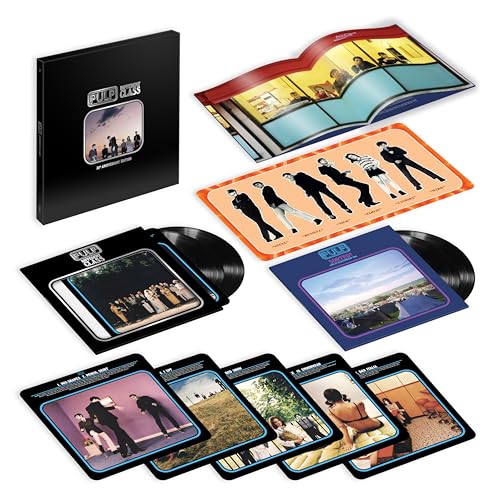


 Reviews
 News


