

Peter Gabriel / i/o CD, Vinyl, Blu-ray
The super deluxe edition box set of Peter Gabriel‘s i/o is released this week.

Holding the Music in Your Hands ®
Peter Gabriel / i/o CD, Vinyl, Blu-ray
The super deluxe edition box set of Peter Gabriel‘s i/o is released this week.
SDEtv explores the newly released indie edition coloured vinyl pressings of Kate Bush’s studio albums.
These Kate Bush reissues are out now, via The state51 Conspiracy and can be ordered via the SDE shop using this link or the buttons below.
Forty five years ago, in February and March 1978, Bob Dylan played his now historic first concert tour of Japan, which included eight shows at the Nippon Budokan Hall in Tokyo. Two of the gigs from that venue – February 28 and March 1 – were recorded on 24-channel, multi-track analogue tape and 22 performances were released as Bob Dylan at Budokan, a 2LP set which was originally intended for Japan only, but was issued globally in April 1979, due to widespread demand.
This month, Columbia Records and Legacy Recordings have released Bob Dylan – The Complete Budokan 1978 – it’s the first time any of the complete performances from that year’s world tour have been officially available.
Newly remixed and remastered from the original recordings, the collection comes in three physical formats – a deluxe 4CD box set, which has 58 tracks, 36 of which are previously unreleased; 8LP (Japan only) and a 2LP version, featuring 16 previously unreleased tracks from the box set. The master tapes were discovered in 2007 – they’d been stored in a vault in a factory in Shizuoka, Japan, for nearly three decades, wrapped thoroughly in a plastic bag to protect them from moisture.
Mercifully, the tapes were immaculately preserved – in his liner notes, Tetsuya Shiroki, co-producer of the box set, says it “felt like uncovering the Holy Grail”. Interestingly, the tapes were kept under wraps for another 15 years before the project finally got the go-ahead in 2022.
Commenting on the new mix, chief engineer, Tom Suzuki, says the intention was to make it crisper and clearer than the original 1978 release, and you can’t argue with him on that – it sounds great, adding a new depth and clarity to the performances. Dylan is accompanied on stage by a 12-piece band – nine musicians and three female backing singers.
The box set also includes facsimile memorabilia, such as concert tickets, pamphlets, posters and flyers, as well as a 60-page, full-colour photo book, with previously unpublished pictures. Watch the SDEtv unboxing video for a look at this presentation.
For the new version, the engineers wanted to reproduce the sound the Japanese audience would’ve heard in the concert hall – nothing has been removed or altered in any way, says Shiroki. So, on the first night of the tour, before a reggae-tinged ‘Shelter From The Storm’, we hear the hum of the amps, and the audience laughing, as Dylan struggles with tuning up, and then tells the crowd: “I’ve got a temperamental guitar”.
At the time it was released, Bob Dylan at Budokan polarised fans and critics – the New York Times called it “a challenging listen, but a rewarding one,” and writing for Rolling Stone, Janet Maslin, criticised Dylan’s “sanctimonious, Las Vegas-style bastardization of ‘Blowin’ in the Wind’, adding, “Can it really be that Bob Dylan had to go all the way to Budokan, to Japan, to find an audience with a short memory, a crowd that didn’t think he had anything to prove? In any case, the jig is up: he’s given up trying to outdo himself and begun something new.”
Ouch! Despite some of the discouraging reviews, the record still went platinum in the U.S and peaked at number 4 in the UK. The 1978 world tour, which saw Dylan play to two million fans across 114 shows, found the singer-songwriter at a crossroads.
It was an unsettling period in his personal life and career – his marriage to his first wife, Sara Lownds, had ended in a divorce the year before, and he was also smarting from the failure of his film Renaldo and Clara. On top of that, he hadn’t released an album since 1976’s Desire – Street Legal was recorded and would be released in June 1978 – and he hadn’t performed live since the end of the Rolling Thunder Revue in May 1976.
Dylan has always confounded his fans as well as delighted them, and, on that note, the first CD in the box set opens with the surprising rendition of the first song he played at Budokan on February 28 1978 – a slick and funky instrumental version of ‘A Hard Rain’s A-Gonna Fall.’
It’s an odd listen, as at times it wanders dangerously close to sounding like a hotel bar band – there’s a MOR sax break – but it’s powered by some great bass playing from Rob Stoner, and saved by an epic electric guitar solo, colourful country violin and dobro.
We’re in more familiar and agreeable territory with the next track from that night’s set – ‘Repossession Blues’, which is Dylan’s take on a song by Memphis rockabilly act Roland Janes and has some superb honking sax and killer riffing from lead guitarist Billy Cross.
There’s a sprightly reworking of ‘Mr Tambourine Man’ with Steve Douglas on flute (he played sax as part of Phil Spector’s Wall of Sound crew) and a neat organ solo from Alan Pasqua, while a truly lovely, impassioned rendition of ‘I Threw It All Away’ adds female gospel backing vocals and sax.
The slow, tender and soulful version of ‘Girl From The North Country’ is stunning, ‘To Ramona’ is heartfelt and moving, and the vitriolic ‘Ballad Of A Thin Man’ is a dramatic showstopper, but it’s not all good… ‘Maggie’s Farm’ gets a full-on, ‘70s power-rock overhaul, with howling guitar and even some dubious disco stylings, and no one needs a cod-reggae reworking of ‘Don’t Think Twice, It’s All Right.’
One of the highlights of the 1 March Budokan concert – on CDs 3 and 4 – is a magnificent, warm and organ-soaked ‘The Man In Me’ with a sax solo – it was only the sixth time the song had been played live.
The Complete Budokan 1978 may at times be “Dylan going Vegas,” – Maslin was right, the version of ‘Blowin’ In The Wind’ is very cabaret – but to be able to hear two these two full performances from 1978 is a wonderful thing. Dylan is in fine form vocally and from the playful band introductions he sounds like he’s enjoying himself.
There are some genuinely brilliant, fascinating and radical reinterpretations, which, thanks to the impressive remixing and remastering, sound superb, even if some of the versions might be too MOR and Vegas-like for some listeners to handle, Dylanologists and diehard fans will be delighted that what happened at those two full concerts in Budokan didn’t stay in that vault in Japan.
Review by Sean Hannam for SDE. The Complete Budokan 1978 is out now.


|
|
||||||||||||||||||||||||||||||||||||||||||||||||||||||||||||

With PWL Extended: Big Hits and Surprises just released, SDE caught up with hitmaker and music entrepreneur Pete Waterman to discuss his time writing and recording singles and albums for numerous acts and running a small business that grew exponentially towards the end of the 1980s. “I regret not selling Kylie to EMI” he tells Paul Sinclair in this revealing interview…
Pete Waterman: I left this to BMG. I think sometimes I’m too close to this stuff. And it’s interesting to step back and let other people curate and see what their choices are. I find these sorts of things really, really interesting from a collector’s point of view. Sometimes they pick stuff and I can’t even remember that we did it! We were flat out and you tend to forget exactly what you were doing.
The Blow Monkeys is of particular interest, because I was actually involved with Phil on that one. So, Jack Stevens, who was the A&R guy at RCA, as it was then, he asked me to do this for him. In those early days, when Phil had only just come over from working at The Marquee, I’m trying to get him established as a mix engineer and as a mixer; it was still very much the case that we had fingers in all the pies, because that Blow Monkeys track is very early. [released in Feb 86]
Extremely happy, because lots has changed over the years, obviously, and things move on, but the logo and the company has always remained with us. It’s Pete Waterman Limited, and if it’s got my brand on it, you know that I’ve approved of it. The Stock Aitken Waterman brand is Stock Aitken Waterman, but PWL is the record company and we’ve always treated it differently.
And we never wanted it…
Yeah, but it’s like that famous saying, “if you want something done, ask a busy man”, you know, and also, if you’re as immersed as we were in it, you become brilliant at it. I was literally living this; seven days a week, certainly 16 to 18 hours every day. I was focused on what was going on, whether it would be PWL or Mike [Stock] and Matt [Aitken], or whether it be the other mix engineers, or [late night British Dance Music Granada TV programme] The Hitman and Her… My whole life was surrounded at that point, by music. And I had a great team around me, whether it be in the studio, in the offices, or at Granada; we had a great team. So they made it easy because they’re giving you solutions, not problems. Every time you make a record, you make a problem. “How do I get this on the radio?” “How do I get this on TV?” So you know there’s a problem, but what you’re looking for is solutions.
Every time you make a record, you make a problem
Pete Waterman
As a DJ, through Mecca. In those days, you weren’t the DJ that people think of today. I mean, you ran the ‘kids sessions’, as they were called, which meant people up to up to 18 years old. You did everything, you cleaned the floor, you checked the coats, you changed the toilet rolls in the toilets, you changed the towels – you were in charge! You hired the security staff and said, who came in and didn’t come in. At the end of the night, you went to the door to see the receipts of how many people had come in and the reason for that was you either reached your bonus, or you didn’t. And if you didn’t regularly, then you got pulled into the manager’s office and were asked “What are you playing? You’re not entertaining the crowd”. And we all go through that period; as a DJ, you can’t always be be on it. Sometimes you do back the wrong horse. For example, when Motown left Detroit to go to LA that gave me a real problem. Because I could play any Motown record when they were in Detroit. When they went to LA, and they started making records like The Temptations’ ‘Papa was a Rollin’ Stone’, I couldn’t play that record. I couldn’t play James Brown. My audience just didn’t want that heavy funk. They were used to that Northern Soul, R&B, uptempo boy-and-girl stuff. So the first thing you do as a DJ, is you revert to oldies… I’ll just take a couple of oldies in. And it works, but it only works for certain time because, after a while, the old has become boring, because they’ve heard him that too many times. And it’s at that point, you think, Oh, my God, I’ve got to do something quick here. I’ve gone from 1200 to 1300 kids on a night down to 400 and I’m still falling. And any minute now the manager’s going to come to me and I’m going to lose my job. So then you focus on the music. You really do, and you think, what am I missing here? So that’s where my training came from; watching the crowd, watching what worked and what didn’t work.
Oh yeah. I think it’s true to say and in hindsight, I probably kept the brand alive for years longer than anybody would have normally done, because I stayed with the roots. We didn’t get into [working with] American artists. Recently, I was talking to one of my contemporaries at the time, and they were paying producers $100,000 per track. Well, we were charging £500 a track! So it would have been very tempting, if somebody said, I’ll pay you guys $200,000 per track – come to the States. You think “We’ve made it”. But then, to me, you’ve completely changed what you’re doing. I’d had that experience with Rick Astley, and I was never gonna have that experience again.
Rick, Astley was a development deal. Very, very, very unusual in the record industry. They gave us £30,000 pounds to develop this artist, because I believed in him that much. I knew he needed time to grow and I didn’t want to just make a single; I wanted him to learn the studio business and feel comfortable. Now, no other company would have given me 30,000 quid. So you’ve got to hand it to RCA, they gave me the money in blind faith. I mean, I could have walked off with that £30,000 and never ever delivered an artist. After six or seven months they’re asking “what’s going on?”, because we still haven’t played them anything. So we bought them down into reception, and we literally did put a speaker and a microphone in the middle of reception. Julian and Peter came down from the RCA and Rick sang live ‘Ain’t Too Proud to Beg’ to a backing track. Everybody’s jaw dropped because they’d never seen anything like that before. You know, they were used to going into a rehearsal room and seeing a professional outfit. But you know, he was a tea boy, it was like “Rick just pop out here, will you? Just sing this song for these two geezers that have come down from the record company!”. But he did, and we still talk about it to this day. You would never do that to an artist now, but that’s how comfortable it all was. I don’t think either we, nor Rick, understood the treadmill that you then go on once you’ve got that hit. But the thing was, I realised [originally] in America, that Rick and ‘Never Gonna Give You Up’ was never going to be a hit, because he wasn’t a priority artist for RCA. Bill Tanner in Miami, who was the big DJ on the biggest station in America, he told me exactly why this would not be in America. He said to me “Pete, this is wonderful record, it’s number one on my station but it’s not going to be here in America”. “Why?” “Because it’s on RCA”. And had I not called Germany, because I knew the guy who ran the whole Bertelsmann Empire at that point, Monti Lüftner, things might have been very different, because I actually tried to get the record back for America. But he said “whatever you want, you’ve got”. So they were trying to get Patrick Swayze to number one with Dirty Dancing [‘She’s Like The Wind’] and they were pissed off that Rick Astley got there with ‘Never Gonna Give You Up’. I mean, they wouldn’t even allow us into the RCA building!
Yeah. As I said earlier, we never want to be a record company, we just wanted to be producers and writers. So Nick East had done a fantastic job for us, with Hazell Dean and Divine. He was a promotion guy, who had got no money. So I went to him and said “Right, it’s time to set up your own record company”… “I haven’t got any money”… “Don’ t worry about the money. I’ve got a record. It’s Princess ‘Say I’m Your Number One’, I’ll put the money up, you form your record company”, which he did, and that was Surpreme. So that’s literally how that came about. So we gave him the record, rather than paying him, and he took it on his own label and took the profit off of that.
No, because I wanted to keep it at arm’s length at this point. I had to go and borrow money to press the record for for Nick, because Nick didn’t have any money. Luckily I had a bank manager who had ears! He heard the record and said “how much do you need? You got it”. I walked away with £25,000 but with no security. I paid it back in about a month, but that was how we operated in those days.
I didn’t turn the Pet Shop Boys down, I turned [the group’s manager] Tom Watkins down. Tom Watkins is the only guy that’s ever ripped me off in the business and I always said, I wouldn’t work with Tom. It’s ironic that Tom Watkins, at the end, pinched Phil [Harding] and Ian [Curnow] off me. But I’m quite a moral guy when somebody rips me off. You think “that’s once, you don’t rip me off twice”. I do regret it [to an extent] because I love Neil and I love the Pet Shop Boys. And God, do I wish I’d produced ‘It’s a Sin’ but that’s just history. But I didn’t turn down the Pet Shop Boys, I just couldn’t work with with Tom Watkins.
Oh, you know about that? [laughs] Wow. I forgot all about that.
Well, I think, again, we are talking very early here. And the snobbery was unbelievable in those early years, and it wasn’t a shock to us, to be honest. I think people saw us as challenging; we were changing the norm and I think that we definitely saw this and people would say that you can’t work with these guys, because they’re dangerous to us as a label; they’re taking business away from us. Actually, I used to see George Michael [who sings on ‘Wrap Her Up’] most Friday nights in Haringey, in the clubs; we tested some early 12-inches in the same gay clubs that he was in, testing is his mixes, but I guess it’s incredible now to think we were renegades! It’s like the we were the Antichrist. “For Christ’s sake don’t call Stock Aitken Waterman!”
The snobbery was unbelievable in those early years… “For Christ’s sake don’t call Stock Aitken Waterman!”
Pete Waterman
I think we had a particular sound, a really unique sound at that point. And if you then put Elton John and George Michael into that unique sound, maybe the artists or the management go “Whoa, wait a minute… it’s no longer Elton John and George Michael, it’s Elton John, George Michael and Stock Aitken Waterman, and that’s we’re not going to allow that”.
Yeah, at this point, the management particularly, were getting very worried that we would dominate the artist. That happened to us when we worked with Judas Priest. Bill Curbishley [the band’s manager] was the first guy to openly admit to the problem. You know, it was the biggest hit we never had. I remember playing it to Jonathan King and he went nuts and personally called Bill Curbishley and CBS, and told them they had to release it, that it would be number one all over the world. And Bill Curbishley said, yeah, but it kills Judas Priest… We’re not going to sell belt buckles, and beer mugs with a band that’s number one in the pop charts. So that was a lesson… you go “got it”, but it’s still sad because the whole of the Judas Priest session was amazing. It was a different world for us, a different world.
Paul, I don’t know. I do think it is slightly sad that you can’t make up your own mind, whether it’s the best ever Stock Aitken Waterman record, or not. It’s a different world now, but you know, they’ve still got their fans, and they don’t want to let their fans down. They’re doing the same as we’re doing, issuing unreleased stuff and whatever, so you’d have to ask them, really. I still play it to people and go “Look what happened when you put Stock Aitken Waterman with a rock band!” You’ve got an enormous rock anthem.
With Judas Priest it was the biggest hit we never had
Pete Waterman
I think it was the most interesting session we did because you are with a well established band, who are all fantastic players. We recorded it in Paris in this enormous recording studio with all the drums mic’d up and we thought “Wow, this is rock and roll!”. We didn’t take any instruments, because they had everything. A Linndrum machine, for a click track, is probably all we took, but when we’re in there, and we’re teaching Rob [Halford] and the guys how to play the songs, it just became a mutual love-in. It was like “You guys are amazing”… “No, you guys are amazing!” Matt’s rock tendencies came out and one of the guys said, “God, you’re an amazing guitarist”. So it was like, we were playing with them. Yes, we added electronic keyboards, but that was after we’d recorded them as a live band. I remember sitting down and saying “I’ve got this idea, we’re gonna record a Stylistics song” [‘You Are Everything’]. Well, you could have heard a cockroach fart, it was silent. There’s these big hairy geezers with tight trousers and bulging bollocks and here am I suggesting a Stylistics song? But they got it straight away and Rob was brilliant. I think we did it in about two takes.
No, we became Judas Priest! [laughs]. They became Stock Aitken Waterman and were all interested in the technology but we weren’t interested, we wanted to get the guitars out! The whole thing got reversed.
Yeah, absolutely.
Indirectly. [long pause]. You can’t really work with your heroes. McCartney, to Mike, me and Matt was [another] stratosphere. So you are in awe, no matter what they do. You’re in awe. And so, when we did work with him, he was absolutely brilliant. He’s lovely to work with, but he wasn’t used to being produced. And we soon realised that. And I was the one that had to go in as the old Beatles fan and say “That’s great. Let’s go home”. And he’d be like “No, I can do it better”. “No, no. Let’s go home”. But the lovely side was that Linda and I became really good friends. So Linda used to ring me up because Paul would say, “I’ve got to talk to Pete Waterman because I’ve got to change that vocal”. And she’d say, “Pete’s the producer, it’s fine”.
He was out of tune. He’d got emotional, and he’d gone slightly out of tune. But to me, it’s the part that makes the record, because you’ve got McCartney cracking up with emotion. But he’s a perfectionist, which is brilliant. So there we are, as fans, hearing Paul McCartney as he was in the 60s, it’s like, “Wow, this is Paul McCartney”. But he [wants to be] modern. He’s trying to make better records than Band on the Run, although you ain’t going top Band on the Run! So here’s this amazing guy but we’ve caught on tape this little bit of an historic moment of Paul McCartney. And Linda and the family recognise it straightaway. He was still calling us when it had been number one for four weeks, saying he could do it better! So, yes, there was this period where Linda said to Paul, you need you need to work with these guys because they’re fresh and they will task you to do things differently. But I don’t think we could have ever produced Paul McCartney, because we’re too big as fans.
Paul McCartney was absolutely brilliant to work with… but he wasn’t used to being produced
Pete Waterman
I think if you go back to the early days with Agents Aren’t Aeroplanes and The Blow Monkeys, we were the 12-inch kings. [At that point] we were not getting work from other people but we realised that you could make enough money by selling 12-inch singles to make another record. So we specialised in 12-inch mixes, particularly on that Agents Aren’t Aeroplanes record. We knew we weren’t going to have a hit, but all we had to do was raise enough money to make the next record. It was the same with Hazell Dean, and that kept us going. We weren’t rich by any stretch of the imagination, at this point, but we had enough money to make the next record. I remember when we got called in to do Dead or Alive, when we were doing the contracts, I demanded a royalty on the 12-inch. Well, major record companies treated 12-inches like promos – they [virtually] gave them away. So they just didn’t care. They put in my contract that I got paid on 12-inch records. The band didn’t get paid on 12-inch records. So when suddenly that 12-inch, worldwide, had sold over a million they had a problem because the band wasn’t being paid and Stock Aitken Waterman were. So that’s why these 12-inches are important to us. They weren’t part of our marketing strategy, they were part of what we knew was needed. It was part of our art form, if you like
Yeah, quite often. Certainly on ‘Roadblock’ we did. Actually, Princess started off as a long version which we shortened. Things like Kylie and Jason were never like that but Sigue Sigue Sputnik was made in a 12-inch form and with Lonnie Gordon we always made as 12-inches and edited down.
They were complete bastards.
Yeah, but we just carried on. We knew that they were threatening their A&R guys. You know, “if you’re a naughty boy, we’ll send you to Stock Aitken Waterman”. That’s worse than sending you to Coventry! You know, nobody will ever speak to you again. Yeah, we knew that, but it didn’t worry us.
It was, yes.
Yes. Yes! And I was offering ‘I Should Be So Lucky’ for £1200, by the way, when most people were paying £15,000 pounds per track. But nobody took it. Nobody. I went to a music conference in America and that’s where Steve Mason who owned Pinnacle distribution, talked me into putting it out on PWL. “This is a hit, put it out yourself!” That’s how that came about. I didn’t want to do it.
They didn’t want to do it.
They just didn’t want to. You have to ask them, I suppose. They didn’t want to invest, they didn’t believe in the artists… That wasn’t what they did. They were writer-producers. Matt and Mike took their royalties and they didn’t have to pay the staff, I paid the staff. So what I did with my company, PWL, was up to me. If they’d have wanted to, at any point, they could have come in and said, well, we’ll put some money in with you.
Yeah. It brought the added load of more staff, who all had mortgages to pay. You start with four or five staff and then suddenly, you’re up to 12 to 14 staff. These aren’t the actual figures but it’s like you’re paying £3,000 a month in salaries, and national insurance contributions and suddenly you’ve gone to £25,000. That’s a whole different ballpark. So it wasn’t about me living in a flat, it was about me paying the wages every month, and not having the bank pulling everything from us.
Yeah. Cashflow problems in record industry was how the majors control the independents because you always had a cash flow problem, because you didn’t get paid for six months and 90 days. Take Rick Astley. We had the number one record in the world and Barclays Bank was chasing me for an overdraft of £5000. I probably had four million pounds sitting out there all the way around the world and I was I was getting threatened with bankruptcy for a £5000 overdraft. That’s just the way it worked. So you’re constantly changing banks, and you’re constantly having to deliver the wages. I wouldn’t have changed it for the world, by the way, but it’s interesting looking back
We did it and we didn’t, because I didn’t sign Sonia to the label. I signed Sonia to Chrysalis.
I wanted some of the pressure taken off. It’s the same with Stock Aitken Waterman [with songs like ‘Roadblock’]. I licensed that to A&M, because it was just too much pressure, at that point. I didn’t want to take any more staff on. We couldn’t cope with Kylie and Jason, let alone Stock Aitken Waterman, Sonia and all the rest of it. Most major record companies can only deal with three big artists, so trying to deal with five in a little company? Forget it!
It was
Oh, yeah, I think so. We’ve just had a conversation about how tough it was to pay the bills, and no major record company was giving us any work. And suddenly, we’ve got an artist earning a quarter of a million pounds a week [Kylie]. If someone’s offering you more money, you say “Fuck you, pal. I’m off over here”. This wasn’t me thinking I’ve got to be credible… bollocks [to that]! I’ve got to pay the wages here; I’ve got 32 staff. I don’t need the bank calling me every three weeks and asking me to pay in a cheque. We’ve got no credibility, anyway, so we might we’ll take the cash. We’ve won the lottery, so do I ring up the Lottery and say “sorry, I don’t want it”? Bollocks ! I’m taking the money…
Absolutely. But at that moment in time, you can’t look into the future. Yeah, I can look back now and say, if we sold Kylie, after the second album, which we could have done, to EMI for a lot of money, we’d have gone back to being what we’d done before. But we didn’t. Because we’d become a massive organisation at that point. Now, do I regret that? Yes, I can look back and say, that’s when we should have said “Right. Off you go over there. You set yourself up. We’re going back to basics”. But it was out of my hands by that time, because it was such a big organisation.
No, no, no, that’s absolutely the wrong way to look at it. Yes, I took responsibility for all my artists. And with The Reynolds Girls, I’m glad you picked them, because that wasn’t my decision, that was their dad’s decision. In fact, if you look at Hazell Dean, you can see our loyalty because we stayed with with Hazell right to the end. There was a problem in that she wasn’t selling records, but we stayed there; we didn’t drop her. I think 99 percent of the time the act wanted to drop us, or there was a situation were I didn’t agree [with something]. It’s like, if you want to go, away you go. When Rick wanted to go to RCA, I wasn’t gonna stand in his way. We’d been mates for a long time. It was like, if that’s what you want, Rick, off you go. When we were responsible for the artist, we never ever treated an artist as a one off single.
Thanks to Pete Waterman who was talking to Paul Sinclair for SDE. PWL Extended: Big Hits and Surprises is out now. It’s available as two 12-track 2LP sets, a 24-track 3CD package or the limited edition SDE-exclusive 26-track, stereo-only blu-ray audio, available only via the SDE shop using this link or the button below (limited to 1000 worldwide).


A new book called Phew, Eh Readers? collects the work of music journalist Tom Hibbert whose idiosyncratic, acerbic, groundbreaking writing was enjoyed by a generation of music fans, notably in Smash Hits in the 1980s and then later in Q magazine later in the same decade and into the 1990s.
As well as collecting some of his funniest writing, the book will also include affectionate reminiscences from some of his peers including Mark Ellen, Sylvia Patterson, Robyn Hitchcock, Bob Stanley and Chris Heath.
Tom Hibbert died in 2011 at the age of just 59. The book has been compiled by Barney Hoskyns and Jasper Murison-Bowie with the assistance of Tom’s widow Allyce.
Phew, Eh Readers will be published by Nine Eight Books on 1 February 2024.


|
|
||||||||||||||||||||||||

Kate Bush / Vinyl reissues Vinyl
All ten of Kate Bush’s studio albums are being re-released through her new label The state51 Conspiracy with special coloured vinyl editions being available via independent record shops, including the SDE shop.

The third in the series of Level 42 CD box sets. This 7CD package features all of the band’s albums from 1991 – 1994 with four discs of B-Sides, 7″ mixes, remixes and rare versions. Daryl Easlea contributes sleeve notes.
History has repeated itself as the remixed, rejigged and rebooted Beatles compilation 1967-1970 – more commonly referred to as ‘The Blue Album’ – has entered the UK album chart at number two, kept off number one by Taylor Swift whose ‘Taylor’s Version’ edition of 1989 spends a third week at the top. The reason I say history has repeated itself is because in 1973, when this compilation was first released (alongside 1962-1966), it never made it to number one then, either. David Bowie’s Aladdin Sane kept 1967-1970 pinned to number two for three consecutive weeks.
Back to 2023 and there’s quite a lot to unpack here. Swift staying at number one for three weeks in a row would have hardly been worthy of comment in the 1980s or 1990s but these days it’s a rare occurrence; in fact it hasn’t happened for almost TWO YEARS, when Adele enjoyed a five-week run at the top at the end of 2021, with her 30 album.
Music Week reported the exact sales figures and you can only conclude it was an unfortunate missed opportunity for Apple Corps and Universal. They’ll perhaps be ruing the decision to issue both vinyl and CD box set editions that brought together both the ‘Red’ and ‘Blue’ albums, because the Official Charts Company consider the box a separate release when compared to the individual ‘Red’ and ‘Blue’ albums. Swift stayed at the summit with 16,773 sales and the ‘Blue’ album sold 14,954 which is a shortfall of 1,819 units. However, the box set edition sold 3,625 units and so it’s reasonable to conclude that if they hadn’t bothered with the box set then 1967-1970 would have sold the combined figures, giving a tally of 18,579 (14954 + 3,625)- enough to outscore Taylor Swift and secure the number one spot!
Extra salt in the wound comes when you consider that ‘The Red Album’ sold 13,432 to secure number three this week, but again, if those 3,625 box set sales were added to this, then 1962-1966 would also have outsold Taylor Swift with sales of 17,057. The Beatles would have been – really should have been – number one and two on this week’s album chart.
Of course, these product decisions are made well in advance and the album chart is such a lottery these days anyway (who remembers Tears For Fears not getting to number one with The Tipping Point on 29k sales?) but even so, you need a strategy that is going to maximise your chances and diluting the sales in this way, by having what the Official Charts Company regard as three distinct releases instead of two, in hindsight, has proved costly. Because it’s viewed as a separate ‘album’, the box set sits at number 33 in the album charts this week.
It will be no consolation to the parties involved that the new/last single, ‘Now and Then’, has remained high in the singles chart at number six, one place above Taylor Swift’s ‘Is It Over Now?’.

In other news, the next song from Trevor Horn’s forthcoming Echoes – Ancient and Modern album has been made available. It’s a re-recording of the Yes classic ‘Owner of a Lonely Heart’ with Mr Rick Astley on vocals. Have a listen below and let me know what you think, by leaving a comment. Don’t forget that SDE has an exclusive blu-ray audio version of this album available, and Trevor has created a fantastic, dedicated 5.1 mix, which is included in both vocal and instrumental versions. This is in addition to the Dolby Atmos Mix and a hi-res 96/24 stereo mix! Order your copy here.
Earlier this year, a curious thing happened to Black Box Recorder’s back catalogue. The streaming figures for ‘Child Psychology’, a track from their 1998 debut album England Made Me, suddenly went nuts overnight: on Spotify, it currently stands at 25.6m plays, which is 24m more than the band’s solitary minor hit, 2000’s ‘The Facts Of Life’. It transpired that Billie Eilish had posted a video online of herself listening to the song: her fans had subsequently flocked to hear it for themselves. “Child Psychology continues to bring joy to so many new listeners,” commented Black Box Recorder’s former singer Sarah Nixey, dryly, next to a reminder of the song’s mordant chorus: “life is unfair – kill yourself or get over it”.
It’s unclear whether the Eilish connection prompted Chrysalis to release a 25th Anniversary expanded edition of England Made Me – certainly, the song’s title is prominently featured on the sticker on the front of the vinyl edition – but whatever the reason, it’s a welcome reissue, particularly on vinyl. On release, England Made Me didn’t sell very much, and it came out in an era when record labels were wont to press only a nominal quantity of copies on vinyl – there’s a very brisk market indeed in secondhand Britpop-era vinyl – so the original is hard to find and expensive if you do. Moreover, England Made Me is a strange and singular album that deserves exhumation.
As the title suggests, it’s very British, but it’s utterly at odds with the prevalent mood of British alternative rock in the 90s. England Made Me wasn’t uncommercial – it’s big on melodies, its songs have hooks – but in a world of huge singalong anthems, its sound was hushed, subtle and introverted: wiry strands of largely undistorted electric guitar, delicate washes of keyboards, an occasional bit of glockenspiel, the tempos of the songs never breaking a sweat. Nixey’s voice, meanwhile, was unapologetically Received Pronunciation in an era of Mockney dropped aitches. A cover of Althea And Donna’s 1978 number one ‘Uptown Top Ranking’ bore the influence of trip hop in its sampled breakbeat and incessant, hazy loops, but the overall effect is chilling, rather than chilled-out.
The mirror image of Britpop’s jolly flag-waving – Black Box Recorder had to be dissuaded from packaging it in a sleeve featuring a photograph of the England football team giving Nazi salutes at the 1936 Berlin Olympics – its lyrics depict “dear old dismal England” as a world of rain-soaked suburban boredom, familial dysfunction, violence and melancholy. Its closing track, ‘Hated Sunday’, is a brilliant musical evocation of the existential malaise that can grip you somewhere between Songs Of Praise and the Antiques Roadshow: “time stands still, one last drag, it still feels like school tomorrow”. Its notion of “cool Britannia” involves an icily respectable, stiff-upper-lip veneer beneath which all manner of darkness, sadism and discontent seethes: sung in a voice that’s both blank-eyed and cut-glass, the title track depicts a woman progressing from a childhood torturing insects to murder; the eerie mood conjured up on ‘Ideal Home’ somehow suggests the idyllic middle-class life drawn in its lyrics is a sham, covering something rather unpleasant up. It is infinitely more interested in the grimy strangeness of Britain in the early 70s than in the sunlit we-won-the-World-Cup fantasia of mid-60s Swinging London that seemed to lurk behind so much 90s UK pop culture.
With the Berlin Olympics photo nixed, the cover instead features an incredible shot of wrestler ‘Exotic’ Adrian Street – a hulking vision in make-up, platform boots and glam rock finery – standing outside the miner’s cage at the Welsh colliery where he once worked, his coal-dust covered father looking on. ‘Kidnapping An Heiress’ evoked memories of the 1975 abduction and murder of Lesley Whittle; among the extra tracks included on this re-release are covers of ‘Seasons In The Sun’ – the simultaneously weedy and unsettling English-language version of Jacques Brel’s song about a dying man, ‘Le Moribond’, with which Terry Jacks had an unlikely and profoundly depressing Number One in 1974 – and a single by obscure Brighton punk band The Dodgems called ‘Lord Lucan Is Missing’. The additional 10-inch that comes with this reissue is also home to ‘Brutality’, which offers a take on nostalgia that pretty much sums up Black Box Recorder’s sense of humour: “whatever happened to drinking and driving and doing the decent thing / hiding out on the continent getting over a nervous breakdown?”
The grimness and violence lurking around British life, the weirdness of the early 70s, a pitch-black sense of humour: in fairness, these were drums that that Black Box Recorder’s Luke Haines had been beating for some time. His band The Auteurs were supposed to follow tour-mates Suede to mainstream stardom – they were featured in the infamous “Yanks go home!” issue of music magazine Select that’s held to be Britpop’s ground zero – but instead, Haines had become 90s UK alt-rock’s most curmudgeonly refusenik: by the time of the decade’s zenith, The Auteurs were recording Steve Albini-produced songs about child murder and bombing the Columbia Hotel, the London rock and roll hotel that gave its name to a song by Oasis, while Haines was also helming a concept album about early 70s terrorism under the name Baader Meinhof. And they were themes he would continue exploring long afterwards: his provocative and darkly hilarious 2006 solo album Off My Rocker At The Art School Bop comes highly recommended. But it’s questionable whether he ever explored them quite as powerfully or succinctly as he does on England Made Me, an album full of exquisitely nasty, haunting pop gems. The reissue is apparently remastered, although it’s hard to work out whether that constitutes a major improvement, simply because original vinyl copies are so scarce: I confess, I’ve never heard one to compare the new version to. But that scarcity alone makes the reissue worthwhile – that and the fact that England Made Me is so far removed from anything else that was happening in 1998 that it transcends its era: listening to it isn’t a nostalgic experience, its contents feel fresh, relevant, even prescient.
England Made Me is reissued on vinyl today, via Chrysalis.

Def Leppard’s 2022 studio album Diamond Star Halos will be the next release, on blu-ray audio, in the ongoing SDE Surround Series.
The 15-track long-player includes the singles ‘Kick’, ‘Fire It Up’ and ‘Take What You Want’ and features guest vocals from Alison Krauss on two tracks: ‘This Guitar’ and ‘Lifeless’. The album – the band’s 12th – was co-produced by Ronan McHugh and was a critical and commercial success, peaking in the top 10 of both the UK and US album charts.
The new forthcoming SDE-exclusive blu-ray edition will feature a Steven Wilson Dolby Atmos Mix of Diamond Star Halos, which is the first time this spatial audio mix has been available on a physical product. It will also include an exclusive instrumental version, the standard stereo mix and two rare bonus tracks, unreleased physically outside of Japan (‘Angels Can’t Help You Now – Stripped Version (Covent Garden Mix)’ and ‘This Guitar – Joe Only Version’).
Blu-ray content summary:
This Def Leppard blu-ray audio is No 16 in the ongoing SDE Surround Series and will be packaged in the same style as previous releases in the series and ships with a free, collectible SDE Surround Series slipcase with the number ’16’ on the spine.

Here’s the now traditional reminder as to why this blu-ray comes highly recommended:
The SDE-exclusive Blu-ray Audio of Diamond Star Halos is a limited edition item. It will be pressed based on demand and is available to pre-order for 14 days only. Availability after that cannot be guaranteed, so secure your copy today by pre-ordering at the SDE shop, either directly via this link or using the special SDE shop buy button (‘add to cart’) below.
We ship worldwide and there’s no longer any extra charges to the EU (if the value of your order is less than €150).
This SDE-exclusive blu-ray of Diamond Star Halos will be released on 23 February 2024 (was 12 January) via Mercury/UMR.
The SDE Surround Series so far is:
#1 Tears For Fears: The Tipping Point
#2 xPropaganda: The Heart Is Strange
#3 Gilbert O’Sullivan: Driven
#4 Shakespears Sister: Hormonally Yours
#5 Brian Eno: FOREVERANDEVERNOMORE
#6 Orbital: Optical Delusion
#6.5 Various Arists: Concert For George
#7 Ten Years After: A Space In Time
#8 Bob Dylan: Time Out Of Mind (2022 Remix)
#9 Tears For Fears: The Hurting
#10 Mike Oldfield: Tubular Bells
#11 Suede
#12 ABC: The Lexicon of Love
#13 Duran Duran: Danse Macabre
#14 Trevor Horn: Echoes – Ancient and Modern
#15 Soft Cell: Non-Stop Erotic Cabaret
SDEtv takes a look at the SDE-exclusive blu-ray edition of BMG’s new PWL Extended Big Hits and Surprises Vols 1&2. Watch the video…
PWL Extended: Big Hits and Surprises is released on 17 November 2023 via BMG. You can order the SDE-exclusive blu-ray via this link or using the buy button (‘add to cart’) below. These are now in stock and will ship in the next 48 hours.
TECHNICAL NOTES: This blu-ray audio requires a blu-ray player. It will not play on a CD player!

|
|
||||||||||||||||||||||||
Suede’s 1994 non-album single Stay Together will be released as a limited edition seven-inch picture disc early next year, as part of Demon’s ongoing ‘Suede30’ celebrations.
The song was the last single released by the band while Bernard Butler was still a member and its peak of number three in the UK singles chart felt like some kind of culmination or validation at the time, in what seemed like the inexorable rise of the band after that run of four singles from their debut album.
Commercially, although not critically, things would take a turn for the worse, although that was all in the future at this point and ‘Stay Together’ remains a fantastic piece of work, with a typically strong flipside in ‘The Living Dead’.

This seven-inch picture disc features the edit of Stay Together (the 12-inch and CD singles at the time boasted the long 8.29 version) and ‘The Living Dead’. It’s the fifth in the series of picture discs and it seems that Demon do plan to issue all three singles from the magnificent Dog Man Star in this format next year.
This Stay Together seven-inch picture disc is released on 16 February 2024 via Demon Records. Like the previous four picture discs, you can pre-order from the SDE shop via this link or by using the button below.

NOW That’s What I Call Music continue their occasional limited edition vinyl box set series with NOW Presents Disco.
This is a 5LP set pressed on purple vinyl and features “the greatest 70s Disco tracks ever”. You can decide if you think that’s true, by perusing the tracklistings below.
Certainly, it’s full of timeless classics, by Chic, Sister Sledge, Gloria Gaynor, Village People, Grace Jones, Amii Stewart, Candi Staton, Chaka Khan, LaBelle, Frankie Valli & The Four Seasons, Tina Charles, Baccara, Boney M., Lipps Inc., Kool & The Gang and many more!

This is the fourth box in the series after Now Presents The 1970s, Now Presents Electronic and Now Presents Classic Soul. The first two are now out-of-print with only the relatively recent Classic Soul still easily available.
NOW Presents Disco will be released on 8 December 2023.


|
|
||||||||||||||||||||||||

SDEtv examines the New Order Substance 1987 reissue and finds the package a “perfect 4CD set” and “not fit for purpose” simultaneously. Watch the video to find out more…

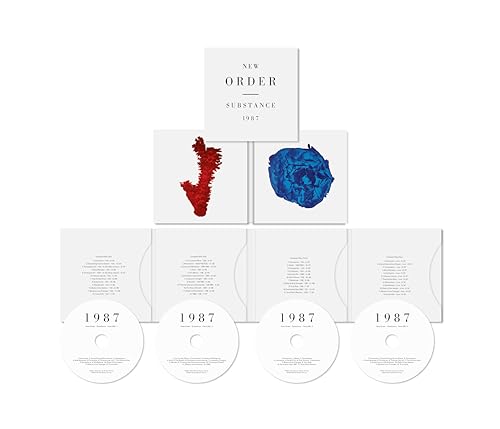
|
|
||||||||||||||||||||||||


|
|
||||||||||||||||||||||||||||||||||||


|
|
||||||||||||||||||||||||


|
|
||||||||||||||||||||||||


|
|
||||||||||||||||||||||||

Sheryl Crow will release Evolution, her 12th studio album in March next year. The record will feature nine new tracks and has been produced by Mike Elizondo.
This announcement is mildly surprising given that Crow had announced that she would no longer make albums after 2019’s ultra-collaborative Threads. She explains: “Everything has gotten more song oriented with streaming, and making an album is a huge endeavor. I started off sending one song to Mike, which turned into four, and it was going to be an EP. But the songs just kept flowing out of me, four songs turned into nine and it was pretty obvious this was an album.”
The album features the single ‘Alarm Clock’, which Crow premiered on Jimmy Fallon recently, and clocks in at a brief 35 minutes. There’s nothing complicated about the physical formats which amount to a vinyl LP (which may or may not be a coloured vinyl pressing) and a CD. That seems to be it.
Evolution will be released on 29 March 2024 via Big Machine.


|
|
||||||||||||||||||||||||||||||


|
|
||||||||||||||||||||||||||||||

Bob Dylan / The Complete Budokan 1978 CD, Vinyl
Columbia and Sony’s Legacy Recordings issue The Complete Budokan 1978 a new 4CD or 8LP vinyl box that marks the 45th anniversary of Bob Dylan’s 1978 world tour and includes two complete shows from Tokyo’s Nippon Budokan Hall (February 28 and March 1, 1978). Watch SDEtv unbox the 4CD version.

This reissue of Muse’s 2003 album features remastered audio, never-before-released live versions, abd demos. This 3LP+2CD set features the album on one CD and 2LPs with bonus material on the second CD and the clear vinyl 12-inch.


|
|
||||||||||||||||||||||||||||||

NOW That’s What I Call Music! 16 features 33 of the biggest chart hits from 1989 on two CDs, including Queen, Tina Turner, Cliff Richard, Deborah Harry, Erasure, Belinda Carlisle, Living in a Box, Tears For Fears, Neneh Cherry, Wet Wet Wet, Cathy Dennis and more. Kate Bush’s ‘The Sensual World’ and Lil’ Louis’ French Kiss were on the original compilation but are MISSING from this reissue.


The first brand new studio album from Classix Nouveaux for 40 years. Battle Cry contains nine tracks including seven brand new compositions plus ‘Never Never Comes’ and ‘Interlude/Inside Outside’ which have been newly re-imagined.

Out today is the reissue of The Beatles ‘Red’ and ‘Blue’ albums. SDEtv takes a close look at the two coloured vinyl editions and compares to the originals.


|
|
||||||||||||||||||||||||||||||||||||||||||


|
|
||||||||||||||||||||||||||||||


|
|
||||||||||||||||||||||||||||||||||||||||||||||||||||||||||||||||||||||||


|
|
||||||||||||||||||||||||||||||


|
|
||||||||||||||||||||||||||||||


|
|
||||||||||||||||||||||||


|
|
||||||||||||||||||||||||


With next year marking the 20th anniversary of their debut Hot Fuss, The Killers have chosen this moment to release a new greatest hits called Rebel Diamonds.
The compilation features 20 tracks, with all the hits and at least one song from each of their seven studio albums. A new number, ‘Spirit’, is also included.

Rebel Diamonds is available on CD, 2LP black vinyl with a coloured cream vinyl edition available via indie shops. The band are going to offer a 4LP edition via their channels soon, although this doesn’t seem to be available yet. No extra material, it’s just pressed at 45RPM.
Rebel Diamonds is being released on 8 December 2023, via EMI.


|
|
||||||||||||||||||||||||||||||


|
|
||||||||||||||||||||||||

Porcupine Tree’s 2022 tour to promote their Closure/Continuation record is celebrated with a special live album release next month.
Closure/Continuation. Live. documents the reformed band’s triumphant return to the stage via a live recording captured on 7 November 2022 at Amsterdam’s 17,000 capacity Ziggo Dome.
Three physical formats all include the full live show (“no hits” to quote Steven Wilson) and the deluxe edition is a 2CD+2xblu-ray set which feature audio across the two CDs, the filmed show (+ bonus features) on blu-ray and then a second blu-ray with audio streams in Dolby Atmos, 5.1 and hi-res stereo. The four discs are housed in a 60-page hardcover book which slides into a 12-inch slipcase.

There is also a 4LP box set with all the audio pressed on clear vinyl and a blu-ray+DVD edition which just the filmed show – no bonus features or separate audio-only element. The deluxe edition and 4LP versions are not available across all retail.
Closure/Continuation. Live. is released on 8 December 2023, via Music For Nations/Sony. The 4-disc deluxe set is being reprinted for a 15 March 2024 re-release.


Go West’s 1987 album Dancing On The Couch will be reissued in January.
This follow-up to their platinum self-titled debut saw Peter Cox and Richard Drummie continuing to explore their signature pop-soul sound, and includes the singles ‘True Colours’, ‘I Want To Hear It From You’, ‘From Baltimore To Paris’, and ‘The King Is Dead’ (with guest backing vocals from a certain Kate Bush).

This new deluxe edition is available as a 3CD+DVD set which includes the original album newly remastered by producer Gary Stevenson; a second CD of B-sides, rarities and previously unreleased material; a third CD featuring the Hammersmith Odeon show recorded on the ‘Runaway Train’ tour in 1987; and a DVD featuring promo videos from the period and the Hammersmith concert (on DVD for the first time). This set is packaged as a seven-inch hardcover book with a 20-page booklet with photos, lyrics and new sleeve notes from the band.
There’s also a 2LP edition pressed on clear vinyl offers a bonus LP of remixes and rarities.
The SDE shop has exclusive editions of both releases which ship with a print of the album cover SIGNED by both Peter Cox and Richard Drummie. The print is the size of a seven-inch single (for both editions). Additionally, the SDE shop has an ultra-limited edition of the Go West single ‘King of Wishingful Thinking’. This is a special Lathe Cut clear vinyl edition is limited to 50 units. It comes in a white sleeve signed (and numbered) by both band members. Strictly limited to ONE per customer.
Dancing on the Couch will be reissued on 26 January 2024, via Chrysalis. The lathe cut vinyl will ship next week if ordered by itself, or in January if ordered with Dancing on the Couch.
Both editions of Dancing On The Couch with the SIGNED prints will be available for to pre-order for one week only, from today. Order all of these exclusives ONLY via the SDE shop using this link or the buttons below


SDEtv explores the new 4CD super deluxe edition of Bob Dylan’s The Complete Budokan 1978.
The Complete Budokan 1978 is released on 17 November 2023 via Columbia/Legacy Recordings.

|
|
||||||||||||||||||||||||||||||||||||||||||||||||||||||||||||||||||||||||
|
|
|
||||||||||||||||||||||||||||||||||||||||||||||||||||||||||||


 Reviews
 Interview


