SDEtv unboxes the recently Mötley Crüevinyl box set from BMG. Crucial Crüe: The Studio Albums 1981-1989 features five albums all pressed on coloured/splatter vinyl. It’s out now.
Compare prices and pre-order
Mtley Cre
The Studio Albums 1981 - 1989 - 5LP coloured vinyl box set
Twenty something years ago, I interviewed Andy McCluskey. He was funny and charming, if a little defensive in tone. But that was understandable: I was speaking to him not as the former frontman of Orchestral Manouevres In The Dark, but in relation to his latterday career, as the mastermind behind Atomic Kitten – not, perhaps, among early Noughties manufactured pop’s more artful practitioners. It all seemed a very long way indeed from OMD, at least in their initial incarnation: “a two-piece conceptual art project in the guise of a musical band”, as McCluskey described them in Dylan Jones’ history of the new romantic era, Sweet Dreams, dedicated to combining “the melancholic emotion of Neu! to the rigid structure of Kraftwerk”.
The thing was, McCluskey said, it was a journey he’d begun long before OMD split up. “OMD just made the records we wanted to make and they somehow became hits. Then, one day, we made the album we wanted to make and nobody bought it, so we thought we’d better start trying to write some hits – there’s nothing wrong with doing that”.
Thus did I end up enthusing about OMD’s 1983 avant-pop masterpiece Dazzle Ships – the album “no one bought” – when I should have been talking about Atomic Kitten. Listening to it 40 years after it nearly ended the duo’s career – luxuriously reissued on blue and grey vinyl, tricked out with a second album of extra tracks different from both those already released on the 2008 reissue and the outtakes found on the 2019 Souvenir box set – you do boggle a bit at the idea that this was the work of people who’d spent the preceding three years as a fixture on Top Of The Pops and the cover of Smash Hits. It’s not just that it’s heavy on sombre ballads and light on pop hooks. It’s that you’d struggle to describe nearly half of its tracks as songs: instead, they’re assemblages of found sounds, instrumentals exploring the possibilities of the Fairlight sampler, bursts of ambient atmospherics, things that sound like jingles. Dazzle Ships is an album that gets under a certain kind of listener’s skin – if you’re willing to go with it, its chilly, idiosyncratic sound-world can envelop you – but you’d have to call it an acquired taste.
‘Genetic Engineering’ was the first single from Dazzle Ships
Then again, you can see why OMD thought they might get away with it. It was recorded in 1982, a year that began with their single ‘Maid Of Orleans (The Waltz Joan Of Arc)’ at Number 4 in the chart. If the British public was willing to buy that – a chorus-free song that opened with nearly a minute of atonal noise, then turned into a loving homage to the sound of the least commercial of Kraftwerk’s “classic” albums, 1975’s Radioactivity – then why would they necessarily have a problem with an album that also leaned heavily on Radioactivity for inspiration: this time, not the ghostly choral synths of its title track, but the faintly creepy recordings of radio call signs and news broadcasts that punctuate its first side? Perhaps they might have done, had OMD elected to release the vaguely ‘Enola Gay’-like ‘Telegraph’ as the first single (to be specific, if they’d released the slightly less frantic version of ‘Telegraph’ they had recorded during sessions for 1981’s Architecture And Morality, or even the “very early demo” on LP 2 of this reissue, both of which are noticeably more commercial than the finished product). But instead they plumped for ‘Genetic Engineering’, a song that heavily deployed the scratchy, trebly guitar sound they’d already used on Architecture And Morality’s opening track, ‘The New Stone Age’ – and that suggested the duo might have been listening to the early Orange Juice and Josef K singles that Scotland’s Postcard Records had released in 1980 – alongside a children’s Speak And Spell toy, a clattery rhythm track built out of handclaps and what sound like samples of a typewriter and a particularly wracked-sounding McCluskey vocal: it was simultaneously thrilling and a little cacophonous, and ominously stalled at Number 20.
You’re occasionally struck by the sense of a band going out of their way to be as difficult as possible
Alexis Petridis
Indeed, you’re occasionally struck by the sense of a band going out of their way to be as difficult as possible. ‘The Romance Of The Telescope’ also dated back to the Architecture And Morality sessions: re-recorded for Dazzle Ships, OMD seem to have deliberately made the synthesizers more off-key. The second LP of this reissue features a demo of ‘Silent Running’ that has a slightly more propulsive chug to its rhythm track: a little thing, but it definitely affects the atmosphere of the sound. There was clearly weirder stuff than made the album on the cutting room floor – one of the extra tracks here, ‘Shakespeare 82’, sounds like a brief burst of incidental music from a BBC costume drama set in the Elizabethan era – but there were also more directly appealing songs, including the gorgeous ‘4 Neu’, relegated to ‘Genetic Engineering”s b-side.
But if OMD had made it more commercial or directly appealing, it wouldn’t have been Dazzle Ships, the kind of album of which cults are made. Which is precisely what happened in the long term. It was initially the subject of second thoughts and recriminations. The band’s manager said it should have been entirely re-recorded, McCluskey took the blame for what he described as a paucity of ideas: there was certainly some recycling going – closer For All The Things We’ve Made had begun life on the B-side of the Maid Of Orleans 12” – but it still feels an odd interpretation of an album that gives every impression of teeming with ideas, about communication, the Cold War, technology, human interaction and whether the boundless progress of science was an entirely good thing, many of which still seem pertinent 40 years on.
‘Shakespeare 82’ sounds like a brief burst of incidental music from a BBC costume drama set in the Elizabethan era
Alexis Petridis
Over time, attitudes towards Dazzle Ships shifted. It began being talked as a prime example of expansive 80s avant pop – up there with The Dreaming by Kate Bush, Thomas Dolby’sThe Flat Earth, The Associates’Sulk, its weirdness fuelled by the new, expansive possibilities of sampling. Its oddness was amplified by what OMD did next, 1984’s Junk Culture and 1985’s Crush, which restored their commercial standing by dealing in delightful, but infinitely more straightforward pop: if you wanted to hear the duo’s lost experimental side, then Dazzle Ships represented its purest distillation. Latterday artists and producers began hailing it as an inspiration – Mark Ronson, Moby, Anohi – and rappers began sampling it. Andy McCluskey and Paul Humphreys changed their tune accordingly, claiming it as one of their best albums. After OMD reformed in 2006, they performed Dazzle Ships in full. There’s a fabulous moment on the subsequent live album where the audience burst into spontaneous applause when the title track kicks in: a foghorn noise being received like a greatest hit.
You could quibble with the latest reissue package – the second album lasts barely 20 minutes, which means there was room to include the outtakes scattered across other releases: an opportunity to release a definitive last word on Dazzle Ships has been missed – but what’s there is harder to argue with. The half-speed mastered vinyl sounds great, and looks good too – its colours corresponding with the remixed artwork, closer to the original European CD than its initial British sleeve. And the music feels infinitely more deserving of its latterday reputation than the response it received in 1983: strange and strangely appealing, austere but somehow heady, a transmission from the past that’s worth tuning into today.
Dazzle Ships was reviewed for SDE by Alexis Petridis. The reissue is out now, via UMR/EMI.
Great price for this Madness deluxe edition which adds 18 bonus tracks (including demos, B-sides and BBC John Peel Session tracks) alongside brand new sleeve notes which include interviews with founder Madness members Chrissyboy Foreman, Mike Barson, Mark Bedford and Daniel Woodgate. An ‘album-only’ red vinyl version is also available.
Chrysalis remaster and reissue Athlete’s platinum 2003 debut album. The 4CD set is in DVD-sized casebound book and offers all the B sides from the debut album’s singles, previously unreleased demos, the complete London ULU concert from March 2003, and exclusive BBC sessions. For vinyl the album is issued as a 2LP set for the first time and is pressed on blue vinyl. The vinyl is expanded to include B-sides!
The ‘Damn, I Wish I Was Your Lover’ singer-songwriter returns with her first album in 11 years. That single was from her 1992 debut Tongues and Tails but the Steve Lipson-produced follow-up, Whaler, is the better record in SDE’s opinion. Free Myself could be promising – have a listen to ‘Better Off Without You’.
Mike Oldfield’s seminal 1973 album Tubular Bells is being reissued for its 50th anniversary and amongst the formats is an SDE-exclusive blu-ray audio which features a brand new immersive Dolby Atmos Mix along with other rare spatial audio versions, a new stereo mix and an unreleased demo of a planned – but scrapped – Tubular Bells 4, which was made five years ago!
Back in 1973, the largely unknown 20-year-old Mike Oldfield released his debut album, the first release on brand-new label, Virgin Records. Tubular Bells became a phenomenon, topping the UK charts, winning a Grammy and it was famously featured in William’s Friedkin’s film The Exorcist, which itself became a global sensation in ’73.
This 50th Anniversary celebration of Tubular Bells, overseen by Mike Oldfield, is available on SDE-exclusive blu-ray, 2LP half-speed mastered vinyl and on CD.
The Tubular Bells SDE-exclusive blu-ray is packed with content and features the following audio streams:
Tubular Bells – 2023 David Kosten Dolby Atmos Mix*
Tubular Bells – 2009 Mike Oldfield 5.1 Surround Mix
The Dolby Atmos Mix has been created by producer David Kosten (who’s worked with the likes of Steven Wilson and Bat For Lashes) and he had the challenge of trying to recreate Oldfield’s original 1973 mix in immersive audio, going back to the original multi-track stems which feature almost none of the processing you hear on the final mixes – the levels, echoes, reverbs, radical tone shifts, panning etc. Kosten also created a new stereo mix and the blu-ray also includes a new edit of the classic Tubular Bells intro which is also in stereo and Atmos. All four versions are only available physically via this SDE-exclusive Blu-ray Audio!
Additionally, Mike Oldfield’s 5.1 Surround Mix from 2009 is also included. That was only ever issued on DVD at the time, so it sees its debut here on Blu-ray as lossless DTS-HD Master Audio 5.1.
The four-channel Quad Mix was mixed by Phil Newell in 1975 and was issued on 2001 on SACD. It has some differences to the original stereo and 5.1 mixes, most notable the Viv Stanshall voiceover on ‘Sailor’s Hornpipe’ at the end It has been unavailable since that time but is the third different spatial audio mix on this Blu-ray.
The original stereo mix on the Blu-ray is as used on the new half-speed mastered vinyl and of course fans will be very interested in the Tubular Bells 4 demo. The story is, Mike Oldfield retired from releasing music in 2018, after giving up touring many years previously. In the months after his last album, Return To Ommadawn in 2017, Oldfield toyed with going the whole way and making a fourth and final instalment of Tubular Bells in time for its 50th anniversary. Work began in earnest, and Mike felt he had finally cracked the secret of being able to successfully return to and rework the opening motif. An eight-minute taster was sent to his A&R team. And then, nothing. Mike decided against continuing. Five years later, this final paragraph of the Tubular Bells story is being released as part of the 50th anniversary celebration. It may well be the last thing ever recorded by Oldfield and this is stereo-only.
The SDE-exclusive Blu-ray Audio will ship with a free, collectible SDE Surround Series slipcase
This Mike Oldfield Tubular Bells Blu-ray Audio is #10 in the ongoing SDE Surround Series and will be packaged similarly to previous editions and ships with a free, collectible SDE Surround Series slipcase.
Here’s the now traditional reminder as to why this product is highly recommended:
It’s the only way to enjoy the Dolby Atmos mix (and the new stereo mix) of the album via a physical product
You don’t need to sign-up to a streaming service such as Tidal or Apple Music to hear the spatial audio mix
The Atmos Mix on the Blu-ray is not compressed due to streaming bandwidth restrictions
You own the product, you are not renting it from a digital service provider
The Blu-ray audio is an excellent format for music and you don’t want to see it die off
Supporting SDE with these initiatives leads to similar collaborations with labels/artists and we are keen to bring your more in the near future!
The 50th anniversary 2LP half-speed mastered vinyl includes the original stereo mix on the first record and a series of bonus tracks on LP 2. These are Tubular Bells 4 Intro – Demo,Tubular Bells/In Dulci Jubilo from the Opening Ceremony of the London 2012 Olympic Games, Tubular X (first time on vinyl for this 1998 X-Files inspired version), a Mike Oldfield & YORK remix of Tubular Bells and ‘Mike Oldfield’s Single (Theme From Tubular Bells)’.
The 50th anniversary CD version has the same content as the 2LP set but without ‘Tubular X’ and ‘Mike Oldfield’s Single (Theme From Tubular Bells)’.
The SDE-exclusive Blu-ray Audio of Tubular Bells is a limited edition item. It will be pressed based on demand and due to the short lead time to manufacture, it will be available to pre-order for 10 days only. Availability after that cannot be guaranteed, so secure your copy today by pre-ordering at the SDE shop, either directly via this link or using the special SDE shop buy button (‘add to cart’) below. We ship worldwide (the tracked service to USA for blu-ray is £8, for example) and the CD and vinyl editions are also available individually or via a specially-priced bundles.
Tubular Bells 50th anniversary Blu-ray Audio and the CD and 2LP vinyl formats will be released on 26 May 2023, via UMR/EMI.
TECHNICAL NOTES: This blu-ray audio requires a blu-ray player. Decoding the Dolby Atmos mix requires a Dolby Atmos-certified soundbar or a Dolby Atmos-compatible AV Receiver/Amp. The Dolby Atmos mix will ‘fold down’ to 5.1 or stereo if a Dolby Atmos decoder is not detected.
EU SHIPPING NOTES: If you are ordering from the EU please be aware that that goods may be subject to import VAT when they arrive from the UK. The prices the SDE shop charge you do not include VAT
Tracklisting
Tubular BellsMike Oldfield/50th anniversary
Tubular Bells – 2023 David Kosten Dolby Atmos Mix*
Tubular Bells – 2009 Mike Oldfield 5.1 Surround Mix
The Auteurs were a British ‘indie’ rock band whose 1993 debut album New Wave was lauded in the press and was runner up (to Suede’s debut album) at the Mercury Music Prize awards in 1993. Fronted by singer and songwriter Luke Haines, the band would go on to record three more albums in the 1990s with Haines occasionally taking a left turn for side projects such as the Baader Meinhof album in ’96 and forming Black Box Recorder with John Moore and Sarah Nixey, whose debut England Made Me was released in 1998.
Last month, Cherry Red issued a comprehensive 6CD Auteurs box set called People ‘Round Here Don’t Like To Talk About It: The Complete EMI Recordings, which brings together all four studio albums with a wealth of bonus material, the Baader Meinhof record and Das Capital a semi-orchestral collection of re-recorded Auteurs tracks that Haines put out in 2003.
Luke remains as prolific and busy as ever, having recently issued a second collaborative album with R.E.M.’s Peter Buck [All The Kids Are Super Bummed Out] which he toured with Buck earlier this year, but he found the time to sit down with SDE in a north London pub to discuss the Auteurs output and the new box set…
SuperDeluxeEdition: Where did your musical talent come from? Did you learn the guitar in your bedroom as a kid ?
Luke Haines Yeah. I didn’t have musical parents and they didn’t really actively like pop music; they disapproved of it. My mum had me when she was about 30, in 1967, and they were the generation where the ’60s passed them, a little bit. The two pop records they had, apart from stuff like Perry Como and Matt Monro were ‘She Loves You’, the Parlophone single, and ‘Hey Jude’. You wonder what happened in the intervening years…
So when you when you were older and you were at school, what were your ambitions?
To be in a rock and roll band. From about age 13. Ludicrous.
Obvously lots of people have that ambition, but you actually did it.
I wanted to be in a rock band and I wanted to be an artist, because my dad was a graphic designer. He started off through art school and all of that and it sounded really attractive. And when I was young I was quite good at drawing and painting and all of that.
Did you go to art school?
Yes. I was probably the last intake at the free arts school and I did my foundation, like all good rock and rollers do [laughs]. But then I promptly abandoned art for many, many years.
But did you get lots of support from friends and family or did people think you were a bit mad and needed to go out and get a proper job?
Yeah, they thought I was a bit mad…
Did you have a period where you were just doing normal jobs?
No, I’ve never had a proper job in my life. Never. I went to music college after I left art college. I studied music composition, guitar and piano.
That’s quite a surprise, in a way…
You wouldn’t think so… [laughs]
No, not for that reason [laughs] but I just didn’t have you down as someone who went that route of learning properly, how to read music etc.
I liked the sound and the feel of the acoustic guitar but then I got corrupted, quite early on, by electric guitar. My dad bought me a cheap electric guitar. He was quite encouraging. I was doing things that he maybe wanted to do. He didn’t want to play the electric guitar but he liked the creative arts and he was really pleased when The Auteurs had a hit album.
That’s good. He got to see some success.
Yeah. And I bought him a television. I couldn’t afford the house [laughs].
Were you writing songs from an early age? Do you have tapes of songs that might not be the best…
Unfortunately, yes. I was writing bad songs probably from the age of 15.
Were you recording them into a dodgy cassette recorder?
Yeah, in bands we’d do demos. I was good at getting bands together.
Did you do lots of gigging then?
We did gigs, but not lots. It wasn’t like I was on tour or anything.
You didn’t seem to be interested in music technology in any way which comes across from those first Auteurs albums. When people are starting out, especially when they haven’t got a proper band, the normal thing is to get a sampler, synthesiser, drum machine etc.
No. I was before that time. It wasn’t till my mid-20s that I had a Portastudio and that seemed quite technological, for the time.
How hard was it to get a band together? Was that relatively easy thing to do?
For The Servants [Luke played guitar in David Westlake’s late 80s indie band], it was always really hard to keep the band going. You can never keep a drummer, or bass player, for long. They usually go and join Felt. Lawrence even asked me to join Felt – he’s probably forgotten that – but he asked me a long, long time ago. He’ll probably deny it!
In the sleeve notes for this new box set, you are quite lighthearted about how easy it was to get signed and have an album out…
It was! The first Auteurs album was incredibly easy…
But why? Was it just that people recognised the quality of your songwriting?
I think with five years in The Servants I learned what being in a band entailed. I really liked a lot of stuff I was on, the stuff I recorded with Dave – and I still record every so often with Dave, if he asks me, he’s a good friend – but there was a lot of sitting around, not doing very much. We’d record a song in a studio once every three years and put it out 18 months later and then go to Switzerland to promote it a year after that! I decided I was going to give it one more shot. I wrote my best songs, learnt to use a Portastudio, and just got a scratch band together: my girlfriend at the time Alice [Readman], who played in the dying embers of The Servants, learnt to play bass. So there was two of us, that’s good! She thought of the name, and then an old school friend [Glenn Collins] on drums.
What about the cello? Because James Banbury’s cello became almost a signature sound.
He came in after the first album. He recorded on three tracks for the first album, I think, but as a session player. I wanted a cello, [but] I didn’t know I wanted a cello, so I was recording these low backwards sounds on the piano… and the producer said, “I know a cello player” and that’s where he enters [laughs].
The thing that comes across clearly, especially from the 4-track demos which you put at the end of this box set, is that it’s all in your head, the arrangements, and you knew exactly how you wanted it to sound. I’ve been reading this new Paul McCartney book called ‘The McCartney Legacy’ that covers the early Wings years and Paul starts out saying how they are going to be a proper band with equal contributions, but then everyone gets really pissed off with him because he’s telling them exactly how and what to play. How was it in The Auteurs? Was it always obvious that you were the boss?
Yeah… Because that’s what happened in The Servants. David could have very specific ideas about what the lead guitar – i.e. me – should be playing, and at first, I was a bit put out by this, but then I kind of got into it, and I thought “this is good” because he had really good ideas and I enjoy the company of people that are kind of on the same wavelength. Bands don’t have to be democratic.
How did The Auteurs get signed? Did you just take those demos to Hut [the record label]?
No. I was just like phoning up people asking for gigs. On the strength of those demos, they very reluctantly gave me a show; third on the bill. A lot of people who went on to become ‘names’ in the music industry, were very dismissive of those demos… I mean, they were very badly recorded. Then Jon Eydmann, who was at that time the manager of Suede, called up and asked if we wanted to support Suede. They’d heard the demos and simultaneously I’d send tons of them to a label called East West. They sent them all back to me! I’d sent about 20 demos. But they were thinking of signing Suede to a major deal and so they told me Suede had picked up my demo, played it, liked it, and said to their manager “could we get this band to support us?”. This was Jon, who’d seen the live review in the NME and we away. It’s like one of those weird, mad things that you always hope is gonna happen. Suddenly the phone started ringing…
Were you good having to work with ‘suits’ and people in record labels? In your books you’re quite dismissive and jokey about that aspect…
Well, we weren’t The Replacements, put it like that. It wasn’t like a suicide mission from day one. There were things I knew we had to do. But we got really lucky because while all these labels were hovering around, by that point we had a manager who was an alright manager. He fronted the whole of the first album, paid for it all, we’d recorded it all before a label signed us…
That’s interesting. I didn’t know that.
Yeah, yeah, so basically, he just went around the labels with a finished album and said “here you go…”.
If you’re the record label that’s quite attractive because you don’t have to pay for all the sessions, etc.
Yeah, and we kept it very cheap, so we didn’t have to get involved with all that thing of “we’ll put you in a studio” etc.
Does that mean you managed to retain ownership of that first album or did they end up nicking it as part of the deal?
They had it for a time, but I now have ownership. I’ve got ownership of all of The Auteurs stuff, so it worked out all right. I have to say, a lot of this is 50-50 luck and judgement. I wasn’t so super savvy that I engineered it. We got lucky that we had a manager who was a bit of a bastard, but not a bastard enough… inasmuch as he didn’t try and pull anything on us. He didn’t steal anything and we got signed to a label, and they were onside…
This was Hut, who were part of Virgin. They were that thing of a major ‘pretending’ to be an indie…
‘Pretending’ yes. People used to get very het up about that.
Did it have a proper indie ethos?
Yes. David Boyd was the main guy and he came from Rough Trade.
‘Showgirl’ from New Wave
The first album was kind of in tune with the vibe of what was going on at that time, but that was presumably just luck, because it doesn’t sound like you were trying to follow any trends. You’re just doing what you wanted to do.
I mean, arrogantly, I prefer to say that the times got in tune with that album. We recorded it in May/June 1992 so none of that stuff we are slightly associated with really existed at that point, although Suede were around…
You toured quite a bit with Suede. Did you feel a kinship with them or a rivalry?
Not a rivalry, no. A slight kinship… I mean, they helped us out. Big time. They didn’t need to. I mean, I think the fact that we couldn’t possibly blow them off stage, at that point, was probably quite attractive. So we kind of made them look good.
So they didn’t see you as any kind of threat, basically?
No, I wouldn’t have thought so. They had Bernard [Butler]. He was an explosive guitarist at that point. I hadn’t seen anyone who could touch him. And Brett was a great frontman. They had it all. They were super, super tight and we were super, super shambolic. Before we supported them we’d only played about five gigs.
Suede were super tight and we were super shambolic
Luke Haines
Brett had that frontman glamour, where he was thinking back to Bowie, Lou Reed or whoever. Who were the people you were thinking back to?
Jonathan Richman [founder of proto-punk band The Modern Lovers], Mark Smith, Robert Forster.
So a very different kind of thing…
Very different. And the stuff that was being thrown back at us when people started writing about The Auteurs, like the Bowie thing – I mean I love Bowie – but I thought that we had absolutely nothing to do with Hunky Dory. I always thought it was more sort of vaguely somewhere between [The Kinks’] Village Green and early Fall. And Television and stuff like that. And The Modern Lovers.
Going back to your first album, New Wave… So you get signed, the album is basically done. What are your aspirations at this point, because you must have been hoping to have a hit shingle and be quite successful…
No, not at all, not at that time. I remember getting called up a few days after the release and someone said, I can’t remember the exact number, but something like “You’re number 14 in the midweek”. I’m like “what’s a midweek?” I didn’t know what a midweek chart was. I said “So that’s like in the independent charts?” “No, no, that’s that’s the big charts. The main charts”. Wow, okay. How did that happen? I just thought it was cool to have an album out and that we did shows and people came to them.
Did the record company articulate to you what they wanted, what their idea of success may or may not be?
No, not really, which is weird.
Obviously, once you’re signed to a record label there’s a certain element of being on a treadmill, and sometimes you read about bands who can’t get off this treadmill and they lose control of their own destiny. Did you think about that sort of stuff at the time?
I thought about that after the second album [1994’s Now I’m A Cowboy]. I realised that we were on the treadmill. For the first album we were touring and that was good. Because I’d wanted I’d always wanted to be in a band…
And have that lifestyle?
Yes. But then it got… I sort of realised I was finding it hard to write songs and the band weren’t always… erm… in terms of personalities, it wasn’t the romantic vision I had. I’m not sure that really exists…
I’m surprised that you said you found it hard to write songs because you come across as being very prolific. The second album followed quite closely on the first, there was a certain momentum happening.
I should say I was finding it harder to write songs. I wasn’t as as prolific as I am now, but I guess I don’t tour as much. Now, at the grand old age of 55 it’s very easy to write songs. I could write could write an album, tonight on the walk home.
Are you still striving for the perfect pop song?
No, I don’t think in those terms.
You seem to be quite very conceptual…
I’ve come to realise I’m an idiot savant. I think I’m very fearful – no fearful is the wrong word – I’m aware of wasting an idea, perhaps because I don’t want to miss an idea. Not because I think it’s gonna be ‘the song’ or it’s going to solve the problems in the Middle East. It’s just like, this is a nice idea for a song. It’s as simple as that.
That first album [New Wave], got nominated for the Mercury Music Prize and you famously nearly won it. And maybe with a bit more luck, you could have had bigger hit singles. Do either of those things bother you, that you didn’t have a top 40 single or that you didn’t win the Mercury Music Prize?
At the time it did, but again, even with the Mercury Music Prize I didn’t know what it was. For the first year of The Auteurs, even though I’d been in a band for five years, I was quite naive about how things worked. And I was quite bratty as well, because I thought, well, you know, fuck this. I’m a pop musician, I’m a minor pop star. So I’m gonna, eek a lot out of it.
Did you like the music industry? I mean, not all the people working in record labels and PR and stuff are going to be your cup of tea and that is a world that is new to everyone, particularly when they become a signed artist and a successful band.
I think in the early ’90s It was a bit more like the Wild West. I didn’t do anything I didn’t want to do. Although I didn’t really enjoy the videos, I thought it was all a bit… We worked with nice people, so it wasn’t the fault of the directors. But you would come across some really thick people, at points, but a lot of our dealings with the people who were important, were alright. I’d marked myself out as someone who could be a bit bratty, a bit tempestuous, so they tended to be a bit…
Scared of you?
A little bit like that, yeah. Which is kind of all right. It was useful.
Presumably, there was the public Luke Haines who would talk to NME journalists and then a private one, who was different.
Yeah, yeah, of course. I mean, if someone tweets an old interview or something, I never read it, because I don’t want to hear the thoughts of me, aged 25. Would you? But I was smart enough to say interesting, provocative things.
But did that come at a cost? Did you ever pay a price for that?
I don’t know. I don’t know, really. Whilst I was sometimes ‘in character’ somewhat, I still had a very strong idea of what I wanted Auteurs records to be and what I wanted us be and the important thing was always making the records.
‘Lenny Valentino’ from Now I’m A Cowboy
So what happened after the first album? The second album had the same producer and the same sound, more or less…
Inevitably, it got a bit more ‘professional’. The reason that I’m sometimes a bit sniffy about the second album, after the fact, is that it did get more professional. We got rid of the original drummer [Glenn Collins], which was partly as a result of a bit of pressure on me and partly – bless him, because he’s still a great friend of mine – partly because he wasn’t cutting it. We got a new drummer who was bit more durable when doing longer shows. The first drummer was great doing 20 minute shows, but would then flag out a bit.
Alice [Readman] learnt the bass. I’m always impressed with people that seemingly learn an instrument relatively quickly and she was pretty good.
She got really good, she had a style and it really worked. [Steve] Albini was really impressed.
What was your vision for that second album? There’s more electric guitars and a few rockier tracks. Did you have any kind of different outlook compared to what you were doing on the first record? I guess there was more money and you could maybe muck around a bit more…
We didn’t muck around. I thought I was trying to hone the songs, make them better and make them kind of broader. I don’t think I had the time to really think it out.
Those first two albums are really the two that are most similar to each other. Even to the extent of the artwork and the whole look of them; they feel like a pair, almost.
Yes, yes, very much so. I mean, in the light of day, now, many many years later – I don’t listen to these albums much, unless I’m doing something like this [the box set] and need to do my homework – but I’m pleasantly surprised. Okay, yeah, it’s kind of ‘part two’, but it rocks more and it sold the most in the US, by quite a lot. It has ‘Lenny Valentino’ on it. That’s one of the few things that the record company made me do, they made me go back and get Lenny Valentino right. So we got it right on the album and it’s a great recording. It’s great record.
The record company made me go back and get Lenny Valentino right. We got it right on the album and it’s a great recording.
Luke Haines
That’s the single where it’s unbelievable that it wasn’t a hit.
It was a bit too early. That was released the same week that Pulp had ‘Lipgloss’ out, just prior to them going really big. They obviously deserved to go big, but I just think that it was a little bit too early. We just missed out by a few places, but the thing is, that song has earned me money over the years. It’s got on many soundtracks.
So after those first two records, do you remember thinking quite specifically about what to do next? You must have been fairly pleased with yourself because…
Not really, no.
Why not?
I thought that, recording-wise, we needed to do something better. I remember being quite fed up with the first album – ludicrously – because I just thought it overshadowed the second album, which is kind of mad. Looking back on the second album now – in a non-career way and just hearing the record – it sounds great. It sounds weird for the time and other worldly… Things like underground movies and all this sort of stuff. People had huge expectations for the second album, chart-wise, but I think it went a couple of places higher than the first album and then the Pulp album at the time [His ‘n’ Hers] I think it went to number one, or something [it actually peaked at number 9. Now I’m A Cowboy peaked at #27, five places lower than New Wave]
So with the third album, After Murder Park, you got in a different producer, Steve Albini, and everything seemed to have a harder edge to it…
It was probably a reaction. Part of it was a reaction against what was going on, which I thought was incredibly lightweight, what is now called ‘Britpop’.
What did you think about Suede and their success, because they were obviously a band that you knew and you would have seen that first record do really well and then they went a bit proggy with Dog Man Star and stuff…
And Bernard left. I don’t really know the album… I know the Head Music album a more because it was a bit more in touch with them, then. I wasn’t really around when they were doing the Coming Up album, but I think their best album is that Sci-Fi Lullabies collection. It’s a fantastic record.
‘Unsolved Child Murder’ from After Murder Park
Back to your third record, After Murder Park. Lyrically, you had songs like ‘Back With The Killer Again’, ‘Unsolved Child Murder’… Where was all that coming from?
‘Unsolved Child Murder’ is a true story about a kid in my road who disappeared, when I was about seven and I’m telling that story and the whole thing just started taking a very sort of… I don’t want to use the word ‘dark’, but…
That song was very musical, but you’re not going to have a hit single with that lyric and you would have known that.
I didn’t, I thought in my 20s that anything is viable as a single, thinking with a John Cale, Jonathan Richman kind of mindset. I wasn’t thinking along the lines of Supergrass and ‘Alright’. Supergrass were a good band, but I’d broken my ankle, so I was on a lot of painkillers and I’d spent the year on tour being very untogether and in a very nihilistic state of mind. We hadn’t had a break since the first album and so I went away and wrote those songs and that’s just what came out, this avalanche of… I always get labelled with ‘misanthropy’, and that tends to be from people don’t understand what misanthropy means, but in that case it’s perhaps justified, what happened was a very misanthropic album, a very hard album, came out and it was necessary. It was kind of like ‘let’s clear the decks’…
After Murder Park was a very misanthropic album, a very hard album. It was necessary.
Luke Haines
Did you ever have any concerns about being dropped and having to do something else?
No. I had conviction. I sort of knew that for life, I’m in a rock ‘n’ roll band. I don’t know why I had such confidence in that.
What were the reviews like for that record at the time? Was it well reviewed?
Yeah. It was pretty well reviewed.
How well did it sell?
It sold less, but it still sold, I think. I mean, I think it ended at about number 50. Again, it’s sold quite well in America and we had a good thing in Europe. So it sold enough for us to not be up against it. Someone told me a figure after a few weeks of something like 60,000…
Which compared to today is great
But at the time that was thought of as not a lot. We were in Abbey Road [to record the album] and it didn’t cost much. I think Albini took 10 grand and no royalty or anything. It was 10 grand, plus accommodation, so he stayed in the Abbey Road chateau! We spent ten days in Abbey Road, so the whole thing probably cost less than £40k.
Why did you want to work with producer Steve Albini?
I wanted to work with him on the first album. I mean, things would have turned out a whole lot differently if I’d worked with Albini on the first album. It probably wouldn’t have worked out as well.
What did he bring to the third record?
Attitude. He bolstered my attitude. We became friends; we’re still friends. We were completely on the same wavelength. He got where we were coming from. He got whatever psychic space I was trying to occupy. He made, not concessions, but he took some things from me that he hadn’t done before like recording brass sections and string sections.
What’s interesting about this period is you then recorded the Baader Meinhof album, which is one of my personal favourites…
Me too. After Murder Park had been recorded. The record company liked it! David Boyd was a great A&R man, I remember he said something like “I didn’t sign you to have hit records”, which was like, what the fuck? He said “These are art statements”. I mean, he wanted the records to do as well as they could, but that’s why I never bought into the idea that Hut were some bullshit version of an indie label, because for me they were the perfect version of an indie label. They left me to do things that probably Rough Trade or Mute wouldn’t have done. He was like “You’re the artist. You’ve just got to do what you do”.
I remember buying the Baader Meinhof record at a time and really liking it. I would talk about the album a lot with someone I was working with. He found a book about the Red Army Faction and I became very interested in the whole thing, and understood the lyrics a bit more because of it. How did you become interested enough to want to write songs about it?
I just read a lot, anyway and, at the time, I was drawn to these quite esoteric subject matters. This was before the internet, so you had to go and find the books. I was kind of always into those ideas, not terrorism [laughs] but…
It’s interesting, because it’s pre-9-11 it didn’t have that stigma. And while I didn’t think the characters in the songs were cool, and I didn’t admire the people involved, it was fascinating to understand what would drive people to those acts.
That’s sort of where I was at, with it. Initially I wrote the one song, ‘Baader Meinhof’, probably around the time we were recording After Murder Park and in fact there’s a Baader Meinhof reference in the song ‘Tombstone’. But it could have been on the After Murder Park album and just been a song on that record. But it wasn’t and we had so much time off after recording Murder Park until the release [almost a year between March 1995 and March 1996] so Baader Meinhof got recorded with Phil Vinall, who was the producer of the first two albums and after we did the single [‘Baader Meinhof’] we just stumbled upon this sound. Phil’s friend Kuljit [Bhamra] – who played on the first album – owned a studio in Southhall, so Phil suggested we do it there. We got Kuljit to play on it and once he did, we thought “this sounds brilliant”. It’s just basically acoustic guitar, Kuljit on tons of tablas, mad synth bass and then the most distorted sound I could do. I thought it was a great new sound. I think we added the strings on later, to give it that kind of weird, B-movie feel. We had an Indian percussionist so I wanted Indian-sounding strings. It was just before people started getting interested in Bollywood soundtracks. I just really liked the sound of it and the lyrics seemed to work brilliantly with it, even though they were nothing to do with it. And we just kept on, over weekends for about six months, we just recorded more tracks. And it became this sort of concept. The lyrics became less important, to me it’s more about the sound.
But it was good though. Obviously the album is topped and tailed by ‘Baader Meinhof’ and I don’t know whether it’s a perfect narrative or not, but you feel like you’re following the plot.
I’m not trying to cop out of the lyrical aspect – I wholly stand by it, I think it’s a good idea – but I wasn’t trying to make any kind of political statement. I think what I was trying to do was make the music sound really cool. Like a pop record!
You could have made Baader Meinhof another Auteurs album, in theory, so why make it a side-project with the band name the same as the album title? You must have known that that would make it harder to find, harder to categorise…
Not really. Again, I hadn’t really thought about those terms. I just thought this is another record and it goes somewhere different.
And the record label were supportive?
I was amazed that they were gonna put it out. They gave me an advance for it, afterwards.
‘Meet Me at the Airport’ from Baader Meinhof
That’s like living the dream. You can write about anything, do anything and people were paying you to do it and releasing the albums.
It seems like it now, but in the 90s it was almost like a day-to-day [occurance]. I didn’t think it was that strange, which might be delusional on my part, but it just seemed like ‘this is the next record’, and we’re doing it. It wasn’t something I fretted about. I didn’t think “I’ve done this and I’m going to get dropped”
Were you pleased to be making a living out of being in a band, being an artist, recording music, and releasing it. Were you satisfied with that?
No [pause]. I still hadn’t made [the album I wanted to make]… although I’d say Baader Meinhof comes close – I think it’s one of the best records I’ve made. But at the time, I thought, I’ve got to do more like this. It’s was actually really hard to get out of the mindset of that sound, because I just thought that was a great sound.
Okay, but that’s an artistic aspiration. What I’m talking about is dreaming of owning a mansion, driving a flash car, having the triple platinum album where you never have to work again for the rest of your life, which I know is a clichéd rock star aspiration. That doesn’t sound like that was something that interested you.
Not really. I mean, when we were doing the Black Box Recorder album The Facts of Life, and we had a hit single and went on Top of the Pops; I felt a bit disillusioned.
What, like you’d blotted your copy book by being in the charts? [laughs]
A little bit, a little bit. But I’m not looking down on pop. Pop’s great.
Putting the whole Britpop thing to one side, the interesting thing about that period in the mid 90s is a lot your contemporaries, or however you want to describe them – like Suede, or Pulp or whoever – they had a moment in the sun where they had a big crossover-type record. And you didn’t really have that, which doesn’t sound to me like it really bothers you that much.
Not in retrospect…
But at the time, did you ever think, ‘it’s not fair..’?
I thought that when ‘Lenny Valentino’ missed the charts by one place [it peaked at #41]. Even if it had been 39…
…You could have gone on Top of the Pops.
No, the thing is, I refused to do Top of the Pops, like an idiot. With ‘Lenny Valentino’, I think in the midweek it was like #30 or something. “Do you want to be on Top of the Pops?” “No!” [laughs].
Do you regret that?
I don’t regret it, no. I don’t think it would have made an ounce of difference to what happened afterwards if ‘Lenny Valentino’ had got to #32. There wasn’t really another big hit single on the album, anyway.
‘Future Generation’ from How I Learned To Love the Bootboys
The last Auteurs album was How I Learned to Love the Bootboys, which came out in 1999. So you had AfterMurder Park, Baader Meinhof, and then England Made Me, the first Black Box Recorder album in ’98. Were you getting bored of the construct of The Auteurs as a band?
Yeah. I felt after After Murder Park we were kind of done. We’d already started what became the Boot Boys album during the Baader Meinhof sessions. 1996 to 1999 is rather like a blur of recording. The dates are always a bit scrambled, because a lot was going on. The Boot Boys sessions were a bit more efficient and they were in bigger studios. That’s the point where Hut were starting to say “can you have a hit, please?”. So eventually I kind of got it together. We went to another label for Black Box Recorder. David [Boyd] was fine about that; an amazing A&R man. The first BBR album came out and was a critical success. Again, it’s one of my favourite albums, and again we kind of found a sound for it. So the last Auteurs album was recorded concurrently. And at the time I thought it kind of suffered a bit because of that… but listening back, it sounds okay.
You were on a role with Baader Meinhof, England Made Me and How I Learned to Love the Bootboys, but it wasn’t perceived like that by many people because it was effectively three different acts.
I think journalists really had a hard on for the next Black Box Recorder album. The Auteurs were seen as the old thing. It’s 1999, it’s the fourth album, there’s no hits on it. But for many years, I’ve always thought that’s a much better record than I ever gave it credit for
So that was the last Auteurs album. Obviously you made the Das Capital album.
I got called in, which was very rare – me and my then manager. And we had the meeting with David Boyd. Back in 1992 the Hut office was this very cool place, on top of the old Virgin building in Kensal Rise. Everyone smoked spliffs, Dave’s hair was really long and he looked like he was in the Grateful Dead. It was great. And as the years went by the the office gradually moved down the building and by the time we got to the Das Capital album it was at the front door [laughs]. Anyway, we had this meeting and Dave had this bit of paper which he showed to us and on it was just a few words: “Auteurs contract to be terminated” [laughs]. And then he said “I don’t want to do this” and he screwed it up and threw it in the bin and said “I’ve got an idea. We’ll do a greatest hits album and just record the songs again”. We were for the chop, so it was a case of let’s get as much money out of the bastards as we can. So you could look upon it as a contractual obligation album, but it was done in the best spirits of like “fuck the company”. I hadn’t listened to that album in ages, but it was the first one I played for the box set and it sounds good. I wasn’t sure at that point what I was going to do, so I wrote a couple of new songs. We had great fun. I just re-recorded not the best songs but the songs that would work well with that treatment.
Thanks to Luke Haines who was talking to Paul Sinclair for SDE.The Auteurs box set,People ‘Round Here Don’t Like To Talk About It: The Complete EMI Recordings, is out now via Cherry Red.
Compare prices and pre-order
THE AUTEURS
People Round Here Dont Like To Talk About It - 6CD box set
The Pet Shop Boys will release a new greatest hits album in June called Smash: The Singles 1985-2020.
This release features new 2023 remasters and includes 55 singles, starting with West End Girls from ’85 and ending with 2020’s I Don’t Wanna. It includes most of their singles although there’s a few grey areas/omissions such as no ‘How Can You Expect To Be Taken Seriously?’ (from 1991’s Behaviour) and a lack of ‘Burning The Heather'(the latter, from 2020’s Hotspot, was issued on seven-inch vinyl in the UK).
The 6LP version of Smash: The Singles 1985-2020 contains 55 tracks (click image to enlarge)
The physical formats are a 3CD+2xblu-ray, 6LP vinyl and a 3CD set without the video content. Where appropriate, all the singles are seven-inch remixes or edits. A special 6LP white vinyl and triple-cassette edition are available exclusively via the Pet Shop Boys shop.
The 3CD+2blu-ray sees all the videos on blu-ray for the first time. A second blu-ray contains bonus videos and lyric videos including for some of the songs excluded from the main audio offering. 66 videos in total!
The Pet Shop Boys commented: “As we start work on a new album, and later this year continue our ‘Dreamworld’ greatest hits tour, it seems like a good time to take stock and bring together every single we’ve released.”
Smash: The Singles 1985-2020 will be released on 16 June, via Parlophone.
Demon Music continue their Ocean Colour Scene reissue campaign with Yesterday Today 1999-2003 a 3LP coloured vinyl box set that includes three albums.
The albums in question are 1999’s One From The Modern, Mechanical Wonderfrom 2001 and North Atlantic Drift which was issued in 2003.
All three records have been remastered by Phil Kinrade at Alchemy Mastering and they are presented on coloured vinyl as you can see from the image above. This set is available from the usual channels but the official artist store has copies that come with a signed print.
Yesterday and Today 1999-2003 will be released on 12 May 2023.
With the 67th contest taking place in the UK in May, NOW That’s What I Call Eurovision Song Contest is a new collection available in three different variants – including very limited 5LP clear vinyl box set – featuring the ultimate collection of winners, memorable and enduring classics, and fan favourites from across the decades.
The vinyl box features 84 songson five clear vinyl records and includes track-by-track annotations, including facts about the song, artist, and result at the contest! This box is presented and branded like the ‘Electronic’ and ‘The ’70s’ NOW sets of recent times.
The “very limited” 5LP vinyl box set
A 4CD edition offers the same 84 tracks and is packaged as an eight-panel card wallet, just like the non-deluxe Yearbooks and finally a 2LP set is pressed on red and blue vinyl and offers 36 tracks.
Full tracklistings for all editions are below and the big 84-track versions are a veritable A to Z of Eurovision, from ‘Arcade’ (Duncan Laurence’s contest-winning Dutch entry from 2019) to ‘Zitti e buoni’ (Italian group Måneskin’s winning song for 2021).
All formats of Now That’s What I Call Eurovision Song Contest are released on 28 April 2023.
Compare prices and pre-order
Various Artists
Now Thats What I Call Eurovision Song Contest - limited edition 5LP clear vinyl box set
Rick Astley’s 1988 album Hold Me In Your Arms will be reissued in May as an expanded 2CD set and on coloured vinyl.
The album is 35 years old and features three top 10 UK singles in ‘She Wants To Dance With Me’, ‘Take Me To Your Heart’ and the title track. Astley also continued his success in North America; ‘She Wants To Dance With Me’ was a top 10 hit and the US-only single, ‘Giving Up On Love’, was a top 40 hit.
Hold Me In Your Arms is reissued as a 35th anniversary 2CD set (click image to enlarge)
Hold Me In Your Arms has been newly remastered and the 2CD edition offers 18 bonus tracks, which doesn’t quite match the 21 from the 2010 double-CD from Edsel. Like last year’s reissue of Rick’s 1987 debut Whenever You Need Somebody, this new 2CD set offers some ‘Reimagined’ versions (first issued on the 2019 Best of Me compilation). This deluxe CD edition comes with an expanded booklet that includes previously unseen photographs of Rick from 1988/1989.
There is also an album-only LP which features the new remaster is presented on blue vinyl.
Hold Me In Your Arms will be reissued on 12 May 2023, via BMG.
The debut album of short-lived psychedelic 60s pop group Tomorrow has been ‘reimagined’ by guitarist Steve Howe and will be reissued as Permanent Dream, next month.
That band (originally Soul & covers outfit The In Crowd) appeared in the 1967 film Smashing Time and released their one studio album the following year. It features two singles: ‘My White Bicycle’ and ‘Revolution’, neither which, sadly, troubled the charts in any meaningful way.
The lack of commercial success had little to do with the quality of the music, rather timing, since the album was recorded in early 1967 (before The Beatles’Sgt. Pepper helped define this era) but not released until February 1968 when the Psychedelic movement was well past its peak. Also, the original, slightly dull, black-and-white album cover did little to represent the vibrancy of the music within.
The original album was produced by Mark Wirtz and engineered by Geoff Emerick and Pete Brown and 55 years on, Tomorrow band member, and future prog guitar hero, Steve Howe has reworked and rejigged the album, thanks to developing audio technology and access to the original mono mixes, delivered to Howe from Warners. The multi-tracks are presumed lost and Howe was keen to use the mono mixes since the original stereo versions “suffered greatly from the misguided use of stereo mixes of that era”.
Howe, with the help of engineer Curtis Schwartz, has been able to “refine” instruments and vocals within these original mixes and do pitch and tempo adjustments where necessary. The goal being a “more rounded sound with greater continuity to an achievable level of perfection”. Everything is remastered from the original mono mixes.
Now called Permanent Dream, the new version features some less well-known studio tracks, a new running order and new artwork (by long time Yes collaborators The Gottlieb Brothers) which better reflects the psychedelic music within.
The album is available on CD and black and coloured (violet) vinyl. The vinyl editions are gatefold presentations with notes by Steve Howe and John ‘Twink’ Alder (which I’m sure will be in the CD booklet too). It will be released on 28 April 2023, via Spirit of Unicorn Music.
Go West’s Peter Cox returns with Seaglass, his first solo album in 10 years.
The album features the singles ‘Too Far Gone’ and ‘She Wants Magic’ and benefits from the production skills of a certain Gary Stevenson, producer of the Go West’s self-titled debut album and all those great early hits such as ‘We Close Our Eyes’ and ‘Call Me’. Stevenson has also worked with ABC and Rick Astley.
‘Too Far Gone’ from Seaglass
Seaglass sees Cox return to Chrysalis Records, the label that launched Go West, and the long-player will coincide with Peter’s solo tour in May. Tickets are available here.
The album will be widely available on CD but SDE is exclusively offering you the chance to secure a very limited 140g clear vinyl pressing which is personally SIGNED by Peter – don’t miss out and get your order in!
Seaglass will be released on 12 May via Chrysalis Records. You can order the signed clear vinyl LP by visiting the SDE shop directly via this link or by using the ‘buy button’ (‘add to cart’) below. We aren’t selling the CD but see the widget below for purchasing options.
ABBA haven’t finished their 40th anniversary reissues yet (we are still waiting for The Visitors) but that hasn’t stopped them celebrating the 50th anniversary of their debut Ring Ring with a series of special vinyl editions.
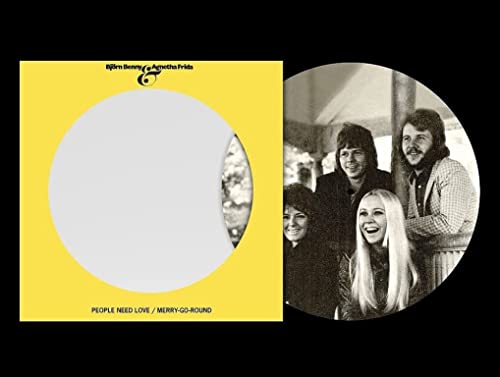
A new 2LP vinyl edition has been half-speed mastered at Abbey Road by Miles Showell and is pressed on 180g black vinyl while all five singles are available as seven-inch picture discs in die-cut sleeves.
Ring Ring is reissued as a 2LP half-speed mastered edition (click image to enlarge)
Finally, a seven-inch box set features five singles from the album pressed on different coloured vinyl (transparent red, transparent yellow, white, blue and red). These come in the usual lift-off lid box with sleeves incorporating “classic band imagery” from the era.
All these vinyl editions of Ring Ring will be released on 19 May 2023 via UMR/Polydor.
The Now That’s What I Call Music team move their focus back on to the late 1970s with a NOW Yearbook ’78, the ninth in the ongoing series that now spans from 1978 to 1986.
The release is available in the usual formats, that is deluxe 4CD hardcover book (with 28-pages of track commentary and a quiz), 3LP coloured vinyl and then a standard 4CD set in an eight-panel card sleeve.
The CD formats contain 85 tracks over the four discs and mix classics from the likes of ELO, Rod Stewart, Gerry Rafferty, ABBA, Wings, Kate Bush, Olivia Newton-John (and John Travolta!) and Patti Smith with songs from artists who emerged in the post-punk era, such as The Boomtown Rats, The Undertones, Buzzcocks, Blondie, The Clash, Elvis Costello and the Attractions and Ian Dury and the Blockheads.
Tickled pink: The 4CD deluxe hardcover book edition of NOW Yearbook 78 (click image to enlarge)
It’s 1978, so naturally disco is embraced, with CD 3 focusing on songs from artists such as Chic, Tavares, Baccara, Sheila and B Devotion, The Three Degrees, Eruption, and Voyage. The final CD offers a pick ‘n’ mix selection of pop smashes of this year from Bill Withers, John Paul Young, Andrew Gold, Dollar, Brotherhood of Man, David Soul, Elkie Brooks and more! Full tracklistings are below.
The 3LP version is pressed on bright pink vinyl and naturally offers a smaller, but still generous, selection of 46 tracks. Like the CD editions, this is available directly from the NOW store. Both the vinyl and deluxe hardcover book editions are limited.
NOW Yearbook 1978 will be released on 28 April 2023.
The Moody Blues’ fifth album, To Our Children’s Children’s Children, will be reissued as a 4CD+blu-ray deluxe edition with new spatial audio and stereo mixes, in addition to rarities and live performances.
Issued in November 1969, the album was the first on the band’s on own label, Threshold Records and had a space exploration theme (inspired by the July 1969 moon landing). The one and only single ‘Watching and Waiting’ wasn’t a hit but the album performed well on both sides of the Atlantic, peaking at No. 2 in the UK.
The box set features a remaster of the original stereo mix of To Our Children’s Children’s Children along with new stereo and 5.1 surround mixes by Stephen W. Tayler, who has also created new stereo and 5.1 mixes of the band’s December 1969 Royal Albert Hall show (stereo mix is on CD 4 while the 5.1 mix is on the blu-ray). CD 2 in this package features B-sides and rarities, including a BBC Radio One Sunday Concert.
To Our Children’s Children’s Children will be reissued as this expanded 4CD+blu-ray deluxe edition on 12 May 2023, via UMR.
Compare prices and pre-order
The Moody Blues
To Our Children’s Children’s Children / The Royal Albert Hall Concert December 1969
Demon Music continue with their year-themed Marc Bolan / T. Rex releases with CD and vinyl box sets focused on 1973 called Whatever Happened to the Teenage Dream?
The 4CD and 5LP sets include the Tanx and Zinc Alloy albums, along with the non-album hit singles & B-sides, including ‘Children Of The Revolution’, ‘Solid Gold Easy Action”, ‘20th Century Boy’ and ‘The Groover’ as well demos and outtakes from both albums. The sets also focus on Marc’s initial forays into the world of soul music and highlights from the unfinished album he wrote and produced for the American singer ‘Sister’ Pat Hall.
The 5LP orange vinyl edition with an A4 print is available via the artist shop (click to enlarge)
Both box sets feature a brand new 16,000-word essay by Mark Paytress, detailing Bolan’s life through this eventful period along with many previously unpublished photos taken by Keith Morris, as well as ephemera from the era.
The 5LP vinyl edition is pressed on orange vinyl and the official artists shop offers A4 prints of Tony Visconti’s score for ‘Whatever Happened To the Teenage Dream’ (note: these are not signed).
The 4CD version of Whatever Happened to the Teenage Dream? (click to enlarge)
Additionally there’s a single LP ‘Songwriter’ version of this release and two seven-inch picture discs (20th Century Boy and ‘The Groover’ both limited to just 1000 units.
All formats of Whatever Happened to the Teenage Dream? will be released on 26 May 2023.
Compare prices and pre-order
T.Rex
Whatever Happened to the Teenage Dream - 4CD box set
Marillion’s fifth studio album, Seasons End, is being reissued as multi-disc CD and vinyl deluxe editions, in May.
The 1989 album was the first with vocalist Steve Hogarth, who replaced Fish, and it includes the single ‘Hooks in You’ which reached No. 30 in September 1989.
Both deluxe editions feature new cover art and the 3CD+blu-ray version offers a new stereo remix of Seasons End by Michael Hunter and the 2022 ‘Live in Leicester’ Sunday night concert from the Marillion Weekend, which included the album performed in it’s entirety.
The 3CD+blu-ray deluxe edition of Seasons End (click image to enlarge)
The blu-ray in this set is packed with content and features a 5.1 mix of the album, B-sides and bonus tracks (including demos), a ‘Bootleg Mix’ of the 1990 concerts in Montreal, an 85-minute making-of-the-album documentary called Seasons Change, the full From Stoke Row To Ipanema documentary, the Rock Steady live performance and the promotional videos for ‘Hooks In You’, ‘Easter’, and ‘The Uninvited Guest’. Phew!
A 5LP vinyl deluxe edition offers the stereo remix and the 2022 concert across 10 sides of vinyl.
Seasons End will be reissued on 19 May 2023. The band’s official site is offering signed A4 prints with orders of this reissue.
Duran Duran have announced “a special new music project”, set for release later this year, which will feature “extended Duran Duran family and friends, old and new”, most notably the band’s former guitarist Andy Taylor who is terminally ill with stage 4 prostate cancer.
There’s clearly a sense of urgency around what would be an emotional reunion and Simon Le Bon is set to fly out to Andy’s home in Ibizia to record with his former bandmate.
While the band didn’t use the word ‘album’ in the post on their socials yesterday, John Taylor recently told The Mirror that “We’re working on an album right now that is going to be coming out at the end of the year and [Andy Taylor] is playing guitar. There’s a lot of cover songs on the album, songs meaningful to us when we were kids. So having him be a part of that project is great.”
Andy Taylor left Duran Duran after contributing a few guitar parts to 1986’s Notorious album. He rejoined the band in 2001 in preparation for what became 2004’s Astronaut and worked on the follow-up, Reportage, until he departed once again. Reportage was shelved and the Timbaland-produced Red Carpet Massacre was issued to a lukewarm reception in 2007. Since that time, Dom Brown has contributed guitar to Duran Duran recordings and performed on stage with the band but he has never been recognised as an official member. Brown didn’t play on 2021’s Future Past (Blur’s Graham Coxon was brought in) but continues to tour with the band.
There were rumours that Duran Duran planned to ‘finish’ Reportage with Andy in the near future, before the guitarist went public with his cancer diagnosis at the Rock and Roll Hall Of Fame last November. It’s conceivable that some of that material could end up as part of this new record, but that remains to be seen.
If this new album is indeed released in 2023 (not a given, going by previous proclamations), at worst it will be only 26 months since Future Past and would therefore be Duran Duran’s quickest follow up to a studio album since 1988’s Big Thing was issued less than two years after Notorious.
The full audio of Talking Heads classic 1984 concert film, Stop Making Sense, will be issued on vinyl for the first time in August.
Directed by Jonathan Demme, Stop Making Sense presented a retrospective of the band up to that point, with a performance that weaves together songs from all their studio albums at that time.
While it focuses mainly on music by Talking Heads but does include a few songs recorded outside the band: ‘Genius Of Love’ by Weymouth and Frantz’s side-project Tom Tom Club and ‘What A Day That Was’ and ‘Big Business’ from Byrne’s 1981 album, The Catherine Wheel.
The Stop Making Sense 2LP vinyl reissue
Today, David Byrne says it’s interesting that this album was – for many people – an introduction to Talking Heads: “We had done a live album before this, but coupled with the film, and with the improved mixes and sound quality, this record reached a whole new audience. As often happens, the songs got an added energy when we perform them live and were inspired by having an audience. In many ways, these versions are more exciting than the studio recordings, so maybe that’s why a lot of folks discovered us via this record.”
The film itself will be going back to cinemas globally this year and this new 2LP set includes the previously unreleased tracks ‘Cities’ and ‘Big Business/I Zimbra’.
The vinyl reissue replicates the booklet from the original and includes additional pages with never-seen-before photos and brand new notes written by Chris, David, Jerry and Tina.
Stop Making Sense is reissued on 2LP vinyl on 18 August 2023, via Rhino. That’s a painful US/UK price differential.
Pink Floyd/The Dark Side of the Moon CD, Vinyl, Box Set, Blu-ray, DVD
An SDE Reader Rating of 1.4 (out of 5) suggests that fans aren’t impressed by this 50th anniversary Dark Side of the Moon box set, although the separate release of Live at Wembley Empire Pool on CD and vinyl offers much better value.