Kylie Minogue‘s 2020 album DISCO is being reissued across three formats as a special ‘guest list’ edition.
The reissue features three brand new tracks with collaborators Jessie Ware, Years & Years and disco icon Gloria Gaynor along with previously unreleased remixes and ‘fan favourites’, including the Dua Lipa version of ‘Real Groove’.
The 3CD+DVD+blu-ray edition of DISCO: Guest List Edition (click image to enlarge)
There are three physical formats:
A 3CD+DVD+Blu-ray deluxe edition features the 16-track version of DISCO on the first disc, new collaboration tracks and remixes on CD 2, the Infinite Disco livestream audio on the third CD and a DVD and Blu-ray with the Infinite Disco livestream performance in full.
A 2CD edition includes the 12-track DISCO album on CD 1 and a bonus disc with remixes and collaborations, plus the four bonus tracks from the original DISCO deluxe.
Finally, there will also be a triple gatefold vinyl edition features the original 12 track DISCO album plus the four bonus tracks from the original DISCO deluxe and the new collaboration tracks and remixes across the additional two LPs.
All three formats have the 10 collaboration tracks/remixes and the four original bonus tracks and the album proper. So the 3LP and two-CD are effectively identical in audio content. The five-disc version comes in a hardcover book edition and offers the video and audio for the Infinite Disco livestream performance.
Kylie store exclusives
The official Kylie store has some exclusives too, most interestingly a double purple vinyl edition which hitherto unheard extended mixes of DISCO tracks. For now, these are unique to this vinyl set. There’s also a 5LP vinyl set which puts the 2LP extended mixes and the standard 3LP Guest List vinyl into a special slipcase. Finally Kylie’s store has an ABBA-style one-track CD single of the Years & Years collaboration ‘A Second to Midnight’.
DISCO: Guest List Edition is released on 12 November 2021.
Even T’Pau box set owners will be tempted by this three-CD budget release which has 56 (count ’em) tracks including a healthy selection of radio edits, remixes and alternate versions. It even features three brand new tracks at the end!
We had almost 1000 entries for the Beach BoysFeel Flows: The Sunflower & Surf’s Up Sessions 1969-1971competition and we have randomly selected one winner!
The lucky winner is SDE member Andy Kirkcaldy
Congratulations to Andy. We will be in touch via email about getting your prize out to you. Thanks to all who entered. Another SDE giveaway is coming soon!
R.E.M.‘s wonderful New Adventures in Hi-Fi album is reissued at the end of October. This US pre-order price for the ‘top of the range’ 2CD+blu-ray super deluxe represents a great saving.
Out today is Mark Knopfler‘s The Studio Albums 1996-2007. This is released as a six-CD box or an 11LP collection.
The albums included are: Golden Heart (1996), Sailing To Philadelphia (2000), The Ragpicker’s Dream (2002), Shangri-La (2004), and Kill To Get Crimson (2007) – and both sets include an exclusive bonus disc of studio b-sides from this period: Gravy Train: The B-Sides 1996-2007. Neither Golden Heart nor Sailing To Philadelphia have been released on vinyl before.
Rather than SDE unbox this new release, the man repsonsible for the vinyl remastering – Abbey Road Studios’ Miles Showell – is going to do it for us. Take it away, Miles!
The Now What’s That I Call Music Team continue their ‘Yearbook’ series with NOW Yearbook ’84 an 80-track four-CD set and 3LP coloured vinyl package that features 42 defining hits that ruled the charts in 1984, including number ones from Lionel Richie, Chaka Khan, Duran Duran, Frankie Goes To Hollywood and George Michael (solo and with Wham!), together with huge hits from U2, Spandau Ballet, and Deniece Williams.
As with NOW Yearbook ’83 the four-CD set is available in deluxe hardcover book set with a 28-page book with track annotations and music quiz laid out in classic ‘eighties’ style. This is limited to 5,000 units. A slightly cheaper non-deluxe is also available (but you really don’t want to be buying that one).
Limited 3LP coloured vinyl or limited 4CD deluxe edition – or both? You decide (click image to enlarge).
Vinyl fans gets three LPs pressed on gorgeous translucent blue vinyl, secured in poly-lined black inner sleeves which reside in a wide-spined sleeve. Like the deluxe CD set this is limited (3,000 units).
NOW Yearbook ’84 is out on 29 October 2021. Be aware that both the 3LP coloured vinyl and the 4CD deluxe of NOW Yearbook ’83 are already out-of-print, despite only being released in June, so don’t miss out.
In early December, Depeche Mode will release a deluxe box set edition of their classic 101 documentary/album from 1989. This reissue sees the original film “meticulously upgraded” using 4k scans of the original film reels to create a new HD edition.
The 101 documentary was co-directed by acclaimed husband-and-wife filmmaking team D.A. Pennebaker (Dont Look Back) and Chris Hegedus (The War Room) with creative input from Depeche Mode, who’d held an exclusive contest for fans offering an appearance in a Depeche Mode movie as the prize. The narrative follows the contest winners as they travel across America to attend Depeche Mode’s landmark Rose Bowl concert and is an early example of ‘reality tv’ which is now commonplace.
101 Blu-ray+2DVD+2CD box set (click to enlarge)
The box set includes the blu-ray, two DVDs and two CDs. The CDs feature the original 20-track album release of 101 while the two DVDs in the set contain the original extras from the 2003 DVD release of 101 (commentaries, interviews etc.). The DVD set doesn’t include the three bonus performances, but does include the upgraded version of the film. The standalone blu-ray does include the three bonus performances.
In addition, the box set contains a 40-page photo-book, a 20″ x 30″ replica of the the original US theatrical release movie poster; a 16-page Anton Corbijn Photo Mode book as featured in the original album release and a download card providing access to 4K downloads of the film and bonus performances plus 24-bit audio files.
Although the blu-ray and DVD will have 5.1 mixes, there is no sign of audio-only surround sound (as issued on the SACD in 2004) and of course the 4K is only download-only, which is a bit disappointing.
The 101 box will be released on 3 December 2021. Standalone blu-ray or a two-DVD sets are also available.
BOXSET Includes three previously unseen bonus performances of “A Question of Lust,” “Sacred” and “Something To Do” plus the official promotional video for “Everything Counts.” Additional content: • 48 page behind-the-scenes photo book including exclusive, unseen images; • 20″ x 30″ replica of original US theatrical release movie poster • 16 page Anton Corbijn Photo Mode book as featured in the original album release • Double CD of the original 20 track 101 concert release; • Download Card providing access to 4K downloads of the film and bonus performances plus 24-bit audio files of the 101 concert release. • The two DVDs in the set contain the original extras from the 2003 DVD release of Depeche Mode – 101, which are exclusive to the DVD discs.
BLU-RAY Includes three previously unseen bonus performances of “A Question of Lust,” “Sacred” and “Something To Do” plus the official promotional video for “Everything Counts.” DVD This edition has been upgraded using new scans of the original film reels and includes the film, the concert and the official promotional video for “Everything Counts.“ * Additional content: • Commentary track by Depeche Mode and D. A. Pennebaker’s film crew • Interviews with Dave Gahan • Andy Fletcher • Martin Gore • Daniel Miller • Jonathan Kessler • Interviews with the fans from the bus: Christopher Hardwick • Oliver Chester • Jay Serken
11CD or 18LP box sets. Toy included but also available as a separate box set.
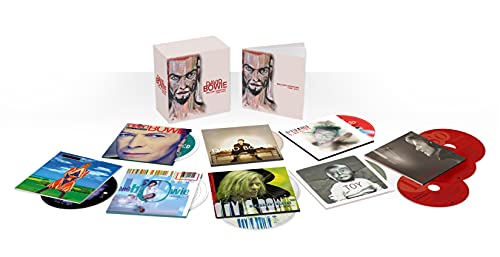
The forthcoming David Bowie ‘era’ box set which covers most of the 1990s will be released in late November. Brilliant Adventures will be an 11CD box set or a 18LP vinyl box.
As expected, the boxes will include newly remastered versions of Black Tie White Noise (1993), The Buddha of Suburbia (1993), Outside (1995), Earthling (1997) and Hours (1999). It will also include David Bowie’s unreleased album Toy (which is also being issued separately as a three-CD or vinyl box).
For the uninitiated, Toy was recorded in 2000 following David’s Glastonbury 2000 performance. Bowie entered the studio with his band (at the time Mark Plati, Sterling Campbell, Gail Ann Dorsey, Earl Slick, Mike Garson, Holly Palmer and Emm Gryner) to record new interpretations of songs he’d first recorded from 1964-1971. For reasons unknown, it was never released.
The 11CD version of Brilliant Adventure (click image to enlarge)
Exclusive to Brilliant Adventure [1992-2001] is Re:Call 5 – 39 tracks of non-album / alternative version / b-sides and soundtrack songs – and the complete BBC Radio Theatre show from 27 June 2000. An edited version of the latter was previously a bonus CD with the Bowie at the Beeb release of September 2000 (the new one has five more tracks) but it has never been issued on vinyl. Toy isn’t actually exclusive, because of the separate box set (more on that below).
The Buddha of Suburbia uses the 1995 US/Canada cover (sepia version) rather than the UK original (which depicted characters from the 1993 BBC dramatisation of Hanif Kureishi’s 1990 novel). For the vinyl box set of Brilliant Adventure, all the studio albums are 2LP sets, except Hours which is a single vinyl record. Earthling only has music pressed on three sides, however and likewise Toy is also a 3-sided 2LP set. Both have an etched side four. The BBC Radio Theatre show requires three vinyl records and Re:Call 5 goes one further and is a 4LP set. Hence the vinyl box is a massive 18LPs.
The vinyl edition of Brilliant Adventure [1992-2001] is an 18LP set (click image to enlarge)
The boxes are in the same style as what has come before, with the CDs presented as “faithfully reproduced mini-vinyl versions” of the original albums. Gold-coloured CDs are used (this apparently makes counterfeiting harder).
There’s an 124-page book in the CD box and a 84-page book in the vinyl set. These feature “rarely seen and previously unpublished photos” by photographers including Frank W. Ockenfels 3, Nick Knight, John Scarisbrick and Nina Schultz Terner, as well as memorabilia, technical notes about the albums from producers/engineers Brian Eno, Nile Rodgers, Reeves Gabrels and Mark Plati. Perhaps surprisingly, given his interview with SDE, there’s also a new interview with Buddha of Suburbia collaborator Erdal Kizilcay.
The cover of Toy. ‘Click to enlarge’ has been disabled.
The cover to the Toy album is ‘interesting’, but it seems that this was very much Bowie’s concept and now that he’s gone, apparently a bad idea by him is trumps a good one by someone else!
In Toy:Box, as it’s called, (one suspects they created a box set just to use that title) are three CDs. The first is the album as featured in Brilliant Adventure and the second CD is a bonus disc of alternative mixes, including proposed B-Sides (versions of David’s debut single ‘Liza Jane’ and 1967’s ‘In The Heat Of The Morning’), later mixes by Tony Visconti and the ‘Tibet Version’ of ‘Silly Boy Blue’ (recorded at The Looking Glass Studio time at the of the 2001 Tibet House show in New York featuring Philip Glass on piano and Moby on guitar).
The third CD features ‘Unplugged & Somewhat Slightly Electric’ versions of all 13 Toy tracks. Mark Plati and Earl Slick had apparently messed around a bit at the original sessions and overdubbed acoustic guitar to some of the tracks. Bowie heard this and quite liked the idea of doing stripped down, acoustic versions. Given that that album proper wasn’t even released, it probably comes as no surprise to find that this idea wasn’t realised either but Plati has seen this through and finished this process for the Toy:Box. AS well as the 3CD version, there’s a 6 x 10-inch single vinyl box set.
Brilliant Adventures [1992-2001] will be released on 26 November 2021 (both vinyl and CD boxes). Toy:Box comes out on 7 January 2022.
LP Box Set: 84 Page hardback book Black Tie White Noise (remastered) (2LP) The Buddha Of Suburbia (remastered) (2LP) 1.Outside (remastered) (2LP) Earthling (remastered) (2LP – 3-sided) ‘hours…’ (remastered) (1LP) BBC Radio Theatre, London, June 27, 2000 (remastered and expanded 20 track version, previously unreleased on vinyl) (3LP)* Toy (previously unreleased) (3 sided – 2LP) Re:Call 5 (non-album singles, edits, single versions, b-sides and soundtrack music) (remastered) (4LP)*
* Exclusive to BRILLIANT ADVENTURE LP box
CD Box Set: 128 Page hardback book Black Tie White Noise (remastered) (1CD) The Buddha Of Suburbia (remastered) (1CD) 1.Outside (remastered) (1CD) Earthling (remastered) (1CD) ‘hours…’ (remastered) (1CD) BBC Radio Theatre, London, June 27th, 2000 (remastered and expanded 20 track version) (2CD)* Toy (previously unreleased) (1CD) Re:Call 5 (non-album singles, edits, single versions, b-sides and soundtrack music) (remastered) (3CD)*
*Exclusive to BRILLIANT ADVENTURE CD box
Tracklisting
Brilliant Adventure [1992-2001]David Bowie/11CD box set
CD 1: Black Tie White Noise [Remastered]]
The Wedding
You’ve Been Around
I Feel Free
Black Tie White Noise (featuring Al B. Sure!)
Jump They Say
Nite Flights
Pallas Athena
Miracle Goodnight
Don’t Let Me Down & Down
Looking for Lester
I Know It’s Gonna Happen Someday
The Wedding Song
CD 2: The Buddha of Suburbia [Remastered]
Buddha of Suburbia
Sex and the Church
South Horizon
The Mysteries
Bleed Like a Craze, Dad
Strangers When We Meet
Dead Against It
Untitled No. 1
Ian Fish, U.K. Heir
Buddha of Suburbia (featuring Lenny Kravitz on guitar)
CD3: 1.Outside [Remastered]
Leon Takes Us Outside
Outside
The Hearts Filthy Lesson
A Small Plot of Land
Baby Grace (A Horrid Cassette)” (segue)
Hallo Spaceboy
The Motel
I Have Not Been to Oxford Town
No Control
Algeria Touchshriek (segue)
The Voyeur of Utter Destruction (as Beauty)
Ramona A. Stone/I Am with Name (segue)
Wishful Beginnings
We Prick You
Nathan Adler (segue)
I’m Deranged
Thru’ These Architects Eyes
Nathan Adler (segue)
Strangers When We Meet
CD 4: Earthling [Remastered]
Little Wonder
Looking for Satellites
Battle for Britain (The Letter)
Seven Years in Tibet
Dead Man Walking
Telling Lies
The Last Thing You Should Do
I’m Afraid of Americans
Law (Earthlings on Fire)
CD 5: ‘…hours’ [Remastered]
Thursday’s Child
Something in the Air
Survive
If I’m Dreaming My Life
Seven
What’s Really Happening?
The Pretty Things Are Going to Hell
New Angels of Promise
Brilliant Adventure
The Dreamers
CD 6: BBC Radio Theatre, London June 2000 [Box Set Exclusive]
Wild Is the Wind
Ashes to Ashes
Seven
This Is Not America
Absolute Beginners
Always Crashing in the Same Car
Survive
The London Boys
I Dig Everything
Little Wonder
CD 7: BBC Radio Theatre, London June,2000 [Box Set Exclusive]
The Man Who Sold the World
Fame
Stay
Hallo Spaceboy
Cracked Actor
I’m Afraid of Americans
All the Young Dudes
Starman
“Heroes”
Let’s Dance
CD 8: Toy
I Dig Everything
You’ve Got A Habit of Leaving
The London Boys
Karma Man
Conversation Piece
Shadow Man
Let Me Sleep Beside You
Hole In The Ground
Baby Loves That Way
Can’t Help Thinking About Me
Silly Boy Blue
Toy (Your Turn To Drive)
CD 9: Re:Call 5 part 1 [Box Set Exclusive]
Real Cool World (Sounds From The Cool World Soundtrack Version)
Jump They Say (7” version)
Lucy Can’t Dance
Black Tie White Noise (feat Al B. Sure!) (Radio Edit)
Don’t Let Me Down & Down (Indonesian Vocal Version)
Buddha Of Suburbia (Single Version) (featuring Lenny Kravitz on guitar)
The Hearts Filthy Lesson (Radio Edit)
Nothing To Be Desired
Strangers When We Meet (edit)
Get Real
The Man Who Sold The World (Live Eno Mix)
I’m Afraid Of Americans (Showgirls Soundtrack Version)
Hallo Spaceboy (Remix)
I Am With Name (Alternative Version)
A Small Plot Of Land (Long Basquiat Soundtrack Version)
CD 10: Re:Call 5 part 2 [Box Set Exclusive]
Little Wonder (Edit)
A Fleeting Moment (aka Severn Years In Tibet – Mandarin Version)
Dead Man Walking (Edit)
Seven Years In Tibet (Edit)
Planet Of Dreams – David Bowie and Gail Ann Dorsey
I’m Afraid Of Americans (V1 – Edit)
I Can’t Read (The Ice Storm Long Version)
A Foggy Day In London Town – David Bowie and Angelo Badalamenti
Fun (BowieNet Mix)
The Pretty Things Are Going To Hell (Stigmata Soundtrack Version)
Thursday’s Child (Radio Edit)
We All Go Through
No One Calls
CD 11: Re:Call 5 part 3 [Box Set Exclusive]
We Shall Go To Town
1917
The Pretty Things Are Going To Hell (Edit)
Thursday’s Child (Omikron: The Nomad Soul Version)
New Angels Of Promise (Omikron: The Nomad Soul Version)
The Dreamers (Omikron: The Nomad Soul Version)
Seven (Demo)
Survive (Marius De Vries mix)
Something In The Air (American Psycho Remix)
Seven (Marius De Vries Mix)
Pictures Of Lily
Tracklisting
Toy BoxDavid Bowie/3CD box set
CD 1: Toy
I Dig Everything
You’ve Got A Habit of Leaving
The London Boys
Karma Man
Conversation Piece
Shadow Man
Let Me Sleep Beside You
Hole In The Ground
Baby Loves That Way
Can’t Help Thinking About Me
Silly Boy Blue
Toy (Your Turn To Drive)
CD 2: Alternatives & Extras
Liza Jane
You’ve Got A Habit of Leaving (alternative mix) *
Baby Loves That Way (alternative mix) *
Can’t Help Thinking About Me (alternative mix)
I Dig Everything (alternative mix)
The London Boys (alternative version)
Silly Boy Blue (Tibet version)
Let Me Sleep Beside You (alternative mix) *
In The Heat Of The Morning
Conversation Piece (alternative mix) *
Hole In The Ground (alternative mix)
Shadow Man (alternative mix) *
Toy (Your Turn To Drive) (alternative mix) *
* previously unreleased
CD 3: Unplugged & Somewhat Slightly Electric
In The Heat Of The Morning (Unplugged & somewhat slightly electric mix)
I Dig Everything (Unplugged & somewhat slightly electric mix)
You’ve Got A Habit of Leaving (Unplugged & somewhat slightly electric mix)
The London Boys (Unplugged & somewhat slightly electric mix)
Karma Man (Unplugged & somewhat slightly electric mix)
Conversation Piece (Unplugged & somewhat slightly electric mix)
Shadow Man (Unplugged & somewhat slightly electric mix)
Let Me Sleep Beside You (Unplugged & somewhat slightly electric mix)
Hole In The Ground (Unplugged & somewhat slightly electric mix)
Baby Loves That Way (Unplugged & somewhat slightly electric mix)
Can’t Help Thinking About Me (Unplugged & somewhat slightly electric mix)
Silly Boy Blue (Unplugged & somewhat slightly electric mix)
Toy (Your Turn To Drive) (Unplugged & somewhat slightly electric mix)
On the eve of the release of the new remix compilation Arthur Baker presents Dance Masters: Shep Pettibone, SDE talks to Baker about this new remix series and takes him back to the Eighties. In a candid and entertaining discussion, the legendary remixer and producer talks about the logistics of remixing, sharing studio space with Shep Pettibone, Bruce Springsteen watching him at work, how much he’d get paid for the big name jobs and whose job it was to buy the drugs…
SDE: Arthur, you’re curating this new series called Dance Masters for Demon Music. There’s going to be a number of collections based around one remixer, and you’re starting with Shep Pettibone. How did you get involved?
Arthur Baker: Well, Wayne [Dickson], who works with Demon Music, is an old friend of mine. And actually, probably around 10 years ago, I mentioned this type of project to Sony. I was like, “You know, there’s all these great remixes who haven’t got the credits that they deserve”. Like John Luongo, Bruce Ford, Shep; all the people that we’re talking about doing now. And the record labels had no interest in 12-inch remixes. I would go to Sony and I say, “Here’s five records I did that you guys now have through RCA, BMG, whatever. And they couldn’t even find them on their system. It was things like a remix of Daryl Hall‘s ‘Dreamtime’, and a Cyndi Lauper one, so there were literally mixes by major artists, and they couldn’t even find the fucking things on their system! And then Wayne did a compilation with John Luongo, a couple years back, which I love. John is sort of a mentor of mine – we were both from Boston, so you know, he was sort of the first guy out of Boston to really make it. And then Wayne called me up and said, “I’m planning on doing a project. And we’re gonna do Shep first, you want to get involved?” And I said, “Sure”. Because obviously, I’ll know all the other remixes. So it’s sort of a cool thing to do, to curate and bring attention to people. Some people who haven’t got the attention, obviously, Shep got a lot, but then he dropped off the face of the earth.
Well, that’s the thing, because there’s there’s plenty of remix compilations around but you rarely ones where it focuses on one remixer. And normally, that’s because it’s such a challenge to licence all the stuff from all over the place.
Well, that was that was definitely my idea 10 years ago to do compilation based upon the remixer. Being a remixer to myself, and I thought it would be really good to do that.
Is there is going to be one with all your remixes as well?
Yeah, there will be. I think probably number three.
So with this Shep Pettibone collection, did Wayne do the nuts and bolts in terms of putting it together? Were you involved in terms of creative input and picking tracks?
Oh, yeah, I did. I did. But I I’d have to be honest that on this one Wayne did a lot of work. But I mean, a lot of the remixes for the project, were actually mixed in my studio, that’s the other thing. Especially the earlier ones like 1983, ’84, ’85. A lot of the real poppy ones – I’d hear those over and over while Shep was working on them.
So what studio would that have been?
It was Shakedown Sound, my my studio in Manhattan. And Shep worked there for like a three-year period. He did all his records there. So I was actually there while a lot of those mixes were being done.
The 1980s was this golden age for the remix, wasn’t it? And New York was the epicentre for DJs, with all the clubs.
Oh yeah.
You guys were kind of like pioneers in a way…you, Shep, Jellybean and the like.
There was a generation before us. We were sort of second generation because in the 70s, they were they were remixers like Jim Burgess and Luongo. They were DJs who were actually doing disco mixes in the 70s. And I’d say Francois [Kervorkian], he started in the 70s. I mean, my first record 78/79, so I guess I did too, but what made the ’80s different was that technology became different. So you could easily do remixes and change things with drum machines, whereas earlier, no one would do overdubs on remixes. I would say John Luongo was one of the first – if not the first – because he put percussion on. He’d worked with this guy, Jimmy Maelen and he put whistles, percussion, not not much keyboards, but he would add percussion, you know. And then a lot of the other guys started doing that. That’s sort of a turning point, I think.
But you guys took the remix out of the disco genre and took it into mainstream pop/rock.
Oh, yeah, it did change. In the mid-70s everything became disco. So they would do disco mixes. Some of them were amazing and some of them were crap. But towards the end of that Luongo did the percussion, and then when we started, it was just it was a continuation of what he had started. Because literally, when I went in, I always wanted to add stuff to it. Other Guys, didn’t. You know, other guys would just work with what they had. Shep started adding things.
How would you get commissioned to do a remix in the first place?
They come to you. The record label. It wasn’t the artist. It could be anyone from a marketing person to like, a dance A&R guy. There were many different ways it went. For instance I’ll get specific because it’s, it’s an interesting story. I got a call from Michael Ostin, who was the head of A&R VP at Warners, asking me to come in – he had a track for me to play. And while I was going in, there was a guy there who was the head of dance promotion. This was ’86. And I went in, I heard the record. It was ‘Big Love’ by Fleetwood Mac. And Michael Ostin said “Do you think you could do anything with it?”, and I said, “Yeah, yeah, I think I can make it a number one dance record”. I heard it right away. I walk out and the head of dance promotion is there. He says “Oh, what did Michael want to talk to you about?” and I said, “He wants me to remix Fleetwood Mac’s ‘Big Love'”. He was like, “That’s not a dance record”. I said, “Well, I’m going to make it one”, and it did become number one. But that was a situation where the A&R guy [Michael Ostin] had seen me on TV in London, after I’d done the Living in a Box remix, he saw me talking about how I had made it into a hit and he said, “When I heard that, I really thought you could do that with ‘Big Love'” and it and it worked out.
So it would be things it would be like that, or your manager would get a call from the label. “Can you do this?”. They’d send you a cassette, you’d listen to it. And you’d either take it or not. I passed on a few biggies, I’d have to say…
Care to name any names?
Okay, I passed on Tears for Fears and ‘Shout’. Because it was a really downtempo and back then, with the technology, you really couldn’t speed things up in a usable way. But Steve Thompson and Michael Barbiero did a great job on it. So that’s one that’s probably the main one that that got away. But then, you know with [Cyndi Lauper’s’] ‘Girls Just Want to Have Fun’ Jellybean did the first mix and they didn’t use it and then I mixed it and they used it.
Did the labels know what they wanted, when they asked you to remix a track?
No, they didn’t really know what they wanted. Well, some did, if the A&R guy was a DJ, or an ex-DJ, some of them were more tuned in and they were more specific. But then others were all just, you know, “make it danceable” or they’d ask you to “do what you did on that other record, for my record”.
Because I imagined the goals might be things like, “we want it to be played on the radio” or similar.
No, it wasn’t even about the radio back then, it was about “we want Bruce Springsteen to get club play”. Or maybe get played on WBLS, more of an urban radio station. So they’d want like rock to go urban; urban to go, you know, indie [laughs]
I think that would be something many people in the UK don’t necessarily realise and that’s how American radio is very segmented.
Yeah, totally different. The UK, back when I was having all my hits, back in the ’80s, it had a national radio station. You know, America never had one. I mean, the closest that came to having a national radio station was when MTV was really big. Because that was a national radio station. That’s why it was such an interesting thing. Because it took the place of a BBC Radio 1, you know, it was it was more that everyone would watch this one station, whereas in England, everyone would listen. Then they’d all watch Top of the Pops, which I always thought was super interesting, because you have the your grandmother, young kids… everyone’s watching Top of the Pops. So it was so powerful, and, you know, really cool. It was great.
So okay, you take on a remix job. What would you normally deliver, as a matter, of course? Was it like three or four versions – a dub mix, a 12-inch mix, etc.?
That came a bit later. The more people did those, the more they expected them. But the label would want a really safe version and then you’d want one where you could do more. So going back to Living in a Box, the mix I did that I first turned in, it was it was not experimental exactly, but it was just like, the kind of mix that I would like to do. I dropped the drums out at one point and just had the bass line, and I’ll never forget because Peter Edge – who’s now Pete Edge and is now a huge person in the industry years later [currently CEO of RCA Records] – he was like, “Oh, you got to take that out. Because if you don’t have the kick [drum] in, people won’t be able to keep dancing”. So I had to take that out, but I put it in on the dub. So the dub has all the big drops and stuff. Now obviously, all that shit’s in every fucking pop record, they take out the drums…
Tell me about the logistics, because you were mentioning technology had improved and you had drum machines, but I imagine it was all still analogue multitrack tapes, back in 83/84?
Yeah, but we were getting drum machines and syncing up with SMPTE [timecode generating system] you were able to sync up a drum machine basically, and you could make a click track. So that all happened in 82/83. But I would say most of Shep’s mixes on this project were after that.
But what I’m getting at is that they would have to duplicate the multi-track tape and then physically send it to you.
Oh yeah, they give you a copy of the multi-track, so you could erase whatever you wanted. Or you could make another copy, which is what we used to call ‘slave’ copies, which isn’t a very PC now, but you’d have a clone. But then, I’d say 1987/88/89, around then, that is when people started throwing the song out and you know, just sampling the vocal and doing that. Most of the mixes Shep did, he kept the full song.
I much prefer the classic treatment where you maintain the structure of the song
Yep. You know, I do too because you keep the song and it’s about the song. But, you know, there’s obviously was a place for both of them. But the people who are better at the other ones couldn’t really do the ‘song’ ones. But then again, Todd Terry did some great ones using the song as well, like [Everything But The Girl‘s] ‘Missing’, so he did quite a few that were great in both ways.
Were the record companies getting permission from the artist? You mentioned Fleetwood Mac. I wonder if they would have been on board with having their songs remixed?
Lindsey Buckingham wasn’t on board. What happened was, with ‘Big Love’. I actually met him. You don’t really usually meet the artist, with remixing, it’s not common at all. But I was in LA, I had to go pick up a copy of the tape at his studio, which was in his house. So I went and he played it for me, and it was great. You know, it was really cool; he’s a great guy. And as I took it away, I said, “Do you have any suggestions? Anything you want me to do?” and he said, “No, just do your thing”.
So when I went in [to listen to the multi-track], and there was a great Stevie Nicks vocal on there that wasn’t really used on the original. But it was on the tape, so I think it ought to use it. And then I did take his bass off and put like a house bass line on. I assume he wasn’t happy with this bass going missing and he wasn’t happy with his ex-girlfriend getting the lead with him. When I finished it, the record label loved it, but said “You know, we got to send it to the group”. And Lindsay didn’t really want her vocal on it, you know, it’s supposed to be his lead. So I ended up doing like, again, a dub with her vocal – he didn’t care about that. And, you know, the new bass line sort of made the mix, with the piano. ‘Big Love’ was probably the first house remix of a rock record. I can probably say that 100 percent, because house had just started with 1986/87.
Lindsey Buckingham “didn’t really want” Stevie Nicks’ vocal on Baker’s remix of Big Love but some of it ended up on this dub mix
They were obviously quite happy with those now, because they included all those remixes on the Tango in the Night reissue box set.
Yeah, yeah, they did. And I was happy with those remixes. And ‘Family Man’ – both of them.
So Arthur, tell me, how long would these remixes take you to do?
It really depends. Some would be really quick and you’d just do it. But what happened was, the more drugs you did, the longer they would take! So if you had no drugs, you wanted to get out of there quick. If you had a lot of drugs, you’d stay there for days. If I’m being honest, it would be like a party in the studio. Once we started getting bigger budgets and more time, and because I own my own studio, I could keep the mix up for a day or two.
The more drugs you did, the longer the remixes would take
Arthur Baker
Same with Shep, I’d let him keep the mix up. So we’d be in there. He’d been doing his mix, I’d come in, we’d hang out in the studio, and then he’d lose the plot a bit and I’d say “You can leave it up and come in and finish it in the morning. But I had the luxury of having my own studio, you know, so it was it was definitely a different time. Like on The Rolling Stones remix of ‘Too Much Blood’ [from 1983’s Undercover] that I did. I probably have 20 reels of parts. I still have all the tapes of that.
In the beginning, you’d edit as you would go, because you had limited studio time. So you’d actually do a version, your 12-inch mix would be edited, you do the edits there. And then you take a couple of reels of passes and then mess around with that for the dub. And and then once it became computerised, you’d put the main pass in the computer, and then you could take a pass, spit it out and have one with a higher vocal, lower vocal, background, you know, you could do all your passes, which you would you have the engineer do, you wouldn’t have to do that once you put it all in. So it was changing with the technology, actually.
I always think of you, you know, on your own, running around like a wizard in a studio. But was that the reality? Did you have a team of people helping you?
I always had an engineer, and an assistant to make tea, or do the drug runs, or whatever [laughs]. But we always had that. And, you know, usually I’d have like one musician, who’d come and do overdubs. I mean, that’s a like the standard team, of remixing. And then later on, I had the editors to edit. But the whole thing with the editor, it was more about not wanting to sit through all the passes that I had done [laughs]. So I’d let the Rascals, The Latin Rascals, do it. Or Junior Vasquez, who was my editor for a while. Or Victor Simonelli… any of those guys. I’d say, my early remixes where we did the edits, right while we were doing it, were some of the better ones because I didn’t I didn’t throw control away to people cutting tape, you know? I would like really do it in the studio and just get it done.
Arthur Baker presents: Dance Masters: Shep Pettibone
How did the budgets work for these things? Were the labels throwing bucket loads of cash at you? Because they had to pay you to do the remix, but, presumably, they also had to cover the studio time?
Yeah… I mean, when I owned my own studio, I was laughing because, you know, they’d give me an ‘all in’ budget and I’d keep 95 percent, or 90 percent of it, you know? Probably the biggest budget I got was I think Paul McCartney [Baker remixed ‘No More Lonely Nights’], where I got 25 grand or something, The Stones was probably 25 grand. And while the engineer made decent money, it wasn’t anywhere near that money. And you’d pay a keyboard player $400 or something. So I probably made like, 22 grand, you know, because it was my studio. When Shep did his remixes in my studio, he had to pay three grand a day for studio time and all that.
I’m glad you mentioned Paul McCartney, because I’m a big McCartney fan. And of course, you did the ‘No More Lonely Nights’ remix
[Laughs] Yeah, I won’t say it’s one of my better works, you know.
Well, can you can you shed a little light on the process around that specific example?
Well, it was more like, you know, he offered a lot of money, and I love the Beatles. And I got that song. And I had to deal with the song. And it wasn’t like I could sample one line of the song and do a house beat. I had to sort of keep it somehow in that vein. I’m sure it will be on ‘my’ Dance Masters box set. There’s some remixes you do strictly for the money, if it’s a lot of money. I mean, in the beginning, I did none of those. I just did things I really loved that I could do something with. And then at some point you do a few that you do more for the money rather than it being about what you think you could do with it. But I always thought I could do something with a with a song. I thought I could do something with anything. If it was a song I couldn’t stand to hear, then I wouldn’t do it. Because there’s nothing worse than listening to a song over and over that just does your head in.
I always thought I could do something with a with a song. I thought I could do something with anything
Arthur Baker
The Springsteen remixes I did I’m really proud of because they were all three really different types of mixes and songs [Arthur Baker did multiple mixes of ‘Born in the USA’, ‘Cover Me’ and ‘Dancing in the Dark’). And I think they all did what they were meant to do. He was happy with them. And and and they still sound good. I got death threats for ‘Dancing in the Dark’ on the radio, someone was like, “Someone should kill that guy!” on the radio on one of the rock stations like K-Rock or something. The guy said “Bruce can’t possibly know that this is happening”. But actually, Bruce was in the studio with me, he actually came to the session Bruce. We were in the Power Station [studio] and the lost power and the AC went off so Bruce just went out and bought the beer!
And would you get paid more money for doing these bigger names like Springsteen and McCartney?
Yeah, for sure. Of course. Because I would also do remixes for newer groups and artists. I was doing a lot of UK groups when I first made it over there, I got bombarded. I came over in 87 and I had never been over. And then literally the first one I did was Neneh Cherry, which did really well and then Living in a Box did well and then living in a box. So after that I got tons of work and I was remixing everyone for a time.
Why would people come to Arthur Baker instead of Shep Pettibone or Jellybean. What were they after? What were they looking for?
I think in England, they came to me at that point, because I’d been really successful as a producer. I’d had all those records out like New Order, Freez, Rocker’s Revenge. They all came out in a short period of time and I’d never shown up in the UK, so it may have been that, but in other cases I don’t know. I would hire Shep before me! [laughs].
Shep Pettibone had great ears and was much more meticulous than I was.
Arthur Baker
As as I say somewhere in this box, that his ears were like radio ears. He had great ears and he was much more meticulous I was more of a punk remixer… I wasn’t that guy. I would have liked to have been that guy. But that was just wasn’t me. I did a lot of those early rock ones, but then you know, Shep was doing Depeche Mode, but a lot of the things he did, he did after me. So I did New Order then he did New Order. I did the Pet Shop Boys, then he did the Pet Shop Boys. So people who were into me, like the Pet Shop Boys would also have been into Shep, and the same with New Order.
The Pet Shop Boys is an interesting one, because you did ‘In The Night’, which is a great remix, and you also remixed ‘Suburbia’, but those never really came out in the UK. How much did you keep tabs on your remixes after the event? So for example did you get pissed off when it it only went to promo stage and not full commercial release?
I may not have known about it in that case, but you want your mixes to do well, obviously. When ‘Living in a Box’ became a big pop hit, I think my remix had a lot to do with that. And that was great. And it got me the Fleetwood Mac gig, you know, so it’s sort of it’s more like promotion. They promote your work. And then obviously the one that we probably won’t talk about, because it was years later, was my remix of ‘Spaceman’ by Babylon Zoo. I mean, that was the biggest selling remix of all time; still is, I think. So you know, you’d like them to do well. I mean, you don’t want it to not come out. I did a John Cougar Mellencamp remix that never came out. I don’t even have a copy of it. It was it was pretty good. But he was sensitive about what, for whatever reason.
One of the things, like with the Pet Shop Boys, I’ve noticed is that bands like to move with the times, don’t they? So they won’t stay with one remixer?
Oh, yeah, for sure. They will. Yeah, they’re very trendy. They worked with Danny Tenaglia. They were they were like Madonna. Madonna is the same way. She would find the hot person and work with them. And she she did that for many years.
Do you miss the miss the 1980s? Do you miss that golden era where you were running around like a maniac just having fun?
Well, I’ve been living in that time, for the last two years making this movie [Arthur is helping to make a documentary] so literally, my life is sort of immersed with Rocker’s Revenge and talking about the Eighties [laughs] Yeah, I miss it. If you could go back in time for a week and do all the things we did back then, it would be great. It was a great time, and the music was great. And the clubs were amazing. I mean, you can’t even compare clubs, then-to-now. There were like 20 clubs in New York that were multi-thousand [occupancy] and rocking clubs. I mean, now there’s none.
Did you ever test drive any of your remixes by nipping down to the local club and getting them to play it?
Oh, every single one! It’s funny, because as I said, I’m making this movie and and I used to bring them to the Fun House famously, as you see in the New Order video [for Confusion], that’s me, taking the reel-to-reel to Jellybean to play it, and that’s what I would do. I’d go to the Fun House, go to Danceteria even before it was done. I’d bring a tape or a cassette and have Freddie Bastone or Jellybean play it. I’d come in with something, they’d like to listen to it for a second and they play it right away for me! You don’t have that now. No one does that anymore.
Arthur is seen in the video for New Order’s ‘Confusion’ bringing a tape reel to Fun House
That’s amazing. So even before you’ve given it back to the label, you’re checking out the reaction…
The label wouldn’t even heard it. This is when I’m still working on it. This is a work in progress. Testing the sound and testing reaction of the crowd.
So you might make changes based on how it goes down?
No, you would make changes. The thing is now, a lot of DJs are such idiots, they’re like afraid to test their tracks. You know, you ask “are you playing that out yet?” and they’ll say “Oh, no, it isn’t ready”. I’m thinking well, maybe you’ll find out that it is ready. If you play it in a crowd. You know, they’re all really afraid, which Jellybean wasn’t. He knew what I was going to give him was going to be right for him. He’d listen to a bit of it, not even all the way through. And then, you know, then he did a lot of mixes with me, so it was it was good.
Would the with the labels ever reject anything and say “this isn’t what we wanted?”
I went for many years without having a rejection, I have to say. It was like a couple of years. I think the first one that got rejected was the John Cougar Mellencamp.
But you would still get paid for that? I mean, you hadn’t done anything wrong, as such.
Yeah, yeah. I mean, the record label might go, “Oh, can you change this and that”, and I would do it. You know, it wasn’t like I wasn’t being precious about it in that way. Working with someone like [Arista President] Clive Davis, you know, he would really put you through the wringer. I did a few remixes for him and a few productions, and he was really hands on. He would get really super-specific.
I’m guessing you wouldn’t really like people coming down and looking over your shoulder. That would be like, “go away, leave me alone”.
Well, when Diana Ross came in and we were mixing [her 1984 album] Swept Away, that was fun. It depends on the artist. If it was going to be someone really critical… I mean, Springsteen was great. He was just saying, “Oh, so what are you doing there?” And he was really interested. He had never given anyone a multitrack of his shit to go work on without him being there, you know, so that was sort of fun for him. I mean, not many artists would come to the studio – Cyndi Lauper did for for ‘She Bop’ [Baker created the 6.16 Special Dance Mix’] . I mean, I wanted to meet the artists in a way. I wanted to get to know them and maybe work with them and on other things.
Have you got like a massive archive of old tapes that no one ever asked you to return?
Yep! [laughs]. At the beginning of this film I’m making is me and my storage room with all these big tapes and everywhere. That’s how the film starts.
You’ve had a very long working and personal relationship with New Order. You must be proud of that?
Well, we are good friends. You know, me and Barney and me and Hooky are really close friends. They are two. of my best friends. Unfortunately, they don’t talk to one another, so it makes it difficult. I invited both of them to my wedding, about 11 years ago. And Hooky answered first and so Barney didn’t come. But I’ve done tracks with Hooky, I do remixes for New Order and I DJ for both of them, so it’s fine. Of course when I’m with one of them, they do ask what’s going on with the other, but I’m pretty diplomatic.
What do you think technology has done to the, to the art form, if you want to call it that? Because the problem is, it’s so easy to do things. There’s so many options. Has that taken away a lot of the creativity do you think? Or has it made it more creative?
Well, I think it depends on who you’re talking to. Some people, it’s made more creative, who would never have done anything without the technology, and they can use the technology way better than I could. The thing is, I don’t try to stay with the times. I try to do my own thing. I’m making records now the way I have since the day I got my computer when things changed so that I could make records on my own. I haven’t gotten any new technology, literally in 15 years, probably. I’m just using logic, and I just make my own music in it. I may have a percussionist play on top and keyboard player, or whatever, but I’m not I’m not trying to get the hottest new plug-ins.
When I did those remixes, I tried to make the original better and add things that I heard in my head that would make it a better record
Arthur Baker
And when I do a remix, like I just remixed New Order’s Be A Rebel, that’s like a classic remix I would have done in the 80s and a lot of people have said, “Wow, that’s really good. It’s the best one of the 30 remixes, they had done just because you made their original track better”. When I did those remixes, I tried to make the original better, you know, add things that I heard in my head that would make it a better record.
Arthur Baker was talking to Paul Sinclair for SDE.
Arthur Baker presents Dance Masters: Shep Pettibone is released on Friday, 1 October 2021. It’s available as a four-CD set or on two 2LP vinyl sets.
Fans of Jethro Tull who have been collecting the various deluxe reissues in recent years will be pleased with the news that their 1970 album Benefit will be reissued as an expanded six-disc set in the same ‘book’ format as the reissues that have been so well received over the last six or seven years.
The new 4CD+2DVD deluxe set is a belated 50th anniversary edition and offers a significant upgrade on the 2013 2CD+DVD digi-pak in terms of both audio/video content and packaging.
The first CD in the set repeats Steven Wilson’s 2013 stereo mix and offers additional recordings and the second disc collects associated recordings from the years 1969-1970 in both stereo and mono. CD3 contains a previously unreleased Steven Wilson remix of Jethro Tull performing at Tanglewood in 1970, while the second of two DVDs (region 0, NTSC) offers previously unavailable film footage of that show with a new Steven Wilson 5.1 surround mix available. The fourth and final CD4 contains a newly remastered mono version of a previously unreleased concert at The Aragon Ballroom in 1970. The other DVD offers the 5.1 mix of the album, flat transfers of the US and UK LP master and more (audio-only disc, so region issues are n/a).
The 50th anniversary of Benefit adopts the presentation of recent sets (click image to enlarge)
The 100-page book, in hardcover book packaging, contains an essay from Martin Webb, who expands upon the 2013 booklet notes. Following that are comments on each of the album’s tracks from, Ian Anderson, Martin Barre, Glenn Cornick and Clive Bunker, as well as interviews with Robin Black (studio engineer of Benefit and many other Jethro Tull albums), Terry Ellis (‘executive producer’ of Benefit), Joshua White who directed the 1970 Tanglewood Festival which features on the second DVD, and Steven Wilson explaining the mixing of Benefit in 2013. In addition there’s an enormous quantity of images of the band and memorabilia from the era.
This 50th anniversary deluxe edition of Benefit is released on 5 November 2021. This is available via the SDE shop. You can pre-order using this link or the button below.
In November, BMG follow-up their 2019 vinyl box of music by German electronic avant-garde band Popol Vuh with a second volume: Acoustic & Ambient Spheres.
This 4LP vinyl package includes the albums Seligpreisung (1973), Coeur de Verre (1970),Agape-Agape (Love-Love) (1983) and Cobra Verde (1987), four important progressive rock & ambient works by the band from the 1970s and 1980s. Cobra Verde and Coeur de Verre are the original soundtracks of the Werner Herzog cinema-classics.
All albums have been remastered and are pressed on 180g vinyl with adapted original artworks, including a bonus track on each album. These will also be available separately on CD. The 4LP vinyl box set comes with an insert with extensive liner notes and photos, completed by three prints, a collector’s film still poster from Coeur de Verre and the original movie poster from Cobra Verde (both in A3 format).
Popol Vuh’s Vol. 2 Acoustic & Ambient Spheres will be released on 26 November 2021.
Compare prices and pre-order
Popol Vuh
Vol 2 Acoustic and Ambient Spheres - 4LP vinyl box
French duo Air will release a 20th anniversary edition of their third album 10 000 Hz Legend in November. This deluxe edition is a three-disc set comprising two CDs and a blu-ray.
The first CD features the album, plus what was originally a Japan-only bonus track ‘The Way You Look Tonight’ (which later ended up on the ‘Everybody Hertz’ mini-album. The second CD offers three live versions from a 2001 KCRW session, ‘People in the City (Live at the Mayan Theater, Los Angeles, 2001)’ and four previously unreleased demo versions.
The 2CD+blu-ray deluxe of Air’s 10 000 Hz Legend
Perhaps most excitingly, the blu-ray offers a brand new Dolby Atmos surround mix (created with the help of Bruce Keen, the original sound engineer of the record) and also includes a 5.1 mix and a PCM stereo mix of the album.
10 000 Hz Legend will be reissued on 5 November 2021.
Various Artists/Arthur Baker presents Dance Masters: Shep Pettibone The Classic Master-MixesCD, Vinyl
‘DANCE MASTERS’ – available on CD and vinyl – is a various artists collection hosted by the legend that is Arthur Baker. Each series will be a multi-disc collection of remixes and the common thread that links everything together will be a focus on one remixer – and who better to start off with than Shep Pettibone!
Hans Zimmer / No Time To Die (2LP exclusive gold vinyl)
With ‘Bond 25’ finally out on Friday, so is the soundtrack from the brilliant Hans Zimmer. It includes Billie Eilish’s title track and features Johnny Marr on guitar. This gold vinyl edition is exclusive to Amazon.
Howard Jonesat the BBC is a new five-CD box set that features a wealth of BBC Sessions and live concert broadcasts that focuses on the classic, early part of Jones’ career.
In the period between 1983-87, the BBC broadcast four different sessions by Howard; two of these for the Kid Jensen Show and two for the Janice Long Show. Howard Jones at the BBC contains all 19 of these session tracks including the complete ‘White Tape’ demo recordings that Howard gave to the BBC to broadcast as his second session in May of 1983 (which includes the rarity ‘What Can I Say?’)
The set also includes three In Concert live performances and the Oxford Road Show performance that was simulcast on BBC Radio 1 and BBC2 on 15th March 1985.
Howard Jones at the BBC is a forthcoming five-CD box set (click image to enlarge)
All the live performance tracks (bar eight from the Oxford Road Show on CD5) are previously unreleased and in fact three songs from the Oxford Road Show are unheard, since they were vnot broadcast at the time (these are ‘Like To Get To Know You Well’, ‘No One Is To Blame’ and ‘Don’t Always Look At The Rain’/‘Things Can Only Get Better’).
Howard says: “This set is a really valuable, historical document. You hear me before the first album was released, after I’ve had success, my evolution from a solo performer to a band-focused performer, and all of it happened across only four years from 1983-1987. There’s so much variety in the sessions, even among songs that appear multiple times. It’s a series of snapshots from a very important time in my career. It’s fascinating for me to listen to and reflect on so many years later. I hope the same holds true for the fans as well.”
The box includes a 16-page CD booklet with sleeve notes by Anil Prasad in conversation with Howard reflecting on his ‘80s BBC Session and live recordings.
Howard Jones at the BBC will be released on 26 November 2021.
Cat Stevens’ 1971 album Teaser and the Firecat will be reissued in November across five physical formats, including TWO super deluxe editions.
The classic album includes songs such as ‘Moonshadow’, ‘Peace Train’, ‘Morning Has Broken’ and ‘The Wind’. It has been remastered at Abbey Road Studios, overseen by original album producer, Paul Samwell-Smith and as with previous reissues, an extensive super deluxe edition is the premium offering.
The super deluxe edition box set of Teaser and the Firecat (click image to enlarge)
The super deluxe features four CDs, a blu-ray, two LPs and a seven-inch vinyl record and two books. It will include: 41 previously unreleased audio tracks and 21 live video performances on disc for the first time.
In terms of packaging, the new box is consistent with Mona Bone Jakon and Tea for the Tillerman super deluxe editions and includes a 44-page, 12-inch softcover replica of the original ‘Teaser and the Firecat’ book (hand written and illustrated by Yusuf in 1972) and a 108 page hardcover 12-inch essay book.
For the first time there will be an additional format, which is a ‘slimmed down’ version of the super deluxe. This contains the 4CDs and Blu-ray, but no vinyl. It also includes the 108-page book in a softcover format with all this content housed in a rigid slipcase. See the image, below.
The ‘slimmed down’ super deluxe does away with vinyl (click image to enlarge)
Additionally there is a two-CD edition, a standard vinyl LP and a single CD option. Interestingly, there is no stereo remix of the album this time, but the scale of the offering on the super deluxe edition(s) is quite stunning.
CD 2 (‘Demos, Alternate Versions, Bonus Tracks’) offers 17 tracks and the third disc (‘Live On Air, UK, 1971’) offers 20 tracks from various radio and TV appearances in Britain over a 12-month period. The fourth disc is Live in Montreux from 2 May 1971.
While the blu-ray doesn’t have a surround mix (he’s clearly not interested!) there is the hi-res stereo but more importantly an enormous amount of video material; 23 separate performances including two promo videos (including a a restored version of the 1977 animated video for ‘Moonshadow’).
The super deluxe set includes a vinyl record made up of alternate versions of the songs on Teaser and the Firecat and another LP (Live 1971) that included five live performances at Montreux in 1971 and six BBC recordings. Finally, the big box features a remastered seven-inch single of ‘Moonshadow’, backed with a previously unreleased Spike Milligan narration of the track from the 1977 ‘Teaser and the Firecat’ animated video.
The ‘slimmed down’ super deluxe has exactly the same content on the optical discs (CDs, blu-ray) but as stated above includes no vinyl and has a softcover (not hardcover book). The two-CD deluxe has a bonus CD with 13 of the demos and alternate versions (the super deluxe CD has 17).
These 50th anniversary editions of Teaser and the Firecat will be released on 19 November 2021 (was 12 November) via UMC / Island.
Compare prices and pre-order
Yusuf / Cat Stevens
Teaser and the Firecat - 4CD+blu-ray+2LP+seven-inch super deluxe
While we wait for thatBlondie box set, the band are opening the vaults for Christmas with a new limited edition 12-inch EP, featuring ‘Yuletide Throwdown’, the track co-written and performed with Fab 5 Freddy, recorded around the time of Rapture, and using the same samples.
This was originally on a flexi-disc on the front of UK magazine Flexipop but is now available commercially for the first time.
This new edition features three versions of the song, the original 1981 version, an exclusive remix by Cut Chemist, and a radio edit of the new remix.
‘Yuletide Throwdown’ has been remastered and remixed for this first commercial release (click image to enlarge)
The audio has been remastered and the 12-inch EP is pressed on pink vinyl and comes in die-cut bespoke ‘disco-bag’ style sleeve with exclusive artwork by New York graffiti artist ‘Hugogyrl’. Needless to say, there isn’t a CD version.
‘Yuletide Throwdown’ is released on 5 November 2021.
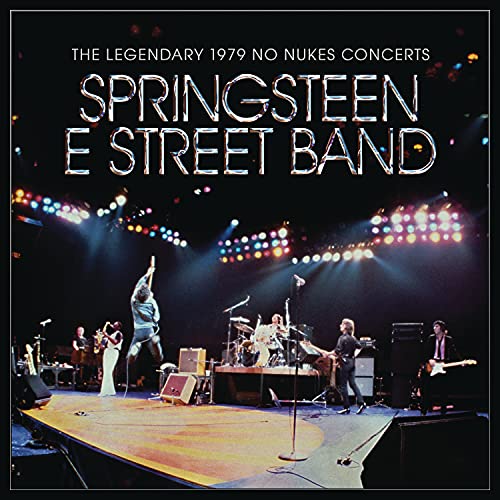
The Legendary 1979 ‘No Nukes’ Concerts from Bruce Springsteen and the E Street Band were recorded at the September 1979 MUSE (Musicians United for Safe Energy) benefit concerts at Madison Square Garden in New York City.
These were shot on film and the audio recorded to multi-track tape but have remained in the vaults – until now! Jon Landau says: “The Seventies were a golden period in the history of Bruce Springsteen and the E Street Band, and the Legendary 1979 No Nukes Concerts is the greatest document of that era we will ever have”.
The 2CD+blu-ray package for No Nukes (click image to enlarge)
No Nukes has been prepared for release in November and is available as a 2CD+blu-ray, 2CD+DVD or 2LP vinyl sets.
This audio on the CDs and vinyl is 13 songs performed over two nights, that are newly remixed and mastered, by Bob Clearmountain. Similarly, the film footage has been edited and restored to HD for the blu-ray (the DVD won’t be HD of course).
The 2LP gatefold vinyl edition of No Nukes (click image to enlarge)
The CD packages includes a 24-page book with rare photos and memorabilia, an essay, vintage ticket envelope, ticket reproduction and sticker. The 2LP vinyl edition is a gatefold package and also includes a 24-page book and a massive (33” x 19”) poster.
1979 No Nukes ConcertsBruce Springsteen & the E Street Band/2CD+blu-ray or 2CD+DVD
CD 1
1. Prove It All Night
2. Badlands
3. The Promised Land
4. The River
5. Sherry Darling
6. Thunder Road
7. Jungleland
CD 2
1. Rosalita (Come Out Tonight)
2. Born To Run
3. Stay
4. Detroit Medley
5. Quarter To Three
6. Rave On
Blu-ray or DVD
1. Prove It All Night
2. Badlands
3. The Promised Land
4. The River
5. Sherry Darling
6. Thunder Road
7. Jungleland
8. Rosalita (Come Out Tonight)
9. Born To Run
10. Stay
11. Detroit Medley
12. Quarter To Three
13. Rave On
Tracklisting
1979 No Nukes ConcertsBruce Springsteen & the E Street Band/2LP vinyl
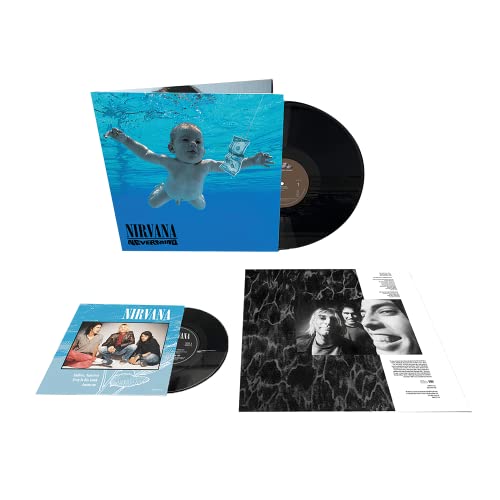
Universal Music/Polydor will release 30th anniversary editions of Nirvana‘s classic 1991 album Nevermind album, in November.
Even though it only feels like yesterday when the 20th anniversary sets were released, UMC are going for it 5CD+blu-ray and 8LP vinyl (+seven-inch) super deluxe editions. Two-CD and vinyl+seven-inch sets are also on offer.
While the 4CD+DVD set from ten years ago was concerned with alternate mixes, rehearsals, BBC sessions and Live at the Paramount, a decade on and there is a big focus on live performance.
Nirvana 30 – the 5CD+blu-ray super deluxe edition (click image to enlarge)
In the 5CD+blu-ray super deluxe, the album itself has been remastered from the original analog tapes (the previous remaster was generally disliked by fans) and added to that are four complete concerts from the Nevermind tour from Amsterdam, Netherlands; Del Mar, California; Melbourne, Australia and Tokyo, Japan. Additionally, a Blu-ray of the complete and newly remastered in HD Live in Amsterdam concert video is included along with a 40-page hardcover book with unreleased photos.
The 8LP super deluxe has the same content as the CD set (sans blu-ray) above but also includes a first-ever seven-inch for ‘Endless, Nameless’ with B-sides ‘Even In His Youth’ and ‘Aneurysm. This also comes with a 40-page hardcover book with unreleased photos.
Nirvana 30 – the 8LP vinyl super deluxe edition (click image to enlarge)
The two-CD deluxe features the remastered album and highlights from the four concerts which are in the super deluxe editions. A vinyl edition (which also comes with that same seven-inch) features the remastered album and comes in a premium ‘tip-on’ sleeve.
All formats of Nevermind 30 are released on 12 November, except the 8LP vinyl super deluxe which won’t be shipping until 27 May 2022!
The Pretenders first two albums will be reissued as three-CD deluxe editions in November, with both “curated by Chrissie Hynde”.
Pretenders was first issued in December 1979 and features the singles ‘Stop Your Sobbing’, ‘Kid’ and UK chart-topper ‘Brass in Pocket’. Less than two years later the follow-up Pretenders II was issued. Hits included ‘Talk of the Town’ (issued much earlier in April 1980), ‘Message of Love’ and ‘I Go To Sleep’. Both albums featured the classic line-up of Chrissie Hynde (vocals and guitar), James Honeyman-Scott (guitar), Pete Farndon (bass) and Martin Chambers (drums).
Both Pretenders and Pretenders II are presented as large format deluxe sets
These new triple-CD deluxe editions come as large-format (12″ x 12″) editions featuring “a high quality book”, with new sleeve notes by Will Hodgkinson and plenty of rare and unseen photos.
Both albums have been remastered by original producer Chris Thomas and these deluxe editions features demos, rarities, BBC Sessions and many live performances. Despite a fare few previous deluxe editions, between them these sets offer 25 previously unreleased tracks along with a further nine that are ‘new to CD’.
Both Pretenders and Pretenders II deluxe editions will be released on 5 November 2021.
Bernard Butler’s debut solo album, 1998’s People Move On, will be reissued as an expanded four-CD deluxe edition and 2LP vinyl set early next year
Butler left Suede in 1994 before the release of their Dog Man Star album and initially joined forces with singer David McAlmont, initially for standalone singles ‘Yes’ and ‘You Do’, although Hut Records in the end persuaded the pair to bring all their recordings together (B-sides etc.) for the Sound Of McAlmont & Butler album, which was released in November 1995.
Then in 1997, Alan McGee signed Bernard to Creation Records, and he set about recording his first solo album, playing all the instruments himself, except for the drums and strings.
Released in April 1998, the album features the singles ‘Stay’, ‘Not Alone’ and ‘Change Of Heart’ and reached number 11 in the UK album charts.
For this reissue Bernard Butler decided that he wanted to re-record all the vocals, for both the album and the B-sides. He has also added the “occasional guitar overdub”. In the case of album-closer ‘I’m Tired’, no instrumental existed and so the 2021 version is a new one-take performance.
This ‘2021 edition’ doesn’t replace the original in the four-CD deluxe edition but rather sits alongside it, on CD 2 and part of CD 3. The fourth disc features some gems from Bernard’s own archives: demos, a rehearsal, solo live tracks, and a selection of fascinating outtakes from the string sessions.
People Move On is reissued as a 4CD deluxe set (click image to enlarge)
The 28 page book is extensively annotated by Bernard himself, contains all the lyrics and includes photos from Bernard’s own collection along with some unpublished session photos from photographer Jill Furmanovsky.
In addition to the CD set, a 2LP version pressed on white vinyl is available. This is the ‘new vocals’ version of ‘People Move On’ and features updated front cover artwork featuring one of those shots from Jill Furmanovsky’s session (rejected at the time by the label).
The four-CD version with the signed print is exclusive to Amazon in the UK. Vinyl fans can buy the white vinyl with a signed print exclusively from Rough Trade in the UK.
People Move On will be reissued on 11 February 2022 (was 28 January 2022).
Compare prices and pre-order
Bernard Butler (Exclusive Signed Edition)
People Move On - 4CD exclusive version with signed print





![David Bowie / Brilliant Adventure [1992-2001]](https://images.superdeluxeedition.com/wp-content/uploads/2021/09/propercover.jpg)








 Interview


