Ludicrous price for the wonderfully packaged Japanese reissue from 2020. Features vinyl replica outer sleeve, inner sleeve, OBI-strip, booklet with Japanese and English lyrics and ‘rice paper’ CD sleeve. Tracks are: ‘Brown Sugar’, ‘Undercover Of The Night’, ‘Start Me Up’, ‘Tumbling Dice’, ‘It’s Only Rock And Roll (But I Like It)’, ‘She’s So Cold’, ‘Miss You’, ‘Beast Of Burden’, ‘Fool To Cry’, ‘Waiting On A Friend’, ‘Angie’ and ‘Respectable’.
Released last week, SDE lifts the lid off the box set edition of Back The Way We Came, a new ‘Best Of’ album celebrating ten years of Noel Gallagher’s High Flying Birds. Is it worth the £80 price-tag? Watch the video to find out…
Back The Way We Came: Vol 1 (2011-2021)’ is out now via Sour Mash Records
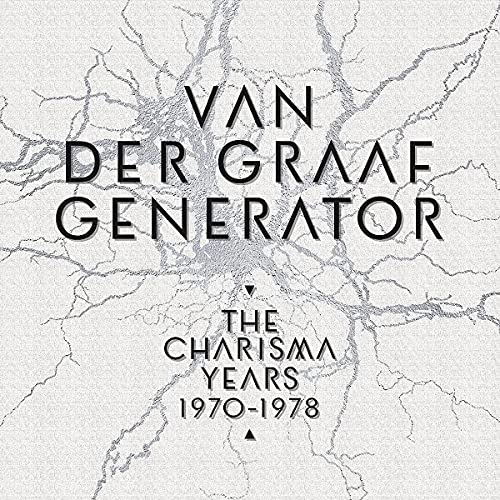
English prog rock bandVan Der Graaf‘s entire recorded work for Charisma Records is being released in a 17CD+3 x blu-ray box set. This package features remastered albums, bonus tracks, BBC sessions, rare video footage, new stereo remixes and 5.1 surround versions.
The studio albums features on The Charisma Years are as follows: The Least We Can Do is Wave to Each Other (1970), H to He Who Am the Only One (1970), Pawn Hearts (1971), Godbluff (1975), Still Life (1976), World Record (1976) and The Quiet Zone / The Pleasure Dome (1977). All of these have bonus tracks such as A-sides, B-sides and all of the surviving BBC sessions recorded by the band. CD 4 is almost an entire disc of Pawn Hearts sessions.
Additionally, the double live album, Vital (1978) is included, as is a recently discovered and previously unreleased entire concert recorded in Paris in December 1976 by French radio.
Van Der Graaf Generator’s The Charisma Years 1970-1978 (click image to enlarge)
The last four CDs in The Charisma Years (CD14 to CD17) are new stereo mixes of H to he Who Am the Only One, Pawn Hearts, Godbluff and Still Life. These have been remixed from the original multi-track tapes by Stephen W Tayler.
Two blu-rays also include these stereo mixes in hi-res and offer 5.1 surround sound mixes of all four of those albums. These have also been created by Stephen W Tayler.
Finally, this mammoth box concludes with another blu-ray with rare and unreleased video footage. This is apparently “all of the surviving Van Der Graaf Generator television footage and promotional films” and includes the band’s appearance on German TV’s Beat Club in 1970, a filmed appearance at The Bataclan in Paris in 1972 for the French TV show Pop Deux, the 1972 appearance on Pop Shop for RTBF Belgium, the promotional films for ‘Wondering’ and ‘Cat’s Eye’ and a 20 minute documentary with live footage shot by Austrian television at The Kohfidisch Open Air Festival, Austria in June 1978.
The Charisma Years comes packaged with a 68-page book and is released on 3 September 2021, via UMC/Virgin.
The Charisma Years 1970-1978Van Der Graaf Generator/20-disc box set
CD 1: The Least We Can Do is Wave to Each Other
Darkness (11/11)
Refugees
White Hammer
Whatever Would Robert Have Said?
Out of My Book
After the Flood
Bonus tracks
Refugees (single version) – A-side April 1970
Boat of Millions of Years – B-side April 1970
Darkness (BBC Radio ‘Top Gear’ session 20 Jan 1970)
After the Flood (BBC Radio ‘Top Gear’ session 20 Jan 1970)
CD 2: H to He Who Am the Only One
Killer
House with No Door
The Emperor in His War Room
Lost
Pioneers Over C
Bonus tracks
Killer (first version) – Previously unreleased – Recorded at Trident Studios in July 1970
The Emperor in His War Room (first version) – Recorded at Trident Studios in July 1970
Lost (BBC Radio ‘Top Gear’ session 12 Oct 1970) – previously unreleased
Killer (BBC Radio ‘Top Gear’ session 12 Oct 1970) – previously unreleased
CD 3: Pawn Hearts
Lemmings (including Cog)
Man Erg
A Plague of Lighthouse Keepers:
a) Eyewitness b) Pictures / Lighthouse c) Eyewitness d) SHM e) Presence of the Night f) Kosmos Tours g) (Custard’s) Last Stand h) The Clot Thickens i) Land’s End (Sineline) j) We Go now
Bonus Tracks
Man Erg (BBC Radio One Sounds of the Seventies session – 10 June 1971)
Theme One (BBC Radio One Sounds of the Seventies session – 10 June 1971)
Vision (BBC Radio One Sounds of the Seventies session – 10 June 1971)
Darkness (BBC Radio One Sounds of the Seventies session – 10 June 1971)
CD 4
Theme One (A-side of single Feb 1972)
W (B-side of single Feb 1972)
Squid / Octopus (from Pawn Heart sessions)
Angle of Incidents (from Pawn Heart sessions)
Ponker’s Theme (from Pawn Heart sessions)
Dimunitions (from Pawn Heart sessions)
W (first version) (from Pawn Heart sessions)
Theme One (original mix) (from Pawn Heart sessions)
Man Erg (BBC Radio One John Peel Concert 23 Sep 1971)
W (BBC Radio One John Peel Concert 23 Sep 1971)
Killer (BBC Radio One John Peel Concert 23 Sep 1971)
Refugees (BBC Radio One John Peel Concert 14 Dec 1971)
CD 5: Godbluff
The Undercover Man
Scorched Earth
Arrow
The Sleepwalkers
Bonus tracks
Scorched Earth (BBC Radio One John Peel session – 3 July 1975)
The Sleepwalkers (BBC Radio One John Peel session – 3 July 1975)
CD 6: Live in Rimini 9th August 1975
A Louse is Not a Home
(In the) Black Room / The Tower
Forsaken Gardens
Lemmings
Scorched Earth
Man-Erg
CD 7: Still Life
Pilgrims
Still Life
La Rossa
My Room (Waiting for Wonderland)
Childlike Faith in Childhood’s End
Bonus tracks
Gog (live) – Recorded at the Theatr Gwynedd, Bangor, Wales 10 May 1975
Still Life (BBC Radio One John Peel session – 1 April 1976)
La Rossa (BBC Radio One John Peel session – 1 April 1976)
CD 8: World Record
When She Comes
A Place to Survive
Masks
Meurglys III (The Songwriters Guild)
Wondering
Bonus tracks:
When She Comes (BBC Radio One John Peel session – 11 November 1976)
Masks (BBC Radio One John Peel session – 11 November 1976)
Part One (Approx. 35% of) Meurglys III (The Songwriters Guild) – B-side of single Oct 1976 – Previously unreleased on CD
CD 9: Live at Maison de la Mutualite, Paris (6 Dec 1976 – previously unreleased)
Arrow
When She Comes
Masks
Still Life
Lemmings
Childlike Faith in Childhood’s End
CD 10: CD 9: Live at Maison de la Mutualite, Paris (6 Dec 1976 – previously unreleased)
Meurglys III (The Songwriter’s Guild)
Gog
Sleepwalkers
Killer
Man-Erg
CD 11: The Quiet Zone / The Pleasure Dome
Lizard Play
The Habit of the Broken Heart
The Siren Song
Last Frame
The Wave
Cat’s Eye / Yellow Fever (Running)
The Sphinx in the Face
Chemical World
The Sphinx Returns
Bonus tracks
Door
Ship of Fools (B-side of French single from Sep 1977)
The Wave (demo version)
Cat’s Eye / Yellow Fever (BBC Radio One John Peel session – 24 October 1977)
The Sphinx in the Face (BBC Radio One John Peel session – 24 October 1977)
(Fragments of) A Plague of Lighthouse Keepers / Sleepwalker’s End (BBC Radio One John Peel session – 24 October 1977)
CD 12: Vital (live album)
Ship of Fools
Still Life
Last Frame
Mirror Images
Medley: A Plague of Lighthouse Keepers / Sleepwalkers
CD 13: Vital (live album)
Pioneers Over C
Sci-Finance
Door
Urban / Killer / Urban
Nadir’s Big Chance
CD 14: H to He Who Am the Only One (New stereo mix)
Killer
House with No Door
The Emperor in His War Room
Lost
Pioneers Over C
CD 15: Pawn Hearts (New stereo mix)
Lemmings (including Cog)
Man Erg
A Plague of Lighthouse Keepers:
a) Eyewitness b) Pictures / Lighthouse c) Eyewitness d) SHM e) Presence of the Night f) Kosmos Tours g) (Custard’s) Last Stand h) The Clot Thickens i) Land’s End (Sineline) j) We Go now
Bonus tracks
Theme One (new stereo mix)
W (new stereo mix)
CD 16: Godbluff (New stereo mix)
The Undercover Man
Scorched Earth
Arrow
The Sleepwalkers
CD 17: Still Life (New stereo mix)
Pilgrims
Still Life
La Rossa
My Room (Waiting for Wonderland)
Childlike Faith in Childhood’s End
Blu-ray #1: ‘H to He Who Am the Only One’ and ‘Pawn Hearts’
Both albums in High resolution 5.1 Surround Sound Mix / New Stereo Mix / Original stereo mix
H to He Who Am the Only One
Killer
House with No Door
The Emperor in His War Room
Lost
Pioneers Over C
Pawn Hearts
Lemmings (including Cog)
Man Erg
A Plague of Lighthouse Keepers:
a) Eyewitness b) Pictures / Lighthouse c) Eyewitness d) SHM e) Presence of the Night f) Kosmos Tours g) (Custard’s) Last Stand h) The Clot Thickens i) Land’s End (Sineline) j) We Go now
Blu-ray #2: ‘Godbluff’ and ‘Still Life’
Both albums in High resolution 5.1 Surround Sound Mix / New Stereo Mix / Original stereo mix
Godbluff
The Undercover Man
Scorched Earth
Arrow
The Sleepwalkers
Still Life
Pilgrims
La Rossa
My Room (Waiting for Wonderland)
Childlike Faith in Childhood’s End
Blu-ray #3: The Video Vaults
Darkness (‘Beat Club’ – German TV 23 June 1970) – previously unreleased
Whatever Would Robert Have Said (‘Beat Club’ – German TV 23 June 1970) – previously unreleased
Lost (‘Pop Deux’ Filmed at The Bataclan Theatre, Paris 18 March 1972 – Previously unreleased)
Killer (‘Pop Deux’ Filmed at The Bataclan Theatre, Paris 18 March 1972 – Previously unreleased)
Octopus (‘Pop Deux’ Filmed at The Bataclan Theatre, Paris 18 March 1972 – Previously unreleased)
Theme One (‘Pop Shop’ Recorded 23 March 1972 for RTBF, Belgium) First official release.
A Plague of Lighthouse Keepers (‘Pop Shop’ Recorded 23 March 1972 for RTBF, Belgium) First official release.
The Undercover Man (Live in Charleroi Palais des Expos – 27 September 1975) First official release.
Arrow (Live in Charleroi Palais des Expos – 27 September 1975) First official release.
Scorched Earth (Live in Charleroi Palais des Expos – 27 September 1975) First official release.
Sleepwalkers (Live in Charleroi Palais des Expos – 27 September 1975) First official release.
Wondering (Charisma promotional film 1976) Previously unreleased
Eric Clapton‘s eponymous debut album will be expanded and reissued as a four-CD deluxe edition in August.
The album was originally released in August 1970, so this is technically a 51st anniversary edition. The deluxe edition offers three different mixes:
The Eric Clapton Mix
The Delaney Bramlett Mix
The Tom Dowd Mix (The UK Version).
The Tom Dowd Mix is the standard UK version, while the Delaney Bramlett mix was unreleased until 2006 when it appeared on the two-CD deluxe edition. The Eric Clapton mix is released in full for the first time.
The 4CD deluxe edition of Eric Clapton (click image to enlarge)
The bonus material on CD 4 was mostly included on that same two-CD deluxe although this new edition does include a previously unreleased alternate mix of ‘Comin’ Home’.
The artwork is different for the four-CD set, but a single vinyl LP edition reverts to the familiar front cover. SDE can’t find any confirmation which version the vinyl is, but assumes it’s the standard Tom Dowd mix.
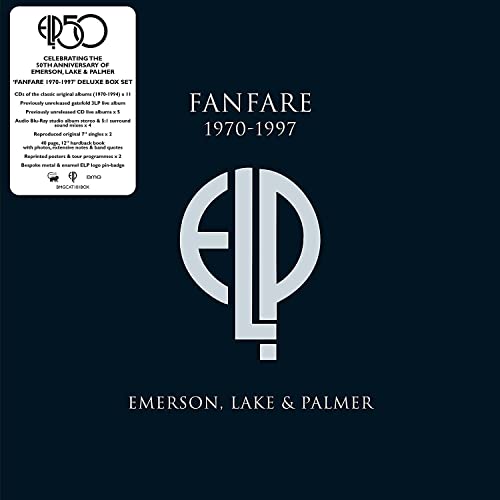
BMG reissue the2017 ELPFanfare box set which contains 16 CDs, three vinyl records, a blu-ray audio (with stereo and 5.1 mixes of four albums), a seven-inch single, a book and other ‘stuff’.
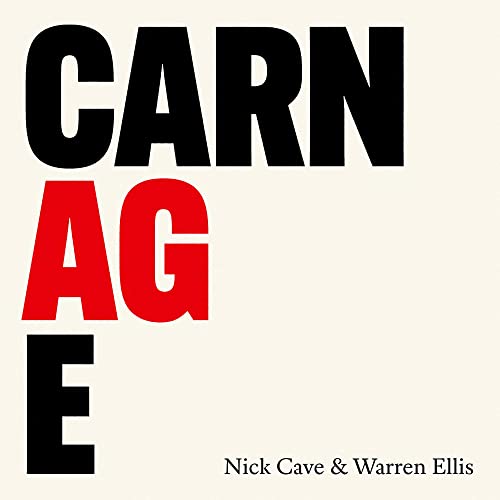
The first song-based album from soundtrack experts Nick Cave and Warren Ellis. Both vinyl and CD come with a 24-page booklet, the the later featuring a ‘debossed’ cover.
Compare prices and pre-order
Nick Cave & Warren Ellis (Nick Cave & The Bad Seeds)
Record Store Day returns on Saturday 12 June, which is one of two ‘drop days’ this year (down from three in 2020). The second date is 17 July.
Keeping with tradition, SDE is pleased to present a series of video previews this week of selected items. Today we focus on albums, singles or EPs issued in the 1990s.
Remember, the rules are relaxed again this year, so if you can’t make it to your local record shop (if you have one!) then online orders are permitted from 6pm on the day. Good luck and let’s hear what your most desired items are – leave a comment!
George Harrison‘s 1970 album All Things Must Pass will be reissued in August for a belated 50th anniversary edition and will be available in SEVEN different physical editions including an ‘Uber Deluxe Edition’ which comes in wooden crate and contains everything…and more!
Paul Hicks – the mixer/engineer who has worked on the Lennon reissues – has created a new mix of All Things Must Pass, overseen by George’s son Dhani, who is executive producer on this project. There is a new stereo mix, a surround mix and a Dolby Atmos mix of the album. The new stereo mix replaces the original album mix on every format. Speaking of which here are the formats:
Uber Deluxe Edition: 8LP+5CD+blu-ray. Comes in a wooden crate with books, figurines, Klaus Voorman illustration and more.
Super Deluxe Edition (CD): 5CD+blu-ray. Original album, plus 3CDs of demos and outtakes, plus a blu-ray with the surround mixes
Super Deluxe Edition (vinyl): 8LP. Original album plus 5LPs of outtakes/demos
Deluxe Edition (vinyl): 5LP. Original album plus 2LPs of outtakes (no demos)
Deluxe Edition (CD): 3CDs. Original album plus an extra discs of outtakes. Comes in a little box.
Standard Edition (vinyl): 3LP set featuring the new mix of the album. This is available on black vinyl and green splatter coloured vinyl
Standard Edition (CD): 2CD set featuring new mix of the album. Gatefold card sleeve presentation.
The Uber Deluxe Edition comes in a wooden crate and includes figurines of Harrison and those gnomes (click image to enlarge)
The Uber Deluxe and both 8LP vinyl and 5CD+blu-ray Super Deluxe Editions contain 70 audio tracks. There are 23 tracks on the original album, so that leaves 47 demo recordings, session outtakes and studio jams, of which 42 are previously unreleased. On the CD edition the three bonus discs are split into two discs of demos (‘day 1’ and ‘day 2’) and a third disc of outtakes.
5CD+blu-ray super deluxe edition (click image to enlarge)
The 5CD+blu-ray super deluxe edition comes in a slipcase with a 56-page scrapbook curated by Olivia Harrison, with unseen imagery and memorabilia from the era, handwritten lyrics, diary entries, studio notes, tape box images, a comprehensive track-by-track and more. It also includes a replica of the original album poster (all formats have the poster).
The 8LP super deluxe has all the tracks from the 5CD set and a 60-page scrapbook with the same contents as above.
The 5LP deluxe edition is the remixed album with two bonus LPs which are the Session Outtakes & Jams. In other words, CD 5 from the super deluxe, or LPs 7 & 8 from the 8LP vinyl super deluxe.
All Things Must Pass 8LP vinyl super deluxe edition (click image to enlarge)
The ‘uber deluxe’ has an “elaborate and expanded” version of the scrapbook and includes asecond book (44 pages) chronicling the making of All Things Must Pass through extensive archival interviews with notes. This also comes with a wooden bookmark made from a felled Oak tree (Quercus Robur) in George’s Friar Park, the 1/6 scale replica figurines of Harrison and the gnomes featured on the album cover, a limited edition illustration by musician and artist Klaus Voorman, a copy of Paramahansa Yogananda’s “Light from the Great Ones”, Rudraksha beads contained in individual custom-made boxes and the poster.
Record Store Day returns on Saturday 12 June, which is one of two ‘drop days’ this year (down from three in 2020). The second date is 17 July.
Keeping with tradition, SDE is pleased to present a series of video previews this week of selected items. Today we focus on albums, singles or EPs issued in the 1980s.
Remember, the rules are relaxed again this year, so if you can’t make it to your local record shop (if you have one!) then online orders are permitted from 6pm on the day. Good luck and let’s hear what your most desired items are – leave a comment!
Record Store Day returns on Saturday 12 June, which is one of two ‘drop days’ this year (down from three in 2020). The second date is 17 July.
Keeping with tradition, SDE is pleased to present a series of video previews this week of selected items. Today we focus on albums/artists from the 1960s and 1970s including Joni Mitchell, The Doors, Grateful Dead and more.
Remember the rules are relaxed again this year, so if you can’t make it to your local record shop (if you have one!) then online orders are permitted from 6pm on the day. Good luck and let’s here what your most desired items are – leave a comment!
Lindsey Buckingham will release a new studio album in September. Called simply, Lindsey Buckingham, his seventh studio album was written, produced and recorded by Buckingham at his home studio in Los Angeles.
You can preview the very encouraging ‘I Don’t Mind’ from the record below.
Buckingham says the following, about the meaning of this song: “Over time, two people inevitably find the need to augment their initial dynamic with one of flexibility, an acceptance of each others’ flaws and a willingness to continually work on issues; it is the essence of a good long term relationship. This song celebrates that spirit and discipline.”
The new album features 10 tracks including ‘Power Down’, ‘Scream’, ‘Swan Song’ and a cover of ‘60s folk group the Pozo-Seco Singers’ hit single ‘Time’.
Lindsey Buckingham will be available on CD and vinyl and is released on 17 September 2021. There are no deluxe editions or box sets, although a blue vinyl edition will be available via various indie outlets.
Buena Vista Social Club was the ensemble of Cuban musicians established in 1996 and the subsequent album issued in 1997. That Grammy-winning record enjoyed phenomenal success, with sales of eight million copies, to date. It is now being reissued for its 25th anniversary, newly remastered and featuring previously unheard tracks from the original 1996 recording sessions.
Recorded in just seven days, in Havana, under the direction of Juan de Marcos González and American guitarist Ry Cooder, no one could have predicted how this group of artists would be elevated to the world stage and come to popularise Cuba’s rich musical heritage
‘Chan Chan’ is very much the calling card of Buena Vista Social Club
The album has been remastered by Bernie Grundman and will be reissued as a 2CD deluxe set in a 64-page casebound book packaging. This features new sleeve notes, photos and lyrics etc. The second disc in this set features 12 previously unreleased bonus tracks from the original 1996 session tapes.
A 2LP gatefold vinyl package sees the album pressed on 180g vinyl and includes five of those bonus tracks from the double CD set.
The 2LP+2CD deluxe bookpack features a 40-page hardcover book and two prints
However there is a ‘top of the range’ physical deluxe edition which brings together both the 2LP vinyl and the 2CD and packages them in a large format, 40-page deluxe bookpack. This comes with a large 40-page book and includes two prints.
All three variants are available via the official store (with T-shirt bundles) or from the usual retail channels, as below.
Buena Vista Social Club 25th anniversary edition is released on 17 September 2021.
Compare prices and pre-order
Buena Vista Social Club
Buena Vista Social Club 25th anniversary 2LP+2CD deluxe bookpack
The three albums Scritti Politti made for Virgin are to be reissued by band leader Green Gartside’s current record label, Rough Trade, in 2021.
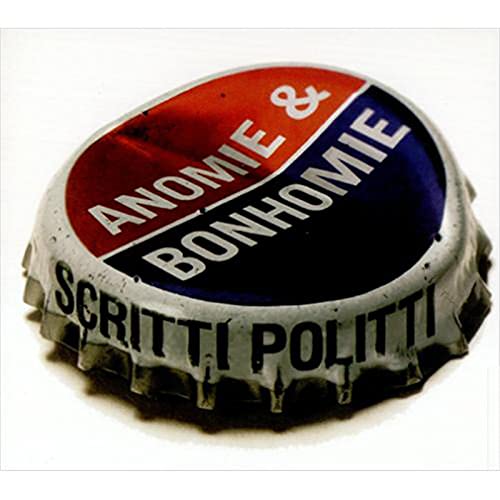
Cupid & Psyche 85 (1985), Provision (1988) and Anomie & Bonhomie (1999) will feature new sleevenotes reuniting Gartside with keyboardist and co-producer David Gamson. The reissue series, which features the albums being released on vinyl, CD and digitally, will see the first vinyl release for 1999’s Anomie & Bonhomie (issued as a 2LP set).
The four bonus tracks from the original CD and cassette versions of the 1985 classic Cupid & Psyche 85 are maintained on the CD (and will finally appear on streaming sites) but will not be added to the vinyl version. To put it another way, the CD and vinyl reissue of Cupid & Psyche 85 are identical to the versions released in the 1980s.
There are no additional bonus tracks on any of the albums. This means B-sides such as ‘World Come Back To Life’ and ‘Dead Certainty’, as well as a host of remixes, remain in the vaults.
The press release is vague by omission when it comes to the audio and remastering. When challenged on twitter by a fan, about remastering, Rough Trade Records replied saying that “Green has overseen the re-cutting of all the records”. Overseeing the re-cutting of an album isn’t the same as remastering the audio, and indeed SDE has had it confirmed by the label that the audio hasn’t been remastered. So the CDs will sound identical to the old ones.
The reissues are the first of any kind for Scritti Politti, who originally released the albums on Virgin in the UK and Warner in the US. It coincides with a forthcoming Scritti Politti tour, running from 21 September to 2 October, billed as “celebrating 35 years of Cupid & Psyche 85”.
Green has “overseen the re-cutting of all the records” but the audio hasn’t been remastered
In reissuing the albums to coincide with a tour, it appears Rough Trade are getting the albums back into print at the earliest opportunity to celebrate Scritti’s music, with more extensive versions of the albums planned later. Scritti’s production manager Joe Smith, who has overseen the reissues with Gartside, told SDE: “The long game plan is to go through the archive, to do a full expanded edition of each album or a boxset. But that will take time.”
While the idea of a “long game plan” may having fans mentally storing these theoretical, expanded reissues in the ‘it-will-never-happen’ file, we should also consider that they would still likely to have to wait until Gartside finishes a new Scritti Politti album. Not good news when you consider Kate Bush – not exactly a beacon of prolificy – has released three times as many albums as him in the last 20 years.
After being persuaded to sign to Rough Trade by label boss Geoff Travis after the commercial failure of Anomie & Bonhomie, Gartside has released just one album under the Scritti Politti banner, 2006’s acclaimed White Bread, Black Beer. In a recent interview, Gartside assured Classic Pop the new album was nearing completion, saying: “It’s just the fear of the business of finishing things which I have a hang-up about. While I’m also starting new stuff, I’m in my home studio every day to finish songs up. I’m going through all this music at a hell of a lick now.”
Scritti Politti singles from the three reissued albums invariably included an extended remix, while many had additional mixes: eight remixes of ‘Perfect Way’ from Cupid & Psyche 85 were released, while non-album single ‘Take Me In Your Arms And Love Me’ received five remixes. Scritti Politti’s standalone hit ‘She’s A Woman’, a Beatles cover released in 1991, is also not added to 1988’s Provision. That song also received five different remixes across its single formats, including mixes by William Orbit and Apollo 440. King of the remixes is ‘Tinseltown To The Boogiedown’ from Anomie & Bonhomie, with versions from Pete Rock and Rob Swift among the nine different remixes for the single.
None of those Scritti remixes are available on streaming sites, which currently only feature the collective’s albums plus the B-sides for White Bread, Black Beer singles ‘The Boom Boom Bap’ and ‘Snow In Sun’. White Bread, Black Beer itself is a rarity on physical formats, with vinyl versions fetching around £55. Smith confirmed he and Gartside are working on a reissue of that album too.
Anomie & Bonhomie is reissued on vinyl for the first time. It’s a 2LP set.
In addition to the released remixes currently still waiting to be assembled, there are several known unreleased Scritti Politti recordings of interest, including Nile Rodgers’ productions of ‘Small Talk’ – later produced by Arif Mardin on Cupid & Psyche 85 – and ‘L Is For Lover’, which Scritti never released but was eventually recorded by Al Jarreau as the title track of his 1986 album. Talking to Classic Pop about his attitude to unreleased music, Gartside said: “One day, someone should do a proper, forensic look at what’s in the vault. I always think that, if it didn’t come out at the time, there was probably a reason why not, whether it was contractual or we thought ‘Nah…’ But it’s tied in with how I never bother spending time thinking about the past or listening to it.”
The sleevenotes by Gartside and Garson will certainly be of interest. The pair fell out after the recording of Anomie & Bonhomie, but have become friends again in recent years. Drummer Fred Maher, the other member of Scritti Politti on Cupid & Psyche 85 and Provision, isn’t involved in the reissue, but Gartside has said there is no animosity between the pair and he hopes to make contact with Maher soon.
Cupid & Psyche 85 and Anomie & Bonhomie will be reissued by Rough Trade on 30 July 2021. The CD of Cupid & Psyche 85 has been delayed to 18 March 2022 (!) and there’s still no sign of Provision!
As recently reported on SDE musician and passionate Paul McCartney fan Fernando Perdomo has masterminded what has turned out to be a fabulous tribute version of Paul and Linda McCartney’s 1971 album Ram. The album is covered in its entirety and features various guest vocalists and musicians with a core team consistent across all the tracks. One of those is the original drummer on the Ram album – and subsequent Wings drummer – Denny Seiwell! SDE caught up with Denny recently and he tells us about the Ram On project, his time in the Paul’s band and the Wings reunion that Paul seriously considered…
How did you get involved in the Ram On project? Did Fernando Perdomo contact you directly?
I met him at a show, five or six years ago and then I keep bumping into him and he was really a sweet guy. Then Denny Laine asked me to come down and just sit in and play with him, and I said “sure, I’ll do that”. Fernando was there and we started talking. He says: “I recorded ‘Too Many People’ and ‘Some People Never Know’ in my home studio. I finished the tracks but I didn’t put drums on them. Would you mind coming up and playing drums?” I said “Yeah, what the hell”. I thought, “let me see if this kid’s good or not”, you know. So I went up and I was blown away. It took me all of ten minutes to do two songs, you know.
We remained friends, and about a year later, he called me up and he said “Do you know it’s 50th anniversary of Ram? Let’s do the whole album!”. I said, “Well, yeah, I think so, but before we do anything let me call Paul, let me see how he feels about that”. So I called Paul and he said “Yeah, go ahead, have fun”. So it seemed we got his blessing and then I talked to his people at MPL [McCartney Productions Limited] in New York to make sure that we didn’t, you know, crush anything that he was planning and that [there were] no conflicts of interest.
What do you think makes the Ram album so special?
I know what was really so special about it: Linda put a foot up his arse and said “You get up, we’re going to New York, we’re going to make a record, you can’t just sit up here at the farm in Scotland…”. It was that Beatle break-up that was causing all the angst in him. I just think that some emotional part of his life was coming out in Ram and in the music.
What were your preconceptions, because at that point in time McCartney, that first solo album was the only non-Beatles music from Paul that people really would have heard. There must have been an element where you didn’t really know what it was going to be like, the music that he was making?
Sure, I had no idea what it was going to be like. But as New York session players, that’s what we expected. Every day when we went to work it was a clean slate, you didn’t know what you were going to be doing. They are paying you handsomely and they expect you to do the job, do it quick and do it great! So I mean, when we started hearing the material we were saying “Oh my God, this is not another typical album that we’re going to do, this is going to be very important in the history of music”. So we gave it our best, I must say, and Paul gave us a clean slate to do anything that we wanted – and he hired me for me, he didn’t hire me because he wanted to tell a drummer what to play. He only asked me to change one part that I came up with on Uncle Albert and that was the only time – even in Wings, he never [did].
But to be honest, I like the way Paul plays on the McCartney album, he’s a really interesting drummer. So when I did the audition, I kind of went in to how he or how Ringo would play it. So when I’m hearing the song for the first time on the Ram album, I’m thinking “Well how would Paul play it if he was drumming it?”
A TV advert for the 2012 archive reissue of Ram
Paul is a master when it comes to the multi-part song with different sections – particularly on the Ram album – so there’s quite often different tempos, different feels going on within three or four minutes aren’t there? Does that make it particularly gratifying for a drummer?
Yeah, yeah, yeah. In the past I used to do shows up in the Poconos mountains and the Catskills where you’d have a dance team and a comedian and the dance team would have this music that went all over the place. So I was well versed in that, and like ‘Uncle Albert’ that was done in one pass, that wasn’t broken up in ‘Uncle Albert’and then ‘Admiral Halsey’ later. Same with ‘Back Seat’ and a lot of those tracks… ‘Little Lamb Dragonfly’, ‘Get on the Right Thing’, all of those songs were done as one take even though they had several tempos, we just learned them, remembered them. Paul would set the tempo on whatever instrument he was playing.
How did those songs sound in the studio at the time? Because my understanding is that Paul did all the bass overdubs later on?
Correct. There was only three of us, Paul playing either guitar or piano, and he’d sing a guide vocal. [David] Spinozza or Hugh McCracken, one at a time, were the guitar players, and me. So he based all of his bass parts off of my bass drum beats that I came up with. So the fact that I saw this as a way we’re going to work and I knew I had to really be careful on the parts that I came up with because it’s going to influence the way Paul comes up with his bass parts. And he loved working like that. So yeah, I’ve never heard any of the tracks. When the record was over he sent me a little box of the Ram album and my doorman said “Here is a box of records that are here for you”. I went up and I put it on the turntable and I was just blown away to hear the whole thing, you know, it was pretty amazing.
And tell me the story about your drum kit – I was blown away by this story of how, you know, the drum kit was a Beatles drum kit. Tell me that story!
I don’t know if it’s [true] Ringo says it isn’t, but I think it is. This place in New York is going out of business and they had a Ringo or a Beatles display I guess, and they had a Ringo Starr drum kit in there, a black Ludwig kit. And they said it was taken from the Shea Stadium concert in New York and that’s how they got it. And so they had this auction and my buddy who runs a drum shop in New York, he called me up, he said “Hey, I’m going to this auction, they have the Beatles drum set from Shea Stadium. I’m going to go get on it, I don’t really want all of the drums, I just want the snare drum, would you be into”? I said “Sure, I’d love to have it, but it’s probably way above my head, financially”. So he goes to the auction, he calls me up, he says “I got it, I got the kit and you can have the two tom toms and the bass drum”. I said, “Okay, how much?” “300 bucks”, I went “Oh my God”. So I ran down there and I gave him 300 bucks.
So Paul calls me, between the audition and the first session, he calls me up and says, “I’d like to hire you for this Ram album”. So I show up on the date and I had my drums in the drum booth. Paul comes in, he goes “Hey man, you ready to go and then he looks and does a double-take on The Beatles drums. I used them, with my dad’s snare drum for the whole album.
That’s pretty amazing. So the bass drum had ‘The Beatles’ written in it?
Of course, yeah. I sold the drums back to the guy because they weren’t great; I could make them sound good but they weren’t an overall great sound, but I kept the head. And then I heard that one of those original seven heads went for $2 million over here. And I started looking for it, I couldn’t find it.
When people cover records, quite often the mindset is, “we have to do something different” because they think there’s no point like trying to replicate it perfectly. But Fernando has just spun that on its head to a certain degree, because all those parts are replicated in quite a lot of detail. Did that surprise you?
Well no, that was my role. You know, we figured having the original drummer and playing the original drum parts – that’s a basis that you can’t go wrong with. And Fernando was very fussy with a lot of the guitar parts, he’s really great at that. Getting the same sounds and the same parts and you know adding a little bit of our own thing, without taking away from the original spirit of Ram. And really the hardest part was saying no to some great vocals. He would bring in three or four people to sing the same thing and then we’d go through it and I’d choose one, not for namesake, who might sell more records… none of that. It was like who has the spirit of the record? I don’t care how much they sound like Paul – although I’d like it to have that delivery and cadence that Paul had. So I would say “Yay or nay” on a lot of the important vocals and that was my role.
Fernando Perdomo and Denny Seiwell (photo by Cyndi Trissel)
Even though there are different vocalists for each song, the album has a consistent tone and feel, doesn’t it?
Yeah. Between the two of us I think we did an exemplary job, especially going through lockdown. He would make a mix and send me a rough or three or four different roughs and he would say “What do you think?” And we’d talk about it and we would pick the best one or sometimes we would ask people to redo something, make it a little bit different… It really came out well, I’m very proud of it.
One of the things that comes across to me is how Paul’s vocal range at that time, was immense. His vocal talents were off-the-scale really. And I think for any singer to try and match his range, it’s going to be a challenge isn’t it?
Yeah, absolutely. You couldn’t replace his vocal. I mean this record [Ram On] is really good but ah, the vocals are great but there’s not a Paul McCartney. But I’m telling you when we found Timmy Sean to do the vocal on ‘Monkberry Moon Delight’ and Dan Rothchild [‘Too Many People’], and some of the other people, like Adrian Bourgeois [‘Dear Boy’] it just blew me away.
Linda aside, you’re the only person in Wings that worked with Paul, before becoming a member of Wings.
Yeah.
So to a certain extent you knew what you were letting yourself in for. When Paul said “Would you like to join my band?” You’d had that experience of working with him in the studio. You could compare and contrast the two things: being a session musician; working with him in the studio and then being a member of his band. How did those two things compare?
I wasn’t a member of his band. This is the way he went at the time. So first of all he called me up for a vacation and said “You and your wife come on over and we’ll hang out a little bit at the farm”. And he brought – Hugh McCracken was over as well and he was finishing a tour with Gary Wright. So Paul said “You know, I miss my old band, I’m thinking about putting a band together, shall we put a band together?” And I go “I’m in”.
And Hugh said, “I can’t”. He didn’t tell them why but over time I found out that he had a previous marriage and he had young kids. When I told Paul this, just a couple of years before Hugh had passed away, it really made all the difference in the world. So [anyway], I went home, I went back to New York and Paul said “Okay I’m bringing Denny Laine over, let’s come over and form a band”. It wasn’t “Paul McCartney and Wings”. He wanted the band to be known as “Wings”.
And after we brought Henry [McCullough] in and we went on the road and we did the University tour, the European tour and then the British tour, we had really become a band, band, band. It was a different head from being a session guy and I enjoyed that. It was a different way of thinking about the music.
Why did you say yes? I know if Paul McCartney asks you to work with him, it’s probably hard to say no, but weren’t you enjoying life in New York as a session musician? Why did you want to be in a band?
I’m sorry, sometimes you have a great time in the studio and the other times you go to work and you’re polishing a turd, you know. I mean, sometimes the stuff you are asked to do isn’t that great.
I was grateful that I was called on so many times. I was making good money but the difference between Paul McCartney and just doing an ordinary session man job… there is no comparison. Paul was the musical genius of the time, you know, and I respected everything about him. And I never met anybody with that much talent and we hit it off so perfectly. That’s why he said “Are you interested?” I said “Hell, yeah, count me in”. And we were going to go with Hugh McCracken and Paul Harris, we were thinking about this anyway. Paul Harris on piano – there was no talk of Linda yet.
After Hugh had left and went back to the States and I came home to New York, he called me up and he says, “Yeah, I think I’m going to have Linda play piano”. That was a bit of a shock, I must say, because she doesn’t play piano. But he says “You know, the stuff that I need a piano player to do, I can teach anybody to do and I’ll make sure that she can do her part and I’ll find simple parts that really work for the songs”. And I trusted him so much musically that I went “Great, whatever, that’s fine”.
But did your relationship change from when you were together working on Ram to when you were in Wings?
Exactly the same. Paul and I could just look at each other without saying anything, we had communication, you know. And Linda was doing her best, you know, God bless her, she really did her best. He would teach her nice simple parts and you know, at the end she had really advanced her skills on a piano and her singing as well. She became a very integral voice of the Wings sound.
When Ram came out originally, it received mixed reviews, didn’t it? Paul must have been disappointed about that. Did he ever talk to you about it?
Yeah, we were all a little disappointed but, you know, I believe it was just jealous people, complaining about him breaking up the Beatles… talking out their butt holes, you know. I really think that they weren’t listening to the music or they wouldn’t have missed that much great music, you know. And you’ve got to remember if our critic, if he writes [that] everything’s good, he’s going to be out of work in no time at all. A critic needs to find something wrong and write about it.
I’m sure Paul hated me for many years
Denny seiwell
What about that university tour? It’s exactly what he was talking to John Lennon about when they were doing Let It Be in early 1969: getting back-to-basics and going out on a small tour. Paul obviously got a big kick out of that university tour, but was everyone else enjoying it as much as he was?
Oh my God, yeah, it was the most fun we ever had as a band. I don’t think any of these iterations of Wings after this one had the kind of fun we did because we were really breaking the ice and we had a 12-passenger Transit van, wives, kids and dogs, and a little truck with our gear in it, two roadies, and we just set out not knowing where we’re going. We’d stop at a university and say “Can we play here tonight?”. It was the best, right. At the end of the night we’d sit with the kids with a money box and we’d pass it, one for you, one for you, one for you, you know these pound notes. I think it cost 50 or 75p to get in the show. It was great.
With the Wild Life album there wasn’t that layered complexity that there was with Ram. Did that surprise you or were you expecting it because you were a new band?
When we, when I came back to Scotland, after I went home for two weeks or so, Paul called and he said “Okay, I got Denny here, come on back over and we’ll start learning some songs”. He had written a bunch of songs. So when we were in recording Wild Life, five of the eight songs were first takes.
And a song like Mumbo you can hear it – “Take it Tony!” – you know, we were doing a jam and Paul looks up at the engineer and the red light’s not on, and it’s like “Take it Tony!” [laughs] and he hit the button and that’s where you hear the machine start. Most of that material – it’s only eight songs – that was developed up at the farm in Scotland.
When we got down to Abbey Road and we started recording that stuff, they wanted to do a cover of ‘Love is Strange’ and somebody said, “Well why don’t we do it reggae style?” And so we started fooling around and it was all very impromptu and that record was done in a weekend. The tracks were done in a couple of days, if that long, and then we started doing some overdubs and then we actually took a little time to mix it and make sure that everything sounded good. When we were mixing, sometimes we would be in the studio until four in the morning and you had a ‘fader assignment’, that meant you had to raise or lower some faders [at the appropriate time] and if you blew your assignment, you had to do it again, so it was a band effort, it really was a band effort.
Denny was on the Wings Over Europe tour with the open-top double-decker bus!
Tell me about that European tour [Wings Over Europe] with the open-top double-decker bus. Now that bus looks crazy. Was it as much fun to be on that bus as it looked from the pictures?
Not really [laughs]. You know, it only went 35 miles an hour. A lot of times, if you had a couple of hundred of miles between cities, we’d be on the motorway and they’d have to send cars from the other end, like they sent like five lime green BMWs for us, brand new BMWs – the bus stopped and we hopped into them, otherwise we never would have never made it in time for the gig. It wasn’t comfortable. It had the mattresses on the top deck so if the weather was fine you could go up there and lay on a mattress. In the South of France it was great but Germany, not that great! [laughs].
But isn’t that an example of like Paul coming up with a sort of crazy idea that sounds fun but in reality isn’t that much fun?
But it was fun, it was great fun. We bonded in that time period. Those two weeks, 11, 12 days, whatever it was, we really bonded as a band. And actually we got better, as the gigs went on, and the band sounded better and we were more comfortable with each other performing live, it was a win/win.
You ended up playing on three albums, including Red Rose Speedway. How did you feel about the progression, in terms of the musicality?
Definitely, the progression was obvious. It still wasn’t up to Ram, but it wasn’t meant to be because it was a band. Even though it was a band, it was still all Paul’s music and every once in a while he let Denny Laine throw something in or he let Henry throw something in. But basically, he was the songwriter in Wings. But the progression was very obvious, it was moving along nicely, you know. And by the time we were doing Band on the Run in Scotland, I mean we had truly become a band. I mean, we had the British tour right before that, and we gelled as a band and it was a good, as Paul used to call it, “A shit-hot rock and roll band”. And so we had all of that other element too, you know, but we could go from ‘Mary Had a Little Lamb’ to ‘Give Ireland Back to the Irish’ to ‘1882’ or ‘Wild Life’. There were so many different styles which is what really made it interesting.
Obviously, you left before Paul went off to Lagos to do Band on the Run, but you were like playing and rehearsing that material in Scotland beforehand?
Yeah. The story… I mean that’s the ugly part but Paul was really adamant about Henry playing a couple of parts the same way every time we performed that song and especially if we’re playing live. Henry is too organic and he was pushed into a corner one day and he said “Oh, fuck you!” and he left. And there were some other problems with the Beatle lawsuit and everything and we weren’t making any money, we were promised all this money that never happened. It was difficult, I must say in all honesty, it was difficult to live with the retainer salary that we were paid.
There was no management, no office, no anything… We were kind of our own and it was a trust thing with Paul and it was all done on a friendship and a hippy handshake, you know. So no contracts or no anything and after a while it wears on you that you’re one of the biggest bands in the world and you’ve got nothing to show for it. And life is actually tough, paying bills and stuff like that when Paul is driving around in brand new Lamborghini’s and buying, you know…
Paul always rolls out the story about how the night before they were due to fly off to Lagos, you left the band. But I imagine that isn’t quite how it panned out.
Yeah, that’s the way it happened. I’m hearing another bad piece of information from one of the members about… well, it was Denny Laine, you know. Henry had already gone and I was trying to convince Paul to postpone recording in Lagos for a month and bring in a new guitar player and get him up to speed so we can go down there and record it the way we rehearsed it in Scotland – as a band. There is a two track of that rehearsal somewhere in the universe. Man, it’s better than the real album because it had that band vibe again; it was really great. I’d pay anything to hear that again.
But Paul played all of those parts on the record when he went down there [to Lagos] but I said “Get a guitar player”, he said “No, we’ve just got to do this, we’re going to go down and [we’ll] do it. We’ll fix it with overdubs” and I went “Not again, man… we just spent three years becoming a band”. So I’m thinking about that, I hear some more information about the financial end of the situation and I said “You know what, I think it’s time for me to leave”, and I called them up, with a car in front of my place, because I just… I can’t do this anymore. I would have loved to go to Africa, I’m not afraid of going to Africa for Christ’s sakes but I wasn’t going to make another record without an agreement in writing as to what my royalties would be. You know, I’d given enough, you can give so much and then it’s time to pull the plug on it.
Were you calling his bluff to some degree? Did you expect him to sort something out?
That’s my biggest regret that I didn’t sit him down before I did that. It was just like the straw that broke the camel’s back, you know. I heard another bad piece of information but we lived as a family, we travelled as a family, we loved as a family, you know, it’s like hippies, just really all in. And except for this one little thing – and I’d just heard another piece about this one little thing [that gets] bigger and bigger and bigger – and I just said “You know what, I don’t think this is going to be in my best interest to stay”.
It broke my heart, it broke my heart and it’s something that I’ve regretted ever since I did it and I’m so happy that over time Paul and I became friends [again] because I’m sure he hated me for many years but we became friends around 1994 when he played here at the Anaheim Stadium. I said to my wife, I said “Let’s just drive down and see if we can get in”, you know, say hello or something like that.
So we drove backstage and I see a security guy in a golf cart and I said “Hey man, would you just go in and tell Paul that his old drummer Denny and his wife are out back here”. He runs in on his golf cart and he comes out 30 seconds later and he said “Hop on”, and took us right into Paul and Linda’s dressing room and Paul and Linda were there and the kids were there and my wife used to babysit the kids, she went on tour with us, you know. So it was a family reunion, it was great and Linda slipped me the phone numbers so we could stay in touch. She said “We miss you guys, we love you”. And the hurt was over and we became friends again and I helped him with, you know, some stuff like Wingspan and different things that he was doing.
What did you make of the Band on the Run album in the end? Did it surprise you that it became so big? You must have been aware of how good the songs were, I guess, if you had been rehearsing it?
Well I don’t know, it wasn’t my favourite. ‘Jet’ was okay but ‘Band on the Run’ [Denny sings the chorus], I don’t know, just, you know, not what we were going for and it wasn’t my favourite but his music is always like that though. You have to hear it a few times until it sinks in and then you never forget it. But yeah, I made a big mistake there and that’s one of my only regrets in life.
It’s interesting you said that there were some recordings made, because famously Paul had some demos with him, didn’t he, when he went to Africa which –
Yeah, I heard that he had a couple of cassettes just to go down there with, so they had a reference from the original rehearsals, and they were stolen. I’m pretty sure it was a two-track, a Studer two-track running up there in the barn [in Scotland] when we rehearsed and that’s what those cassettes were taken from.
They would be amazing to hear, because when Paul issued the Band on the Run deluxe edition, in 2010, they were not included. Getting back to Ram, where do you think it stands in Paul McCartney’s post-Beatles era? Would you put it at the very top?
Yeah. Oh yeah. The more people that I run into, everybody says “Ram was my favourite record”, period, not just my favourite McCartney solo album, they say “My favourite record”.
Do you think Paul understands what makes that record so great? Because my theory with Paul McCartney is that it almost seems like luck if something is brilliant or if something is not so good – it’s just whatever phase he’s in, whatever mood he is going in. He’s never really, recreated Ram again has he?
I think it was all the feelings during that Beatle break-up that inspired that whole record. And I believe that’s what made it so special.
Is there any chance of this ‘Ram On’ band ever playing live? Have you guys been talking about doing that as we come out of lockdown and COVID?
Yes, we’re talking about that already. Fernando is just back from a trip to Miami and I believe in the next week or two we’re going to call the guys that live in LA and get together and see if we can come up with something that does justice to the album
An attempt being made and I would be all in for that, we could just – you know, the key cities: New York, Chicago, LA or San Francisco… maybe even go to England.
You must be proud of the finished Ram On album because I’ve enjoyed listening to it so much and it really does evoke the spirit of the original doesn’t it?
Yes, thank you. I mean, I know you’ve got ears, you’re not one of those guys who listens with their eyes. I can tell from the questions you’re asking me that you know what it is and you’ve spent some time listening to the music and we are proud of it, I am very proud of it. You know, and Fernando is talking about doing another cover of the Wild Life album. I don’t care what the critics say, I like it!
I’m hoping that Ram On comes out on vinyl at some point as well.
Well they’re talking about that. If it reaches a certain sales point that we’ll start manufacturing the vinyl. But also there’s a lot of music on it – you can only put 20 minutes on a side with vinyl. So we’re trying to figure out but they’re trying to get it ready for Christmas if it can happen, it will happen.
You’d probably have to leave off the extra tracks at the end, Another Day and the B side and all that stuff…
Yeah. Well if it’s up to me I’d leave off the two ‘Ram On’s because that was just Paul screwing around one day in the studio and he had a floor tom tom, a foot stomp, a ukulele, and he was making radio commercials for the album. That’s what ‘Ram On’ was. So I don’t know if that needs to be on there but I like having ‘Another Day’ and ‘Oh Woman, Oh Why’ included.
Yeah, but Denny, you can’t leave off proper album tracks, there would be an outrage if you did that!
Yeah, that is true [laughs]
Let me ask you one more thing before we go. I don’t know how sentimental Paul is, and we’re all getting older, but do you think, he would ever want to get together with you guys: you, Denny Laine etc. and maybe do something as a nod to the old days or do you think we are past that?
I went to see him right after Linda died, my wife and I went over. We were hanging out and I said “Why don’t we do like a Wings reunion thing for Linda’s food company or some charity or something?” He said “Yeah, it’s a good idea”. And then he said “Get together with some of the guys and see who’s interested”. So I started doing that, I came back and I called him up and said “Everybody’s interested, do you want to do it?” And he goes “Well I’ve been thinking about it and having a Wings reunion without Linda would be having a Beatles reunion without John”. So that was nixed.
Paul did his own cover of ‘Heart of the Country’ back in 2013
Did you ever hear Paul’s reworking of ‘Heart of the Country’? You mentioned Linda and her food company. There was an advert for Linda McCartney’s vegetarian food about seven years ago, and Paul rerecorded the song in a slightly sort of ‘busker’ fashion.
I never heard that. There’s a lot that I missed of what Paul’s done over the years. I have my own life and I was doing all kinds of recording a lot of movie soundtracks, TV shows and what have you, I just went back to the session world and it’s just now, when I was 75, I got signed my first record deal. I had my first deal as an artist and I have a jazz trio.
The Denny Seiwell Trio playing ‘Live and Let Die’
Thanks to Denny Seiwell who was talking to Paul Sinclair for SDE. Ram On: The 50th anniversary Tribute to Paul and Linda McCartney’s Ram is out now on CD. Vinyl may follow later this year.
Tina Turner‘s 1989 album Foreign Affair will be reissued in July across a number of physical formats, including a 4CD+DVD deluxe edition.
The album produced many hit singles, particularly in Europe, with songs like ‘I Don’t Wanna Lose You’, ‘Steamy Windows’, the title track and of course ‘The Best’, which is very much a signature song for Tina these days.
The 4CD+DVD deluxe edition offers the remastered album on the first disc, a decent-looking selection of remixes and B-sides on CD 2 and then two further discs of Tina Turner live in Barcelona.
The Foreign Affair deluxe edition includes art cards, photos and a ‘commemorative passport’ (click image to enlarge)
The DVD features this same Barcelona live show as well as the videos for the album’s singles “restored to HD” (DVDs can’t natively display HD pictures so this is an unfortunate turn of phrase from the label, but they should still look good).
The deluxe edition comes with some ‘stuff’ including a “commemorative passport” with photos of Tina, an art card featuring photos from photographer Paul Cox and a booklet with new sleeve notes from Holly Knight; the songwriter of ‘The Best’, ‘Be Tender With Me Baby’, ‘You Can’t Stop Me Loving You’ and ‘Ask Me How I Feel’.
Foreign Affair was Tina’s third studio album after her return to prominence which started with Private Dancer in 1984. That album was reissued in 2015 (read the SDE review), so it’s a leisurely pace, with Rhino taking six years to follow up that reissue with another Tina Turner studio album. Of course we should mention that they’ve skipped 1986’s Break Every Rule which is pretty disappointing. Let’s hope they return to that album before 2027!
Foreign Affair is also available as a 2CD edition (the B-sides and remixes feature on the bonus disc) and a 2LP vinyl set (remastered album, no extras).
Remastered versions of the original albums and an enormous amount of previously unreleased bonus tracks
Capitol Records/Universal Music will explore The Beach Boys‘ 1969-1971 period with a new archive release called Feel Flows – The Sunflower and Surf’s Up Sessions 1969-1971.
Available across a number of formats – including five-CD deluxe set and 4LP vinyl box – Feel Flows features newly remastered versions of Sunflower (1970) and Surf’s Up (1971) and boasts up to 108 previously unreleased tracks, including live recordings, radio promos, alternate versions, alternate mixes, isolated backing tracks and a cappella versions.
The five-CD deluxe edition features 135 tracks in total, and comes packaged as a 48-page hardcover book, which includes unreleased photos, lyric sheets, tape box images and new sleeve notes by Howie Edelson and new and archival interviews from Al Jardine, Brian Wilson, Bruce Johnston, Carl Wilson, Dennis Wilson, Mike Love, and others.
Abbreviated versions of Feel Flows are offered as 4LP vinyl box sets (black and coloured variants) and 2LP and 2CD editions.
This release has been assembled by Mark Linett and Alan Boyd, the team behind the SMiLE Sessions reissue from a decade ago.
Feel Flows – The Sunflower and Surf’s Up Sessions 1969-1971 will be released on 27 August 2021 (was 30 July).
Toyah Willcox, the new queen of ‘Sunday Lunch’ lockdown videos talks to SDE about the reissue of Toyah’s 1980s album The Blue Meaning. This is the second major release in Cherry Red’s reissue campaign, since the label acquired Safari Records in early 2020.
SDE:You’ve been keeping busy during lockdown – I’ve seen the videos – but you must have missed playing live, since you used to do it so much?
Toyah Willcox: Yes, that’s true, but I managed to build a pretty phenomenal… brand name in lockdown. So we’re going to continue with it. It’s been a phenomenon we never expected, and it’s still growing. In a couple of years we’ll have our own TV channel, doing our own TV broadcasts. What seems to have struck home is the very basic truth and simplicity of what we do. We’re not in hi-tech studios or anything like that, but we’ll actually be broadening the whole of that.
You clearly enjoy doing them, but it must take up a lot of your time, over the weekends, since you do so many different types of video, don’t you?
Yeah, we try and get it all done before the weekend because we learnt the hard way that if you have a breakdown in technology, or a hacker – we have had people trying to get in – then you have to have all the backup systems there.
Are you saying that when everything gets back to normal, you might go out and play a bit less, because you now have this new way to connect to your audience?
We’ll be going out more, because we are putting in a year and a half of concerts into the next period, so I’ll be doing twice as much as I’ve done before. I’m not expecting a day off until the end of 2022!
So you are still working as hard as ever then. 40 years ago, in The Blue Meaning era you were acting, touring, in the studio… where does the drive come from? Especially back then, because you were so young?
Back then, that was all you could do. There was only one way of reaching your fans and that was constant touring. This next 18 months is exceptional for all live performing artists. We’re catching up on ticket sales that people have held on to for literally 14 months and we’re honouring all of that. I’m going out with Posh Pop [Toyah’s forthcoming studio album] from August, so I’m doubling up. I’ve got to promote Blue Meaning and then next year I’m promoting [the reissue of] Anthem.
How do you look upon The Blue Meaning now, 40 years on? Can you rate it as a record, or do you just see it as a time, a period…
I think it deserves its place in history. These tapes have been owned by someone who left them in a vault and I deserve, as an artist, my historical place at this time. Sheep Farming in Barnet is a joyous album about five people getting a record deal at the ascending heights of punk. With Blue Meaning, this is where punk was turning to goth and was taking on a lot more edge. By the time we released Blue Meaning we were still touring that wonderful pub circuit, but 2000 kids were turning up a night to see us. Blue Meaning was the turning point in our career when we knew we were going to be successful. Cherry Red now have the tapes and I’m so grateful.
Cherry Red seem to be doing a really good job…
Can I add that my team are doing a good job too! The design values on this has all come from my team.
You were very young when you made this record and lyrically it’s quite dark and some of the references are pretty obscure. Do you still recognise the person who wrote those lyrics and sang those songs?
No, I think this is probably one of the angriest of all the albums. I don’t connect to that person. But back then, I try to put it in the context that I was the only female in the team, at a time when I couldn’t even walk from the venue to the hotel in Leeds because The Yorkshire Ripper was around. This was this glorious time for women in punk and yet there was still this feeling of vulnerability. And I found the sexual politics at the time, very hard-hitting. In that a woman was considered friendly and open if she was willingly promiscuous, and if she wasn’t, there was something wrong with her. And I was dealing with a lot of this at this time. When I listen back to the album, I hear that anger. The anger of a lack of freedom, and the anger of the expectation of me to have no ownership of my body, which was very, very common back then. There are many, many images in this album which I think are related to me discovering about World War II, for the first time. I was never educated about that at school. But during this period of punk, there was a repositioning of political attitudes. At lot of punk bands in the beginning were wearing German memorabilia – we never did by the way, Joel Bogen [Toyah guitarist and songwriter] is a devout Jew – but there was an awful lot of political re-education going on and conflict and confusion. This album reflects many conversations and many conflicts within the two creative forces in the band – Joel and me. And of course, Pete Bush [keyboard player] was very creative in the band at this time.
You mentioned you had a good live following at the time. Do you think people were listening to the lyrics or were they just jumping up and down and having a good time?
I think in the case of this album, they were listening to the lyrics. And by Anthem, my God the lyrics were their new religion. These were devout fans. ‘Ieya’ has remained the most important song in my career up until the point of ‘Dance in the Hurricane’ [from the 2019 reissue of In the Court of the Crimson Queen] when I last saw you, two years ago. It’s taken that long for a song to eclipse ‘Ieya’.
No one teaches you how to work effectively in a professional recording studio. You were used to the live stage, so how challenging was it in the studio?
The challenging thing for me has remained the one constant, and that is when you record, you shut the room out of your audio experience. I didn’t understand this at the time, so as soon as headphones when on me, I lost the room; I lost the connection that I was used to with an audience. For me, the connection with the audience is 50 percent of the music, in terms of the audio experience. Steve James (the co-producer of The Blue Meaning) was incredibly astute and he realised I needed to hear a room. So he’d set up speakers and place me far enough a way, so that I could respond to the sound in a room and that’s how we did most of Blue Meaning.
The music, the lyrics, the songs, were fairly uncompromising. Was credibility for you and the band more important that trying to reach out and have a hit record?
We weren’t looking for mainstream at that time. In fact, many of the punk bands actually turned down Top of the Pops. What we wanted was to be loyal to was our devout, punk following, who saw a kind of separateness in our music, from the mainstream. And that’s how we felt at the time. We very much wanted to explore new sounds and have the freedom to express ourselves as artists and not as a commercial entity. When Keith Hale came back into the vision for ‘It’s A Mystery’, at the beginning of recording Anthem, by that time everyone could feel the spirit of the Eighties New Wave / New Romantics coming in. I felt we quite naturally evolved into that new world, with Nick Tauber coming in and the other musicians.
The Blue Meaning reissue has that early version of It’s A Mystery, with the band Blood Donor on it. Despite its subsequent success, you’ve said a number of times that it’s not one of your favourites. What’s the issue? Is it because you were singing someone else’s words or because it was so different to what you were doing at the time?
My initial reaction to it was “this isn’t me”. This isn’t the person I am, it’s not the truth of me. That was my initial reaction, because I always came into this industry wanting to be a strong, independent, female leader. And I felt the song was about vulnerability and so I didn’t think it was right for me or my fans. Keith Hale and I went into the studio and I wrote the second verse [but] I was never credited for it and I never received payment…
I was going to ask you about that. I noted that you had said that but your name isn’t on the songwriting credits…
Keith would not allow me that and I think in this day and age it’s something he needs to address. But when the song came out I truly believed it would end my musical career. And it was an instant, instant hit. And today I am incredibly respectful of that. I’m not going to go on stage and refuse to sing something that has opened every door for me, in my career. I believe that since then, I’ve done work that is completely independent of that success and I have my own successes, but that song put me in the mainstream, and I’m not saying that was ever a problem – it wasn’t.
You touched on being a woman in a man’s world. You really were, weren’t you? The rest of the band was men, there were men in the audience, men running the record label. What was that like? Did you just have to get on with it?
It’s all I knew. I didn’t know any other possibility. I would not say I was a feminist back then. I probably didn’t understand feminism, back then. This is the world I knew. But what always kind of baffled me was why was I apart from other women in this experience and it’s taken so long to see this, but I’m not built like other women [laughs] so let’s look 40 years back and you’ve got a really stunningly, beautiful, well-proportioned woman, they’re going to do far better than I did. And it’s taken me all this time to realise how important the physicality is. It’s taken a long time for me to understand that about myself.
But as I said earlier you were driven and ambitious, so that steely determination must have stood you in good stead?
I was very reliable. One of the reasons I still do well today is that I’m incredibly reliable. If people have faith in me, I’ve got their back 150 per cent. Back then, I turned up on time, I knew my lines, I’d written the songs, I was always there – I never let people down. I never disappeared into some kind of altered state. The reliability of an artist is a huge percentage of the industry supporting you. Yes, back then I was determined, but I was also aware that literally everyone was saying that I have no place in this industry. I had no place in show business, because I was so small and I had a very unattractive walk. It made me even more determined and I just thought “well, fuck you. I’m gonna prove you wrong”. That determination was there probably from the age of about seven, when I was told constantly I would never have a place in show business. There was revenge in my heart! (Laughs).
Looking back to 1980, you had your acting, the music was going well, but were you happy? Or were you still battling childhood/teenage angst?
I did enjoy the moment, very much indeed. But the next challenge was always waiting.
The Blue Meaning reissue is out now as an expanded 2CD+DVD set and on pink vinyl.
1. IEYA 2. SPACED WALKING 3. GHOSTS 4. MUMMIES 5. BLUE MEANINGS 6. TIGER! TIGER! 7. VISION 8. INSECTS 9. LOVE ME 10. SHE
BONUS TRACKS
11. SILENCE WON’T DO* 12. JACK & JILL* 13. COTTON VEST 14. THE MERCHANT & THE NUBILE 15. DANCED (SESSION VERSION) 16. LAST GOODBYE (SESSION VERSION)* 17. LOVE ME (SESSION VERSION)* 18. IEYA (SINGLE VERSION) 19. HELIUM SONG (SPACED WALKING)^













 News
News


