Nothing But The Blues features previously unreleased Eric Clapton live performances which “serve as a vital counterpart to From The Cradle, which was recorded in the studio. Several songs appear on both (‘Motherless Child’, ‘Standing ‘Round Crying’, and ‘I’m Tore Down’), but the performances are entirely different. The release also includes songs that did not appear on From the Cradle, including Jimmy Rogers’, ‘Blues All Day Long’, and Robert Johnson’s ‘Malted Milk’, as well as the standards ‘Every Day I Have The Blues’ and ‘Forty-Four’. The box set includes the documentary on blu-ray, the soundtrack on both vinyl and CD, a bonus CD with four extra tracks, a hardcover book, memorabilia, including a numbered lithograph, 12×24 poster, Clapton guitar string set, custom guitar picks, and “an exclusive bandana”.
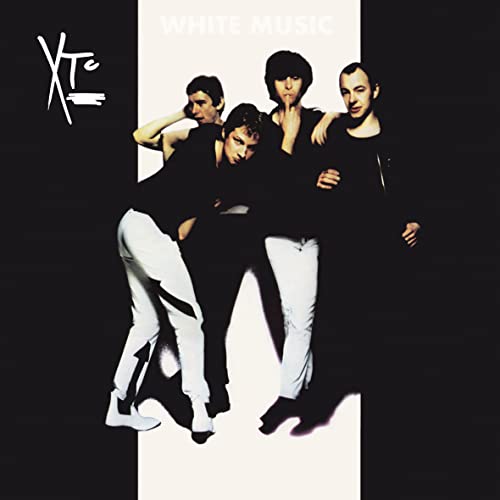
XTC’s 1978 debut album is reissued on vinyl, newly cut from masters by Jason Mitchell at LOUD mastering and approved by Andy Partridge. Pressed on 200g heavyweight vinyl at the Vinyl Factory in the UK.
Macca proves you can reheat a soufflé with this ill-advised reissue
On the eve of his 80th birthday, Paul McCartney has announced some new product. His three solo albums –McCartney (1970), McCartney II (1980) and McCartney III (2020) – will form a vinyl, or CD box set, called simply, McCartney.
This will be available as a limited edition 3LP coloured vinyl set (clear, white and creamy white vinyl, respectively) that comes with three 8 x 10” photo prints with introductions from Paul. This is available initially from Paul’s online shop. A black vinyl edition will be available from normal retail channels from Monday. The three-CD box includes three smaller photo prints.
The 3LP coloured vinyl box set.
Given that there were at least NINE coloured vinyl editions of 2020’s McCartney III (not forgetting the four CDs with different bonus tracks) and that the McCartney album from 1970 was issued as a half-speed mastered vinyl pressing only two years ago as well as the fact that McCartney II was issued on limited edition clear vinyl in 2017 (McCartney was issued on red vinyl at the same time!) you do have to question THE POINT of this box set which offers nothing in the way of bonus audio and zilch that hardcore fan doesn’t already own. Hell, the 1987 CD edition of McCartney II had two bonus tracks (‘Check My Machine’ and ‘Secret Friend’) which won’t be included 35 years later on this box. Progress?
We love Paul and wish him the best for his 80th, but this product isn’t much more than a mechanism to allow Macca to put his hand in your wallet and take out £100 (while whistling ‘Happy Birthday’ to himself as he does so). Putting the three McCartney albums in a box is an obvious, but nevertheless dumb, idea.
Paul has now put out just one Archive Collection reissue (Flaming Pie) in the last three-and-a-half years. Fans will be hoping that MPL and Capitol and get this “multi-year” campaign back on track and finally get all the Wings albums over the line by delivering London Town and Back to the Egg at some point this year.
McCartney will be released on 5 August 2022. The coloured version is available via McCartney’s website but the black vinyl and CD sets are also available below.
The Now That’s What I Call Music team step back to 1980, the year began arguably the best decade in pop, for a fifth full volume of their ever popular Yearbook releases. NOW Yearbook ’80 comes as a 4CD deluxe hardcover book edition and a 3LP set pressed on clear vinyl.
The 4CD set (also available in cheaper ‘standard’ packaging) offer 85 tracks across the four discs and is a wonderful reminder of just how good 1980 was, with its intersection of pure pop, new wave, post-punk, the beginnings of new romanticism, disco hangovers from the ’70s along with some weird and wonderful ‘forgotten’ tracks.
The big names endure of course and Queen’s timeless ‘Another One Bites The Dust’ (track 1, CD 1, au naturellement) welcomes us to the new decade and this collection offers not only what is widely regarded as ABBA’s best song (‘The Winner Takes It All’) but two of Paul McCartney’s finest solo compositions in ‘Coming Up’ and ‘Waterfalls’ (highlights from the patchy, but inspired, McCartney II). That current talk of the town (or globe?), Kate Bush, is represented by the brilliant ‘Babooshka’ (her second biggest hit single in the UK after ‘Wuthering Heights’ until ‘Running Up That Hill’ superseded it in 1985) and the first CD has contributions from era stalwarts The Police (‘Don’t Stand So Close To Me’), Blondie (‘Atomic’), Adam and the Ants (‘Dog Eat Dog’), Dexys Midnight Runners (‘Geno’), Pretenders (‘Brass in Pocket’), The Jam (‘Start!’), Madness (‘Baggy Trousers’), Ultravox (‘Sleepwalk’), Roxy Music (‘Oh Yeah’), OMD (‘Enola Gay’) and many more.
Now Yearbook ’80 Limited deluxe hardcover book 4CD set (click image to enlarge)
John Lennon’s ‘(Just Like) Starting Over’ (the song that was falling down the charts when he was murdered and then subsequently rose to the top) starts CD 2 which then goes into ‘rock mode’ for a bit, with contributions from The Rolling Stones (‘Emotional Rescue’), Stray Cats (‘Runaway Boys’), Status Quo (‘What You’re Proposing’), Rainbow (‘All Night Long’), Judas Priest (‘Breaking The Law’) and Motörhead (‘Ace of Spades’). Disco & soul tells rock to move over and so songs by Donna Summer, The Gap Band, Jermaine Jackson and Tom Browne feature later on.
There’s no let up. CD 3 offers more Jam, Pretenders, Roxy Music, Madness, plus The Vapors, The Tourists, Joy Division, Bad Manners, Ramones, Elvis Costello & The Attractions, Martha and the Muffins, Joe Jackson, The Boomtown Rats etc.
Now Yearbook ’80 Limited edition 3LP clear vinyl set (click image to enlarge)
Highlights from the final CD include the aforementioned McCartney and ABBA, plus the non-guilty pleasures of Olivia Newton-John (‘Magic’), Sheena Easton (‘9 to 5 (Morning Train)’), The Nolans (‘I’m In The Mood For Dancing’), Kelly Marie (‘Feels Like I’m In Love’), Dollar (‘I Wanna Hold Your Hand’), Andrew Lloyd Webber & Marti Webb (‘Take That Look Off Your Face’), The Mash and that perennial festive favourite Jona Lewie’s ‘Stop The Cavalry’.
As always, the 3LP edition offers an unavoidable, cut-down selection, in this instance highlighting 47 tracks from 1980, but both tracklistings are available in full, below. Both the vinyl and hardcover CD deluxe book sets are limited so the usual advice applies – don’t wait around to get your pre-order in.
Now Yearbook ’80 will be released on 15 July 2022.
Compare prices and pre-order
Various Artists
Now Yearbook 1980 - 4CD hardcover deluxe book edition
Porcupine Tree was initially an early ’90s solo project for musician and songwriter Steven Wilson, before emerging as a proper band whose sound evolved from psychedelic/experimental rock to a more progressive rock direction. After 10 studio albums between 1992 and 2009, “the most important band you’d never heard of” appeared to call it a day after a gig at London’s Royal Albert Hall, in 2010. On the eve of Closure/Continuation, the band’s first studio album in over 12 years, Steven Wilson talks to SDE about the once prickly subject of Porcupine Tree’s return…
SDE: It seems that Porcupine Tree weren’t ‘finished’? It was more like a hiatus?
Steven Wilson: Yeah, obviously, we kept it quiet that we were working on this material, so a lot of people did conclude that we had probably finished. In fact, I did plenty to fuel that particular misconception myself because I’ve made five solo albums in the time is taken Porcupine Tree to make one album. When you’re out promoting something you’ve just spent the best part of a year, or two years, of your life pouring your heart and soul into and somebody starts off the interview with: “So when are Porcupine Tree getting back together?”, quite often I would be fairly dismissive, and I’d say “forget it, the band’s finished”, you know, more out of frustration than anything else. Obviously, that led credence to the the misconception that people probably had, that we just stopped making music together as a team. But in fact, as we see, we we’ve been working on this material for the best part of 10 years. And I think the longer it went on, the more we felt that if we were going to come back, it had to be something really, really strong, and as good as anything we’d done.
What were relationships like with [keyboard player] Richard Barbieriand [drummer] Gavin Harrison? Did you need any ‘clear the air’ talks?
Not really. I mean, to be honest, the relationship between the band members has always been a little bit… ‘frosty’ is probably not the right word… but we’re very different as people. In fact, I write in my book, in the first chapter, about standing on stage at the Albert Hall [for the last show in 2010] and the atmosphere not being great and the truth is I can’t remember it ever being amazing, compared to my solo band, for example, where there was always this feeling of joy. I just had so much fun with my solo band. And with Porcupine Tree, I always felt slightly like there was resentments. Richard has read my book, and he said, “Look, we didn’t feel that way at all. That was just your reality”. And I’m quite happy to concede that my reality was probably partly down to a feeling of inadequacy, on my part in terms of being a frontman, I never intended to be a frontman, I always felt slightly fraudulent standing at the front.
I never intended to be a frontman. I always felt slightly fraudulent standing at the front
Steven Wilson
I always felt slightly fraudulent about the idea of being a lead guitar player. And also, I think I felt very strongly that I was the worst member, in terms of technical ability – I was the weakest musician in the band. And yet, I was the one that wrote most of the material, did most of the interviews was the was the focal point of the band. And I’m probably not the first person to feel that. I’m sure many people in bands who are the leader… I mean, you look at someone like Roger Waters, who is clearly the weakest musician in Pink Floyd, my favourite band. So there’s a precedent there, straightaway. But that was getting to me. And in fact, once the band ceased operations, and we we took a break from each other, I think the relationships got much better. And it’s been more fun to make this record, I think, than any Porcupine Tree record of the past, partly because I think I was allowing myself to just be one of the band, one of the team, and I’ve never really been able to do that before. My natural inclination is to not be a team player, to be a bit of a controlling force. So now with the solo career established, and with more time having passed and me mellowing slightly, I think it was a lot more fun to just allow myself to be part of a collaborative process this time.
But what has your solo success given you? More confidence? Are you just more relaxed because you’ve done it and proved yourself, so to speak?
I think I feel more confident as a frontman, as a singer. One of the things that the people that have interviewed me keep saying is that the vocals on this record sound so much more confident, more soulful and more diverse. And it wasn’t something that had occurred to me, but I’m sure that must be a consequence of having learned to be comfortable in the role of a being a singer and being being a frontman. One of the other things that’s notable about my solo career is that I wasn’t really the guitar player in the bands that I put together. I mean, I played guitar, but I also play keyboards and I sang and all those things. But I always had the ‘superstar’ guitar players in my live bands, whether it was Nico [Tsonev] or Guthrie [Govan] or Dave Kilminster. So I think I allowed myself to be more of a frontman, focal point/lead singer, rather than thinking of myself as a guitar player.
You’ve said in interviews that it would be a backward step to do another Porcupine Tree album…
I do have a slight dilemma about reactivating the band for that very reason, that it could be seen as for possibly the very first time in my career, that I’m “giving the fans what they want”. As you know, because we’ve talked about this before, I have an aversion to that that principle [laughs]. I always believe that great art – not that I consider myself a great artist, but at least artists with integrity – should always confront expectations, not cater for them. And this could be seen as doing the latter for the first time in recent memory. I think I temper that with the belief that this record is not “more of the same”, because it isn’t. It feels quintessentially like a Porcupine Tree record, but it also sounds like something fresh.
It feels quintessentially like a Porcupine Tree record, but it also sounds like something fresh
Steven Wilson
And I don’t think we would have gone ahead and released the record, if we felt it was simply more of the same. There are many things about this record that are different to previous records, the fact that I play the bass; the fact that we wrote it together; the de-emphasis on the heavy guitar aspect that was a strong component of where we left off… So there are many things that are different about this record and so I consoled myself with the fact that this is not a backward step, musically. Even if it might appear to be a backward step in the broader terms of my career. But my solo career is still continuing and I’ve already finished writing my next record. So to me, the two things now coexist in that respect.
And what was the most important aspect for you? Creating a new album, creating art? Or was it the opportunity to do a tour with the guys and play live?
The tour is almost an afterthought. You know, I was speaking about this with Gavin, because the the project began with me and Gavin just jamming way back in 2012. And fairly early on, we started having conversations along the lines of if we do come back with another Porcupine Tree record – and it was an ‘if’ at that time; nobody knew we were doing it, so we could make all those decisions ourselves without feeling any external pressure – but if we do this record, should we maybe just put it out online, as a streaming-only [release] and not make a big deal about? Just slip it out, and not even do shows. And then it was “maybe we’ll just do one big show?” or “maybe we’ll just do one big show in Europe and one big show in America?” And of course, inevitably, once we did go to our management and start talking to record labels, the plans that we had to make this low key record, all went out of the window, because people were excited. And that’s great. When people are excited, you’d be very foolish to look that gift horse in the mouth. One of the things that I’ve noted and again, I wrote about this in the book, is how the legend has grown in our absence, which is fascinating. We never would have been able to play the kind of venues we’re playing [in 2022] back in 2010 where we were we stopped. We did one night at the Albert Hall – that was the pinnacle, really, in terms of our UK trajectory. I’ve done multiple nights at the Albert Hall as a solo artist since and now Porcupine Tree leap frog all of that, and we’re going to sell out Wembley Arena, which is like 12,000 people, which is amazing. So it was almost like that saying “absence makes the heart grow fonder”… the legend rather than disappearing into into history, the legend of Porcupine Tree was born..
‘Of The New Day’ from Closure/Continuation
What do you put that down to? Social media and the world that we now live in? Or do you put it down to your continued success as a solo artist?
All of those things. I think if all of those things had a part to play. Certainly keeping the profile of the music up through my solo career, Gavin going off and touring with King Crimson and perhaps people investigating the music through him. And also the fact that I think what we did – and I understand this now, retrospectively, even if I didn’t acknowledge it at the time – what we did still sounds completely unique. We took this element of complex, conceptual rock, and we fused that with Richard’s sound design and approach to keyboard textures, Gavin’s interest in polyrhythms, my singer-songwriter sensibility, even elements of electronic music, industrial music – even metal music – and we put it all together in a way that was completely intuitive and unselfconscious. But I realised now, listening back to some of it, that it was really unique. I mean, we get called ‘progressive rock’, but it’s not like any other progressive rock that was being made at that time. And it’s been imitated since. But we still we still do it better than everyone else [laughs]. I really think that now, having done the new record.
How would you describe the difference between a new Porcupine Tree album and a new Steven Wilson solo album? There’s inevitably going to be a fair amount of overlap.
I think inevitably there is, but I think one thing that’s proven if you listen to Closure/Continuation, and then you compare it to [2021’s] The Future Bites for example, they’re very, very different. Of course, there is a common thread, because it’s me, you know, it’s my musical personality. I couldn’t hide that even if I tried. And believe me, I have tried [laughs]. It’s one of the funny things when I do something that I think is really different, and a real breakthrough for me, is when I’ll play it to my close confidants or my family and all they hear is me! It just sounds like me [to them]. So you can’t bury your personality, even if you want to. But I think the timing of this record is is interesting. For me, it feels like the perfect time for Porcupine Tree to be coming back because there have been moments in my solo career, with albums like [2014’s] Hand. Cannot. Erase., for example, where fans could quite legitimately have said, well, that could easily have been a Porcupine Tree record. But if you listen to an album like The Future Bites, I don’t think that’s true. That’s not the kind of record that I would ever have made with Porcupine Tree. It’s more electronic, it has a de-emphasis on guitars and de-emphasis of what you might call rock tropes. And whatever Porcupine Tree is, and has become, it still clearly sounds like a rock band.
With the last couple of solo albums, you have clearly been trying to move away from the whole ‘prog’ tag. But is it almost a relief not to worry about any of that stuff and just rock out with Porcupine Tree?
I think there’s an element of that. We were definitely doing what came naturally and not self consciously trying to analyse. I’d be the first to admit that when I approached an album like The Future Bites, for example, there was a very, very clear mandate from the beginning, that I want to do something different. I want to confront expectations; I want to make a record that is not really anything to do with the world of progressive rock. It wasn’t a contrived reinvention, but nevertheless, it was a conscious attempt to reinvent, and I think, a successful one. Whereas I think you’re right with Porcupine Tree, there’s none of that thought process. It’s simply, this is what we do when we get together. And we’re not thinking about how it’s going to be positioned or how it’s going to be promoted, or how it’s going to be marketed. I mean, I strongly believe that when you get to a certain point in your career – and I have been doing this 30 years now, professionally – I feel I have earned the right to be seen as someone who’s created my own musical universe. And this idea of genre shouldn’t necessarily apply.
I feel I have earned the right to be seen as someone who’s created my own musical universe and this idea of genre shouldn’t necessarily apply
Steven Wilson
In the same way that when you think of an artist like Bowie or Zappa, or Kate Bush, what what genre do you think of them being in? You don’t really, do you? I don’t, I just think of them as making ‘David Bowie music’ or ‘Kate Bush music’. And I would love to believe that after 30 years doing this, and having made lots of many different kinds of music over the years, that this notion that I’m somehow easily categorisable in one genre shouldn’t apply anymore. And I know I sound like I have a chip on my shoulder about it, but I have to spend so much of my time, sometimes, justifying why an album like The Future Bites isn’t in the genre that people have put me in, even though I never put myself in that genre. So here we are talking about a record, which probably does fit into that genre quite comfortably, although I still feel that it’s a unique sound world and sound universe that we have in Porcupine Tree – it doesn’t sound like any other progressive rock, to me.
Porcupine Tree: Richard Barbieri (left), Steven Wilson (centre), Gavin Harrison (right) – click image to enlarge (photo by Alex Lake)
This album is a lot more collaborative, in terms of the creative input, than previous Porcupine Tree records. Why is that? Did Richard and Gavin say to you: “If we’re going to do this, we need more input”?
No the opposite. I said to them, “If we’re going to make a Porcupine Tree record, I want you guys to be writing too. Because at that point, when we started, 2012/2013, I was already a couple of albums into my solo trajectory. So my point of view was, what’s the point of me writing a new Porcupine Tree record on my own and taking it in and presenting it – as historically was the case – and just saying, “Hey, guys, I’ve written the new Porcupine Tree record”. What would be the point of that? I could go off and make that as a solo record. So to me, it was like, if we’re going to do this, let’s change things up. Let’s actually write this as a collective. Albeit that most of the songs were written in duo form, either myself with Gavin or myself with Richard, but the point is that there was always a collaborative process from the very moment of instigation of a new song and a new idea was with somebody else. So I wouldn’t say I laid down the law, but I made that one of the principles in terms of if we’re going to make a new record, then it has to be this way. And of course they loved that. In a way, they’ve been frustrated that hadn’t been the case in the past, but that goes back to the earlier point I made about this time I no longer felt that need to control everything. It was a relief for me, and I’m sure for them.
And I guess that takes the pressure off you, as well? Everything’s not on your shoulders?
Yeah. This time around, it feels pretty much like a band, where everyone has their role. So Gavin is the MD of the live band, for example. Gavin has found the two other musicians for the tour and I completely trust Gavin – Gavin is the best musician in the band, so it’s logical for him to be the person that’s sourcing the the other musicians that are going to be in the live lineup. Richard looks after all the merchandise and stuff. Now historically, I would always feel like I had to be involved in those things too. Even if I wasn’t like the primary person, I would always feel like I had to stick my oar in. Now, I don’t even know what’s going on, and I like that. I completely trust those guys in those roles. And so it feels much more pleasant to be doing it this time and to feel part of a team. And to not feel that compulsion to control everything.
What about your commercial expectations? Do you feel like there’s any unfinished business in terms of Porcupine Tree, getting some deserved success? I read you said that you weren’t interested in making this a ‘commercial/crossover’ album, but you must be hoping that this is going to be the highest charting Porcupine Tree album so far in your career?
Well, yes and no. I mean, there are a number of caveats to that. Firstly, the music world we left in 2010 is unrecognisable from from the way it is now. And you know, and I know – we’ve discussed this, I know – that the whole notion of chart positions, particularly for rock acts, has become… I wouldn’t say meaningless, because it still means something, particularly for someone like myself, and you, because we grew up with the notion of the charts as being, a key signifier in what we would listen to and what we were discovering. And it’s very hard to get that romantic notion out of your head, that the chart still means something. But it doesn’t really. I mean, rock acts, as we see, time and time again, go into the top five [of the UK album chart], week one, and then disappear off off a cliff edge, week two. And that’s partly down to the fact that most rock music now exists outside of the mainstream, and is therefore fanbase driven.
Most rock music now exists outside of the mainstream and is therefore fanbase driven
Steven Wilson
So your fanbase will pre-order your record and that’s why, coming into your world, the notion of the Super Deluxe Edition has become so important, because that’s what fans want to buy. That’s what they invest in, and they’re happy to buy that six months in advance of the record coming out. So what happens is that week one, your album flies, soars into the top five – it might even get to number one, if you have a good week. And then week two, you’re campaign is over, which is completely different to the way it used to be, where you’d obviously have the second, third, fourth, fifth single off a record which would keep your record, active for months and months on end. And that just doesn’t happen anymore. I mean, it happens with a very small minority of mainstream pop records. And it happens with a very small minority of Greatest Hits records by, you know, the sort of acts that time and time again, are rediscovered: the Eltons, the Fleetwood Macs, the Queens etc. That’s it really. If we if we get a number one record, it’s going to be wonderful. Will it mean anything in the longer term? No, what will mean something? What will mean a hundred times more than getting to number one in week one, is if we were still in the top 10, in week two. If we get number one record that will be an amazing, amazing thrill. But it really depends on what else comes out that first week if Drake decides to drop his new album that week forget it. I mean, that’s what happened to Tears for Fears, isn’t it? [a reference to UK rapper Central Cee beating Tears For Fears to number one in early March 2022].
Fans from way back have been asking about [bass player] Colin Edwin, and wondering why he wasn’t involved in this project. What’s the story on that?
There isn’t really a big story. There are lots of little things that conspired to make it the way it was. I think the first thing was that the very genesis of the project was me wandering over to Gavin’s place for a cup of tea one day, and him suggesting we have a jam. And I looked around his studio and he didn’t have a guitar, but he had a bass guitar. So I picked up the bass guitar. And I think that one of the very first times we got together we started jamming that groove at the beginning of ‘Harridan’, which opens the record. And we had a few sessions like that where I didn’t even bother bringing a guitar – I was enjoying playing the bass. Like a lot of guitar players, when I pick up the bass, I tend to play it like a guitar player. So I do a lot of stuff quite high, I play melodies, I play chords, things that perhaps a “proper bass player” might not think to do. And so the very fundaments of the record, the very basis of the record, the DNA the record comes from, was built on me and Gavin jamming with me on bass, playing bass in my style, which is very different to Colin’s style. So in that sense, it became a bit of a fait accompli, by the time we had three or four songs, it was like, “oh, okay, I guess I’m the bass player on this record, then”. But there were other things. None of us heard from Colin for years on end. We all went our separate ways in 2010, and I would regularly hear from Richard and Gavin: “When are we going to do something new?”, “Should we get together?”, “Should we have dinner?”, “Should we have a cup of tea?” I didn’t hear from Colin, I still haven’t heard from him. So he wasn’t proactively pushing to be involved in anything new. But I think on top of all of this, the way I see it, the creative core of the band has always been the three of us. So it’s Gavin’s interest in complex drums, time signatures, polyrhythms; Richard’s emphasis on sound design and textural keyboard playing. Both of those things, filtered through my singer-songwriter sensibility. And again, going back to the very beginning, Porcupine Tree started as a solo project, so I played bass. On the first three Porcupine Tree albums, I played bass. And I played bass occasionally on tracks in the intervening period as well, when it was more my style that I wanted on the bass, more aggressive, more guitar-orientated style. So tracks on [2002’s] In Absentia and [2005’s] Deadwing I play bass on, so it’s not completely unprecedented.
Are you looking forward to the tour? Amusingly, in your book, you say how, apart from the Royal Albert Hall Show in 2010, you were never really big enough to not be in each other’s pockets on the road and getting on each other’s nerves, on tour buses and the like. Clearly, it’s gonna to be a slightly different scale with this new tour, but do you foresee any problems spending two or three months on the road together? At the end, will you be quite happy to walk away, or will you have forged even stronger relationships, do you think?
It’s a good question. And the answer is, of course, that we don’t really know until we do it. I mean, it’s 12 years since we toured. And we’re all supposedly older and wiser, and more relaxed about what we do. Certainly the process of making the album, I think, was the most pleasant process I’ve ever had recording a Porcupine Tree album. I hope that will continue through into the touring; I suspect it will. Listen, we’re still going to get on each other’s nerves; we are very different as people. What we all share is that we’re all English and have that repressed English thing [laughs] about not really expressing ourselves. It’s funny, because my wife is Israeli and the Israelis are the complete opposite. They express everything and are very emotional people. And I’ve had to learn to be a little bit more like that with my wife. But we’re very English and I think we all have our own way of doing things. Richard is extremely meticulous, for example, and I’m not. I mean, I know people might find that surprising to hear but my process is quite scattershot, in a way. I work very fast, and in a way that some people might consider to be quite disorganised. Whereas Richard and Gavin are much more organised. I mean, they all show up on the first day of rehearsals knowing everything and having planned everything. I’ll show up and my pedal board will be in disarray. I won’t have learned any of the lyrics, I won’t know the chords. Because the simple fact is, I’m doing 100 things at once, in my professional career. I mean, hopefully it’s not going to be quite like that, but there’ll be an element of it, anyway. So we’ll probably still wind each other up. But I think there’s going to be a lot more fun, as well, on this tour, perhaps than there was on the the last one.
You’ve called the album Closure/Continuation, which obviously, leaves the door open – if not wide open, then maybe ajar. Is Porcupine Tree going to be just like No-Man where it will never shut down? It will just be floating there as something that you could come back to in the future?
Possibly. There is obviously an implied question mark in the title, because we don’t know ourselves…
Have you got a one-album deal with the label? How has that been structured?
We have no pressure; we’re under no obligation to make another record, or to do another tour. And I think it’s very important to us that we would always feel like we would only make another record if we felt we had something to say. For a long time, I’ve believed that if you’re going to make a record you have to ask yourself the question, “What does this add to the catalogue?”. “What is the purpose for making this record?” And again, this goes back to that idea of not wanting to do just more of the same. And I say that because I think a lot of bands do get stuck in that cycle where they’re simply creating more of the same, more of the same, more of the same… what you might call the AC/DC syndrome, almost pointlessly adding records to the catalogue that really add nothing musically to the legacy at all. I’m sorry to pick on AC/DC, because I love AC/DC [laughs] but they’re the best example, I can think of – a band that essentially have been making the same record most of their career, and their fans love that. And that’s great. But I do feel this new record justifies its existence in the catalogue, it feels like a new take on the band’s sound. And we would have to feel like we could find that again. So we’re not closing the door. But I think the most important thing for us if this was the last record, I think it’s a really strong way to close the book, a really strong way. And I know from speaking to Gavin and Richard, we all felt the same in that the last record we made, [2009’s] The Incident wasn’t our best record; it didn’t feel like a particularly good way to end things. It wasn’t a bad record, but it wasn’t the best record. And so if Closure/Continuation was to be our last record, I think we’d feel good about that.
Thanks to Steven Wilson who was talking to Paul Sinclair for SDE. Closure/Continuation will be released on 24 June 2022 via Music For Nations.
The Lightning Seeds return with a new studio album called See You In The Stars in October.
The 10-song collection features the first single, ‘Sunshine’, which you can preview below and also boasts a collaboration with Terry Hall who co-writes Emily Smiles (Hall co-penned, Jollification‘s ‘Lucky You’, you might recall). Two songs on the album – ‘Great To Be Alive’ and ‘Live To Love You’ – also saw Ian Broudie co-write with the Coral’s James Skelly.
The new album will be the first Seeds long-player since 2009’s Four Winds. Why’s it taken so long? Here’s what Ian Broudie has to say: “I always think music’s like attack and defence in football –or like politics – or like life. It’s about balance, and achieving that is the challenge for me.”
The album will be available on CD and vinyl. There is no black vinyl; the standard vinyl is ‘forest green’ and the indie exclusive is ‘midnight blue smoky’ vinyl. The official shop has both, has bundles with a signed print and offers pre-sale access to tickets for a UK autumn tour.
See You In The Stars will be released on 14 October via BMG.
Massive discount for the whopping 18LP David Bowie vinyl box set. Features the albums Black Tie White Noise (2LP), The Buddha of Suburbia (2LP), Outside (2LP), Earthling (2LP), Hours, Toy (2LP), BBC Radio Theatre, London, June 27, 2000 (expanded 20 track version) (3LP) and Re:Call 5 (non-album singles, edits, single versions, b-sides and soundtrack music – 4LP). Also includes an 84-page book.
Simple Minds will release Direction of the Heart, their 19th studio album, in October.
It’s the band’s first album of new material since 2018’s Walk Between Worlds and the first single is ‘Vision Thing’ – a tribute to Jim Kerr’s “best pal”, his father who passed away in 2019 – which you can preview below.
Direction Of The Heart was written in Sicily, where both Kerr and Burchill live and recorded in Frankfurt (since they were unable to come to the UK because of quarantine rules). The record has been co-produced with Andy Wright and Gavin Goldberg. Sparks’ frontman Russell Mael features on one song (‘Human Traffic’).
Jim Kerr describes the album as an ‘Electro-rock’ record and the standard CD and vinyl have nine tracks while the deluxe CD offers 11.
The official Simple Minds shop is offering bundles with signed prints, silver-coloured vinyl LP and an orange cassette.
Direction of the Heart will be released on 21 October 2022, via BMG.
The delayed Al Stewart 50CD box set is out this week. This is limited to 2,000 copies worldwide. The SDE shop has already started shipping its orders, but there’s still stock so if you are interested, go here. Shipped by courier and fully insured.
New official set from UMC which offers three complete shows from the vault based on appearances made in and around the Frank Zappa’s home town of Erie, PA. These are Edinboro College and Gannon University ’74 and Erie County Fieldhouse ’76. Includes bonus tracks from the same tours. This features three separate band line-ups, newly mixed from the original 4-track tapes by Craig Parker Adams and mastered by John Polito at Audio Mechanics. Historical essays by Dan Schell & Joe Travers.
Not really a super deluxe (although that’s how it’s bring promoted) but rather a new 2CD deluxe of Sting’s 2021 album. The three bonus tracks on the previous deluxe are appended to the album and you get a FIP Session Live in Paris on CD 2.
Universal Music Catalogue have apologised to fans over the discovery of an issue with the blu-ray that forms part of the Elton JohnMadman Across The Water 3CD+blu-ray deluxe set and have promised that the issue will be corrected “at no cost” to fans who have already pre-ordered the box.
This error is that the early recording of the song ‘Madman Across The Water’ (the one that features Mick Ronson) is actually not the early version at all but is in fact the standard version as found on the album. No other product/edition is impacted, just the blu-ray in the deluxe box set.
This will be fixed and a new disc will be manufactured, which the label expect to ship in early July. All this is covered in a statement from the label in which they say: “We sincerely hope that this will not spoil your enjoyment of this beautiful 50th anniversary set.Again, we offer our sincere apologies to everyone who has purchased the super deluxe edition CD set, and for the inconvenience it has caused”.
If you have a blu-ray and want a replacement disc here is what you have to do: email OperationsSupport@umusic.com to request a replacement disc. In that email you’ll need to include some kind of proof of purchase/ownership (sales receipt/email confirmation/screengrab/photo of you holding your box set etc).
The replacement disc will ship in a plain white sleeve so don’t discard the existing printed wallet (not that many of you would do that). You can assume that all existing stock in the marketplace will have this incorrect blu-ray and so if you purchase, you’ll need to email for the replacement disc.
SDE published an unboxing video of Madman Across The Water earlier this week. Unfortunately, I hadn’t had the chance to listen to the blu-ray when I filmed the video, hence it wasn’t picked up on at the time.
Madman Across The Water is released today, 10 June 2022.
Compare prices and pre-order
Elton John
Madman Across The Water - 3CD+blu-ray super deluxe
William Orbit (best known for his production/remix work for artists like Madonna, Blur and Seal) has released 13 studio albums under his own name over the last 35 years and in August will deliver a new long-player, The Painter.
His follow up to his 2014’s Orbit SymphonicThe Painter offers Orbit’s distinctive production style with plenty of vocal collaborations, including names you’ll likely be familiar with (Katie Melua, Beth Orton) and maybe some you won’t (electro-pop artist Polly Scattergood, Mercury Award nominee Georgia, Canadian trip-hop artist Natalie Walker, Columbia’s Lido Pimienta, the Ghanian producer, song-writer and vocalist Gloria Kaba and others).
Check out the album’s first single ‘Colours Colliding (with Polly Scattergood)’, below.
Orbit designed and painted all of the record’s artwork and says, “I had been away from music making for some years, holed up in a beach town in California, painting, and writing about my life and reflecting on general observations. Then, back in London, inspiration struck with a vengeance. I was feeling the same spirit as I had in the mid 90s.
“It was a blessing to have the exquisite contributions from the artists who appear on the album. And a thrill to explore new technologies. It is one of my very best, with the difference being gaining an understanding of a totally new landscape of means to present it to people’s ears”
SDE has heard the album in full and it features some wonderfully hypnotic music (the two Beth Orton tracks are great). It’s available on double vinyl (amazon UK have an exclusive red vinylversion) and some variants have alternate cover art (like the Rough Trade UK black vinyl).
The Painter is released on 26 August 2022 via Warner Records.
Against The Odds 1974-1982, the long-awaited Blondie box set (originally announced in 2018), will finally be released in August this year across four major physical formats.
The 10LP super deluxe set offers all six studio albums – Blondie, Plastic Letters, Parallel Lines, Eat To The Beat, Autoamerican and The Hunter – and includes four additional LPs of session outtakes, B-sides, and demos. These rarities are titled ‘Plaza Sound’, ‘Parallel Beats’, ‘Coca Cola’, ‘Home Tapes’. This vinyl box comes with a bonus 10-inch of outtakes called ‘Out In The Streets’ and a seven-inch single featuring the band’s cover of The Doors’ ‘Moonlight Drive’ and demo of ‘Mr. Sightseer’. In total, it contains 124 studio tracks.
The vinyl super deluxe comes with two books: a 144-page hardcover book with session commentary from Debbie Harry, Chris Stein, Clem Burke, Jimmy Destri, Frank Infante, Nigel Harrison, and Gary Valentine, and essays from producers Richard Gottehrer and Mike Chapman and a 120-page volume which gives a discographical overview of the period via hundreds of pic sleeves, 45 labels, international sleeve variants, flexis, cassettes, and even 8-tracks.
The 10LP vinyl super deluxe features all the albums, 4LPs of rarities, two books and more (click image to enlarge)
The 8CD version of Against The Odds effectively offers the same audio content – 124 studio tracks – as the big vinyl packge, but with the rarities on two bonus CDs (called ‘Home Tapes’ and ‘Out In The Streets’). If you are wondering how 52 bonus tracks require three CDs in the standalone set, while the 8CD package offers the same 52 bonus tracks with just two bonus CDs, the answer lies in the fact that 35 of the bonus tracks are appended to the albums, leaving 17 tracks across the two final themed CDs (‘Home Tapes’ and ‘Out In The Streets’). The triple-disc package just mixes everything together. The eight CDs come in replica sleeves and are presented within a large-format 128-page hardcover book and slipcase.
8CD edition of Against The Odds (click image to enlarge)
If you just want the bonus tracks and don’t require the remastered albums then the good news is that 3CD and 4LP editions which offer just that are available. The 4LP set features all 52 bonus tracks and comes packaged as a 128-page hardcover book tucked inside a foil-wrapped slipcase (all the formats are foil-wrapped). The 3CD edition has the same 52 tracks and comes with a 164-page hardcover mini-book housed in a sturdy slipcase.
The 3CD ‘bonus tracks only’ edition of Against The Odds (click image to enlarge)
All 124 tracks for Against The Odds have been remastered from the original analogue tapes. 36 of these are previously unissued (according to the label). The vinyl was lacquered at Abbey Road and pressed on high quality 180g vinyl.
Against The Odds 1974-1982 will be released on 26 August 2022 via Capitol/UMC/Numero Group.
The forthcoming reissue of George Michael’sOlder is available as a 2LP vinyl set (black or various coloured editions) or as a 3LP+5CD super deluxe edition box set. Fans have already expressed some disappointment at the lack of CD deluxe edition, but news has emerged in the last few days of a special 2CD version that is exclusive to the Japanese market and features 15 bonus tracks.
This set appears to boast a slightly different front cover design/cropping and offers a extra disc of remixes and non-album tracks that effectively uses the four bonus discs in the super deluxe as a ‘pick ‘n’ mix’.
For example, the Japan bonus disc includes ‘Safe’ and ‘You Know That I Want To’ from Upper (CD 2 in the big box) along with the radio edits of both ‘Star People’ and ‘The Strangest Thing 97’ (both also from Upper). The Forthright Dub Remix of ‘Fastlove’ is from CD 5 in the box, while the Forthright 7″ Remix of the same song is from CD 4. The special radio edit of ‘Jesus to a Child’ is from CD3 but this Japanese double CD also includes the other ‘Jesus to a Child’ radio edit (from CD 5 in the box). You get the idea.
While there doesn’t appear to be anything exclusive on this set, if you don’t want to fork out for that expensive box set then it’s a reasonable option, particularly since it appears as if this is a Japan mini-LP CD, since the packaging is described as “original jacket” which normally means ‘paper sleeve’, aka vinyl replica.
The discs in this set are actually the Japanese blu-spec CD2 format, but rest assured that these are compatible with all CD players and so it shouldn’t be an issue.
This special 2CD reissue of Older is released on 8 July 2022
Little Feat / Electrif Lycanthrope: Live at Ultra-Sonic Studios, 1974
Finally officially issued in the USA for ‘Black Friday’ last year, Rhino now offer a wider release (on CD) for this legendary and much-bootlegged Little Feat live performance from 1974. The band were in their prime and this is considered their best line-up – Lowell George (Guitar, Vocals), Paul Barrere (Guitar, Vocals), Kenny Gradney (Bass), Richie Hayward (Drums, Vocals) Sam Clayton (Percussion, Vocals), and Bill Payne (Keyboards). This is the full-length performance, taken from the original pre-FM broadcast master tapes.
Out on Friday is the 50th anniversary reissue of Elton John’s 1971 album Madman Across The Water. SDEtv explores both the 3CD+blu-ray and the 4LP vinyl box and also takes a peek at the limited ‘propeller edition’ coloured vinyl! Watch the unboxing video…and note the great pre-order price in the USA!
Compare prices and pre-order
Elton John
Madman Across The Water - 3CD+blu-ray super deluxe
Little Feat’s double live album Waiting For Columbus will be reissued as an 8-disc super deluxe edition in July.
Issued in 1978, the original album was formed of performances in 1977 from the Rainbow Theatre in London and Washington D.C.’s Lisner Auditorium.
The Waiting For Columbus 8CD super deluxe edition
The new super deluxe edition features the original album remastered but adds six discs comprising three full live shows from this 1977 tour. These are the complete performances in London and Washington DC, plus a previously unreleased live show recorded at Manchester City Hall in on July 29, 1977. Unlike the other two concerts no recordings from the Manchester show ended up on Waiting For Columbus.
The Waiting For Columbus reissue is available as an 8CD box set which comes with a 24-page booklet. It is also available as a remastered 2LP set. It’s scheduled for released on 29 July 2022
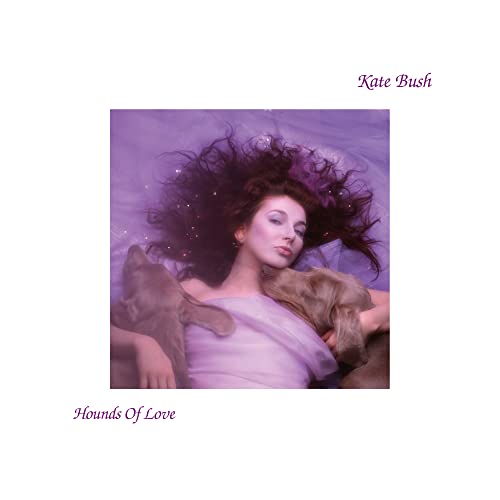
Everyone is talking about Kate Bush’s 1985 single ‘Running Up That Hill’ at the moment, because it features heavily in the opening episode of season four of the TV series Stranger Things, available on Netflix right now. Anything that gets people talking about the brilliance of Kate is alright with SDE, and regular readers will already know that I’m a big fan and indeed, I bought the 12-inch single of ‘Running Up That Hill’ when it was released in August 1985!
So with that in mind, here’s everything you always wanted to know about Kate Bush’s ‘Running Up That Hill’, but were afraid to ask…
• Running Up That Hill was Kate Bush’s 13th UK single and the first from her 1985 album Hounds of Love. It was issued on 5 August in Britain.
• Running Up That Hill was written and produced by Kate Bush. All of her output, from 1982’s The Dreaming onwards, has been self-produced.
• For Running Up That Hill, Kate played the Fairlight CMI sampler/synthesizer and Del Palmer (her boyfriend at the time), engineered and played bass on the song. Kate and Del sampled and shaped the sounds on the Fairlight. Del also programmed the LinnDrum machine for that memorable drum pattern. The only other musicians are Alan Murphy on guitar (Murphy also played with Go West and Level 42 and died in 1989), Stuart Elliot (real drums, formerly of Steve Harley & Cockney Rebel) and Kate’s brother Paddy, who plays a Russian stringed instrument called a Balalaika.
• The lyric to Running Up That Hill concerns relationships and trying to understand your partner better. Kate sings of making “a deal with God” to “get him to swap our places”. The idea is that this, presumably temporary, switch would offer a greater insight into the other persons point of view and deliver better understanding in the relationship moving forward.
• Running Up That Hill was Bush’s first single to be extended/remixed for a 12-inch vinyl single. The 12-inch remix was created by Kate and her engineer Del Palmer.
• An instrumental version of Running Up That Hill was issued on the B-side of the 12-inch, but remains unique to that release and unissued on CD.
• The UK cassette of Hounds of Love appended the 12″ Mix of Running Up That Hill to side one. No other format included the remix (although it was a bonus track on the expanded 1997 EMI 100 CD reissue).
The original promo video for ‘Running Up That Hill’
• Running Up That Hill was originally called ‘A Deal With God’. In a rare compromise, Kate was persuaded by EMI to rename it ‘Running Up That Hill’ to ensure that it got played on as many American radio stations as possible (the reference to ‘God’ was perceived as an issue). On the album the song is called ‘Running Up That Hill (A Deal With God)’.
• Running Up That Hill peaked at #3 in the UK singles chart in late August 1985. UB40 featuring Chrissie Hynde’s ‘I Got You Babe’ and Madonna’s ‘Into The Groove’ (#1 and #2 respectively at the time) denied Kate a second UK number one, but the song remains her biggest UK hit after the chart-topping ‘Wuthering Heights’ (from 1978). Kate got her revenge on Madonna when Hounds of Love entered the UK album chart at number one displacing Madge’s Like A Virgin.
• Running Up That Hill is Kate’s biggest hit single in America. It’s actually her only top 30 single, peaking at #30 on the Billboard Hot 100. Another song from the Hounds of Love (‘Hello Earth’) was used in an episode of Miami Vice later that year (‘Bushido’ first broadcast in November 1985).
• The B-side to Running Up That Hill is a short piano ballad called ‘Under The Ivy’. Kate played a live version of this song for UK music programme The Tube for their 100th episode (broadcast in March 1986). You can watch this here.
Between its 1985 release and 2014 Kate Bush only performed ‘Running Up That Hill’ live on ONE occasion
• Kate did not tour the Hounds of Love album, and so Running Up That Hill was not played live until March 1987 when Kate took part in the Amnesty International charity concert The Secret Policeman’s Third Ball. This performance featured Pink Floyd’s David Gilmour on guitar. David had helped Kate record some demos in 1973 (when she was just 15!) and was instrumental in ‘Rolling The Ball’ and getting EMI to sign her. The second time Kate played ‘Running Up That Hill’ live was August 2014, for her Before The Dawn residency in Hammersmith Odeon, over 27 years later!
• Talking of 27, Kate was a relatively sprightly 27 years old when Running Up That Hill was issued as a single. She had already released four studio albums (The Kick Inside and Lionheart (both 1978), Never For Ever (1980) and The Dreaming (1982). Her fifth album Hounds of Love had been recorded and was issued shortly after ‘Running Up That Hill’.
• A 2012 remix of Running Up That Hill with new vocals was created for the closing ceremony for the London 2012 Olympic Games. It’s not clear why Kate wanted to do this, but it was linked to rumours at the time that Kate was planning to perform live, or at least appear at the event, but that didn’t come to pass. Kate had ‘previous’ when it came to new vocals. For the 1986 compilation The Whole Story, she decided to record new vocals for her debut single ‘Wuthering Heights’.
• Many of the British public would have first heard Running Up That Hill when Kate performed it on UK TV chat show Wogan, which had high viewing ratings and was a popular way for to record labels to promote new singles. She would use the same platform for her 1986 Experiment IV single and again in 1989 for This Woman’s Work (which a year earlier had featured in the John Hughes romantic comedy She’s Having A Baby).
Kate Bush performs ‘Running Up That Hill’ on UK TV’s Wogan
• Since the release of Running Up That Hill in 1985, only one other Kate solo single, 2005’s ‘King of the Mountain’, charted in the UK top ten, although the aforementioned 2012 remix of ‘Running Up That Hill’ did re-enter the top ten as a digital single in that year and ‘Don’t Give Up’, her duet with Peter Gabriel reached number nine in late 1986.
SDE Editor Paul Sinclair’s 12-inch single of ‘Running Up That Hill’, bought in 1985 (click image to enlarge)
• The striking cover photo on the Running Up That Hill single was taken by Kate’s brother John Carder Bush. He also took the shots on the rear of the single with lyrics to the single written on Kate’s arms.
• Running Up That Hill was nominated for ‘British Single of the Year’ at the 1986 BPI (later Brit) Awards. It didn’t win, because Tears For Fears’ ‘Everybody Wants to Rule The World’ picked up the gong. Hounds of Love also lost out to Phil Collins’No Jacket Required in the ‘British Album of the Year’ category. In a triple whammy of disappointment, Kate was nominated in the ‘British Solo Artist’ category but Annie Lennox won the award, despite not being a solo artist.
How to buy Running Up That Hill
If you wish to own a physical copy of Running Up That Hill, here are your options.
Track down the original vinyl single on 7-inch or 12-inch vinyl via eBay or Discogs
If you want the 12-inch version of Running Up That Hill on CD you can buy the 12-inch/B-sides/Rarities 3CD compilation called The Other Sides. This was originally unique to Kate’s 2018 Remastered Part II box set, but was later issued separately. It’s a great little collection, although probably not the place to start if you’re new to Kate!
Elvis Costello’s second album for Warner Bros., 1991’s Mighty Like A Rose is to be reissued as a limited edition gold-coloured vinyl pressing.
The album features the Beach Boys spoofing single ‘The Other Side of Summer’ which got a fair amount of airplay and coverage at the time, although it only managed to reach #43 in the UK album chart.
https://www.youtube.com/watch?v=Ww0hN-puTdA
Mitchell Froom co-produced the album with Costello and Kevin Killen and Mighty Like A Rose was the third long-player (after Spike and Flowers in the Dirt) to feature the fruits of the McCartney/MacManus songwriting sessions with the inclusion of the songs ‘So Like Candy’ and ‘Playboy To A Man’ (both, in demo form, were included on the 2017 Archive Collection reissue of Paul’s Flowers in the Dirt).
The LP is pressed on 180g gold-coloured vinyl, and comes with an insert. These are numbered and limited to 2000 copies worldwide.
Mighty Like A Rose is reissued on 15 July 2022 via Music On Vinyl. Pre-order from the SDE shopusing this link or the button below.
EU SHIPPING NOTES: If you are ordering from the EU please be aware that that goods may be subject to import VAT when they arrive from the UK. The prices the SDE shop charge you do not include VAT.
Tracklisting
Mighty Like A RoseElvis Costello/Gold-coloured vinyl LP
It will be of no surprise to anyone that the Now That’s What I Call Music Team are following up their very well received Yearbook 81 release (watch the SDEtv unboxing video) with a companion ‘Extra’ set which offers “66 More Essential Hits From 1981”.
This new triple CD package offers more hits from the best-selling artists of that year (The Police, John Lennon, Duran Duran, Toyah, Adam and the Ants, ELO, The Human League etc.) as well as hits from a host of artists not represented on the actual Now ’81 Yearbook (which was issued last month). Full track listing is below.
As usual, there’s no ‘extra’ vinyl and this 3CD set is packaged in a six-panel gatefold card wallet.
Now Yearbook ’81 – Extra will be released on 1 July 2022
Neil Young‘s unreleased 2001 album Toast will be officially released in July.
Recorded at Toast Studios in San Francisco (hence the name) around the turn of the millennium, Toast features the brilliant Crazy Horse. Neil has mentioned this album occasionally over the years in and 2021 offered some detail about the it: “The music of Toast is about a relationship,” he said. “There is a time in many relationships that go bad, a time long before the breakup, where it dawns on one of the people, maybe both, that it’s over. This was that time.”
You can preview ‘Standing in the Light of Love’, above. Other songs on the 7-track album include ‘Timberline’, the story of an out-of-work logger who grapples with his faith, and the 10-minute ‘Gateway of Love’. Those three are previously unreleased, while four songs from Toast were reworked and appeared on what was Young’s next album, 2003’s Are You Passionate.
Toast is available on 2LP vinyl (side 4 is etched) and CD. It’s released on 8 July 2022.
Neil Finn and Tim Finn’s 1995 album FINN, the first by The Finn Brothers (although only originally credited to ‘Finn’) will be reissued as a 2LP vinyl set in July.
New Zealand’s most celebrated musical siblings put out this wonderfully quirky album to much acclaim from critics and longtime fans who’d followed the pair’s work since their time together in Split Enz and Crowded House.
Released by Parlophone in the UK, the first single ‘Suffer Never’ actually sneaked into the top 30 singles chart, in all likelihood because if you bought both CD singles at the time (guilty as charged) you got an amazing collection of demos including some Crowded House classics like ‘Four Seasons In One Day’ and ‘Weather With You’ (from Woodface) and ‘Catherine Wheels’ (from Together Alone).
Second single Angels Heap didn’t quite make the top 40 (it got close, peaking at #41) but again delivered a fascinating collection of demos; four this time: ‘It’s Only Natural’, ‘There Goes God’, ‘How Will You Go’ and ‘Chocolate Cake’.
The singles were brilliant collectibles, but the album – co-produced by Neil, Tim and Tchad Blake – stood on its own as an organic, semi-lo-fi masterpiece, with some magical songs like opener ‘Only Taking Sense’, the hypnotic ‘Mood Swinging Man’, the McCartney-esque piano ballad ‘Last Day of June’ and nostalgic ‘Angels Heap’ with its warm acoustics and close harmonies.
Tim Finn: “Making this record felt like freedom. Neil, myself, and Tchad Blake carved out a space that (to quote Nabokov) was pure “aesthetic bliss”. We took a few half-written songs, a T-Chest bass, and an ancient Chamberlin into an Auckland studio and a few weeks later came out with a finished album that was unlike anything we’d done before.”
FINN comes with a bonus LP of demos and a signed print when ordered from the official shop (click image to enlarge)
Neil Finn: “From the first day in York St studios with Tim and Tchad we felt free to make any kind of sound we fancied, there was no template to follow for a Finn Bothers record. We just wanted to play everything ourselves. The old Chamberlin keyboard I had just shipped back from LA played sampled loops and orchestra sounds with actual tapes. I really wanted it to be a big feature of the record but the first time I started playing it and before we realised, all the tapes unspooled out off the back and ended up on the floor. It seemed to be a pre-emptive humbling, like a symbolic trial sent by the universe. Tim and I are not renowned at all for our practical Mr Fixit skills, but we spent the best part of the first day on the floor delicately untangling and restoring the tapes into place and voila… it worked (most of the notes anyway) the Chamberlin was back and ready to play a pivotal part in the sound of Finn. Mood Swinging Man, Where Is My Soul, Angels Heap all dressed up with its wonky, exotic textures. That small victory set us on the path to discover other unexpected talents and find new ways of approaching arrangement.”
Remarkably, this album has never been issued on vinyl and so this forthcoming 2LP set – remastered by Miles Showell at Abbey Road – is its debut on the format. The bonus LP features ten demos (which also see their commercial debut on vinyl). Nine of them are from the CD singles (no ‘Chocolate Cake’, so draw your own conclusions on that) plus an unreleased song called ‘Four Stepping in 3/4 Time’. It’s worth noting that the late Paul Hester features on the demos.
Ed O’Brien from Radiohead (who worked with Neil on his 7 Worlds Collide project) has contributed sleeve notes for this gatefold 2LP set. The records have been pressed on 180g vinyl at The Vinyl Factory.
FINN is released on 2LP vinyl on 29 July 2022 via Needle Mythology. If you are wondering about a CD edition, the label say that “a vinyl replica CD of the expanded, FINN will be on sale a few months after the vinyl release – for no reason other than, an unforeseen hold-up on the paperwork for this reissue”.









 SDEtv