Dire Straits‘ 1988 greatest hits, Money For Nothing, is being reissued on vinyl in June.
This collection was their first ‘best of’ and took advantage of the massive success of the band’s 1985 album Brothers in Arms. The compilation featured highlights from their first five albums, including ‘Sultans of Swing’, ‘Romeo and Juliet’, ‘Private Investigations’ and three of the five singles from ‘Brothers in Arms’.
Money For Nothing is remastered and reissued as a 2LP set (click image to enlarge)
The vinyl edition now includes ‘Telegraph Road (Live Remix)’ which was a CD-only selection back in the day. Also, ‘Portobello Belle (Live)’ is a brand new mix.
The audio is “fully remastered” by Bob Ludwig, and cut by Bernie Grundman and Money For Nothing is offered over four sides of vinyl, for the first time. This is not a gatefold, the two records reside in a wide-spined sleeve and a 12-inch, double-sided insert is included.
Money For Nothing will be released on 17 June 2022 via UMC/EMI.
Northern Irish band Ash’s debut album, 1977, is being reissued on a special black and white ‘splatter vinyl edition’.
Issued in 1996, the band’s first album topped the charts in the UK and contains four top 20 singles: ‘Girl From Mars’, ‘Angel Interceptor’, ‘Goldfinger’ and ‘Oh Yeah’.
The 12-track album has been remastered for this reissue and the splatter vinyl is presented in a gatefold sleeve. 1977 is reissued on 1 July 2022.
Massive discount on the original price. This box features an all-new remix and remaster by Bob Clearmountain, as well as bonus tracks and a previously unreleased bootleg concert at Olympia Theatre, Paris 1971, a surround-sound Blu-ray, a 180g half-speed master LP, a 7″ single, booklet, all-new sleeve notes and collectable lithographs.
The Rolling Stones/Tattoo You super deluxe editionsuper deluxe edition
40th anniversary Tattoo You box set includes four CDs with a newly remastered version of the album, a Lost & Found CD of rarities, Still Life: Wembley Stadium 1982 and a bonus vinyl picture disc pressing of Tattoo You. Also includes a generous 124-page book featuring over 200 rare photos from the recording sessions and the live tour plus interviews with producer Chris Kimsey and photographer Hubert Kretzscmar.
Rush/Permanent Waves super deluxe editionsuper deluxe edition
Graham Nash / Live: Songs For Beginners & Wild Tales
Graham Nash revisits his first two classic solo albums, Songs For Beginners and Wild Tales. This live performance is from 2019 and sees both long-players performed in sequence with his seven-piece band.
Whitesnake are to release a remixed edition of their Greatest Hits with a special CD+blu-ray edition available which includes all the videos.
Whitesnake founder and lead singer David Coverdale had 16 tracks remixed and remastered for this collection. He explains: “We’ve definitely expanded on the original Greatest Hits, took them all out of the sonic time capsule of the ’80s and ’90s, and brought them up to date, sound-wise … as always, we have the original albums for those who consider them holy relics.”
An example of updates to these newly remixed tracks includes Hammond organ on more than half of the songs, courtesy of keyboardist Derek Sherinian and new performances by former Whitesnake guitarist Adrian Vandenberg on ‘The Deeper The Love’ and ‘Judgement Day’. As well as these newly-recorded additions, Coverdale found unused vintage performances by guitarist John Sykes that didn’t appear on the original recordings, including a solo on ‘Slide It In’ and rhythm guitar on ‘Give Me All Your Love’.
This new release is available on 2LP vinyl, CD and perhaps most interestingly a CD+blu-ray edition with the blu-ray featuring all the videos (and a bonus feature of Coverdale ‘unboxing’ some of the previous releases). It’s rather unusual for labels to issue videos even on the DVD format these days, so the blu-ray is definitely welcome. SDE has enquired about sound options on this disc and will report back.
The release dates are all over the place, with the CD+blu-ray to be issued on 3 June, the 2LP vinyl slated for 20 May and the standard CD scheduled for 17 June (although already out in some territories.
The band’s farewell tour (with Europe) starts tomorrow night in Dublin, before moving to the UK. Tickets available here.
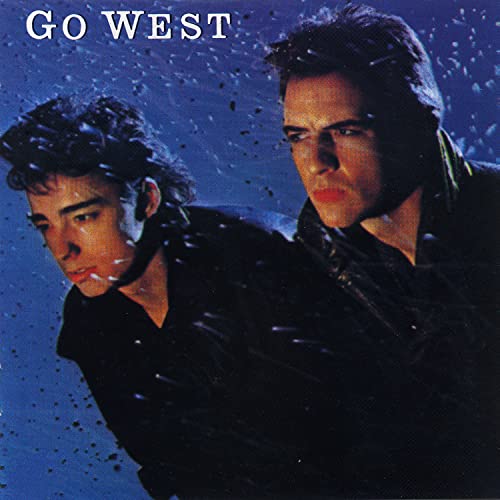
Go West’s 1985 debut album has been reissued by Chrysalis as a generous 4CD+DVD large format box set. Released just yesterday, this package includes Go West remastered, remix album Bangs and Crashes, a previously unreleased live album and a collection of demos and rarities. Additionally, a DVD features promo videos, footage of the band playing live in Japan and various BBC TV appearances. SDE recently caught up with band members Peter Cox and Richard Drummie to discuss the album and the early days of Go West as they were knocking on record company doors trying to get signed.
SDE: It has been over 35 years since the release of Go West. How do you look back on your debut album and what’s your take on it these days?
Peter Cox Well, had you said to me in 1985 that I’d still be making a fool of myself on stage in 2022, I’d have said that would be unlikely. But here we are. Some of those songs have served us very well. And the process of making that album really was living the dream for Richard and myself, because we’ve been trying for a long time to get in the door at a record label. And we found ourselves, albeit in a very modest studio, actually making an album. I remember reading Duran Duran talking about their plans for world domination, but Richard and I never had that kind of ambition. We really didn’t. You know, at the time of making the first Go West album, all we were thinking about was that we were making an album, finally – the thing we’d always dreamed of doing – and we hoped that it would do well enough that we will be allowed to make another one. And that was about as far as our ambition extended!
Richard Drummie: I look back on it and think of Ron Fair from Chrysalis, who eventually signed us, literally plucking us out of this ocean as we were drowning [laughs]. I said to Peter: “We need to get somebody else involved here” and that’s when we got our manager, John Glover involved. And I think had we no got John involved, we may have never got the deal.
You guys were in your mid-to-late twenties when the first album came out. That’s a long time to wait when you consider the members of the likes of Duran Duran were much younger. Was there ever have a time when you were losing faith in the fact that you might actually achieve the dream of signing with a label and releasing an album?
Peter Cox: Yes, absolutely. Often! I can remember falling out with Richard’s girlfriend at the time because we had once again been invited in to see this or that A&R man, and we were told: “We love what you’re doing, but we don’t hear a single”. That was the mantra of labels. And every time you would go in, my hopes would be raised, and then we’d schlep in to town to someone’s office and be politely told, as I say, “we like what you’re doing, but we don’t hear a single”. And on this particular occasion, Richard’s girlfriend couldn’t understand why I was so demoralised.
Richard Drummie: I never really had faith in the first place! I thought it was a venture doomed to failure, from the word go. I was 26 and Pete was 29. So apart from Susan Boyle, [older people getting signed] doesn’t really happen that much these days. And then with 10 years, or more, of trying to get a record deal and getting turned down, you then get the deal. It’s just the fact that those songs got out [that pleases me], because there’s loads of bands out there who were in the same position and didn’t get plucked out of the sea. They’ve probably got equally good songs that never saw the light of day.
How far does the friendship go back? We’re you doing another jobs when you were in your early 20s?
Peter Cox: Yeah, we were both doing various different things. I met Richard when he was 16. By the time we started doing any kind of writing together, we were just fooling around really; it was just for fun. But by that stage, I was singing in residency with the Mecca Organisation, working in Sheffield, for three nights a week. Richard was selling advertising on what’s called a ‘free sheet’, you know, those newspapers that come through the letterbox were full of ads. And every couple of weeks he would drive up to Sheffield with all the new music that he’d amassed and VHS tapes of films he’d seen that he thought we might enjoy together. We would just hang out, drink cheap wine, watch films, listen to music and dream, I suppose.
Richard Drummie: I got kicked out of the house when I was quite young, like 16, nearly 17 or something. I was planning to go off to university and study law, but that was not really what I wanted to do – you know, we all want to be a train driver, an astronaut, an actor or a musician! So I kind of made up my mind [not to] and I just had to get any job I could to pay the bills and I didn’t like a lot of the jobs I had, and I had a lot of different jobs, before I finally got into doing what I wanted to.
Did the long wait make it all the more satisfying, when it happened?
Peter Cox: Yeah, I suppose so. When we got into the studio, going in every day, to a proper recording facility – even though it was quite modest by later standards – we couldn’t have been happier. We were doing exactly that thing that we’d always dreamed of doing. It was it was a good time.
What were the tracks that unlocked it? Was it ‘We Close Our Eyes’ and ‘Call Me’? Were they the breakthrough tracks that actually got you the deal?
Peter Cox: Yes, and no, because we had an early version of ‘We Close Our Eyes’, and I must say it was a very different sounding thing from the single that came out. But you are right, when you talk about ‘Call Me’ because after another one of those trips into London, and a meeting with an A&R guy who said, “Can’t wait to hear what you do next”, we thought “okay, we’re obviously not writing the kind of songs that are going to get us through this filter, the record company door”. So we resolved to try and write something that we thought was commercial. And that was ‘Call Me’. And I think the initial version of that song was close to the final recorded version. By that time, we were already working on an 8-track recorder with Gary Stevenson, who ended up producing the first Go West album. Gary’s 8-track demos did sound fantastic, within the limitations of that machine. He was – he is – a super-talented producer and knows how to get the most out of even such a limited piece of equipment. So the demos that we did of ‘Call Me’ and some other songs, were the ones that got Richard and I a publishing deal with ATV music. That was in 1982. And ATV allowed us to go into Rooster Studios, where we ended up recording the first Go West album. But yes, but it was ‘Call Me’ that got us through the door.
https://www.youtube.com/watch?v=W5UlJh5UM_U
Go West peform ‘Call Me’ on Top of the Pops
So it was a two-stage process. You had the publishing deal, and then that you had the actual record recording deal?
Peter Cox: That’s right. But ATV had to pick up two options on us as writers before we managed to get a record deal. At that point, I had a previous association with John Glover, who still manages us today. And by that time, we had a demo of ‘Call Me’ and some other bits and pieces. And I went to John and I said, I’m writing with this guy, we’ve got some songs we think are good and we wonder whether you might be able to help us. He called in a favour from Mike Vernon at Chipping Norton Studios. And we went and recorded the basis of what became the masters of ‘Call Me’ and ‘We Close Our Eyes’. And it was those tunes that finally got us a record deal, I think,
Who would you say were your musical influences, because it’s very much an ’80s pop sound, that first record. So it’s not necessarily obvious, who might have influenced you.
Peter Cox: I started out listening almost exclusively to Jamaican reggae when I was in my early teens, then from there to Motown, and then from there to blues/rock bands like Free and Bad Company because Paul Rogers was a big vocal influence for me. But then when I came to start writing with Richard, some of his influences were similar although Richard is a huge Todd Rundgren fan, for example, so that might be an influence that isn’t readily apparent in the 80s pop sound of Go West. Richard introduced me largely to American West Coast music: Steely Dan, The Doobie Brothers and re-introduced me, if you like, to the more contemporary Stevie Wonder recordings that were around… so yeah, it could be a very long list. I could go on and on.
How was it seeing bands from the early 80s having success while you were still struggling? Was that a little bit frustrating?
Richard Drummie: I was never resentful of anyone else’s success. I mean, I really liked Duran Duran, I loved ‘Don’t You Want Me’ by The Human League. I wasn’t jealous. I was just going, “Oh, yes. Can I do that as well?”
Were you in any way worried because you didn’t really have a ‘proper band’, in the way of, say, Duran Duran or Spandau Ballet? Did you think because of the technology at the time, you could take care of whatever was required in the studio with a producer and just bring in musicians as and when needed?
Peter Cox: It’s a good question. We never really thought about the live aspect of it, I suppose. Because our relationship began as a writing partnership. And we were friendly enough with Gary that he would get involved and we would just fool around recording and making our demos. And at that time also, Richard and I were fans of a duo that was signed to Epic called The Quick; George McFarlane and Colin Campsie. We came to know them, I think our publishers introduced us to them, and we ended up working in the studio with them, doing a couple of demos. The reason I mentioned The Quick is that I had seen them performing on TV shows, and exactly as you described, Colin would sing and George would be playing keyboards with a drum machine in the background. So they actually functioned as a two-man band. It went against us when we were trying to get through the door at record labels, because one of the questions we would be asked was, “when can we see you live?” And exactly as you say, we had to tell them “we don’t have a band. So right now, we can’t do anything about that”. So it didn’t worry us particularly because we were focused on writing and making demos and I guess we figured we would get a band together when we needed to promote the album, and that’s what came to pass.
Richard Drummie: Myself and Peter have always looked at this quite differently, even today. [When recording in the studio] people might say, “How are we going to do that live?” I say, “I don’t care”. You know, don’t compromise the record by worrying about playing it live. That never really bite us in the backside anyway, because the technology came along for us to be able to do it. Also, we just went out and got the best band in the country. Alan Murphy was certainly regarded as one of the best guitarists. And [drummer] Tony Beard went on to join Hall and Oates, Peter-John Vettese, our keyboard player, went on to produce ‘Proud’ for Heather Small and did all the keyboards on ‘Why’, by Annie Lennox and for a while on bass we had Pino Palladino. So, you know, we just spent all the money [laughs]. We’ve never made any money, live, because everyone was on like, untold money! But they were the best. And yeah, it worked out for us in the end.
The 1980s were interesting, weren’t they, because it did become like the era of ‘the duo’ whether it was Pet Shop Boys, Soft Cell, or whoever. The route to getting signed wasn’t necessarily how it had been, in the old days, playing live in clubs and pubs – you could do it very differently. And I guess, Go West are a good example of that. When you went into the studio and actually did the recordings with Gary, did you know how you wanted to sound or did you just think, it will sound good because we’re gonna use that drum machine, that synthesiser etc.
Peter Cox: In hindsight, we’d been doing what I realise now was pre-production with Gary and with Dave West, who was Gary’s keyboard whiz, who dialled in all those sounds. What would typically happen would be that Richard and I would be there singing musical ideas and so on. But the manifestation of those ideas was by other people, Dave, dialled in all the keyboard sounds that made up that big riff at the beginning of ‘We Close Our Eyes’, for example. I don’t think Richard or I had those kinds of skills. We could sing a melody and say “make it big”, or “make it sound like this”, but we needed that assistance to to manifest those sounds. I remember doing a lot of the background vocals for ‘Call Me’ in the spare bedroom of Gary Stevenson’s parent’s flat in Stanwell (in Surrey, in the UK), so when you ask about how did we envisage the song sounding? I mean, it was it was an organic process of the four of us Gary, Dave, Richard and myself, in a room together, exploring. The guitar sound that we used a lot on that first album was inspired by a band called The Fixx, that clean, super-compressed guitar sound at the top of the song was a sound that we all loved. We made our own version of it and used it all over that first record, clean, compressed guitar. So we had, in a general sense, an idea of how we wanted the album to sound. But we did lean on Gary because he was very, very confident, you know, “we can do anything”. And Richard shares that confidence. I’m wired less in that way.
Richard Drummie: When we were writing the initial songs, we actually had these records called ‘drum drops’, which were basically albums that just had 10 tracks of just drums, so one might be called ‘Bossa Nova’ and others might be called ‘Rock’ or ‘Heavy Rock’. We would literally just record those down to two tracks on a Portastudio and then overdub over the top of them. So the whole technology thing was really at the beginning when we started, but we loved it. All of the drums on the first album, apart from some top kit, like tom toms or high hats, were done on a drum machine, an Oberheim drum machine. The only sequencer we had was in a thing called the TB-303 which was also known as the Roland Bass Line, this little silver thing that cost a fortune, something like £1000. That would remember 100 notes, so that’s how we did ‘We Close Our Eyes’. Through the writing of that first album, things started to come out. There was a thing called PPG Wave Tone, which was what they used on [Frankie Goes To Hollywood’s] ‘Two Tribes’ so we used it on ‘S.O.S’. We hired one in. And it was just great. It was just like Christmas every day, you know?
Was the record label quite hands on, perhaps making you do a few tracks at a time and then listening to them, or were they just letting you get on with it?
Peter Cox: Well, that was one of the things that worked out really well for us, because the guy who signed us to Chrysalis was a junior from the Los Angeles office, his name was Ron Fair. He had to threatened to resign if the label didn’t allow him to sign us, because he didn’t really have that much clout. And they did finally gave in to him and gave us what I now realise was a comparatively small budget. The budget to make the video for ‘We Close Our Eyes’, was half as much again as it cost to record the entire album! But I’m getting off the point. So Ron managed to persuade Chrysalis to sign us, but because he was based in Los Angeles, there wasn’t the money for him to stay in London and supervise what we were doing. So they left us almost completely to our own devices, which was a beautiful, beautiful thing. Because we could fool around to our heart’s content, exploring and making what became that debut album, without too much record company interference, if I may use that word.
Obviously, ‘We Close Our Eyes’ was a massive hit single. You must have known it was a good song, and that it was a commercial sounding track, but what were your expectations, releasing your first single?
Peter Cox: Yeah, again, it’s a good question. My own expectations were naively small, I thought, we’ll put a record out, we might get in the low 80s, or 90s, in the charts. Then we’ll do some gigs and we’ll build a following, and so on. And of course, as we know, if things went well for you in the 80s, that’s not quite how things worked. And also, it being the age of video, we had Godley & Creme direct the video (to ‘We Close Our Eyes’). MTV in America was in its infancy, and we got a lot of play on MTV, which introduced us to an American audience without having to go there, initially. And ‘We Close Our Eyes’, got to number five in the UK charts. So my idea of a slow build-up just went completely out of window and there we were with a top five single.
Richard Drummie: I was absolutely blown away by the success. Didn’t expect it at all. We were driving over Kew Bridge and [BBC Radio One DJ] Bruno Brooks played ‘We Close Our Eyes’ – it was the first time we’d ever heard it on the radio. We pulled the car over, I looked at Pete and we shook hands. I kind of felt like “We’ve done it. That’s it. I have to go back and get a job now!”
I’ve spoken to artists before, who slightly regret the massive first single, especially if it goes to number one because you’ve then got your work cut out, and it’s the thing you have to try and beat. Obviously, you never actually surpassed the UK single success of ‘We Close Our Eyes’, in the end, and I was just wondering whether you’re just really happy about the song’s success or whether it you’ve ever looked upon it as a slight albatross around your neck?
Richard Drummie: No, no. I think you need that first one. I always say that we haven’t got so many hits that we can’t fit them, and load of other songs, into an evening’s entertainment. So I never roll my eyes and go “oh, no, not this one again”.
Peter Cox: I think like so many, many other artists, we had trouble with our second album for all the reasons that you suggest. That is true. But I think having success, at least for us, was a question of being fortunate enough to be in the right place at the right time. However good our songs are, you need an element of luck. So I certainly wouldn’t ever say “no, I wish it had been different”, because, honestly, I didn’t really have an ambition and a clear plan of how things were going to go. I just kind of went along with the ride. So I certainly wouldn’t say that any kind of success was necessarily a negative because I honestly I didn’t have any real expectations of being successful.
Where do you think you fitted it into the pop landscape at that time?
Richard Drummie: It’s weird, you never feel… I mean, I do now because I’ve been doing it for so long, but back then I always felt like a fan they’d let into Top of the Pops! But after a while, you know, we met people, like Paul Young and we met the Duranies and whoever. And you know, some people were up in the clouds and thinking they were more special than they actually were. I don’t think we had that problem at all. I’ve always thought if you’re nice on the way up, then people would be nice to you on the way down. And so far, so good
It must have been a real whirlwind for, a year, 18 months, being in that kind of major label machine and all the promotion and the travel and all the rest of it. Was that just a joy for you and how easily did you adjust to that very quick change of lifestyle?
Peter Cox: Yes, you’re exactly right. 1985 definitely was a whirlwind and there were lots of pluses: I got to travel to places I’ve never dreamed of going; our first live shows were in Japan; I went to America and spent a good part of 1985 in America. All of that was wonderful. But I think, without getting too heavy, I think different people react to those experiences and that pressure in different ways. And, as I might have intimated already, you asked about whether I was confident that ‘We Close Our Eyes’ was a hit song, and speaking just for myself, I’ve never been that confident that any song was a hit song, because I just think these things are so unpredictable. Whereas Richard is wired in a very different way. He’s always been much more confident in his thinking. It was him who phoned the record label and said, “we’ve written the hit!”. I would never do that, because I’m just not wired that way. And so, yes, on the one hand, it was amazing to be in Japan, playing huge shows on a bill with Culture Club and The Style Council and The Associates in 1985, but speaking personally, I felt a lot of projected pressure, I guess, about what I thought people would expect of me as a so-called pop star. I think I experienced more anxiety about that stuff than perhaps than Richard did.
Richard Drummie: People would say, “did it change you?” And I said, “No, it didn’t change me at all, but it changed a lot of people around me”. A lot of people didn’t invite me to things anymore, sort of saying, “Oh, well, we didn’t think you’d like you want to do that anymore”. You know, like I’d prefer to go to a swanky restaurant rather than going down the pub with my mates!? I found that quite disturbing.
There seems to be a good balance in your relationship…
Richard Drummie: I was confident, much more confident than Peter was. Peter has always been quite self-questioning with his abilities, whereas I’m quite aware of what I think I can do, and I don’t mind shouting about it [laughs]. The record company would say “we need to see you play live” and I’d say, “Don’t worry about that. We got a great band. We’re gonna blow you away”. And we’d go outside and Peter would say “what band?” [laughs]. I’d say “Oh, we’ll get one”. Pete’s very honest, but almost to the point of… I said to him, once “Pete, if you keep telling people that your just ordinary and boring, in the end, they are going to believe you and they’re gonna just walk away” [laughs].
Let’s talk a little bit about the boxset. One of the things that surprised me is that when you look back, there haven’t really been any reissues of Go West albums. Is there any specific reason for that?
Richard Drummie: We couldn’t be bothered to be honest with you! [laughs]. Sorry, that was said for effect. Our manager is constantly saying, “Guys, we could do this, we could do that, we could do the other”. I think what we were concentrating on before was a box set that was going to be all the albums, but to be honest with you it was just too big to get your arms around [Richard is speaking metaphorically, here!]. It was only when Chrysalis told us that there was more than enough material available to do a box of the first record that I could personally then envisage it.
Peter Cox: Well, much much to other people’s frustration, Richard and I have always been very anxious to make the best thing, whatever the thing is. Even the second album, we put our love and our energy into it, and I say that because what we’ve been really at pains to avoid, is putting out something that we weren’t proud of. And I think that the box set looks great. I hope that it’s got pieces of interest. It’s so difficult to be objective about whether fans might find a demo of this, or that, interesting. But that’s the kind of thing that’s in the box set, you know, early mixes, demos of songs, songs which didn’t make the cut for the first album, and so on. So I hope that there’s plenty in there to interest fans, there’s a lot of previously unseen artwork. There is a film of our gig in Yokohama Baseball Stadium when Typhoon number nine came in while we were playing. So yes, I think it’s a great looking thing, and I hope people will get pleasure out of it.
Richard Drummie: What we’ve always worried about is with best ofs and greatest hits, and repackaging, is we both grew up as kids buying these things and you get it home and you think “I’ve already got this”. All they’ve done is just shuffled it, put a different picture on the front. And although it may have made us some money, we just said no, we’re not doing that. It’s ripping the fans off. I don’t think this new box set is ripping the fans off. We’ve put a lot into it; we’ve made sure there’s lots of demos of the original recordings, which I think is interesting; there are tracks that never made it, that people haven’t heard; there are pictures from the sessions that haven’t been seen – you won’t just get what you’ve already got.
How was playing live and that Japanese gig in particular?
Richard Drummie: We’d been in school bands, but when Go West got signed, we hadn’t played live as a band. The first the first time we played live on stage, it was recorded for Radio One In concert, and I think some of that is on the box set. We then got on a bus and went up to the to play [infamous UK music show] The Tube and we were lucky because Jimmy Somerville didn’t turn up, so they came to us and asked if we had three other songs we could play [to fill in]. So we got a lot more airtime than we were going to get. And then we flew to Japan, and we played Yokohama Baseball Stadium and that was us, The Style Council, The Associates and Culture Club. We just walked out in front of 30,000 people and it was memorable for every possible reason, because it was during a thing called Typhoon number nine. So it was literally torrential rain while we were on stage. Today, they would never had allowed it. It was ridiculous, but yes, very memorable.
Go West peform live on The Tube in 1985
The album itself has been remastered, did you get involved and go along for the remastering and have a listen?
Peter Cox: No, because Gary Stevenson has remastered the tracks and Gary obviously produced the album. I have deferred the technical aspect of these things to other people. And certainly more lately, I realised that if I have a skill, I’d like to think that it was in writing songs. I’ve had an aspiration to be a guitar player for the longest time, and I played quite a lot of the simple guitar parts on the first Go West album, with the help of very patient engineer and producer. But I finally, and belatedly, came to the realisation that I’m never going to be a great guitar player and that I should focus on things that I think I can do, which is write songs. So when it comes to the mastering of an album, I defer to people who I think know more about that stuff.
There’s lots of 12-inch mixes in the box set. Some artists I talk to say they cringe when they look back to the 80s and that era of the 12-inch extended version. What are your thoughts? You enjoy listening to them now?
Peter Cox: Back in the day, my sense of remixes tended to be that it would be the early part of the song – whatever the song was – and then 64 bars of drums and then the fade. So to my mind, it was largely a very uninteresting horizon. But when we were given the chance to do our own 12-inch mixes, we approached it in a completely different way. Or it seemed different to us, inasmuch as we would go in and start recording; add this and do different backing vocal parts, and so on, and so on. We were determined to try and do something that was better.
Richard Drummie: They said that we should do dance 12-inches, but we didn’t do dance 12-inches. This is going to sound pretentious, but we tried to make like a piece of music, out of the bits that we’d got. There’s a great 12-inch, actually, of ‘The Tracks Of My Tears’, which I was only listening to the other day. It sounds nothing like the original.
Peter Cox: And because by this time, we had Alan Murphy playing guitar with the band and fantastic players that we could call on, I would say that doing those 12-inch mixes was some of the happiest recording experiences I had. Because, first of all, the album had been a success, so the record label was much more willing to give us rope, with which to hang ourselves [laughs]. And they gave us money to go into nice studios, like Sarm West. So we had free rein, and we could explore and that’s, that’s the most fun.
Richard Drummie: We absolutely loved doing 12-inch mixes the best out of everything we did. There was no record company saying “it’s too long, take the middle eight out”.
The third CD in the box has a fair amount of demos on it. But I have to say that I was expecting to see the demos of ‘We Close Our Eyes’ and ‘Call Me’ on there. Why did you not include them?
Peter Cox: Yeah, that’s a good question. I think partly it may be because Chrysalis couldn’t find a copy of that original demo of ‘We Close Our Eyes’ in the archive. I couldn’t lay hands on it myself. I think I agree with you, it would have been interesting for people to hear how different our initial version of ‘We Close Our Eyes’ was to the end result. Because that would give people an insight to into all the things that Gary Stephenson and Dave brought to the party. For example, as simple a thing as it might sound, Gary’s first question was, “How fast can we raise the tempo of this song before the tempo no longer works”. He meant any song. And that has stood us in good stead ever since, because when we play a short set at a festival, we have a variety of up tempo songs we can play. And if you are an 80s act, whose biggest song in the 1980s was a ballad, then arguably that puts you at a slight disadvantage, because you can’t really come on stage with any energy.
Richard Drummie: The demos are so different. That you wouldn’t… well, you would recognise them, but that’s an interesting point. Maybe we didn’t want people to hear what our demos sounded like, I don’t know! [laughs]. The ‘Call Me’ demo, the original one, was literally done on a Portastudio. I got annoyed though, because we’d played record companies ‘We Close Our Eyes’, ‘Don’t Look Down’, ‘Eye To Eye’… all these songs that are on the first album and they kept saying “We’re really looking forward to seeing what you do next”. In the end, I said to Peter, “Oh, let’s just give them what they want. Let’s just write something ridiculously catchy and commercial”. And so we wrote ‘Call Me’ and sure enough, we took it into the record company, a little bell rang and they said, “we’ll sign you” because they could hear a single. It was ironic that they wanted us to get some profile before they put what they thought was ‘the hit’ out, so they let us choose first single and we said ‘We Close Our Eyes’ and that was the biggest hit!
You are about to do four live dates with a full orchestra [this tour is now finished]. Why did you decide to do that?
Peter Cox: Well, the first idea was a managerial one, isn’t it always? [laughs] Personally I found it difficult in the first place to imagine how we would sound with an orchestra, largely because by design, we replaced those sounds with synthesizers on our album. You know, we thought of it as a positive not to have a horn section. Whereas ABC, with ‘The Lexicon of Love’, it was a no brainer for Martin [Fry] to tour with an orchestra because The Lexicon of Love has an orchestra all over it. But now that we’re in the process, and we’ve got a sympathetic arranger, who’s on our wavelength, it’s worked out really well. Aside from the obvious songs that we would need to play at any gig – ‘We Close Our Eyes’, ‘Don’t Look Down’, ‘Call Me’ – there are other songs in our catalogue, perhaps less well known which lend themselves even better to an orchestral arrangement. So, for example a couple of songs from the ‘Dancing On The Couch’ album, have worked out beautifully with an orchestra. I’m hoping that people will really enjoy the show.
It’s quite a fashionable thing these days to release orchestral versions of your hits. Have the arrangements and rehearsals given you any ideas for future, you know, would you consider doing something like that?
Peter Cox: Well, now we have these arrangements, it does make perfect sense to have a studio, orchestral recording of them. I have very little doubt that someone somewhere is quietly whispering about recording these live shows. But if anyone who knows me will know that it’s probably best not to tell me because I might have a nervous breakdown!
Assuming the box set does well – and I’m sure it will – do think that you might go through some of your other albums and treat them in a similar fashion?
Peter Cox: Yes, in theory, that is the plan.
Richard Drummie: We were going to maybe move on to Indian Summer next, because obviously, it’s got ‘The King of Wishful Thinking’ and ‘Faithful’ on it, but Chrysalis, I think, want to work through our catalogue chronologically.
Thanks to Peter Cox and Richard Drummie who were talking to Paul Sinclair for SDE. The Go West 4CD+DVD box set is out now and there’s a few more available on the SDE shop with signed prints, although be aware these will not ship until late next week.
Go West play live with Paul Young in York on 15 May and in Glasgow on 31 May. Get tickets here.
Queen’sPlatinum Collection was issued back in 2000 and saw all three ‘Greatest Hits’ brought together as one 3CD box set. That triple-album set is now replicated but in the form of a 6LP coloured vinyl box set, due in June.
The original Greatest Hits (25 million sales and counting) was issued in 1981, while Greatest Hits II followed a decade later, just before the death of Freddie Mercury. Greatest Hits III (released in 1999) is a bit of a hodge-podge, if we’re honest, featuring solo works, collaborations and live tributes.
All three Greatest Hits are collected in the 6LP coloured vinyl edition of The Platinum Collection (click image to enlarge)
All three albums are across two LPs, making this a 6LP vinyl box set. Each record will be pressed on different coloured vinyl (see image above) and will come in its own individually designed sleeve. The set comes with a 24-page 12-inch photo book/let and the records are housed in an outer slipcase with brand new artwork.
The Platinum Collection 6LP coloured vinyl box set is released on 17 June via EMI/UMC. It is a limited edition although the label haven’t been forthcoming in terms of numbers.
The band’s fifth studio album is released on 13 May and is available across a number of formats, including deluxe CD (with five unnamed bonus tracks) and 2LP vinyl. The signed CD is the standard 14-track album and it appears not to be restricted to just the UK!
At the second time of asking Eurythmics have been inducted into The Rock and Roll Hall Of Fame. Dave Stewart and Annie Lennox were shortlisted in 2018 and actually actively promoted for their induction while Sony managed a vinyl reissue campaign… but it came to naught. However this year, without making the same kind of effort they are now one of seven inductees in the ‘Performer’ category.
Stewart gave his reaction to Billboard saying “It’s part of being English or Scottish to play everything down. It’s not sort of cool to leap around and go, ‘Wow!’ But underneath all that, we’re both really excited and honoured, actually.”
Duran Duran are also inducted and were suitably pleased with Simon saying “It’s one thing to be nominated – but a totally different thing altogether to be actually voted up for induction into The Rock & Roll Hall of Fame, which is to my mind the closest thing you’ll ever get to a rock & roll knighthood.””
Other inductees in the performer category were Pat Benatar, Dolly Parton (despite her reluctance), Eminem, Lionel Richie and Carly Simon. There were some special categories, so for example. Judas Priest and Jimmy Jam and Terry Lewis got in under the ‘Musical Exellence’ banner.
The likes of Beck, Kate Bush etc. didn’t ‘make it through to the next round’ but certainly Kate will not be bothered. She’s literally not even mentioned her nomination once!
The induction ceremony will take place on 5 November this year at the Microsoft Theater in Los Angeles
A new Madonna compilation called Finally Enough Love: 50 Number Ones will be released in August. Part remix collection, part ‘best of’ this 3CD set has been curated by Madonna and, as the title suggests, contains 50 tracks that have topped the Billboard dance chart over the years and decades.
Broadly speaking, this brings together radio-length edits of Madonna singles, with some of them better known than others and the odd previously unreleased version (or available digitally/commercially for the first time). These include things like You Can Dance remix/edits of ‘Physical Attraction’ and ‘Everybody’, an Alternate Single Mix of ‘Keep It Together’, the ‘Sasha Ultra Violet Mix Edit’ of Ray of Light’ and more.
Finally Enough Love has 50 Number Ones on the 3CD edition (click image to enlarge)
Each remix was newly remastered for the collection by Mike Dean, who produced Madonna’s two most-recent studio albums, Rebel Heart (2015) and Madame X (2019)
Finally Enough Love is also available as a 2LP vinyl set with a 16-song version of the track listing (a single CD version shares this). There’s 2LP black vinyl, a 2LP red vinyl for UK indie/RSD shops and an Amazon UK exclusive 2LP silver vinyl edition. If you really must have all 50 tracks on vinyl there is a 6LP edition but it’s only available via Madonna’s shop (UK link and USA link).
2LP silver vinyl is exclusive to Amazon
There’s no mention of it in the press release, but Finally Enough Love presumably marks the start of the new career-spanning partnership with Warner Music Group that was announced last year and promised fans a “multi-year catalog series”.
Finally Enough Love: 50 Number Ones is released on 19 August 2022.
Tomorrow, the two-week pre-order window for the SDE-exclusive blu-ray audio of Tears For Fears new album The Tipping Point closes.
There will no availability after 4 May 2022, so this really is your last chance to secure a physical copy of Steven Wilson’s stupendous Dolby Atmos and 5.1 mixes of this wonderful album.
The release date for this second pressing of the blu-ray audio is 17 June 2022. This product is only available via the SDE shop. To pre-order, use this link or the button below. Your order will be shipped during that week of release. We will endeavour to get your blu-ray to you as close to day of release as possible, but please note that is not a guarantee.
TECHNICAL NOTES: This blu-ray audio requires a blu-ray player. Decoding the Dolby Atmos mix requires a Dolby Atmos-certified soundbar or a Dolby Atmos-compatible AV Receiver/Amp. The Dolby Atmos mix will ‘fold down’ to 5.1 or stereo if a Dolby Atmos decoder is not detected. The DTS HD 5.1 mix should work with virtually all home cinema set-ups.
EU SHIPPING NOTES: If you are ordering from the EU please be aware that that goods may be subject to import VAT when they arrive from the UK. The prices the SDE shop charge you do not include VAT.
Tracklisting
The Tipping PointTears For Fears /SDE-exclusive blu-ray audio
Go West’s 1985 debut album is expanded to four CDs and a DVD for the new super deluxe edition. Clear vinyl LP also available. SDE interview with both Peter and Richard coming later this week!
Only Soft Cell’s sixth studio album, the CD of *Happiness Not Included features the Pet Shop Boys-produced version of ‘The Purple Zone’, while the vinyl doesn’t (because they were already in production). The band have promised future vinyl pressings will be amended.
Compare prices and pre-order
Soft Cell
Happiness Not Included - CD with hardcover packaging
XTC’s 1983 album Mummer was their first having retired from touring. This features ‘Love on a Farmboy’s Wages’ and has been remastered and pressed on 200g. black vinyl. If you’re wondering about the album artwork, it has been “restored to Andy Partridge’s originally intended cover”.
Before Hysteria there was Pyromania, Def Leppard’s third studio album, issued in 1983. Produced by Robert John “Mutt” Lange the album delivered massive mainstream success in America, selling over 10m copies. Remarkably Leppard hadn’t quite reached the summit and they’d surpass this with their next album!
As part of a planned year-long celebration of The Beach Boys’ 60th anniversary, Capitol Records/UMe are to release a newly remastered and massively expanded edition of the group’s greatest hits collection Sounds Of Summer: The Very Best of The Beach Boys.
This collection was originally issued in 2003 and contained 30 tracks. The reissue updates both the number of songs and the audio quality with an extra 50 songs, giving a total of 80 tracks across three CDs or six vinyl LPs.
This has been put together by Mark Linettand Alan Boyd who were responsible for last year’s Feel Flows – The Sunflower and Surf’s Up Sessions 1969-1971 and other Beach Boys packages.
This collection features nearly every US Top 40 hit of The Beach Boys’ career, including ‘California Girls’, ‘I Get Around’, ‘Surfer Girl’, ‘Surfin’ U.S.A.’, ‘Fun, Fun, Fun’, ‘God Only Knows’, ‘Good Vibrations’, ‘Wouldn’t It Be Nice’, ,Kokomo’, ‘Barbara Ann’, ‘Help Me, Rhonda’, ‘In My Room’ and many others. Of course with 50 extra tracks it goes well beyond ‘the hits’.
In terms of the audio, the collection boasts 24 new mixes including two first-time stereo mixes, plus 22 new-and-improved stereo mixes, which in some cases features “the latest in digital stereo extraction technology”, allowing for the team to separate the original mono backing tracks for the first time.
The 3CD expanded edition of ‘Sounds of Summer’ (click image to enlarge)
The expanded edition of Sounds Of Summer is available as a 3CD set and 6LP vinyl super deluxe box pressed on 180g black vinyl. Both include a booklet with new sleeve notes and updated photos.
The 30 tracks on the original release (a single CD edition is also available) have been mixed in Dolby Atmos although sadly there is no physical edition as part of the offering.
Sounds Of Summer: The Very Best of The Beach Boys will be released on 17 June 2022. Good price in France for the 6LP vinyl version.
David Bowie’s 1972 album The Rise and Fall of Ziggy Stardust and the Spiders From Mars will be reissued as a half-speed mastered vinyl pressing and a vinyl picture disc in June.
The album was issued on gold-coloured vinyl in 2017 for its 45 anniversary, was issued as a standalone black vinyl reissue in 2016, appeared twice as part of theFive Yearsbox sets in 2015 and then back in 2012 was released as a special vinyl LP + DVD combo set (for the 40th anniversary) which included Ken Scott 2003 5.1 mix and a few bonus tracks (that was the last time any David Bowie album was issued physically in surround sound).
As far as SDE can recall, there have been no previous half-speed mastered pressings of any of David’s classic albums so brace yourself for what could be a new wave of releases (à la McCartney). If you are interested in the technical details, this new pressing was cut on a customised late Neumann VMS80 lathe with fully recapped electronics from 192kHz restored masters of the original Trident Studios master tapes, with no additional processing on transfer. The half speed was cut by John Webber at AIR Studios.
The Ziggy Stardust vinyl picture disc comes with a poster (click image to enlarge)
The picture disc follows vinyl picture discs of Space Oddity, The Man Who Sold The World and Hunky Dory (currently discounted on Amazon in the UK) so NO PRESSURE to carry on the collection! Let’s hope the albums don’t come to a grinding halt like the picture disc singles did.
These two vinyl reissues of The Rise and Fall of Ziggy Stardust and the Spiders From Mars will be released on 17 June 2022.
Paul Weller’s 2008 album 22 Dreams will be reissued on double vinyl in July.
Weller’s ninth studio album was critically acclaimed, after what was arguably a dip in form during the early part of the new millennium, and featured contributions from Noel Gallagher, Gem Archer and Steve Craddock.
The long-player topped the charts and amongst the formats at the time was a special 2CD deluxe edition (which featured bonus demos, instrumentals and the like) which, for a while, was much desired and changed hands for high prices on the resale market (more were eventually pressed, bursting that particular balloon).
22 Dreams was issued as a 2LP set in 2008 and this new reissue basically recreates the original double gatefold vinyl with the inclusion of a 12″ x 36″ poster and the 8-page booklet with ‘The Missing Dream AKA Dream #22 by Simon Armitage. The original sells for £100+ on Discogs these days so this reissue will undoubtedly be welcome!
22 Dreams is out on 22 July 2022 via UMC/Island. It’s unclear what is happening to the 1998 Modern Classics compilation which was supposed to be issued on the same day as 22 Dreams, with a 2LP set with a bonus LP – Live Classics – as recorded at Victoria Park, Hackney (on 8 August 1998)
Original album reissued plus full Lyceum Theatre gig on CD
The Grateful Dead’s first tour outside of North America was captured on Europe ’72, a triple live album that distilled peak moments from the 22 shows the band played in Europe. This record is now being reissued for its 50th anniversary as a 2CD set or 3LP vinyl.
The original 3LP album is reissued for it’s 50th anniversary on 3LP vinyl and 2CD (click image to enlarge)
Venues and locations include the Empire Pool in Wembley, London; the Concertgebouw in Amsterdam; the Olympia Theatre in Paris, France; the Tivoli Concert Hall, Copenhagen and London’s Lyceum Theatre.
In fact, the Lyceum gig, from 26 May 1972, was the last show of this tour and was the group’s penultimate performance with founding member, Ron ‘Pigpen’ McKernan, who died in March the following year. This is being released in full as a special 4CD set on the same date as the Europe 72 reissues (the Wembley show was issued on 5LP for the first of 2022’s Record Store ‘drop days’).
The Lyceum Theatre gig is presented in full across four CDs (click image to enlarge)
All audio is remastered by engineer David Glasser, with restored audio by Plangent Processes. Both Europe 72 and the Lyceum Theatre are released on 29 July 2022.
Vinyl box set that features the album, plus alternative mixes (including proposed B-Sides) and ‘Unplugged & Somewhat Slightly Electric’ versions of all 13 Toy tracks.
CD version of the Toy:Box with bonus alternative mixes (including proposed B-Sides) and ‘Unplugged & Somewhat Slightly Electric’ versions of all 13 Toy tracks.
Cat Stevens /Teaser and the Firecat 4CD+blu-ray super deluxe4CD+blu-ray super deluxe
Superb deal for the vinyl-free, 4CD+blu-ray super deluxe of last year’s Cat StevensTeaser and the Firecat reissue. Effectively half price. Watch the SDEtv unboxing video which shows you what this set is like.
Cat Stevens /Teaser and the Firecat 2CD deluxe2CD deluxe
The hardcover book 2CD deluxe of Cat StevensTeaser and the Firecat offers a bonus disc of demos, alternate versions and live recordings. Deal still on but you need to click to use the voucher (on the product listing page).
Cat Stevens /Teaser and the Firecat vinyl LPvinyl LP
Roger Chapman / Moth To A Flame: The Recordings 1979-1981
Five-CD Roger Chapman box with newly remastered audio features the albums Chappo, Live in Hamburg and MailOrder Magic. Includes 25 bonus tracks drawn from studio outtakes, live recordings and BBC Radio ‘In Concert’.
Songbird (A Solo Collection) is a new ‘best of’ featuring songs by Fleetwood Mac songwriter and vocalist Christine McVie.
The 10-track compilation includes a selection of songs from two of her solo albums – 1984’s Christine McVie and 2004’s In The Meantime and features two previously unreleased studio recordings including ‘Slowdown’, which was originally written for the 1985 film American Flyers.
McVie says of ‘Slowdown’: “I was asked to write a song for a film about a cycling competition. So, I thought we’d give it a go. So that’s why the lyrics are sort of muddled up with a little bit of a love song, a little bit of cycling. And it turned out really well, but they didn’t end up using it. We thought it was a pity to waste it, so it’s on here”.
Another interesting selection is a new orchestral version of ‘Songbird’ from Fleetwood Mac’s Rumours album, which has become one of McVie’s signature tracks. The new version uses McVie’s vocals from the original recording with a new string arrangement by Vince Mendoza.
The songs on Songbird (A Solo Collection) have remastered by producer Glyn Johns (him from The Beatles Get Back), who worked closely with McVie on the project. DJ and broadcaster Johnnie Walker contributes notes based on a new interview with McVie where they talk about each song.
Songbird will be released 24 June 2022 and will be available on black vinyl and CD.
After almost exactly two years without gigs, Lloyd Cole is on the road again continuing his From Rattlesnakes to Guesswork tour which started way back in 2019.
With no income from performing in front of an audience, Cole has been keeping the wolf from the door with his very engaging Patreon account where, in his words, he creates “insight and memorabilia via audio, photo and video + commentary”. This means photos, musings, rare audio and even guitar lessons for his monthly subscribers.
The format for the the tour, which SDE attended at Cadogan Hall, in London on Thursday night, sees Lloyd supporting himself, with an initial 35-minute solo set. After a 20 minute or so interval, Cole is back accompanied by Commotions guitarist Neil Clark, who lends an air of authenticity to proceedings. That second set lasts for around 85 minutes.
Now 61, Lloyd Cole has a lot going for him. He’s appears trim, and in good health (he’s now an avid cycler) and from a performance point of view his voice is in remarkable shape; strong, rich and seemingly hard to separate from the man 30 years younger. Despite self-deprecating comments to the contrary, Cole is an excellent guitar player and for the early part of the show, it’s intimate and entertaining with Cole’s dry wit delivering some very funny one-liners in between songs (he welcomes late-comers by saying “Good evening, you’ve only missed ‘Rattlesnakes’…”).
Broadly speaking, Lloyd in support act guise delivers the newer and more obscure material, opening with ‘Past Imperfect’ from The Negatives album (issued in 2000, that record was the only long-player from his short-lived band, also called The Negatives) and including three tracks from the ‘new’ album (Guesswork actually came out in the summer of 2019). That’s not to say there aren’t a few ‘biggies’, including a trio from Rattlesnakes (the aforementioned title track, ‘Patience’ and ‘Are You Ready to be Heartbroken?’). For audience members who don’t know their way around the more obscure albums, Lloyd’s lyrics are always interesting enough to draw you in, and the wordy and witty ‘Like A Broken Record’ (from 2010’s Broken Record) demonstrated this very well.
Neil Clark joins Cole for the feature presentation and together they deliver more Commotions and less solo Cole, with Clark doing all the intricate lead guitar on his acoustic, as Cole mainly strums along, taking care of rhythm guitar duties. ‘2CV’ for this writer was the highlight, sounding almost identical to the album version with Lloyd’s moving lyric. Later the pace increased for the non-stop snowstorm that is ‘My Bag’, a perky ‘Lost Weekend’ and of course ‘Perfect Skin’.
It was undoubtedly an entertaining evening of great songs, delivered impeccably and virtually all the boxes were ticked except the one labelled “sonic diversity”. Lloyd plays acoustic guitar all night and is then accompanied by someone else playing acoustic guitar. This goes on for two hours (in total) and I’ll be honest and say I was craving an electric guitar or a piano by the end. Clark is obviously a brilliant guitarist, but what should be his searing electric guitar solo at the end of the ‘Forest Fire’ encore loses much of its power when played on the acoustic. Dare I suggest it doesn’t actually sound very good at all? On other songs, his acoustic lead often doesn’t cut through enough, getting lost in what you might call an acoustic mush and I found myself straining to try and hear. The brilliant ‘Violins’, as recorded on Guesswork, is an electronic delight with plinky synths and a drum machine. On Thursday evening it was yet another song played on acoustic guitar…
We have to acknowledge the economies of touring these days, for an artistic like Lloyd Cole, but he did suggest on Thursday that the income from his Patreon might allow him to tour with a full band sometime in the not-too-distant future. That’s great news, but in the meantime, how much more expensive is it for Clark to travel with an electric guitar rather than an acoustic one? I can’t help but compare Suzanne Vega with Lloyd Cole at this instance. Both play acoustic guitars during their shows, but Vega is accompanied by Irish guitarist Gerry Leonard, who is a one-man-band par excellence. He can deliver sonics that are out of this world, from his pedals and his box of tricks. He’s brilliant at soundscapes, beats and just playing incredible electric guitar which is a wonderful backdrop and contrast to Suzanne’s acoustic rhythm guitar playing. It’s still just two people up on stage, just as Cole and Clark are two people, but Leonard brings much more to the table. It’s dynamic, offers creative re-interpretations and delivers the interesting sonic textures currently missing from an evening with Lloyd Cole.
Lloyd’s From Rattlesnakes to Guesswork tour continues tonight in Southend.


![David Bowie / Brilliant Adventure [1992-2001] 18LP vinyl box set](https://images.superdeluxeedition.com/wp-content/uploads/2021/09/vinyl_spread.jpeg)








 Interview