Paul McCartney’s audacious seven-inch singles box gathers together 80 solo/Wings 45s in a massive wooden crate. Very expensive, although as many fans pointed out it’s actually not bad value when measured in terms of pounds-per single. This has now sold out in most, if not all, territories.
After some massively lavish album reissues, for some reason UMC are just issuing ‘basic’ standalone remastered editions of Cat Stevens’ 1972 album, Catch Bull At Four, with no bonus audio at all.
Re-available for the 20th anniversary, the 4LP vinyl edition features the Complete Sound Recordings (27 tracks) of the 2002 George Harrison tribute concert. The forthcoming SDE-exclusive blu-ray audio is the only other audio product to offer this, although of course the Blu-ray features Dolby Atmos (as well as stereo). Pre-order the blu-ray.
Demon Music kick off an Ocean Colour Scene reissue campaign with Yesterday Today 1992-2018, a massive 15CD box set.
The large format package Includes all 10 of their studio albums. They are: Ocean Colour Scene (1992), Moseley Shoals (1996), Marchin’ Already (1997), One For The Modern (1999) , Mechanical Wonder (2001), North Atlantic Drift (2003), A Hyperactive Workout For The Flying Squad (2005), On The Leyline (2007), Saturday (2010), and Painting (2013).
The 15CD version of Yesterday Today 1992-2018 contains all the albums and 5 bonus discs (click image to enlarge)
Additionally, there’s five bonus discs featuring a very large selection of B-sides and rarities including the Free inspired ‘So Sad’ and ‘Men Of Such Opinion’, ‘Huckleberry Grove’ featuring the Jamaican ska legend Rico Rodriguez, and the more sedate ballads ‘Robin Hood’, ‘I Need A Love Song’ and ‘Mrs Jones’ and a cover of ‘Day Tripper’, featuring Noel and Liam Gallagher. The package offers 230 tracks in total.
The box set comes with a 72-page hardback book, with in-depth essay from award winning author Daniel Rachel depicting the rise of Ocean Colour Scene from the inside. The book includes photographs from Ocean Colour Scene photographers Lawrence Watson and Tony Briggs, many previously unseen.
The 5LP coloured vinyl version of Yesterday Today 1992-2018 (click image to enlarge)
A limited edition, 5LP coloured vinyl collection with the same name will be released at the same time. Smaller in scale, this simply offers the band’s first three studio albums Ocean Colour Scene, Moseley Shoals (2LP)and Marchin’ Already (2LP).
Both sets will be released on 24 February 2022 via Edsel/Demon Records and the label promises a “year-long” campaign marking 30 years of the band. The official shop is currently offer both editions with signed prints.
The main impediment, for the wannabe Kate Bushbiographer is that Kate’s family and friends – along with most people that she’s worked with over the years – are not likely to want to talk to you. Bush inspires almost total loyalty in this respect, so gaining any insight from those around her is pretty much a non-starter. Kate herself is clearly not going to grant you an audience, so you are left with the option of trawling through various TV and press interviews, across the decades of Kate’s career, to help tell her story, which isn’t going to be easy either, since Bush is notoriously guarded when it comes to her private life and tends to keep press chatter strictly to ‘the work’.
Even that is not straightforward, since in the latter half of Bush’s career, she’s said very little. For example, Kate hasn’t been interviewed by anyone on television in over 29 years (1993’s Red Shoes-promoting Aspel & Company, appearance was the last) and she rarely talks to the press at all these days, unless she’s got a new album out (in the UK she’ll normally grant the BBC a radio interview and likely do a single ’big’ UK music publication, Mojo being her mag of choice).
Because Kate doesn’t subscribe to the usual recording artist life-cycle convention of making an album, actively promoting it, going on tour, taking a short break and then repeating the process, her life can’t be tracked through her public movements in the way that other artists’ can. She ‘disappears’ sometimes for more than a decade and all we ever really find out is that she was “working on the new album” in that time. It’s fair to say she’s a mystery wrapped in an enigma.
Of course, if you’ve been lucky enough to sit down and interview Kate in person, then you have a distinct advantage and that’s exactly what the author of Running Up That Hill: 50 Visions of Kate Bush – journalist Tom Doyle – got the opportunity to do in 2005, commissioned by UK’s Mojo magazine, a publication Kate had agreed to talk to, to promote her Aerial album.
The first of 50 chapters (or make that ‘visions’) in the book specifically concerns this interview, the location of which Kate intriguingly switches at the last minute from Abbey Road Studios to her house. Doyle spends the best part of a day at Bush’s residence and over four hours talking to her and he certainly makes the most of it – it’s probably one of the best interviews she’s ever given. Kate’s initially wary, but relaxes into it, as she warms to Doyle and the task at hand. Calling it ‘revealing’ however, would be an exaggeration, since Kate can say a lot, but tell you very little.
After that excellent beginning, there are 49 further chapter/visions that cover key points in Bush’s professional career, including David Gilmour’s involvement in getting her signed (via ‘Guest Testimony’ from Gilmour himself) , the making of all the albums, the Tour of Life, the Before The Dawn residency in 2014, this year’s remarkable rebirth of ‘Running Up That Hill’ and the occasional controversy (such as the “Kate’s a tory” furore from a few years back when she said she admired then UK Prime Minister Theresa May).
This episodic approach works well and there’s no attempt to delve into Bush’s personal life or work out what she was up to during the wilderness years of 1993 to 2005 (in all likelihood, not a lot, other than making Aerial and bringing up her only child Bertie). The less you know about Kate’s work, the more you’ll enjoy this book, but even familiar stories or well-worn anecdotes come to life because Doyle clearly covered so much ground during that 2005 interview. He regularly has the ace up his sleeve of always having a direct quote to hand, because he asked her about it at the time. So for example, we learn that after 1978’s rushed Lionheart, Kate decides that she “doesn’t want to be produced by someone who sees it different from me” and when The Dreaming is completed in 1982 she scraps a her, admittedly vague, plans to tour, deciding that making albums “somehow felt more important” than playing to a live audience. Kate’s determination to produce herself and her apparent disinterest in touring (post The Tour of Life) are both fairly well known traits but somehow Doyle imbues them with a freshness.
Some of the ‘visions’ are admittedly slight, with a chapter (actually less than two pages) called ‘A Right Royal Mishap and Blunder’ which brings together a couple of anecdotes to do with Prince Charles and The Queen (involving a strap and a gaff, which isn’t as rude as it sounds).
Although Doyle gently probes Kate and politely challenges her occasionally during the interview, he doesn’t pass judgement during the book or reach any conclusions; it’s left for the reader to make up their mind. Anyone looking for an investigative, revelatory, dirt-digging deep dive will be disappointed.
Doyle asks the right questions but Kate’s answers are never totally convincing. Does she wish she’d made more albums? She tells him ‘maybe’, but then responds predictably by saying that the quality might have dropped if she’d made more. Perhaps, or perhaps not. Kate wrote one of her best-loved songs ‘This Woman’s Work’ virtually to order, and did it remarkably quickly, which rather dispels the myth that you need to slave away for years to get something of quality. Hounds of Love, widely regarded as her best album, took no more than a couple of years to record.
While not wanting to be famous is an admirable and unusual trait for a ‘pop star’, the book never quite gets to the bottom of Kate’s lack of interest in commercial success, her dislike of touring and not wanting to grasp opportunities that others would give their right arm for. Doyle tells us that Kate had an offer to support Fleetwood Mac on an American tour in the late 1970s which she turned down. He makes the fair point that it might not have suited Kate’s style of performance, but there’s only one way to find out and that’s take the opportunity!
Likewise, the Stings and Elton Johns of this world are like a rat up a drainpipe when there’s a sniff of working with a hip, young act but that isn’t the case with Kate. While in 1992 she gave permission for Utah Saints to sample her 1985 hit ‘Cloudbusting’ for their single ‘Something Good’, she stays away from anything that might be regarded as a active collaboration, although interestingly her engineer/former partner Del Palmer hints in an interview that she was considering it.
The book is all very positive, to the degree that if this had been an approved-by-the-artist type of publication (it isn’t), you wouldn’t be surprised, so I would argue that Doyle likes his subject matter perhaps a little too much and he could use a little more critical distance. One of the ‘visions’ is Ian Rankin telling us why he thinks Kate is great lyricist (another ‘Guest Testimony’) which rather adds to the fanboy vibe.
Nevertheless, Running Up That Hill: 50 Visions of Kate Bush is a thoroughly enjoyable read and largely does a commendable job of examining the professional output of the elusive singer-songwriter. You’ll come away admiring Kate’s intellect, her determination and her achievements, but the mystery that is Kate Bush remains, and I imagine that’s just how she likes it.
Running Up That Hill: 50 Visions of Kate Bush is out now via Nine Eight Books.
Compare prices and pre-order
Doyle, Tom
Running Up That Hill 50 Visions of Kate Bush - hardcover book
Haircut One Hundred’s 1982 album Pelican West will be reissued in February next year as multi-disc vinyl and CD box sets.
The album featured three top ten UK singles in ‘Favourite Shirts (Boy Meets Girl)’, ‘Love Plus One’ and ‘Fantastic Day’ and reached #2 in the UK album charts and an #31 in America. Pelican West would be the band’s only album with frontman Nick Heyward. He left in early 1983 and the band released one further LP without him (1984’s Paintand Paint), without success.
The 4CD super deluxe includes a signed print from the official shop (click image to enlarge)
The album has been remastered and expanded for a 40th anniversary reissue and 4CD and 4LP vinyl box sets will be available, initially with prints signed by all members of the band (750 copies worldwide).
The large format 4CD set offers the remastered album, a disc of 12-inch mixes and B-sides, the demos for their unfinished second album with Heyward (which was given the provisional title Blue Hat For A Blue Day) and a live set from Hammersmith Odeon from the spring of 1982. 24 of these 54 tracks are previously unreleased, including early versions of later Nick Heyward solo hits ‘Whistle Down The Wind’, ‘Blue Hat For A Blue Day’ and ‘Sunny Boy, Sunny Girl’.
The 4LP vinyl box offers the same content across four records minus the Hammersmith Odeon show. This 38-track offering features the album half-speed mastered (this is also available separately). This is newly mastered by Phil Kinrade and cut by Barry Grint at AIR Mastering. Like the 4CD box set the 4LP vinyl package is also available with a signed print (750 copies worldwide).
The 4LP set also includes a signed print via the official shop, while stocks last (click image to enlarge)
The 4CD set features a 44-page booklet with a new 10,000-word sleeve note featuring an oral history of the time with all six members interviewed by the set’s curator, Daryl Easlea. The booklet also includes memorabilia and exclusive photographs from the personal collection of Haircut guitarist Graham Jones and bassist Les Nemes. The vinyl set also offers the notes.
Pelican West will be reissued on 24 February 2023 via Demon Music. The signed editions are currently only available via the official Haircut One Hundred shop.
To celebrate the 40th anniversary, Nick Heyward, Les Nemes, Graham Jones & Blair Cunningham will be performing a very special one-off show at London’s O2 Shepherds Bush Empire on 12 May 2023. Ticket info, here.
After a quiet time in Cure world, frontman Robert Smith and his bandmates are back in the spotlight – with plenty of dry ice obviously – as they preview songs from their long-awaited new album, Songs Of A Lost World, on a current European tour. But, before fans can get their hands on the next record, which, at the time of writing, doesn’t yet have a release date, they’ll have to console themselves instead with the 30th anniversary 3CD deluxe edition of the group’s 1992 studio album, Wish, which is out this week.
There are 45 tracks in this set, including 24 that have been previously unreleased – mostly demos – and four that haven’t been available on CD or digital before, which are all instrumentals from the mail-order only cassette, Lost Wishes, recorded during the Wish sessions.
Wish is arguably The Cure’s last truly great album. Although 2000’s gloom fest, Bloodflowers, was an impressive record – the last instalment in a dark trilogy, alongside Pornography and Disintegration – Wish is a much stronger set of songs overall, and was the band’s highest-charting album, hitting number one in the UK and two in the US.
It’s also the album that won The Cure more mainstream fans, largely thanks to the worldwide success of hit single ‘Friday I’m In Love’ – number six in the UK and number 18 in the States – whose deliciously infectious, jangly guitar pop became as much a staple of student discos and indie nightclubs in the ‘90s as Dr. Marten boots and snakebite and black.
In a 2004 interview with Mojo magazine, Smith commented: “It’s always been paradoxical that it’s pushed down people’s throats that we’re a goth band. Because, to the general public, we’re not. To taxi drivers, I’m the bloke that sings ‘Friday I’m in Love.’ I’m not the bloke who sings ‘Shake Dog Shake’ or ‘One Hundred Years.’”
Although Wish does have some effervescent pop moments, like ‘Friday I’m In Love’ and fellow hit single, ‘High’, it’s also a very dark album at times – the doom-mongering stadium rock of ‘Open’ and the melancholy ‘Apart’ – and it includes some of the Cure’s greatest songs, like the soul-searching and piano-led ballad ‘Trust’ – Smith says it’s one of the best things they’ve ever done – and the psychedelic and shimmering epic ,‘From the Edge of the Deep Green Sea’, which is still a live highlight in the band’s set.
When the group (Smith, Porl Thompson – guitar, Simon Gallup – bass, Perry Bamonte – keyboards/guitar, and Boris Williams – drums) went into The Manor, in Oxfordshire, to record ‘Wish’, in September 1991, their original plan was to make two separate albums – “a moody one and a poppy one”. That might explain the schizophrenic nature of the record, which they then took to even more extremes on its follow-up – the aptly-named Wild Mood Swings.
In this deluxe edition of Wish, the first CD is a remastered version of the original album by Smith and engineer Miles Showell at Abbey Road Studios. One of Smith’s regrets after the album was recorded was that due to other commitments, he couldn’t properly oversee the mastering process. “It has really bugged for me for a very long time,” he says in the sleeve notes, adding: “It has taken 30 years, but finally, finally my Wish has come true.” The new version sounds fine, but to be fair, maybe it was just Smith who wasn’t happy with the original – most people would probably be hard pressed to tell the difference.
The second CD is made up of 21 demos – the majority of which are instrumentals. Some, when properly recorded, ended up as B-sides, like ‘The Big Hand’ – it’s included here with vocals and is pretty faithful to the finished version – and others were destined for Wish.
The demo of album track ‘Cut’ (aka ‘Away’) is less heavy and vicious than the final, er, cut – shorn of its corrosive wah-wah guitar – while the first version of single, ‘A Letter To Elise’, isn’t really that different. ‘Wendy Time’ is less squelchy and funky in its earlier form and ‘Apart’ is missing the atmospheric guitar solo.
CD 2 is a slog. There are too many samey, bass-heavy, dirge-like instrumentals – ‘T7’, ‘T6’, ‘T8’, ‘Now Is The Time’, ‘Abetabw’ – that you feel like you are trying to navigate your way through a murky gothic fog.
Thankfully, there are a few welcome surprises looming out of the pea souper, like the pop rush of ‘Miss Van Gogh’, ‘Heart Attack’, with its manic and choppy funk-like guitar, the exotic-sounding and colourful ‘Swing Change’, which has tribal percussion, and the bonkers ‘Frogfish’, which with its wailing sax could’ve come off 1987’s Kiss Me, Kiss Me, Kiss Me and sounds like The Cure doing a guest spot in the Mos Eisley cantina from Star Wars.
The third disc in the 3CD set includes the four-track Lost Wishes EP – so-so, Cure-by-numbers instrumentals that don’t sound too dissimilar to many of the demos on CD two. One is called ‘Off To Sleep…’ which seems fitting.
There are also some hard-to get remixes of singles and album tracks – the Partscheckruf mix of ‘From the Edge of the Deep Green Sea’ by Smith and David M. Allen isn’t drastically different to the original – and the Higher mix of ‘High’, the extended 12” mix of ‘Doing The Unstuck’, the Strangelove mix of ‘Friday I’m In Love’ and the Blue mix of ‘A Letter To Elise’ don’t really radically overhaul the songs, opting to be just a little bit ‘indie-dance’. It was the ‘90s after all.
A live version of Wish’s final song, ‘End’, that was recorded in Paris in 1992, but unreleased at the time, is also included. It’s okay, but Smith’s vocals sound somewhat lost in the mix – overpowered by the heavy music.
Wish may have garnered The Cure many more fans back in the day, but it’s fair to say that a lot of them will have deserted the band since. This 30th anniversary deluxe edition won’t win them back – it’s essentially for Cureheads and completists and is a cabinet of curiosities rather than an essential collection.
The 24-page booklet is an interesting read. With sleeve notes by Smith and journalist Johnny Black, it sets the scene nicely and Smith provides some interesting insights into the making of the album – such as how recording sessions were often interrupted by drunken bike rides alongside a canal.
Retailing for around £18, and in a foldout, glossy cardboard wallet, this package is good value for money – you get a lot of tracks – but there are too many instrumentals and often uninteresting demos. It would’ve been nice to have had some video content included – maybe some studio footage, interviews, promo films or a concert – or more live songs, to add some variety. How about that for a wish list?
The Wish 3CD set is released on Friday, 25 November 2022.
On the eve of the 20th anniversary of the 2002 concert, fans now have the opportunity to re-experience Concert For George in immersive Dolby Atmos Audio, via an SDE-exclusive blu-ray audio
On 29 November 2002, one year after his passing, Olivia Harrison and Eric Clapton organised a performance tribute to celebrate the life and music of George Harrison. Held at London’s Royal Albert Hall, the momentous evening featured George’s songs, and music he loved, performed by artists including Eric Clapton, Joe Brown, Dhani Harrison, Jools Holland, Jeff Lynne, Paul McCartney, Monty Python, Tom Petty, Billy Preston, Ravi & Anoushka Shankar, Ringo Starr and more.
Concert For George captures stunning renditions of some of the most significant music of the 20th century, including ‘While My Guitar Gently Weeps‘ (featuring Clapton on guitar, McCartney on piano and Starr on drums), ‘Taxman‘ (performed by Tom Petty and the Heartbreakers) and ‘The Inner Light‘ (covered by Jeff Lynne and Anoushka Shankar). Lynne, Harrison’s longtime friend and collaborator, produced the audio elements of the concert, while Clapton oversaw the entire proceedings as Musical Director.
In collaboration with Craft Recordings, SDE is proud to exclusively offer the brand new Dolby Atmos Mix of Concert For George on limited edition blu-ray audio.
Furthermore, the SDE-exclusive blu-ray will feature all the audio – thecomplete sound recordings from Concert For George – and therefore includes the beautiful Indian music performed/conducted early in the evening by Anoushka Shankar, the Monty Python numbers and Sam Brown’s supreme rendition of Horse To The Water (with Jools Holland).The complete sound recordings have never been issued on CD and were only previously released as an audio product via the 4LP vinyl set (issued in 2018 and now re-available). With the physical blu-ray audio you can make yourself comfortable, sit back, and enjoy all two hours of the full 27-track configuration without flipping sides or changing records.
The Dolby Atmos Mix of Concert For George has been created by GRAMMY-winning engineerPaul Hicks, whose many credits include the 2009 Beatles remasters, the remixes for the 50th anniversary of George Harrison’s 1970 album All Things Must Pass and the spatial and stereo audio mixes for the albums issued as part of the ongoing John Lennon reissue campaign (Imagine, Gimme Some Truth and Plastic Ono Band).
I thought we could go a little more daring with this Blu-ray Audio
Mix engineer Paul Hicks, 2022
With regards to this Concert For George Atmos Mix, Paul Hicks explained to SDE how he took a two-pronged approach to the spatial audio mix, treating the theatrical version and the blu-ray audio version differently, with the later more immersive and a lot bolder than the original 5.1 mix (the one on the previous DVD/blu-ray video releases).
He told us: “With the fact that Apple and [others] have embraced spatial technology, I feel that people are ready to go a bit bolder in it now. When we did the theatrical [Dolby Atmos mix], you know, that’s meant for screenings, so was a little bit more traditional. But with how people are listening to Atmos today, I thought we could go a little bit more daring with this [Blu-ray Audio]… the format is [typically] where you’re looking at the band, but for this Blu-ray you’re standing where the singers are—so it’s nice and immersive.
Having it on Blu-ray you get the advantage of the full-quality Atmos. It’s a chance to hear [the concert] full-quality in all its glory”. Paul Hicks, 2022
Concert For George20th Anniversary one-night-only global theatrical event 29 November 2022 – Book Tickets
The Concert For George limited edition blu-ray audio is the only way to enjoy the new Atmos Mix via a physical product, and the disc also features a 48/24 stereo mix of the complete sound recordings (the highest resolution available). Please note, for the avoidance of any doubt, this blu-ray does not include any video, it’s an audio-only product – a live album – that contains the remastered sound recordings of Concert For George newly mixed in Dolby Atmos, and in stereo.
Here’s the now traditional reminder as to why this product is highly recommended:
It’s the only way to enjoy the Dolby Atmos mix of the album via a physical product
You don’t need to sign-up to a streaming service such as Tidal or Apple Music to hear the spatial audio mix
The Atmos Mix on the blu-ray is not compressed due to streaming bandwidth restrictions
You own the product, you are not renting it from a digital service provider
The blu-ray audio is an excellent format for music and you don’t want to see it die off
Supporting SDE with these initiatives leads to similar collaborations with labels/artists and we are keen to bring your more in the near future
The Concert For George blu-ray audio will be available to pre-order for two weeks only. The pre-order window is now open and will close in early December 2022. Secure your pre-order in at the earliest opportunity, to avoid any disappointment (#6 in the series, Orbital’s Optical Delusion, sold out earlier this month). The release date for this special edition of Concert For George is 24 February 2023, a day before what would have been George’s 80th birthday. Your copy will ship a few days before that date.
The blu-ray audio is available exclusively via the SDE shop: To pre-order it, you can either visit the SDE shop directly, using this link, or place your SDE shop order from this page using the special Concert for George button, below. We ship worldwide and use tracked postage for a speedy and reliable service (we have kept international shipping prices as low as possible).
This special release in the ongoing SDE Surround Series will not be shipping with an SDE slipcase (and is #6.5 in the series).
Customer reviews for previous releases in the SDE Surround Series
“Quite amazing”, “Hauntingly beautiful” – Brian Eno’s FOREVERANDEVERNOMORE
“Absolutely sublime” – xPropaganda’s The Heart Is Strange
“The best way to hear this album” – Shakespears Sister’s Hormonally Yours
“Outstanding. Totally immersive” – Tears For Fears’ The Tipping Point
TECHNICAL NOTES: This blu-ray audio contains no video. It requires a blu-ray player. Decoding the Dolby Atmos mix requires a Dolby Atmos-certified soundbar or a Dolby Atmos-compatible AV Receiver/Amp. The Dolby Atmos mix will ‘fold down’ to 5.1 or stereo if a Dolby Atmos decoder is not detected.
EU SHIPPING NOTES: If you are ordering from the EU please be aware that that goods may be subject to import VAT when they arrive from the UK. The prices the SDE shop charge you do not include VAT
Tracklisting
Concert For GeorgeVarious Artists/
Sarve Shaam
Your Eyes – Anoushka Shankar
The Inner Light – Jeff Lynne & Anoushka Shankar
Arpan – Conducted by Anoushka Shankar
The Lumberjack Song – Monty Python with Tom Hanks
Sit On My Face – Monty Python
I Want To Tell You – Jeff Lynne
If I Needed Someone – Eric Clapton
Old Brown Shoe – Gary Brooker
Give Me Love – Jeff Lynne
Beware Of Darkness – Eric Clapton
Here Comes The Sun – Joe Brown
That’s The Way It Goes – Joe Brown
Horse To The Water – Sam Brown
Taxman – Tom Petty and the Heartbreakers
I Need You – Tom Petty and the Heartbreakers
Handle With Care – Tom Petty and the Heartbreakers with Jeff Lynne & Dhani Harrison
Isn’t It A Pity – Billy Preston
Photograph – Ringo Starr
Honey Don’t – Ringo Starr
For You Blue – Paul McCartney
Something – Paul McCartney & Eric Clapton
All Things Must Pass – Paul McCartney
While My Guitar Gently Weeps – Paul McCartney & Eric Clapton
English rock bandUFO’s fifth studio album, No Heavy Petting, has been remastered and expanded for reissue early in 2023.
Originally released in 1975, and the last to be produced by Ten Years After’s Leo Lyons, the album includes the songs ‘Natural Thing’ and ‘I’m A Loser’.
No Heavy Petting. Remastered and expanded for 3LP clear vinyl (click image to enlarge)
The 2CD deluxe digipak edition comes with a poster booklet and features the remastered album and five bonus tracks on disc one plus the 1976 Roundhouse live set on CD 2. A 3LP clear vinyl edition has the album on LP 1 and the live set on the other two records.
No Heavy Petting will be reissued on 20 January 2023, via Chrysalis.
David Bowie/A Divine Symmetry: The Journey to Hunky DoryCD
The 4CD+blu-ray David Bowie deluxe set was released in November 2022. This week sees the single vinyl LP edition that features an alternate version of the Hunky Dory album made up of different versions of each track (‘An Alternative Journey Through Hunky Dory’).
Bryan Ferry’s 1993 album of cover versions is reissued. Formats are yellow vinyl LP and CD. The CD is described as a “limited edition Japanese-style oversized card sleeve” which sounds promising. This album features the UK top 20 hit ‘I Put A Spell On You’.
4CD bookset that “celebrates the roots of The Haçienda”. This contains 63 tracks and combines key sides spun by DJs with period tracks from acts who played at the venue in 1982. This includes a generous selection of 12-inch versions.
We had over 1800 entries for the BlondieAgainst The Odds competition and we have randomly selected one winner!
The lucky winner SDE member Ricardo Sardo
Congratulations to Ricardo. We will be in touch via email about getting your prize out to you. Thanks to all who entered. Another SDE giveaway is coming soon!
ABBA with lots to celebrate as SDE rounds up Grammy nominations
The 2023 Grammy Award nominations were announced this week and while it’s mostly a load of old tosh, SDE always takes a keen interest in a few specific categories and artists.
First off, ABBA are again recognised this year after a lifetime of being ignored by The Recording Academy. I say ‘again’ because the first single from 2021’s Voyage album, ‘I Still Have Faith In You’, was nominated for Record of the Year last year. Quite how that song was nominated for the 64th Grammy Awards and ‘Don’t Shut Me Down’ gets nominated for the same category this year – when both songs were released on 2 September 2021 – is something of a mystery.
Anyway, ABBA didn’t win last year, but they have a better chance of picking up a gong this time, since they have four nominations for the 65th Grammy Awards:
Record of the Year: Don’t Shut Me Down
Album of the Year: Voyage
Best Pop Duo/group Performance: Don’t Shut Me Down
Best Pop Vocal Album: Voyage
Norah Jones gets her 18th Grammy Nomination – Best Traditional Pop Vocal Album – for IDream Of Christmas (Extended). Diana Ross’Thank You is in the same category.
Best Rock Performance includes Beck’s cover of Neil Young’s ‘Old Man’. This stirred some controversy in late September, since it was used in an NFL advert, prompting Young to post this less than cryptic image on Instagram reminding his fans that the writer of ‘This Note’s For You’ is ‘sponsored by nobody’. This same category includes The Black Keys, Bryan Adams and Ozzy Osbourne featuring Jeff Beck.
Red Hot Chili Peppers (‘Black Summer’) and The War On Drugs (‘Harmonia’s Dream’) are two notable nominees in the Best Rock Song category while Elvis Costello’sThe Boy Named If is one of six album nominated for Best Rock Album.
The never-ending categories include Best Alternative Music Performance, in which you’ll find the Artic Monkeys (‘There’d Better Be A Mirrorball’) and Florence + The Machine (‘King’), while Björk (Fossora) and Arcade Fire (WE) both get nods for Best Alternative Music Album.
Shaggy’s Sting-produced Com Fly Wid Mi – which is an album of Reggae-style Frank Sinatra covers – is nominated for Best Reggae Album. Sting and Shaggy’s previous collaboration, 44/876, won this category at the 61st Grammys in February 2019, so they’ll be hoping to repeat that success.
The Package, Notes, Historical section of the Grammys is most pertinent to SDE, since it concerns reissues and box sets and packaging. Spiritualized’s ‘Everything Was Beautiful’ is nominated for Best Recording Package meanwhile Best Boxed Or Special Limited Edition Package includes the deluxe edition of They Might Be Giant’sBook album and In And Out Of The Garden: Madison Square Garden ’81 ’82 ’83, which is the Grateful Dead’s 17CD box set celebrating early 80s performances in New York City, is also in the same category.
Bob Mehr is nominated in the Best Album Notes category for his work for Wilco’sYankee Hotel Foxtrot 20th anniversary reissue and the same album gets another nomination for Best Historical Album alongside Blondie’sAgainst The Odds.
Best Immersive Album is probably one of the most disappointing categories. Ricky Kej and Stewart Copeland’s ‘Divine Tides’ is nominated (Eric Schilling was the immersive mix engineer), and so is Christina Aguilera’s Aguilera (Jaycen Joshua, immersive mix engineer), but Steven Wilson’s work on Tears For Fears’The Tipping Point is not recognised, which is really disappointing. In fact, despite 91 categories, there’s no place at all for Tears For Fears, The Tipping Point and the various singles pulled from it. You’d also think that Giles Martin’s Atmos work on The Beatles’Let It Be would be a shoe-in for this category but it’s not nominated. Stephen Lipson’s immersive work on xPropaganda’sThe Heart Is Strange is also not recognised although he produced Hans Zimmer’s score for the James Bond film No Time To Die, which is nominated for Best Score Soundtrack For Visual Media.
The Michael JacksonThriller 40 reissue came out on Friday and after what looked like it could be some frustrating delays to the MoFi formats – the SACD and the MoFi UltraDisc One-Step vinyl box set – did actually ship from the official store yesterday.
This reissue campaign is hard to understand. The ‘main’ format is an extremely modest 2CD set that brings together some new demos but decides to ignore other era-relevant audio such as extended mixes or even the ‘Billie Jean’ home demo. They’ve missed a golden opportunity to bring everything together under one roof and while Sony have chosen to license out the audiophile editions to MoFi, what has emerged in recent days is that there is actually a new Atmos Mix which is very good indeed. You’ll find it on Apple Music, but of course it’s not available physically.
The next in Bob Dylan’sBootleg Series – Vol. 17 – will be called Fragments – Time Out Of Mind Sessions (1996-1997) and will be available in four physical formats which offer a new stereo remix of the album, outtakes & alternative versions and more.
Time Out Of Mind was released 25 years ago and quickly became recognised as a Dylan classic with songs like ‘Love Sick’, ‘Can’t Wait’ and ‘Not Dark Yet’ and ‘Make You Feel My Love’ with the latter having been covered by many artists, including Billy Joel, Neil Diamond and Adele. The record won ‘Album of the Year’ and two other Grammys at the 1998 Award Ceremony.
The bonus material on Fragments: Time Out Of Mind Sessions traces the album’s creation and includes previously unreleased song versions from the 1996 Teatro Studio demo sessions – which featured Dylan (vocals, guitar, piano), Daniel Lanois (guitar, organ), Tony Garnier (bass) and Tony Mangurian (drums, percussion) – as well as unreleased live recordings from 1998-2001.
The 5CD deluxe edition of Fragments – Time Out Of Mind Sessions (1996-1997) – click image to enlarge
The reissue will be available as a 5CD super deluxe, a 2CD deluxe, a 4LP vinyl set and a mammoth 10LP vinyl offering (Bob Dylan store-only, £200 and limited to 5,000 units). The 2CD and the 4LP share the same track listing, which is the newly remixed album and 12 outakes/alternates. The 5CD edition offers a further CD of outtakes/alternates, a CD of live tracks (all bar one are previously unreleased) and a final bonus disc of of studio and live recordings which already made an appearance on The Bootleg Series Vol. 8: Tell Tale Signs but are repeated here. The 10LP version repeats the track listing of the 5CD set.
The Time Out Of Mind remix is by Michael H. Brauer and offers fresh look at the studio album. It removes some of the Daniel Lanois effects and focuses on the intimate atmosphere in which the songs were recorded. The goal according to Steven Hyden (who pens the notes in this reissue) was to establish “a greater closeness between listener and musician” and this remix isn’t intended to replace the original, but just offer an alternative.
Fragments – Time Out Of Mind Sessions (1996-1997) will be released on 27 January 2023, via Sony’s Legacy Recordings.
“The greatest live album of all time” expanded to 8CDs!
To celebrate the 45th anniversary of Thin Lizzy’s 1978 live album Live And Dangerous, Universal Music Catalogue will release a definitive 8CD super deluxe edition featuring a newly remastered version of the album and alongside it all the gigs recorded for Live and Dangerous!
These seven shows from London, Toronto and Philadelphia have been newly mixed by Ben Findlay from the original multi-tracks and mastered by Andy Pearce, overseen by legendary Lizzy guitarist Scott Gorham.
The 8CD super deluxe of Live and Dangerous (click to enlarge)
Live And Dangerous was originally intended to be a studio album, working with producer Tony Visconti, however, Visconti had only had a small window in his schedule, so Lizzy’s frontman Philip Lynott came up with the idea that they spend two weeks together compiling a live album instead. When Live and Dangerous was initially released in 1978, the album spent the best part of three months in the UK top ten and was only denied the top spot by one of the best-selling albums of all time, the soundtrack to Saturday Night Fever.
The super deluxe edition of Live And Dangerous finally puts to bed the myth that the album was extensively overdubbed in the studio, and demonstrates that Thin Lizzy was one of the best live bands of the 1970s.
The box set is a large format (12″ x 12″) package and includes sleeve notes with new interviews by Mark Blake and a booklet packed with rare photos and memorabilia.
Live and Dangerous super deluxe edition will be released on 20 January 2023, via UMC/Mercury.
Robert Palmer’s nine albums for Island Records have been newly remastered and collected in a forthcoming deluxe set called The Island Records Years 1974-1985.
Palmer’s back catalogue has been criminally under exploited over the years, with rumours of ‘complications’ with his estate causing licensing roadblocks for third parties and even rights’ holders unwilling to commit to anything significant. Indeed, boutique label Hidden Masters, who did such great work with Jess Roden and Chris Wood’s back catalogue a few years ago, were forced to cancel a full scale retrospective at the request of Robert Palmer’s estate when they were 18 months into the project! Apart from a Collected greatest hits and a cheapo Classic Albums Series package, it has been very quiet.
This changes in February next year with this new deluxe set from Edsel. The same label came in for some criticism a decade ago when they first tackled Robert Palmer’s Island output via a series of CDs that combined albums. Fans were not happy with what sounded and looked like MP3s and while that was never really properly resolved, SDE did its own investigation.
We should stress here that this new package features brand new remasters by Phil Kinrade at AIR Mastering “using digital sources provided by the Universal archive” so no one is expecting a repeat of what came before.
Throughout his long and varied career with Island, Palmer worked with an incredible array of musicians and producers. His 1974 debut album of blue-eyed and New Orleans soul, Sneakin’ Sally Through the Alley, featured The Meters, Art Neville, Steve Winwood and Little Feat’s Lowell George (whose ‘Sailin’ Shoes’ he covered), amongst other stellar musicians.
Little Feat were the backing band on many of the songs on Palmer’s second album, Pressure Drop, and 1976’s follow up Some People Can Do What They Like was self-produced by Palmer and featured Chuck Rainey on bass. Double Fun was a joint production withremix producer Tom Moulton and features ‘Every Kinda People’ which was written by former Free bassist Andy Fraser and became Palmer’s first hit record, reaching number 16 on the Billboard Hot 100.
The Island Records Years 1974-1985 is a new 9CD deluxe set
His next album, Secretsreached number 19 in America, whilst the single ‘Bad Case of Loving You (Doctor, Doctor)’ reached #14. 1980’s Clues introduced a rockier, more new wave sound and features one of Palmer’s best songs, ‘Johnny and Mary’, a song used by Renault in its long-running TV advertising which must have helped Palmer pay a few bills!
1983’s Pride was heralded for its brilliant blending of mainstream pop with black music rhythms and elements of American funk and Robert hit the mainstream big time with 1985’s hugely successful Riptide which spawned the US-chart-topper ‘Addicted To Love’ and the Jimmy Jam and Terry Lewis-penned transatlantic top ten hit ‘I Didn’t Mean To Turn You On’. The album was produced by Chic’s Bernard Edwards.
‘Johnny and Mary’ from 1980’s Clues
Palmer left Island and signed with EMI shortly after this, but he never again repeated the commercial success of Riptide. Heavy Nova from 1988 came closest with its ‘Addicted to Love’ soundalike ‘Simply Irresistible’ nearly getting to the top of the US singles chart (it peaked at #2).
The new 9CD deluxe set contains all the Island albums, including Maybe It’s Live which features live tracks and some studio numbers. Some of the albums contain bonus tracks although closer inspection reveals that these are identical to the bonus tracks from the Edsel CDs issued in 2013.
So nothing new, as such, but with upgraded mastering and much better presentation this should be a tempting package for the reissue-starved Robert Palmer fan.
The Island Records Years 1974-1985 will be released on 17 February 2023, via Edsel.
Newly remastered • 2LP black or limited ‘coke bottle’ clear vinyl
Tori Amos’ debut solo album Little Earthquakes will be reissued as a 2LP set early next year.
Ostensibly part of the 30th anniversary celebrations, this reissue sees the 12-track album pressed across two 140g black vinyl records. In 2015, there was a half-speed mastered vinyl version released on a single 180g vinyl record but this new vinyl is a fresh remaster carried out by Jon Astley in 2022 (the sleeve notes are the same).
The album is nearly 57 minutes long, so arguably Rhino really should have reissued it as a 2LP set seven years ago and despite not being a half-speed mastered pressing this time around (at least no one has indicated that it is) one would expect this to sound better than the single vinyl edition from 2015.
Little Earthquakes will be reissued as a 2LP vinyl set (click image to enlarge)
Last February, Tori Amos announcedLittle Earthquakes: The Graphic Novel, a collaboration with Z2 Comics available in three special editions. Still not released (the last update was this was “expected” to be delivered this month) two of the special editions come with a vinyl picture disc called Little Earthquakes: The B-sides. That remains unique to these offerings.
It’s worth noting that the 30th anniversary Little Earthquake celebrations of offer nothing to the CD fan. The 2CD deluxe set delivered most (although not all) of the single bonus tracks from the era, but it seems there’s no appetite to expand that set to include any extra audio or video… and dare I suggest spatial audio! (Ocean to Ocean, Tori’s most recent album was issued on streaming in Dolby Atmos).
Little Earthquakes will be released on 6 January 2023, via Rhino. There is a limited ‘coke bottle’ clear vinyl edition via some indie retailers.
Mono vinyl box re-emerges as a coloured vinyl offering
Back in July, SDE informed you of a forthcoming vinyl repress of The Rolling Stones in Mono from ABKCO Records. It all went a bit quiet and this was never officially confirmed, although now it finally is and there’s a surprise bonus to boot! This 16LP vinyl box set of The Rolling Stones‘ albums from 1963 to 1969 will now be reissued in January next year, and unlike the original vinyl box, first issued back in 2016, this repress will offer 16 coloured vinyl records.
The Rolling Stones in Mono 16LP coloured vinyl box set (click image to enlarge)
This long out-of-print collection (Discogs prices start at over £600) brings together 14 studio albums plus Stray Cats, a compilation of songs from singles and EPs issued in the 1960s. In total, The Rolling Stones in Mono delivers 186 tracks, 56 of which, when issued in 2016, “had never before been heard in mono since the advent of the digital age.”
The Rolling Stones in Mono spans the era between 1963 and 1969 when most rock and pop recordings were originally mixed to mono, and as we know with The Beatles, stereo was often an afterthought, often completed far more quickly than its mono counterpart. This doesn’t mean mono is always ‘better’ than the stereo versions, but it can regularly be the case, with mono often more ‘powerful’ than a hastily mixed, and sometimes dubiously panned, stereo version.
The vinyl box starts at the band’s 1964 debut and runs through to 1969’s Let It Bleed and includes the US and UK versions of both Out of Our Heads and Aftermath. The Stray Cats compilation (think The Beatles’ Mono Masters) is a double vinyl LP, which means this is a 16LP vinyl box set.
The Rolling Stones in Mono was mastered by engineer Bob Ludwig and the albums are all pressed on 180g coloured vinyl. The records come packaged in an unusual outer box with a ‘wraparound’ flap at the top with a magnetic clasp. Inside is a 48 page booklet with photos and an essay by David Fricke
The Rolling Stones in Monowill be released on 20 January 2023 via UMC/ABKCO. Please note: any pre-orders made via Amazon UK in July should still be valid, because it’s the same product code (ASIN), but you should double-check your account to verify!
Sean Hannam talks to Bret, as his prepares to complete his tour in London
Bret McKenzie is one half of New Zealand musical comedy duo, Flight of the Conchords – the other member is Jemaine Clement. SDE caught up with Bret, who has recently released his debut solo album, Songs Without Jokes, and plays London later this week, to talk about his current tour, the challenges of writing serious songs and working with some of L.A.’s top session musicians.
I tried really hard to write songs without jokes because all the time I’m writing a lot of dick jokes
Bret McKenzie
SDE: Hi Bret. Thanks for sparing the time to talk to us. You’re on tour in the States. How’s that going?
Bret: I just played the Fillmore in San Francisco – it was epic and so fun. It’s a legendary venue – it was like the ghosts of all the previous gigs are in there and it’s got cool chandeliers… The crowd were really great.
The gigs have been rockin’ – the audiences come and they’re not sure what’s going to happen, to be honest. ‘What he’s gonna do? What is this thing?’ The show’s kind of a mixture of music and comedy – it’s funny because I banter away in-between the songs and I’ve been really trying to wake the audience up. I spent quite a few years at home, what with COVID, so I want the audience to be awake and not drifting off. I’m trying to connect with them. With stand-up comedy gigs, there’s a connection with the audience, so I try to bring that connection to the music show.
You’re playing London at the O2 Shepherd’s Bush Empire on 20 November – are you looking forward to that?
I can’t wait – it’s a beautiful room and I haven’t been there in a while. My band are from New Zealand and half of them have never been to the UK before. It’s a buzzy time and it’s the last show of the tour – we’ve been across New Zealand and America, travelling on a bus, and the band is really smokin’. I’m psyched, man – it’s a tricky time to tour, with COVID – it’s really complicated. We were going to do all of the UK, but we had to reschedule the dates. We’re coming back next year to do a proper UK tour.
You’ve got an eight-piece band, haven’t you?
Yeah – in fact, in London, it’s going to be nine, with two horn players. It’s a huge band – ridiculously large and highly unviable financially, but it’s so much fun.
Let’s talk about your solo debut album, Songs Without Jokes. It has a real ‘70s singer-songwriter / L.A. vibe – you recorded it at EastWest Studios, in Hollywood.It sounds like Randy Newman and Harry Nilsson, as well as Springsteen and Steely Dan. Are they all big influences on you?
Yeah – that’s spot on. That feels like quite a romantic period for singer-songwriters, in those L.A. West Coast studios. The production on the record is pretty high level. A friend of mine was laughing at how most COVID albums come out being bedroom recordings, but my record has high-end, Los Angeles session musicians on it! With those inspirations, like Randy Newman, Steely Dan, Harry Nilsson, and a little bit of Bruce Springsteen and Dire Straits, what was really exciting was that we were able to capture very accurately the sound that they make.
In the press material, you mention how you wanted one of the songs to sound like Steely Dan, so you told session guitarist, Dean Parks, that, and he told you that he’d actually played with them…
Yeah – that was so funny. He was like, ‘I’ve got that covered’…
You worked with some great US session musicians on the album, including drummer, Joey Waronker (Beck, R.E.M.), and bassist Lee Sklar (James Taylor, Phil Collins). How was that?
It was one of the most fun things I’ve ever done – they are some of the master studio musicians and they were just so generous and encouraging. I’d say, ‘I’ve got this little song – let’s give it a go,’ and they’d launch off into these rockin’ jams. They’ve played with everyone. Great session musicians not only have to be great musicians but also cool people to hang out with because it’s part of the job. Lee Sklar looks like Gandalf, with a big, long beard.
The first track on the album, ‘This World’, which has a great horn arrangement, is very Randy Newman, and it deals with environmental issues…
It’s an eco-warrior song. I like the way it’s such a jaunty tune about such a tragic catastrophe. In that sense, it’s a little like Randy Newman, and it’s a piano song. Lots of the songs I wrote at home once I’d got my kids to bed – I was playing around in my lounge. During the day, I’d be writing songs for TV and film, but the other songs were little ideas and fragments that didn’t fit into the world of songwriting that I do for work. I collected them all up. It wasn’t really a concept album – they are more a collection of songs.
So, did it start off as a side-project and then turn into something much bigger?
Yeah – it really was a side-project, but once you release it, you have to do all these interviews…
Sorry about that...
No, it’s great – but it sounds like I’m on a mission to not be funny. It wasn’t like that, but I’m really enjoying it. I wanted to do something that was new and different. Creatively, I thought it would be a really interesting challenge. I tried really hard to write songs without jokes because all the time I’m writing a lot of dick jokes. I was like, ‘OK – no dick jokes’.
Was No Dick Jokes ever a working title for the album?
No, but someone suggested I should call it Songs Without Jemaine.
So, how much of a challenge was it to write songs without jokes?
I tried to avoid outrageous comedy rhymes. What was more interesting was writing songs based on an emotional state or a feeling. That was a different challenge for me, but I loved it. I’ve been enjoying opening up that side of songwriting.
Earlier you mentioned Dire Straits as being an influence. Your song ‘Dave’s Place’ has a Mark Knopfler feel vocally and some ‘80s synths on it…
Yeah, it really does. It started off sounding like a country song, but when we got into the studio, Mickey Petralia [producer], said, ‘How about we add a post-apocalyptic synth and a vintage drum machine?’ And then it came out the other end sounding like Dire Straits.
‘Here For You’ sounds like ‘Streets of Philadelphia’-era Springsteen…
I’ll take that. I was trying to write personal songs and to let them flow out a little more, which is a different style of writing for me. I think I’m still learning how to do it. Often the songs for Conchords and for films get chopped up, cut and pasted, broken down and rewritten.
The album does sound like a complete piece of work…
Thank you. Part of that was recording with the band and trying to capture that time. It’s funny – a lot of it is quite doomy. I’m writing newer songs that are a little less doomy.
‘That’s L.A.’ is a bit yacht rock, but it has a melancholy undercurrent, and ‘Up In Smoke’ is another sad song. The latter was written about the wildfires in California, wasn’t it? Were you caught up in that disaster?
A friend of mine was moving out of his house because of the forest fires and he was telling me about it. At the same time, there were forest fires in Australia and the smoke was drifting across to New Zealand. It was just a weird time – one night, I was playing the piano and I came up with a little song about that. It’s funny because I wasn’t trying too hard to write these songs…
What’s your songwriting process? Do you write on guitar and piano?
A bit of both. I have a terrible memory. My wife is really good – sometimes I’m in the lounge and playing the piano, and she’ll say, ‘Have you recorded the songs you think are good?’ Otherwise, the next day I can’t remember anything. So now I just record the little fragments on my phone.
‘A Little Tune’ could be a song from a musical and it has some great barroom piano on it…
I love that one – it’s the most Harry Nilsson one and it has the Preservation Hall Horns on it, from New Orleans. That song started small, but in the studio it blew up into this huge arrangement.
There’s a song called ‘America Goodbye’ on the album, and on the last track, ‘Crazy Times’, there’s a line where you sing, “L.A. – I miss you now – never thought I would…”Do you have a love-hate relationship with L.A. and the States?
Yeah – I do. I’ve got a real love-hate thing. I love working in America because they’re so foolishly optimistic. I don’t think it’s false optimism – they just think every dream can come true. Creatively, that’s really helpful because people say, ‘That’s a great idea – that would be awesome’. In New Zealand, people say, ‘Oh – that would never happen’, or it’s more like the UK: ‘Good luck with that, mate, you’ll never get another job…’. ‘America Goodbye’ is a song about leaving America but also about the crumbling American empire. It’s funny playing it to American audiences – it seems to really connect with them at the moment.
You write for TV and films, including The Muppets movies. What are you currently working on and what’s next? Another solo record?
I just wrote a song for The Simpsons – I was recording Homer yesterday. It was really fun. I’ve got five or six films I’m writing songs for – I have a big list of songs that I’ve got to write. I’m really lucky – I have plenty of work. I’ve started another record – I’m really enjoying it and the songwriting and working with musicians is energising me. It’s creatively very satisfying and it’s exciting.
At the London show, will you be doing any jokes without songs?
I do that joke – I say, ‘I’m going to do songs without jokes, some old songs with jokes and some jokes without songs’.
Oh, there you go, then…
You got it.
Thanks to Bret McKenzie, who was talking to Sean Hannam for SDE.Songs Without Jokes is out now on Sub Pop Records. Bret McKenzie is playing O2 Shepherd’s Bush Empire, London on 20 November 2022. Book tickets here.
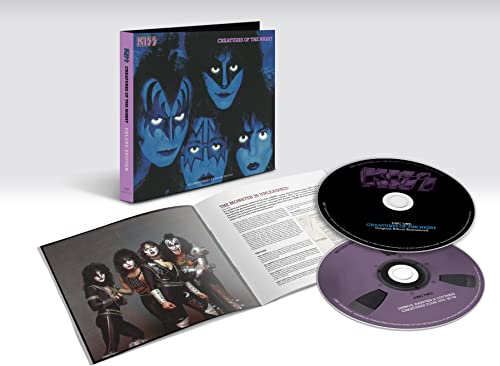
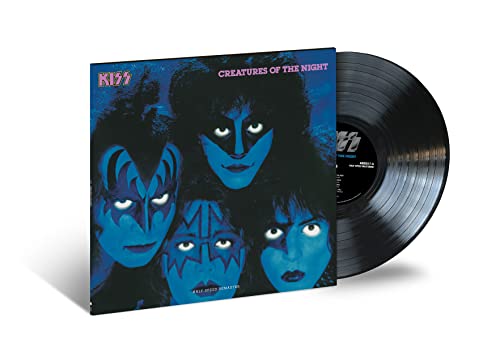
40th anniversary reissue of Kiss’ 1982 album.. The 5CD+blu-ray super deluxe features 75 unreleased tracks including demos, rarities, outtakes and soundboard live recordings from the Creatures ’82/’83 tour. The blu-ray contains Atmos and 5.1 surround mixes and the newly remastered stereo mix.
Neil Young and Crazy Horse release their third album of original material in four years, co-produced with the Rick Rubin at his Shangri-La studio in Malibu, California.
In another great SDE competition, we have copy of Blondie’sAgainst The Odds box set to give away! This is the large format 8CD edition that features the six classic albums, remastered with bonus tracks and two further CDs of demos, alternate takes, home recordings and more. That’s 125 tracks in total.
The prize draw is open to all SDE Members. Simply ensure you are logged in and confirm your entry into the competition in the poll below! If you aren’t an SDE member yet, it’s free and easy to sign-up!
This competition has ended. The winner was announced on this post!
One winner will be randomly selected at 12 noon (GMT) on Saturday 19 November 2022 and will be contacted via the email address linked to their SDE account. The winner will also be announced on SDE. Good luck!
SDE Members are a valued part of SDE community and can leave comments on this site, rate physical releases, offer feedback via polls, receive release & deal alerts via email and more. Membership is free.
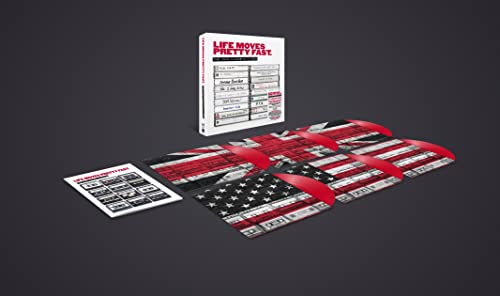
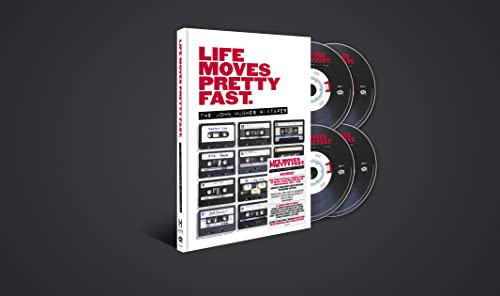
Life Moves Pretty Fast: The John Hughes Mixtapes is the first official compilation of music from the movies of John Hughes 1983-1989. Curated by Hughes music supervisor Tarquin Gotch these 4CD and 6LP box sets include a diverse array of music including tracks from Simple Minds, OMD, The Dream Academy, Kate Bush, New Order, The Beat, The Jesus and Mary Chain, Yello, Book of Love, Lindsey Buckingham and many more.
Gotch spoke to SDE recently about life in the 1980s working with Hughes and the challenges and satisfaction of pairing music with pictures…
SDE: You must be very pleased to be involved in this Life Moves Pretty Fast project because it brings everything together.
Tarquin Gotch: Indeed. I’m very proud of it. And it’s taken literally years, many years. We’ve been working on it specifically for about three years. It took me a while to realise that when you look at the body of John’s teen films it was an interesting subject… him as a filmmaker and as somebody that used music as he did. So I thought it was a worthy subject. The next step was to make sure that the estate was happy. And that meant, building up trust by making sure they were across absolutely everything we did. The ambition was to do the definitive collection, and I think we’ve got 95 percent there. I am very frustrated that there are certain tracks that I can’t have. Tracks like Sixteen Candles by theStray Cats. I signed the Stray Cats, I’m immensely proud of them and it was so clever of John to have them do that, so early in their career and in his career. But the deals that were done in those days were if you commissioned the work from a band, the film company owned the master for use in the film. And any other use was sort of left and unspoken. So you go to the film company say, “Well, we don’t want it to use in the film, obviously, we want to use it on this compilation”. They say: “We don’t have that right”. So we go to all the rights owners of The Stray Cats and say can we use it in this way and they say “We haven’t got that right”. Nobody has that right!? So I go to [Stray Cats drummer] Slim Jim [Phantom]. Jim is a wonderful man who I know personally. He says “Oh, yeah. We’d be fine [with it]”. Not enough! Not enough for the BBC [who own Demon Music]… So that happened on a few tracks, and it was very frustrating. There were other ones like ‘Apron Strings’ by Everything But The Girl where the band just said no, sadly.
You were the music supervisor on many of John Hughes films. Could you explain what the role of a music supervisor is on a film?
Anything to do with music falls on the music supervisor’s desk. From finding the composer, doing the deals for the composer, making sure the composer knows what is wanted. Most directors have a fairly intimate relationship with their composer and talk directly. You don’t need the music supervisor [for that]. But when it comes to licensing in tracks or creating tracks, then the director turns to the music supervisor and says “here you go”. And that’s a pretty personal relationship. I’ve done other stuff – I was on the first series of The Wonder Years and I did a Tom Waits film, blah blah blah… but I was very much a John Hughes guy.
John Hughes was an Anglophile. He loved everything English
Tarquin Gotch
The reason why I worked well for John was because he was an anglophile. He loved everything English, because when he was in high school, the way that he marked out his otherness was by being on the case in terms of hip music. And at that time, that meant being across English imports. It started, I believe, with The Beatles, when he got the import version of Revolver. And so when I met John, which was he was directing Weird Science and in post production on Pretty in Pink, the internet wasn’t there and you couldn’t just get music at the drop of the hat. Nobody was doing instrumental versions… so as an ex-A&R man out of the UK, I had access to tracks that he couldn’t find anywhere else. I look back and I realise just how sweet and great he was, to put so many of my bands in his films. But you can turn that around and go, because I had those bands and could give him instrumental versions, demos, TV versions with no vocal… whatever, it was a two-way street.
You had been an A&R man for Arista and then WEA, so you had all that background and knowledge of working with artists.
Correct. So I had access to a lot of the UK music business. The only other band in The Breakfast Club really is WangChung and I signed them. With Arista, it was tricky, because Clive Davis would never take any of my groups for America. So was a frustrated A&R man, Paul. And now I’m a frustrated old man!
Apparently, Kelly LeBrock was was your introduction to John Hughes. How did you know her?
[Laughs] Am I lucky guy or what? I mean, Kelly LeBrock in Weird Science… God dammit! I knew her from London because she grew up here. In fact, she went to school here in Lewes, she has told me since. So I was lurking about with her, flirting away like mad and having lots of fun. She was this sort of wild model and I was a late night A&R man, so the two lifestyles really worked and she very kindly invited me out to stay with her. She was married to Victor Drai, the producer of The Woman in Red and she was filming Weird Science and said “come to the set”. I got talking to John and I got the job! She now claims it was a well thought out plan by her, and it may well have been. Frankly, whatever Kelly says is in good in my books.
You mentioned earlier about composers. There were scores in John’s films, but no one ever really remembers that, they remember all the pop music. What was what was it about pop music that John Hughes was so enamoured with?
Ira Newborn, who was his ‘go to’ composer by and large, was just this wonderful man. Very funny, very self-effacing, and he called himself the king of the ‘stings’. Because John would have him score the whole film, and then John would fill it up with all these tracks. Why did John do that? I think it’s because directors love choices, above all. That’s why they do lots of takes and John was famous for doing that. And there are stories throughout his career of him just wanting to try different music against picture and watch what it does.
Directors love choices, above all. That’s why they do lots of takes and John was famous for doing that
Tarquin Gotch
And we would spend all night doing that. And sometimes you’d find something – I’m going to say Yello at the end of Ferris Bueller – and you go “fuck me, that is great!” And John would say, “Yeah, but let’s try some opera..” What? I mean, he would just keep going, and then double-back and go “Alright, yeah, Yello”.
How did the process work? Did he always wait until filming was completed before looking at different music?
No. He’d send the script to me. And of course, he was the first director I’ve ever worked with, so I didn’t know that scripts weren’t always that good. The first script I read was, I don’t know, Pretty in Pink, and you’re like, “that’s pretty good”. I think one of the reasons I worked well with him was because I was in the UK, so there was a time difference. He loved to talk on the phone: cigarette, coffee, talk! So he sent me the script, we’d talk about it, and we’d start sending music to him. Then as he started shooting we’d get VHS tapes of the scenes that he knew he wanted music for, and we’d get little instructions: “I want it sad”, “I want it romantic”, “I want it introspective”, “I want it exuberant”… and then we’d send more music to him. As the scenes got edited, you would narrow it down and it would become much more specific. But I would turn up at his house with bags of ideas. And that’s what they want – choice.
So you were backwards and forwards to America a fair amount?
I lived on planes a lot, in those days. I lived in both LA and London. I had a house in London and rented a place in LA. It was before they realised that planes had to be full and you could often lie down on the seats. Those days are long gone.
Were the artists involved aware of the commercial benefits of having their song played in movies?
Yes. I mean, obviously, nobody was immune to the fact that ‘Don’t You Forget About Me’ had gone to number one. Nobody was immune to the fact that three artists out of Pretty in Pink really were launched by that film. I’m thinking Psychedelic Furs, OMD, and Suzanne Vega. So that had become apparent. On the downside. There was still a big feeling at that time from groups like Pink Floyd, Led Zeppelin and The Beatles that no, no, we don’t do that. We don’t licence our music. It is art and it has to be enjoyed in the way that we intended it to be consumed, not just added on to somebody else’s thing. Very valid. But you had you had that going on.
You talked about licencing problems all these years later for this boxset, but you clearly still would have had problems at the time. And the story I want to pick up on is the one about This Mortal Coil, and She’s Having A Baby which I found really interesting, because everyone’s so familiar with the Kate Bush song from that film, but it could well have been something else completely.
It could have been This Mortal Coil’s ‘Song to the Siren’, and it was great. And it had an eerie vagueness to it that was really good. But, boy, did they do us a favour [by saying no]. Despite the obvious commercial advantages of giving your music to a film, not to mention the money, a lot of groups were rather sneery about John Hughes films. It wasn’t Fellini, it wasn’t Jean Luc Goddard, it was this sort of white, middle class, Capra-like material, which it was absolutely their prerogative to not want to embrace. And This Mortal Coil was a case in point.
You have to grudgingly admire them because it sounded like a lot of money was being thrown at them, yet they were still saying no…
Yes, it was. The one time that throwing money at it worked was with The Beatles and ‘Twist and Shout’ in Ferris Bueller. Money!
Money. That’s what I want!
And it worked. John was a huge Beatles fan. I mean, they were Gods to him. And then Paul McCartney made this understandably, slightly narky remark about us having added brass to the song, which we did, because in the scene in Ferris, in the parade, you can see brass players, so we just added it. And then we got this letter from some lawyers and Paul later made that comment.
Continuing on with the She’s Having A Baby thing then… Kate Bush has this reputation, especially these days, of taking 10 years to make an album. So how did you manage to get her to write and record a song in a relatively short space of time? And how did you know her in the first place?
My lawyer introduced me, I went down, we smoked joints, we got smashed, and it all just seemed to go perfectly. And it wasn’t slow. I think for her, the fact that John gave her a whole segment and said “here you go” and she was writing to picture. I hope I’m not doing her a disservice, but it may have been the first time that she did that. And that’s a creative challenge that I think probably stimulated her. You know, it’s, it’s easier than a blank canvas, I’m going to humbly suggest.
So when she came back to you, did she basically give you a finished product and say, “that’s it”?
Yes.
What did you think when you first heard it?
I can’t tell you the relief. The utter, utter relief when John said, “Oh my God, that’s brilliant”. And he extended the segment to cover the whole song because it was so bloody good. But what I’m missing out of that is that you’ve just got deadlines bearing down on you. And, you know, I’ve stopped working on features films really because the pressure of those deadlines is just unforgiving.
The video to This Woman’s Work that Kate Bush made when she released the song as a single in 1989
Was there any ever any pressure for the artists to release a song as a single to promote the film? Because the Kate Bush one was interesting in that she waited until the end of 1989 when The Sensual World had come out, and it was the second single from that album. But of course, if she had released it as a single with clips from the film in the video, at that time [1988], it would have helped the film and her, probably.
She did not give us the right to use it as a single. I think she was protecting her own schedule and you’re absolutely right. It wasn’t John’s most successful movie, obviously, and the fact that that track sort of creeped out… It is something that’s grown in stature over the years..
One of the things that’s quite interesting is that some of these films didn’t get a soundtrack album at the time. So Ferris Bueller’s Day Off is the obvious example of that. When pop music is such an important part of those films, why why wasn’t there a soundtrack? I
It’s one of the great mysteries, and I’m afraid I don’t have the definitive answer. I have theories. John’s public position was that the music is too diverse. It wouldn’t make a cohesive soundtrack. But that’s not logical; it doesn’t really makes sense. He had a very creative and close relationship with the music executive at A&M called David Anderle. He’d seen him through Pretty in Pink and that suddenly stopped, and we moved away from A&M records. So I have a feeling it has more to do with that than than anything else. The other possibility is that we did not have soundtrack rights for The Beatles’ ‘Twist and Shout’. So we wouldn’t be putting out a soundtrack album without the hit. I think it’s probably a combination of all those three.
John was building up the Hughes Music business. It wasn’t just about putting a few pop songs on his on his films, it was an integral part of, his interests, his life.
He had said “I only make the films so I can put the music in them”. He so loved that process of putting music to picture and going back to where we started the conversation, there’s him as an outsider in high school, finding obscure music. So he brought that to the process. So there’s two things going on: the movie platform and unknown artists. And the obvious thing was to do a deal and in the end it was with with Irving Azoff at Universal. The deal was that he could sign one band per soundtrack. Unfortunately, this clever idea happened, just as he was fading away from doing teen movies and into family movies. And the simple rule is that if adults are talking, you can’t play loud music.
You managed XTC, Stephen Duffy amongst others. I guess you enjoyed that and it must have been hard to give that up, because you had to drop them in the end. How difficult was that?
It was horrible. He phoned me up… John was mercuial and you were either his best friend or you weren’t getting calls at all. I was in doing Christmas Vacation when the relationship ended, I went back to England and was busy managing all my artists. And I get the call from John going, “I want you to come and run the company in Chicago and be my producer”. This is a lifetime ambition [of mine] to be a movie producer. You know, I was thinking, of course, that it meant palm trees, sun and that I’d meet lots of actresses. The reality was I ended up in Chicago, I made four movies for him, and they all shot in the middle of winter, in Chicago – it was hell. But the condition was, if I wanted the job, I had to give up the [artist] management. I’ve regretted it. I came back to England in 2004 and I had no job.
Yello’s ‘Oh Yeah’ was used in Ferris Bueller’s Day Off
But when you were getting into film producing, your role was changing dramatically. You were effectively leaving the music element behind, to a certain degree.
Yes. And it was brilliant, exciting, incredibly demanding and that pressure I referred to earlier was intense. And I went on to work for Fox and run their TV movie division. And that was the same, you know, three movies a year… it eats your life. The thing about those sorts of jobs is that they pay you very well, but they take your life.
Did you enjoy living in America or were you pleased to get back to the UK, when you eventually came back?
I loved America. When I first went out to California, I was a hippie, taking loads of drugs and went to San Francisco. With LA, I could not imagine a worse place on earth, and it was a bit of a shock to realise I lived there for 20 years! When did the hippy say “No, that’s fine. I’ll work for Rupert Murdoch’s Fox and I’ll live in LA – not a problem!” But it’s great to be back here. Coming back here gave me permission to decide, ‘fuck it’. I don’t need to produce movies all the time. I’ll manage Jon Lord – what a pleasure that was!
Out of all his John’s films and which one do you think uses music the most memorably?
In some ways, it’s She’s Having A Baby, which is annoying because it wasn’t the most successful. But actually, it’s probably a fight between Ferris Bueller and Planes, Trains and Automobiles.
Is there one particular moment that you can hone in on a John Hughes film and say “that’s perfect”?
I’ve got a few: The Dream Academy in the museum in Ferris Bueller, looking at the paintings. Of course, Yello at the end of Ferris… I think The Beat’s ‘March of the Swivelheads’, when Ferris runs through the back yards. And I think Emmylou Harris, in the motel scene – “Those aren’t pillows!” – in Planes Trains and Automobiles. I’m just so pleased that Emmylou stayed because we did a test screening of that film and the audience hated country music at the time. And we had to take it all out, but somehow we kept that and I’m so pleased.
Planes, Trains, and Automobiles is my favourite John Hughes film. I can watch it endlessly and it never gets old…
I agree. If I had to choose my favourite film that I have my name on, it’s Planes, Trains and Automobiles.
Thanks to Targuin Gotch who was talking to Paul Sinclair for SDE. Life Moves Pretty Fast: The John Hughes Mixtapes is released today.
Compare prices and pre-order
Various Artists
Life Moves Pretty Fast - deluxe 4CD box set with cassette and seven-inch single
Paul McCartney is to release a massive seven-inch singles vinyl box set next month. The 7″ Singles contains 80 vinyl seven-inch singles, starting with 1970’s ‘Another Day’ and working through the decades to ‘Women and Wives’ from 2020’s McCartney III.
There are 65 recreations of singles/promos using restored artwork from 11 different countries. Additionally 15 singles are included that have never before been issued on seven-inch. These are mostly digital-only releases or songs that were for other reasons not issued on seven-inch.
As you can imagine, 80 seven-inch singles requires a big box and so these are packaged in a two-piece, four-walled FSC-approved “Redwood pine and Birch Ply wooden art crate” manufactured in the United Kingdom.
The 7″ Singles box set (click image to enlarge)
This comes with a 148-page book containing foreword from Paul, essay by Rob Sheffield, recording notes, release dates, and chart information on each of the singles.
Some of the audio has been remastered and some of it is taken from the previous Archive Collection remasters. What has been remastered and what hasn’t, will be an interesting talking point and since certain albums haven’t been reissued yet (like Wings’ London Town and Back to the Egg) and Paul McCartney’s Give My Regards To Broad Street and Press to Play) this is an opportunity to hear some songs from those albums remastered for the first time (although a few cuts featured on 2016’s Pure McCartney).
This box set is limited to 3,000 units worldwide and according to the blurb, includes “1 exclusive test pressing randomly selected from the manufacturing process” which appears to be shown in the image below.
No surprises, this is expensive! In the UK is retailing for £615 and is only available via McCartney’s shop or Universal Music channels (like Sound of Vinyl or uDiscoverMusic). It is going to be available digitally and on streaming but there’s no CD edition.
The 7″ Singles is released on 2 December 2022, via MPL/UMC.
Alternative view of The 7″ Singles (click image to enlarge)
Track listing
1970, Sweden 1A: Another Day 1B: Oh Woman, Oh Why
1971, US Mono Promotional Release 2A: Uncle Albert / Admiral Halsey [Mono] 2B: Too Many People [Mono]
1971, UK 3A: The Back Seat of My Car 3B: Heart of the Country
Previously unreleased on 7” 4A: Love Is Strange [Single Edit] 4B: I Am Your Singer
1972, UK 5A: Give Ireland Back to the Irish 5B: Give Ireland Back to the Irish [Version]
1972, UK 6A: Mary Had a Little Lamb 6B: Little Woman Love
1972, Belgium 7A: Hi, Hi, Hi 7AA: C Moon
1973, Israel 8A: My Love 8B: The Mess [Live at The Hague]
1973, Sweden 9A: Live and Let Die 9B: I Lie Around
1973, Spain 10A: Helen Wheels 10B: Country Dreamer
1974, Germany 11A: Jet 11B: Let Me Roll It
1974, Germany 12A: Band on the Run 12B: Nineteen Hundred and Eighty Five
1974, The Netherlands 13A: Mrs. Vandebilt 13B: Bluebird
1974, Belgium 14A: Junior’s Farm 14B: Sally G
1975, Australia 15A: Listen to What the Man Said 15B: Love in Song
1975, Germany 16A: Letting Go 16B: You Gave Me the Answer
1975, Belgium 17A: Venus and Mars / Rock Show 17B: Magneto and Titanium Man
1976, France 18A: Silly Love Songs 18B: Cook of the House
1976, Germany 19A: Let ‘Em In 19B: Beware My Love
1977, Japan 20A: Maybe I’m Amazed (Live) 20B: Soily (Live)
1977, UK 21A: Mull of Kintyre 21AA: Girls’ School1978,Germany 22A: With a Little Luck (DJ Edit) 22B: Backwards Traveller/Cuff Link
1978, UK 23A: I’ve Had Enough 23B: Deliver Your Children
1978, The Netherlands 24A: London Town 24B: I’m Carrying
1978, France 25A: Goodnight Tonight 25B: Daytime Nightime Suffering
1979, UK 26A: Old Siam, Sir 26B: Spin It On
1979, UK 27A: Getting Closer 27AA: Baby’s Request
1979, Japan 28A: Arrow Through Me 28B: Old Siam, Sir
1979, UK 29A: Wonderful Christmastime 29B: Rudolph the Red Nosed Reggae
1980, UK 30A: Coming Up 30B: Coming Up (Live at Glasgow) 30BB: Lunch Box/Odd Sox
1980, UK 31A: Waterfalls 31B: Check My Machine
Previously unreleased on 7” 32A: Temporary Secretary 32B: Secret Friend [7” Single Edit]
1982, UK 33A: Ebony and Ivory 33B: Rainclouds
1982, UK 34A: Take It Away 34B: I’ll Give You a Ring
1982, UK 35A: Tug of War 35B: Get It
1983, UK 36A: Say Say Say 36B: Ode to a Koala Bear
1983, UK 37A: Pipes of Peace 37B: So Bad
1984, UK 38A: No More Lonely Nights (Ballad) 38B: No More Lonely Nights (Playout Version)
1984, UK 39A: We All Stand Together 39B: We All Stand Together (Humming Version)
1985, US 40A: Spies Like Us 40B: My Carnival
1986, US 41A: Press [Video Edit] 41B: It’s Not True
1986, Art reformatted from US 12” promotional vinyl 42A: Pretty Little Head (Remix) 42B: Write Away
1986, US 43A: Stranglehold 43B: Angry (Remix)
1986, UK 44A: Only Love Remains 44B: Tough on a Tightrope
1987, UK 45A: Once Upon a Long Ago 45B: Back on My Feet
1989, US 46A: My Brave Face 46B: Flying to My Home
1989, UK 47A: This One 47B: The First Stone
1989, Australia 48A: Figure of Eight [7” Bob Clearmountain Mix] 48B: Où Est le Soleil
1989, UK 49A: Party Party 49B: Artwork etching
1990, UK 50A: Put It There 50B: Mama’s Little Girl
1990, Europe 51A: The Long and Winding Road 51B: C Moon
1990, UK 52A: Birthday 52B: Good Day Sunshine
1990, UK 53A: All My Trials 53B: C Moon
Previously unreleased on 7” 54A: The World You’re Coming Into 54AA: Tres Conejos 54B: Save the Child 54BB: The Drinking Song (Let’s Find Ourselves a Little Hostelry
1992, Europe 55A: Hope of Deliverance 55B: Long Leather Coat
1993, Germany 56A: C’Mon People 56B: I Can’t Imagine
1997, Reformatted from 7” picture disc 57A: Young Boy 57B: Looking for You
1997, Reformatted from 7” picture disc 58A: The World Tonight 58B: Used to Be Bad
1997, Reformatted from 7” picture disc 59A: Beautiful Night 59B: Love Come Tumbling Down
1999, UK 60A: No Other Baby 60B: Brown Eyed Handsome Man 60BB: Fabulous
2001, Europe 61A: From a Lover to a Friend 61B: Riding into Jaipur
2004, Europe 62A: Tropic Island Hum 62B: We All Stand Together
2005, Europe 63A: Fine Line 63B: Growing Up Falling Down


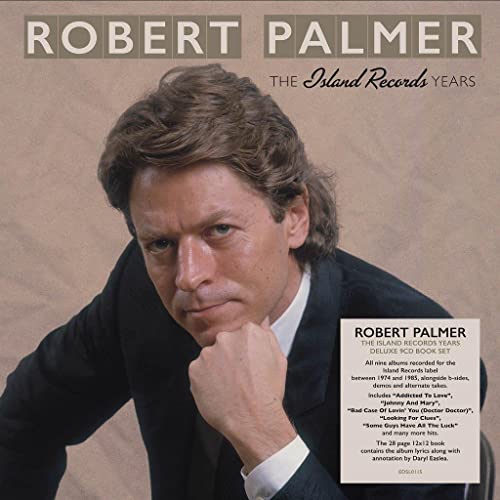


 Interview
 News